Sedona’s parking lots fill by 8am. Pink Jeep Tours cost $89 per person. Cathedral Rock trailhead requires reservations three days out. The town built for 10,000 now hosts 3 million visitors annually, and Route 89A adds 45 minutes to what should be a 15-minute drive.
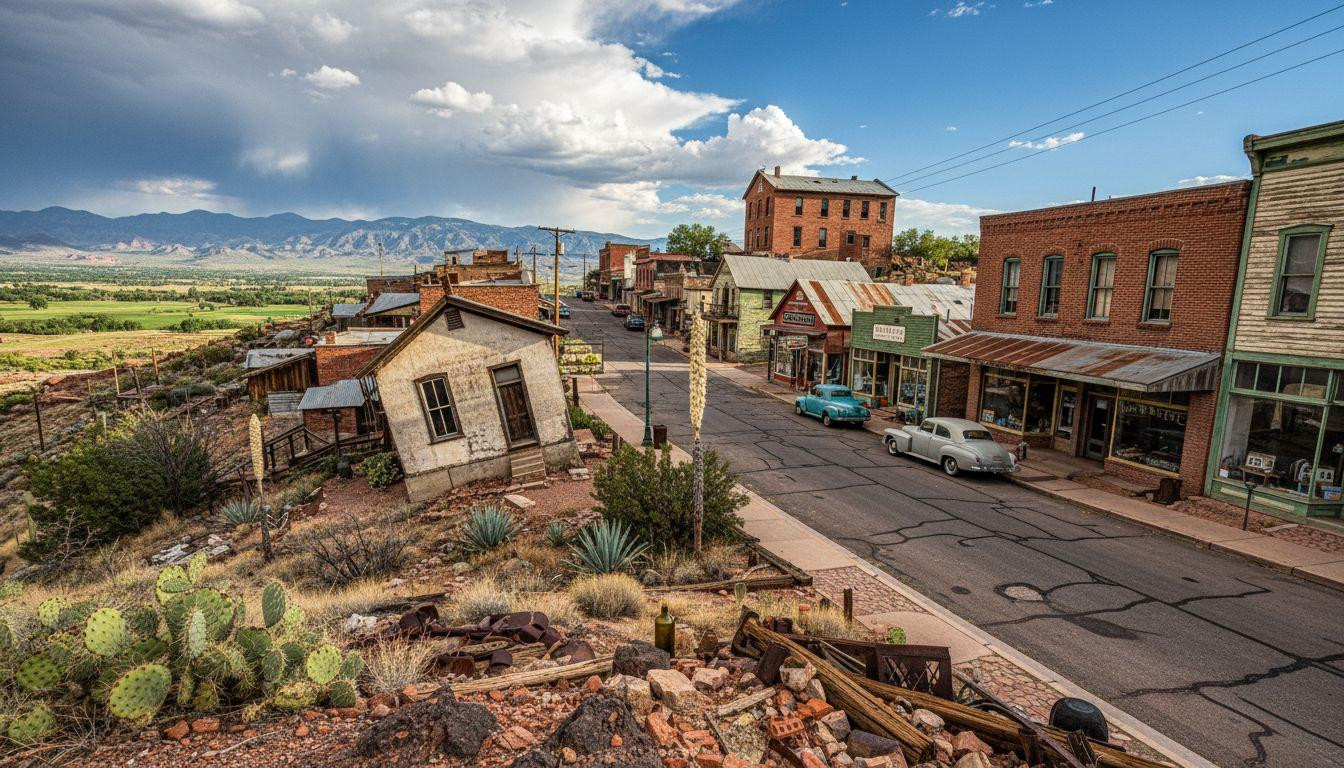
Twenty-eight miles north, Jerome clings to Cleopatra Hill at 5,200 feet. Population 450. The jail slid 225 feet downhill in 1928. Buildings still tilt on unstable ground. No reservations needed.
Why Sedona became unvisitable
Sedona’s vortex sites turned spiritual destinations into selfie factories. Bell Rock sees 2,000 daily visitors in peak season. Hotels average $280 per night in spring 2026. Parking at Tlaquepaque Arts Village costs $15 for two hours.
The town’s red rocks haven’t changed. The experience has. Traffic on 89A between West Sedona and Uptown crawls at 12mph on weekend mornings. Trailhead shuttles run every 20 minutes because parking disappeared. What was once a quiet artist colony became Arizona’s second-most-visited destination after the Grand Canyon.
Pink Jeep Tours book three weeks ahead. Vortex tour guides charge $125 for 90-minute sessions. The metaphysical bookstores that defined 1980s Sedona now share strip malls with chain coffee shops. Similar to Umbria’s plateau villages, the crowds found what locals tried to protect.
Meet Jerome, the town gravity can’t hold
Jerome sits on Cleopatra Hill’s eastern slope. The town jail relocated itself without permission in 1928, sliding 225 feet downhill as mine shafts collapsed beneath the foundation. The building now rests 300 feet from its original site. Foundations still shift.
The sliding buildings phenomenon
Copper mining from 1876 to 1953 hollowed out Cleopatra Hill. The United Verde Mine produced 3 million pounds of copper monthly at peak operation. Underground voids created unstable geology. Buildings tilt at visible angles along Main Street.
The old high school sits 6 degrees off vertical. Store owners prop merchandise to compensate for slanted floors. Cracks appear in sidewalks overnight. A restaurant owner mentioned the floor dropped two inches in five years. The hill moves slowly, pulling Jerome with it.
What $200 actually buys here
The Surgeon’s House B&B charges $189 per night in late April 2026. Three rooms, Verde Valley views, breakfast included. The Connor Hotel runs $165 for standard rooms. Both sit in buildings from the 1920s mining boom.
Sedona’s Enchantment Resort starts at $495 for the same dates. Jerome’s Ghost City Inn offers rooms at $145 with kitchenettes. No resort fees, no valet parking charges, no three-day minimum stays. The town has 12 lodging options total. All book same-day in spring.
The wickedest town that grew up
Jerome earned its “Wickedest Town in the West” title honestly. The 1920s population hit 15,000, mostly miners. The town supported 30 saloons and numerous brothels along Hull Avenue. Shootings happened weekly. Fires destroyed half the town in 1899.
Copper boom to artist rebirth
The mines closed in 1953. Population dropped to 50 by 1960. Artists arrived in the late 1960s, buying abandoned buildings for $500. The town became a National Historic Landmark in 1967. Today 35 galleries occupy former saloons and boarding houses.
Raku Gallery sits in a 1917 building that housed a speakeasy. Nellie Bly Kaleidoscopes operates from a former bordello. The Jerome Artists Cooperative runs weekend studio tours through buildings that once charged by the hour. No admission fees. Artists work while visitors browse.
Authentic vs manufactured mysticism
Sedona’s vortex marketing began in the 1980s when a psychic declared four sites held special energy. Cathedral Rock, Bell Rock, Airport Mesa, and Boynton Canyon became pilgrimage destinations. The concept has no indigenous or geological basis.
Jerome’s history needs no invention. The town jail that moved itself tells a better story than any vortex. Mine shafts drop 1,270 feet beneath Main Street. The Douglas Mansion museum displays mining equipment that pulled $1 billion in copper from Cleopatra Hill. Facts beat fabrication.
Practical reality check
Jerome sits 100 miles north of Phoenix via I-17 and Route 89A. The drive takes two hours. From Sedona, take 89A north for 28 miles through Cottonwood. The road climbs 2,000 feet in 12 miles with switchbacks.
Fall through spring offers the best weather. Summer highs reach 95°F with afternoon monsoons. Winter brings occasional snow that melts by noon. Late April 2026 sees daytime temperatures around 72°F. Mornings start at 45°F.
The town sits at 5,200 feet elevation. Steep streets challenge walking. Main Street runs one-third of a mile on a 15-degree slope. Parking fills the four public lots by 11am on weekends. Arrive before 9am or after 3pm. Much like Victorian mining towns that stayed quiet, Jerome rewards early risers.
Your questions about Jerome answered
How does Jerome compare to Bisbee for authentic mining history?
Bisbee has 5,000 residents and more restaurants. Jerome keeps 450 people and feels emptier. Both offer mine tours. Bisbee’s Queen Mine runs daily at $13 per person. Jerome’s Gold King Mine charges $10 for self-guided tours. Jerome’s buildings slide. Bisbee’s don’t. Choose based on crowd tolerance.
What makes the artist community different from typical tourist galleries?
Artists live in Jerome year-round. Studios occupy their homes. The Jerome Artists Cooperative rotates 30 working artists who take turns staffing the gallery. No commission-only dealers. Prices reflect actual production costs. A potter mentioned selling mugs for $28 that would cost $65 in Sedona galleries.
Is Jerome worth visiting if I’m already going to Prescott?
Prescott sits 35 miles west of Jerome via Route 89A. The drive takes 50 minutes through Mingus Mountain. Prescott offers Victorian downtown streets and Whiskey Row saloons. Jerome adds mining history and unstable geology. Visit both. They’re different enough to justify the detour. Similar to Death Valley’s hidden canyons, Jerome rewards the extra miles.
The Sliding Jail sits at the south end of town. Morning light hits the tilted walls at 7am. The building leans 8 degrees from vertical. Inside, the floor slopes toward Hull Avenue. Stand in the doorway and gravity pulls slightly downhill. The town moves. Sedona’s crowds stand still.