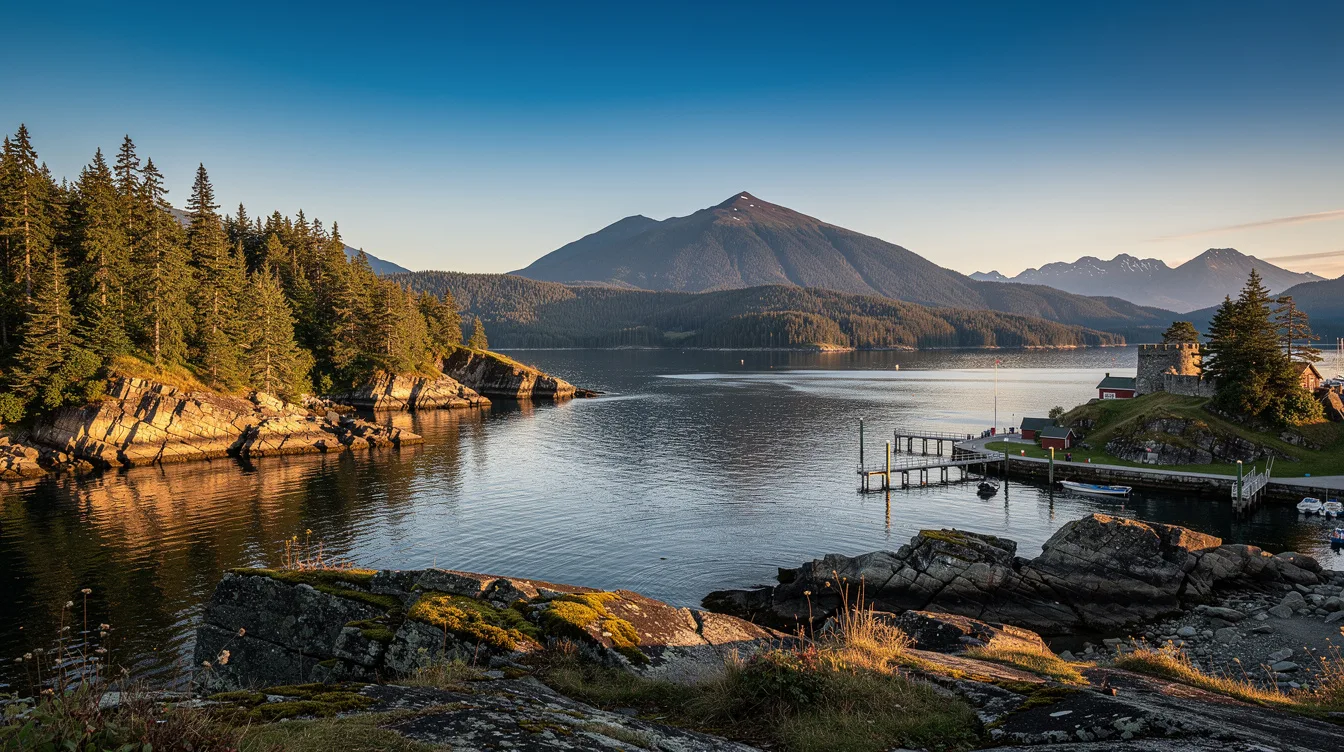
Just under 2 hours 30 minutes from Seattle, Sitka puts Alaska’s biggest historical moment beside a working Pacific town. The official transfer of Alaska from Russia to the United States took place here on October 18, 1867. That fact gives the harbor real weight, but the weathered docks, wet forest, and salt air keep the place from feeling like an outdoor museum.
And Sitka is only about 93.2 miles southwest of Juneau, though there’s no road connecting it to the continental highway network. You can fly, arrive by ferry, or come by cruise ship. The town has about 8,500 residents, so it feels inhabited rather than staged, even when visitors fill the waterfront.
Why October 18, 1867 still matters here
Castle Hill is where the transfer ceremony happened, and the harbor below makes the history easy to picture. Russian control had made Sitka the capital of Russian America, while the Tlingit presence here reaches much further back. The result is layered, sometimes uncomfortable, and far more interesting than a simple Russian footnote.
And the city remained the American capital of Alaska until 1906, when the seat moved to Juneau. You’ll see that overlap in the center, where St. Michael’s Cathedral recalls the Russian period and the streets still lead toward a port shaped by fishing and public services.
At Sitka National Historical Park, forest trails meet the coast and totems stand among the trees. The park is tied to the Tlingit-Russian conflict, so the walk carries more meaning than a quick stroll beside the water. Bring a rain jacket.
The forest is beautiful, but it doesn’t care about your forecast.
A town where the Pacific changes the mood
Sitka faces the open Pacific, unlike many communities along the Inside Passage. That exposure gives the harbor a wider, rougher feeling, and the mountains and islands make every clear view feel earned. And when rain moves across the water, the town turns silver within minutes.
The coastline is the reason I’d choose Sitka over a purely cruise-focused stop. You can walk near the harbor, smell wet cedar, and watch working boats move through the channel. But cruise traffic is part of the story, and the quietest version of town usually comes after the ships leave.
Beyond the waterfront, the Tongass offers forest, bays, mountains, and trails ranging from easy walks to harder climbs toward Mount Verstovia. You don’t need an ambitious hike to feel remote here. The trade-off is simple: weather changes quickly, and comfortable layers matter more than a perfect itinerary.
Wildlife arrives with the season
Humpback whales, sea otters, harbor seals, sea lions, and bald eagles are among the wildlife seen around Sitka. The water is the main attraction, so you’ll get more from the town if you leave time for a boat trip or a shoreline walk. And the sound of a whale surfacing can interrupt an ordinary afternoon.
WhaleFest takes place every November around the migration of humpback whales. That timing gives November a different appeal from the busier travel window of May through September. But November also means wetter, darker days, so this is a trip for travelers who care more about wildlife than easy weather.
The Alaska Raptor Center focuses on care and rehabilitation for birds of prey, including bald eagles. It’s a practical stop when rain closes in, and it gives you a closer look at animals that otherwise flash past the trees. The setting feels intimate, though the town’s wild edges are never far away.
Can you get there without a cruise?
Yes. Alaska Airlines connects Sitka with Seattle, and the direct flight takes less than 2 hours 30 minutes depending on the service. And flying is the simplest choice if you have limited time.
You can reach the town quickly, then spend your days on foot, near the water, or in the forest.
The Alaska Marine Highway offers a slower arrival through the Inside Passage. You’ll trade speed for changing views, open decks, and the feeling of approaching a place that roads don’t reach. Ferry schedules require more planning, while cruises make Sitka easy to sample but harder to experience at its own pace.
When should you visit Sitka?
May through September is the easiest window for hiking, marine activities, and fuller visitor services. You’ll still need waterproof clothing because rain and humidity are part of the deal. And if whale watching is your priority, November and WhaleFest may be worth the darker skies.
Sitka works best when you let the town stay slightly unfinished. Visit Castle Hill, walk beneath the trees, and watch the harbor change color. By evening, rain taps the roofs while the Pacific darkens beyond the docks.