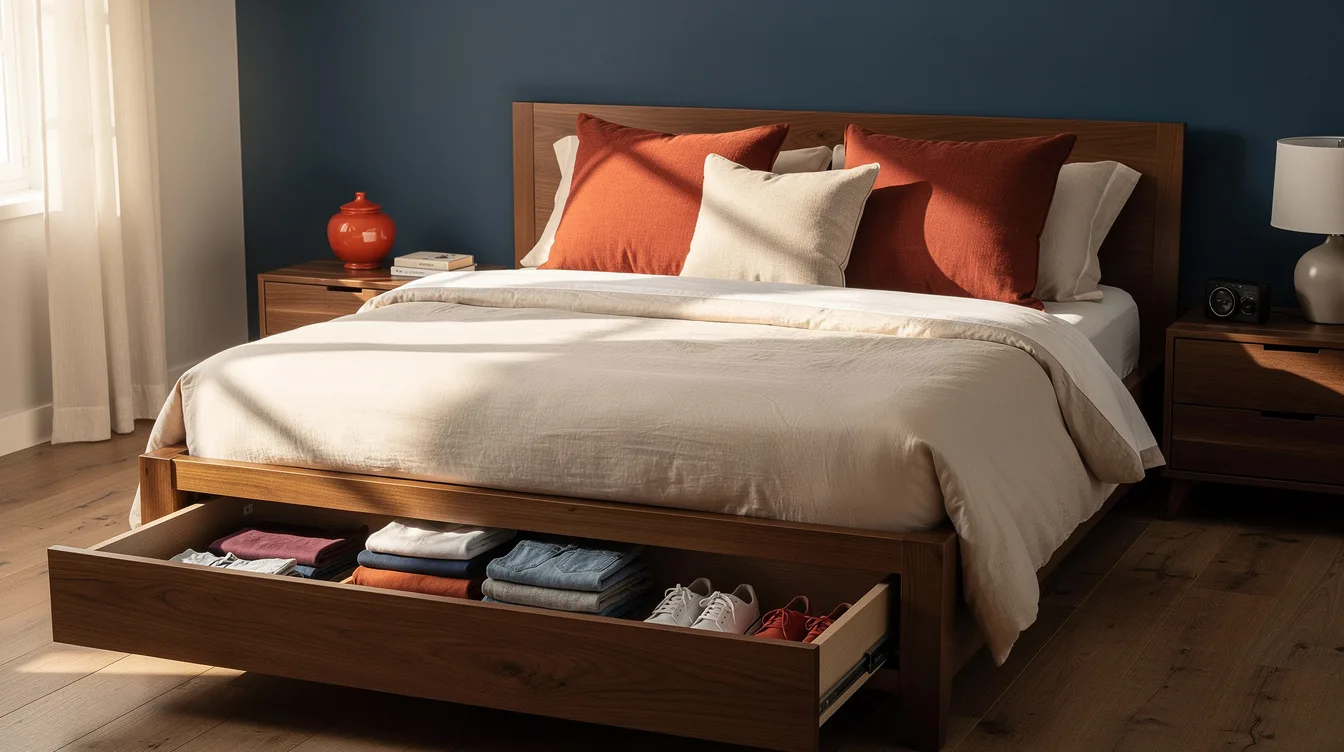
The drawer under your bed should earn its floor space every morning. A unit about 11 3/8 inches tall can hold folded clothes, shoes, or sheets, but only if you can open it without moving the nightstand.
The useful shift is simple: treat each drawer like a low, easy-access dresser. Pull-out drawers and rigid rolling boxes beat a soft bag for anything you reach for several times a week.
Give Each Drawer One Daily Job
Under-bed storage works best when each drawer has a clear assignment. One holds underwear and sleepwear, another keeps workout clothes together, and a third handles everyday shoes or spare sheets.
A drawer filled with unrelated objects becomes a shallow junk drawer. Wooden drawers suit a bedroom that needs a dresser-like look, while clear plastic makes it easier to identify contents before opening anything.
Think in routines, not categories. The drawer you open every morning should hold the items you reach for before work, not linens you touch once a week.
Place Daily Clothes Near Your Dressing Spot
Position the most-used drawer beside the side of the bed where you dress. You should be able to pull it out without moving a nightstand, shifting a rug, or kneeling at an awkward angle.
For jeans and T-shirts, use shallow folded rows instead of a tall stack. Folded cotton clothing stays visible when the drawer is arranged from front to back, so the bottom pieces do not disappear.
Workout clothes deserve the easiest morning access. Keep tops, shorts, and leggings in visible rows, or place one complete outfit together if that matches your routine.
Separate Small Items Before They Become a Pile
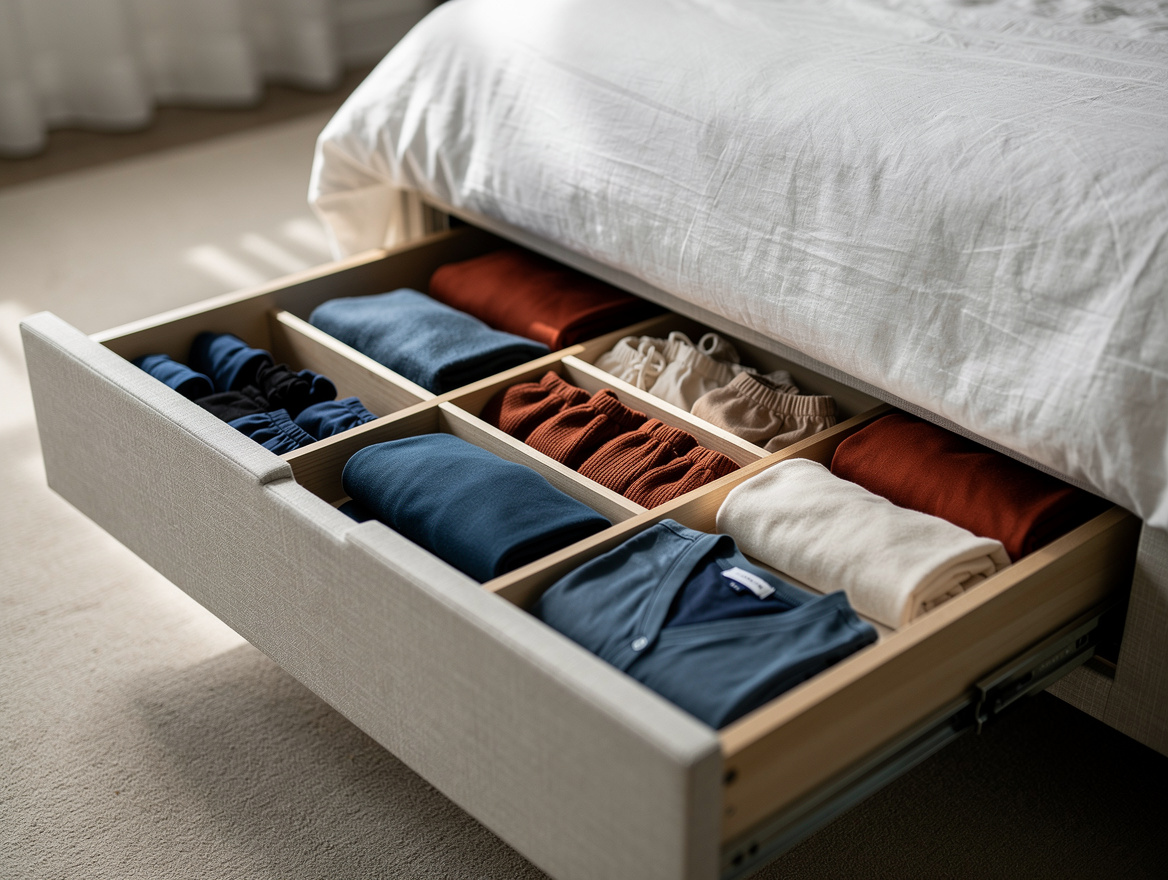
Socks, underwear, and sleepwear need divisions because small garments quickly spread across a wide drawer. Use three sections, with one area for each type, and leave enough room to lift items out without disturbing the rest.
A removable bamboo tray can hold an eye mask, spare charging cable, or reading accessory at the front of the drawer. That small barrier keeps loose objects from sinking beneath clean clothes.
Plastic drawer units are practical for this job because the contents remain easy to scan. A current example is listed around $22 on sale or about $32 at regular pricing, though the exact amount can change.
Keep Everyday Shoes Near the Foot
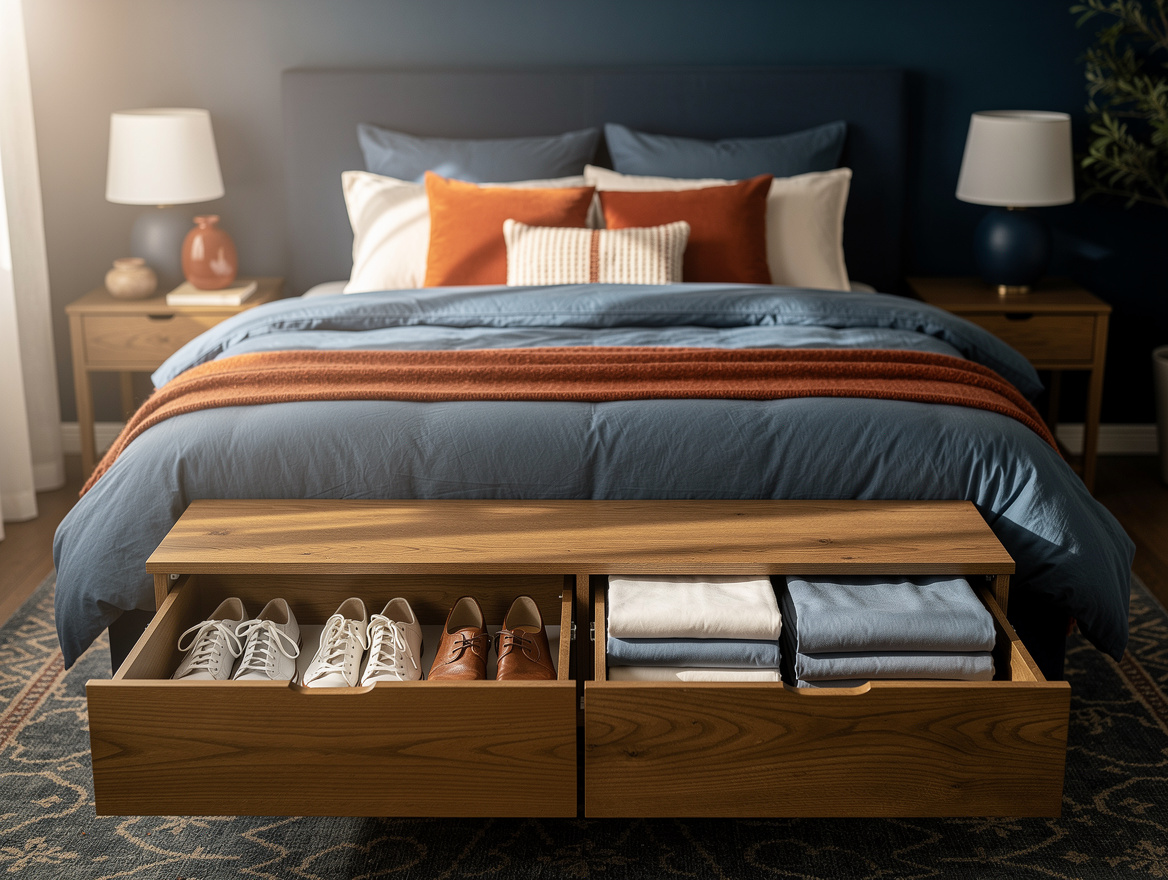
Shoes belong near the foot of the bed, where the drawer can open without competing with a nightstand. Give each pair a defined space and keep footwear separate from clean textiles.
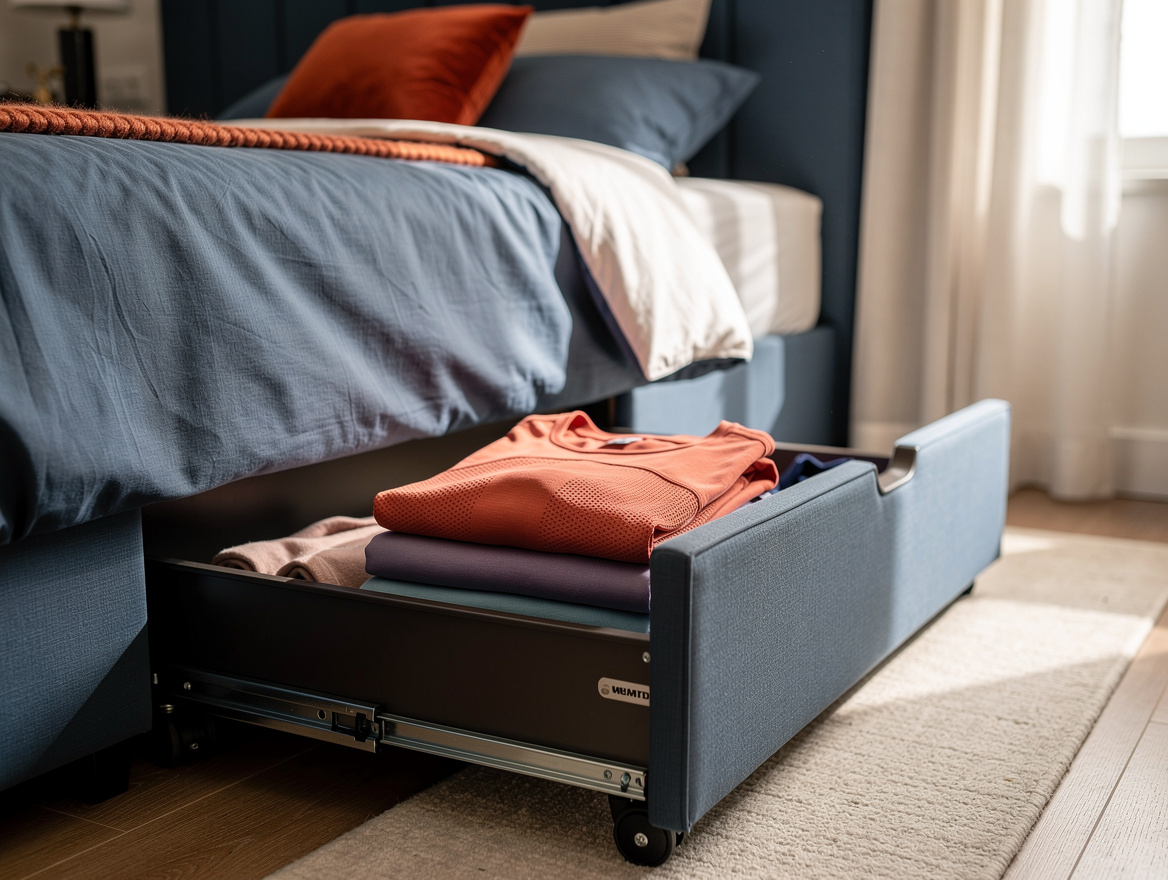
A rigid rolling box is more convenient than a soft bag when the contents are used often. Rigid plastic storage holds its shape as you pull it forward, while a bag may need to be dragged out and unzipped before you can see anything.
Leave a little breathing room around each pair rather than packing the drawer tightly. The point is quick access, and a drawer that requires rearranging every morning has already failed its job.
Reserve One Drawer for Weekly Linens
Spare sheets need less frequent access, so place them in a drawer farther from your usual dressing position. Keep one complete set together, with the pillowcases tucked inside the folded sheet bundle.
A linen sheet set is easier to find when the drawer contains only bedding or other soft bedroom extras. Mixing it with shoes, cables, and workout clothes turns a useful reserve into a frustrating search.
Use the prime drawer for daily clothing and let the weekly drawer sit along the less obstructed side of the bed. That simple priority system makes the whole storage layout feel more intentional.
Match the Drawer to the Bed Frame
Measure the usable space before buying, including the opening path in front of the bed. The furniture-style IKEA MALM drawers for Full, Double, Twin, and Single beds have published external dimensions of about 37 3/8 by 24 3/8 by 11 3/8 inches, and a pair is listed at about $100.
For Queen and King beds, the oak-veneer-front version measures about 40 1/8 by 24 3/8 by 11 3/8 inches per drawer, with a pair listed at about $100. These are designed for the matching high MALM bed, so they are not universal-fit accessories.
Engineered wood gives the furniture-style option a more finished appearance than a basic storage bin, but fit matters more than appearance. Check the bed height, drawer clearance, and handle position before committing to a coordinated set.
Start with the drawer closest to your dressing spot, then assign it one job and divide the contents before adding anything else. Once daily clothes work smoothly, move shoes and spare sheets into the less convenient spaces.
Mia Carter writes about small-space living and budget home makeovers. She has restyled three rentals and tests most ideas in her own 45 sqm flat.