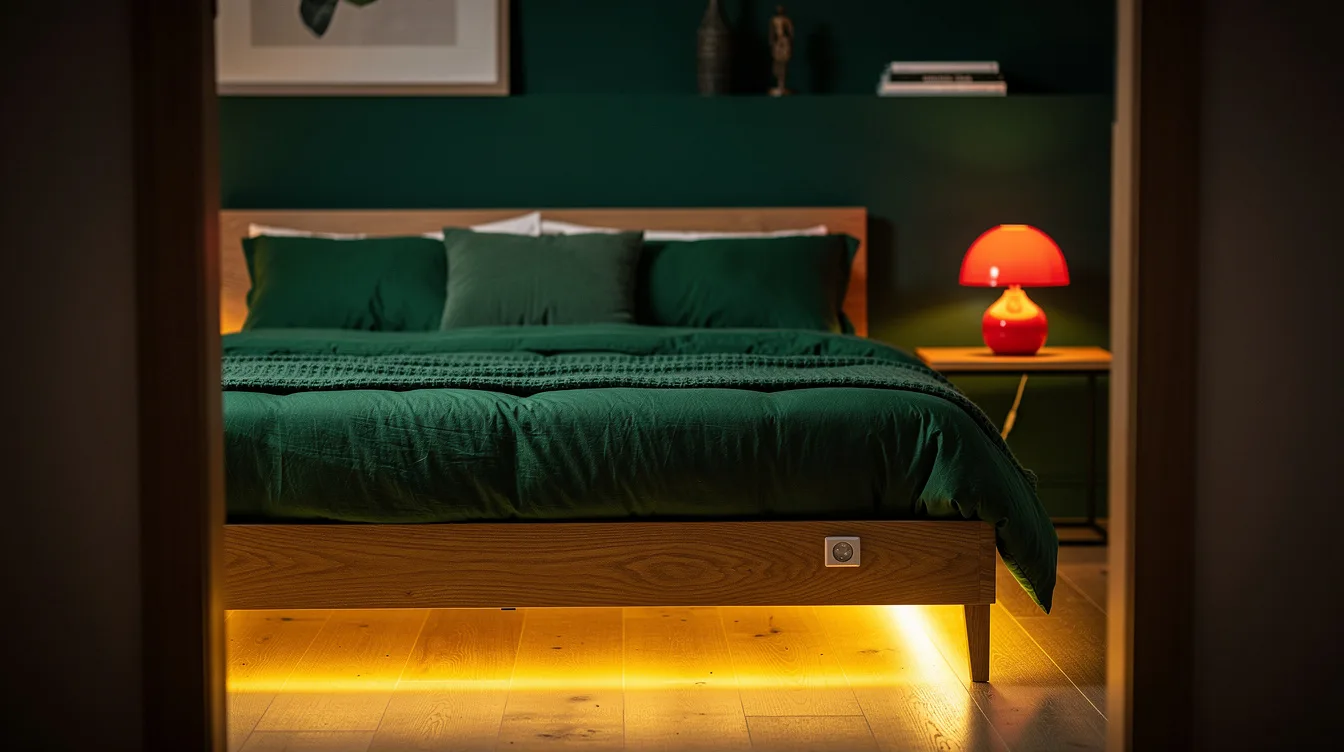
A typical under-bed motion-sensor light costs about $20, yet the wrong one can turn a quiet bathroom trip into a blast of blue-white glare. Under a 54-inch bed, the best placement is low enough to stay hidden and bright enough to reveal slippers, pets, and the edge of a rug.
The right pick has three traits: a warm beam, a reliable sensor, and wiring that doesn’t become a toe trap. I tested the decision as a bedroom problem first and a gadget purchase second.
Measure the Gap Before Buying
A low-profile strip disappears beneath most bed frames, while a puck light needs more clearance and can create a sharper pool of light. Check the space from the floor to the frame before choosing an Amazon motion-sensor light, especially if your bed has built-in drawers.
A typical under-bed light costs about $20, but the cheapest option can have a weak sensor or stiff adhesive. I prefer a flexible LED light strip with a slim controller because it follows the frame instead of hanging below it.
Choose Warm Light for Sleepy Eyes
Cool white light makes a bedroom feel more like a hallway, and it can feel harsh during a midnight wake-up. Look for a warm-white glow that guides your feet without flooding the room.
IKEA is a useful place to browse for softer bedroom lighting, while a basic Amazon strip often gives you more control over brightness. Skip color-changing modes here: a steady amber or warm-white setting is calmer and easier to live with.
Match the Power Source to Your Bed
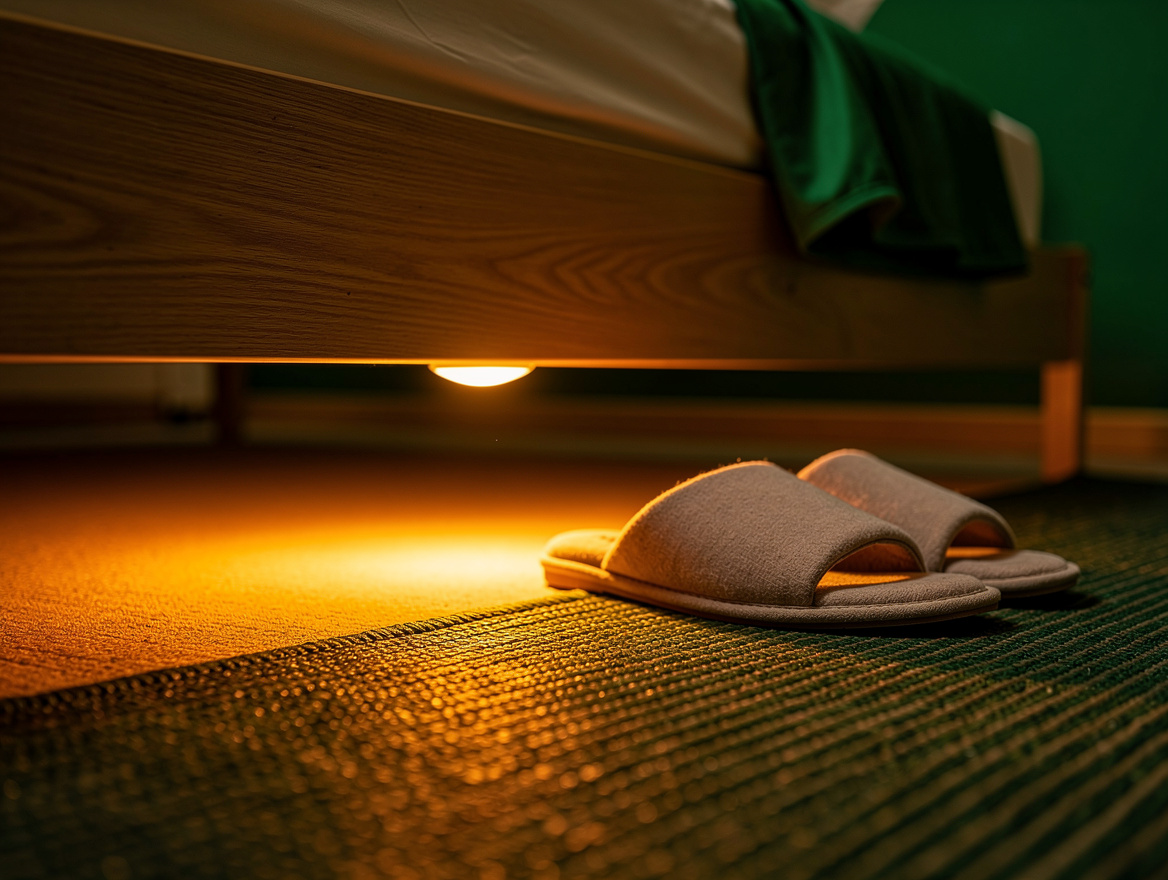
Plug-in lights work best when an outlet sits close to the headboard, while battery-powered lights keep cords away from walking areas. A rechargeable motion light is practical for renters who can’t route a cable behind the frame.
For a permanent setup, check Home Depot and Lowe’s for plug-in options with longer cords and replacement parts. Battery models from Amazon may cost about $15 to $30 typically, but frequent nighttime use means you’ll need to recharge them regularly.
Aim the Sensor at the Walking Path
Place the sensor near the side where you step down, not in the center of the bed where blankets can block its view. A small infrared sensor angled toward the floor can catch movement without turning on every time you roll over.
If both partners use opposite sides, install two short lights or choose a wider sensor range. Target often carries compact night-light styles that suit this arrangement, though the sensor placement matters more than the package design.
Hide the Hardware and Soften the Glow
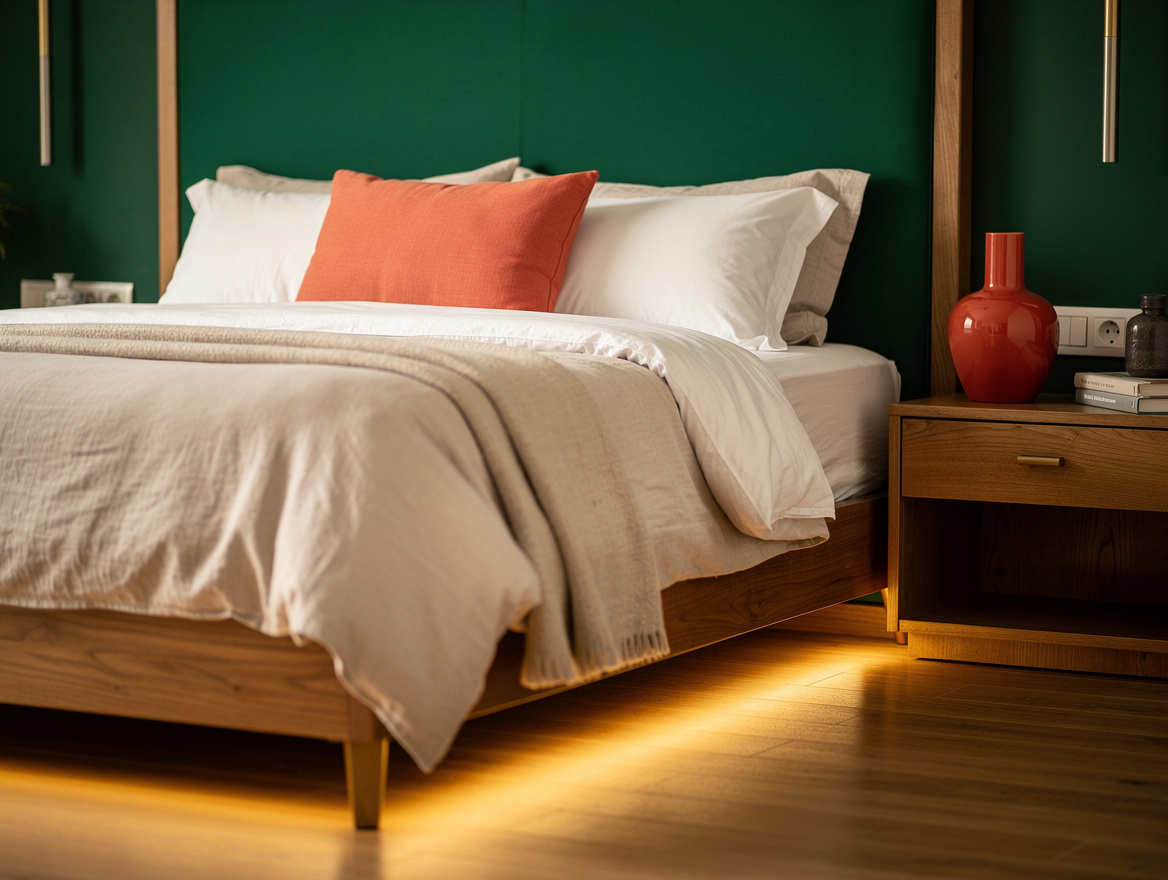
Clean the underside of the frame before applying an adhesive-backed light strip, then press it along the front edge so the LEDs shine onto the floor rather than directly into your eyes. A wood or fabric bed frame hides the strip especially well.
Finish the setup with a low brightness level and a short shutoff period. A matte black cable cover from Ace Hardware can keep the cord tidy, while a simple Walmart night-light is a sensible backup for guests or a second pathway.
Start by measuring the clearance, then choose warm light and place the sensor on your usual exit side. That small bit of planning keeps midnight visibility useful instead of turning the bedroom into a runway.
Mia Carter writes about small-space living and budget home makeovers. She has restyled three rentals and tests most ideas in her own 45 sqm flat.