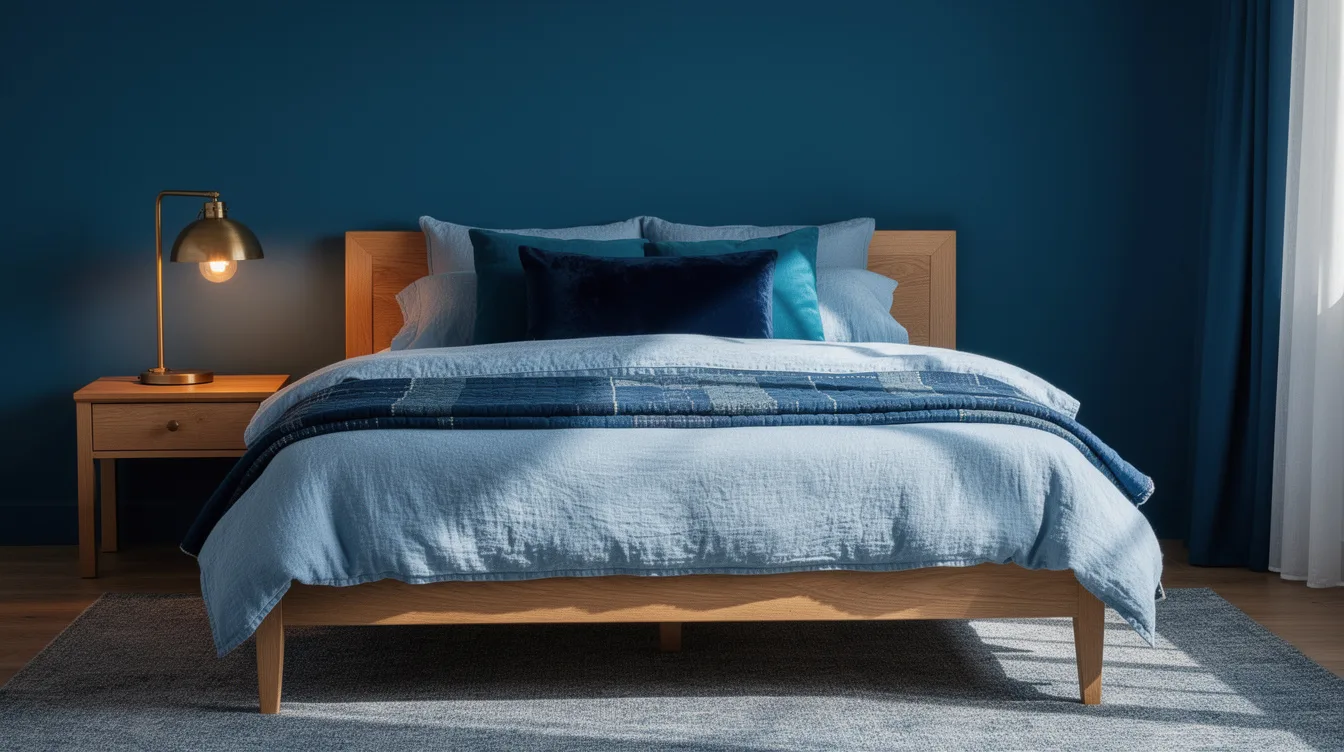
I thought one blue paint color, one blue duvet, and matching curtains would make my 10-by-12-foot bedroom feel calm. Instead, it looked oddly flat by lunchtime.
The room changed when I treated blue as a family of values, from misty walls to an inky accent, and gave every layer a different texture.
Start With a Misted Blue Envelope
I chose a gray-leaning, dusty blue in matte paint for the walls because it softened daylight instead of turning the room into a navy box. A muted base works across four walls far better than a highly saturated blue.
Keep the wall color lighter than the bed by roughly two to four visual steps. That small gap is what lets the bedding read as intentional rather than matched straight from a display floor.
For a typical bedroom, buy sample pots at Home Depot before committing. Blue shifts dramatically beside warm bulbs, oak flooring, and ivory sheets.
Build the Bed in Three Blue Values
My bed needed a clear hierarchy: a faded-blue duvet, a medium denim quilt, then one deep-indigo lumbar pillow. The darkest piece should draw your eye inward, not cover every surface.
A washed linen duvet gives the top layer a soft, imperfect finish that makes blue feel lived-in. I prefer unbleached ivory or mushroom sheets underneath because crisp white can make a cool blue room feel clinical.
For a queen bed, a typical Full/Queen duvet is around 90 by 92 inches. Check dimensions carefully at Target or Walmart, since an undersized duvet makes even good bedding look skimpy.
Add Crinkle Before Adding More Color
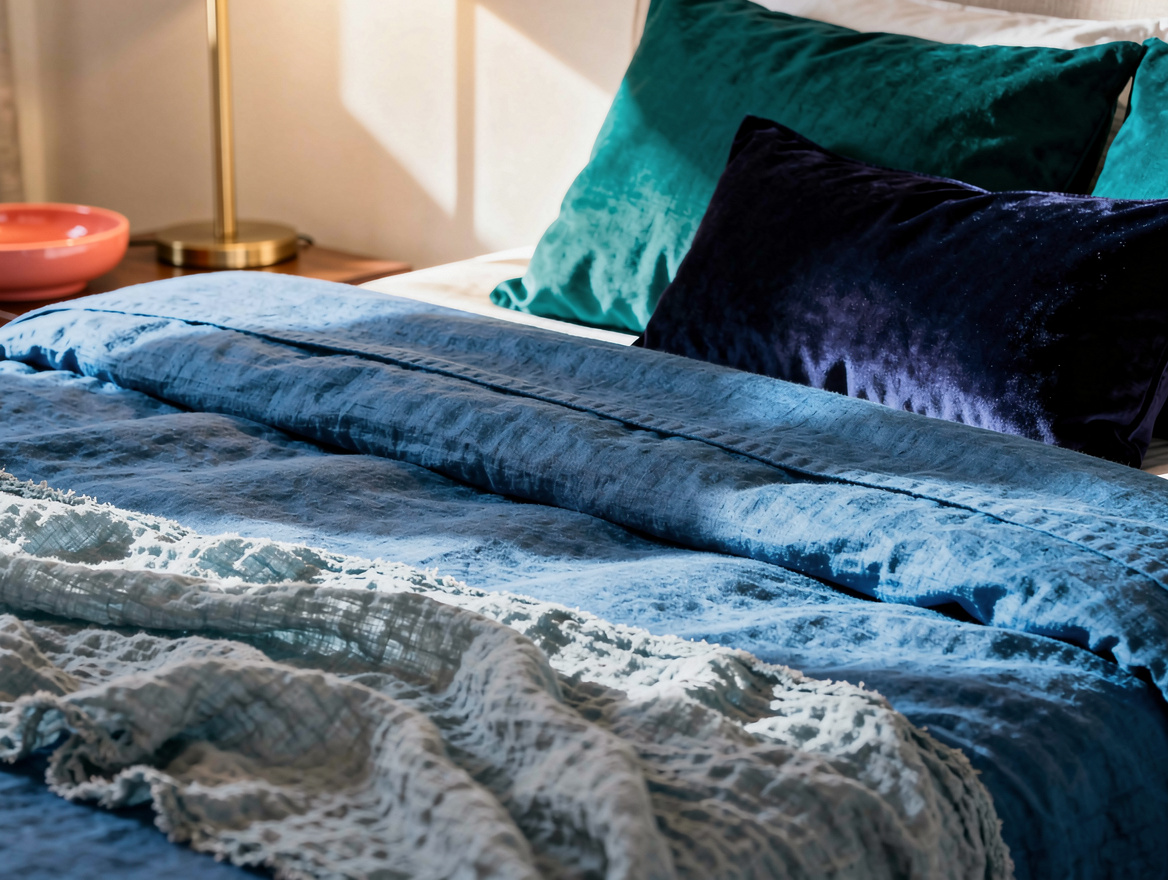
Identical smooth fabrics were my biggest mistake. A blue room needs surfaces that catch light differently, even when every shade stays within the same family.
I brought in a cotton gauze coverlet for its crinkle and shallow shadows, then kept the pillows simpler. It adds movement without the shine that can make tonal bedding feel overly polished.
Skip a pile of tiny decorative pillows. Two standard pillows, two larger shams, and one dark lumbar cushion give the bed enough structure for everyday use.
Anchor the Floor With Wooly Texture
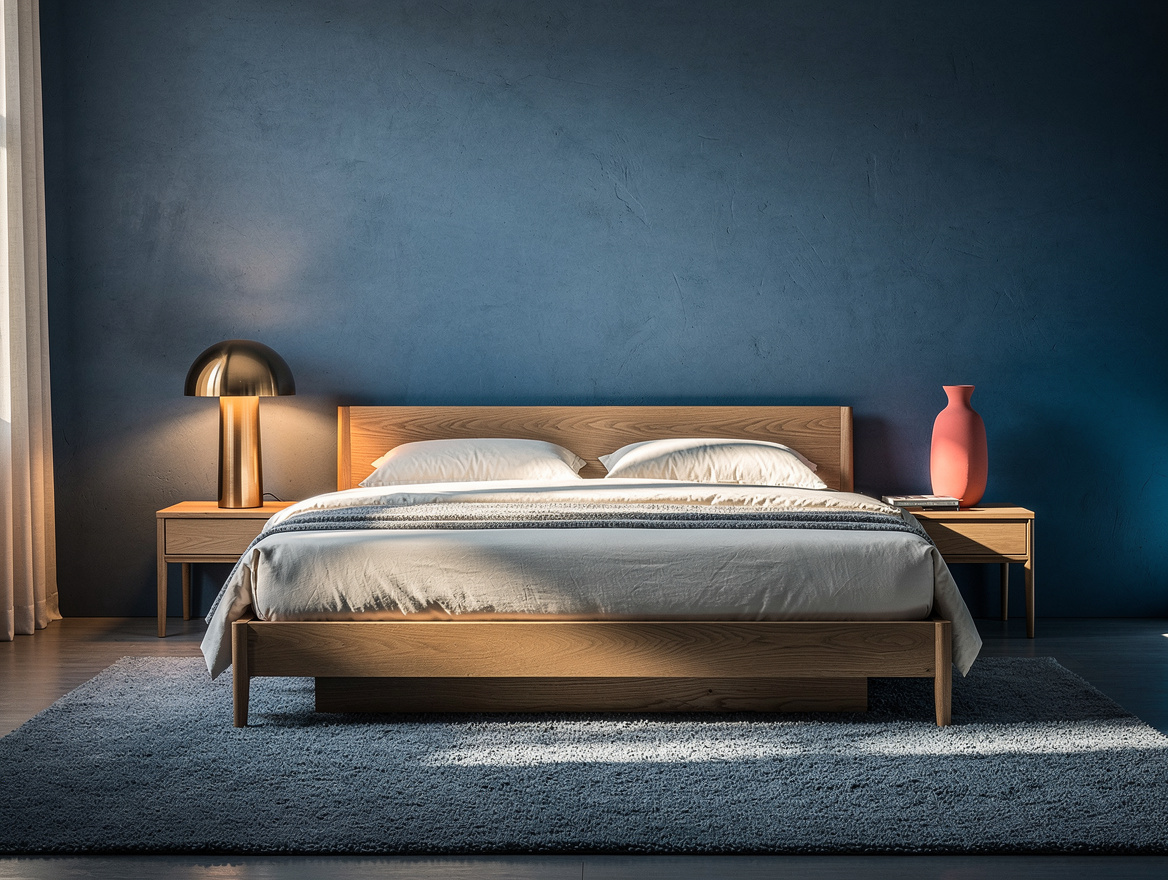
A blue rug is useful only when it has a noticeably different surface from the bedding. I like a muted blue-gray wool rug because it grounds the room while leaving the deep navy for smaller moments.
In a 10-by-12-foot room, a 6-by-9-foot rug usually gives a queen bed a convincing landing zone. Place the front two-thirds of the bed on it, with enough rug visible along both sides to feel intentional.
Look for low-contrast patterning at Wayfair or Amazon. Busy geometric rugs compete with tonal layers and make the color story feel less restful.
Use Deep Navy Like a Shadow
I stopped treating navy as the main event and used it as a visual shadow: one velvet cushion, a narrow frame, and a small lamp base. That 10 percent of depth makes the paler blues feel more dimensional.
A navy velvet accent absorbs light, which is exactly why it works beside matte walls and relaxed linen. One substantial piece has more impact than five little navy objects scattered around the room.
Choose either aged brass with gray-green blue, or nickel with a cleaner cool blue. Mixing every metal finish makes a monochromatic bedroom look undecided.
Let Wood Warm Up the Blue
Blue furniture would have pushed my room into theme territory, so I used an oak bed and a warm wood nightstand instead. The grain breaks up the cool field without interrupting the palette.
Natural oak, pale ash, and light walnut work especially well with mist, rain, and faded-denim blues. I would avoid glossy painted furniture here because it repeats the wall color without contributing texture.
A simple wood frame from IKEA keeps the room approachable, while a darker tobacco-toned leather detail can add weight near a blue-gray wall. Keep that leather limited to one chair or small bench.
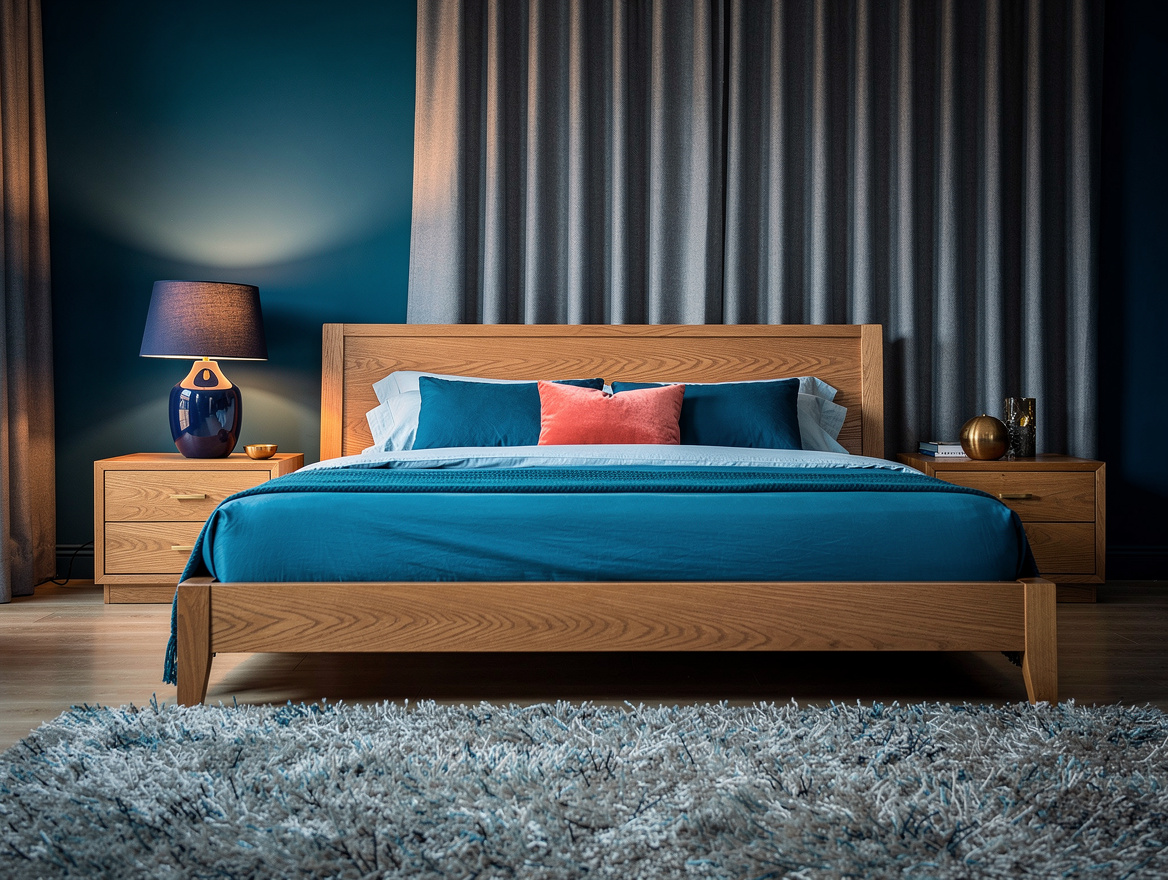
Begin with the wall and duvet, then add one darker navy element before buying anything else. If those three values feel distinct under your actual bedroom light, the rest of the tonal room will fall into place.
Mia Carter writes about small-space living and budget home makeovers. She has restyled three rentals and tests most ideas in her own 45 sqm flat.