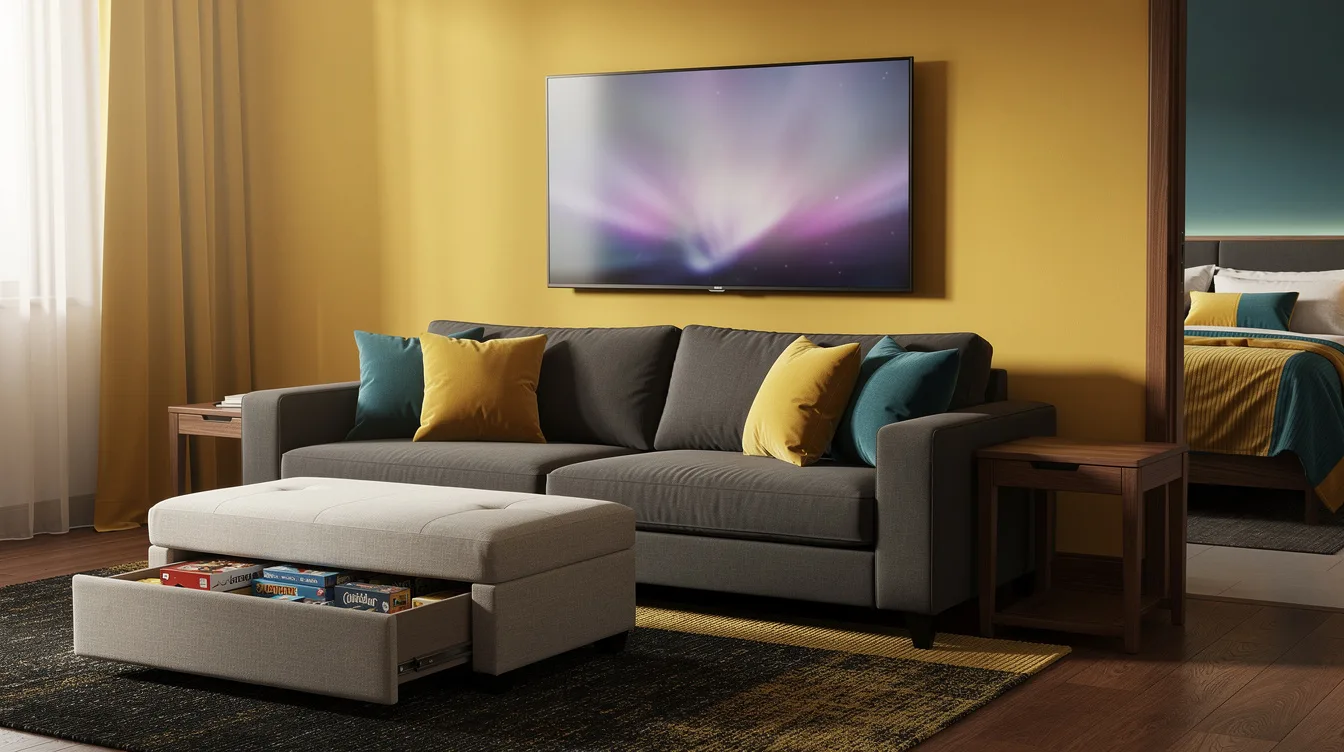
I plan a bedroom-adjacent game room around one dependable seat and one piece that can move when the night changes.
A KIVIK storage ottoman measures about 35⅜ × 27½ inches across, large enough to replace a small coffee table while still working as a guest seat or footrest.
The right choice depends on whether the room needs a central anchor, a shallow wall bench, or storage that can disappear into a longer furniture arrangement.
These are practical layouts built around advertised U.S. Products and prices, with comfort and clear walking space doing more work than decoration.
Start With a Supportive Main Seat
I start a bedroom-adjacent game room with a sofa or supportive chair, then let the storage ottoman handle the flexible jobs that change from one evening to the next.
That order matters because a comfortable main seat supports longer gaming sessions while the ottoman can become a guest seat, footrest, or quick place to stash card games.
In a room beside a bedroom, I also want the furniture to look intentional when the screen is off, so I avoid building the layout around a pile of floor cushions.
My simplest low-cost option is the SONGMICS MAZIE oval bench, listed at $55.99, with a roughly 43 × 15 × 15-inch footprint that can sit against a wall until guests arrive.
Center the KIVIK in a Small Lounge
For a small console lounge, I would place a compact sofa along one wall, the gaming screen opposite it, and one storage ottoman between them as the room’s movable center.
The IKEA KIVIK measures about 35⅜ × 27½ × 16⅞ inches, enough surface for resting feet without swallowing the walking path between the sofa and bedroom door.
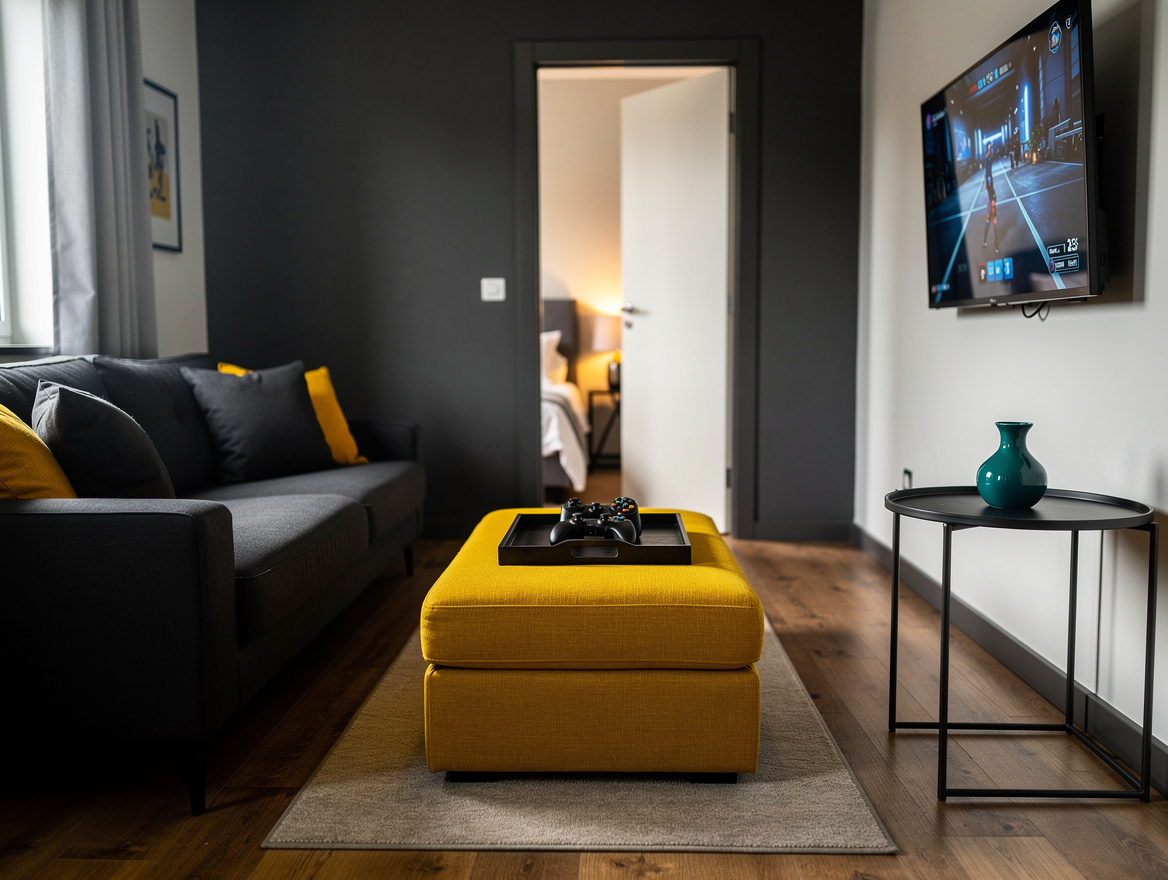
The Tibbleby beige/gray version is advertised at about $299, while the Gunnared beige version is about $349, giving the same storage-ottoman format two useful upholstery directions.
I would treat the KIVIK as a semi-permanent central piece rather than drag it through the doorway every night, especially because its large removable lid and substantial frame make it less nimble than a shallow bench.
Keep a Narrow Bench Against the Wall
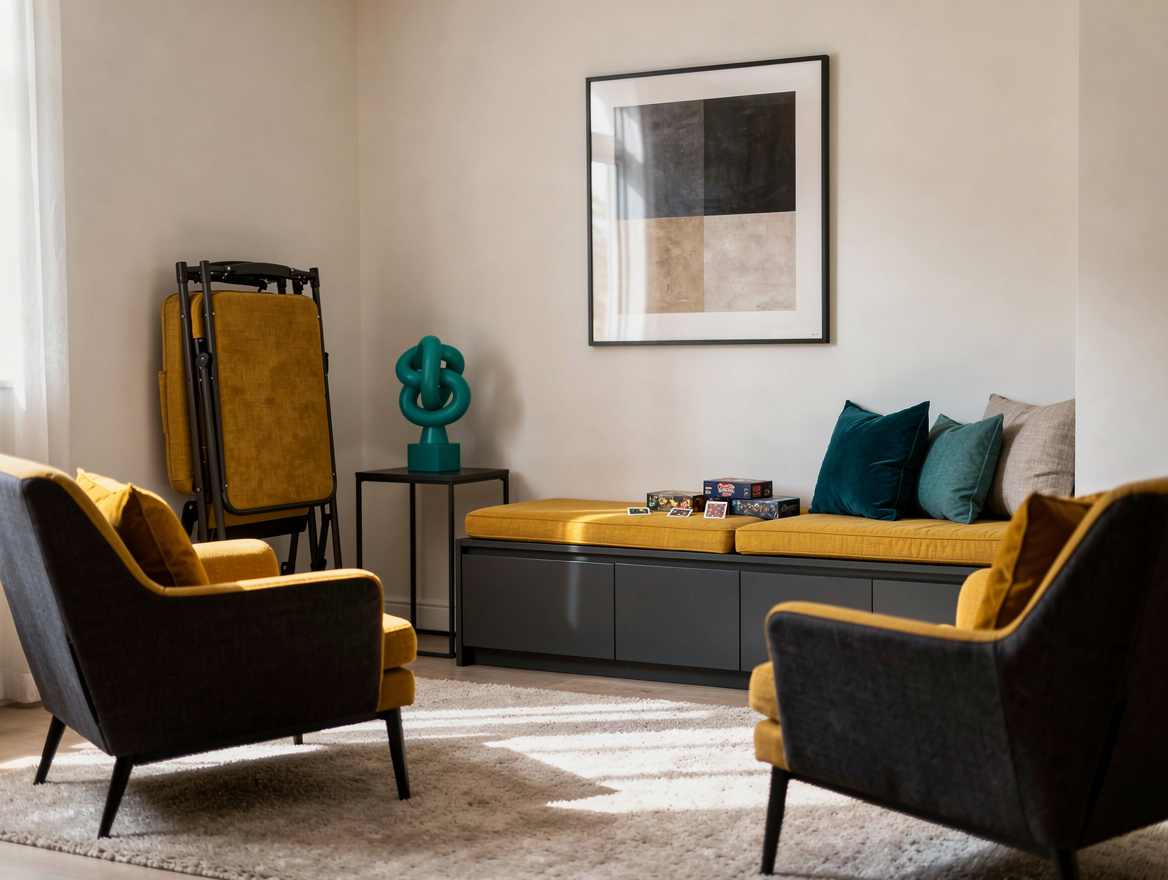
A narrow side room needs a different rhythm: two supportive gaming chairs face the screen, the center stays open, and a storage bench waits along the side wall.
The cream white SONGMICS MAZIE works well for that arrangement because its roughly 15-inch depth leaves more room for a temporary game table, a clear aisle, or a chair pulled forward for company.
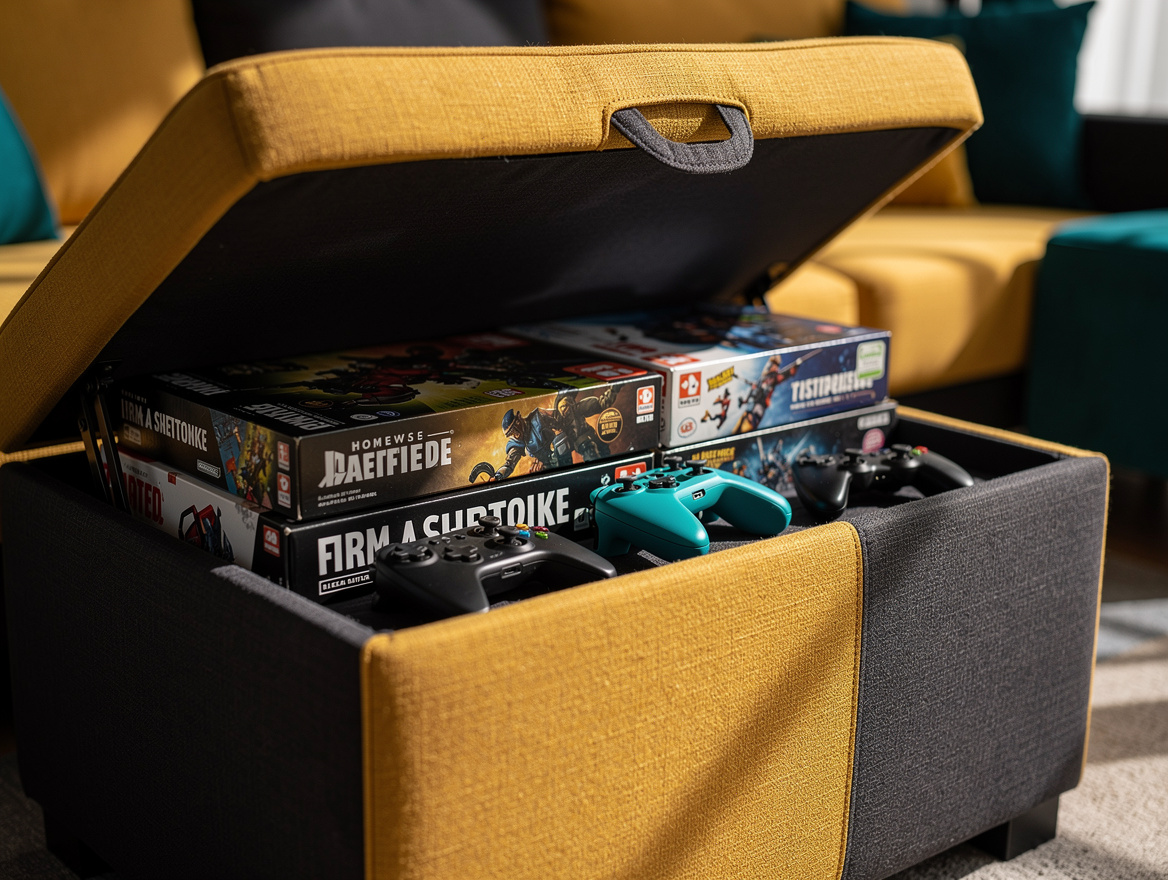
I would use its hidden storage for controllers, decks of cards, and smaller boxed games, keeping the lid easy to reach without placing it under the screen.
Its velvet upholstery makes the bench feel softer than a utility bin, but I would keep expectations practical: this is the inexpensive, movable option, not the piece that anchors the entire room.
Give the Transition Room a Real Bench
When the game room sits between a bedroom and a larger living area, I prefer a furniture-like bench along the longest uninterrupted wall, with the main chair or sofa angled toward the screen.
The slate gray Simpli Home Avalon Extra Large is about 53.9 × 18.1 × 16.5 inches and is advertised at $249, giving the transition space a stronger visual anchor than a small ottoman.
Its polyester linen-look fabric, solid and engineered wood frame, high-density foam, and safety-hinged lid make it suited to regular seating and concealed storage.
The manufacturer lists a total capacity of about 250 pounds, but I would still use it as a bench for ordinary sitting rather than invite rough play on the lid.
Match the Upholstery to the Bedroom
Because the room is adjacent to a bedroom, I would repeat one nearby color or texture instead of trying to make the game area look like a separate showroom.
A machine-washable polyester cover on the IKEA KIVIK is useful in a snack-heavy room, and the removable cover gives the ottoman a practical advantage over delicate accent seating.
For a warmer bedroom connection, the Gunnared beige option can echo bedding or curtains without forcing every piece to match, while Tibbleby beige/gray keeps the palette quieter.
Inside the bench, I would assign one fabric bin to controllers and another to tabletop games, leaving the top clear for feet or a guest seat instead of turning it into permanent clutter.
Protect the Open Floor for Game Nights
The best flexible layout leaves enough open floor for people to shift seats, spread out a board, or move from the bedroom side of the room without bumping into the screen console.
I would place a small side table beside the sofa for drinks, then keep the polyurethane foam ottoman surface available for feet rather than crowding it with lamps and decorative trays.
A central KIVIK suits a compact lounge, a MAZIE suits a narrow room, and the Avalon suits a longer wall where storage needs to look like part of the furniture.
That distinction is my strongest planning rule: choose the ottoman’s job before choosing its color, because a pretty piece in the wrong traffic lane quickly becomes an obstacle.
Start by marking the main seat and the bedroom doorway on the floor, then test the ottoman in the remaining space before buying it.
That five-minute trial will tell you whether you need a central KIVIK, a narrow MAZIE, or the larger Avalon bench with room to spare.
Mia Carter writes about small-space living and budget home makeovers. She has restyled three rentals and tests most ideas in her own 45 sqm flat.