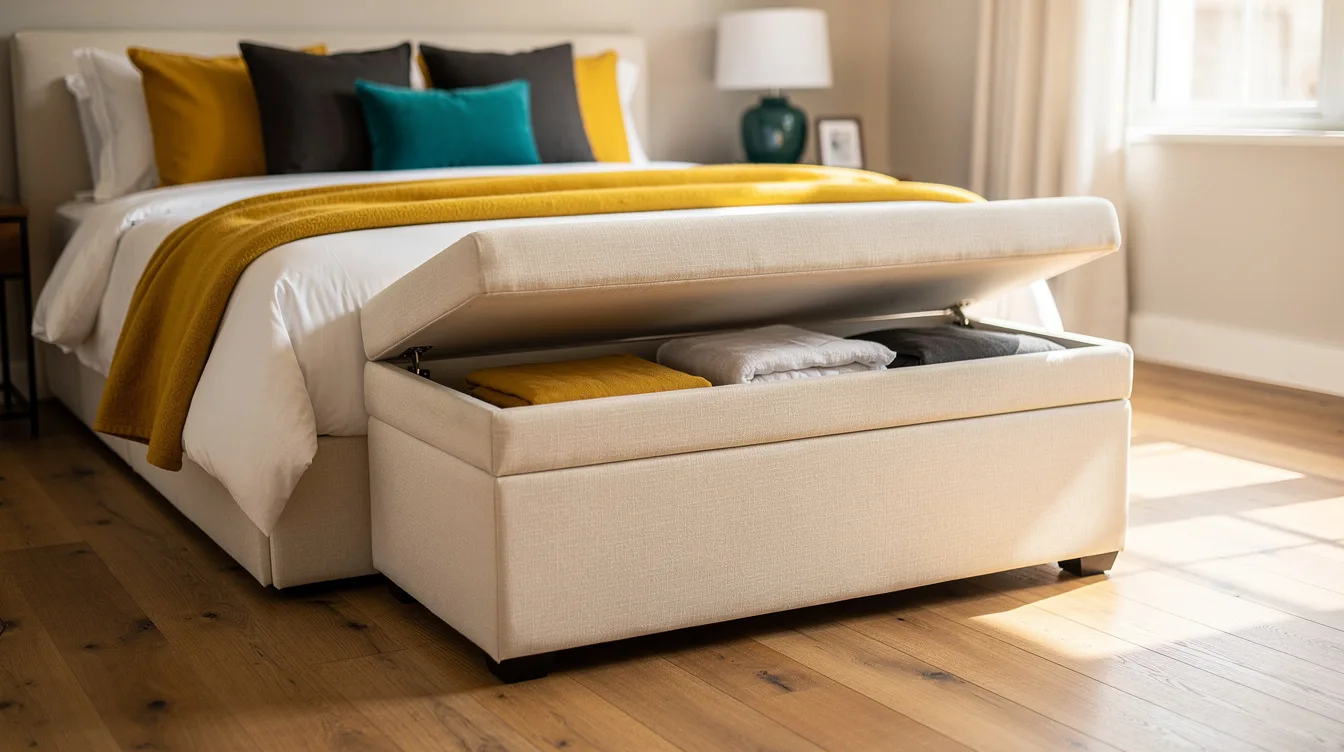
My spare duvet cover used to live in a lumpy under-bed bag that jammed every time I needed fresh sheets. A bench-style storage ottoman, roughly 48 to 63 inches wide, gives those linens a proper home without taking over the bedroom.
The key is choosing storage that holds a real bedding rotation, then giving it enough breathing room to look intentional.
Measure the Foot of the Bed First
A shallow upholstered storage bench is the most useful format for spare sheets, pillowcases, and a lightweight blanket. Look for a piece roughly 16 to 20 inches deep and 17 to 19 inches high, proportions that feel substantial without turning the end of the bed into an obstacle.
Leave about 24 to 30 inches between the bench and opposing furniture, and roughly 36 inches in a frequent pass-through. That clearance matters more than squeezing in a wider ottoman, because a bedroom should still feel easy to move through when the lid is open.
Choose a Hinged Bench for Full Bedding Sets
A hinged lid wins for the bedding most people actually need to hide: two folded sheet sets, pillowcases, and a light duvet cover. A 48-inch bench can suit the foot of a queen bed, while a longer 63-inch version has room for seasonal layers and spare pillows.
Skip tiny decorative cubes if your goal is full linen storage. They look charming beside a chair, but they make you fold a fitted sheet into a miserable little parcel, and no one wants that chore on laundry day.
Use Square Ottomans Only in Spacious Rooms
A large square upholstered ottoman, around 36 to 48 inches wide and deep, can swallow a generous amount of bedding. It also works with a tray on top for a book, water glass, or late-night tea, which makes it useful in a larger bedroom or sitting area.
Its footprint is the catch. In a narrow room, a square ottoman sits too far into the walking path and reads more like living-room furniture than a calm bedroom finish.
Reserve Round Ottomans for Light Overflow
A round storage ottoman, typically about 24 to 32 inches across, is better for one folded sheet set, pillow inserts, or a throw. Place one beside a reading chair or near a dressing table, where its softer shape breaks up a room full of rectangles.
Choose performance linen or a tightly woven fabric if it will double as a seat. The relaxed texture works especially well with oak, painted nightstands, and cotton bedding, while hiding everyday scuffs better than smooth upholstery.
Match the Fabric to Real Household Use
Bouclé gives a bedroom a warm, plush look, especially beside cream bedding and pale wood, but it can snag with pets or rough daily use. It is a better choice for a low-traffic guest room than for the ottoman everyone drops laundry on.
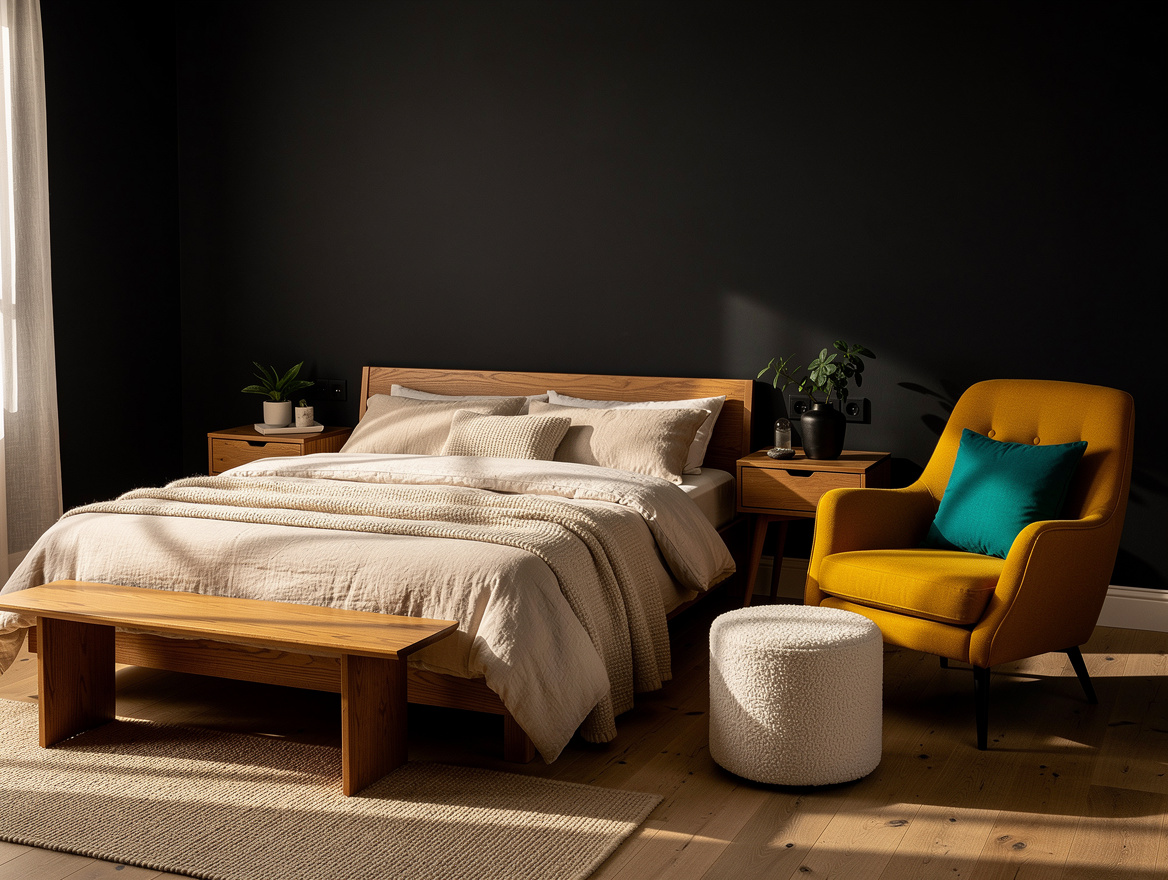
Velvet has more presence and suits a moodier bedroom in deep olive, tobacco, charcoal, or navy. Pick a hinged-lid design rather than a loose cushion, because the storage needs to be simple enough that you will actually put clean linens away.
Make the Interior Easy to Maintain
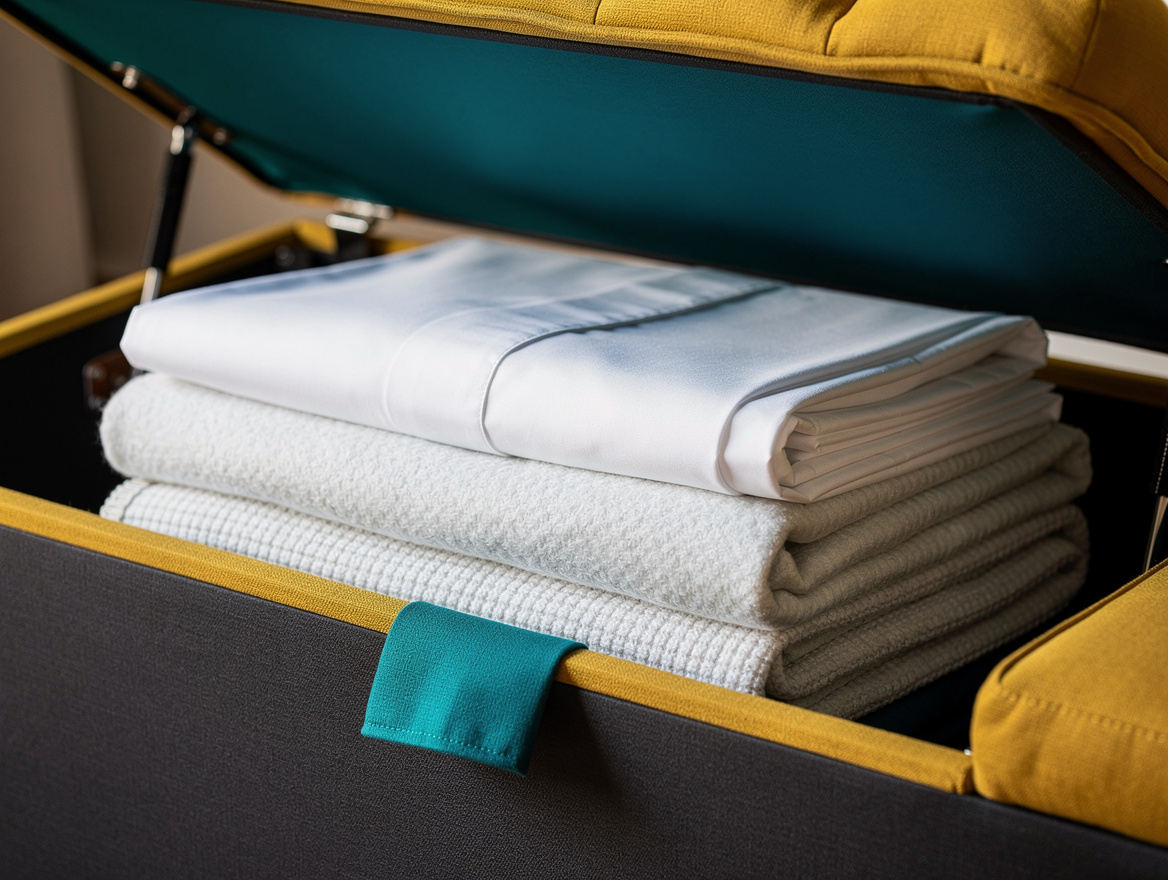
Line the compartment with a washable cotton storage bag or use two soft fabric bins to separate sheets from pillowcases. A cedar sachet is fine for a subtle clean-linen scent, but avoid heavily perfumed products that can cling to bedding.
For a budget-minded small-space option, an Ebern Designs-style cube ottoman with roughly 22 liters of storage is useful for pillowcases and a spare fitted sheet, not winter bedding. If you are shopping at Target, Walmart, Wayfair, or Amazon, check interior dimensions before buying, since exterior padding can steal more room than expected.
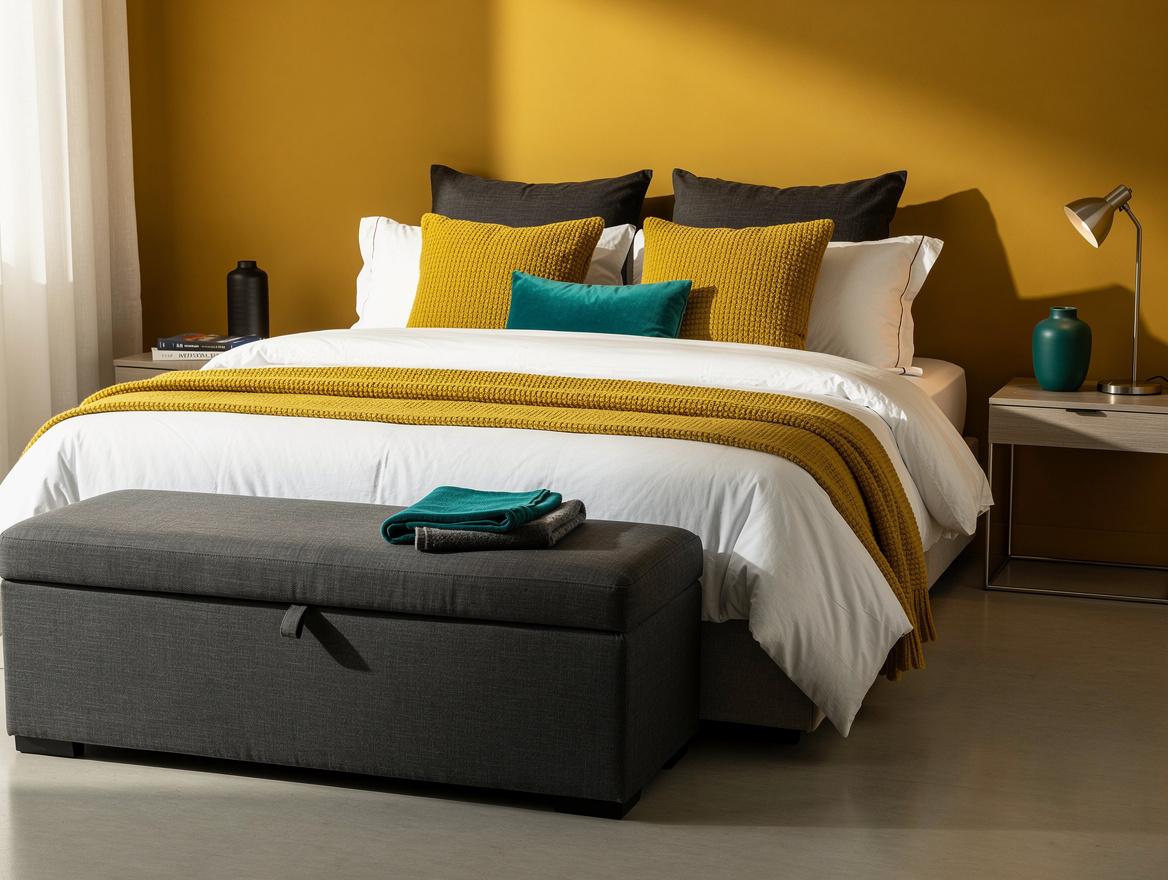
Start with the sheet set you reach for most often, fold it once, and measure that bundle before ordering an ottoman. A long, shallow bench with a hinged lid is usually the cleanest answer for keeping bedroom linens close but out of sight.
Mia Carter writes about small-space living and budget home makeovers. She has restyled three rentals and tests most ideas in her own 45 sqm flat.