
The duvet looked perfect on the store bed, then swallowed the room at home. In a typical 10-by-12-foot bedroom, patterned bedding can occupy more visual space than the walls, so paint has to support the fabric instead of starting a second argument.
The reliable approach begins with undertones, contrast, and the pattern’s quietest color. Once those choices are settled, the room feels layered rather than crowded.
Start With the Bedding’s Quietest Color
Pull one soft background shade from the bedding before you study its brightest detail. A small bedroom usually feels calmer when the walls echo the pattern’s least demanding color, such as warm ivory from a floral coverlet or muted blue from a striped duvet.
Lay the bedding flat beside paint cards from Home Depot and compare them in morning light, afternoon light, and lamplight. The closest match often looks slightly dull on the card, which is exactly why it works across the whole room.
Designers tend to reject the most obvious color in a pattern for the walls. A vivid coral flower may look charming on fabric, but covering every wall in coral can make the bed feel visually heavy.
Match Warm Undertones Before Hue
Color families behave better when their undertones agree. A cream-based quilt wants walls with yellow, beige, or red warmth, while a crisp white cover with gray-blue checks usually needs a cooler wall color such as misty gray.
Hold the fabric against large samples from Lowe’s, then cover the surrounding furniture with a white sheet. This removes visual noise and makes the undertone easier to spot.
Watch the trim, too. Bright white trim can make a warm wall look more yellow, while soft white trim gives earthy bedding a gentler edge. That small relationship often matters more than the color name printed on the paint card.
Control Contrast Around the Bed
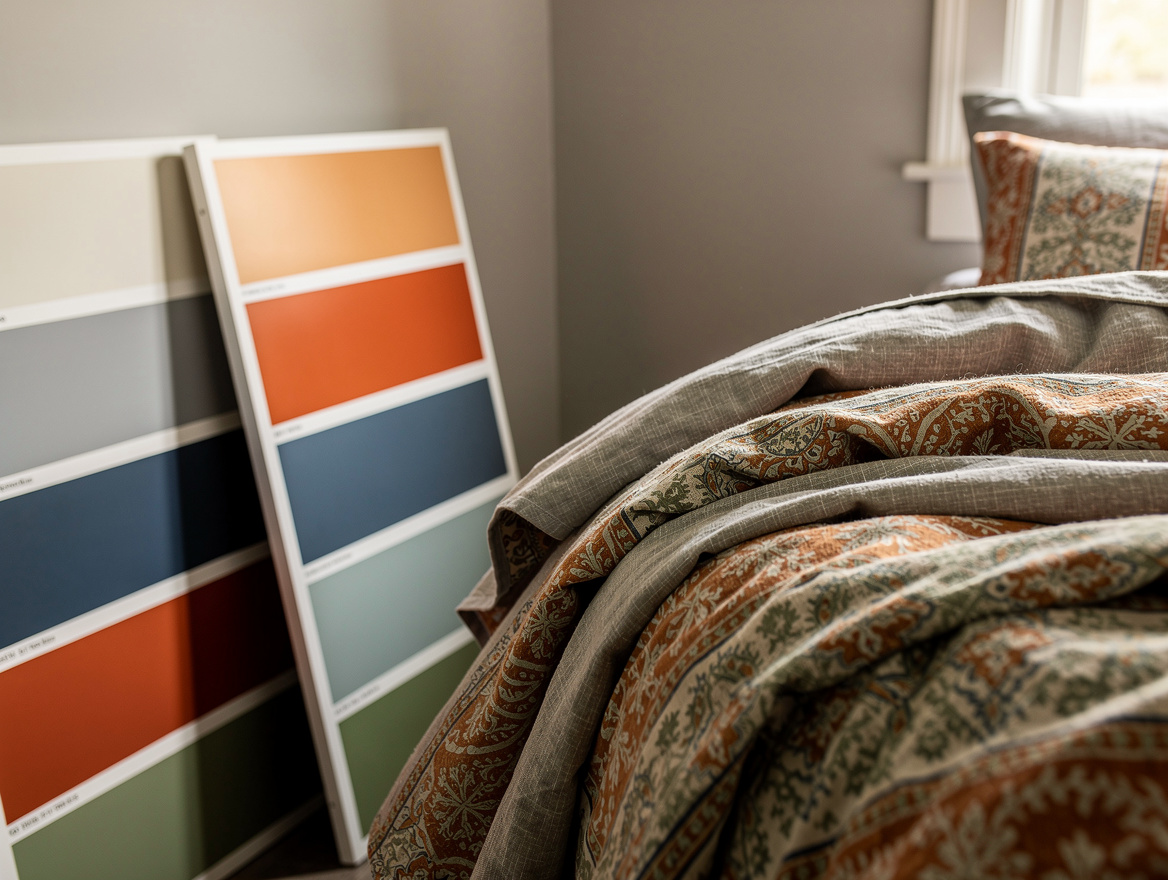
Patterned bedding already creates movement, so the wall color should decide how much energy the room can handle. A navy-and-white geometric duvet pairs beautifully with soft sand walls when the goal is relaxed, but a deep navy wall creates a more dramatic bedroom.
Use a simple contrast test: place the bedding against the wall sample and step back several feet. If your eye lands on the wall first, the paint is competing with the bed.
For a layered look, keep the headboard quieter than the bedding. A natural wood frame from Wayfair can bridge a patterned quilt and a painted wall without adding another strong shape.
Repeat One Color Beyond the Sheets
A bedroom feels intentional when one bedding color appears somewhere below eye level. Repeat the pattern’s muted green in a ceramic lamp, a small bench cushion, or a narrow rug rather than adding another large printed piece.
For example, a botanical duvet with sage green leaves can meet walls in a warm white and a simple oak nightstand. The color repetition links the bed to the rest of the room without making every object match.
IKEA is useful for inexpensive wood frames, cotton curtains, and plain storage baskets that support the bedding instead of fighting it. Keep the supporting pieces solid when the duvet carries the main pattern.

Use Sample Boards Before Painting
Paint looks different beside walnut, brass, black metal, and pale oak, so test the complete combination before committing. Tape a large sample of dusty rose beside the headboard, nightstand, curtain, and a folded corner of the bedding.
Move the board around the room for at least one full day. A shade that feels soft beside a sunny window may turn muddy beside a shaded wall, especially when the bedding includes brown, plum, or rust.
Sample pots from Home Depot are a small expense compared with repainting a full bedroom. Use two coats on the board, because one thin coat can make a color appear lighter and less settled than it will look on the wall.
Let the Ceiling Finish the Color Story
The ceiling and trim can either calm patterned bedding or sharpen it. A bedroom with a busy navy floral bedspread often benefits from soft white trim and ceiling, while a quiet striped set can handle a ceiling color pulled from the fabric.
Keep the ceiling slightly lighter than the walls when the room has a low ceiling or limited daylight. The difference should feel gentle, not like a hard border around the room.
For a more enclosed bedroom, carry the wall color across the trim and choose bedding with one pale accent to keep the effect comfortable. A simple cotton duvet from Target can provide that lighter note without introducing another pattern.

Begin with one large paint sample beside the headboard and leave it there through a full day of changing light. Choose the color that lets the bedding remain the room’s main character, then repeat one small fabric shade in a lamp, rug, or curtain.
Mia Carter writes about small-space living and budget home makeovers. She has restyled three rentals and tests most ideas in her own 45 sqm flat.