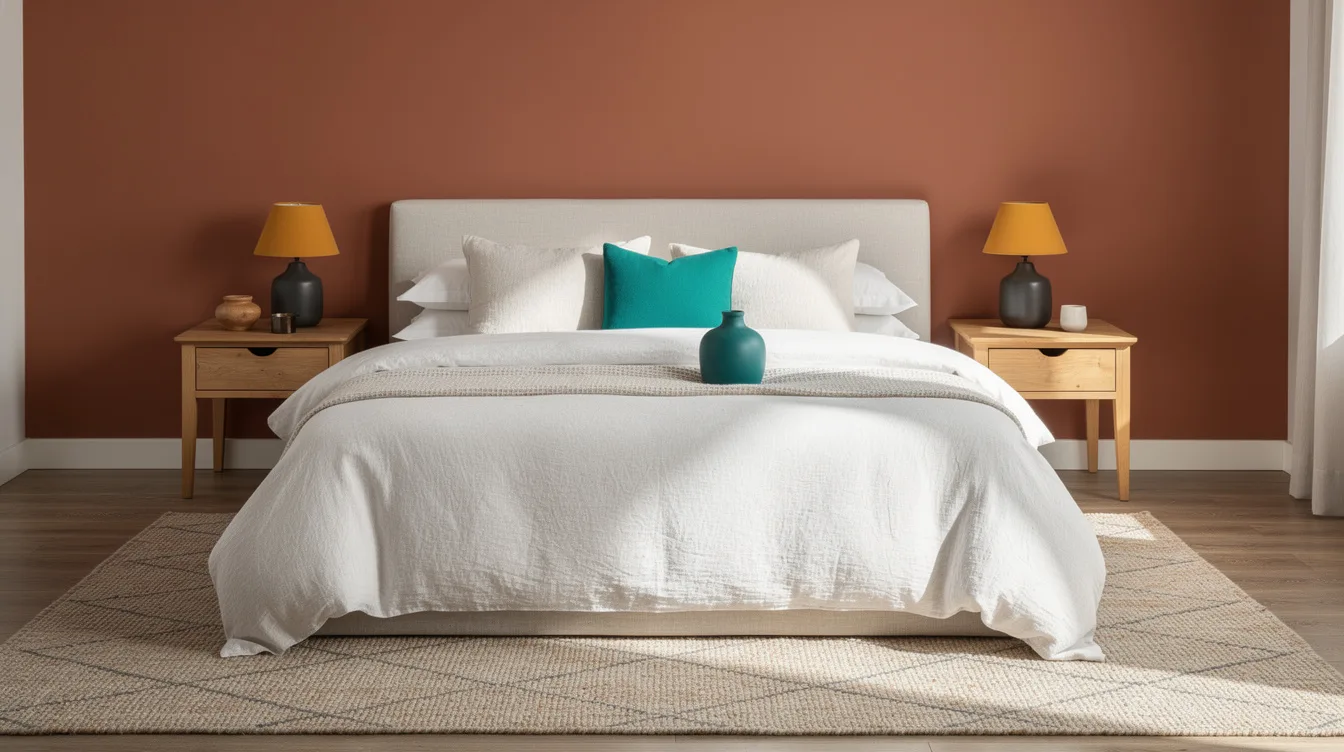
A guest room with a queen bed can feel finished before it feels welcoming. Start with a colorful wall behind a simple frame, then use quieter bedding and furniture to keep the room easy on the eyes.
With a bed that measures about 63 inches wide, the wall has enough presence to shape the entire room. The strongest schemes use terracotta paint, muted teal, or blue botanical wallpaper, then let texture and empty space do the rest.
Center the Color Behind the Queen Bed
A colorful accent wall works best directly behind the bed, where it creates a clear focal point as guests enter. Terracotta, muted teal, and blue botanical wallpaper all bring personality without forcing every other surface to compete.
Keep the remaining walls warm white and let the colored wall carry the room’s strongest visual weight. That restraint makes a 63-inch-wide bed feel intentional rather than oversized.
A queen bed with a simple silhouette gives the wall room to breathe, especially when the headboard rises only about 36 inches. I prefer a low-profile frame here because ornate furniture makes a patterned or saturated wall feel crowded.
Place the bed on the longest uninterrupted wall, then check its alignment from the doorway. A centered bed looks finished before the pillows, art, or lamps arrive.
Quiet the Bedding Around the Wall
Use cotton-linen bedding in cream, ivory, or soft white to calm a terracotta or teal backdrop. The fabric adds texture while keeping the bed visually quieter than the wall.
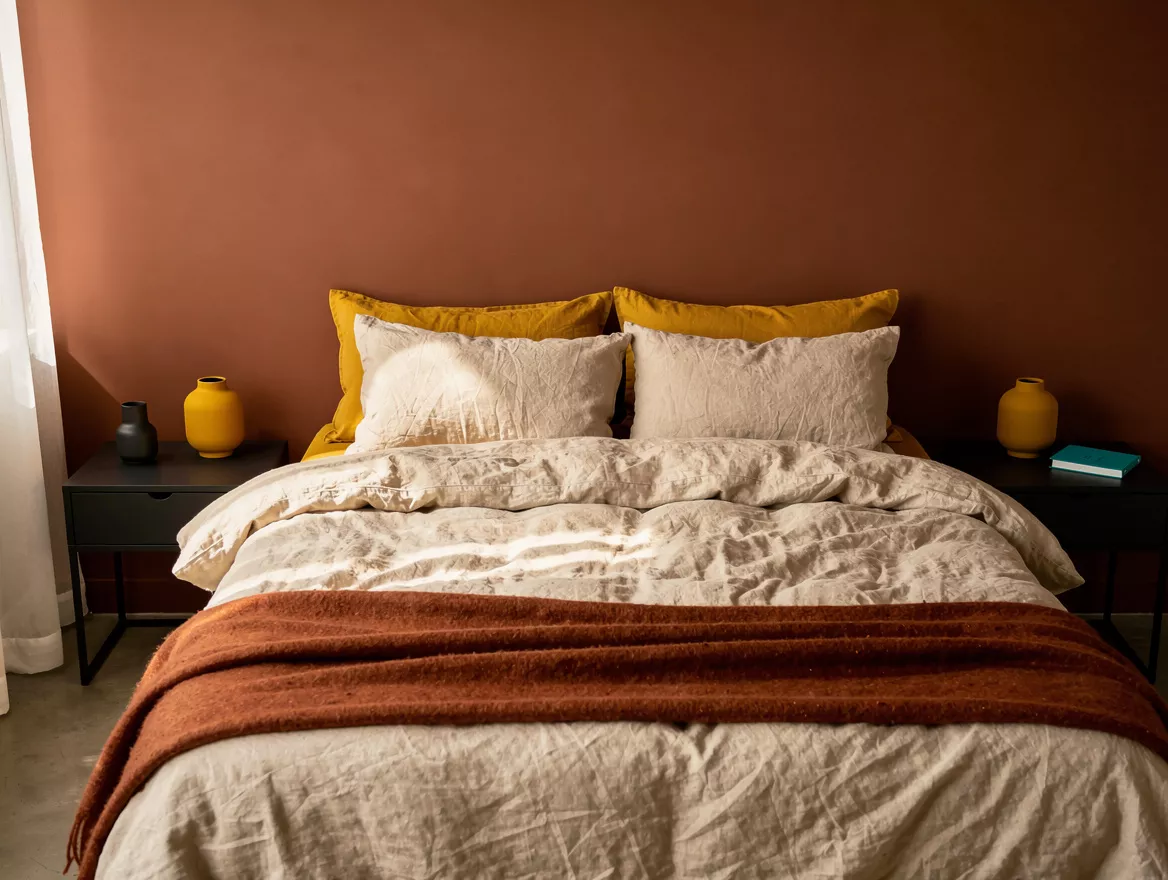
Skip a large quilt pattern when the accent wall already has movement. One rust, tobacco, navy, or ochre throw is enough to connect the bed to the paint without repeating the entire color story.
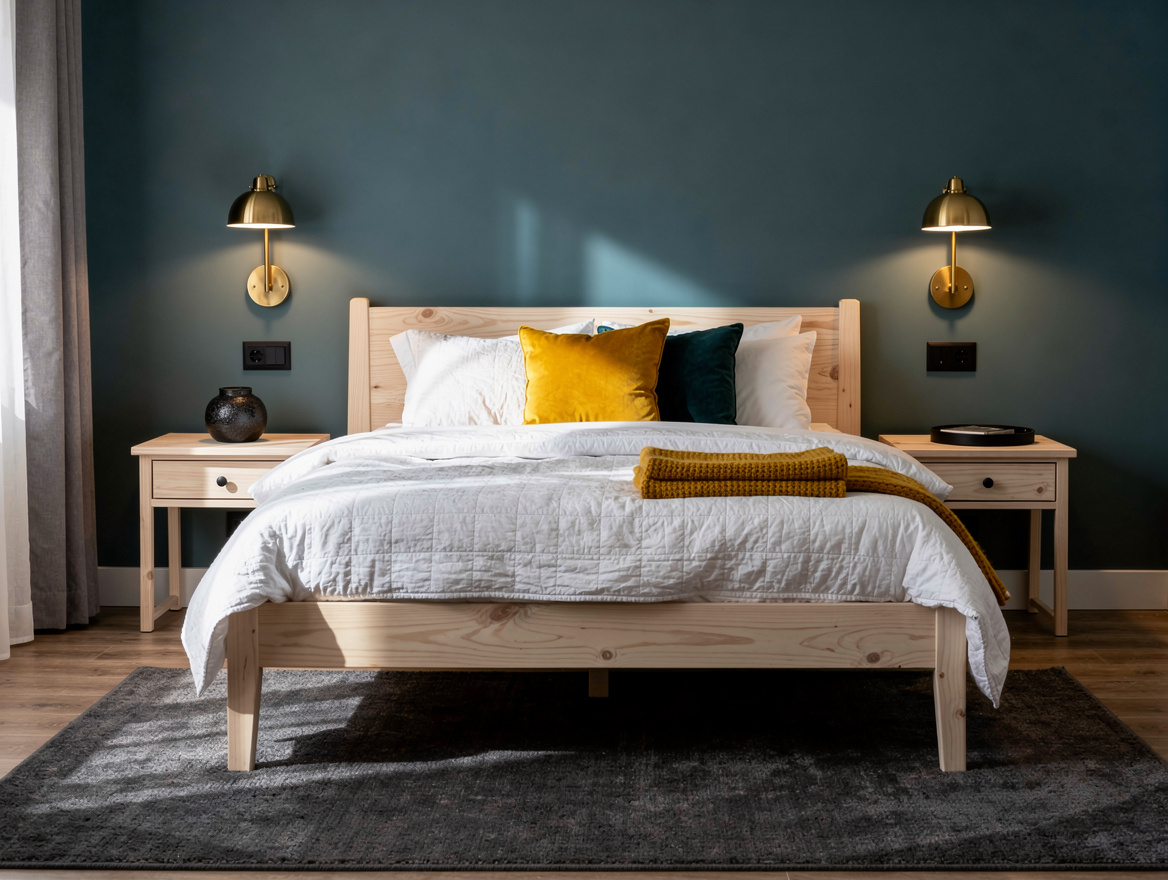
A muted teal wall pairs especially well with pale wood, warm white, and a narrow stripe. The room should feel relaxed enough for guests to unpack, read, and sleep without decoding a complicated palette.
Choose ivory curtains in a plain weave and hang them close to the ceiling when the layout allows. Pattern belongs on one major surface, while the window treatment should soften light rather than announce itself.
Scale the Frame Before Adding Furniture
The IKEA TARVA queen frame is a practical reference point because its solid-pine version measures roughly 63 inches wide by 82 1/4 inches long. The frame with slats is listed at about $199 before tax and delivery, while the mattress remains separate.
A frame-only TARVA version has been listed around $149, so confirm whether slats are included before comparing prices. That small detail changes the real project allowance and can affect how quickly the room becomes usable.
Keep nightstands around 16 to 20 inches wide and roughly 12 to 16 inches deep, leaving enough clearance for doors and walking paths. Oversized bedside tables make a guest room feel more like a storage room than a restful landing place.
Natural pine is my favorite budget finish for a terracotta wall because it adds warmth without introducing another strong color. With teal, pale wood or a white-stained frame feels fresher and keeps the room from drifting toward a beach-house theme.
Let Wallpaper Carry the Pattern
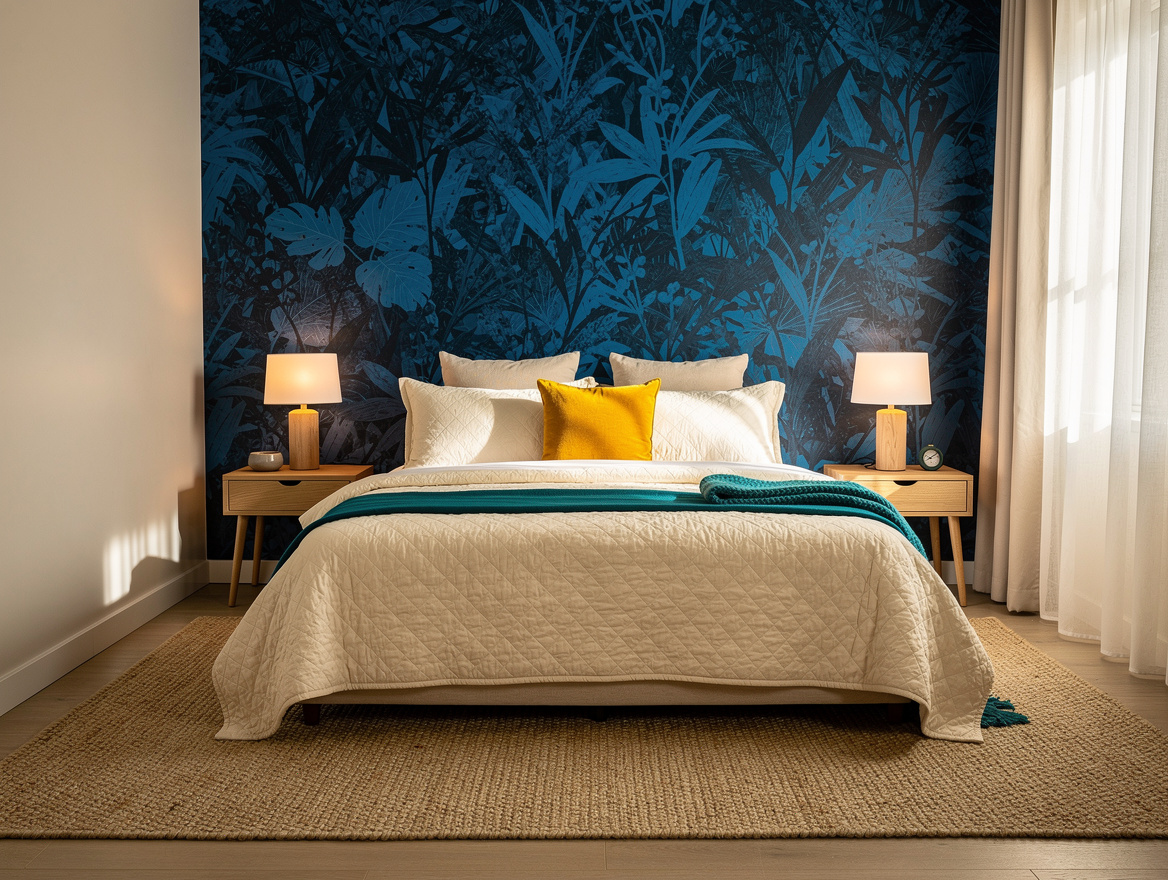
Blue botanical wallpaper can replace most decorative art behind the bed, which makes it useful in a small guest room. The pattern supplies depth and interest while the furniture stays straightforward.
Choose a design with a quiet background and a limited range of leaf colors. Large, high-contrast botanicals can overwhelm a queen bed, especially when the room has a narrow walkway on either side.
Pair the paper with cream bedding, pale wood, and one solid accent cushion. This combination lets the wall feel considered without turning every textile into a second focal point.
Wallpaper usually costs more than a single painted wall, but it adds pattern without requiring much additional art. A painted wall may allow about $50 to $120 in DIY materials, while professional work can run roughly $250 to $600 for a benchmark 12-by-9-foot wall.
Repeat One Accent Tone With Discipline
Repeat the wall color once in a single cushion, folded throw, or small ceramic vessel. That echo helps the palette feel connected, while repeating the shade across every accessory makes the room look staged.
With terracotta paint, choose tobacco, rust, or muted clay in a small dose rather than another bright orange. The best color match is usually a related tone with less saturation.
Use aged-brass hardware when the wall leans warm and black metal when the wall is blue or teal. Two small reading lights are enough beside the bed, and both should have shades that direct light downward.
For a botanical wall, let the furniture stay pale and the metal stay simple. I would rather see one convincing material repeated twice than a collection of unrelated finishes gathered for decoration.
Build a Landing Zone for Overnight Guests
Place an IKEA LOHALS rug, roughly 6 feet 7 inches by 9 feet 10 inches, under the bed so guests step onto something soft on both sides. Its listed regular price is about $180 before tax and delivery, making it a useful planning benchmark.
Set the rug far enough beneath the frame to anchor the bed without blocking doors. A natural weave works especially well with pine, cream textiles, and a warm painted wall.
Add a small white oak tray or simple wood surface for a glass of water, a lamp, and a phone. Keep the top mostly clear because usable space feels more welcoming than a crowded display.
Finish with a cotton towel, two empty hangers, and one open basket for extra bedding. These practical gestures matter more than another decorative object, particularly when the colorful wall already gives the room its personality.
Choose the wall treatment first, then buy the bed and rug around its color and scale. A calm bed, clear walkway, and one useful guest detail will make the room ready long before more decoration is needed.
Mia Carter writes about small-space living and budget home makeovers. She has restyled three rentals and tests most ideas in her own 45 sqm flat.