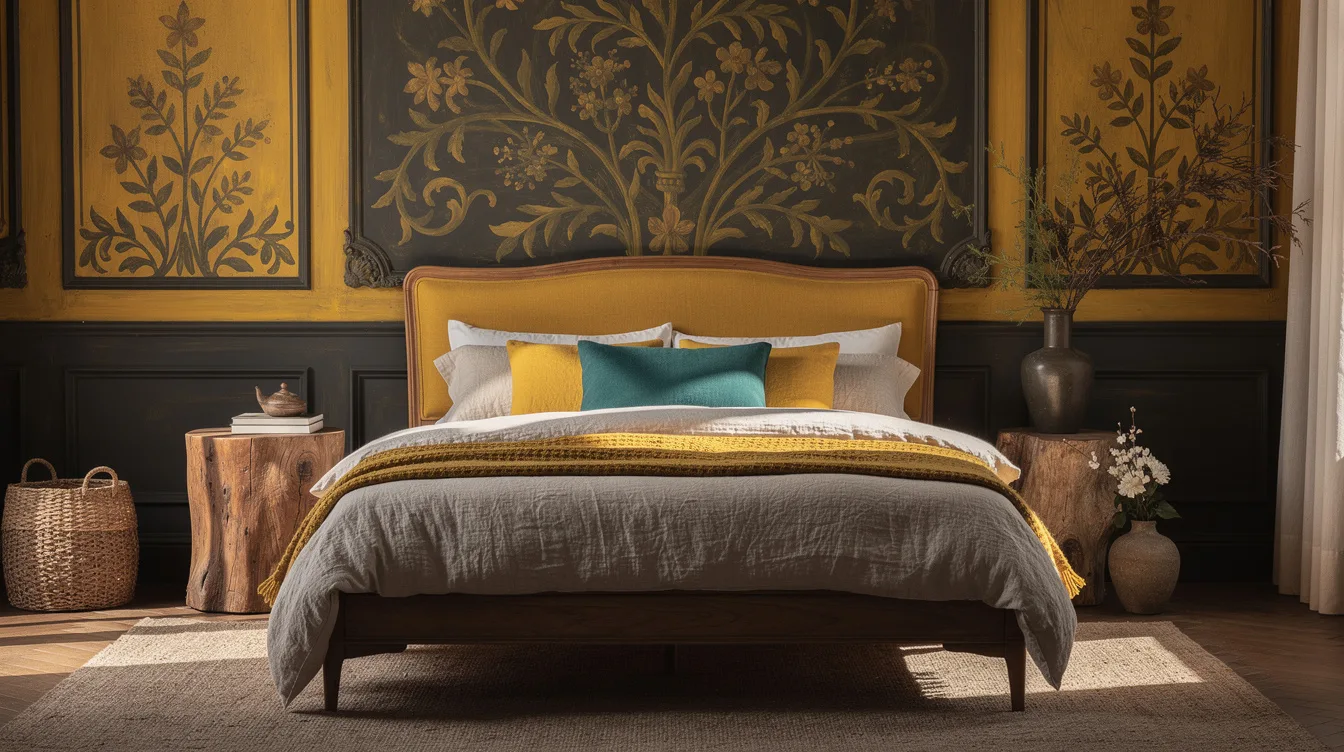
An artisanal bedroom can lose its charm when every surface competes for attention. With about five collected furnishings, a hand-painted detail, and one bed at the center, the room needs editing as much as it needs character.
The goal is a space that feels assembled through living, not ordered in one afternoon. That means choosing a few materials with history, then giving each one enough room to speak.
Designers tend to trust contrast, restraint, and useful beauty here. The best rooms allow an old dresser, a fresh painted mark, and an ordinary bedside lamp to share the same story.
Let One Hand-Painted Detail Lead
Start with one deliberate focal point, such as a hand-painted wall border behind the headboard. Keep the rest of the room quieter so the brushwork feels collected over time instead of scattered across every surface.
A gallon of interior paint typically costs about $40 to $60 at Home Depot, which makes color the smartest place to spend first. Choose a shade that appears in the furniture or artwork, then repeat it once in a smaller object.
Skip perfect symmetry around the painted detail. Slight variation in line width and spacing gives the room a human hand, while a clean ceiling line keeps the result intentional.
Build Around Collected Furniture
Give the bedroom one substantial anchor, perhaps a vintage oak dresser with visible knots, worn pulls, and a finish that has softened at the edges. Its age should influence the rest of the room without forcing every piece to look old.
A simple IKEA pine nightstand can sit comfortably beside a heavier antique piece when both share a warm wood tone. The contrast keeps the room useful and relaxed, rather than turning it into a period display.
Mix scale before you mix style. A tall dresser, low bench, and narrow bedside table create a more convincing collected look than several similarly sized pieces lined along the walls.
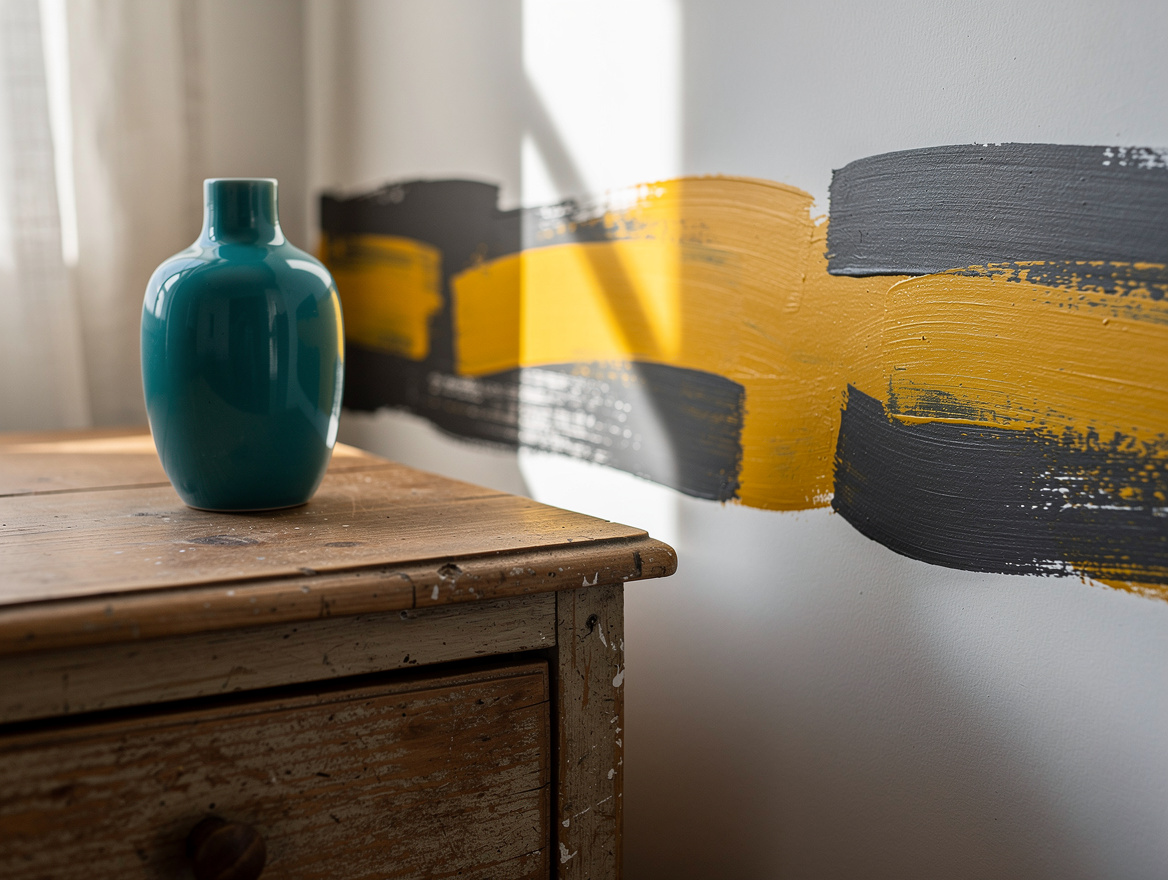
Repeat Color Without Matching
Choose one grounded color to travel through the room, such as washed terracotta on a painted motif, a ceramic vessel, or the edge of a quilt. Repetition gives unrelated furniture a visual relationship.
Keep the supporting colors slightly imperfect. A muted olive pillow can sit beside dusty blue artwork and a cream lamp because the shared softness matters more than an exact match.
Use bright color sparingly on small physical details, including a cobalt glass vase or painted drawer interior. One sharp note wakes up an artisanal bedroom; five sharp notes make it feel staged.
Give Old Pieces Breathing Room
Collected furniture needs empty space around it to remain legible. Leave enough floor visible beneath a low walnut bench and avoid filling every corner with baskets, stools, and decorative boxes.
A wool-look rug from Wayfair typically costs around $150, depending on size and construction. Choose a pattern with some visual age, then let the rug stop short of at least one major furniture piece so the floor plan stays clear.
Resist the urge to cover every surface. One framed painting, a small lamp, and an object with a story will read more strongly on a dresser than a crowded arrangement of accessories.
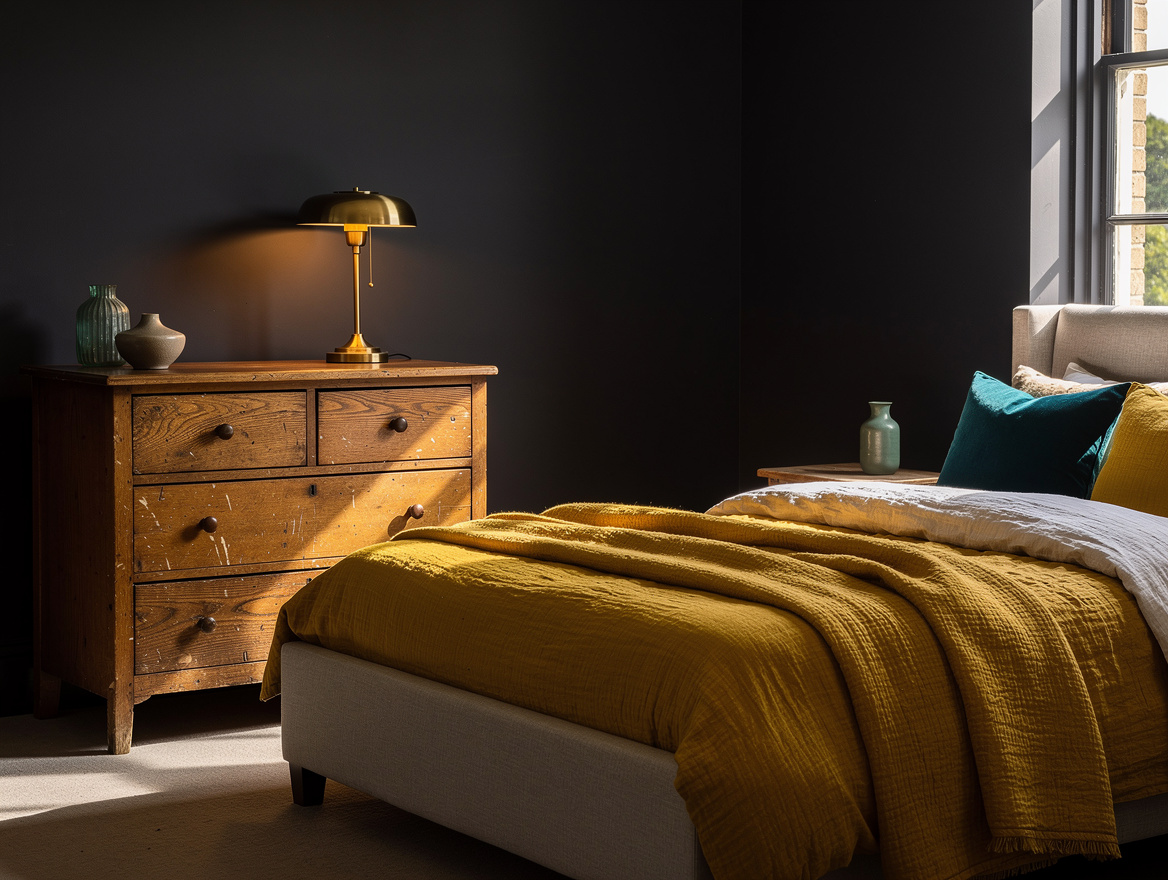
Layer Honest Materials
Texture should come from materials with a reason to be there, such as washed linen bedding that softens the hard lines of a wooden bed. The slightly rumpled surface supports the handmade mood without requiring extra decoration.
A cotton quilt from Walmart often costs about $35 to $60, making it an easy layer to change as the room evolves. Look for a small-scale pattern that echoes the painted detail without copying it.
Add weight through one tactile object, perhaps a ceramic lamp base or a woven throw with visible knots. Smooth, rough, matte, and faded finishes create depth more effectively than a pile of decorative accents.
Edit the Bedside View
The bedside area should feel practical before it feels ornamental. A brass reading lamp gives the collected furniture a useful glow and adds a warm metal note that can repeat in a frame or drawer pull.
A lamp from Target typically costs around $35 to $60, depending on the shade and finish. Choose a silhouette with enough presence to balance the bed, then leave room for a book and a glass of water.
Place the most personal object where you see it first, whether that is a small painting, a handmade bowl, or a photograph in a worn frame. The bedroom becomes convincing when its details support daily life instead of performing for the camera.
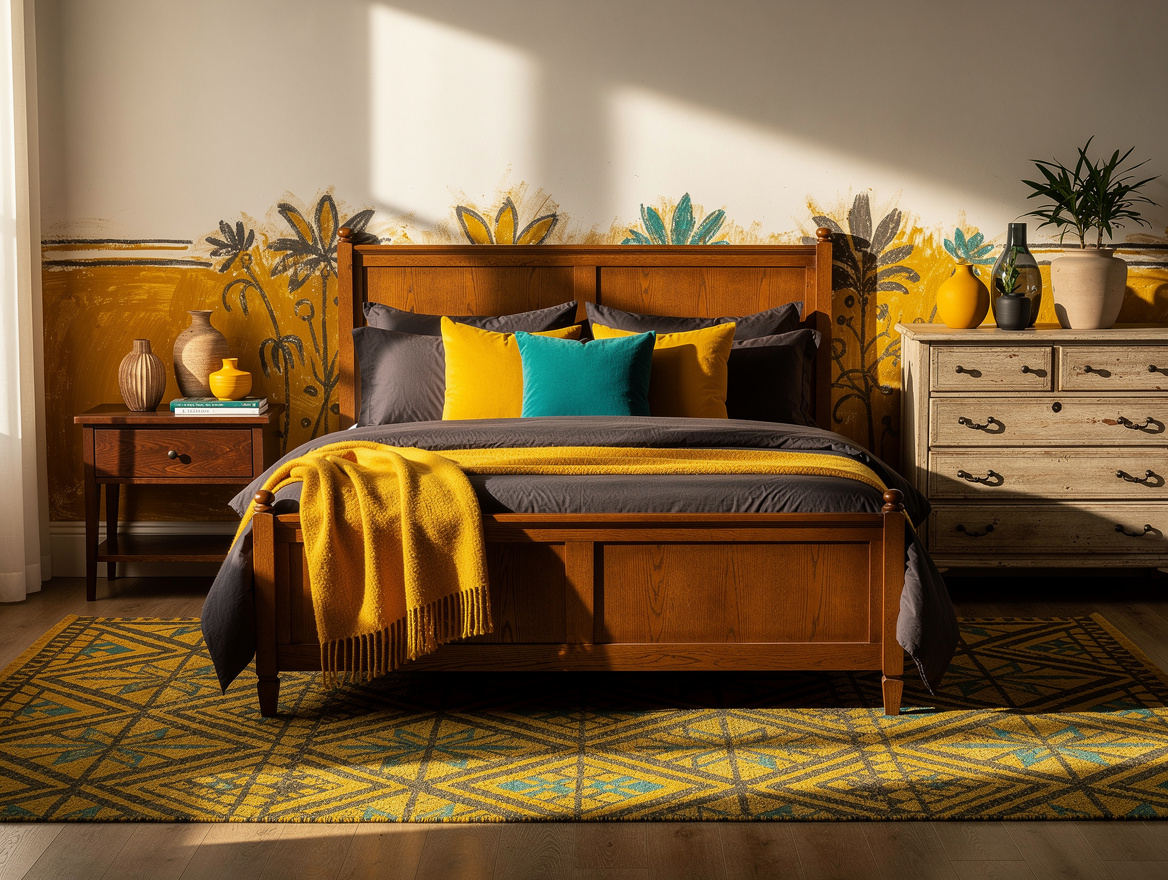
Begin with the wall or furniture piece you already love, then pull one color and one material from it before buying anything new.
Once that anchor is settled, keep the next purchase practical. A room with fewer, better-connected objects will hold its handmade character long after the decorating is finished.
Mia Carter writes about small-space living and budget home makeovers. She has restyled three rentals and tests most ideas in her own 45 sqm flat.