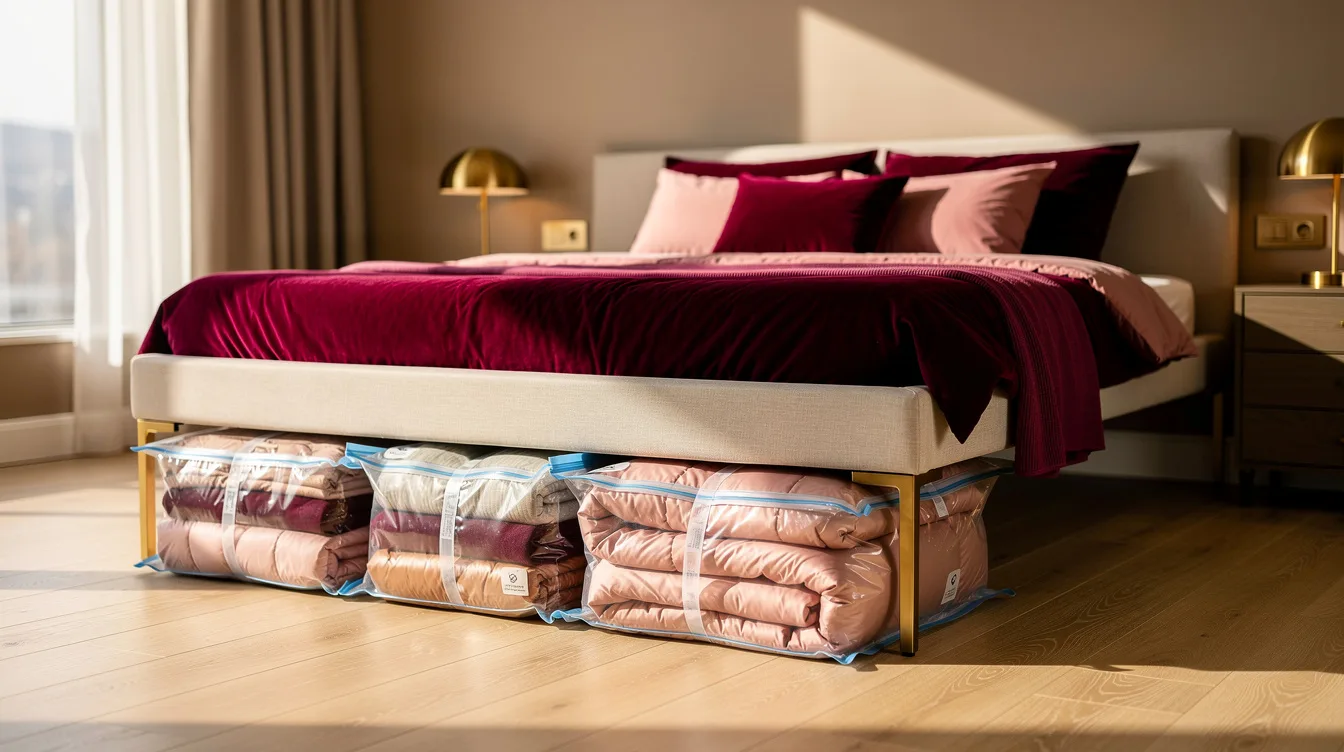
My platform bed looked tidy until I tried to fit a winter comforter beneath its frame. The real question was whether the opening had about 13 inches of clearance, enough for a cube, or only 5 to 6 inches for a flat package.
Vacuum storage bags can solve the problem, but the wrong shape creates a stubborn lump that will not slide out. I found the most reliable approach starts with the bed measurement, then matches the bag, seal, and protective container to that exact gap.
Measure the Clearance Before You Shop
My first move is always measuring from the floor to the lowest point of the platform frame, then subtracting a little room for easy sliding. A gap of about 5 to 6 inches calls for flexible bags or a very low box, while a taller opening gives you more choices.
The TAILI folding under-bed box is about 41 by 17.7 by 6 inches and costs around $44, so it suits an unusually low platform bed. Its size is easier to plan around than a bulky container that nearly fills the opening.
With roughly 13 inches of clearance, cube-style bags become practical. I would still measure the full width and depth of the opening because a bag can fit vertically yet refuse to slide beneath the frame.
Slide Flat Bags Into the Lowest Gaps
For a low platform bed, flat jumbo bags are my safest starting point. The SpaceAid X-Large three-bag set measures about 39.5 by 27.5 inches, costs around $9 on Amazon or $14 at Lowe’s, and can hold up to about four pillows or a queen bedding set.
That shape works well for comforters, spare sheets, and lightweight blankets because the compressed package spreads across the floor instead of standing upright. Leave a small air channel around the valve so the bag can slide out without catching on the frame.
The Gongshi jumbo bag is another practical option at about $14, with a hand pump and dimensions near 40 by 30 inches. I prefer this broad, flat format when the opening is shallow and the bedding will stay untouched for most of the season.
Use Cubes Only With Taller Frames
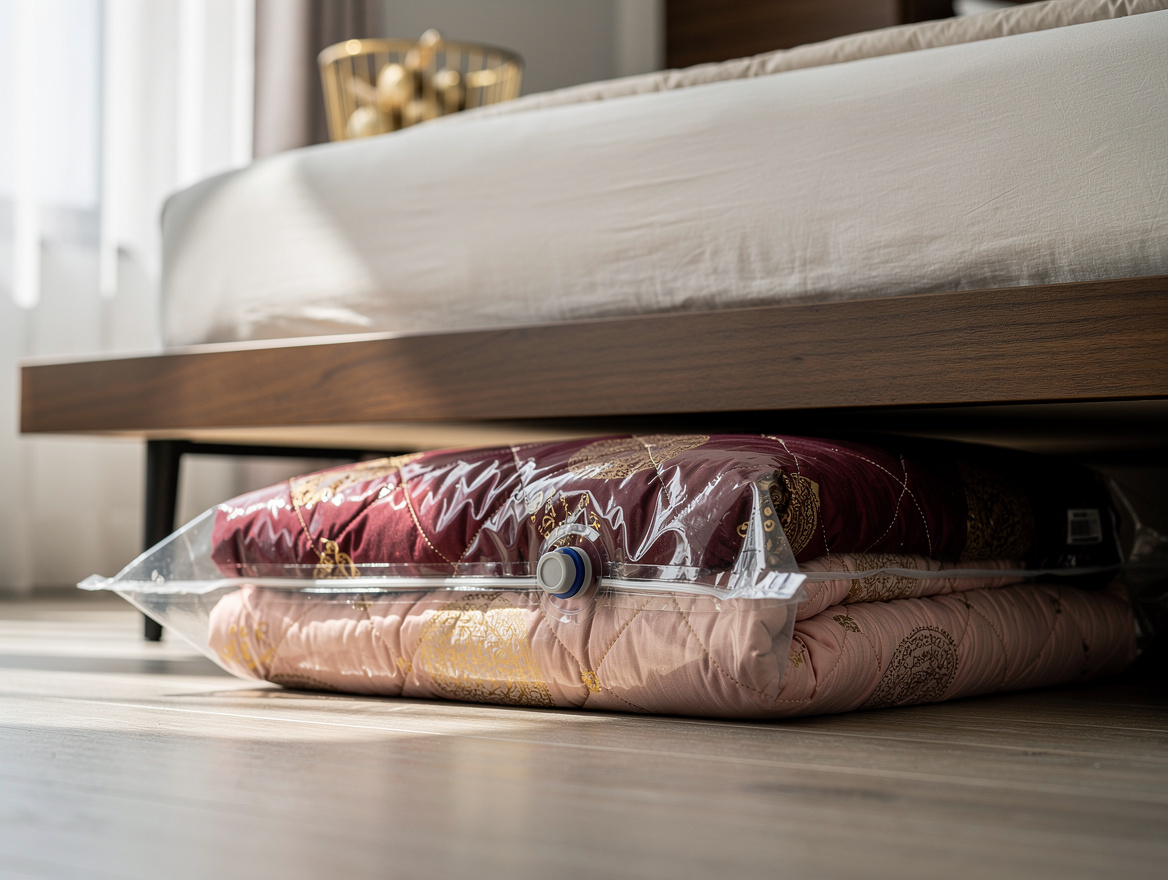
Cube bags make sense when the platform bed has real vertical room, but they are a poor match for a shallow gap. The MagicBag Cubes set costs about $16 to $20, and each bag is roughly 28 by 40 by 13 inches.
That height can hold a queen comforter, several coats, and a stack of thick sweaters, according to the supplied product test. I would choose this shape only when the measured opening is comfortably higher than 13 inches, leaving space to pull the cube forward.
A cube also keeps soft goods more upright, which can make seasonal sorting easier. The compromise is obvious: it stores more volume in one package, yet it demands a taller bed and a clean path beneath it.
Put Soft Bags Inside a Rolling Shell
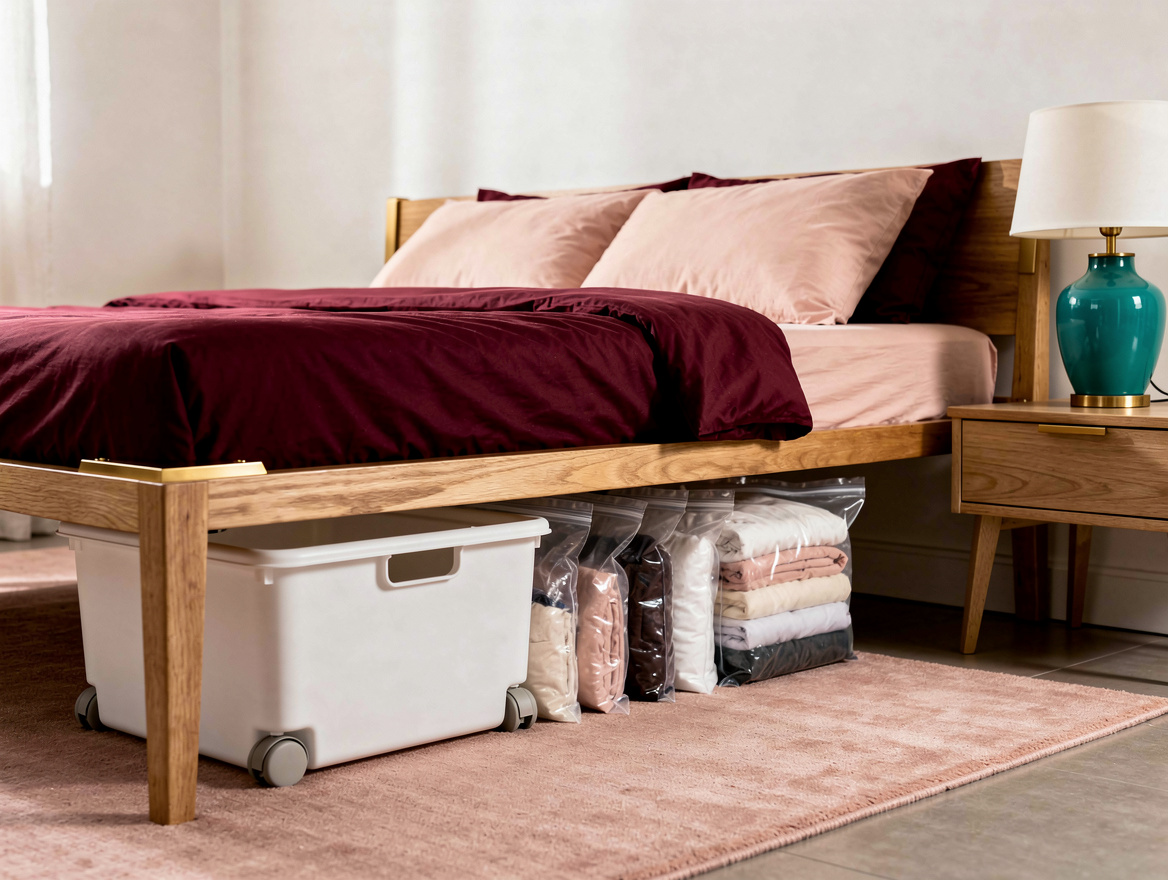
When the floor is rough or the frame has sharp corners, I place compressed bags inside a protective rolling container. A Tsinglax rolling storage bin is about 30 by 16 by 7.5 inches and holds roughly 66 liters, giving the bags a smoother surface to travel on.
This arrangement also creates a useful split between hard and soft items. One or two rolling bins can hold shoes or firm accessories, while two fabric bags handle bulky quilts, pillows, and winter bedding.
The bin must still fit beneath the frame, so I would not buy it before checking the narrowest point. For extremely low clearance, a flat vacuum bag placed directly on a clean floor may work better than forcing a box into the space.
Choose Seals That Hold Through the Season
Most vacuum bags use a zip closure and valve, but the seal matters more when the bedding will sit untouched for months. The Spacesaver Jumbo six-bag set costs about $27 and uses a double zip with a triple-seal valve, features I would favor for long storage.
Common bags use flexible polypropylene, which bends easily around a bed frame. Cube formats often use PA+PE, a stiffer combination that helps the package keep its shape after compression.
For a no-pump option, Spacesaver roll-up bags use nylon and compress by hand. They are convenient for a narrow gap, though I would choose a valve bag when maximum volume reduction matters.
Protect the Bags and Build a Seasonal Rotation
Never drag a compressed bag across concrete or pull it against a sharp metal edge. I slide a folded blanket or smooth mat beneath the load first, then use the zipper end as the handle.
The Hefty Shrink-Pak four-bag set costs around $17.50 and is sold for under-bed storage, making it a straightforward choice for spare comforters. A mixed-size Amazon Basics set costs about $20.50 and includes small through jumbo bags, which helps when one oversized bag would waste room.
I label each package with the contents and season, then keep the bedding I use most often nearest the opening. Since these bags are best for textiles opened about twice a year, easy access matters more than squeezing out the last inch of space.
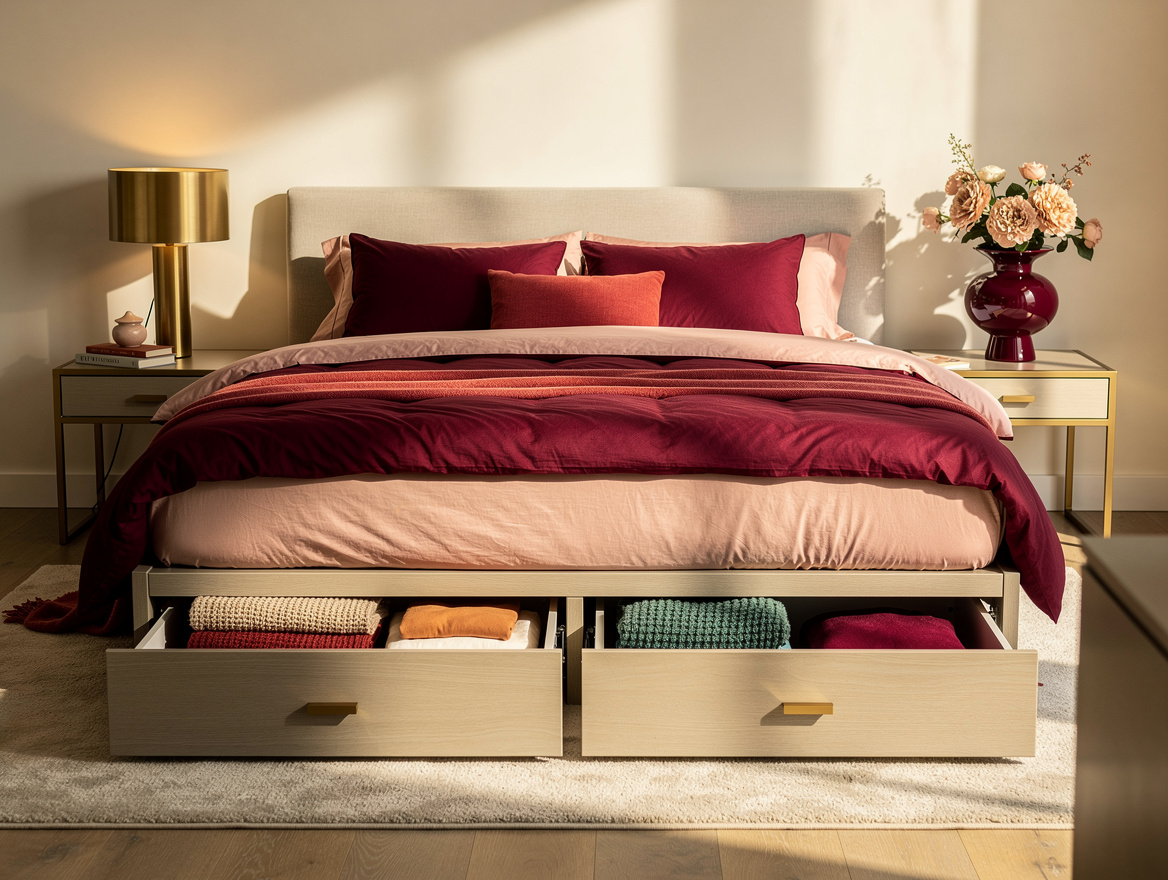
Start with a tape measure, then buy flat XL bags for low openings and reserve cubes for beds with about 13 inches of room. That small order of operations keeps bulky bedding protected, reachable, and out of sight without turning the space beneath the bed into a daily struggle.
Mia Carter writes about small-space living and budget home makeovers. She has restyled three rentals and tests most ideas in her own 45 sqm flat.