
Pink bedroom accents can feel sugary when every surface competes for attention. The cleaner formula gives pink bedding and other soft surfaces about 70% of the color story, while the furniture carries the room’s structure.
That balance lets a roughly 5-by-8-foot rug work with a queen bed instead of turning the floor into another loud statement. The goal is warmth with a firm outline.
Assign Pink to the Soft Surfaces
Start by assigning pink to the surfaces that can move, fold, or change with the season. About 70% of the color story can live in pink linen drapes, bedding, a rug, and a bench while the furniture stays restrained.
A washed cotton duvet, a textured cushion, and a wool throw keep the room from looking flat. The right washed cotton duvet feels relaxed enough for daily use and polished enough for an editorial bedroom.
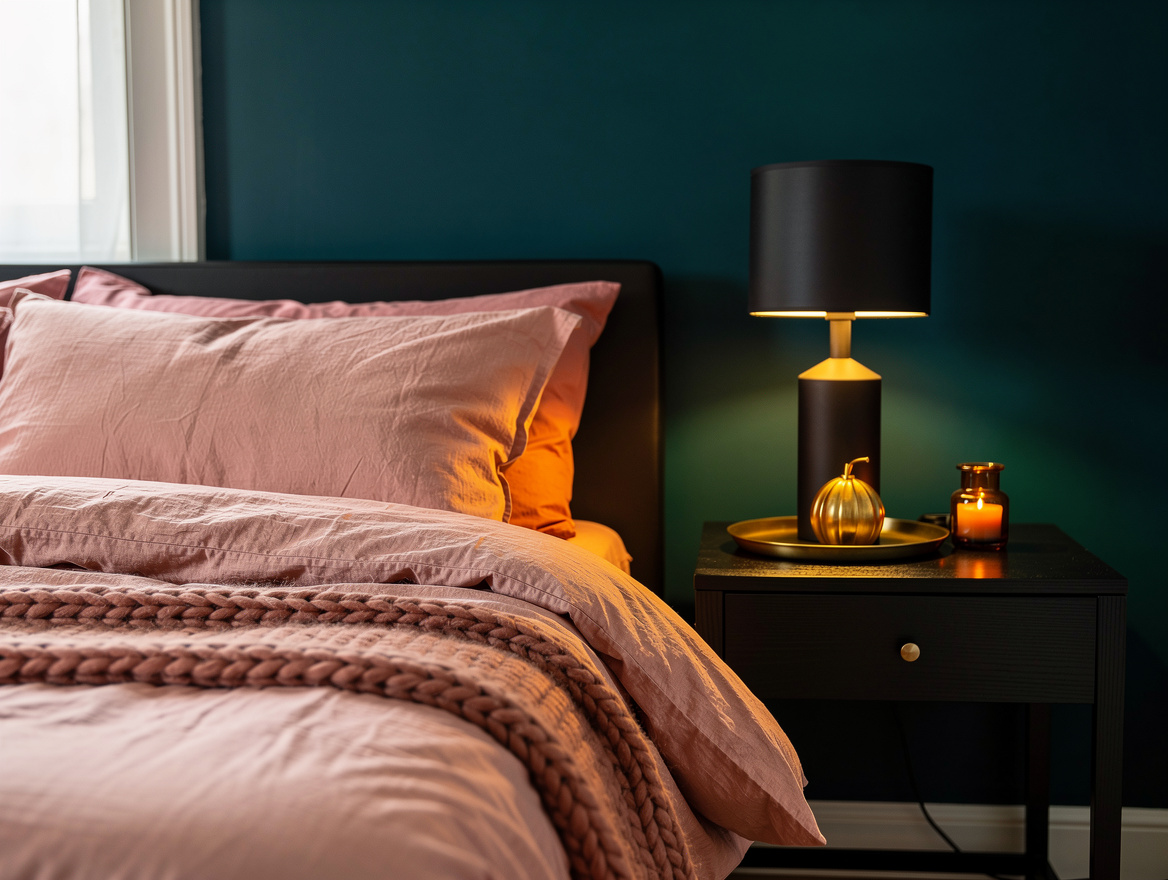
Keep the bed frame, nightstands, lamps, and picture frames dark, simple, and matte. Matte black frames give the pink layers a clean edge without adding another competing color.
This ratio makes pink feel like atmosphere and black feel like architecture. Designers generally prefer that tension over matching every accessory to the walls.
Anchor the Bed With Matte Black
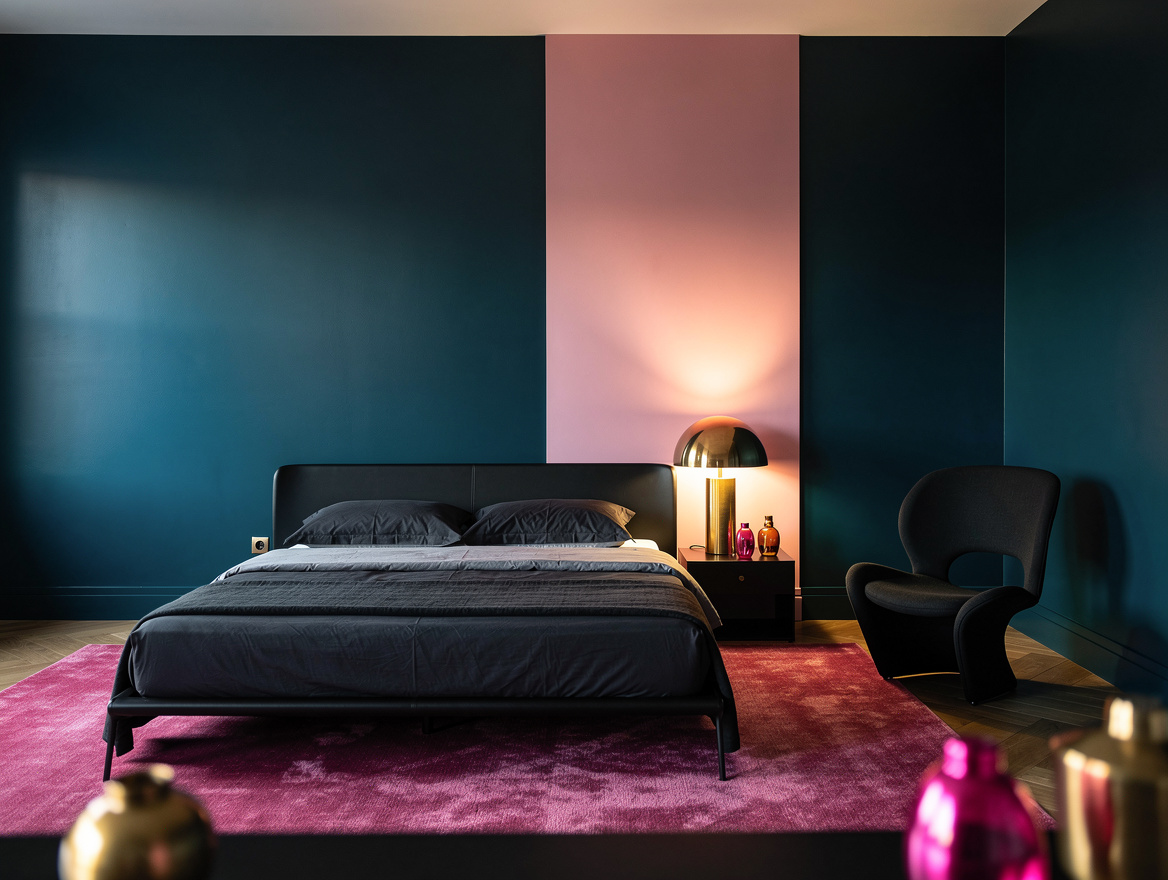
For a strong architectural move, paint the walls blush at roughly 10% to 20% saturation and pair them with a slender powder-coated black bed frame. The contrast gives soft pink enough weight to work in a grown-up bedroom.
Choose a powdery wall color rather than hot pink, especially if the room receives strong afternoon sun. Matte blush paint absorbs light gently and looks calmer beside black furniture than a glossy finish.
A blush-wall and black-frame layout typically lands around $100 to $600, depending on the frame and paint coverage. Spend more on the bed frame if it has visible joints or hardware, because weak construction makes the whole scheme look temporary.
Keep the frame profile narrow and visually open. A bulky silhouette can make the room feel crowded before the bedding and lighting have a chance to soften it.
Set the Bedside Scale With Care
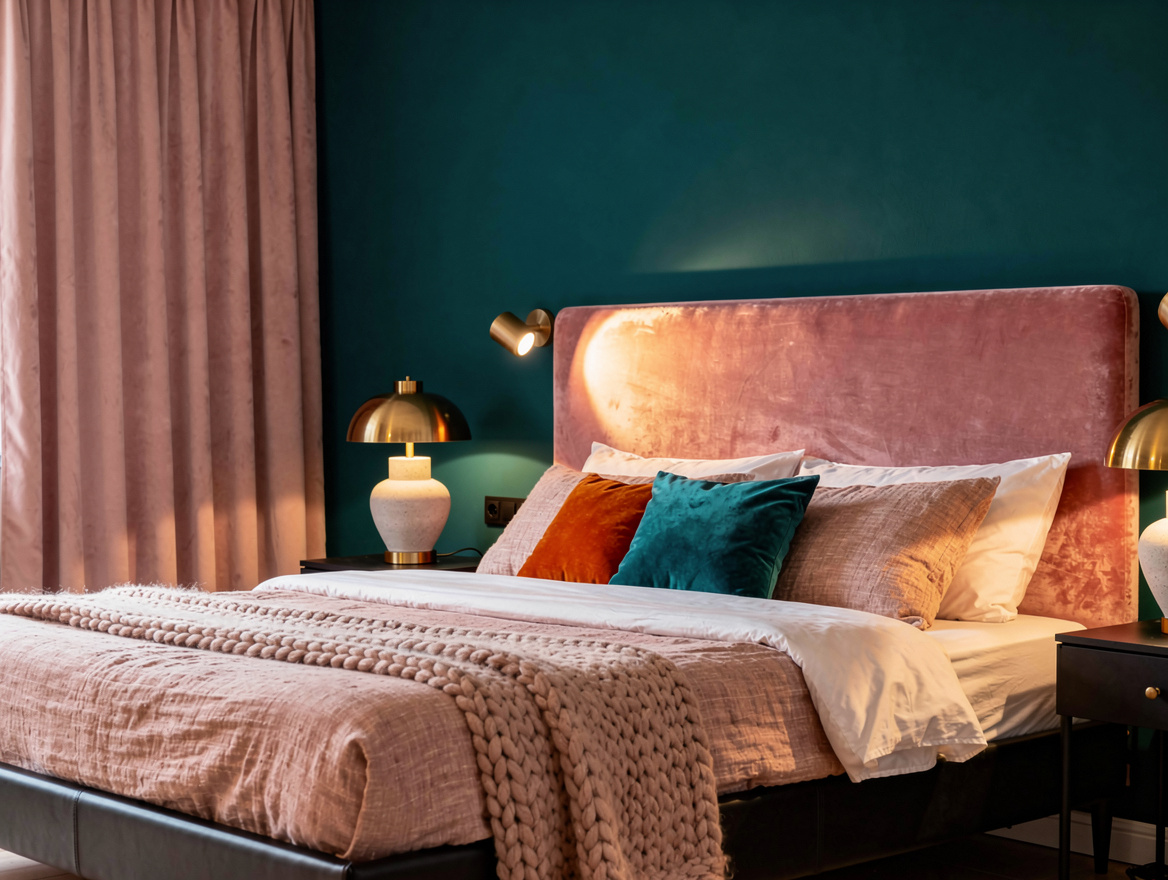
A pink headboard is the easiest way to make the bed the room’s focal point without painting every wall. A pink velvet headboard adds depth, absorbs sound, and gives the black pieces beside it a warmer context.
For a queen bed, estimate a headboard width of roughly 150 to 160 centimeters and a tall height of about 120 to 140 centimeters. Those proportions create presence without letting the headboard overwhelm a modest room.
Match nightstands to the mattress top at approximately 50 to 60 centimeters tall, then use lamps around 55 to 65 centimeters high. Black bedside tables look more intentional when their height and visual weight are close to the bed.
A black canopy bed can work too, but choose slender posts and skip a heavy top rail. The typical budget is about $400 to $1,500, so the open structure should earn its space through proportion and lightness.
Let One Pink Piece Lead
Pick one hero element before buying smaller accents. A 5-by-8-foot rug generally suits a queen bed, while a king usually needs a roughly 6.5-by-10-foot rug to keep the color from disappearing under the frame.
For a foot-of-bed moment, choose a bench slightly narrower than the mattress and leave about 15 to 20 centimeters between the bench and the bed. A pink upholstered bench works best when its legs or trim quietly repeat the black furniture.
Keep the remaining accents quieter than the hero piece. If the rug carries a dusty rose pattern, use pale pink sheets or a single cushion rather than adding another loud print.
A textile-only refresh typically costs about $80 to $250, while paint plus soft furnishings often lands around $300 to $1,200. That range makes a hero textile a sensible first move when the existing bed frame is worth keeping.
Soften Black With Texture and Metal
Black furniture needs touchable materials around it or the room can feel severe. A chunky knit throw, linen bedding, velvet cushions, and washed cotton curtains give the dark finish enough softness for a bedroom.
Use metal as a quiet bridge between the colors. Unlacquered brass and antique bronze bring more warmth to pink than chrome, while matte black keeps the hardware connected to the bed and lamps.
For an affordable update, look at IKEA, Amazon, or Target for frames, lights, and hardware. A set of matte black cabinet pulls typically costs about $20 and can refresh a dresser without adding a new major color.
Choose ceramic lamp bases and warm-white bulbs for the bedside lighting. A ceramic lamp base grounds the arrangement, while warm light keeps pink from turning cold after sunset.
Test the Palette Before You Commit
Pink changes dramatically between daylight and lamplight, so test a sample beside the bed, curtains, and floor before painting. A soft-pink paint sample can look muted at noon and much stronger under warm bulbs.
Layer two or three pink tones rather than repeating one exact shade everywhere. Pale sheets, dusty-pink shams, and a deeper cushion give the bed dimension without creating visual noise.
If the bed and nightstands are angular, add a rounded black chair, ottoman, or bench. A curved black chair interrupts the hard lines and makes the room feel less arranged by ruler.
Skip four hot-pink walls with matching accessories. The most convincing version keeps the pink tactile and varied, then lets soft black furniture provide the discipline.
Begin with one wall sample and the largest textile you already own, then build the black details around what those two pieces reveal. The room will settle faster when the color ratio is decided before the shopping begins.
Mia Carter writes about small-space living and budget home makeovers. She has restyled three rentals and tests most ideas in her own 45 sqm flat.