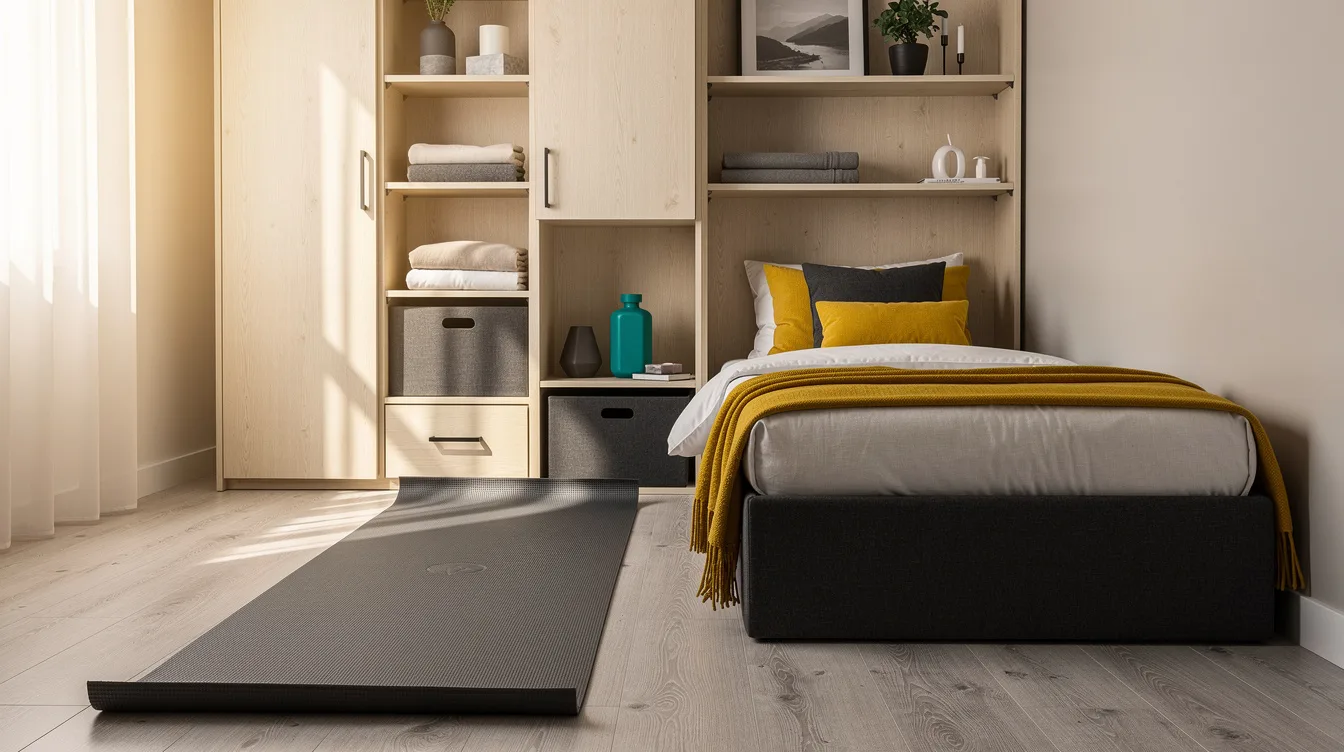
A 140 × 200 cm bed can swallow a small bedroom before you even add a wardrobe. I plan the yoga space first, keeping a clear rectangle of at least 200 × 80 cm so the mat remains usable instead of becoming a permanent obstacle.
The trick is simple on paper: one wall for the bed, shallow storage, and one uninterrupted movement lane. The layout feels much larger when every spare gap is not filled with another container.
Measure the Movement Lane First
I start with the floor, not the bed. A standard yoga mat is typically about 180 × 60 cm, so I reserve at least 200 × 80 cm of completely clear floor before placing any furniture.
For comfortable stretching, plan for an ideal zone of about 210 × 120 cm. That extra width matters when your arms reach overhead or your legs open during seated poses.
Place the Bed Against One Wall
The cleanest layout puts an IKEA VIHALS daybed lengthwise against the longest wall, leaving the opposite side open for movement. This works especially well in a room around 2.35 × 3.00 m.
The structure is listed at about €80, while a version with a VANNAREID mattress is about €229 in the supplied example. A basic daybed setup may cost roughly €150 to €600, depending on the frame, mattress, and bedding.
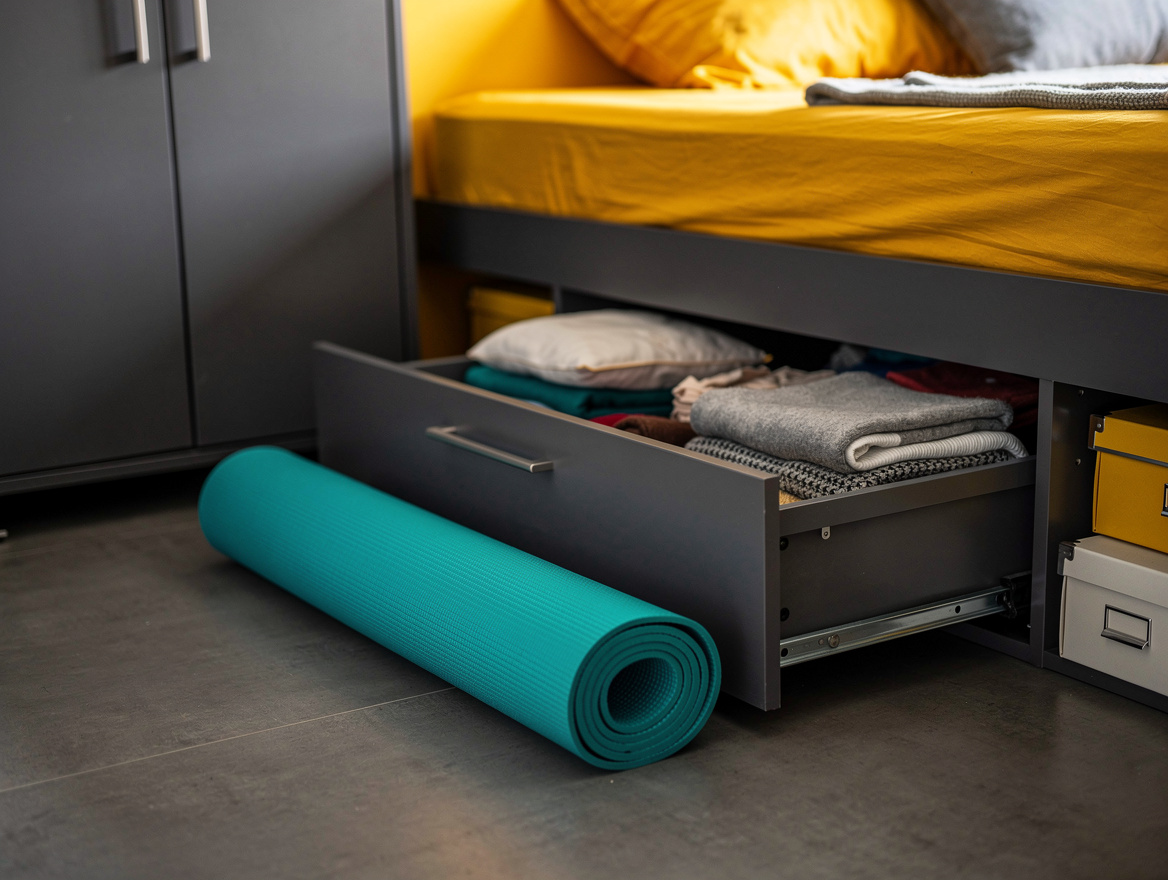
Use drawers beneath the bed instead of a freestanding chest. Every piece that stays outside the movement lane makes the room easier to reset after practice.
Build Upward With Shallow Storage
Choose a shallow wardrobe around 35 to 45 cm deep whenever possible. A standard 55 to 60 cm wardrobe can consume the same valuable floor width as a yoga mat.
A tall cabinet, wall shelf, or vertical shelf keeps clothing off the floor without expanding the room’s footprint. I prefer closed storage for visual calm, with one open shelf for a folded blanket and blocks.
The IKEA BRIMNES daybed is another practical option because its under-bed storage can replace a separate dresser. Its supplied example is about €299, giving the room one large piece that handles both sleeping and storage.
Choose the Bed Size With Discipline
A 120 × 200 cm bed is often the best permanent-bed compromise for one person. Place it in a corner with the headboard against the short wall, then keep the long side opposite it open for a vertical mat position.
A 140 × 200 cm bed can work, but it is usually the breakpoint in a small room. An IKEA SONGESAND frame in that size measures about 153 cm wide by 208 cm long, so the finished footprint can quickly crowd the practice zone.
Below roughly 9 to 10 square meters, an 80 or 90 cm daybed, a 120 cm bed, or a wall bed is generally easier to combine with regular yoga. The 140 × 200 cm double bed belongs in the plan only after the clear rectangle has been drawn.
Keep the Yoga Surface Firm
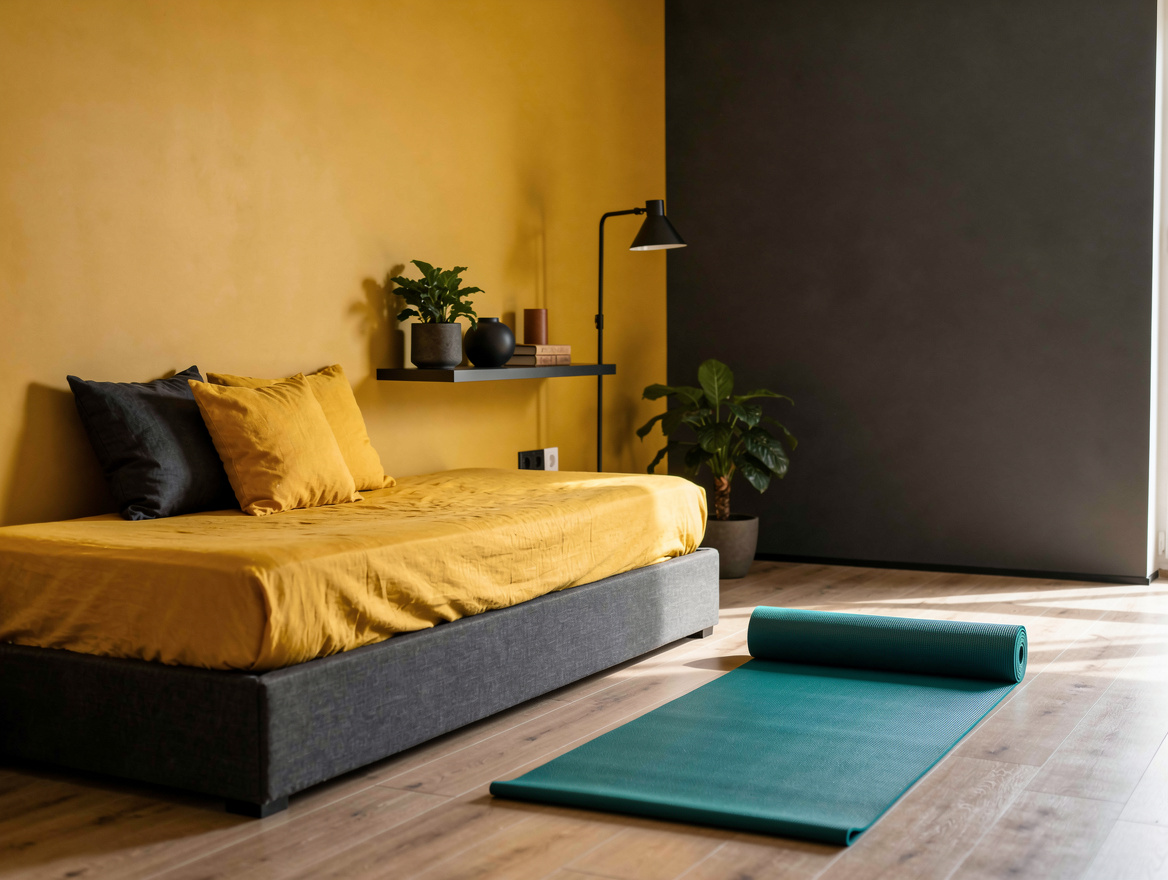
Place the mat over hardwood, laminate, or another firm floor whenever possible. A low-pile wool rug can soften the room around the bed, but thick shag makes standing balances less stable and collects dust under the practice area.
Leave the mat lane free of baskets, stools, and loose bedding. A small cork yoga block can stay beside the wall, while larger props should live in a closed cabinet outside the clear zone.
Choose a simple flatweave runner only where your feet move between the bed and the door. The practice rectangle should remain easy to sweep and quick to reclaim.
Design for a Fast Daily Reset
Make the room work in both directions: sleep at night, practice in the morning. An IKEA HEMNES daybed can open to a wider sleeping surface, but allow for its expanded footprint before treating the surrounding floor as permanent yoga space.
Mount one wall-mounted hook near the bed for a mat strap or towel. Keep a woven storage basket beneath it for blankets, then return every item there after practice so the lane stays visibly open.
Finish with a warm lamp, a clear path to the door, and one framed print rather than a crowded gallery wall. The room should feel ready for movement the moment you wake up.
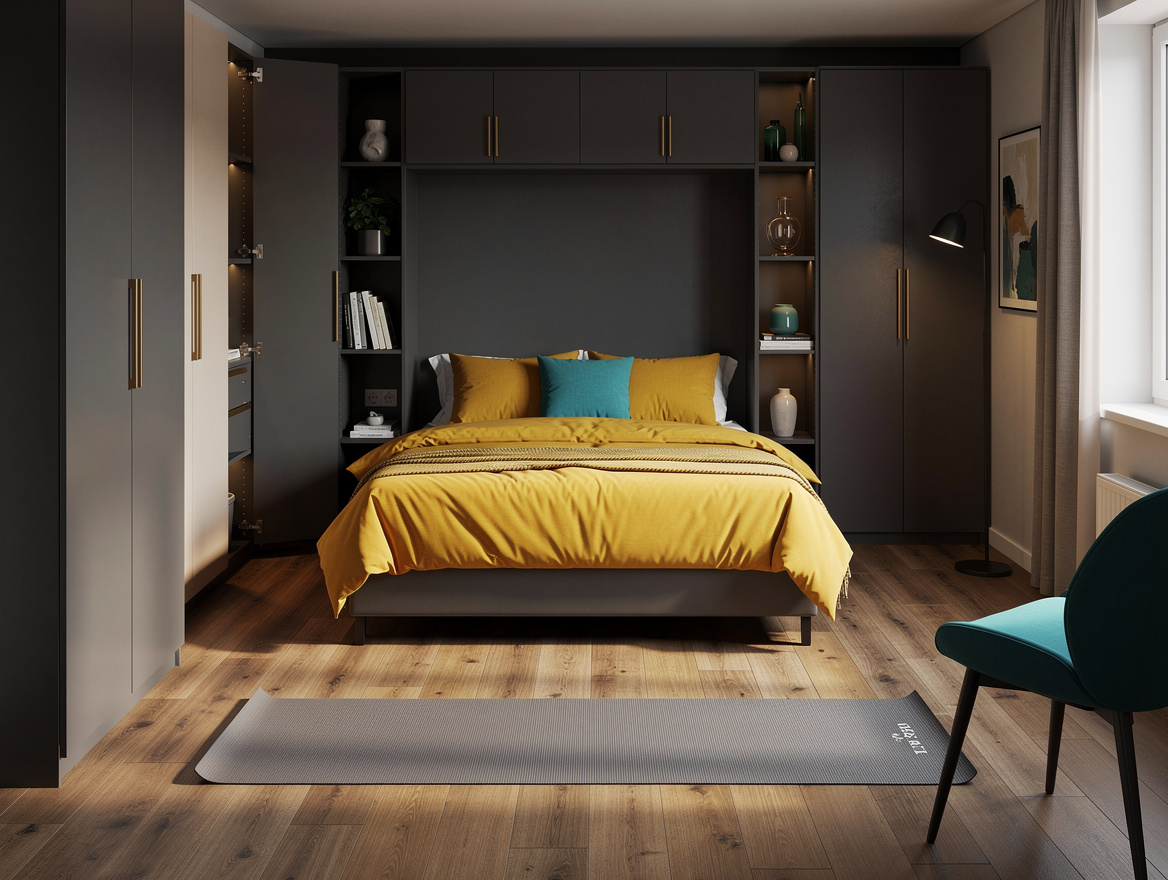
Draw the 210 × 120 cm comfortable zone on the floor with painter’s tape before buying furniture. If the mat fits with your arms extended, the rest of the bedroom can be built around a plan that will actually support daily practice.
Mia Carter writes about small-space living and budget home makeovers. She has restyled three rentals and tests most ideas in her own 45 sqm flat.