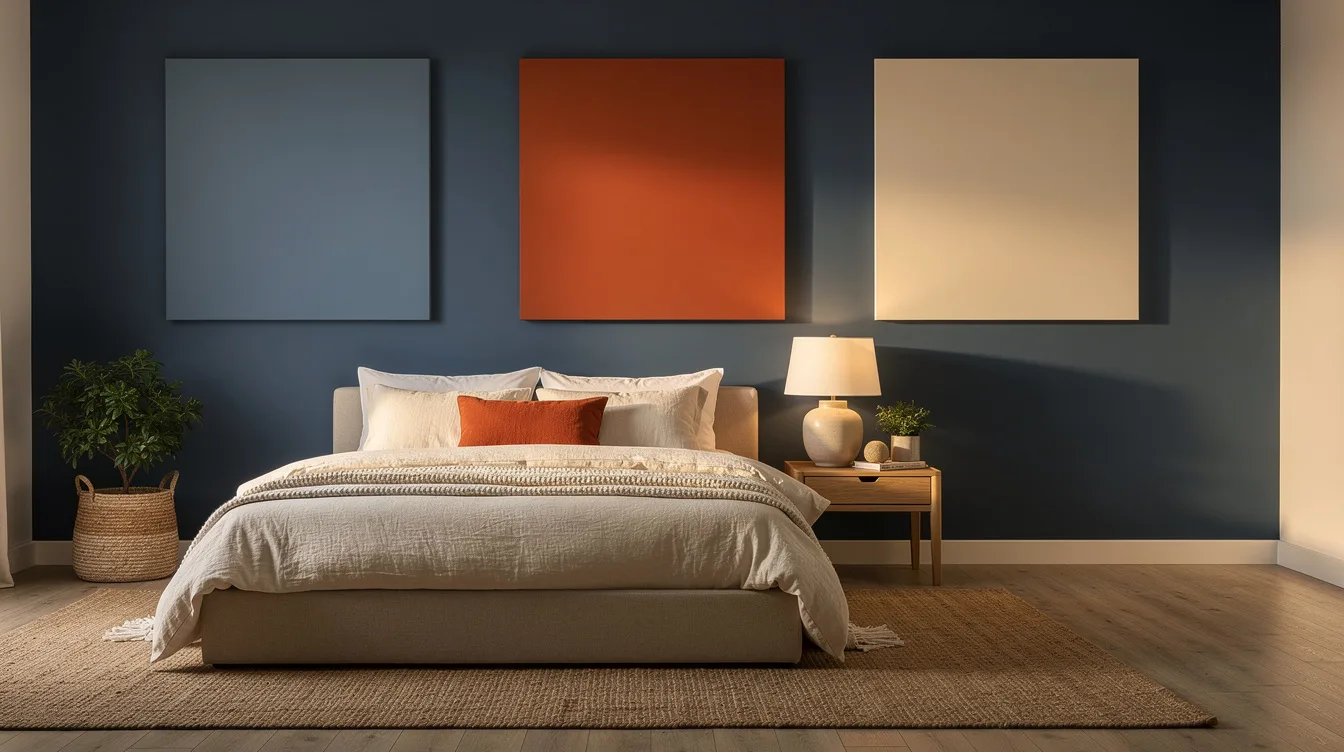
I once chose a bedroom color from a small paper chip and regretted it as soon as the lamps came on. This time, I tested three real paint samples on roughly 2 × 2-foot areas and watched them for 72 hours.
The winning shade changed less dramatically from daylight to evening, which mattered more than how impressive it looked at noon. Room-scale samples made the decision slower, but they also made it far more trustworthy.
Limit the Shortlist Before Sampling
I started with three colors: a warm off-white, a muted mid-tone, and a slightly deeper shade. This kept the undertones readable instead of turning the bedroom into a wall of competing swatches.
My shortlist included a warm off-white, a soft greige, and a muted green. Each one had to work with the bedding, flooring, and wood tones already in the room.
More than three samples made the differences harder to judge. A restrained lineup gave me a clear comparison without visual noise.
Paint Room-Scale Patches
The most dependable test uses real paint on the wall, with two full coats in the finish you plan to use. I made two patches per color, each roughly 2 × 2 feet, so the room’s texture and reflected light could affect the result.
A typical tester pot costs about $4 to $7, making large patches cheaper than guessing with a full gallon. I used a small roller and tray from Home Depot to keep the application close to the final finish.
One coat can look streaky and misleadingly light or dark. Two coats showed the real depth of the matte wall paint far more clearly.
Move Painted Boards Around
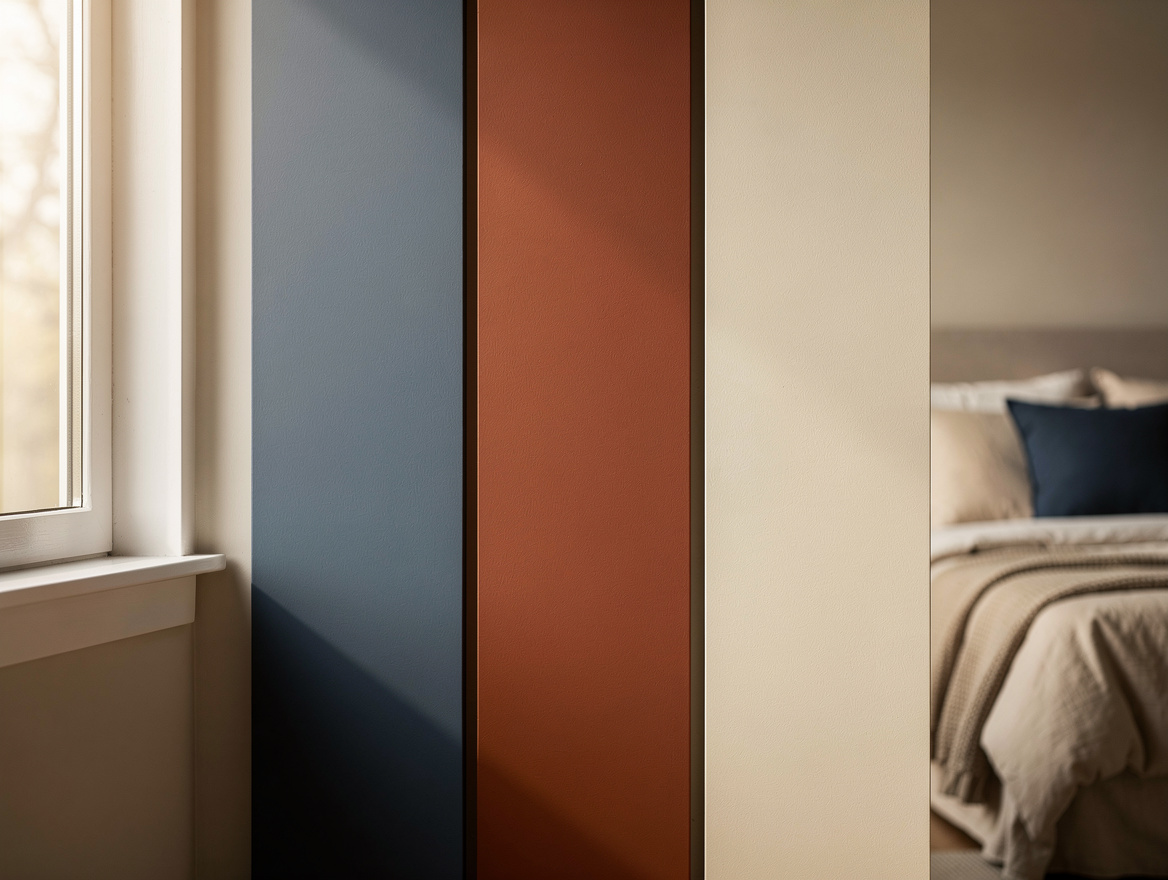
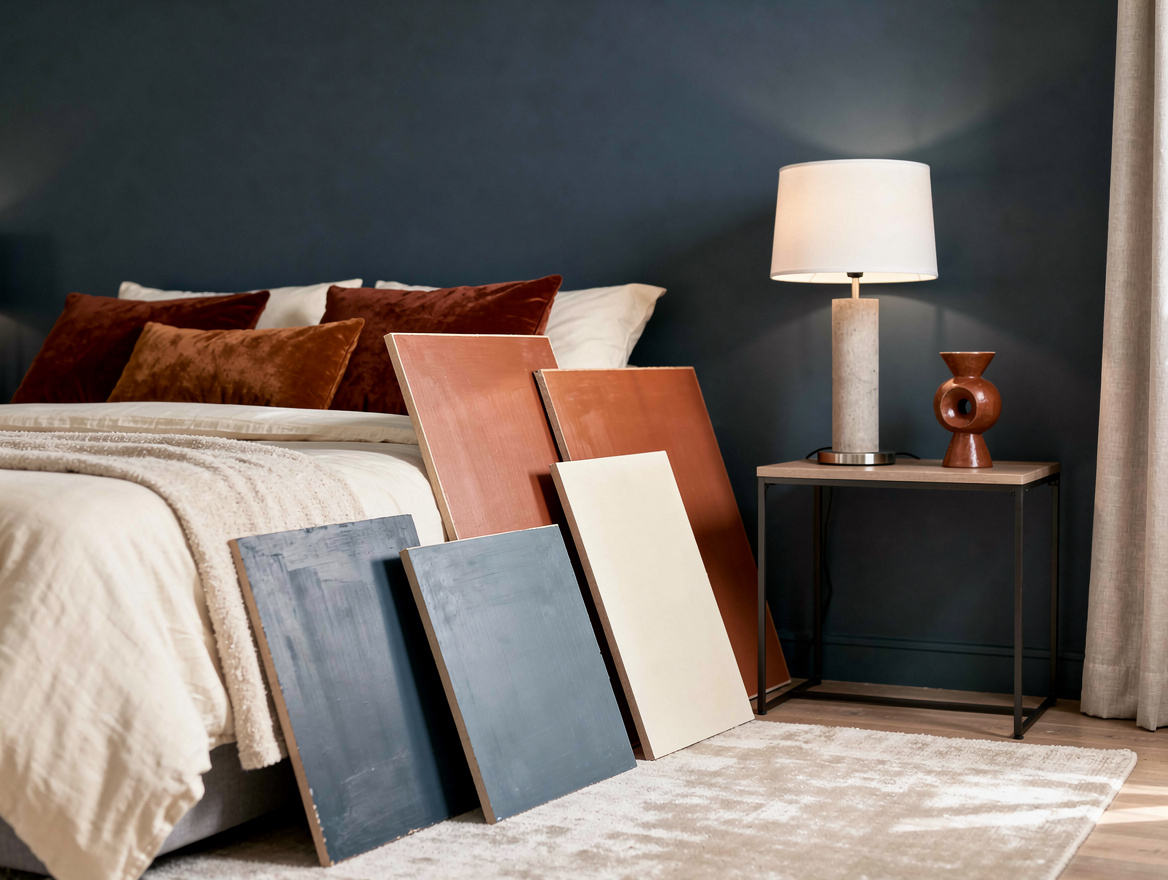
When painting the wall was inconvenient, I used portable boards measuring roughly 24 × 36 inches per color. A white foam board or MDF panel gave each sample enough area to read from across the room.
Board materials and paint usually cost about $10 to $25 per color, depending on what you already have. I bought the panels at Lowe’s and kept the edges unpainted so I could carry them without touching wet surfaces.
Boards helped me compare the window wall, the shadow wall, and the space behind the bed. They are especially useful in a rental, although wall patches remain more accurate because they reveal the room’s actual absorption and texture.
Check the Brightest and Darkest Walls
I placed every finalist on the window-facing wall first. Strong daylight revealed whether the blue-gray paint looked crisp, icy, or unexpectedly green.
Then I tested the same colors on an interior wall that received much less light. This is where pale shades can turn flat, muddy, or darker than expected.
The wall behind the bed received a third test when it was going to become the feature wall. Its different light pattern made the deeper color feel calmer there than it did beside the window.
Watch the Color for Three Days
I left the samples in place for at least 48 to 72 hours and checked them in morning daylight, midday brightness, late afternoon warmth, and overcast conditions. A muted green that looked balanced at noon became noticeably grayer under cloudy skies.
North- and east-facing light can emphasize blue, gray, green, and white undertones. Warm evening light strengthened the cream and beige notes in my off-white sample.
I took one photo from the same standing position at each check, locking the phone exposure when possible. The photos did not replace my eyes, but they made subtle shifts easier to compare later.
Match the Nighttime Bulbs
Daylight was only half the test because the bedroom was used most often after sunset. I switched on the exact lamps and bulbs I planned to keep, including the bedside lamps, ceiling fixture, and reading light.
Warm bulbs made the beige sample feel richer, while the cooler bulb near the dresser pulled out gray in the same paint. I also checked the color with the curtains closed, since that was the room’s real nighttime condition.
Peel-and-stick samples from Amazon can help with an early comparison, but their surface does not perfectly reproduce paint sheen, wall texture, or absorption. I used them as a first filter, then made the final decision from painted patches.
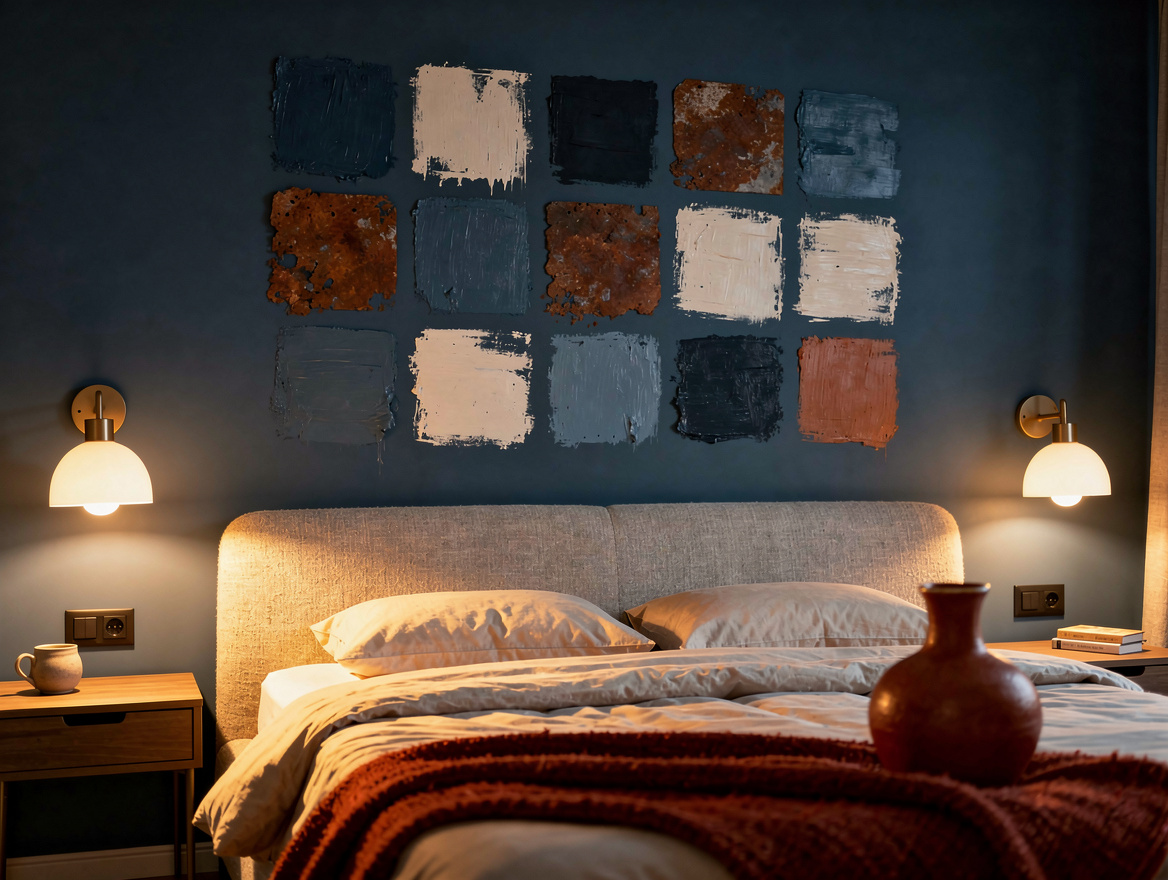
Start with three colors, paint large patches on two contrasting walls, and live with them through daylight, cloudy weather, and your actual nighttime bulbs. Buy the gallon only after the color still feels right when the room is quiet and fully lit for bed.
Mia Carter writes about small-space living and budget home makeovers. She has restyled three rentals and tests most ideas in her own 45 sqm flat.