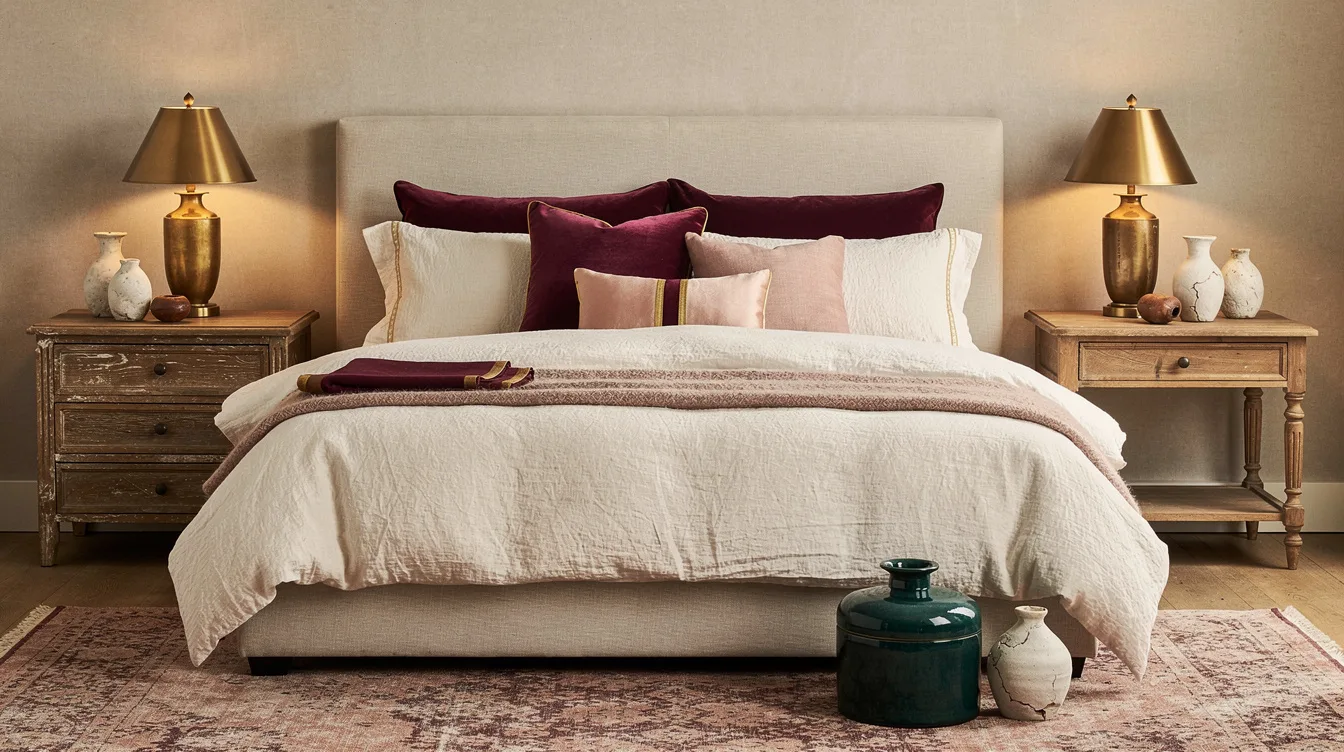
My bedroom changed when I stopped treating every purchase as part of one matching set. With a 60-by-80-inch queen mattress, I spent more on the upholstered bed and underfoot layer, then let second-hand wood, inexpensive art, and imperfect ceramics bring the personality.
The room finally felt collected because the price points moved around. One or two structural anchors can carry a budget-friendly mix of materials, eras, and textures.
Anchor the Room With a Tactile Bed
I started with the piece that takes up the most visual space: an upholstered bed in a warm, quiet shade. A camel, oatmeal, moss, or tobacco frame in linen-look fabric gives the room weight without making every other purchase feel precious.
A queen bed typically runs about $400 to $900 at Wayfair or IKEA, while a higher-quality anchor can cost around $1,200 to $2,500. That is where I would spend first, because the bed is used every night and sets the room’s scale.
Use Mismatched Wood to Add History
Next, I brought in two second-hand nightstands instead of a matching set. One oak table beside a painted pine piece feels found over time, especially when both sit close to the mattress height, around 24 to 30 inches.
Used wood nightstands typically cost about $40 to $180 each, while new wood-look versions at Target or Walmart often land around $100 to $280. My strong opinion: slight variation looks intentional, but random clutter does not, so repeat one detail such as aged brass hardware.
Let One Rug Carry the Floor
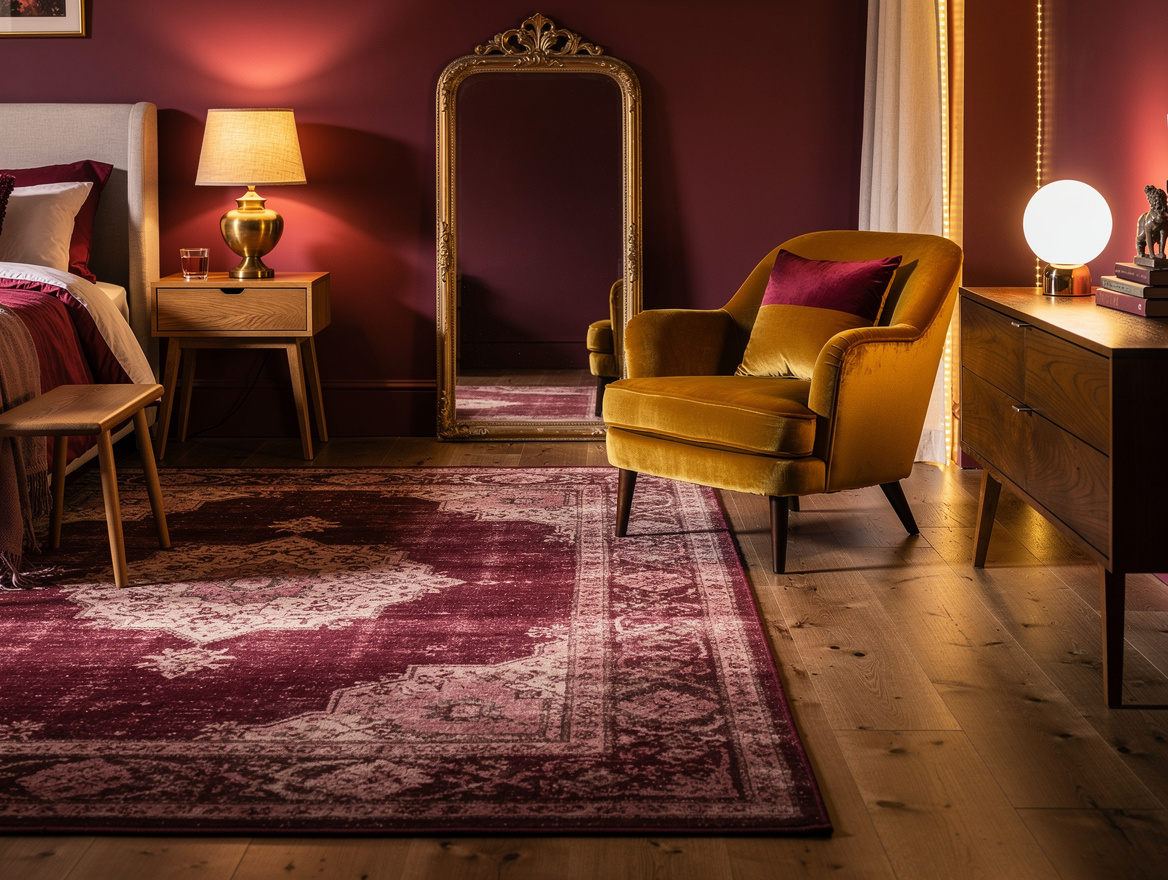
A large rug gave my bedroom more polish than several small decorative pieces ever could. I chose a wool-blend design with a faded pattern, leaving enough visible rug around the bed to connect the nightstands and foot of the frame.
Look for a wool or wool-blend rug and a substantial pad at Costco, Wayfair, or Home Depot. A small vintage-style runner can work near a dresser, but the main rug should do the grounding work instead of competing with it.
Layer Bedding That Feels Better Than It Looks
The high side of my textile mix went toward a flax-linen duvet cover or quality cotton sheets. Bedding is touched every day, so this is one place where texture matters more than a decorative label.
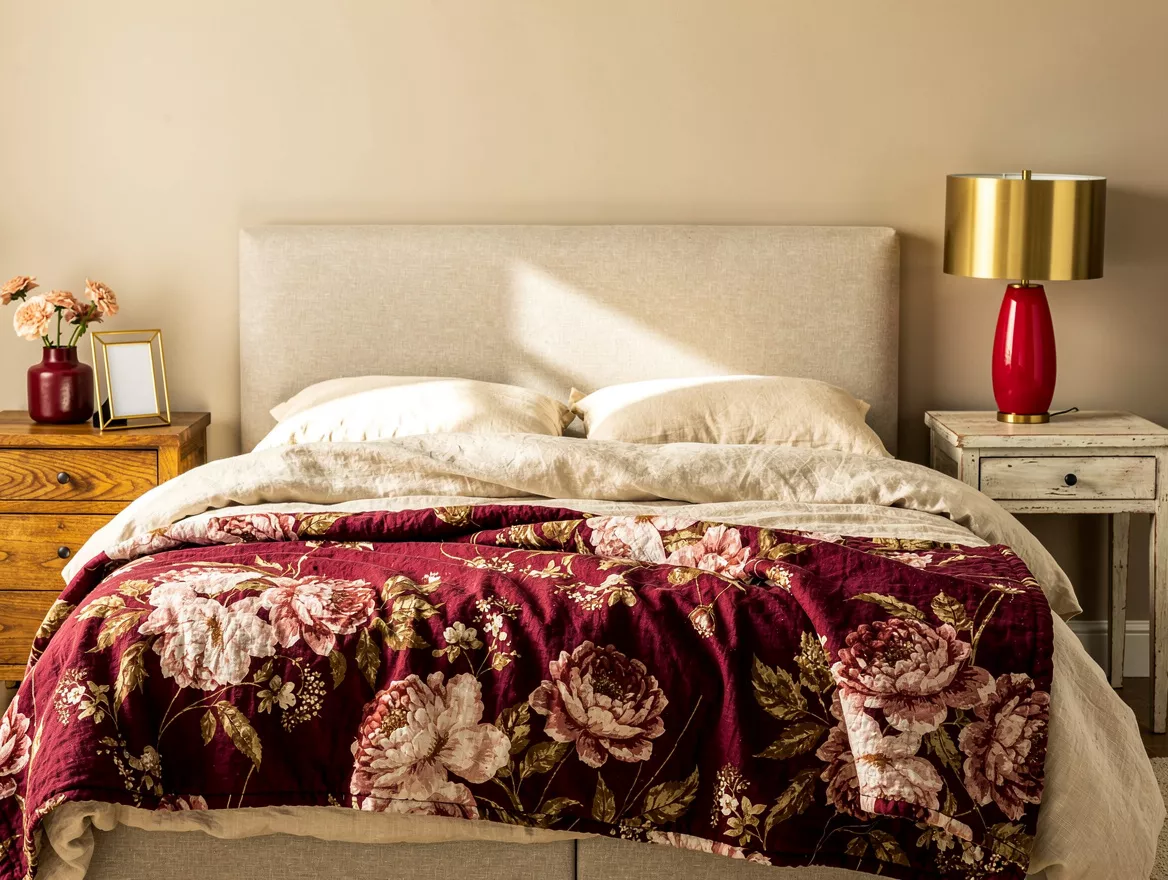
Flax-linen duvet covers typically cost about $90 to $220, with higher-quality versions around $250 to $450. I saved on the finishing layers: an inexpensive cushion cover, a faded floral quilt, and one striped throw folded at the foot of the bed.
Build Warm Light From One Strong Shape
One sculptural lamp made the room feel more considered than a collection of tiny accessories. I paired a dark ceramic base with an aged-brass shade, then used a warm bulb and a dimmer so the room could shift from morning light to a softer evening glow.
A ceramic or metal table lamp typically costs around $35 to $120 at Lowe’s or Amazon, while a more distinctive piece may run about $200 to $500. Keep the shades simple and let the silhouette carry the interest.
Finish With Objects That Look Found
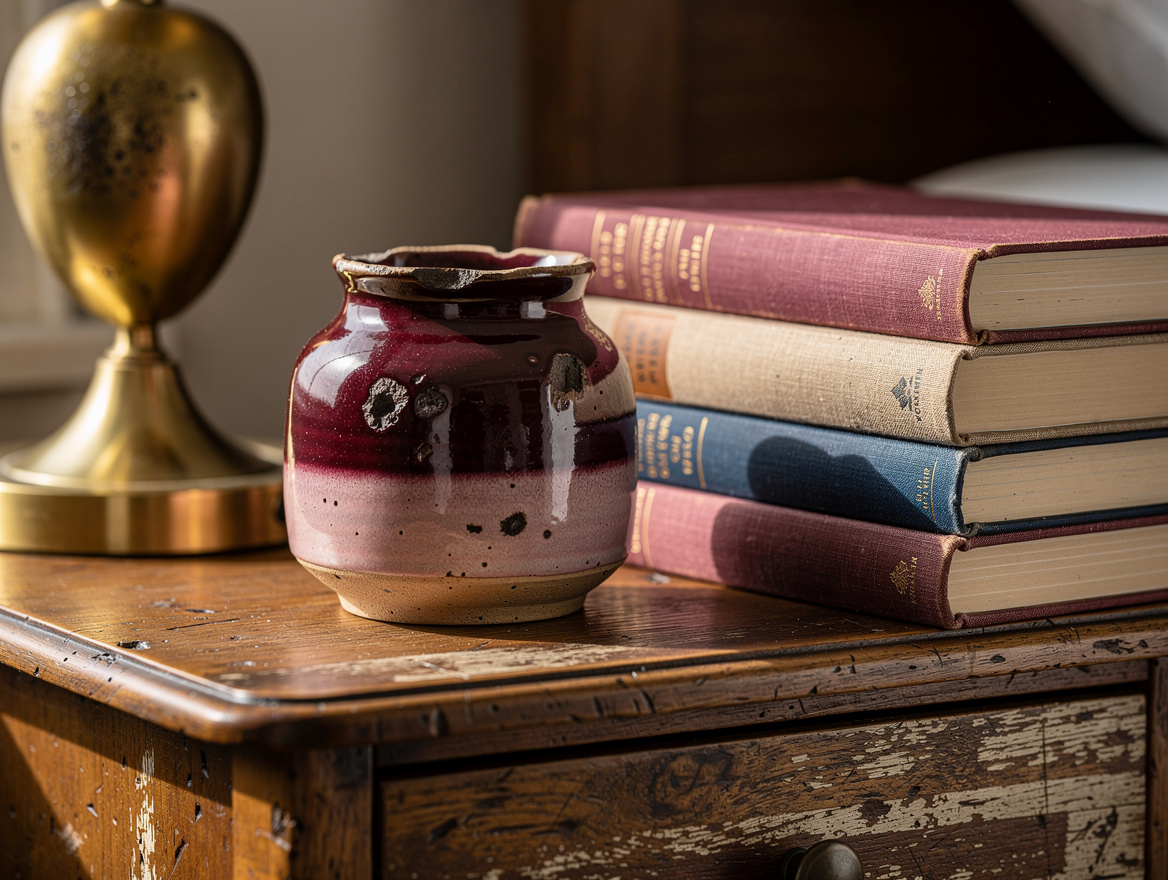
The last layer came from a thrifted frame, a small stack of books, and an imperfect ceramic vessel. I placed one or two objects on each nightstand rather than buying coordinated decor sets, which can make even expensive furniture feel staged.
An antique mirror, oversized print, or framed original can become the room’s second anchor, while IKEA frames and second-hand ceramics keep the cost controlled. The best mix has a little age, a little irregularity, and enough open surface to let the furniture breathe.
Start with the bed, then choose the rug before buying decorative pieces. Once those two layers feel right, let the nightstands, lighting, and objects arrive with a little imperfection.
Mia Carter writes about small-space living and budget home makeovers. She has restyled three rentals and tests most ideas in her own 45 sqm flat.