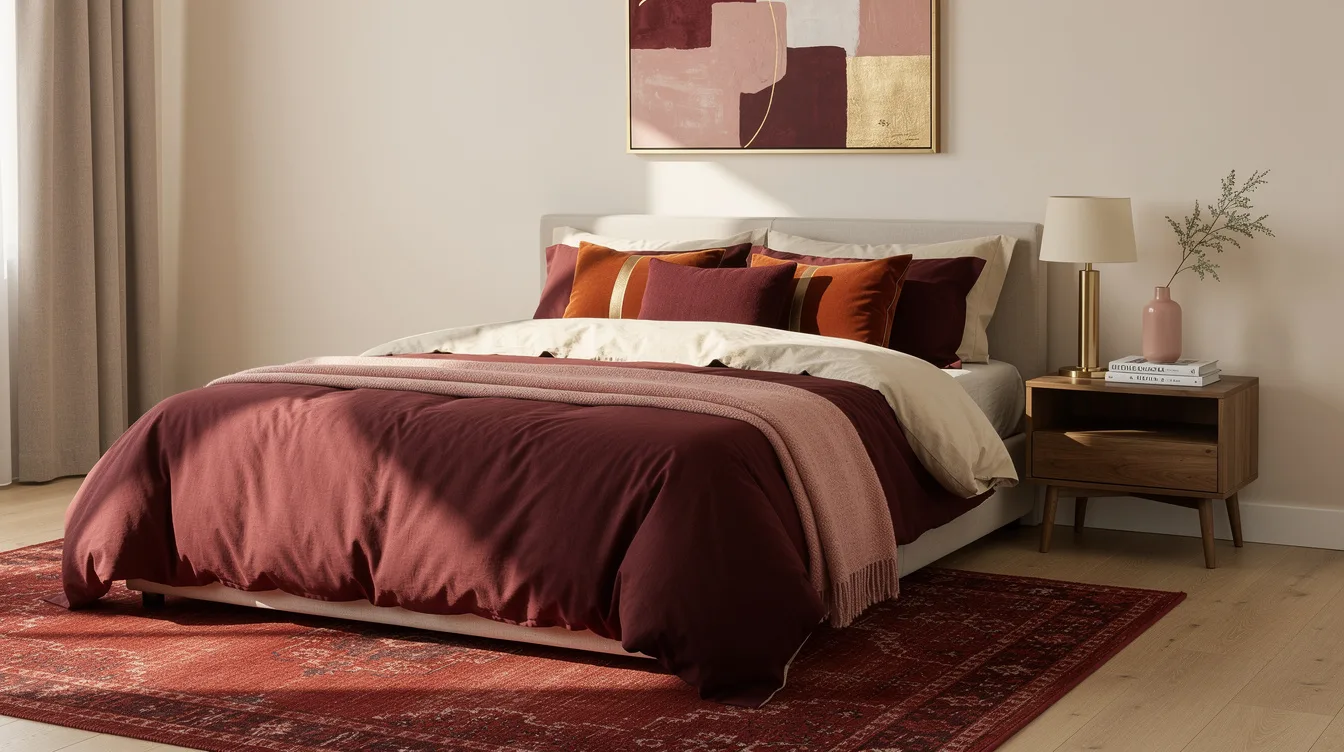
My lease has one line I’ve reread more often than the rent clause: no paint, no exceptions.
I still wanted the bedroom to read brick red instead of builder beige, so the color had to arrive in fabric, starting with a 5-by-8 rug that cost around $60.
Three rentals in, I’ve learned that red punishes you for going all in. Ration it and it looks like money; flood the room and it looks like a themed suite off a highway exit.
Ration the Red to Roughly a Fifth of the Room
Red should fill somewhere between 10 and 20 percent of what you see from the doorway. Go past that and the room stops feeling calm.
The formula I keep coming back to is one large red piece plus two or three smaller echoes.
A burgundy duvet with a lumbar pillow and a red-brown ceramic lamp base looks deliberate. Six red things competing for attention looks like a gift shop.
Pick your shade before you pick your products. Brick red, terracotta, oxblood, burgundy and red-brown all behave like grown-up neutrals.
Bright primary red doesn’t. It bounces off white ceilings and turns the whole room slightly aggressive at night.
Swap the Duvet Before You Buy Anything Else
Bedding shifts more color per dollar than anything else in a bedroom, and the swap takes about four minutes.
Keep everything underneath quiet. White, cream, taupe or charcoal sheets give the red something to sit against.
IKEA’s ÄNGSLILJA washed cotton comes in a brown-red that reads warmer in person than it does on screen. Expect roughly $30 for the twin and around $50 for the full/queen, which measures about 93 by 86 inches.
If you want the color to look expensive, washed linen or percale is where that happens, typically $80 to $180 for a set.
One measurement worth checking before you order: a 60-inch queen with a thick topper usually needs the king cover, about 102 by 94 inches, for drape that actually reaches the rails.
Drape a Throw Across the Bottom Third of the Bed
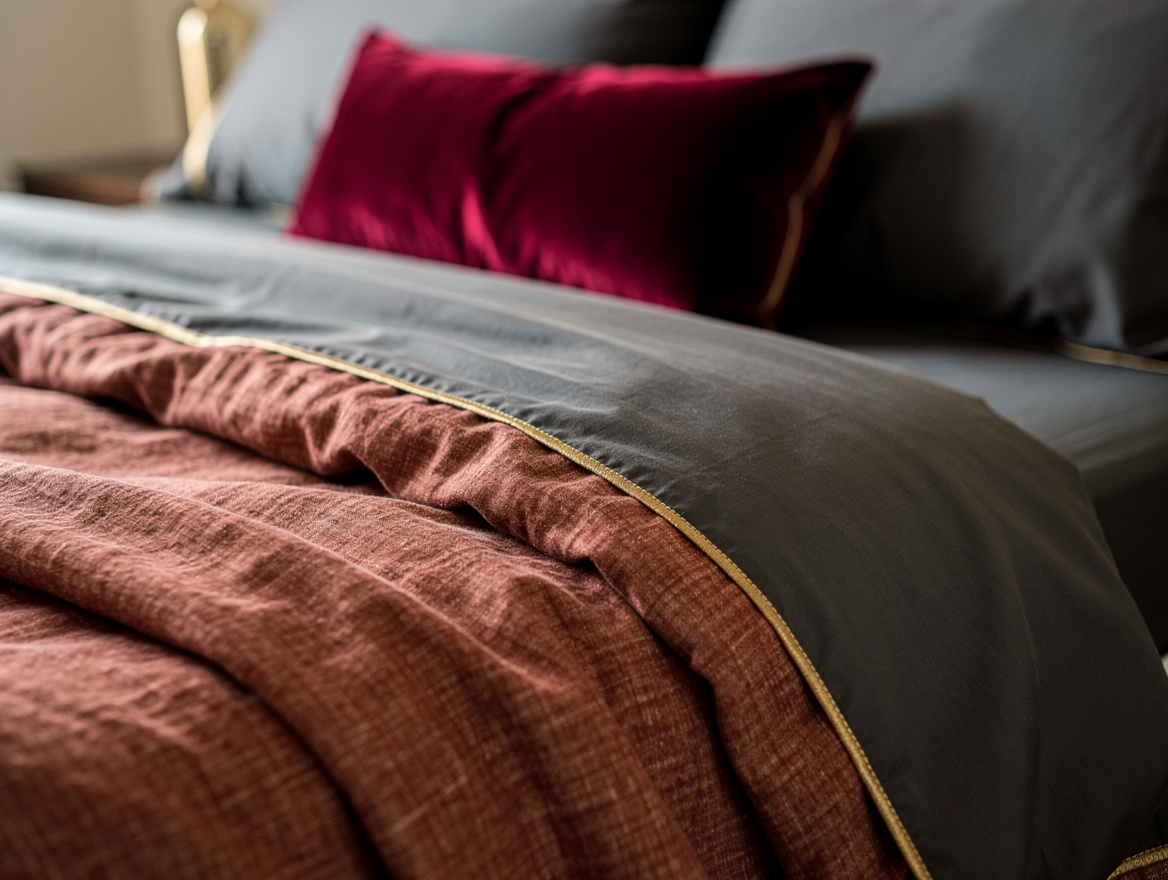
A throw folded over the foot of the bed gives you red without committing the entire mattress to it.
Pull it across roughly the bottom third, then let one corner fall out of line. Perfect symmetry here looks staged.
Size it honestly. About 50 by 60 inches covers a twin or full, while a queen or king wants something closer to 70 by 90 inches or it reads like a napkin.
Material decides everything. Cotton gauze, quilted cotton, washed cotton and wool blends all hold the color matte.
Shiny polyester catches a hard highlight in daylight and looks cheap from six feet away. Costco runs wool-blend throws around $30 when they come in, and those are the ones I grab.
Buy Pillow Covers and Keep the Inserts
Covers, not filled cushions. You keep one set of inserts and swap the whole palette for the price of lunch.
IKEA GURLI in red is usually about $5 for a 20-inch cover, which is the cheapest color change available to a renter.
The velvet SANELA runs closer to $15 at the same size and looks three times that. Velvet holds shadow, so the red gets depth instead of flatness.
My layout is two 20-inch squares standing at the back and one 12-by-20 lumbar leaning in front.
A 26-inch euro square in light red works on a king. On a full it swallows the headboard and the bed starts to look short.
Cotton reads casual, velvet reads hotel. Pick a lane and don’t mix the two on one bed.
Anchor the Floor With a Low-Pile Rug
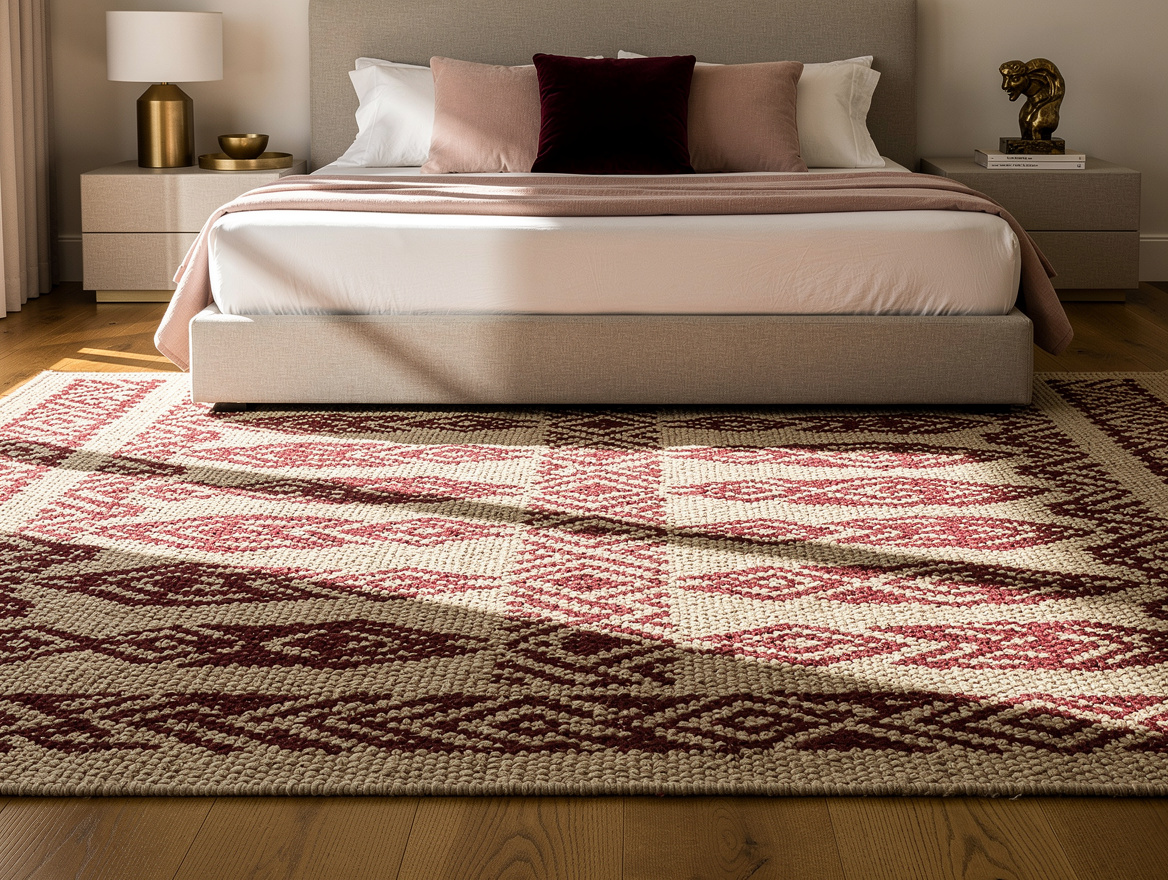
The rug is the best substitute for a painted wall, because it delivers one big uninterrupted field of color the second you walk in.
Lay it perpendicular to the bed, starting about two-thirds of the way down the mattress so the nightstands stay off it.
It has to extend 18 to 24 inches past every side you actually step on. Small rooms take a 4-by-6, a standard queen wants a 5-by-8 or 6-by-9, and a king setup needs an 8-by-10.
IKEA VONSBÄK in low-pile red typically lands near $60 in the smaller size, and the flatwoven cotton options in off-white and red sit in the same range.
Handmade wool like BRÖNDEN runs closer to $350 and will outlast three apartments. Machine-made pieces at Wayfair or Amazon generally cover $50 to $180, with mid-range wool starting around $200.
Put the Red on the Curtain Edge, Not the Whole Panel
Full red curtains only work in a room with strong daylight. Everywhere else they push a sour pink across the ceiling by late afternoon.
Use an off-white linen panel with a wine-red border or a wine-red lining instead.
I sewed a 3-inch band of burgundy velvet down the leading edge of a $35 pair one evening, and it’s the thing guests ask about first.
Hang the rod high and run it 6 to 10 inches past the window on each side so the fabric frames the glass instead of covering it.
Finished width should be 1.5 to 2 times the rod length, and most rooms need panels in the 96-inch to 108-inch range.
Ready-made pairs at Target or Walmart typically run $30 to $80. Made-to-measure starts around $150 and climbs fast.
Prop an Upholstered Headboard Against the Wall
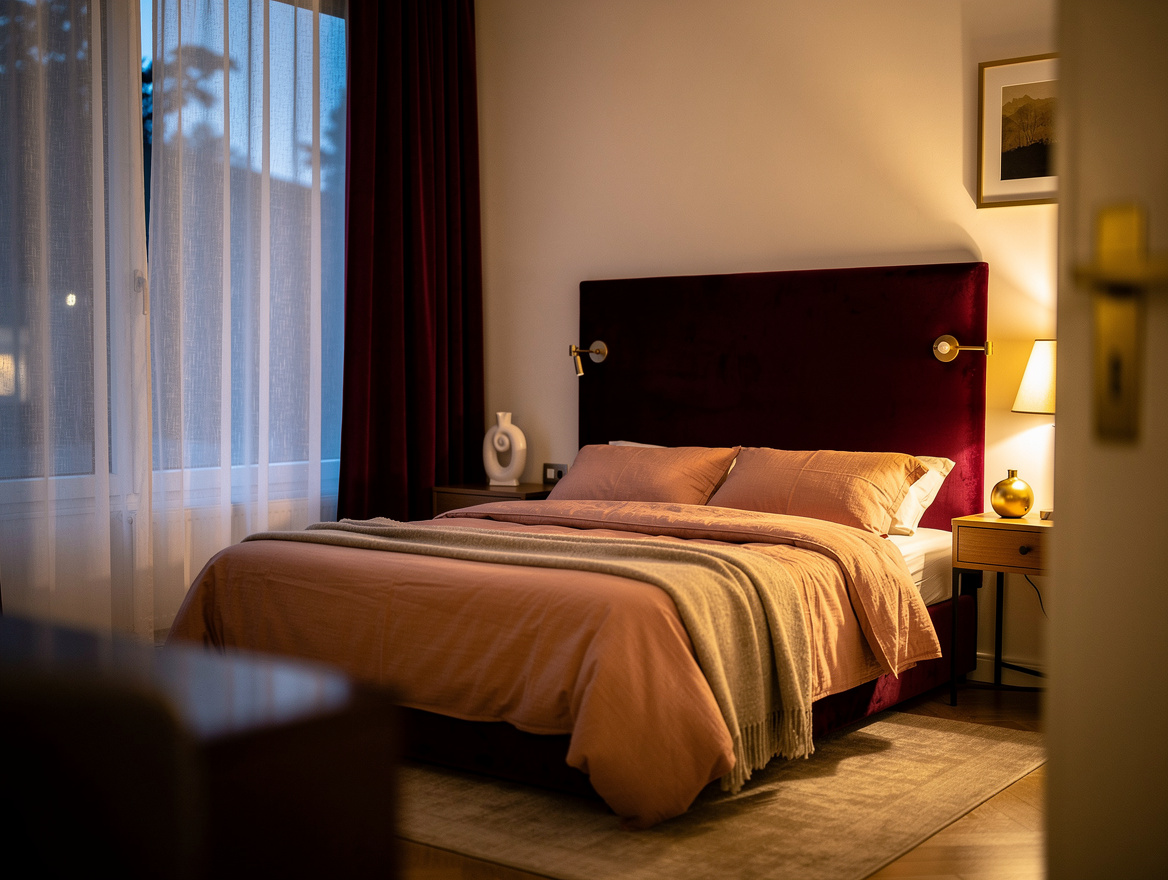
This is the closest thing to an accent wall you can take with you when the lease ends.
An oxblood velvet panel behind neutral bedding does the job paint would do, minus the primer and the deposit argument.
Size it to bed width plus 4 to 8 inches, so about 64 inches for a 60-inch queen, with a height between 40 and 52 inches.
Go shorter than that and the pillows swallow it. Go taller and it starts competing with the ceiling line in a standard 8-foot room.
A DIY build using plywood from Home Depot, 2-inch foam and heavy fabric usually comes in near $150 to $250, and it leans against the wall without a single screw.
Ready-made upholstered headboards generally start around $300, with a full upholstered bed landing between $450 and $1,200. Performance velvet is worth the upcharge if a dog sleeps in that room.
Start with the duvet and the pillow covers, then live with the room for a week before you commit to a rug.
That first pass usually lands near $100, and nothing in it requires a conversation with your landlord.
Mia Carter writes about small-space living and budget home makeovers. She has restyled three rentals and tests most ideas in her own 45 sqm flat.