
A luxury bed can look unfinished even when every pillow is expensive. The fix is often one deliberate foreground layer, usually a lumbar measuring roughly 14 × 36 or 12 × 48 inches.
Place sleeping pillows behind it, add Euro squares only when the bed needs more height, and let one oversized lumbar carry the final horizontal line. The result feels edited, comfortable, and far less fussy than a stack of small decorative cushions.
Center One Long Foreground
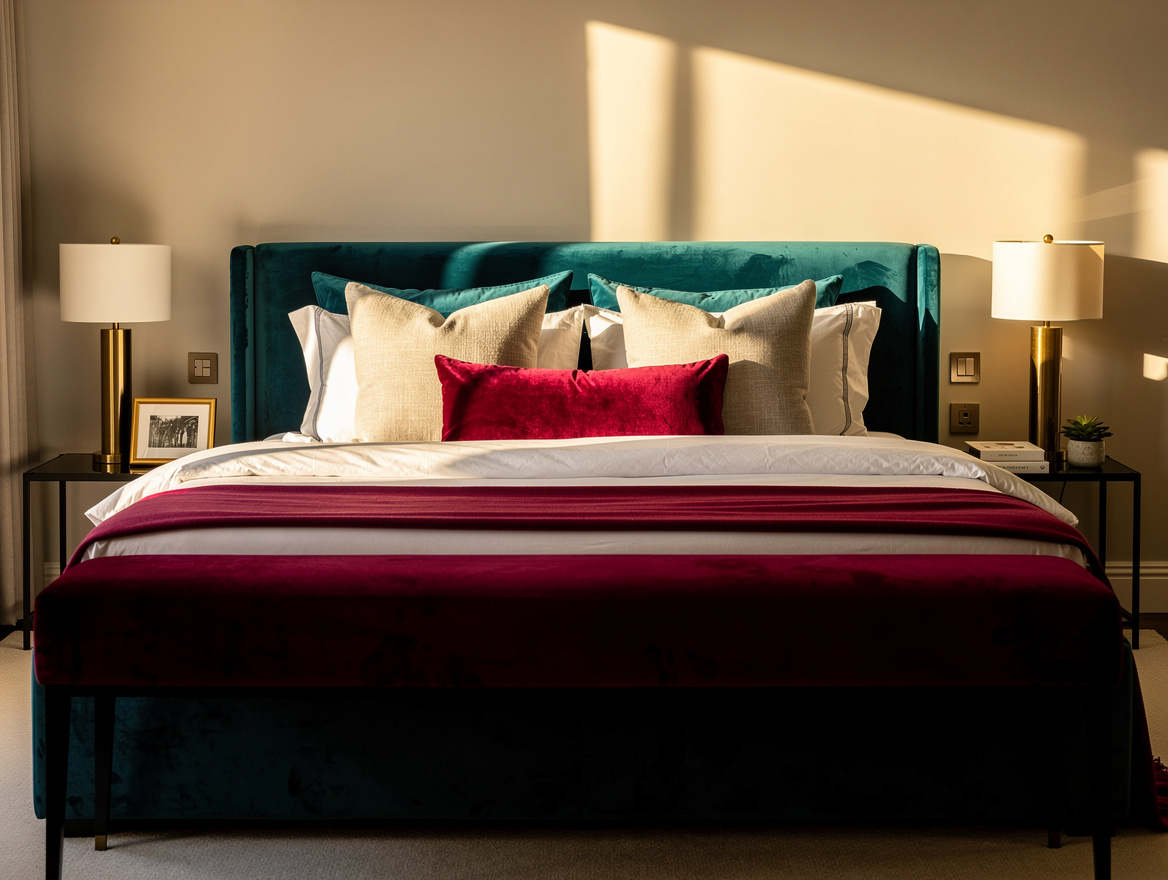
The arrangement works because the lumbar acts as the final foreground layer. Place sleeping pillows at the back, add optional Euro squares in the middle, then center one oversized lumbar across the front.
That single horizontal shape gives the bed a finished edge without creating a crowded mound. A 14 × 36-inch version is a practical starting point for a queen bed, while a longer 12 × 48-inch format can hold its line across a king.
Match the Length to the Bed
Use the bed width as your visual guide, not the size of the mattress alone. On a queen, a 14 × 36-inch lumbar leaves breathing room at both sides; on a king, a roughly 12 × 48-inch pillow creates the uninterrupted band that makes the arrangement feel intentional.
These are useful retail sizes for 2026 shopping, not custom-only measurements. Target carries ready-made 36-inch options, while a 42-inch lumbar can bridge the gap when 36 inches feels too short and 48 inches feels too dominant.
Keep the Back Row Quiet
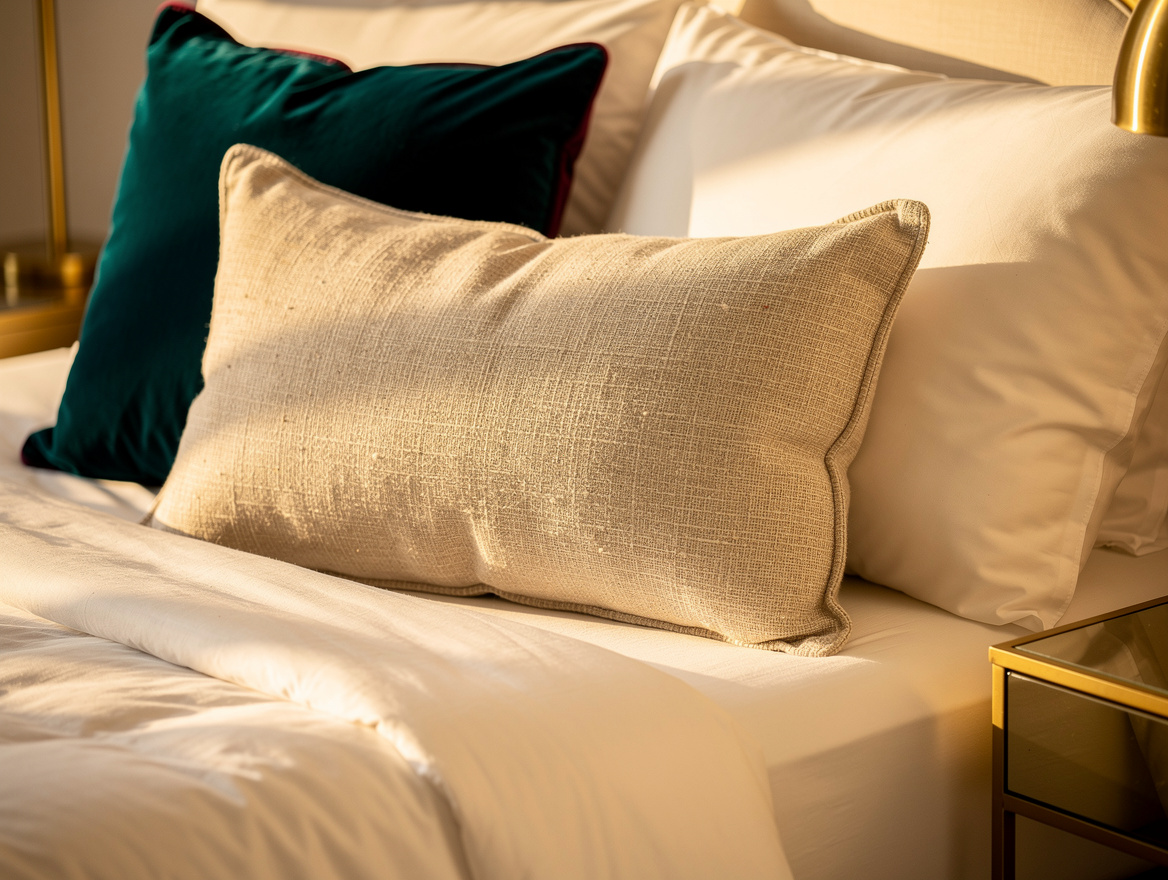
The front pillow gets the visual authority, so the sleeping pillows should support it quietly. Crisp white cotton, soft ivory linen, or a simple solid sham gives the arrangement a calm foundation.
On a layered queen bed, use two sleeping pillows, two Euro squares, and one lumbar. For a minimal hotel look, skip the squares and place the lumbar against two or four sleeping pillows, depending on the bed width and the height of the headboard.
Choose Texture Before Pattern
Start with the hand and surface of the fabric, then decide whether the bed needs a pattern. Natural linen brings a dry, relaxed finish to plain bedding, while cotton velvet gives a richer look with less visual movement.
For a country-house mood, try flax-colored linen, a woven surface, or restrained tassels. For a contemporary room, chestnut, espresso, moss, or muted blue can supply enough depth without forcing the rest of the bedding to compete.
Use One Strong Horizontal Note
The lumbar should introduce one clear idea: texture, color, or pattern. A restrained stripe on a neutral bed can work beautifully, but combining a stripe, tassels, embroidery, and a high-contrast Euro arrangement usually makes the bed look busy.
Target’s Threshold oversized oblong decorative pillows include woven and knotted-fringe options around $35, giving renters an accessible way to test the proportion before spending more on custom-looking textiles.
Keep the rest of the bed relatively quiet when the lumbar has a strong weave or saturated shade. The best arrangements let the long pillow read as one confident horizontal mark.
Separate the Cover From the Insert
Shopping gets confusing when a cover and a complete pillow appear beside each other at different prices. A ready-made decorative pillow from Target may cost about $35, while a filled linen lumbar can run around $105, and a premium designer cover may reach roughly $150 to $180 before the insert.
Feather filling gives the lumbar a softer, more substantial profile and allows the corners to be shaped. A cover-only purchase can still be worthwhile, but check the finished dimensions and buy an insert made for that exact long, low form.
Do not judge a $70 cover against a $105 filled pillow as though they are equivalent purchases. The insert, zipper, fabric weight, and finishing details all affect the final price and the way the pillow holds its shape.

Edit the Finish Before You Buy
Stand back from the bed and inspect the empty spaces around the lumbar. Its ends should feel connected to the bed width, while its height should leave enough of the sleeping pillows visible behind it.
Quilted cotton works when you want a cleaner, lighter accent; velvet works when the room needs weight; linen works when you want the bedding to feel relaxed rather than formal. Choose the material that corrects what the bed currently lacks.
If the headboard is tall or strongly patterned, use a quieter lumbar and let the silhouette do the work. If the headboard is plain, a muted stripe or woven texture can supply the detail without adding another row of cushions.
Start by laying the bed with its sleeping pillows, then measure the open width before choosing the lumbar. Pick the longest proportion that leaves a little breathing room at each side, and spend the rest of the budget on a fabric you will enjoy seeing every morning.
Mia Carter writes about small-space living and budget home makeovers. She has restyled three rentals and tests most ideas in her own 45 sqm flat.