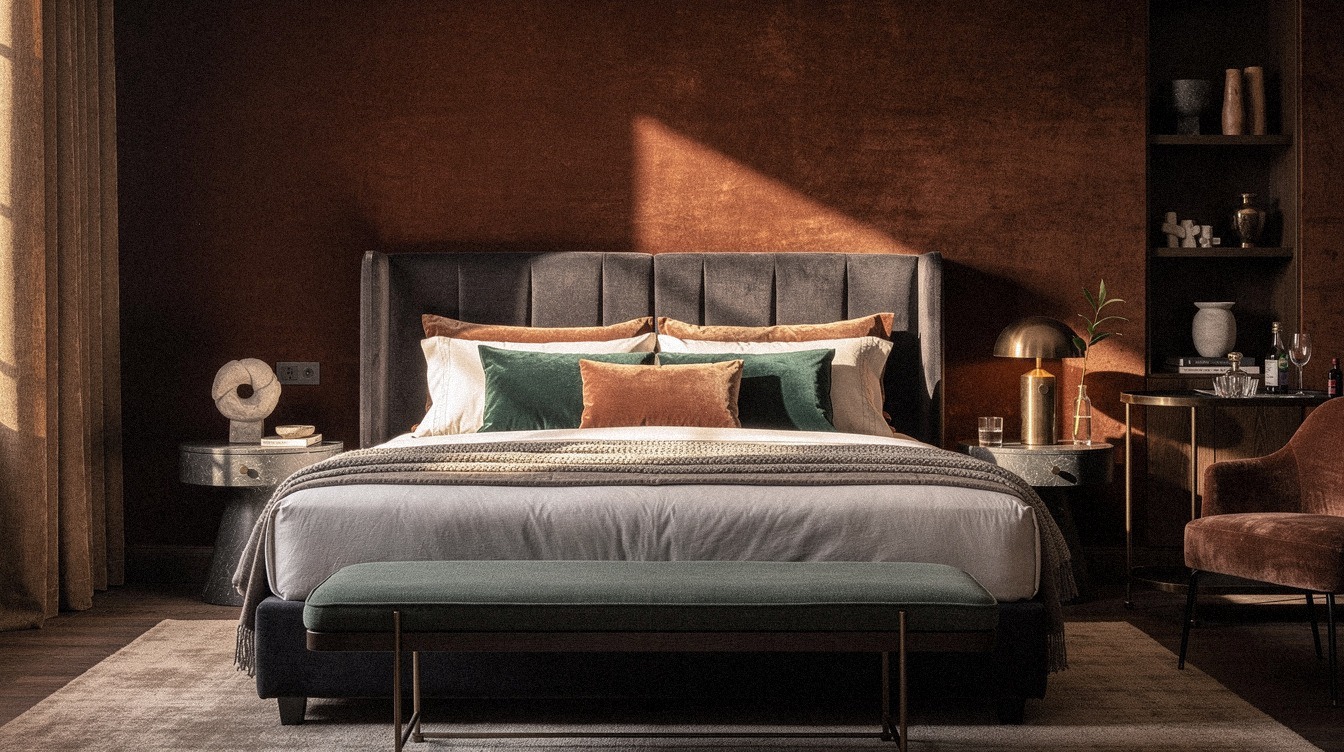
A speakeasy bedroom usually costs about $200 to $800 if you’re repainting, upgrading bedding, adding shades, and tightening the lighting. I’ve watched a lot of bedrooms chase the hotel look with more pillows and brighter bulbs, and that never gets you there. You need depth, shadow, and a little restraint. Do that in the right order, and your room starts feeling private the second you walk in.
Before You Start: The Two-Wood Rule and the Three-Light Stack
Before you buy one more throw or framed print, decide on the bones you want to repeat. I use what I call the Two-Wood Rule in a moody speakeasy room: one darker wood for the big anchors, one warmer wood for the softer touch points. If your bed is deep walnut, let the bench or frame bring in white oak or aged chestnut so the room doesn’t flatten out.
Then build the light plan first. The Three-Light Stack is simple: one low bedside glow, one soft corner wash, one ceiling or reflected shine.
That’s why the boutique-hotel bedrooms people remember don’t feel harsh at 9 p.m. If you’re already reworking fixtures, this piece on swapping rental light fixtures without regret is worth a look before you drill anything.
- Start with tobacco walls behind the bed
- Anchor the room with a velvet headboard
- Layer amber sconces beside the nightstands
- Hang smoked mirrors over dark wood dressers
- Build a hidden bar tray on a vanity
- Drape heavy curtains from ceiling height
- Paint the ceiling a glossy espresso
- Tuck a leather bench at the foot
- Style brass lamps with pleated black shades
- Frame vintage cocktail prints above the bed
- Add a carved screen beside the wardrobe
- Glow up corners with low amber uplights
- Finish with satin bedding in oxblood tones
1Start with tobacco walls behind the bed
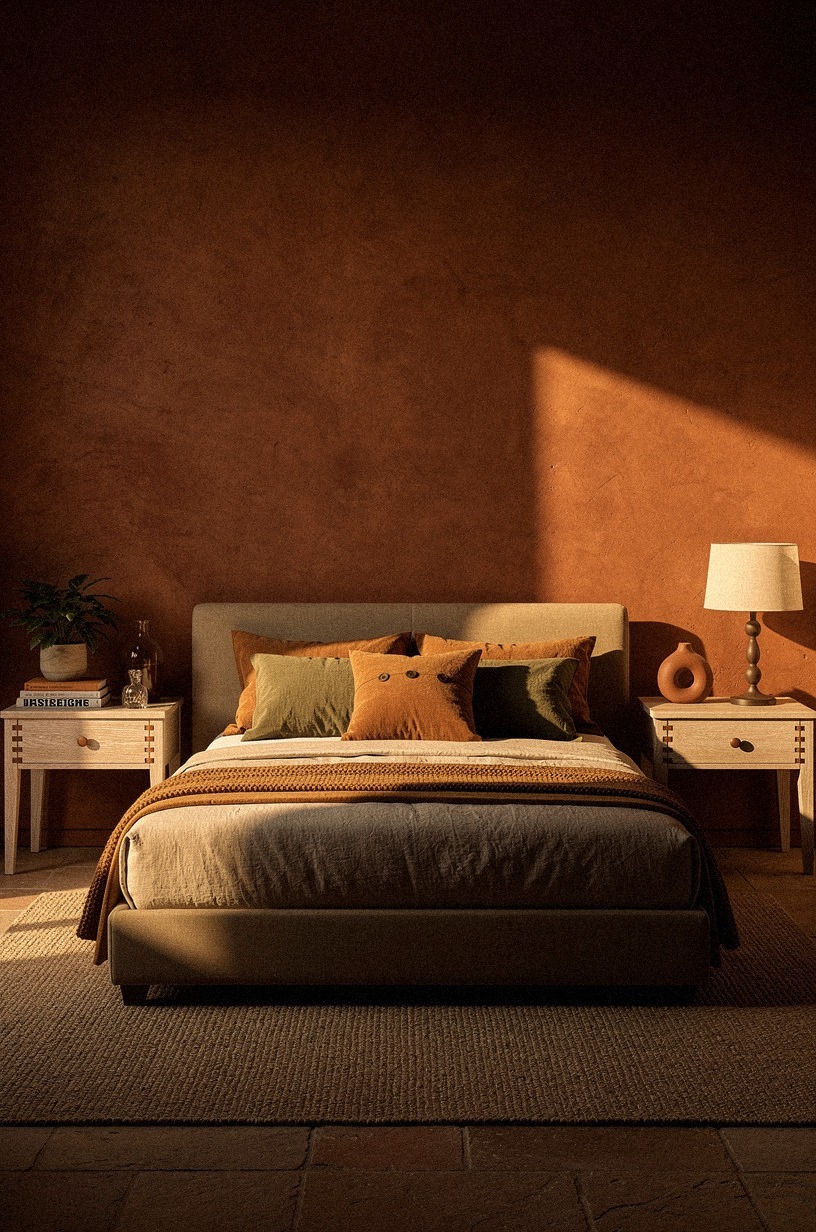
Paint the wall behind your bed first, because that one move decides whether the room reads flat or clubby. You want tobacco, not generic brown, so look for a tone with terracotta undertones and a little clay in it. A queen bed at 60×80 inches needs enough dark field around it to feel intentional, and that backdrop is what gives the bed its gravity when you see it from the door.
I wouldn’t wrap every wall in the same deep tone unless your room gets reliable afternoon light. One accent wall is usually smarter, especially if your trim stays lighter in Benjamin Moore Pale Oak OC-20 or a soft parchment.
But if you’re tempted to stop at beige, don’t. In a speakeasy apartment aesthetic, the wall behind the bed should feel like the room’s handshake.
Warm, low, a little mysterious.
2Anchor the room with a velvet headboard
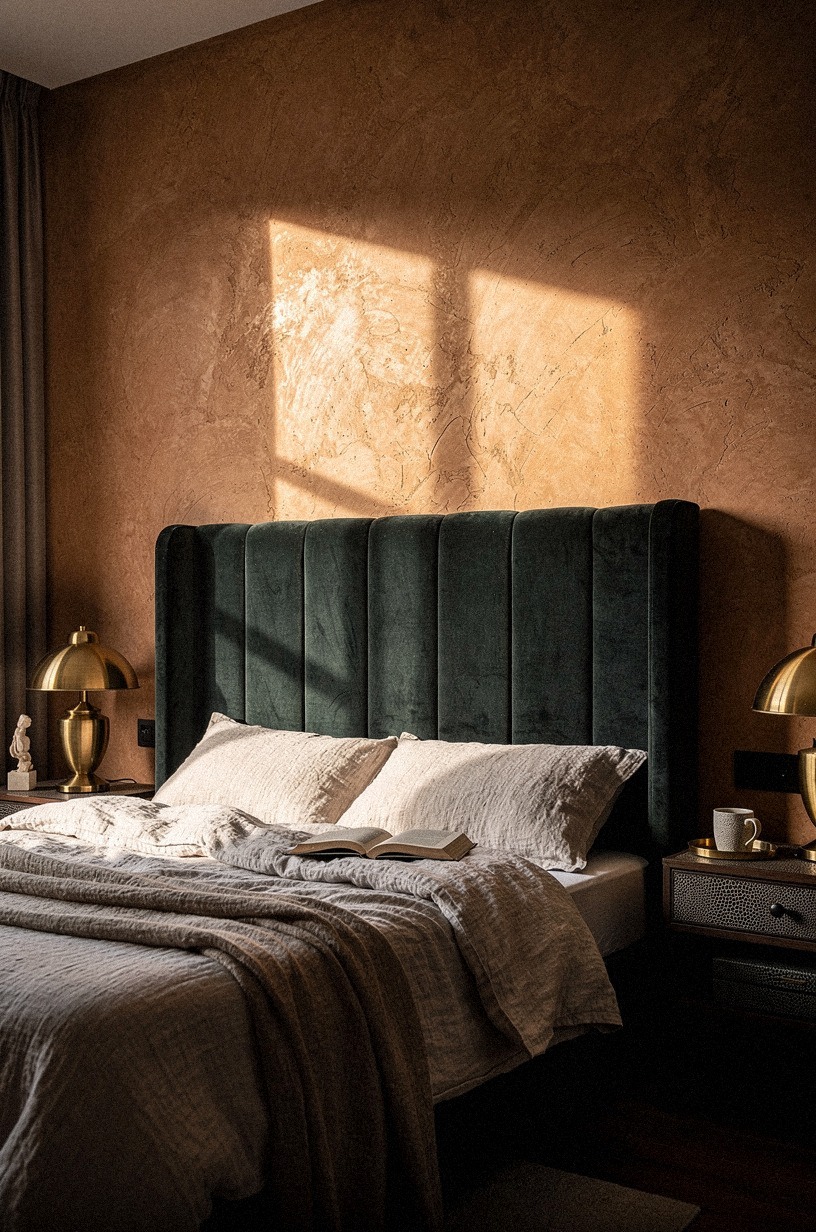
Once the wall has depth, you need a soft surface that catches light instead of bouncing it back hard. That’s why a cotton velvet headboard works so well here, especially in tobacco, plum, or dark olive. When you step into the room and the bed sits slightly off-center, that plush plane keeps the whole composition from feeling too rigid.
You don’t need a custom piece to get the effect. Typical upholstered headboards run about $250 to $900, and I’d rather see you buy a simpler shape in a rich fabric than an ornate frame in cheap faux leather. The leather looks loud fast.
You feel the difference right away! If you want more hotel energy around the bed, the layering approach in this five-layer hotel bed breakdown pairs well with a dark headboard because it softens the room without bleaching it out.
3Layer amber sconces beside the nightstands
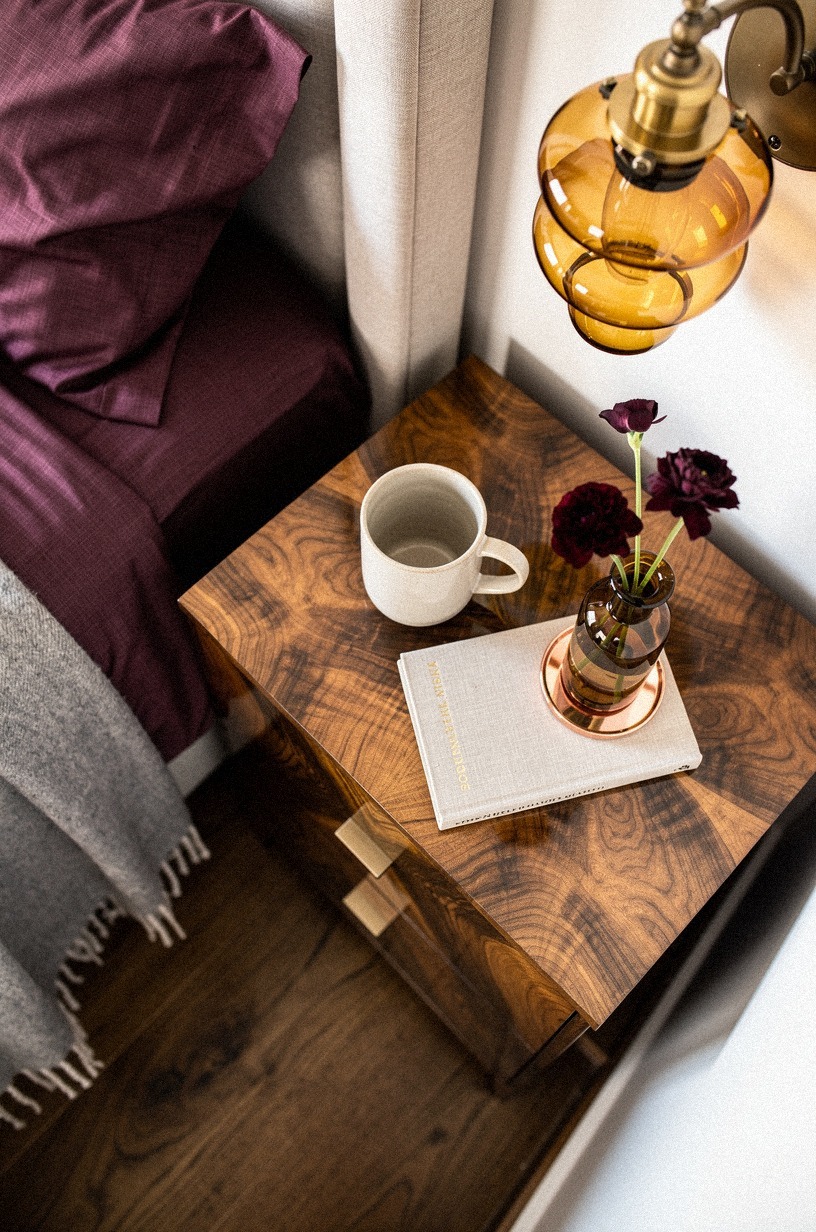
Your bedside lighting should glow sideways, not blast straight down on your face. I like amber sconces beside nightstands that sit roughly 24 to 28 inches tall, close to mattress height, because the proportions feel calm and the wiring line lands where your eye expects it. If the room already has plum, brass, and tobacco in play, a warmer bulb pulls those colors together in seconds.
But keep the shade small and the metal warm. Unlacquered brass or aged bronze both work, and pleated or parchment shades keep the light from looking sterile.
Have you ever noticed how cheap bedrooms always look brightest at the wrong moments? That’s the mistake.
A dimmer helps, and so does thinking about this step like mood control, not task lighting. If you rent, use the same logic from these hotel-style rental fixture swaps and store the originals in a closet.
4Hang smoked mirrors over dark wood dressers
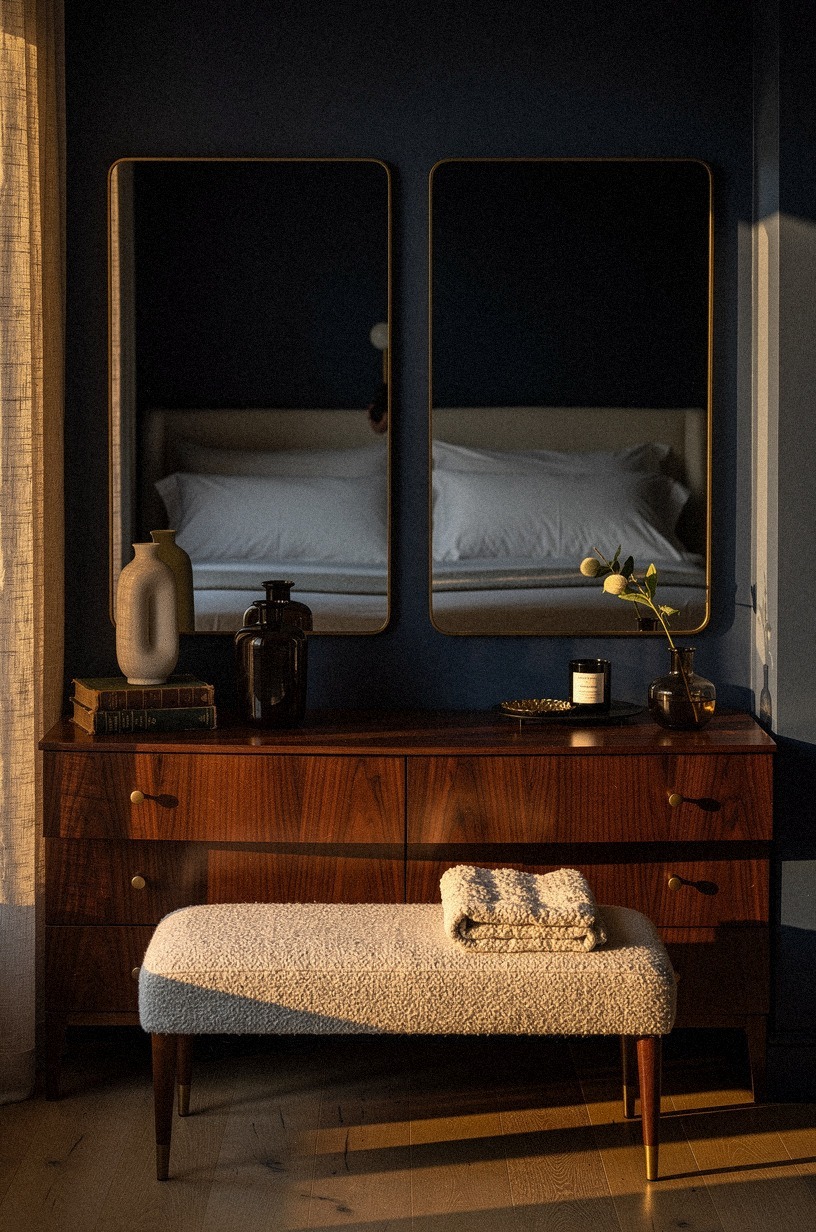
A smoked mirror over a dresser gives you reflection without the full bounce of clear glass. That’s important in a dark cozy bar interior mood, because you want some shimmer and depth, but you don’t want the room turning into a makeup station. Over a walnut dresser or ebonized oak case piece, that slightly tinted mirror reads older, richer, and quieter.
I like two matching mirrors if the dresser wall is wide enough, but they need to sit with discipline. Keep the bottom edge low enough to relate to the dresser, not floating in no-man’s-land. And don’t overfill the top with bottles, trays, and random bowls.
One dish. One box. One framed object.
That’s enough. If your bedroom doubles as a work zone, the tighter edit in this bedroom desk piece about the $299 chair is a good reminder that fewer visual interruptions usually win.
5Build a hidden bar tray on a vanity
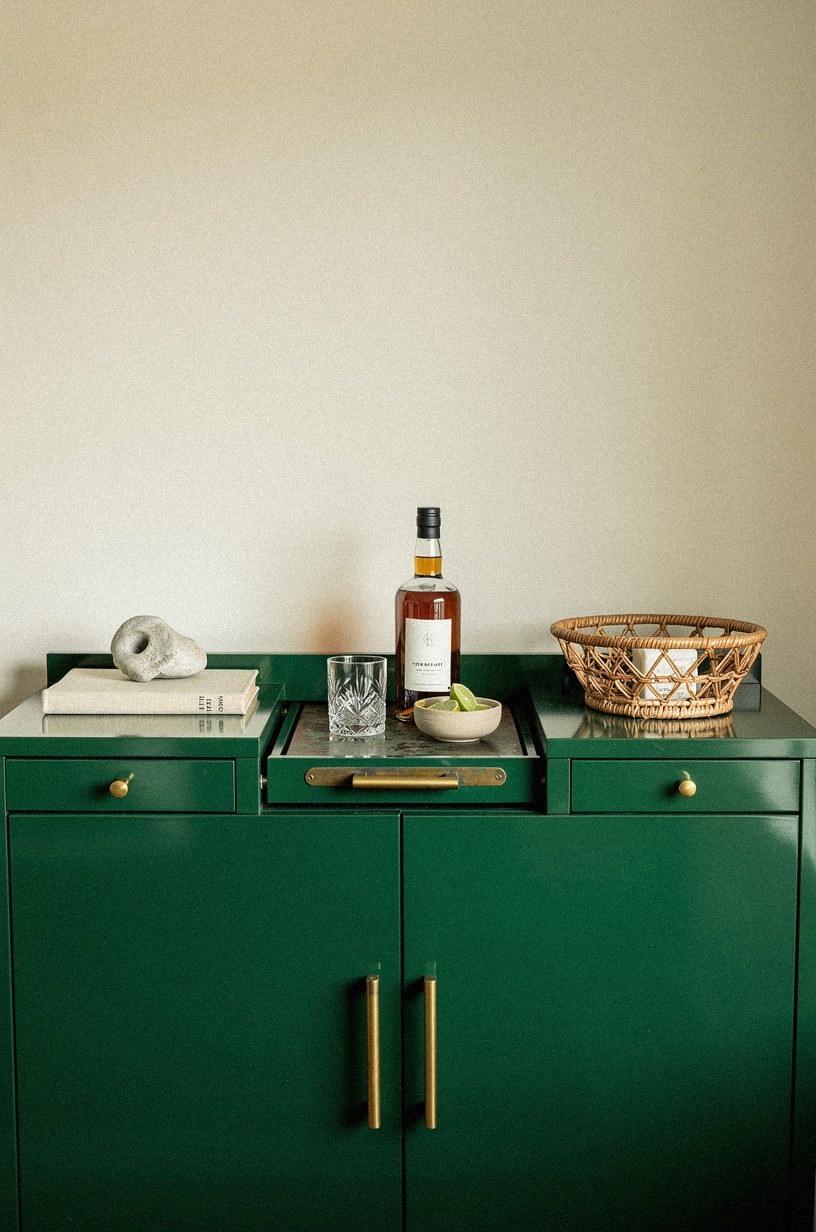
This is where the speakeasy part can get corny fast, so keep it controlled. A hidden tray on a vanity should look like part of the furniture until you pull it forward at night.
Think one lacquered tray, two low glasses, a small ice bucket if you have the room, and maybe a linen napkin tucked under a coupe. Not a novelty cart.
Not a themed moment.
I prefer an emerald or black vanity with one clean surface and a stool that disappears underneath. If you style the tray within a tight footprint, the room still feels restful in daylight.
But if you line up bottles across the top, you’ll lose the private-hotel calm right away. The best version feels discovered, not announced, which is why I keep thinking about the restraint in these hotel essentials guests notice first.
Small moves. Big payoff!
6Drape heavy curtains from ceiling height
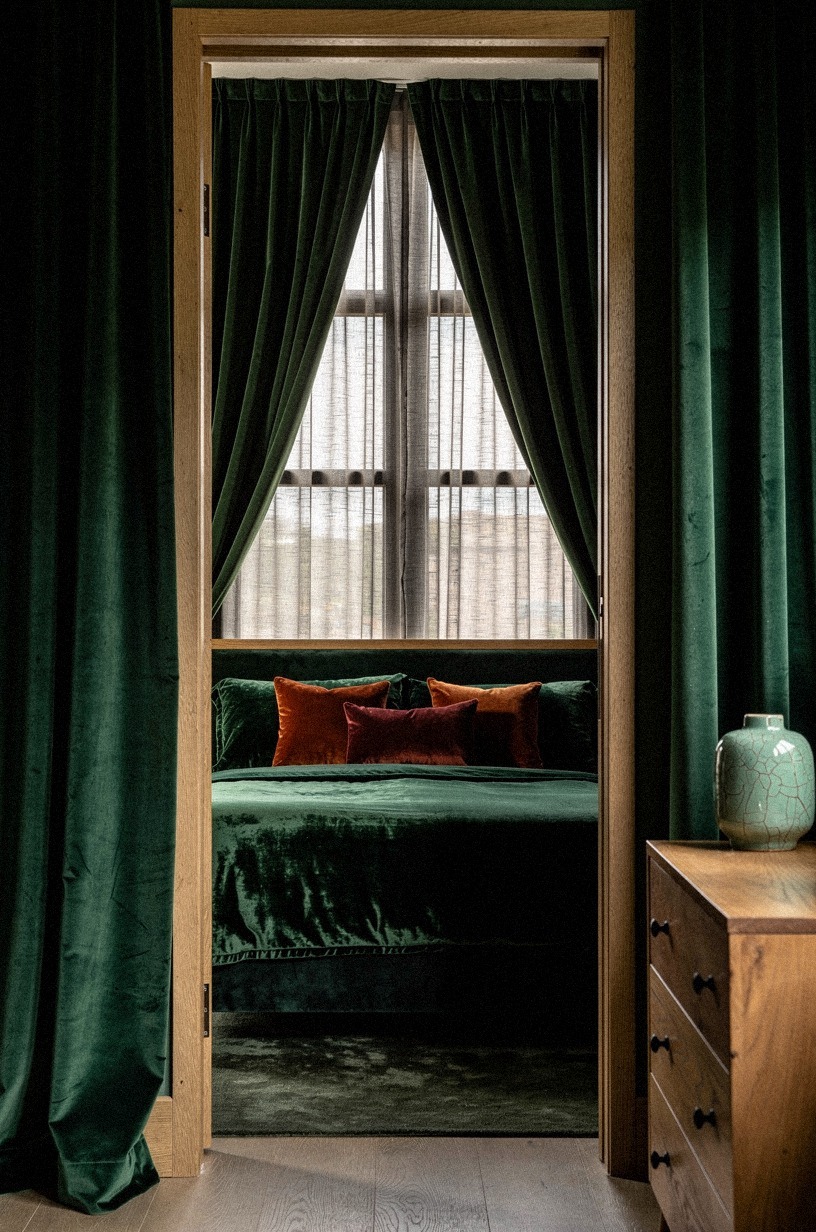
Ceiling-height curtains are the fastest way to make a regular bedroom feel expensive. Mount them high, let them kiss the floor, and choose a weight that blocks daylight without hanging stiff like theater scenery. Belgian flax linen lined with blackout backing works well, especially when the room already has heavier woods and softer wall color.
Typical linen drapes cost about $120 to $400 per pair, and this is one place where width matters more than pattern. I want fullness, not a starched panel stretched flat.
If your windows sit behind the bed view, that fabric becomes part of the architecture, not an accessory. And if you’re dealing with a small footprint, the spacing ideas in this guest-bedroom hotel checklist can help you keep the room from feeling swallowed.
7Paint the ceiling a glossy espresso
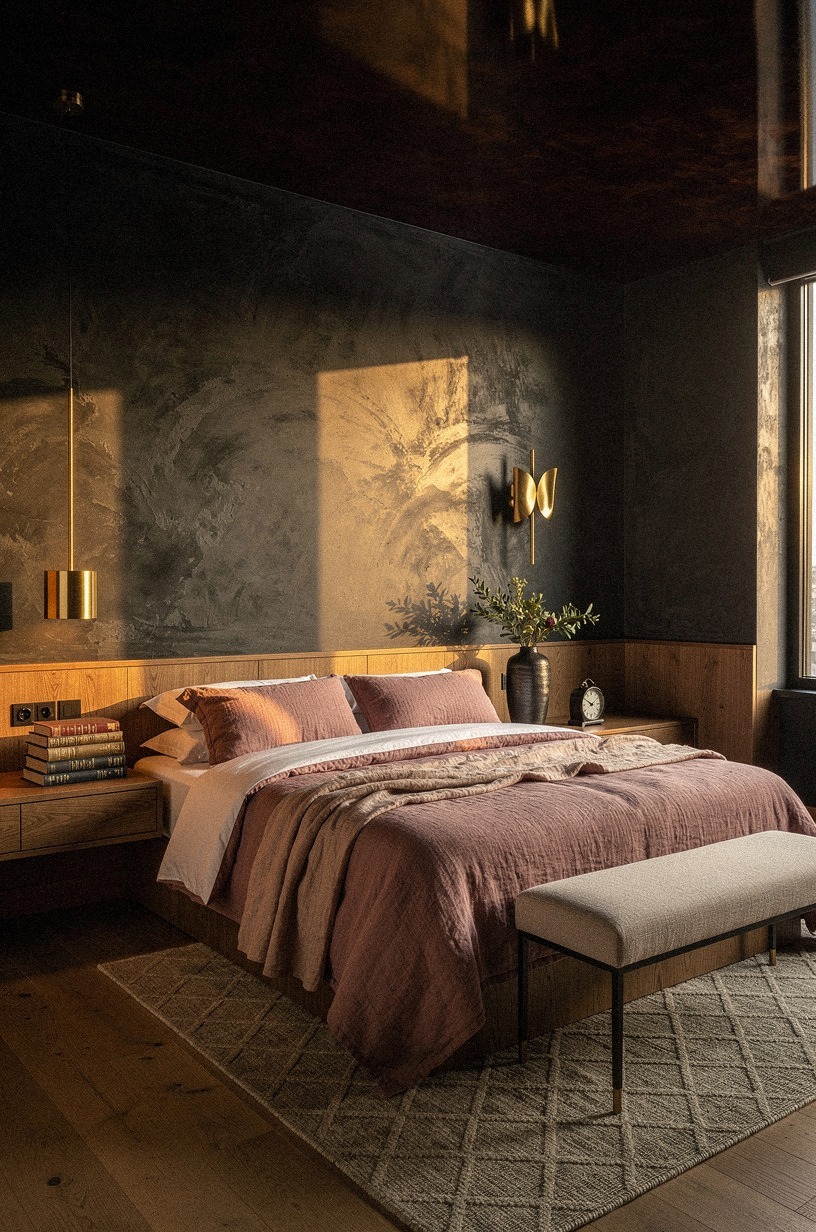
Most people stop at the walls. I’d go one step further and darken the ceiling, because that reflective espresso finish makes lamplight bounce in a way flat paint never will. In a boutique-hotel room with duskier bedding and brass accents, the ceiling becomes less of a lid and more of a shadowy mirror.
This step works best when the trim below it stays restrained, and I’d rather pair glossy espresso with Sherwin-Williams Accessible Beige SW 7036 on adjacent trim than with bright white. Bright white snaps the illusion in half.
But test the sheen first. A bad gloss shows every patch mark, every seam, every rushed roller pass.
The part that worked for me was sanding longer than I wanted to, then rolling slowly. Worth it.
8Tuck a leather bench at the foot
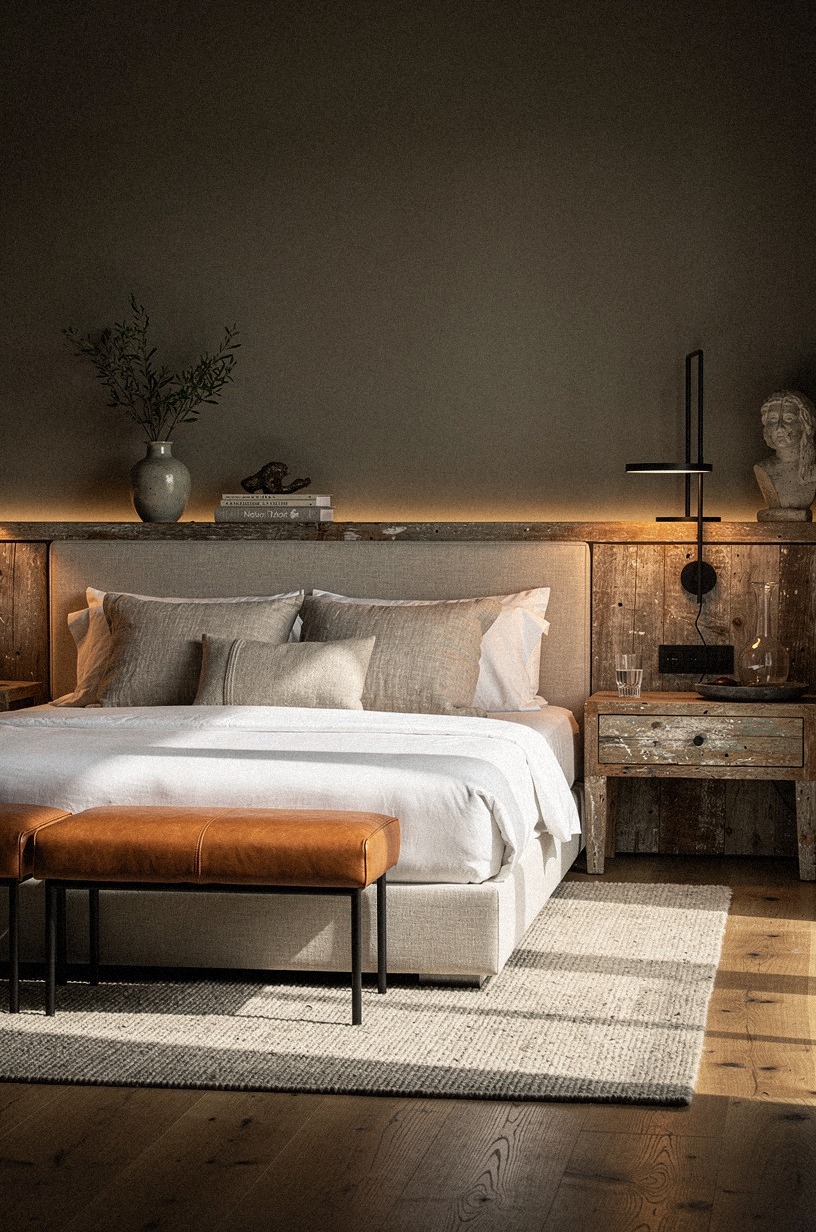
A bench at the foot of the bed gives you a landing spot, and in this look it should feel worn-in rather than sleek.
9Style brass lamps with pleated black shades
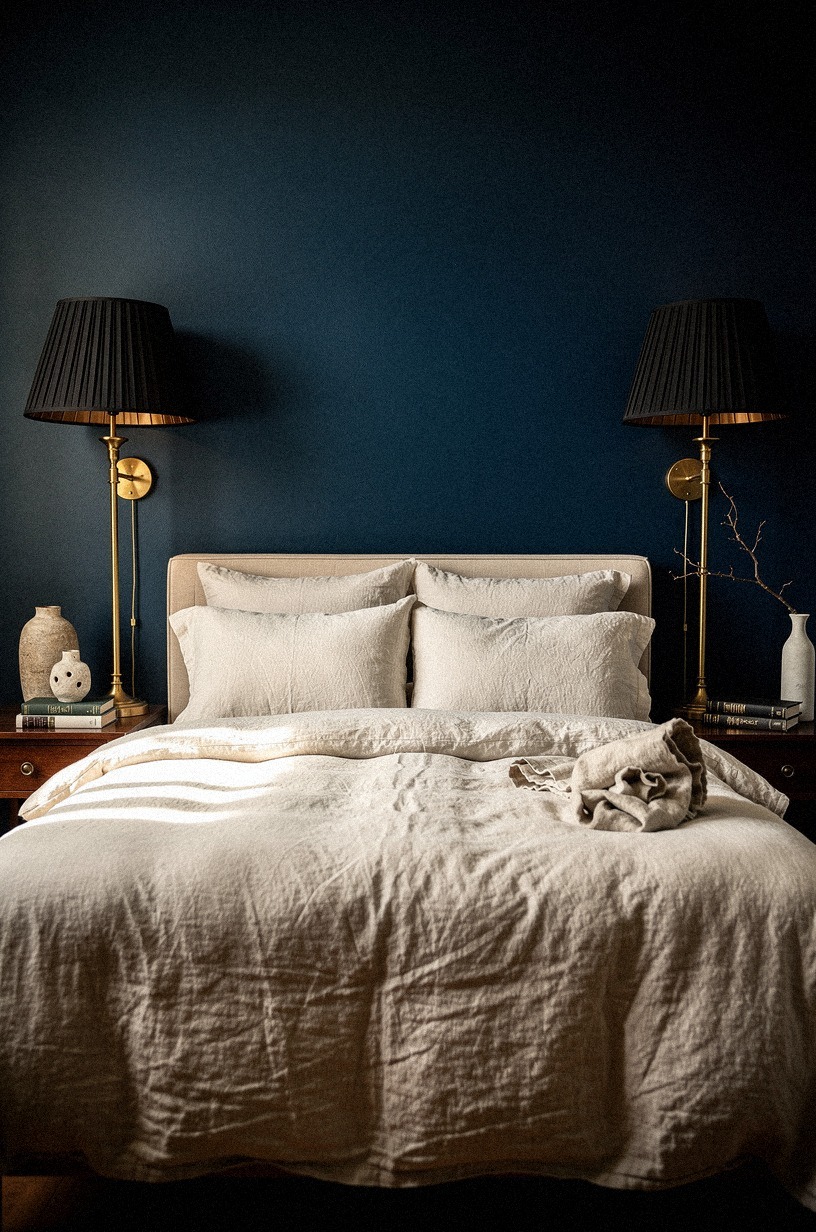
If the sconces handle the side glow, your bedside lamps should bring weight and rhythm. Brass bases with pleated black shades look dramatic from a low angle because the shade reads almost architectural against the wall. That’s especially strong when the bed is centered and the lamps frame it like a stage set, but in a good way.
I like lamps that feel substantial in the hand, not spindly. Aged brass bases, black pleats, warm bulbs, nothing blue.
But the balance matters: if the headboard is already plush and dark, choose lamps with some vertical lift so the bed doesn’t slump visually. You can steal a few comfort cues from these guest-bedroom hotel essentials, but keep the palette moodier and the shade darker. That’s where the old-room energy comes from.
10Frame vintage cocktail prints above the bed
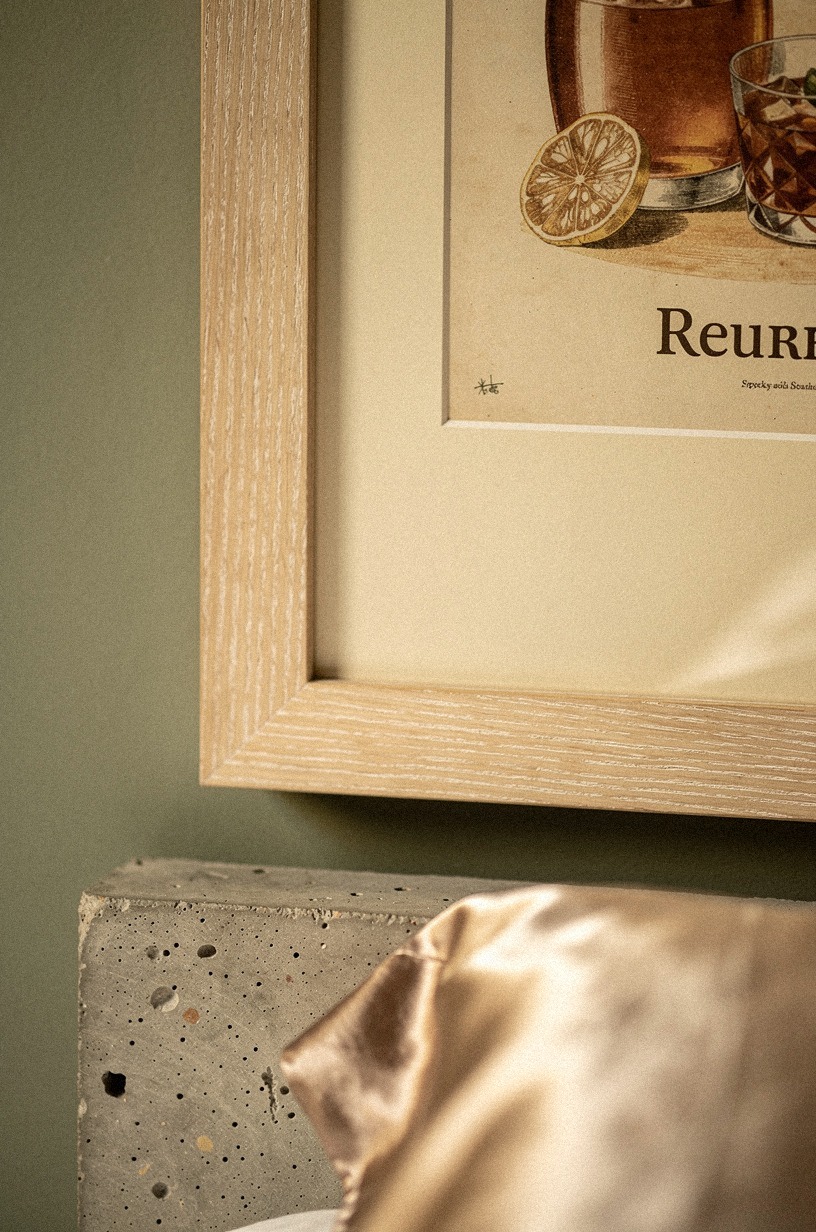
Art above the bed should reinforce the story without turning literal. Vintage cocktail prints can work here because they nod to a 1920 room decor mood, but they need sharp framing and breathing room. I prefer one larger print or a tight pair with generous matting, because tiny scattered pieces make the bed wall feel nervous.
Pay attention to the frame edge, the mat, and the sliver of bedding below. That’s the whole photograph in real life too.
Walnut frames or bronzed metal frames tend to hold the mood better than bright gold, and a creamy mat keeps the art from disappearing into the wall. If your room needs a little travel fantasy with the polish, the escapist tone in this lighthouse stay with bedroom views is a nice reminder that mood works best when it feels specific, not themed.
11Add a carved screen beside the wardrobe
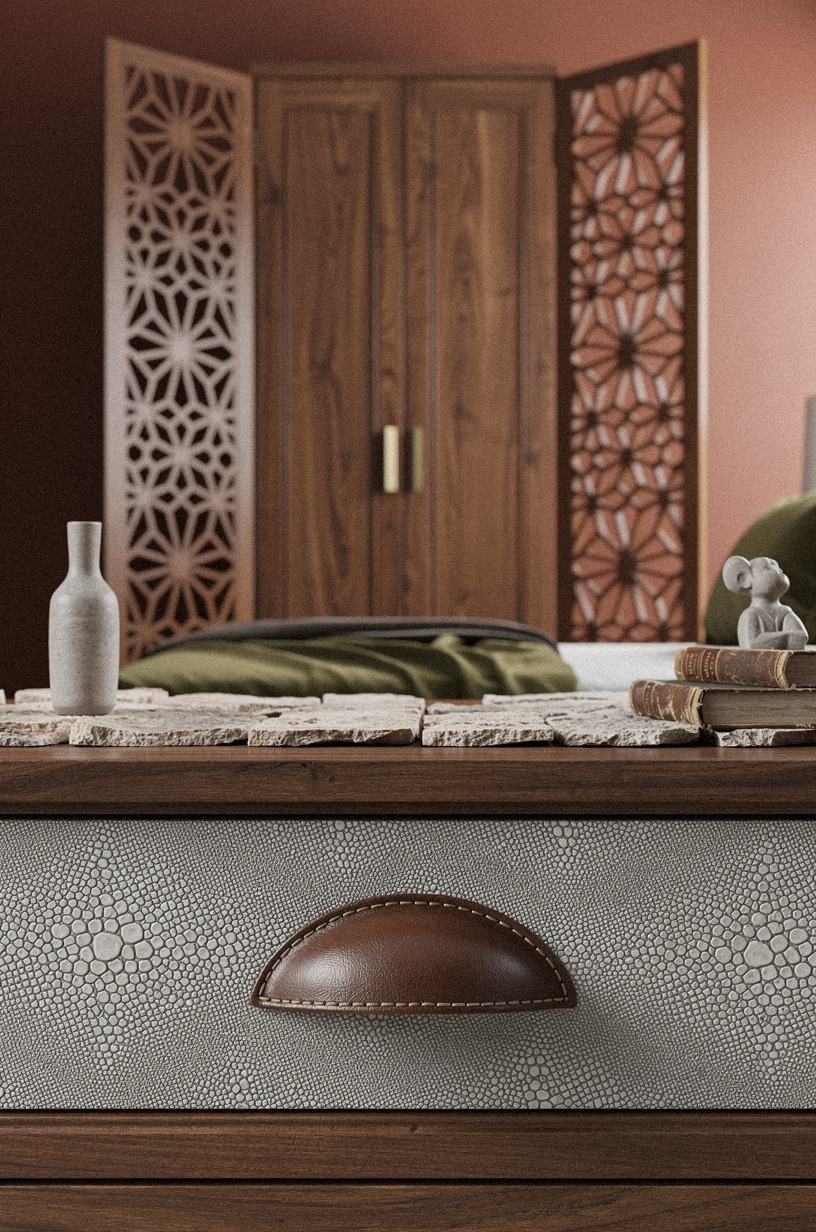
A carved screen is one of those pieces that can either look storied or look like a prop, and the difference is placement. Beside a wardrobe, it should soften the hard vertical line and add pattern without blocking movement. If your wardrobe doors sit centered in the room, the screen gives you depth at floor level and makes that zone feel less blunt.
I like a screen with real cutwork, darker stain, and a shape that doesn’t compete with the bed. Carved mango wood or stained ash both work if the finish isn’t orange.
But keep some air around it. When every corner gets filled, the room stops feeling private and starts feeling busy.
If you’re craving boutique-hotel polish in a tighter plan, this warm MCM bedroom story shows why preserving a few clear sightlines matters so much.
12Glow up corners with low amber uplights
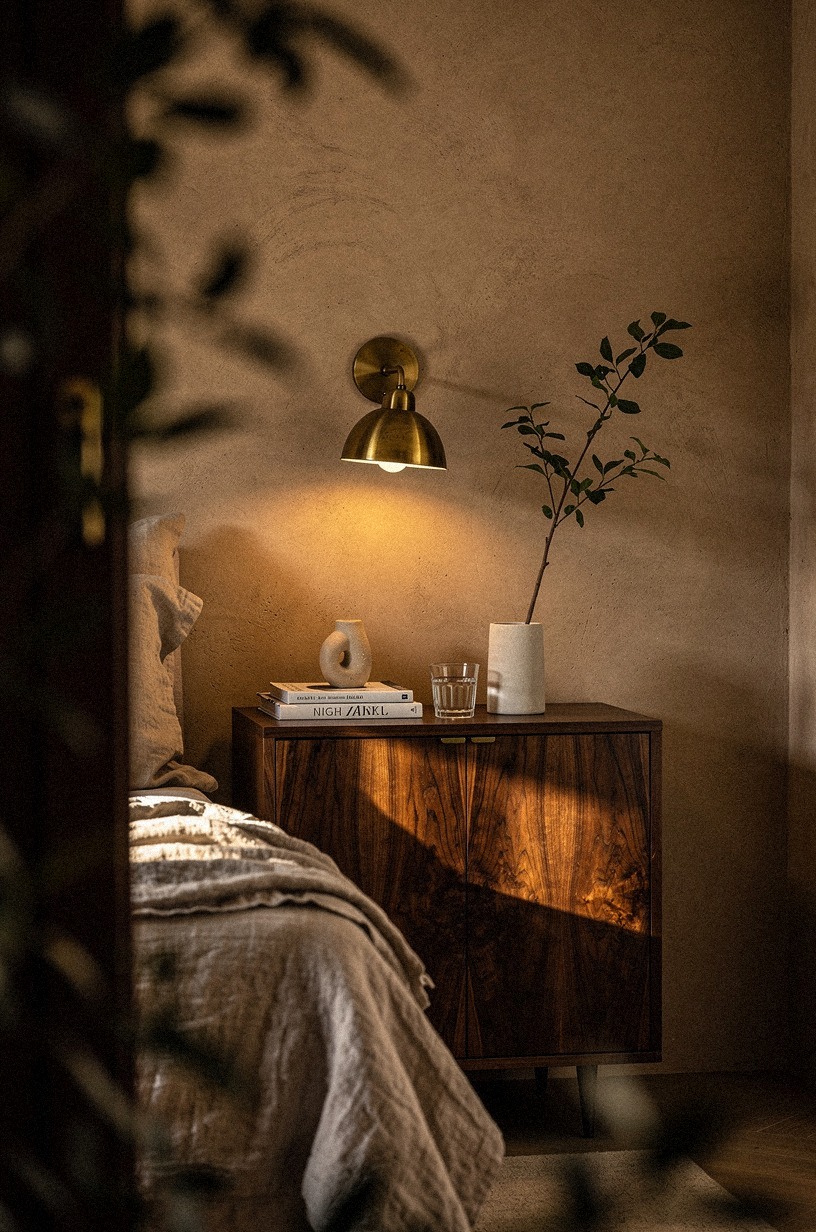
Low uplights are the move people skip, and then they wonder why the room still feels ordinary at night. Tuck one near a branchy plant, behind a chair, or just inside the doorway so the amber glow brushes the wall and catches the texture you already paid for. That indirect light is what makes the room feel deep after sunset.
I wouldn’t use more than one or two. The point isn’t brightness. It’s a quiet halo that makes the corners recede and the bed feel more central.
Amber glass uplights or a compact bronze floor can both do the job, and they’re often cheaper than replacing overhead wiring. The room changes the second that doorway glow turns on!
If you’re trying to spread that same warm privacy outside the bedroom, this boutique-hotel patio redo uses the same low-glow idea in a different zone.
13Finish with satin bedding in oxblood tones
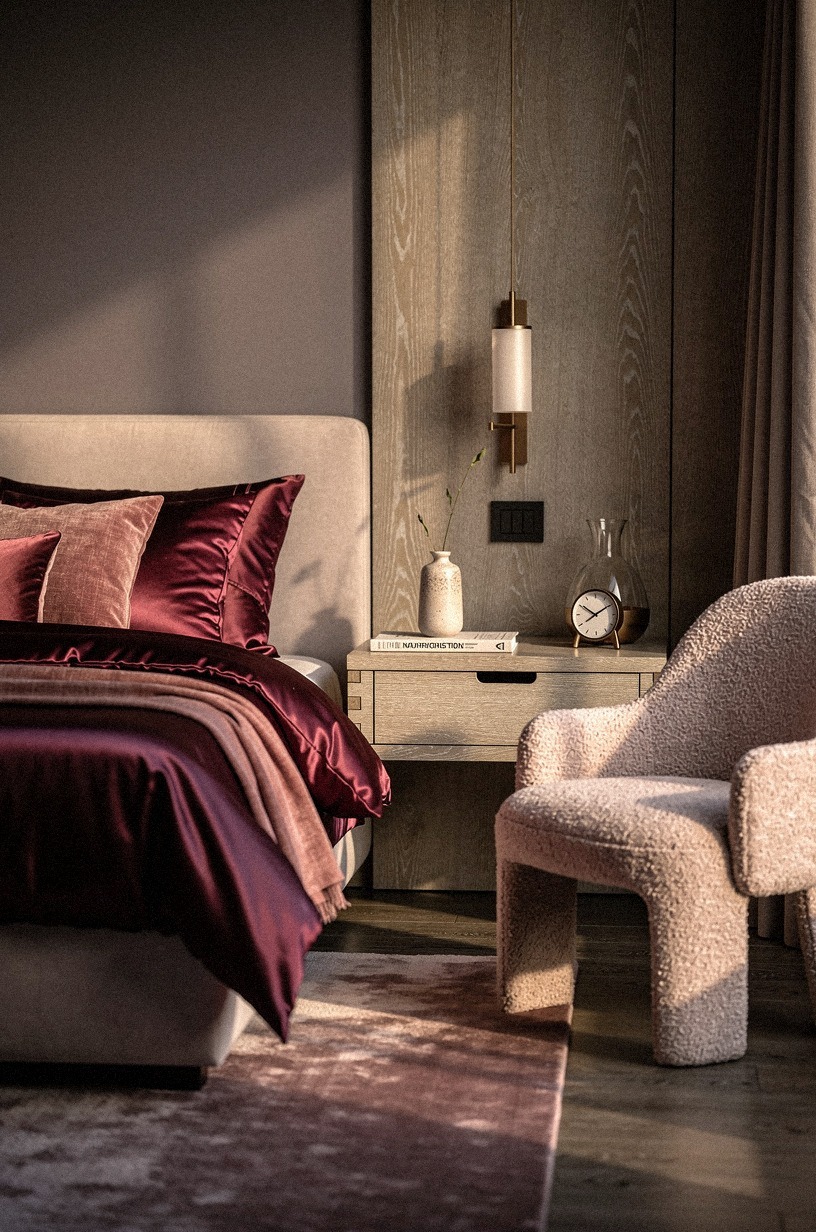
Bedding is the last step for a reason.
Why Does the Hotel Gravity Rule Work So Well?
What separates a speakeasy bedroom from a dark room with nice stuff is restraint. I learned that the hard way.
Years ago, I tried to get this mood by piling on objects: more books, more trays, more art, more pillows, more little brass pieces because I thought mood meant abundance. It didn’t.
The room looked expensive in fragments and nervous as a whole.
Now I think about what I call the Hotel Gravity Rule. Every good boutique room has one thing pulling your eye first, then a series of quieter notes that support it.
In this kind of bedroom, that anchor is usually the bed wall, the headboard, or the lighting stack. Not the vanity tray.
Not the cocktail print. Definitely not the throw pillows.
When you choose the center correctly, the rest of the room gets easier because you’re no longer asking every object to perform.
You can feel this in hotel rooms people remember. The materials are richer, yes, but the bigger difference is that nothing competes at the same volume.
A satin coverlet gets to shine because the rug is matte. A smoked mirror works because the dresser underneath is dense and quiet.
A pleated black shade feels dramatic because the wall behind it isn’t busy with high-contrast art. That’s design, but it’s also editing.
And honestly, this is where people waste money. They keep buying accents before they’ve handled the hard surfaces.
I’ve done it too. I once spent more on bedside styling than on the paint sample round that would’ve solved the room in the first place, and the result still felt thin. If you’re chasing that private-hotel mood, spend where the eye lands longest: wall color, headboard, drapery, and the glow after dark.
Then let the smaller pieces support the feeling instead of trying to create it alone. That’s the whole game.
If you’re still calibrating what hotel warmth looks like in a bedroom, this guest-bedroom essentials story and this MCM bedroom setup guide show the same principle from two different angles.
What Does the Velvet-to-Trim Ladder Cost?
If you’re trying to budget the full look, here’s the honest range. A wool rug at 8×10 usually runs $400 to $1,500, an upholstered headboard lands around $250 to $900, linen drapes sit near $120 to $400 per pair, and washed-linen bedding often falls between $150 and $450. That’s why I tell people to spend first on the surfaces that cover the most visual square footage.
You can fake polish with accessories for a week or two, sure, but you can’t fake scale. Bigger surfaces decide the room.
If you only have a few hundred dollars, start with paint, bedding, and one lamp. Then wait.
That’s usually the smarter order.
The Questions Worth Answering First
What is the best Speakeasy Bedroom Ideas for a Moody, Boutique-Hotel Feel for a small bedroom?
The best version for a small bedroom is a dark bed wall, one upholstered headboard, and ceiling-height drapes. Those three changes give you depth without crowding the floor. I like a slimmer IKEA MALM frame with richer bedding if your footprint is tight.
Where can I buy Speakeasy Bedroom Ideas for a Moody, Boutique-Hotel Feel pieces on a budget?
Start with IKEA, Target Threshold, and Wayfair for the basics, then fill gaps secondhand. Facebook Marketplace is where the good benches and wood dressers hide. You can often buy the large pieces there and save your budget for better lighting.
How much does a Speakeasy Bedroom Ideas for a Moody, Boutique-Hotel Feel makeover cost?
Most bedroom makeovers in this look cost about $200 to $800 if you’re painting, changing bedding, and adding shades. That budget covers the mood-setters first. A bigger jump with headboard, rug, drapes, and lighting usually lands closer to $1,500 to $5,000.
Can I create a Speakeasy Bedroom Ideas for a Moody, Boutique-Hotel Feel on a budget?
Yes, and you don’t need custom millwork to pull it off. Paint, bedding, and better bulbs do most of the heavy lifting. Free moves: clear clutter, lower the lamp color temperature, and edit your art down to one stronger piece.
Is a Speakeasy Bedroom Ideas for a Moody, Boutique-Hotel Feel worth it in a small space?
Yes, it’s worth it, and small bedrooms often carry the mood better because the lighting stays tighter. Less square footage means less drift and more intimacy. Keep the bed dominant, use one rug, and don’t split the room into too many little zones.
Is Speakeasy Bedroom Ideas for a Moody, Boutique-Hotel Feel a good idea for a rental?
Yes, especially if you use removable changes first. Peel-and-stick shade, tension-rod drapery, and swap-and-store lighting can change the feeling fast. This rental-lighting guide on storing original fixtures is the right place to start.
Start with Walls Over Bedding
If I had to pick one step, I’d start with the tobacco wall behind the bed. You can’t fake depth with linens alone, and every dollar you spend after that wall will work harder because the whole room finally has somewhere solid to land.