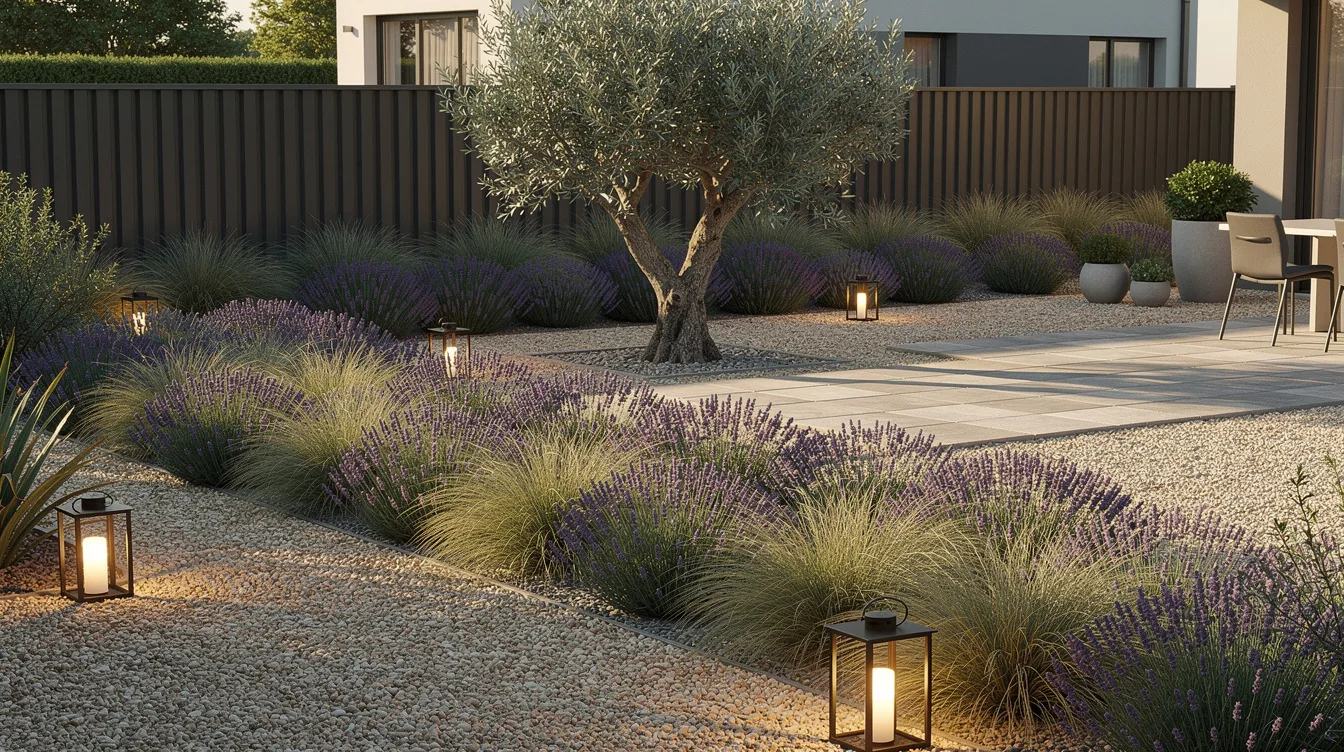
By late July, the back corner of my yard always told the truth. The grass turned dull first, the hose dragged across the patio every evening, and I still ended up with a space that looked tired instead of green.
That is why I stopped chasing a lawn-heavy look and started building around gravel, dense planting, shade, and better watering. A dry backyard can still feel full, but only if the structure does half the work.
Replace most of the lawn with a gravel ground plane
The easiest way to cut water use without getting a bare, dusty yard is to treat decorative gravel as your main surface. In a typical 430 to 645 square foot backyard, I like a broad gravel field with three to five planted islands, because the eye reads it as intentional and full, not empty.
A typical gravel cost is about $30 to $50 per ton, and many yards this size need roughly three to five tons at a depth of about 2 to 3 inches. Add landscape fabric underneath, usually $20 to $60 for a roll that covers around 430 to 860 square feet, and the whole base starts to feel more practical than grass very quickly.
Layer drought-tolerant plants close enough to read as green
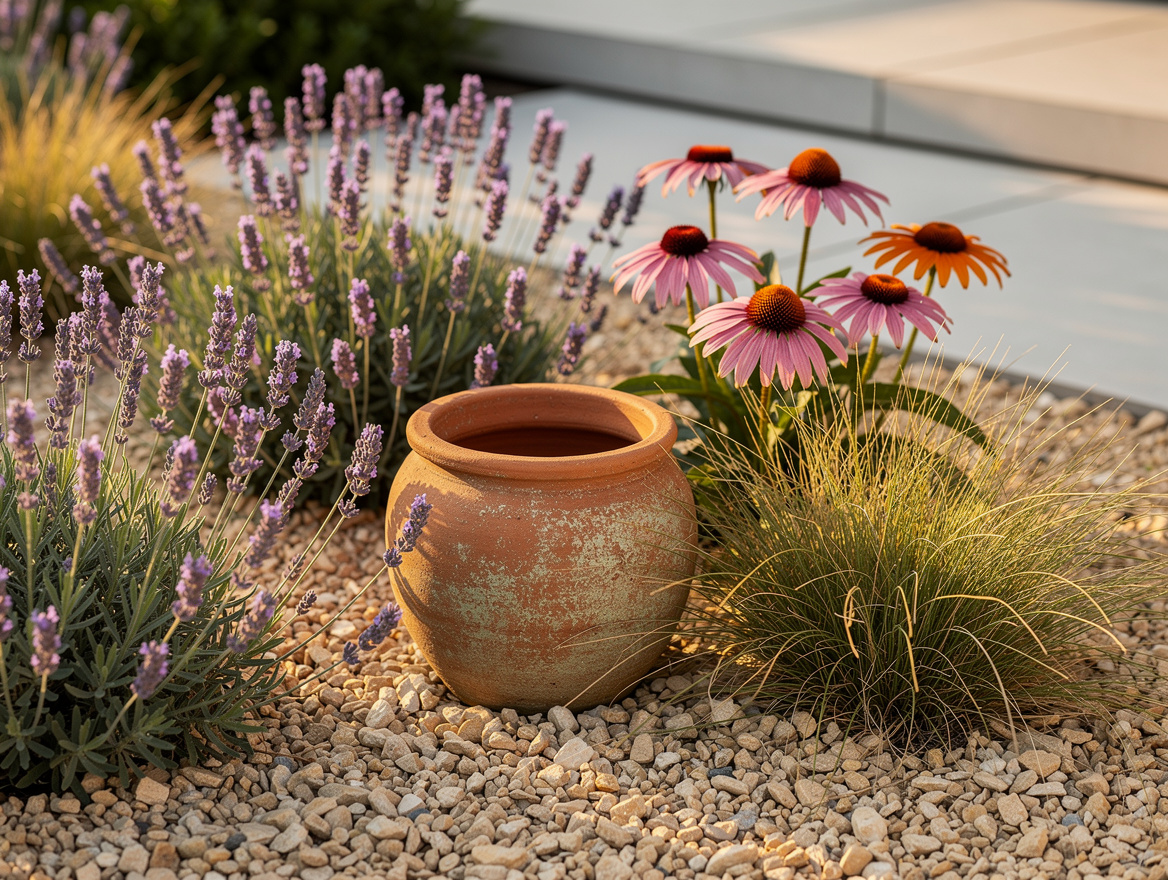
A dry yard looks rich when plants are packed with purpose, not sprinkled around like leftovers. I would build around lavender, rosemary, prairie dropseed, little bluestem, coneflower, and black-eyed Susan, then repeat them so the planting feels dense from every angle.
For a mixed border around 215 to 325 square feet, a realistic plant budget is about $300 to $800 if you buy a mix of sizes from Home Depot or Lowe’s. Typical prices are about $15 to $45 for a one-gallon ornamental grass and $2.99 to $8.99 for smaller perennial pots, which is why I think filler plants matter just as much as any showpiece shrub.
Use one structural tree or shrub to anchor the whole layout
A backyard starts looking lush when it has one plant with real presence. A single olive tree, or a climate-friendly substitute like desert willow in hotter regions, gives you height, shade, and that full-canopy feeling that gravel alone never can.
I would not waste money on several weak focal points when one strong anchor does the job better. Pair that tree with three to five medium shrubs and a ring of grasses, and the yard gets depth fast, especially when the foliage sits at different heights instead of all hugging the ground.
Break up the space with a patio that makes the planting look fuller
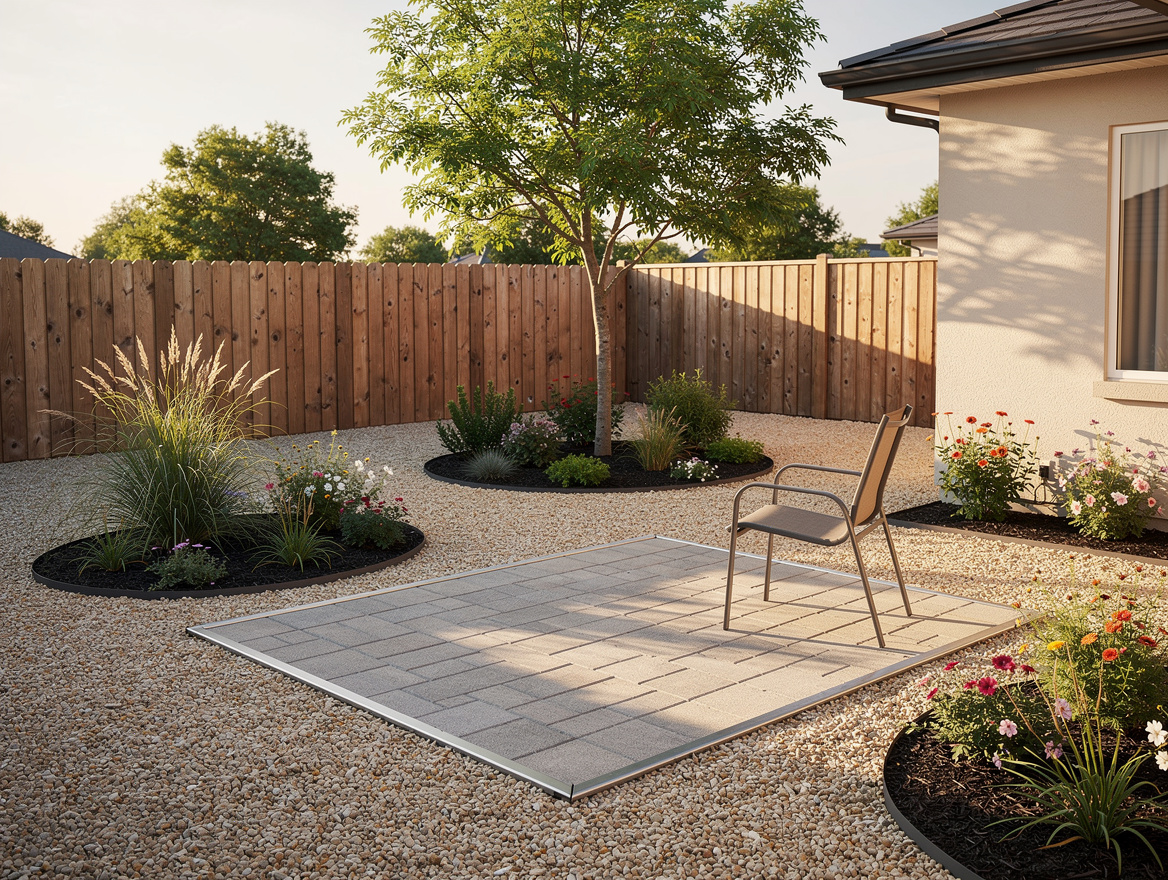
Hardscape is what keeps a drought-tolerant yard from turning into a plant collection with no rhythm. A compact paver patio, roughly 10 by 13 feet or 13 by 16 feet, gives the eye a clean shape, and the surrounding plants look more generous because they contrast with something solid.
I like this more than trying to make every inch green. You can use a simple seating zone with materials from Lowe’s or Home Depot, then frame it with linear beds of succulents and grasses so the whole yard feels modern, calm, and easier to maintain than a thirsty lawn.
Run irrigation where roots need it, then stop overwatering everything else
Most bad dry-climate yards are not ugly because of the plants, they are ugly because the watering plan is sloppy. Put drip irrigation under mulch in the planting islands, keep it focused at the roots, and let the gravel and hardscape stay dry.
This is where people usually waste money by babying drought-tolerant plants forever. A basic setup from Ace Hardware or Amazon is worth it because once plants are established, targeted watering keeps foliage fuller with less runoff, fewer weeds, and far less of that patchy half-alive look.
Add shade, lighting, and containers so the yard feels finished at night
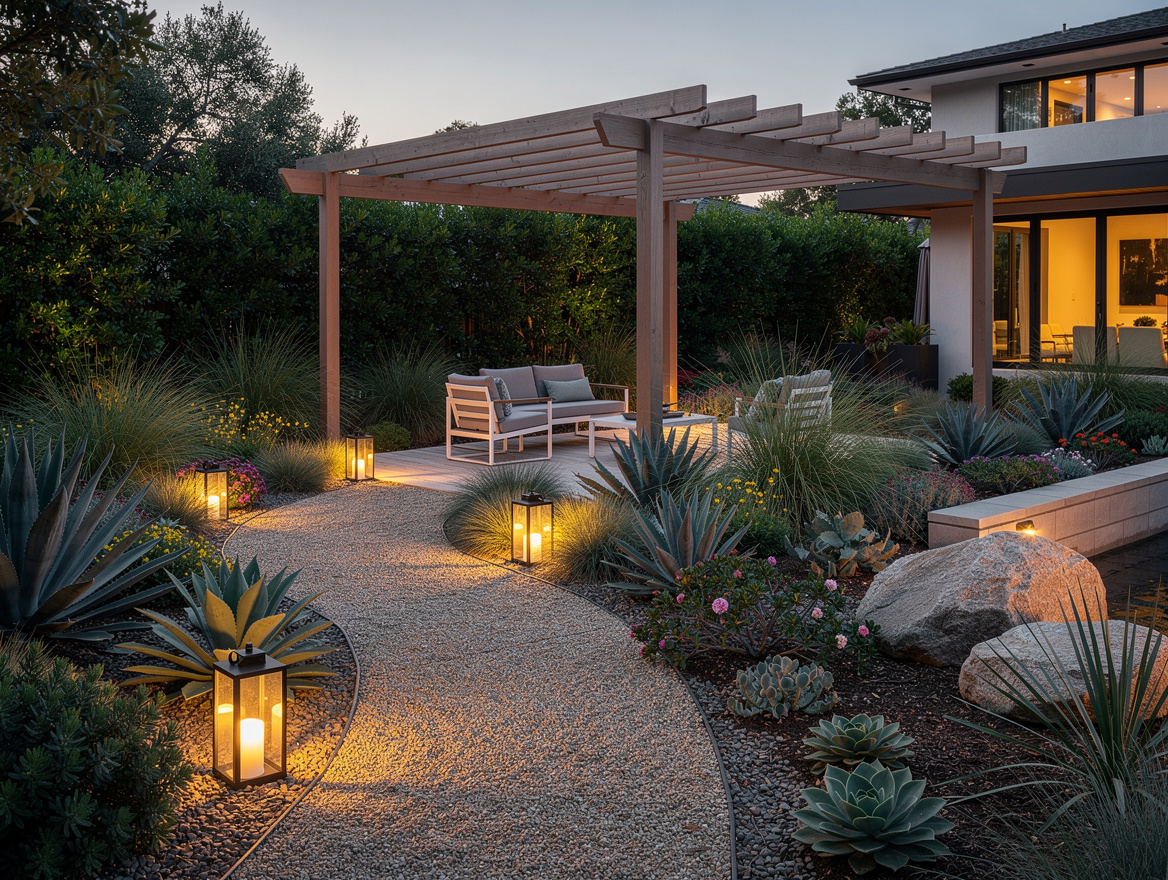
Lush is not only about planting density, it is also about atmosphere. A small pergola, a shade sail, or even one defined umbrella zone makes a dry yard feel cooler, and that changes how green everything looks in late afternoon.
Then bring in a few oversized pots with sedum, rosemary, or a sculptural succulent, plus warm outdoor lighting from IKEA, Target, or Walmart. I prefer this over stuffing more plants into the ground, because a yard that glows after sunset always feels richer than one that disappears the minute the sun drops.
Start with the biggest water hog first, usually the lawn, and redraw that area before you buy a single plant. Once the ground plane is fixed, spend your next dollars on one focal tree, a tight plant palette, and a simple drip setup, because that is what makes the whole yard hold together.
Mia Carter writes about small-space living and budget home makeovers. She has restyled three rentals and tests most ideas in her own 45 sqm flat.