
Slat wall hidden door ideas work best when the entrance stops reading like a gimmick and starts reading like architecture. I learned that after overplaying the wow factor once, and the door looked like a stage prop by week two.
What fixed it was architectural millwork thinking. If you want your living room to feel warmer, cleaner, and a lot more expensive, the answer usually comes down to alignment, stain, and restraint. And yes, the result can look incredibly polished!
- Wrap a media wall around the doorway
- Align narrow walnut slats across the seam
- Recess the handle into one black groove
- Pivot a full slat panel beside the sofa
- Continue ceiling battens over the hidden gap
- Frame the TV niche with matching slats
- Hide push hardware behind a vertical rib
- Stain the concealed door a smoky oak
- Bookend the passage with slim picture lights
- Run acoustic felt between every slat
- Curve the slat wall into the entry
- Float a marble hearth across the reveal
- Repeat uneven slat widths around the door
- Inset brass pulls between darker timber strips
- Backlight the hidden doorway with warm LEDs
- Blend the door into a fluted fireplace wall
1Wrap a media wall around the doorway
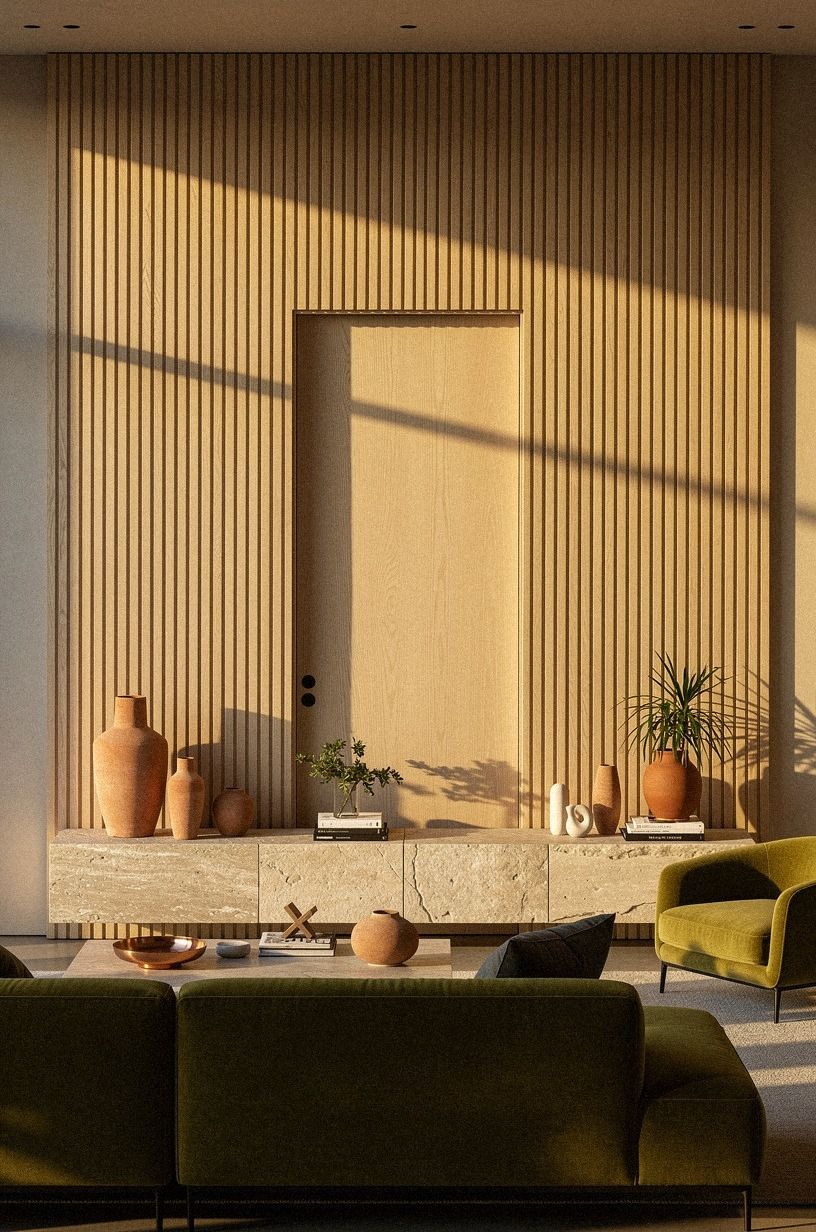
When you wrap the doorway into a full media wall, your eye reads one continuous plane instead of one door plus one feature wall. That’s the move that makes a hidden entrance feel built in rather than tacked on, and it gives the room a calmer, richer center.
I like cerused white oak here because the pale grain keeps full-height slats from looking heavy. Around a low stone media console, add terracotta ceramics, one matte lamp, and a rug with the front legs of your seating on it in an 8×10 or 9×12 size.
And don’t crowd the base with too many objects. If your shelf styling gets busy, the seam starts showing. For more layouts that make the wall feel continuous, I like this guide to hidden doors in wall paneling.
2Align narrow walnut slats across the seam
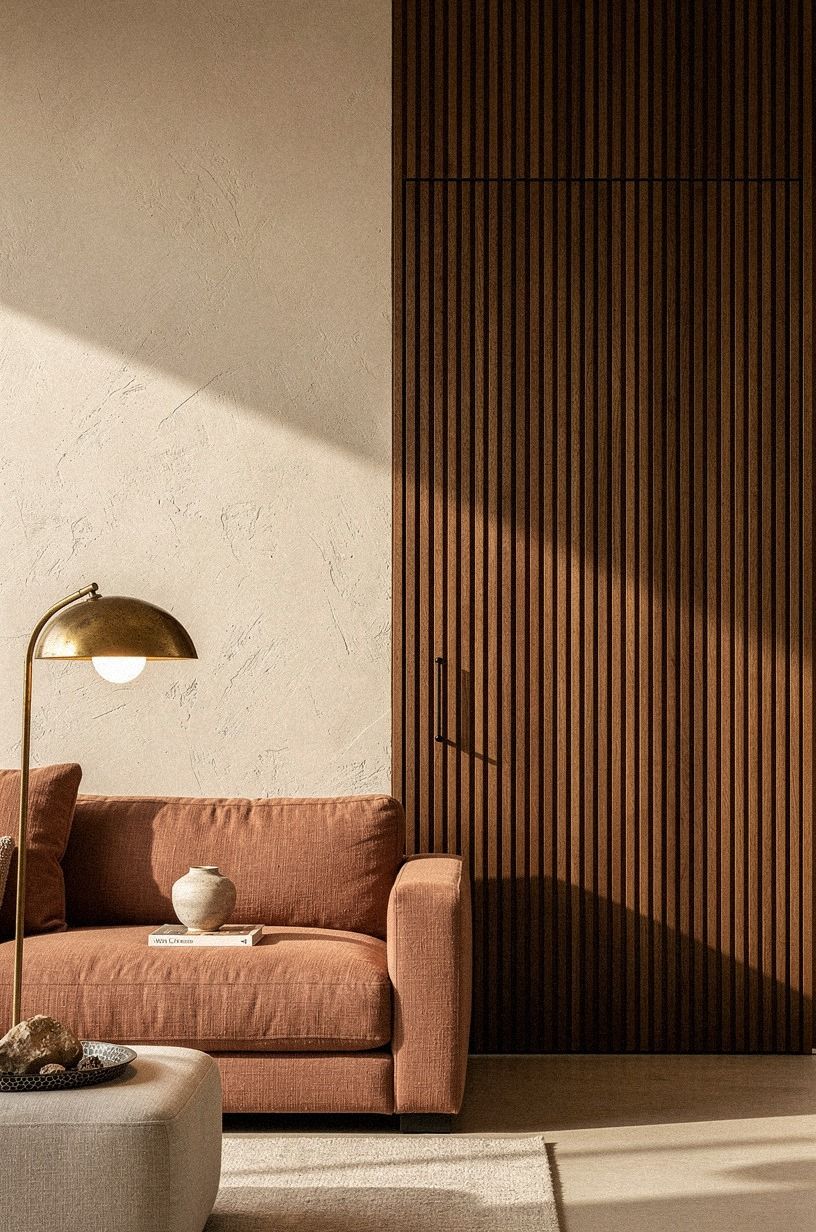
This is the part most people rush, and you really can’t. If the slat spacing shifts even a little where the door meets the fixed wall, your eye catches it from across the room, and that tiny miss is what breaks the sleek illusion.
Go with walnut veneer battens cut to the same width and depth on both sides of the seam, then keep the reveal line shadow-thin. I prefer narrower ribs here because they hide movement better when you step toward the wall.
I’ve seen people make the slats chunkier to feel more dramatic. I wouldn’t. If you like a cleaner wall first approach, these invisible frameless door ideas prove that crisp alignment beats extra ornament every time.
3Recess the handle into one black groove
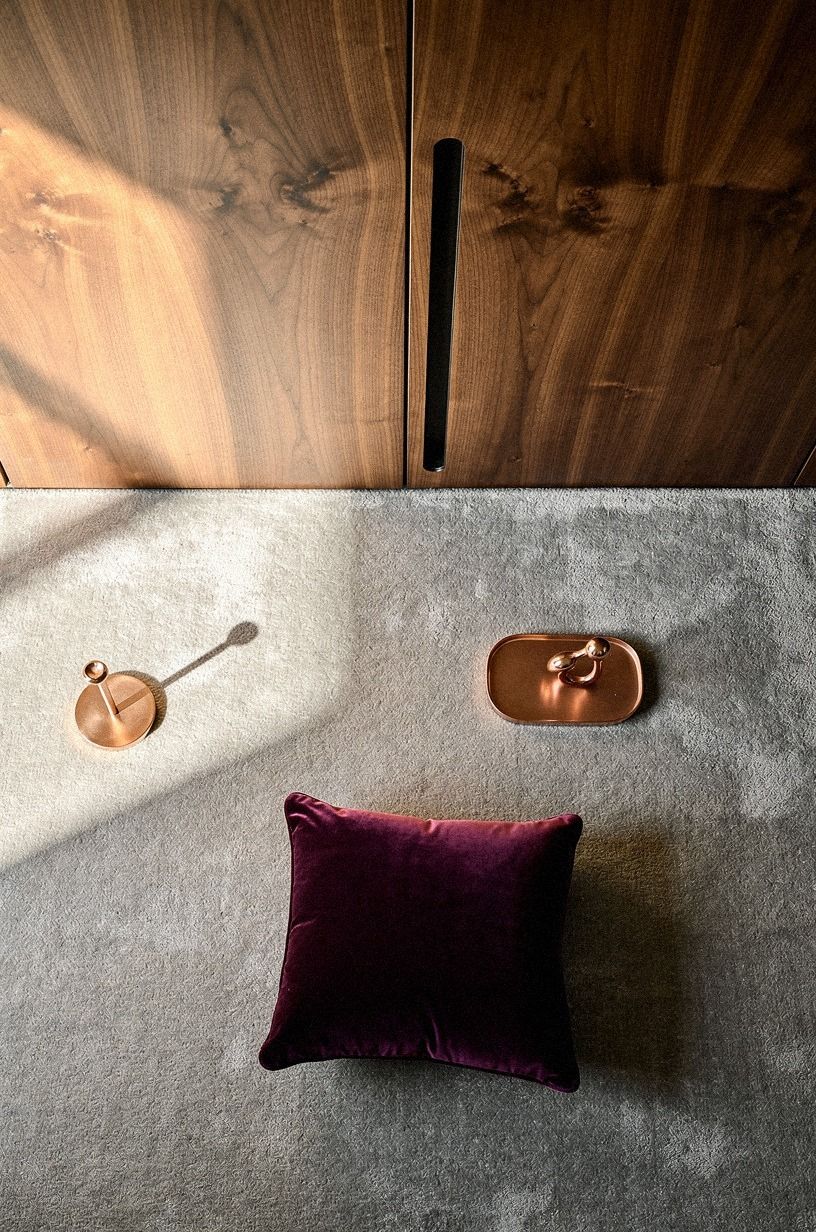
A visible pull is usually the giveaway. If you recess the grip inside one dark vertical groove, the whole door edge reads like part of the slat pattern, especially on a moody walnut wall.
Use a matte black channel pull that sits flush, not proud, and let one groove do all the work. On an oak coffee table that’s 16 to 18 inches tall, the lower sightline tends to catch reflections, so shiny hardware will betray you fast.
But here’s the thing: black only works if the rest of the palette has at least one other dark note. A charcoal lamp base, black picture frame, or slim steel side table is enough. This same low-profile logic also works in hidden pocket door ideas when you want the opening to stay subtle.
4Pivot a full slat panel beside the sofa
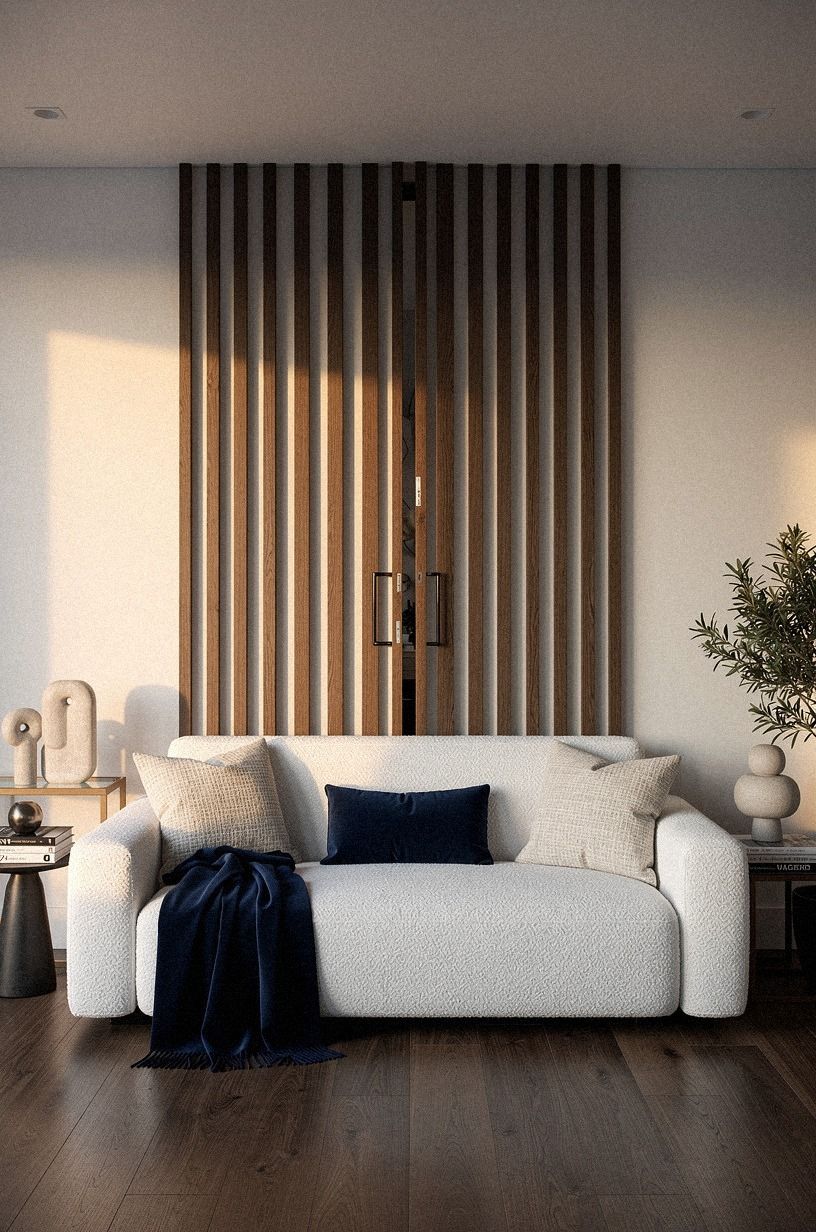
A pivot door feels smoother than a hinged one when the wall is meant to read like furniture. Beside a sofa, that matters, because you see the wall from a seated height first, and the larger panel feels more graceful when it opens.
I love this with boucle upholstery in front of navy, white, and walnut because the nubby fabric softens all that vertical structure. Keep your coffee table to about two-thirds the length of the sofa so the seating zone doesn’t drift too far into the walkway.
If you’re building the door beside your main seating, leave visual breathing room. One floor lamp.
One side table. Done! For rooms where the TV and doorway have to share one handsome wall, look at these TV wall hidden door ideas.
5Continue ceiling battens over the hidden gap
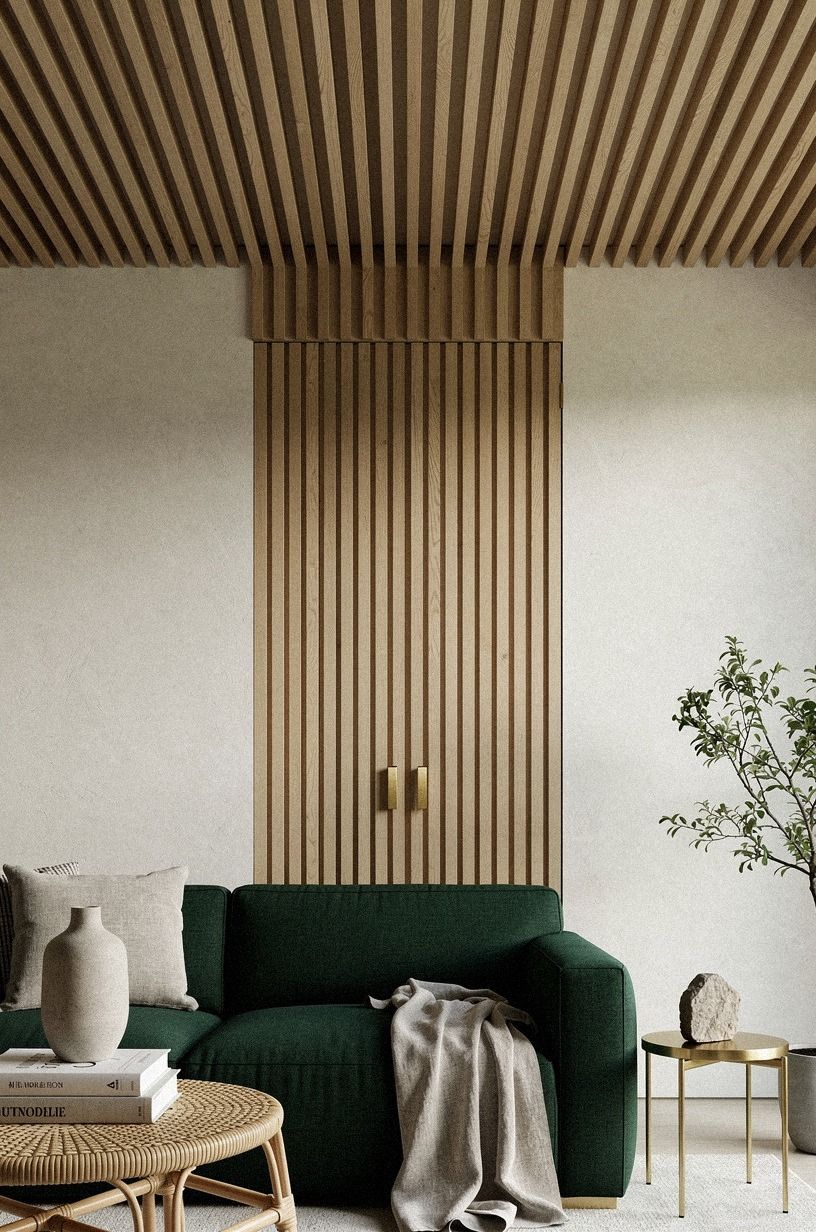
When the battens climb the wall and keep going overhead, the doorway stops looking like a separate insert. It becomes part of the room envelope, which is exactly what you want in a serene living room.
Pair cream walls with Sherwin-Williams Evergreen Fog SW 9130 on one chair or ottoman if you want the wood to feel richer without going dark. That soft green calms the geometry and keeps the whole setup feeling tailored instead of fussy.
And yes, you need to be disciplined about alignment overhead. If the batten rhythm changes at the gap, you’ll notice it every time you switch on the lamps. Ceiling continuity also shows up beautifully in hidden sliding door ideas where the track has to disappear into the architecture.
6Frame the TV niche with matching slats
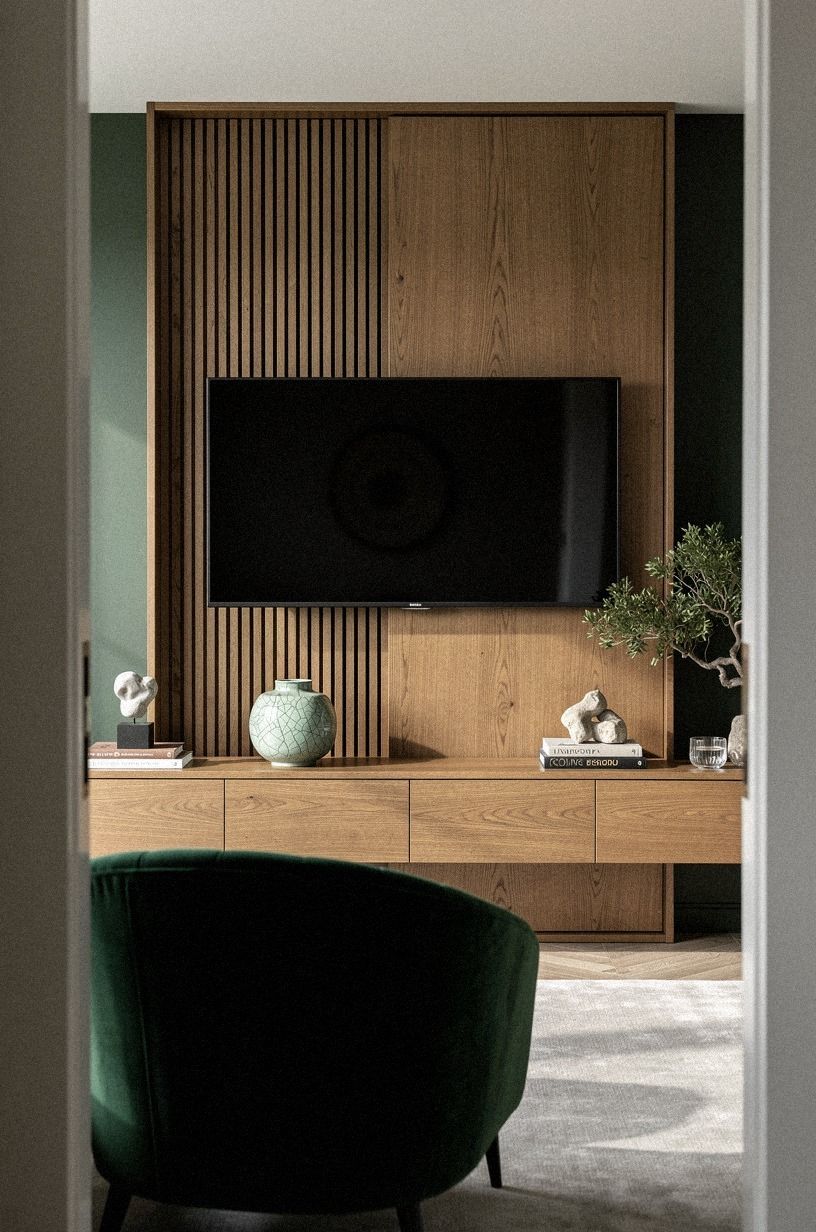
A framed TV niche gives the doorway a job beyond hiding the passage. Now the wall is organizing the whole room, and that centered composition feels grounded fast, especially when your media console sits low and wide instead of tall and fussy.
Choose natural oak battens that match the niche surround exactly, then run the same stain over the hidden door. I usually keep the TV wall cleaner than people expect because electronics already bring enough visual noise on their own.
I’ve tried asymmetrical styling around setups like this, and it rarely helps. The niche already gives you structure. If you want a second example of a concealment wall that still reads purposeful, this guide to a hidden pantry door explains the same built-in discipline.
7Hide push hardware behind a vertical rib
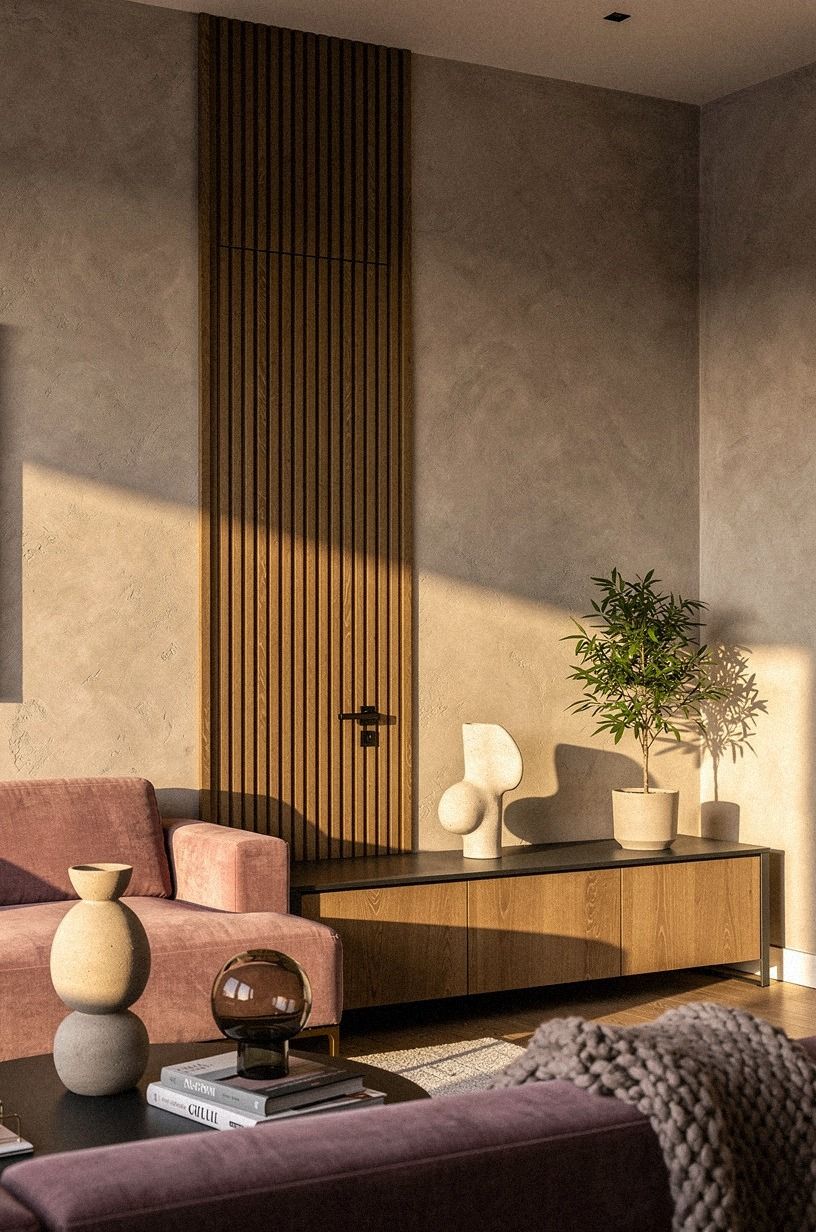
Push hardware is great when you want nothing visible, but only if you protect the touch point. I like hiding it behind one deeper rib so your hand finds the spot by feel while the wall still reads clean.
Against Venetian plaster, a dusty rose, charcoal, and brass palette can look incredibly refined because the finish has movement without shouting. Set the slat rib proud enough that your fingers can press behind it, then keep the nearby styling spare.
But don’t bury the mechanism so far back that guests start pawing at the wall. If you have to explain the door every time, the design failed. This touch-and-open strategy also feels smart in hidden bathroom door ideas where hardware has to stay visually quiet.
8Stain the concealed door a smoky oak
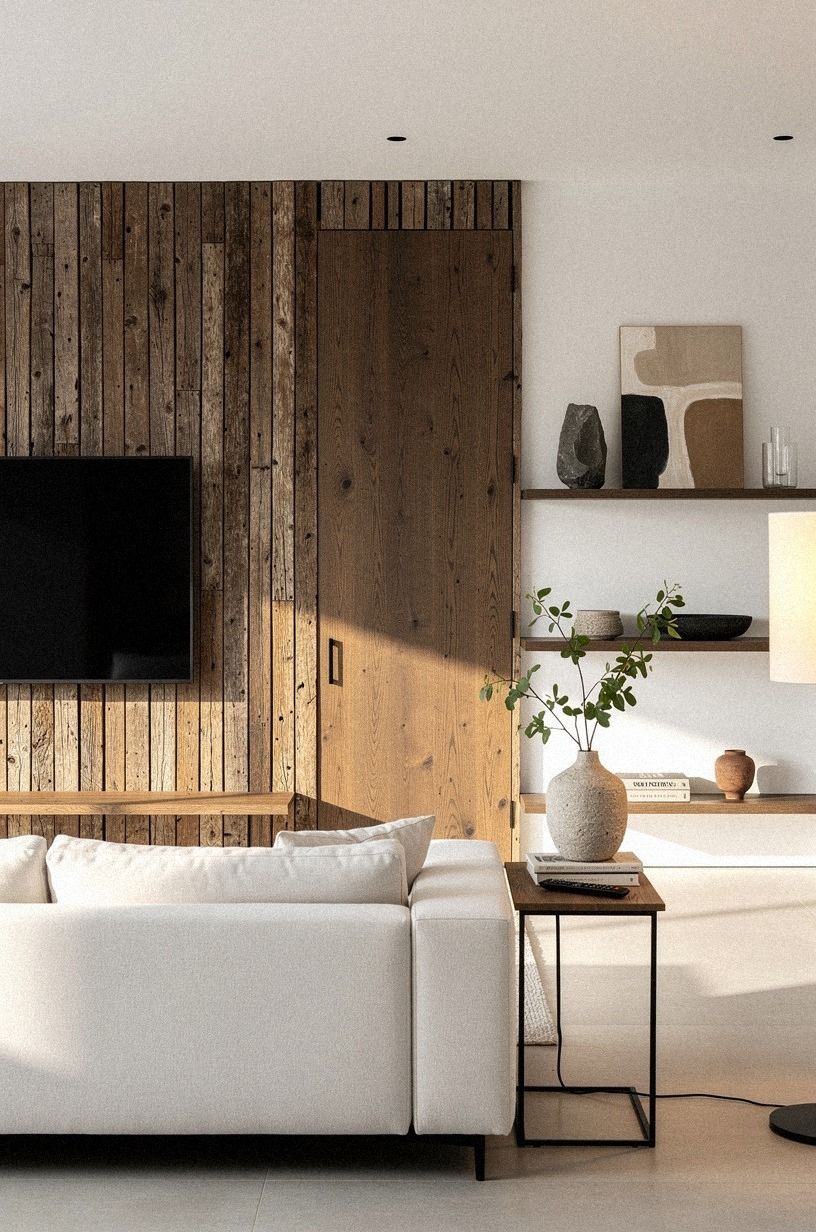
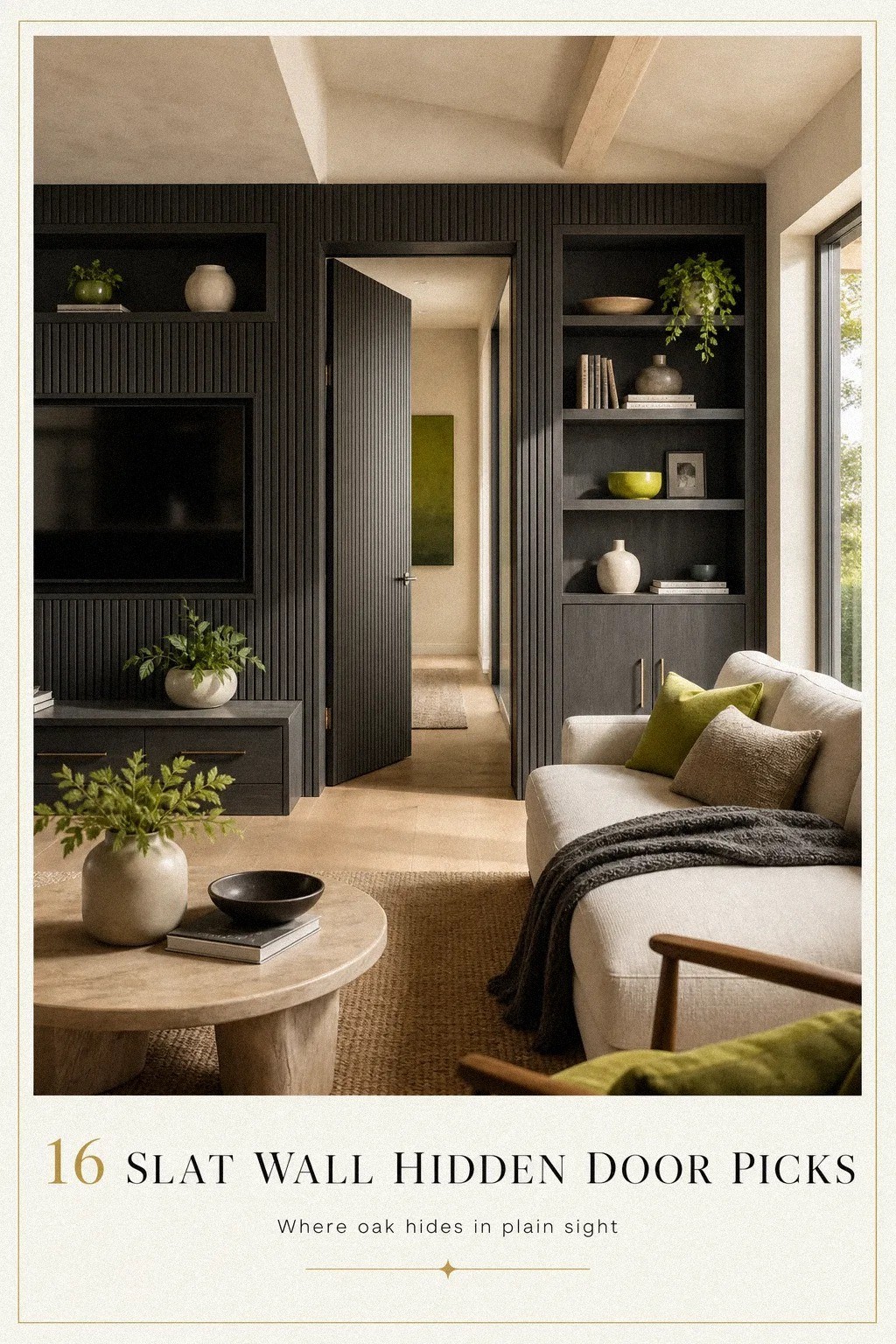
Smoky oak is one of my favorite compromises when you want warmth without the yellow cast that can make slats feel builder-grade. In a room with warm white walls, camel seating, and black accents, the stain gives the entrance a richer, moodier depth.
Use Benjamin Moore Revere Pewter HC-172 on adjacent walls if you want the wood to stay balanced instead of pink. Your goal is that soft, aged finish that looks settled, not freshly lacquered.
I made the mistake once of choosing a deeper espresso tone because it looked dramatic on a sample. On the whole wall, it flattened the room. If you like concealment that still brings a decorative surface, these hidden mirror door ideas show how valuable the finish choice really is.
9Bookend the passage with slim picture lights
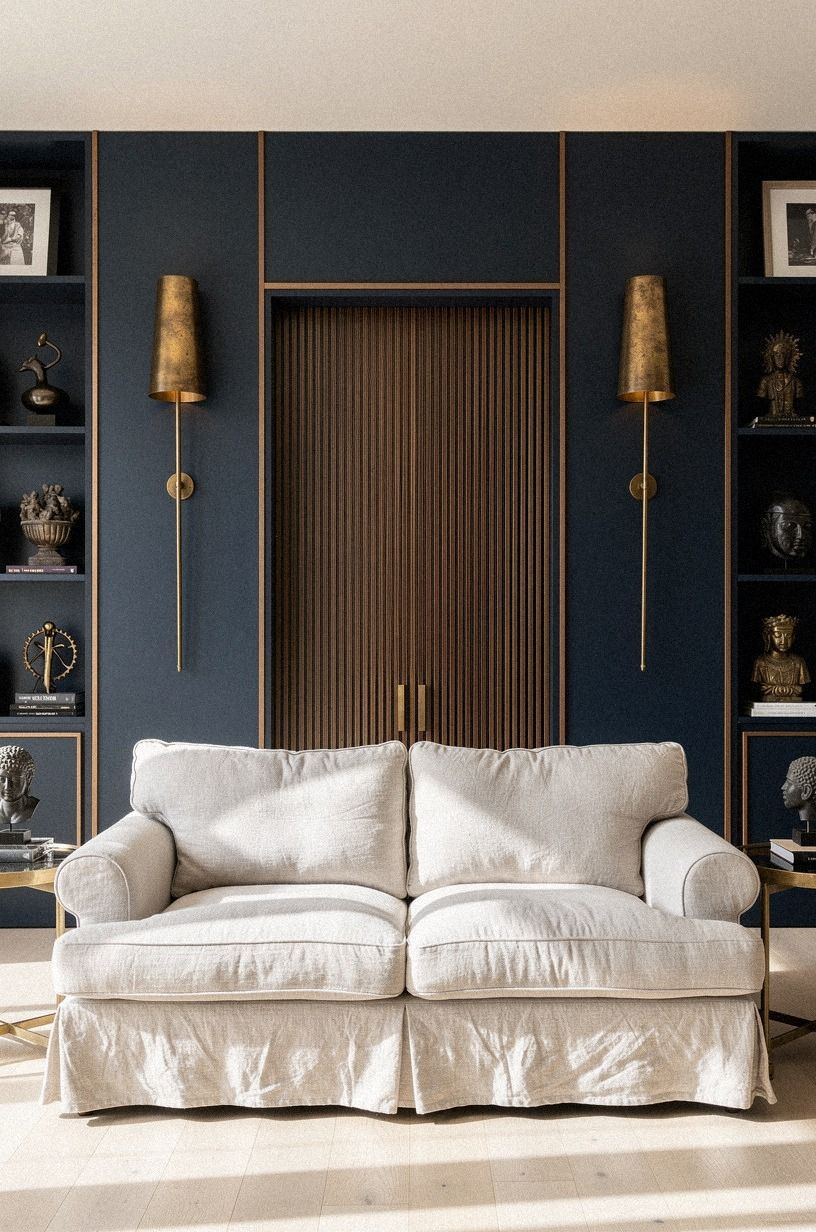
If your slat wall hidden door sits on a darker wall, two slim lights can make the opening feel intentional instead of mysterious. That’s especially true on midnight blue, where the vertical glow catches the ribbing and lets the wall read as crafted millwork.
Pick Farrow & Ball Hague Blue No. 30 if you want a plush backdrop for bronze or copper lighting. That deep paint needs warm bulbs to stay lush instead of flat, and the effect is far more inviting at night.
And keep the wattage modest. Too much brightness ruins the mood and outlines the seam. If you want more broad inspiration beyond slats, this roundup of hidden door ideas is useful for seeing how lighting changes the reveal.
10Run acoustic felt between every slat
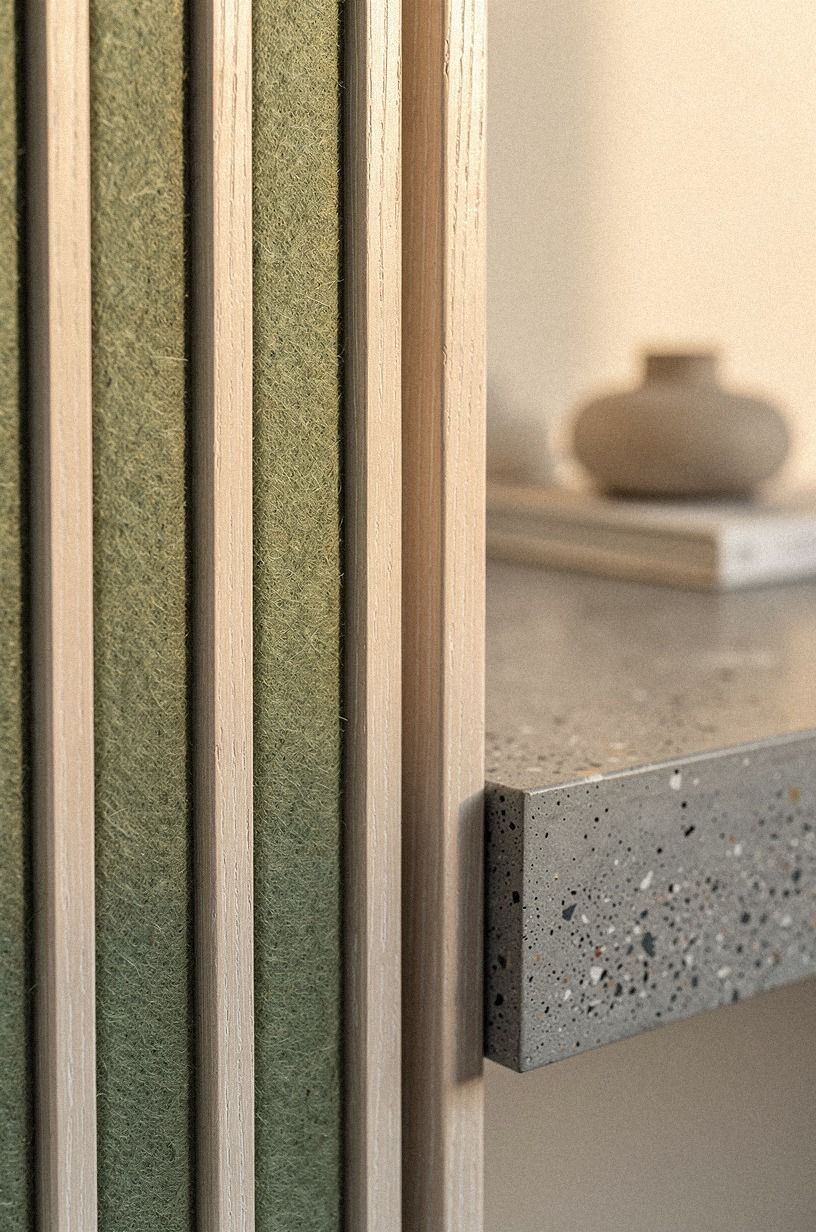
This is one of those moves that looks decorative but solves a real problem. Felt between the slats softens echo, sharpens the rhythm, and helps the seam disappear because your eye reads the shadow lines first.
Tuck sage acoustic felt into every channel if your seating zone already has hard surfaces like stone, glass, or plaster. A performance-fabric sofa can run about $1,200 to $4,000, and once you’ve invested in comfort, it makes sense to calm the sound too.
I wouldn’t use black felt with pale oak unless the room already has strong black notes. Sage or charcoal is easier to live with. If you’re weighing one wall system against another, these hidden pocket door layouts make a good comparison because they solve clutter in a different, equally practical way.
11Curve the slat wall into the entry
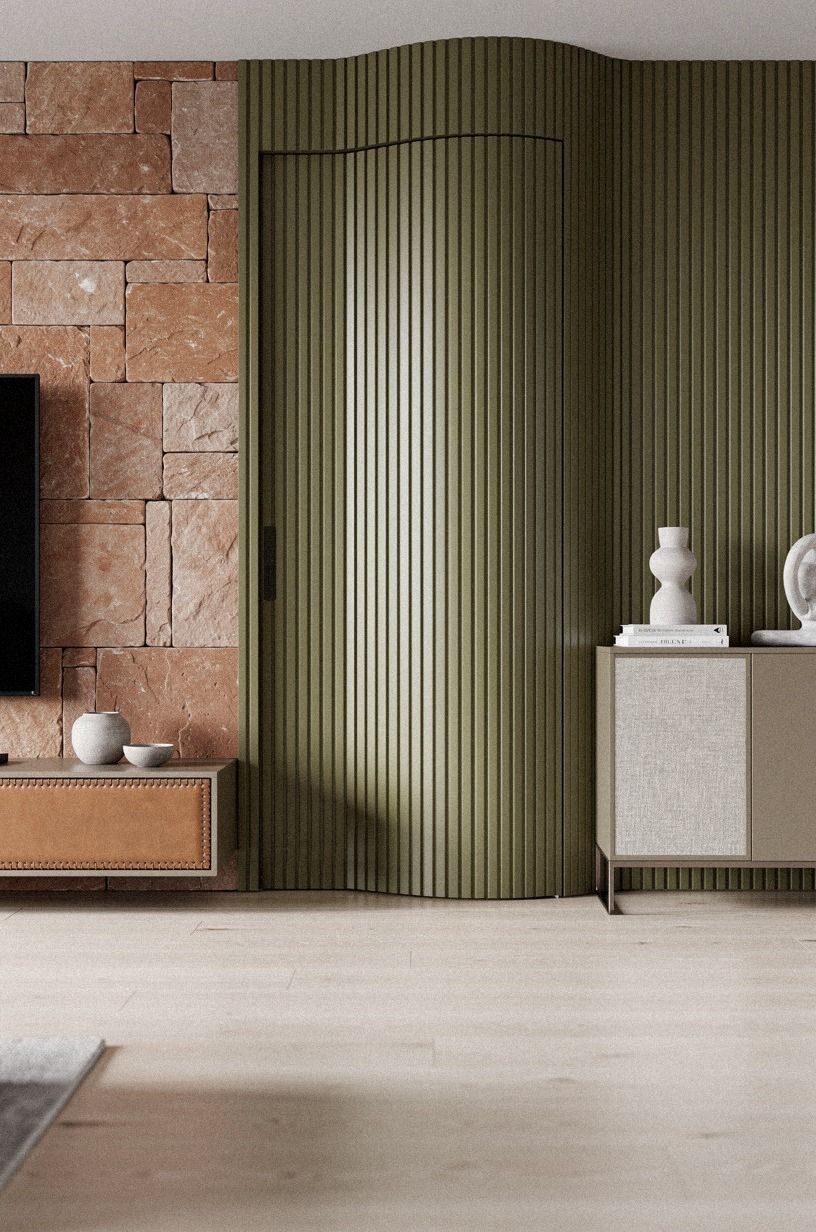
A curve changes everything. Instead of the doorway feeling like a flat interruption, the wall starts guiding you toward it in one continuous motion, and that graceful sweep feels softer on your eye than a hard corner ever will.
Use flexible timber slats over a curved backing and let the entry feel almost carved rather than assembled. If your room leans Mediterranean or earthy, that rounded gesture pairs beautifully with stone vessels and olive upholstery.
And honestly, curves are where cheap materials get exposed fast. If the slats kink or the spacing wobbles, you’ll see it right away. The same rule shows up in hidden sliding door designs where the path has to feel smooth from start to finish.
12Float a marble hearth across the reveal
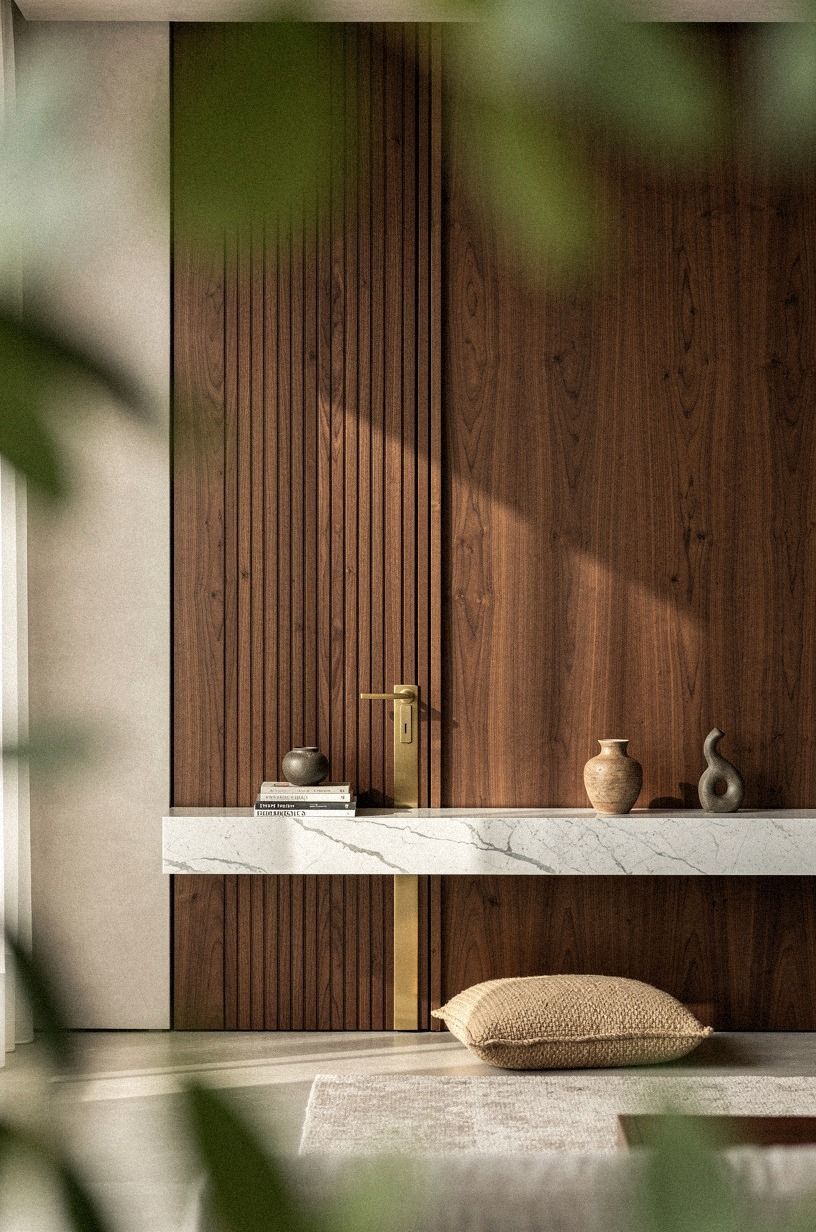
This is a strong move because it ties two permanent-looking elements together: fireplace and passage. When the hearth line carries across the reveal, your eye assumes the wall was always designed that way, and the whole setup feels more expensive in a quiet, believable way.
I like book-matched walnut with a marble hearth that has visible amber veining rather than icy gray. That warmth matters. Your fireplace shouldn’t feel disconnected from the seating area, so keep the rug front legs on and let the hearth line sit low and confident under the slats.
If you’re already exploring concealed entrances, a hidden bookcase door shows the same principle in another form: one material story, one strong horizontal anchor.
13Repeat uneven slat widths around the door
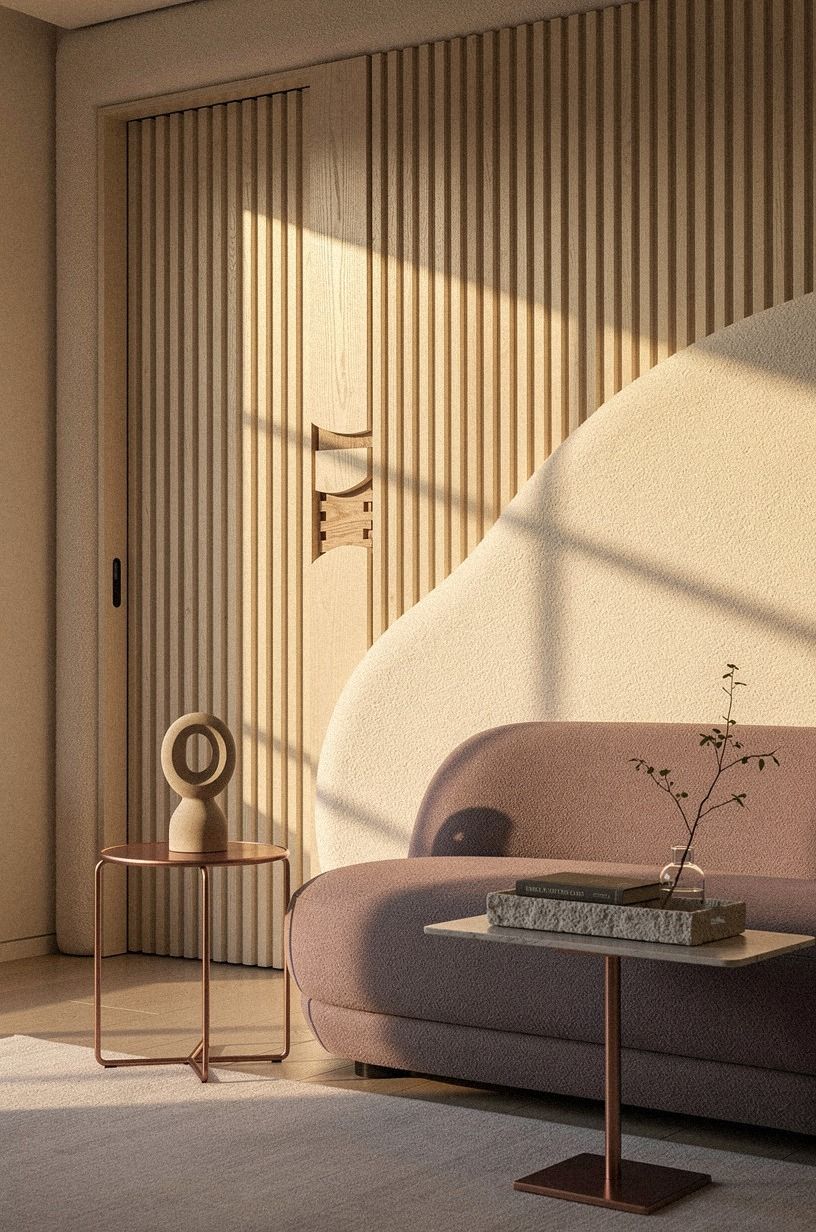
Perfectly even spacing can look a little showroom if the rest of your room is softer and more collected. A slight change in width adds a more custom rhythm and keeps the wall from feeling too rigid.
I like mixing white oak battens in two close widths so the change feels intentional, not random. The effect is subtle, but it gives the doorway a more sculptural cadence, especially when the room has a plush sofa and simple plaster walls.
Don’t push the contrast too far or the wall starts reading decorative before it reads architectural. If you like minimal variety handled well, these invisible frameless door examples show how tiny changes can still feel striking.
14Inset brass pulls between darker timber strips
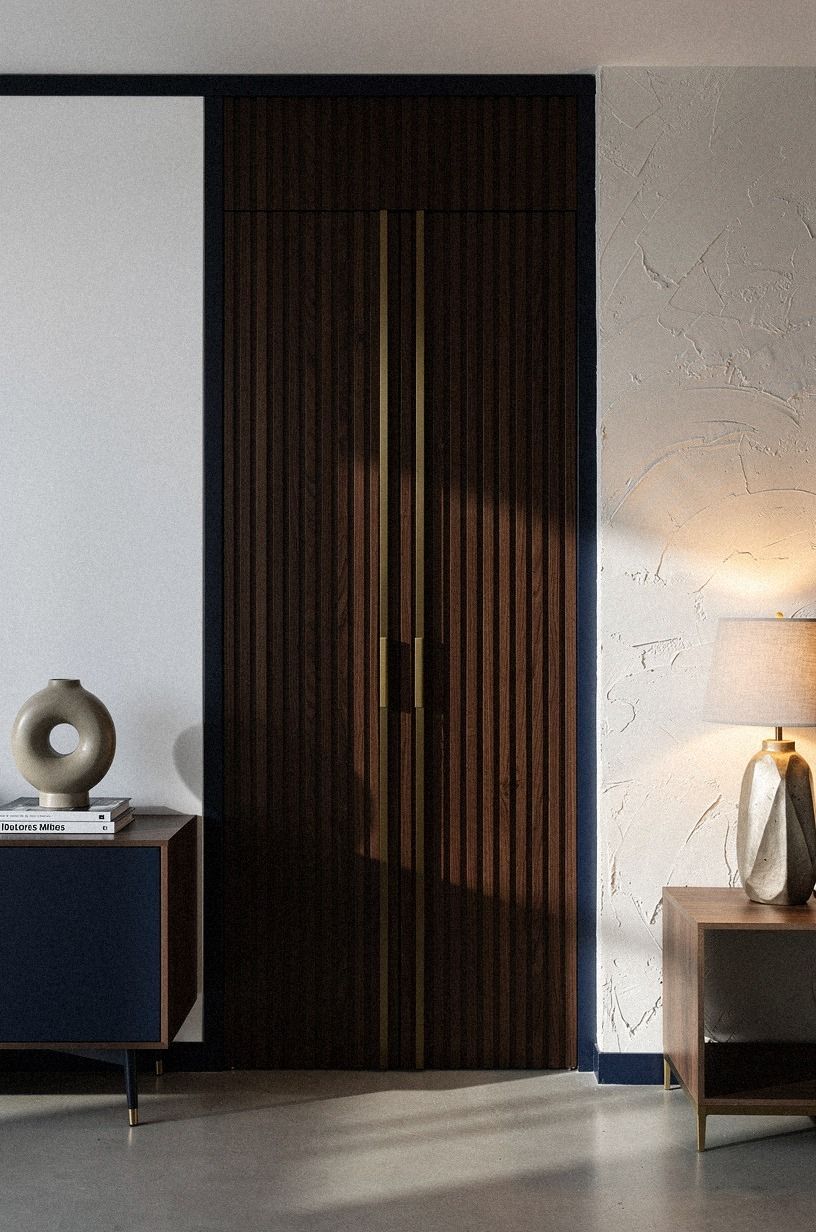
If you know you want visible hardware, make it look collected on purpose. A slim brass pull inset between darker timber strips feels more tailored than a standard handle stuck on top, and in a navy, white, and walnut room, that little line of metal can read almost like jewelry.
Choose unlacquered brass pulls so the finish mellows over time, then flank them with darker walnut strips to sharpen the contrast just enough. I prefer this move when the door is centered because the hardware becomes part of the composition.
I’ve seen polished brass used here, and it’s usually too shiny. The wall starts reading decorative instead of architectural. For another material-led concealment move, I like these hidden mirror door ideas because the reflective surface has the same make-it-count energy.
15Backlight the hidden doorway with warm LEDs
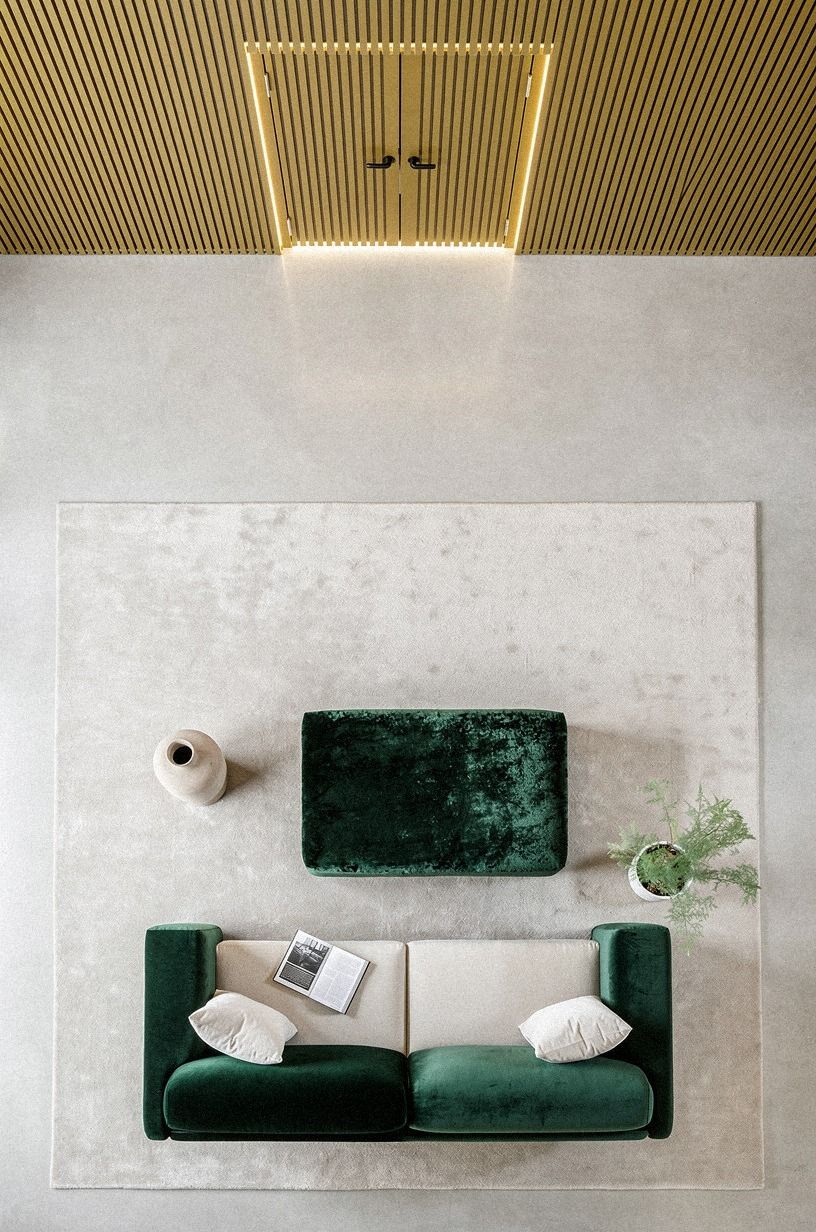
Backlighting can go very wrong, very fast. But if you use it lightly, the glow can separate the slats just enough to make the whole wall feel deeper, calmer, and more atmospheric in the evening.
Use 2700K LED tape tucked behind the perimeter, not exposed, and dim it low. This is also where the money conversation gets clearer, because the wall treatment has to work whether your room is a budget refresh or a custom build.
If you’re spending at the budget end, I’d put the money into paint, lighting, and one disciplined slat wall move first. LEDs are cheap.
Bad millwork isn’t. If your TV wall is already handling a lot, these TV wall hidden door solutions are a smart place to compare proportions.
16Blend the door into a fluted fireplace wall
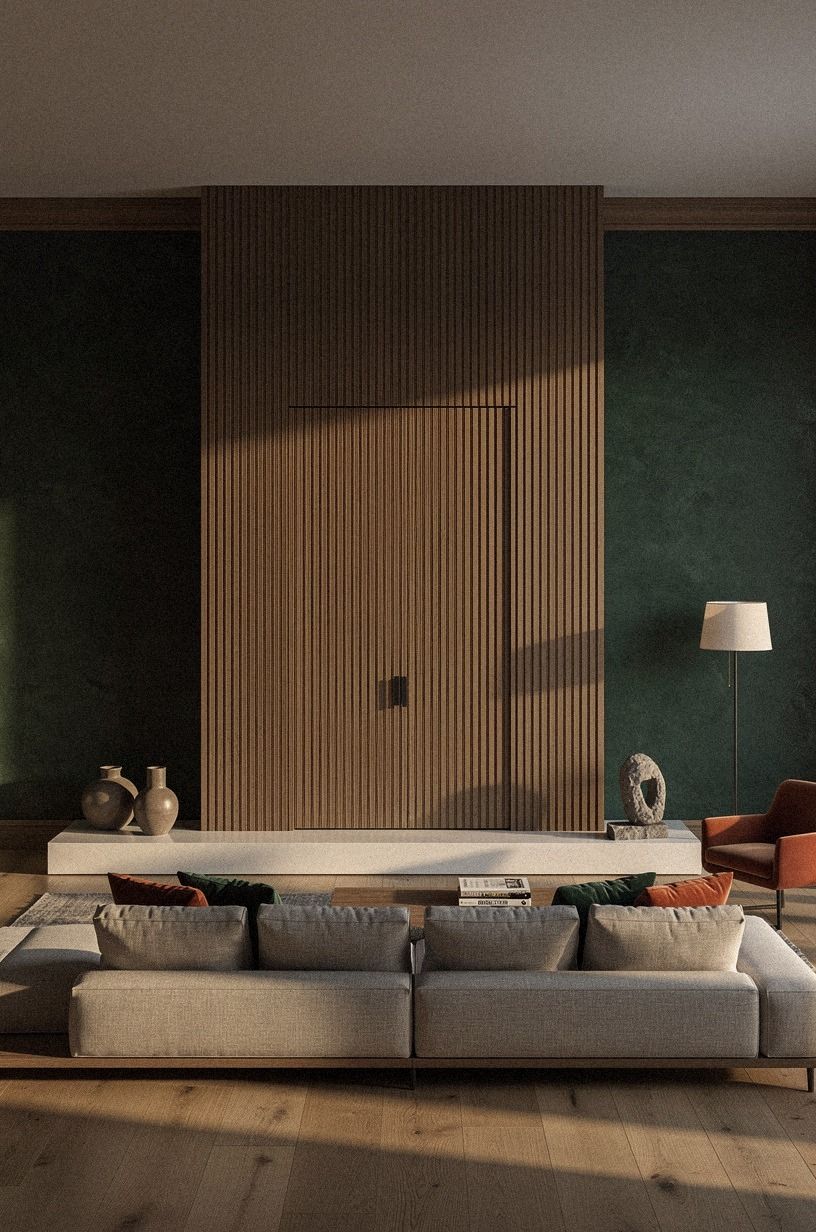
A fluted fireplace wall already gives you vertical rhythm, so adding the door there is one of the smartest ways to hide it. In forest green, rust, and natural oak, the texture can carry the whole living room without needing extra wall decor.
Layer oak fluting around the firebox, then let the same rhythm continue cleanly over the concealed entrance. If your fireplace wall is doing this much visual work, skip oversized art nearby. You don’t need it.
For another approach that keeps the architecture doing the heavy lifting, I still like this guide to hidden doors in wall paneling. It has that same restrained, elegant logic.
Why do these slat wall doors feel so current right now?
I think the reason these doors are everywhere in 2026 has less to do with novelty and more to do with fatigue. People are tired of rooms where every feature announces itself. After years of loud stone, giant pendants, and furniture that tries too hard, a built-in hidden door feels quiet in the best way.
What also changed is living room function. You want storage, you want sound control, you want a work zone that can disappear, and sometimes you want a passage to a pantry, office, or tucked-away den without hanging another obvious slab door on the wall. Slats solve several of those problems at once.
I’ve also noticed that the best versions aren’t the flashiest ones. The rooms that stay with me use aged brass restraint, believable stain, and hardware you barely notice. I’d rather see oak, soft green, and bronze than some hyper-contrasty black-on-black moment that dates itself in a year.
And there is an honest value argument here too. If you’re already buying a quality sofa, hanging linen drapes, and building a fireplace wall, concealing one door inside the architecture can make the whole room look more considered than another round of decorative extras ever will. That’s the calmer, smarter choice I’d make every time.
What People Always Want to Know
What layout works best for a small living room?
The best option is a media wall or TV niche layout because IKEA BESTA scale keeps the doorway doing a real job without eating visual space. If you want more compact planning ideas, the clean footprint in these hidden pocket door ideas is worth a look.
Where can I buy slat wall pieces on a budget?
Start with IKEA for basic storage pieces, then check Wayfair, Facebook Marketplace, and local millwork shops for battens or trim. I’d buy accessories secondhand first, then spend new-money on the parts your hand and eye touch every day.
How much does this kind of makeover cost?
A realistic range starts around $300 to $1,200 if you’re mostly styling and painting, and it climbs fast once you add custom millwork or a pivot system. Better spacing, fewer objects, and cleaner alignment still do a surprising amount of the visual work.
Can I create this look on a budget?
Yes, and budget battens can get you much closer than people think if the seam stays tight and the stain stays restrained. If you’re starting from a kitchen pass-through or secondary wall, these hidden pantry door ideas show the same budget-smart discipline.
Is this worth it in a small space?
Yes, especially because clean wall lines matter even more when the room is compact. A concealed door removes visual clutter and keeps furniture placement simpler, which is why the result often feels more open than the square footage changed.
Is this a good idea for a rental?
Usually no for true millwork, but removable slat panels and no-damage lighting can fake the effect in a much lighter, safer way. I’d keep the move simple, renter-friendly, and visually neat rather than trying to force a full custom install.
Start with the seam, not the stain
If I had to pick one, I’d start with the slat alignment across the seam. If that rhythm is off, no finish will save it. Get the spacing right first.
Pin this for later and compare it with these broader hidden door ideas.