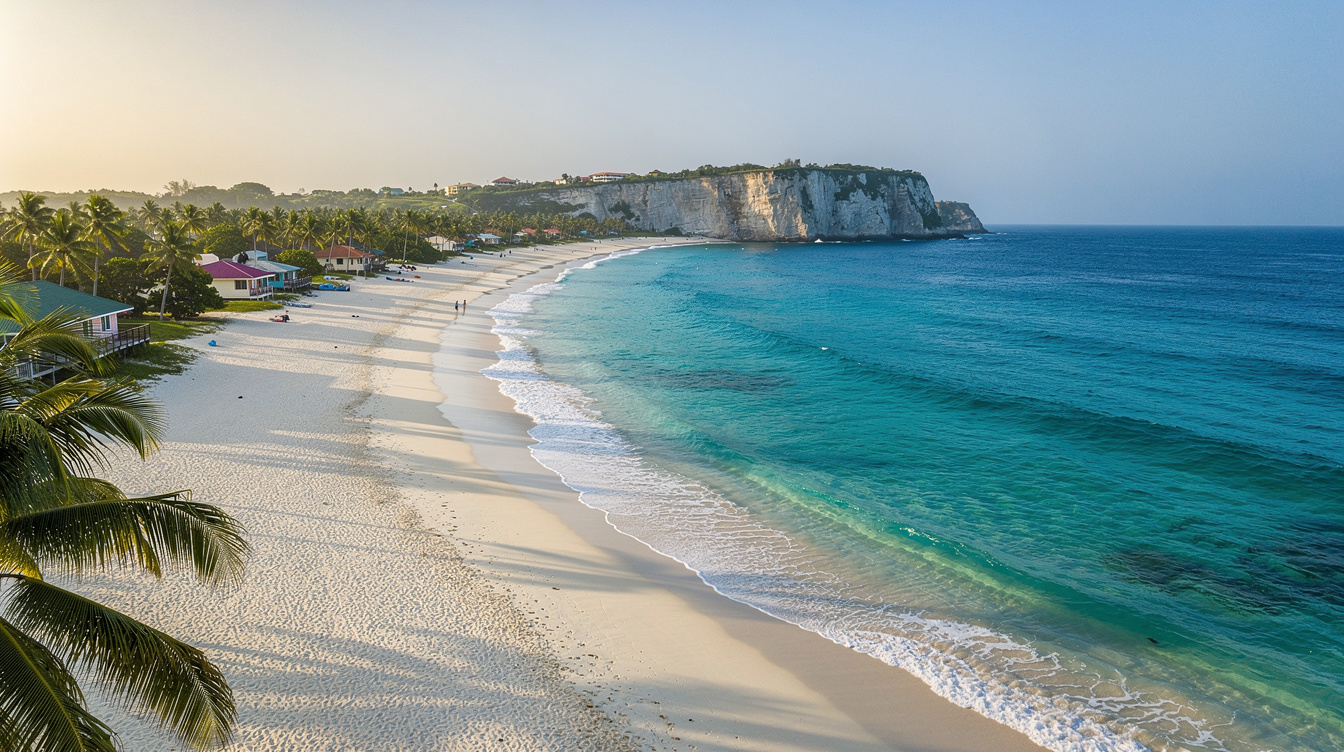
The name is on every booking site, every resort billboard, every rum-punch menu from one end of Negril to the other. Seven Mile Beach. It carries the authority of a fixed geographic fact. Walk the sand from Bloody Bay south toward the West End cliffs and you’ll start counting. The usable beach runs closer to four or five miles before the limestone takes over. The number doesn’t quite add up, but that’s not where the confusion costs you. It costs you when you book a room at one end thinking it’s the same as the other.
The north end belongs to the resorts, and that changes everything
Bloody Bay, at the northern anchor of the stretch, is where the large all-inclusive properties sit behind their rows of matching lounge chairs. Because the resorts control the sand from their buildings to the waterline on their sections, the visual geometry here is tighter and more managed than anything south of it. And because Jamaica’s prevailing trade winds come from the east-northeast, Negril’s west-facing shore sits in a partial geographic lee. The water in the morning, before the sea breeze develops around 1pm, is flat enough to see your feet at six feet of depth.
But that calm belongs equally to every section of the beach. What the north end adds is structure: a wristband, a pool bar, a buffer between you and the vendor corridor. The broader decision about which coast of Jamaica to sleep on points many US visitors here first, and the north end is the most polished version of the answer. The tradeoff is that local food is nearly absent within easy walking distance of the resort wall.
The middle stretch is where the beach actually happens
Norman Manley Boulevard runs parallel to the mid-beach section, and the gaps between guesthouses mark the public entry points. No wristband required. Jamaican families use these sections on weekends, and the water is the same flat-calm surface as anywhere else on the strip. The vendor presence is real: craft sellers, jet ski operators, men offering cold coconuts from a wheeled cart. The pitch is persistent. It’s rarely aggressive.
The jerk chicken from the grill behind the mid-beach bar, eaten at a plastic table with your feet in the sand, runs about $8 to $12. Because the guesthouses along this corridor are mostly Jamaican-owned and priced well under $150 per night, you walk out in the morning with the beach directly in front of you. And the room quality varies sharply, so reading recent reviews before booking here matters more than it does at the resort end. A local guide who has worked the beach for years will tell you that the $90 room and the $140 room can sit two properties apart with very different results.
The mid-beach water has the same shallow sand bottom as the north end, which is why the Caribbean Sea’s calm exposure here rewards morning swimmers before the chop arrives. The depth is deceptive from above. The pale sand makes four feet look like two.
Where Seven Mile Beach stops being a beach
At the southern end of the Norman Manley Boulevard strip, the sand narrows and then stops. The limestone shelving begins. Rick’s Café sits here on the West End Road, roughly a mile south of the main strip, famous enough among US visitors that it functions as a separate destination. The cover charge for non-diners runs around $15 USD. Because cliff-diving draws sunset crowds from across Negril, the late afternoon noise level at the transition zone is the highest point on the entire stretch.
Lively, but not what you came for if you came for sand. The resort-corridor dynamic here has a parallel in other Caribbean strips, but the cliff transition gives Negril an abrupt geographical full stop that most beach destinations don’t have.
The decision the name should have made obvious
Seven Mile is a marketing name that became a geographic name that became an expectation. Book “Seven Mile Beach” without specifying where on it, and you’ve made a meaningful choice by accident. The north end gives you insulation and polish. The mid-beach gives you access and friction and local food. The West End transition gives you a sunset that stops conversation. And because Caribbean wind timing shapes the experience the same way across the region, arriving before the afternoon breeze and staying through the copper light after 5pm is the one piece of advice that holds across all three zones.
Your questions about Seven Mile Beach answered
How do you get to Negril from Montego Bay airport?
Sangster International Airport in Montego Bay is the main US gateway. Negril sits roughly 55 miles west along the A1 coastal road, about 1.5 to 2 hours depending on traffic. Shared minibus transfers run $25 to $35 USD per person. Private transfers cost $60 to $90. There’s no rail connection.
When is the best time to visit Seven Mile Beach?
December through April is peak season: dry, crowded, prices at their highest. But Negril sits on Jamaica’s western tip, which receives measurably less rainfall than the north coast or the Blue Mountains during the wet season. June brings short afternoon showers that clear fast, quieter stretches, and hotel rates that drop 30 to 40 percent below peak pricing.
What does a week at Seven Mile Beach actually cost?
Mid-range guesthouses along Norman Manley Boulevard run roughly $90 to $150 per night in June. All-inclusive resort rates at the north end start around $250 per person per night. Beach meals from local vendors cost $8 to $12. Jet ski rental from water sports operators runs $40 to $60 for an hour.
At 6:15pm the sun drops straight into the Caribbean at the end of the beach’s sight line. The water goes copper. The vendor carts fold up. A pelican hits the flat surface thirty yards out, and the ripple spreads until it’s gone.