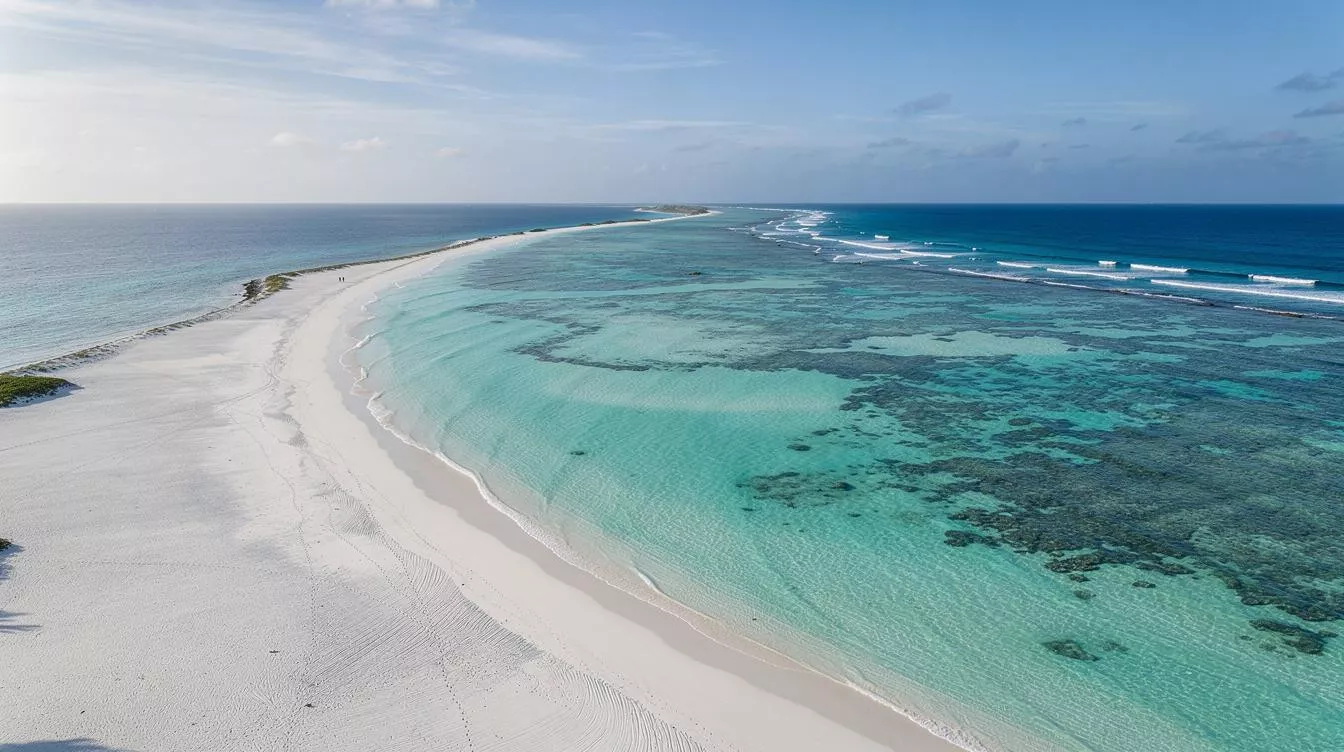
Grace Bay Beach earns its reputation the same way most great beaches do: through geography, not marketing. A barrier reef system runs parallel to the north shore of Providenciales, absorbing Atlantic swell before it reaches the sand. Because of that, the water in front of the resort strip stays shallow, flat, and a shade of turquoise that looks edited even when it isn’t.
But the beach has a timing problem. December through April, peak-season crowds fill the resort corridor and rates climb accordingly. Late April changes that math in ways most travelers booking Turks and Caicos don’t fully account for.
What the reef actually does to the water
The Caicos Barrier Reef runs along the north shore, and because it breaks incoming swell well offshore, the water close to the sand stays calm even when Atlantic conditions are active further out. The beach also faces north-northwest, so trade winds cross the water at an angle rather than pushing surf directly onshore.
That combination keeps the swimming area genuinely flat most mornings. A local boat captain who has run snorkel tours here for years puts it simply: the reef does the work so the beach doesn’t have to. And Princess Alexandra National Park designation protects that reef from anchoring damage, which is why water clarity holds up season after season.
The sand itself is fine and white, and it reflects heat back upward fast. By 9am it’s already warm underfoot. Bring reef-safe sunscreen, because the same reef-protection logic that shapes places like this one is now backed by enforcement in Turks and Caicos.
Why late April is the window most travelers miss
Peak season runs December through April. Crowds are real. Rates at beachfront properties sit at their annual high. Then late April arrives, and something shifts: school-break families return north, resort demand drops, and prices follow.
Air temperature in late April and May hovers in the low 80s°F. Sea temperature runs around 82°F. The official hurricane season opens June 1, but the genuine high-risk window, when mid-August through mid-October sees the most Atlantic activity, is still months away. You get nearly identical weather to February with measurably fewer people on a beach that runs nearly 3 miles.
That said, May can bring brief rain. Local guides describe it as directional and short: a 30-minute squall, then full sun. The temperature doesn’t drop. The water doesn’t change. What changes is that flights cost less and the Caribbean reef calendar in May generally works in a visitor’s favor across the region.
How a day at Grace Bay actually feels
The beach doesn’t require a plan. Morning light hits the shallows at a low angle and turns them the color of pale jade. Walk east from your resort and the sand quality stays consistent for a long stretch, fine and uninterrupted, before the denser cluster of properties begins.
Paddleboards are stable here in the mornings because the reef has already absorbed whatever swell came through overnight. But by 11am the trade wind picks up, and that’s when most people move from the board to the water. Snorkeling near the reef edge is the afternoon activity, when light penetration is best.
And because the national park limits coastal development along the shoreline, there are no vendor rows walking the waterline, which is rarer on famous Caribbean beaches than it should be. The quiet here is polished, not empty. Comparing this to other top-ranked beaches in the region, the park designation is what consistently separates Grace Bay from the alternatives.
Getting there and getting around
Fly into Providenciales International Airport (PLS). The drive from PLS to the Grace Bay resort corridor takes roughly 20 minutes by taxi or resort transfer. If you plan to explore the island beyond the beach strip, rent a car, but note that Turks and Caicos drives on the left.
For quieter options nearby, inter-island access to North Caicos and Middle Caicos exists by ferry. The contrast is instructive: those islands show you what Grace Bay decided not to become. The same logic applies to island day trips across the Caribbean, where the secondary island often delivers the experience the famous one is too busy to offer.
Your questions about Grace Bay answered
How do you get to Grace Bay from the airport?
Fly into PLS on Providenciales. The resort strip is roughly a 20-minute taxi ride from the terminal. Most beach-focused stays don’t require a rental car, but if you want to explore the island’s western end or take the ferry north, having one helps.
When is the best time to visit Grace Bay?
December through April delivers the best weather but the highest prices and most crowded beach. Late April through early June offers nearly identical conditions with lower rates and thinner crowds. Avoid mid-August through mid-October if weather risk concerns you.
How expensive is Grace Bay?
This is one of the Caribbean’s more expensive destinations by any measure. Beachfront resort rates are premium year-round. The lowest prices fall in late April, May, and early December before the winter rush. Book early even for shoulder season, because the good rooms go fast regardless of the calendar.
At 6am in late April, the water at Grace Bay is completely flat. The reef has been absorbing swell since before the sky turned light. The sand is still cool from the night, and for about an hour before the heat builds, the beach is entirely yours.