
Piano room ideas for an elegant musical centerpiece work best when you treat the instrument as furniture with a pulse, not a museum piece. I once shoved a piano against the largest empty wall and wondered why the room felt like a waiting area. It needed warmth, scale, and somewhere for people to linger.
- Anchor the piano area with a rug that reaches underfoot
- Float the bench with The Listening Circle Rule
- Paint the wall behind it in a forgiving mid-tone
- Build The Three-Height Light Stack around evening playing
- Hang art at recital height, not ceiling height
- Choose two woods with The Two-Wood Rule
- Frame a piano in home with floor-length drapery
- Skip the formal settee and add one reading perch instead
- Layer the mantel-style shelf above an upright piano
- Use warm brass over polished chrome for the hardware
- Make the music room with piano earn its storage
- Could a dark piano room still feel bright?
- Choose books and branches over tiny décor
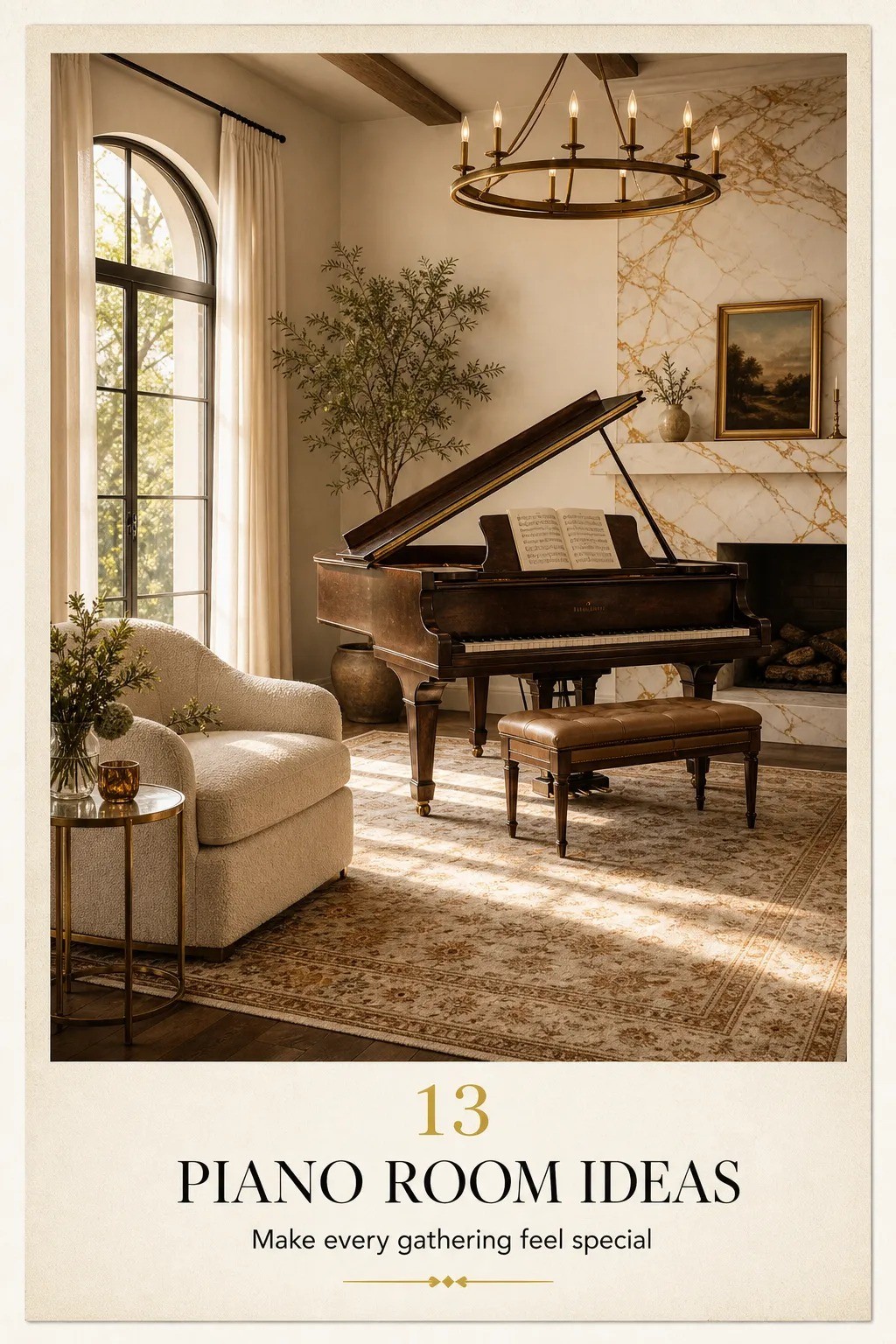
1Anchor the piano area with a rug that reaches underfoot
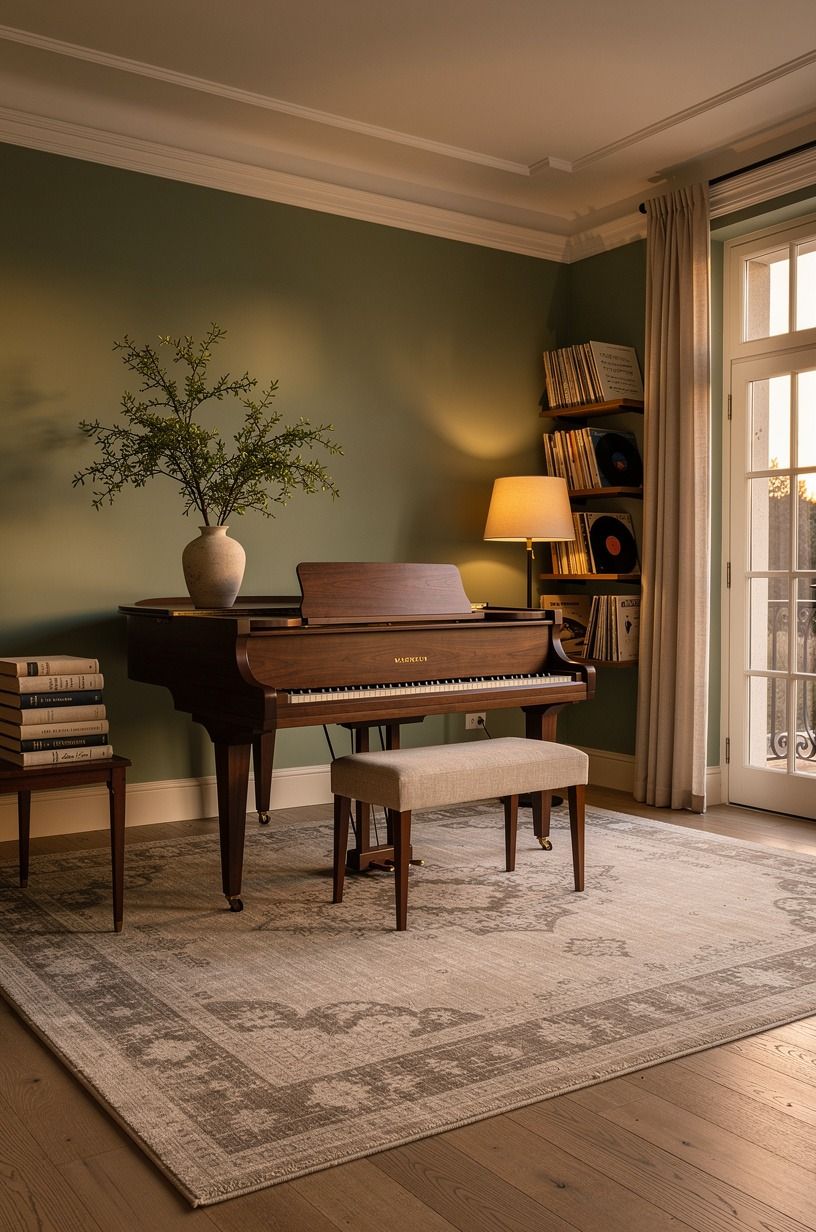
Start with a rug large enough for the piano bench and nearby seating to overlap it. A small rug floating under only the bench looks timid, and you’ll hear every chair scrape against bare flooring. Washed Belgian linen in sage green and warm cream gives the piano area an inviting boundary.
For a music room with piano, let the rug catch the soft pedal side and extend toward the listener. I’d choose linen layers over thin synthetic pile every time because they soften the room without looking like office carpeting. A guide to texture layers in a tiny room can help if your floor still feels sparse.
2Float the bench with The Listening Circle Rule
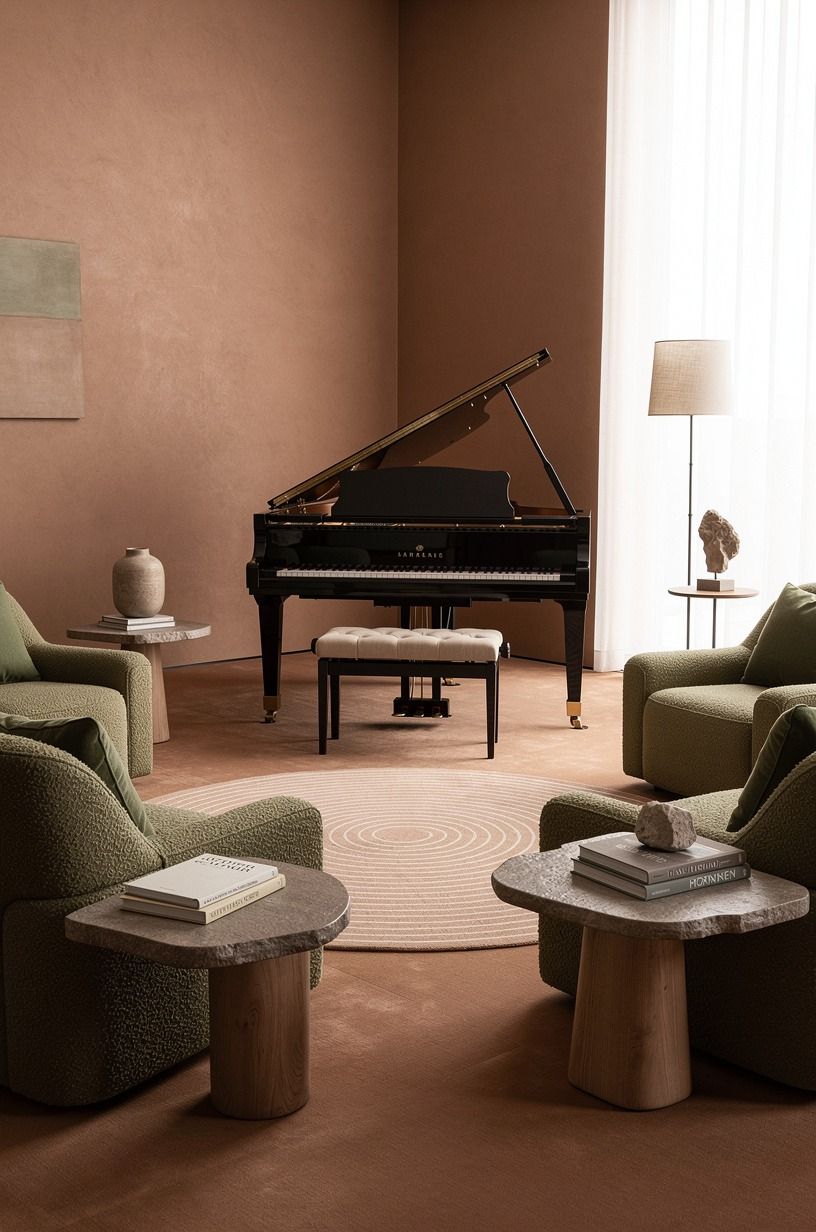
Pull the bench and one additional chair into a loose listening circle rather than lining everything along the walls. You want room for knees, sheet music, and the quiet shuffle before someone starts playing. Organic bouclé in terracotta, stone, and olive works beautifully as the one relaxed seat, especially beside a dark upright.
Keep the chair angled toward the keys, not square to the piano. That tiny turn makes your piano in home feel social instead of formal. And don’t add four matching armchairs, because the room will start reading like a recital hall with nowhere to exhale.
3Paint the wall behind it in a forgiving mid-tone
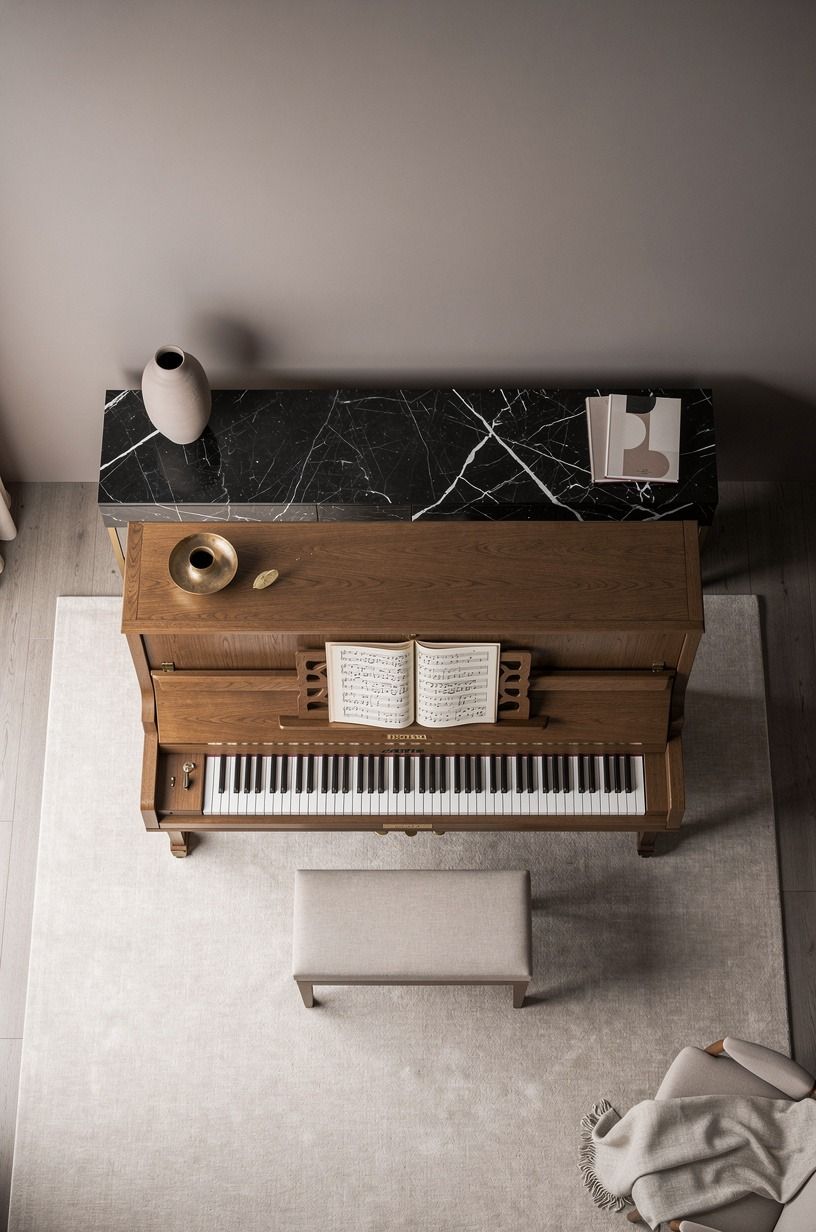
A piano needs contrast, but black furniture against a white wall can look clipped out and oddly severe. Farrow & Ball Pigeon No. 25 gives you a gentle gray-green field that changes with daylight while still letting ebony wood feel refined.
If your room faces north, I’d skip stark white paint. It’s crisp in a sample card, then cold by lunch. Paint the wall behind the piano in a clay-toned mid-tone, leave the remaining walls in Benjamin Moore White Dove OC-17, and add a small Nero Marquina marble accent for depth.
4Build The Three-Height Light Stack around evening playing
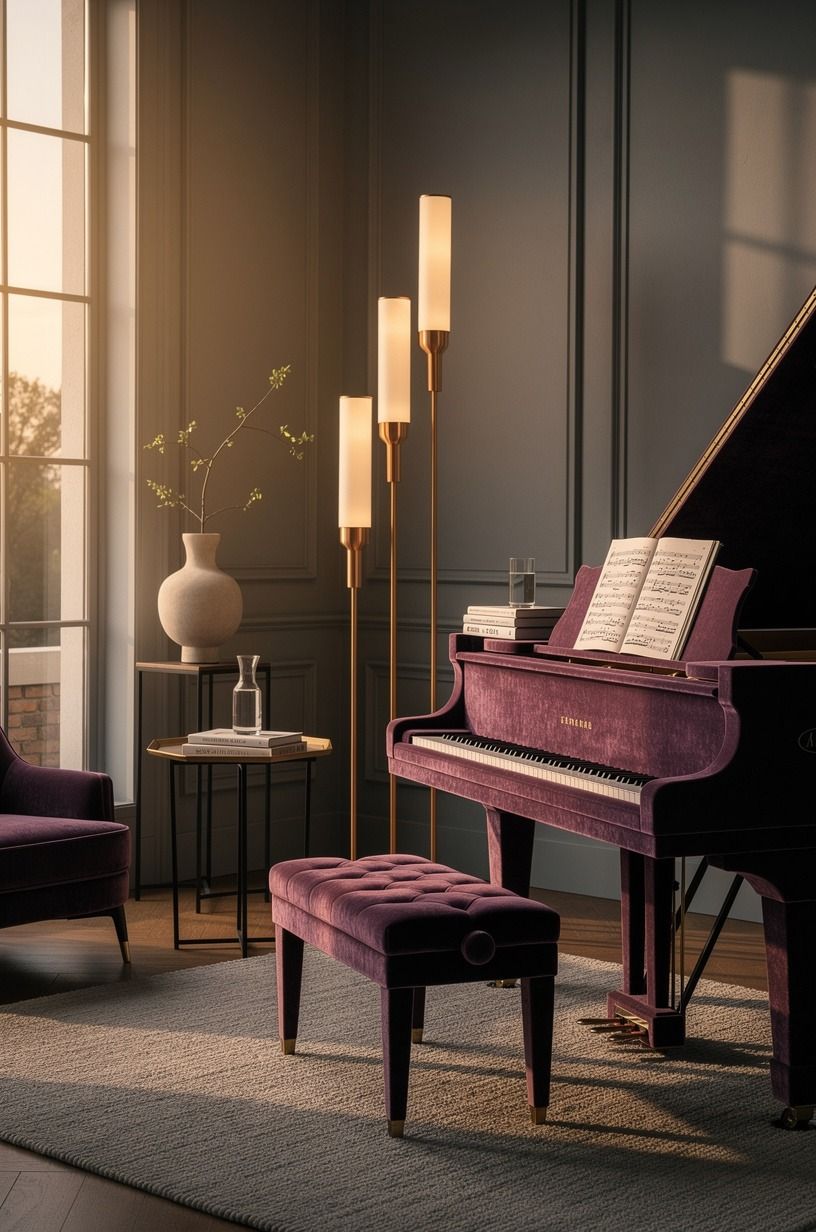
Every piano room needs three sources of light: overhead, task, and ambient. Use a plum mohair velvet pendant shade overhead, a shaded lamp near the bench, and a low lamp on a side table. Your hands need clear light, but your guests don’t need to feel like they’re under a dentist’s lamp.
The lamp should throw a pool of amber onto the keys without flashing in the polished lid. A room lighting story about light that settles explains why one ceiling fixture rarely carries a whole room.
Three sources. That’s the rule.
5Hang art at recital height, not ceiling height
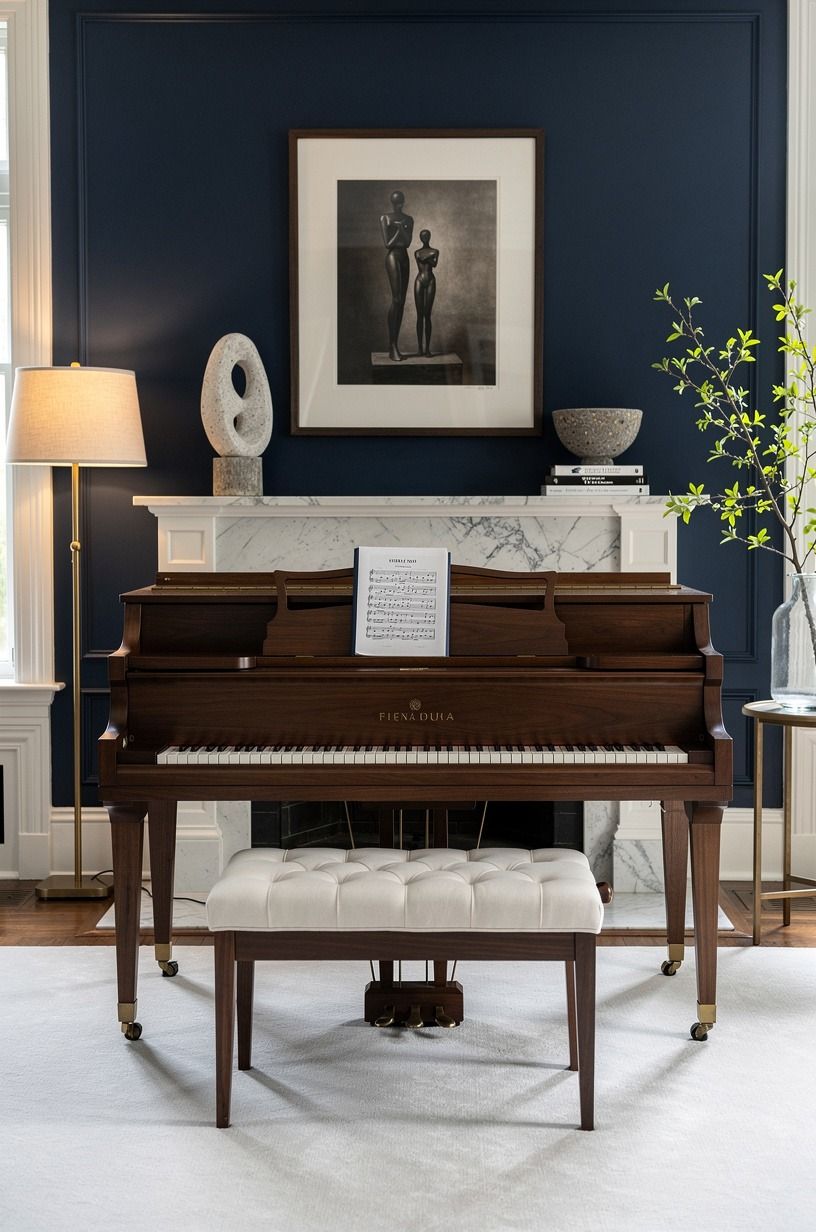
Place the center of framed art around 57 to 60 inches from the floor, then let the piano occupy the lower visual weight. A navy-and-walnut arrangement with a small Carrara marble ledge keeps the wall crisp without pulling attention away from the keys.
6Choose two woods with The Two-Wood Rule
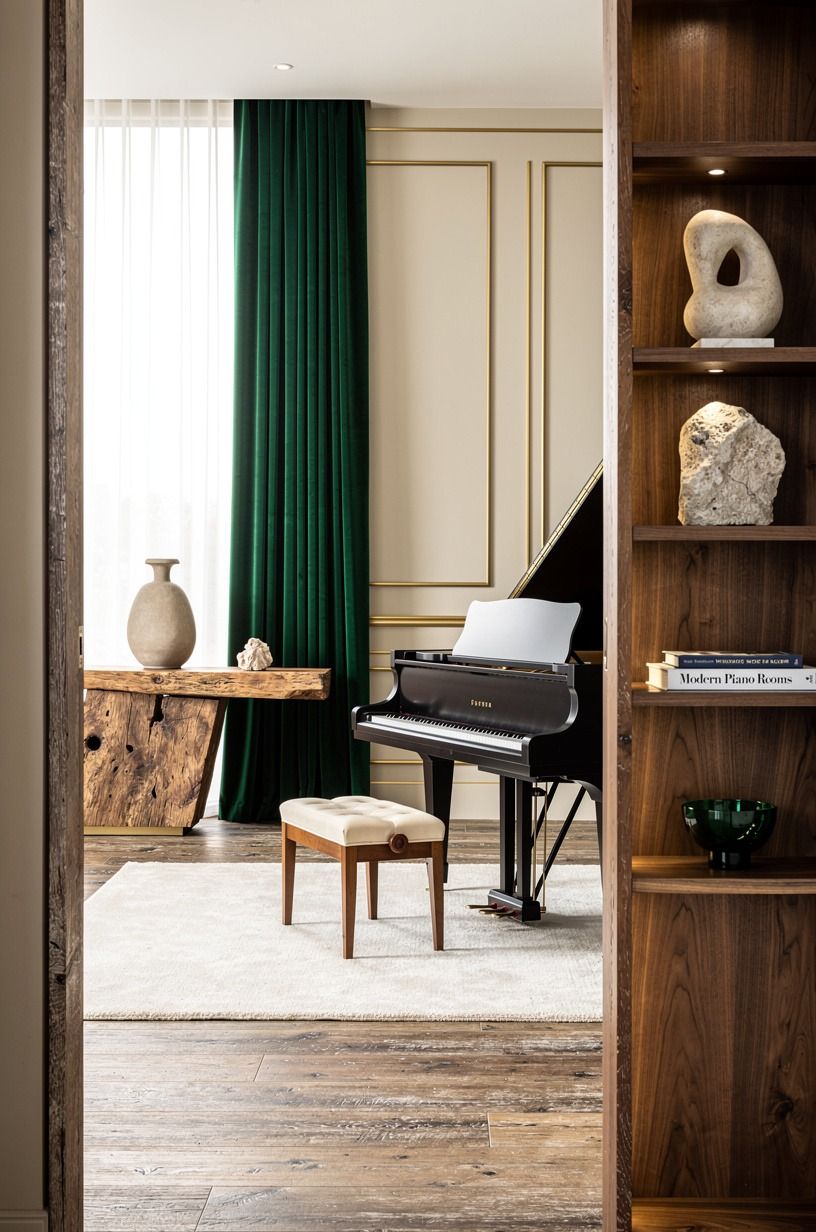
Use two wood tones, maximum: one from the piano and one from the surrounding furniture. Reclaimed weathered teak shelves beside a walnut piano create a calm, organic contrast. Add a third random wood stain and the room starts looking like everyone brought their own dining chair.
A Pottery Barn Livingston console in warm oak can hold music books without mimicking the instrument exactly. You’re looking for a conversation between finishes, not a matching set. But keep the undertones similar, either warm or cool, so your piano area doesn’t get muddy.
7Frame a piano in home with floor-length drapery
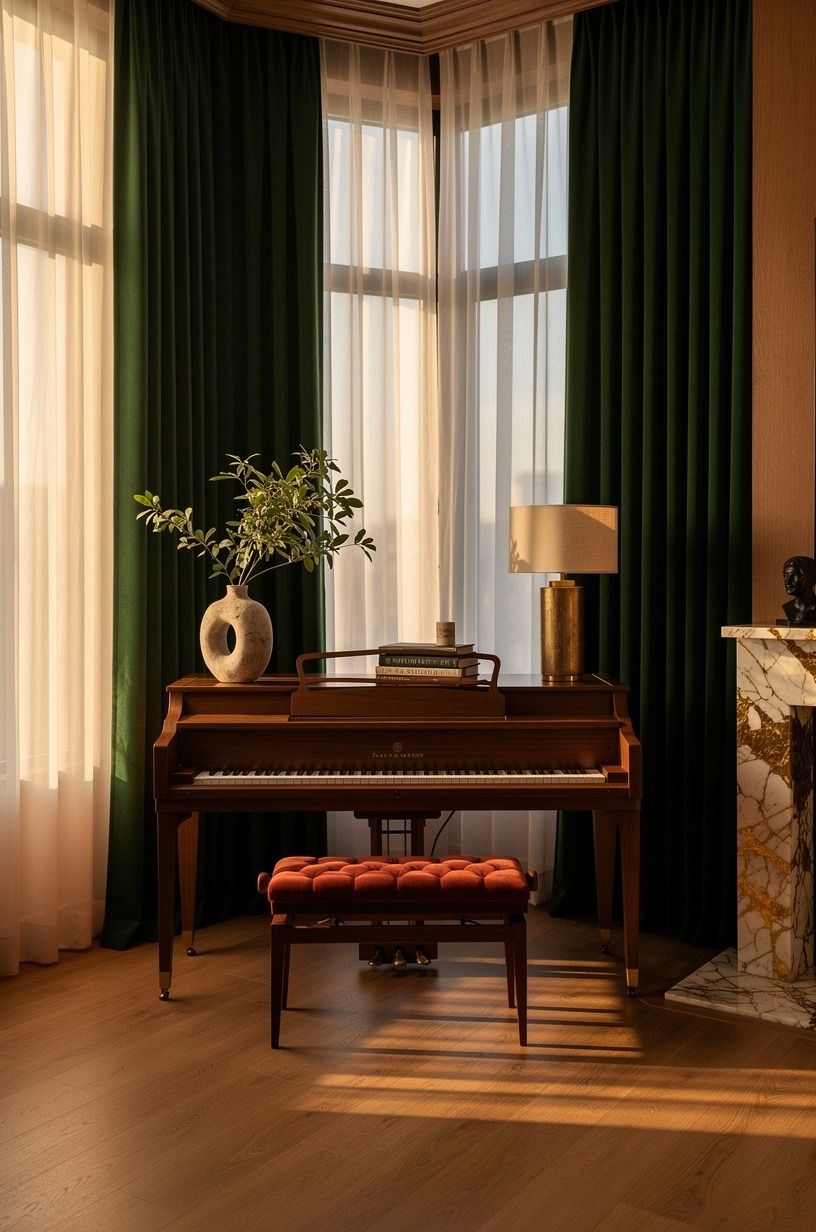
Mount your curtain rod 4 to 6 inches above the window frame and take the panels all the way to the floor. Forest green and rust drapery gives an upright piano a softer edge, especially when the room has hard floors and a natural-oak floor.
Avoid short curtains. They break the vertical line and make even an elegant piano feel squat. If you rent, use a tension rod inside the frame with fuller panels, then borrow more small-space ideas from this studio apartment layout guide.
8Skip the formal settee and add one reading perch instead
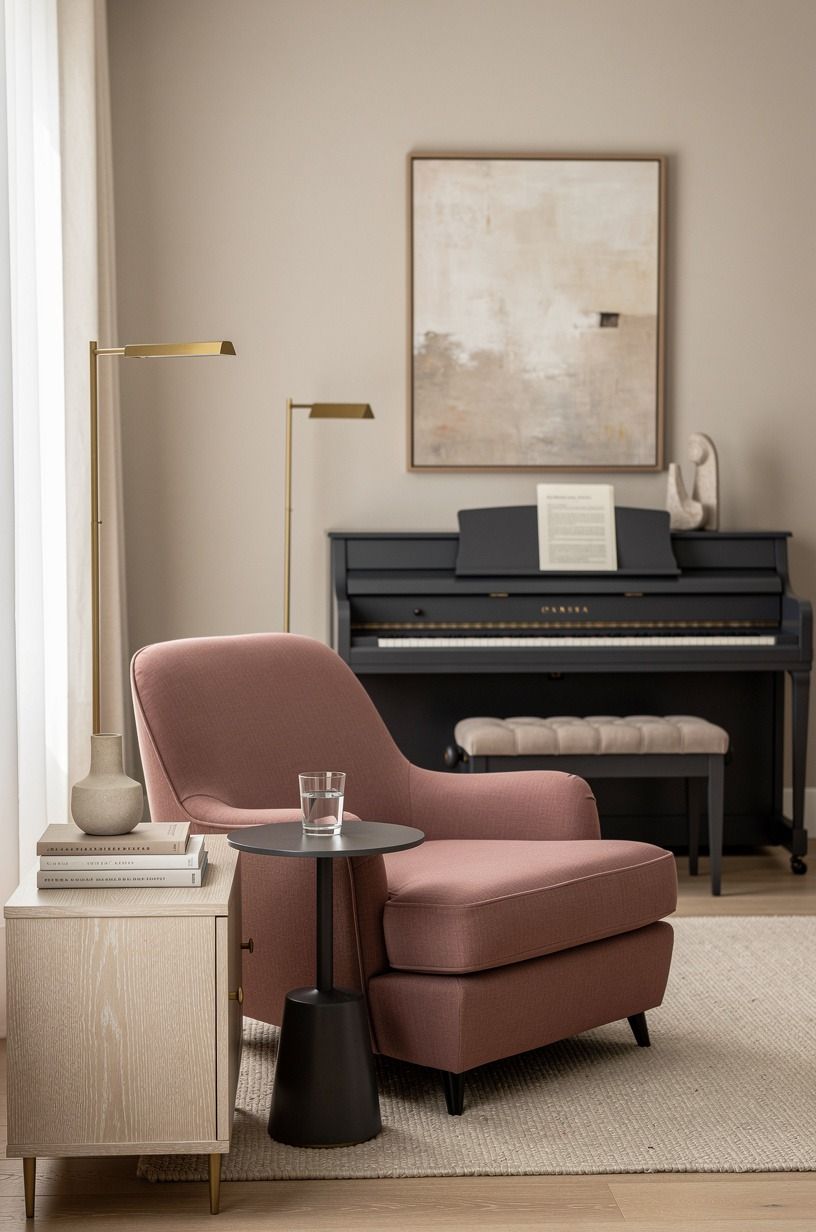
Instead of a delicate settee placed directly behind the pianist, choose one charcoal reading chair in cerused white oak, with a brass lamp and a small surface for tea.
9Layer the mantel-style shelf above an upright piano
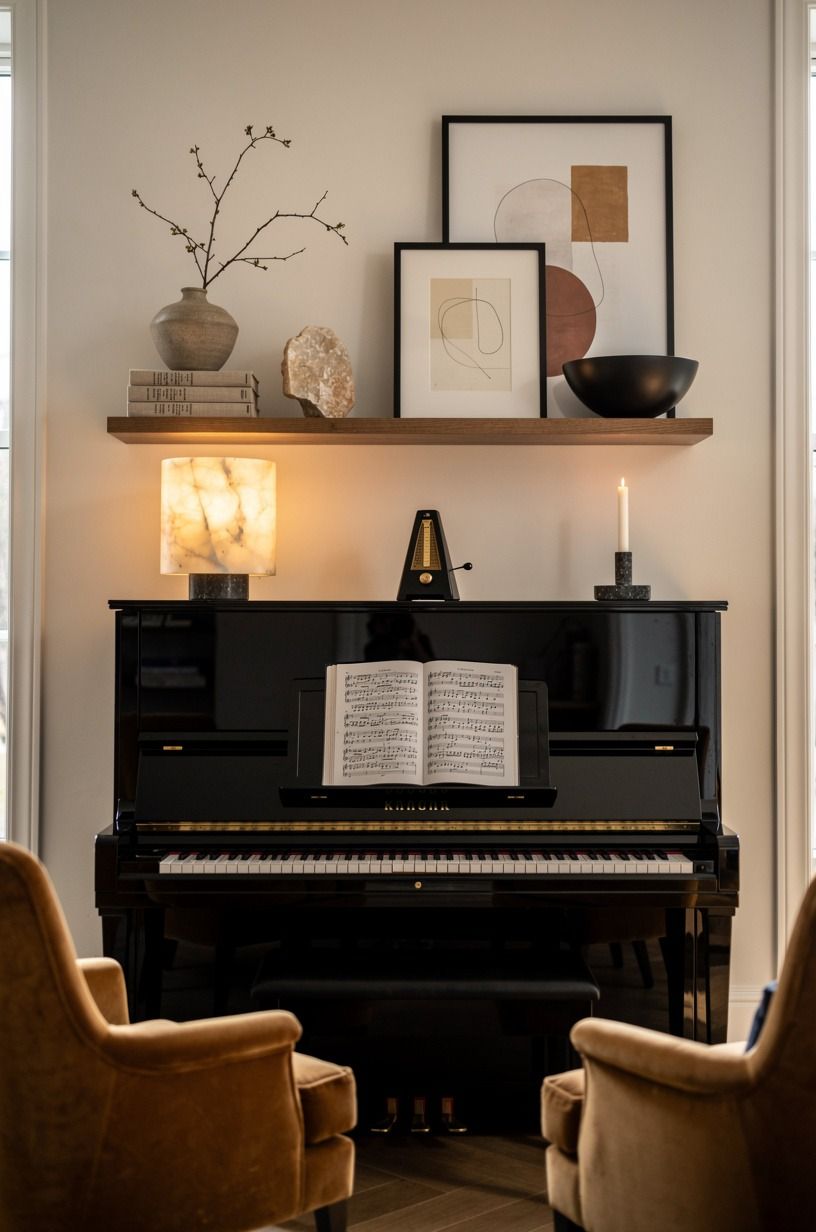
If your upright has enough wall clearance, install a shallow shelf above it rather than resting objects directly on the lid. Warm white, camel, and black accents paired with backlit translucent onyx give you a proper display line for framed photos and one trailing plant.
Keep the shelf styling low and quiet: a brass picture light, two old scores, a ceramic vessel. Don’t crowd it with candles, because wax and piano finishes are a miserable pairing. Your objects should sit above the music, where they can add atmosphere without blocking the sound.
10Use warm brass over polished chrome for the hardware
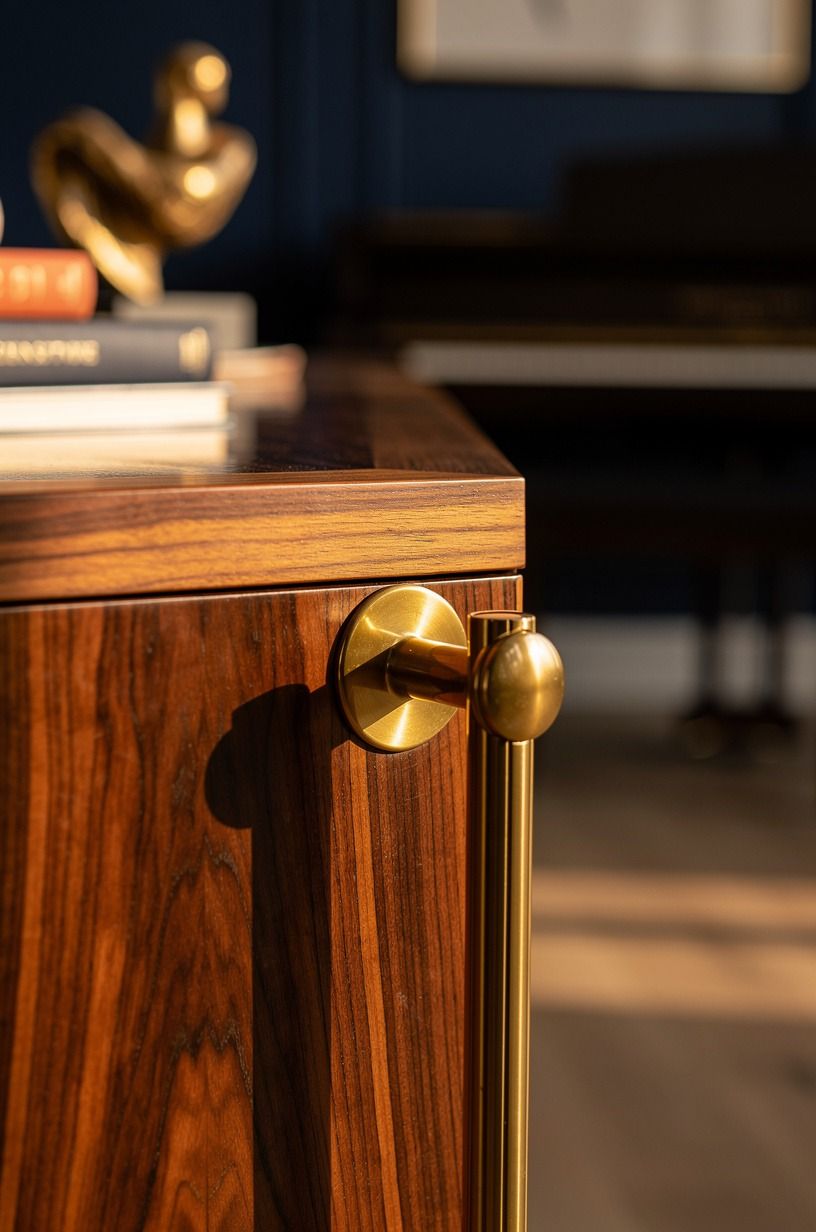
A piano has plenty of hard shine already, particularly when its finish catches afternoon light. Book-matched walnut paired with warm copper hardware on picture lights, cabinet pulls, or a tiny lamp adds a richer note that won’t fight the instrument’s sheen.
I’d skip polished chrome here. It can work in a sleek apartment, but it often makes a traditional piano look stranded between decades.
Your brass doesn’t need to match every metal in the room either. A little variation feels lived-in (and less like a showroom).
11Make the music room with piano earn its storage
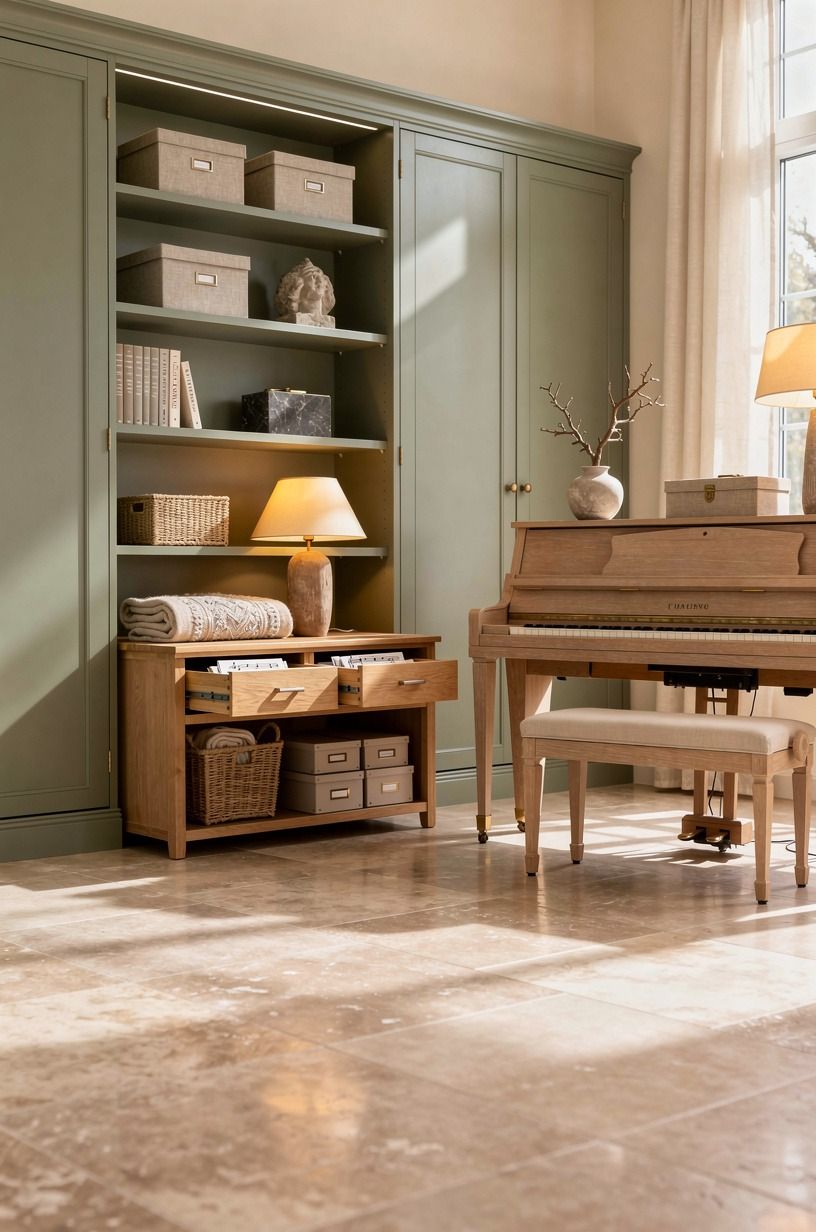
Give loose music, headphones, and metronomes a closed home before they take over the bench. Sage green cabinetry with a warm travertine top makes practical storage feel like part of the room rather than an afterthought.
12Could a dark piano room still feel bright?
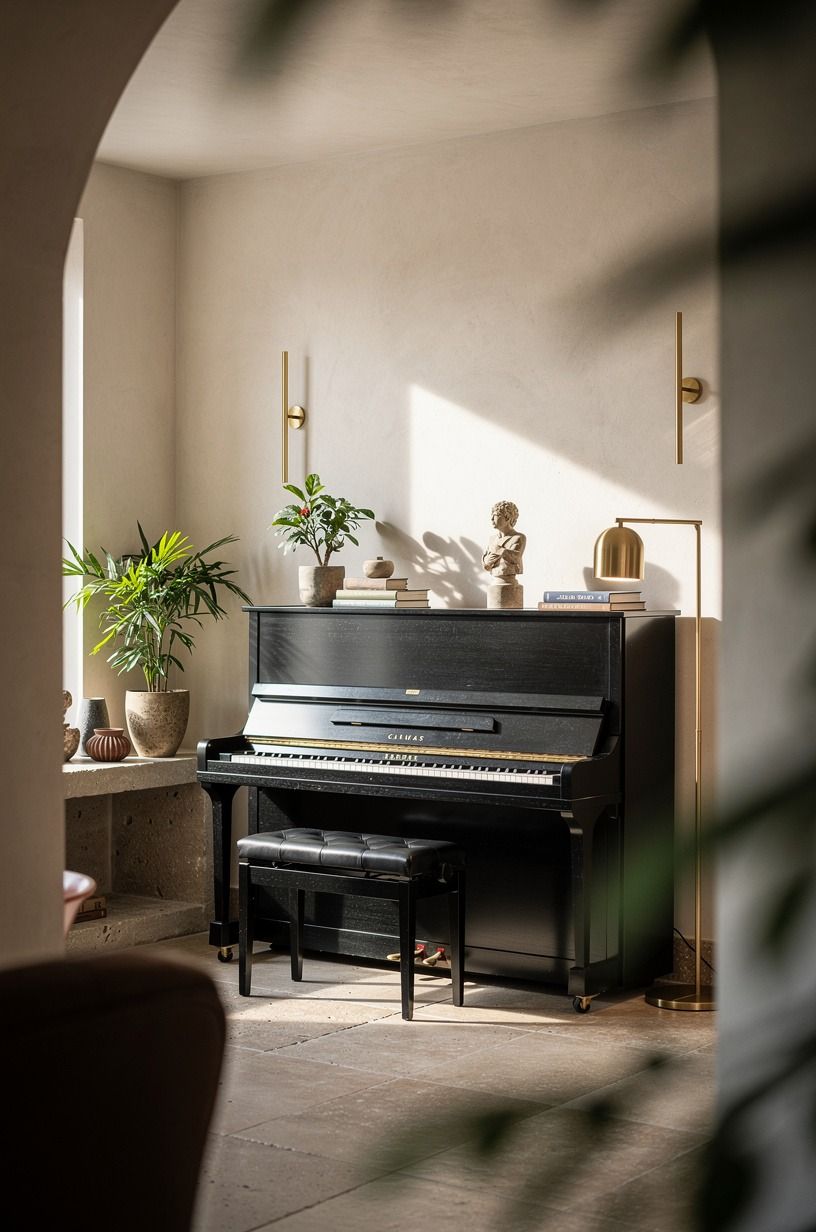
Yes, if you give the darkness something pale and textured to bounce against. Terracotta, stone, and olive alongside unlacquered brass developing patina keep a dark piano room warm rather than cave-like.
Your lighting matters more than your paint chip. Use the three-source setup, and let a mirror catch window light from across the room.
But don’t put a mirror directly over the keyboard if it reflects every movement while you play. That gets distracting fast!
13Choose books and branches over tiny décor
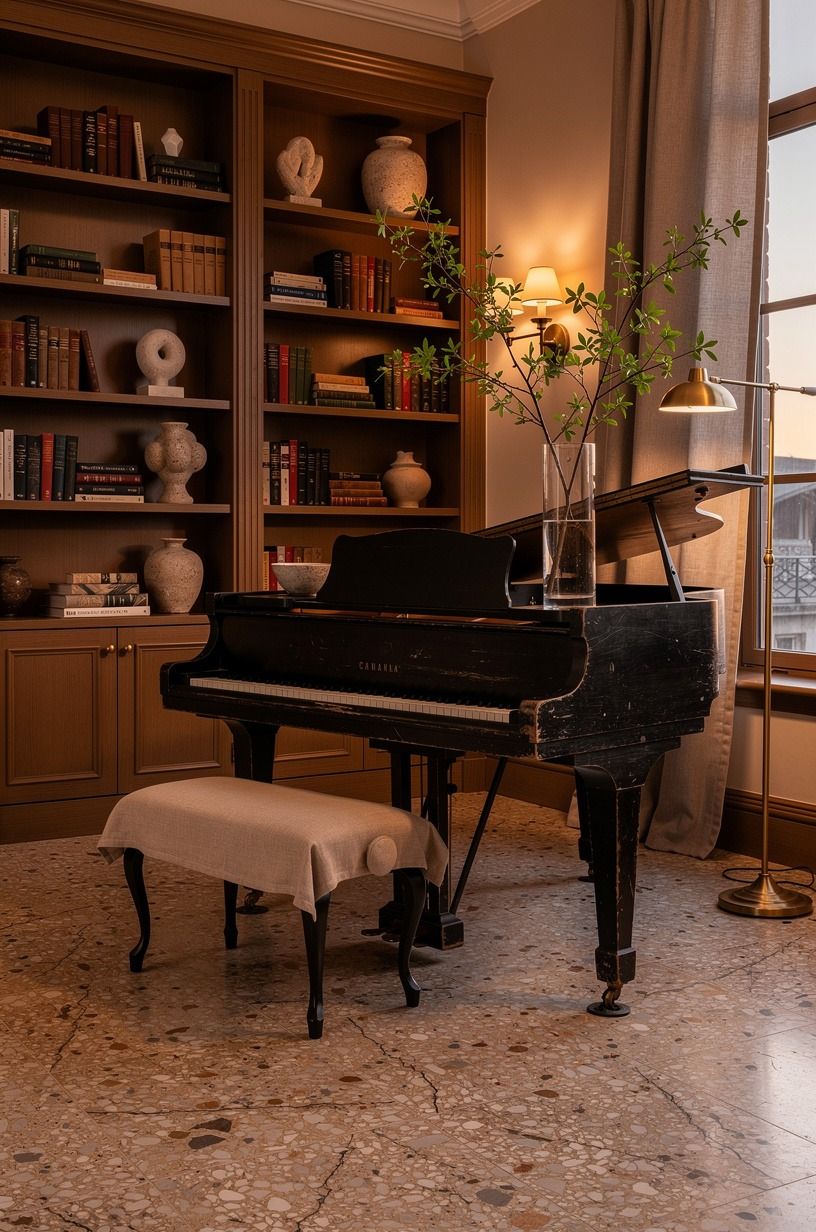
Finish with objects that have some visual weight: music books, a branch in a stoneware vessel, and one sculptural lamp. Clay, linen, aged brass, and an oversized-chip terrazzo piece give the arrangement substance without making it busy.
What a piano room typically costs
You can make a meaningful piano room for $200 to $800 if you focus on paint, textiles, art, and organization first. Spend on what your body notices: a proper rug, a lamp at the bench, and storage that stops sheet music from roaming the floor.
A wool rug typically runs $400 to $1,500, while linen drapes can land around $120 to $400 a pair. You don’t need the high tier to get an elegant result. But a flimsy rug is the wrong place to economize, because your feet and ears notice it every day.
My rule for making a piano room feel lived-in
I’ve learned that piano rooms go wrong when we decorate them around an imaginary audience. We buy the symmetrical lamps, the polished bench, the untouched side chair, then act surprised when nobody chooses to sit there after dinner.
A piano isn’t only sculpture. It’s an invitation with eighty-eight keys.
My first serious setup had a glossy black upright, a white wall, and a narrow bench. I thought the clean look was sophisticated.
What it really did was make every fingerprint visible and every sound bounce around the room. I kept adding accessories, which was exactly backward.
The difference came from a wool rug, a shaded lamp, and curtains that softened the window like fabric does in old theaters.
That’s why I’m suspicious of the all-minimal piano corner. It photographs well, sure, but it can feel nervous in real life.
Your instrument deserves room for a mug, a book, a lamp left on after midnight. The best piano rooms aren’t precious; they’re slightly gathered, a little imperfect, and ready when someone says, “Play that one again.”
And the piano itself doesn’t have to be expensive or antique to hold the room. An inherited upright with scratched sides can feel more compelling than a pristine baby grand if you give it a deliberate setting. Let your room acknowledge that music is messy, repetitive, sometimes loud, and deeply comforting.
That’s the whole point!
What People Always Want to Know
What is the best piano room idea for a small piano room?
The best choice is a rug-and-lighting zone around the piano, because it creates clear purpose without adding bulky furniture. Use one compact chair, a shaded lamp, and closed storage. Your small-room warmth guide can help you keep the edges open.
Where can I buy piano room pieces on a budget?
Start with IKEA, Target Threshold, and Wayfair for lamps, curtains, and storage. Facebook Marketplace is excellent for wood benches and vintage frames. You’ll get more character from one secondhand piece than from a cart full of matching accessories.
How much does a piano room makeover cost?
A basic piano room makeover usually costs about $200 to $800. That covers visible comfort: paint, textiles, art, and organization. Moving existing furniture, printing personal photos, and regrouping books are free, and they often make the biggest first difference.
Can I create a piano room on a budget?
Yes, and you should start with what you own. A low-cost reset includes moving the piano lamp, washing existing curtains, and borrowing a larger rug from another room. Add one thrifted frame or a Target throw only after the layout feels right.
Is a piano room worth it in a small space?
Yes, because a small room gives the instrument a stronger role and makes it easier to create intimate listening. Keep one clear path around the bench, use vertical art, and don’t crowd it with a sofa that’s too deep.
Is a piano room a good idea for a rental?
Yes, if you use removable layers. Rental-friendly warmth comes from peel-and-stick art hooks, tension-rod curtains, rugs, and plug-in lamps. Keep paint touch-up approved by your lease, and let textiles do most of the visual work.
Where I’d Start First
If I had to pick one, I’d start with the rug. You can’t make a piano corner inviting while every sound ricochets off hard flooring and your bench floats alone. Pin the rug idea for later and revisit these velvet throw layers.