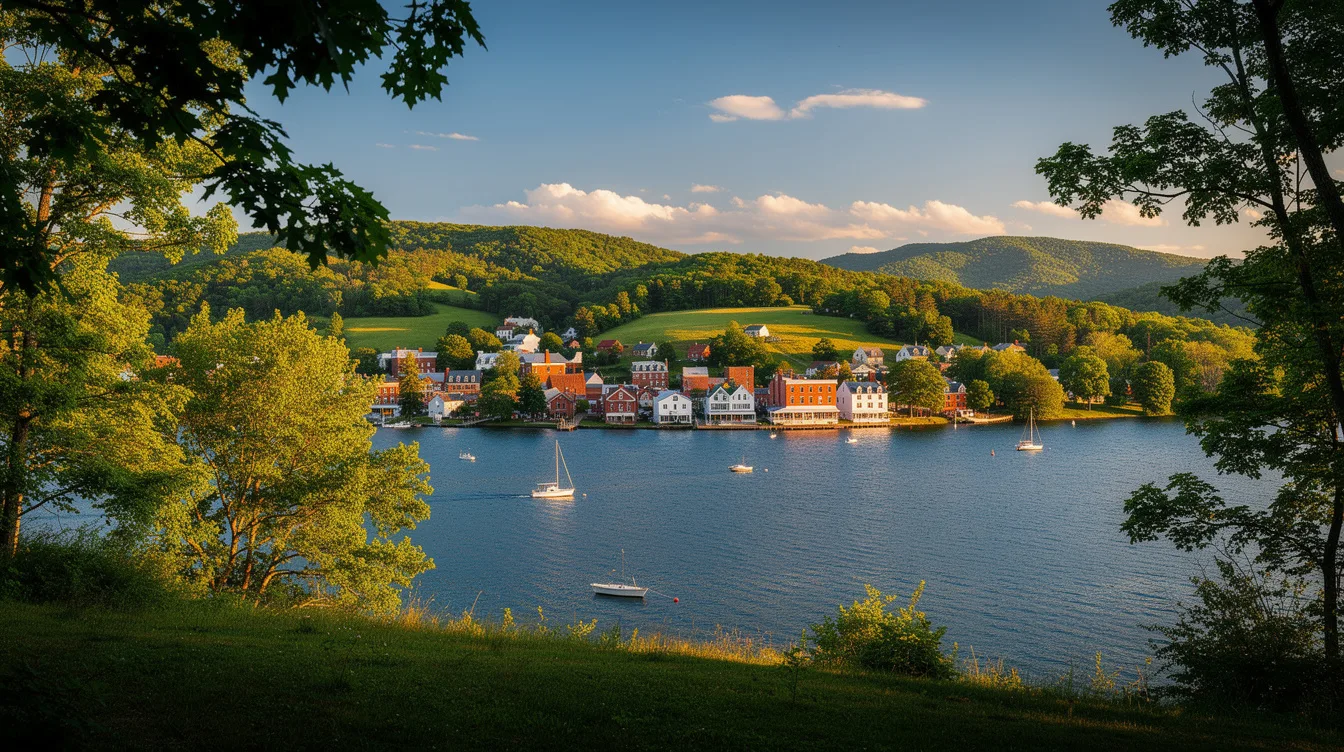
Cooperstown is overlooked by plenty of travelers crossing central New York, which is odd because baseball’s Hall of Fame sits right on Main Street. The village has only 1,794 residents, so the scale feels personal even when baseball fans arrive.
At the foot of Otsego Lake, about 60 miles west of Albany, Cooperstown gives the sport a physical address. You come for the museum, but the lakefront and compact old center make it worth staying past the first exhibits.
The Hall of Fame is the reason, and not the whole story
The National Baseball Hall of Fame and Museum opened in 1939 and remains the village’s main draw. It receives about 260,000 visitors a year, with more than 17 million visits recorded over time, so you should expect company inside.
But Cooperstown’s famous origin story doesn’t hold up. Historians reject the claim that baseball was invented here in 1839, which makes the town more interesting: it is baseball’s ceremonial home, not its proven birthplace.
You can feel that distinction in the way the museum anchors Main Street. The town doesn’t need a made-up myth to earn your attention, because the Hall of Fame has drawn fans since its opening and still gives the game a place to gather.
And the best approach is to let the contradiction stand. Visit for the sport’s memory, then step back outside, where souvenir-focused shops share a street with the library, post office, and the slower pace of an actual village.
Founded in 1786, the village still feels small
Founded in 1786, Cooperstown developed beside Otsego Lake, where the Susquehanna River begins at the lake’s outlet. The historic core includes many buildings from before 1900, so a short walk has more texture than a quick baseball stop suggests.
But it is touristy around the Hall of Fame. Main Street now leans toward gifts and souvenirs, while year-round residents have fewer traditional services than the village once had, including just two gas stations.
You’ll want to give the center some unhurried time anyway. The street can feel busy, but the lake changes the mood, with open water at the edge of a place that otherwise fits comfortably into a single afternoon.
Beyond the museum, Otsego Lake is the town’s necessary counterweight. It keeps Cooperstown from becoming a one-note sports stop, and it gives a visitor somewhere to look when the storefronts start to feel a little too baseball-heavy.
Two museums and a summer opera season broaden the day
The Fenimore Art Museum holds American folk and fine art alongside Native American collections. Nearby, the Farmers’ Museum offers living-history interpretation, which makes this a better destination for mixed-interest travelers than the Hall of Fame alone implies.
And you don’t need to pretend every attraction carries equal weight. Baseball is still the main event, but the art museum and Farmers’ Museum give you a convincing reason to spend a second day rather than rush back toward Albany.
Summer also brings the Glimmerglass Festival, known for opera and performing arts. Its theater opened in 1987, eight miles north of the village, and was described as the first U.S. Hall built specifically for opera since 1966.
You should choose summer if opera belongs in your trip. The festival adds polish, but it doesn’t erase Cooperstown’s rural setting, and that contrast is the point: formal performances are only a short drive from a small lake village.
Getting there asks for a plan
Cooperstown is roughly four hours by car from New York City, which makes it a real destination rather than an easy city day trip. Albany International is the nearest large airport, about 70 miles away, and both Albany and Utica have Amtrak connections followed by a drive.
But the extra leg is part of the trade-off. You won’t step off a train into the village, so a car makes the Hall of Fame, the museums, the lake, and the opera season far easier to combine.
For a first visit, start with the Hall of Fame before Main Street fills up, then leave room for the water and one non-baseball stop. That order works because the museum explains the town’s pull, while the rest of Cooperstown explains why it has lasted.
By evening, the baseball crowds thin, the lake sits beyond the village streets, and Cooperstown feels less like a legend than a small New York town with a very large memory.