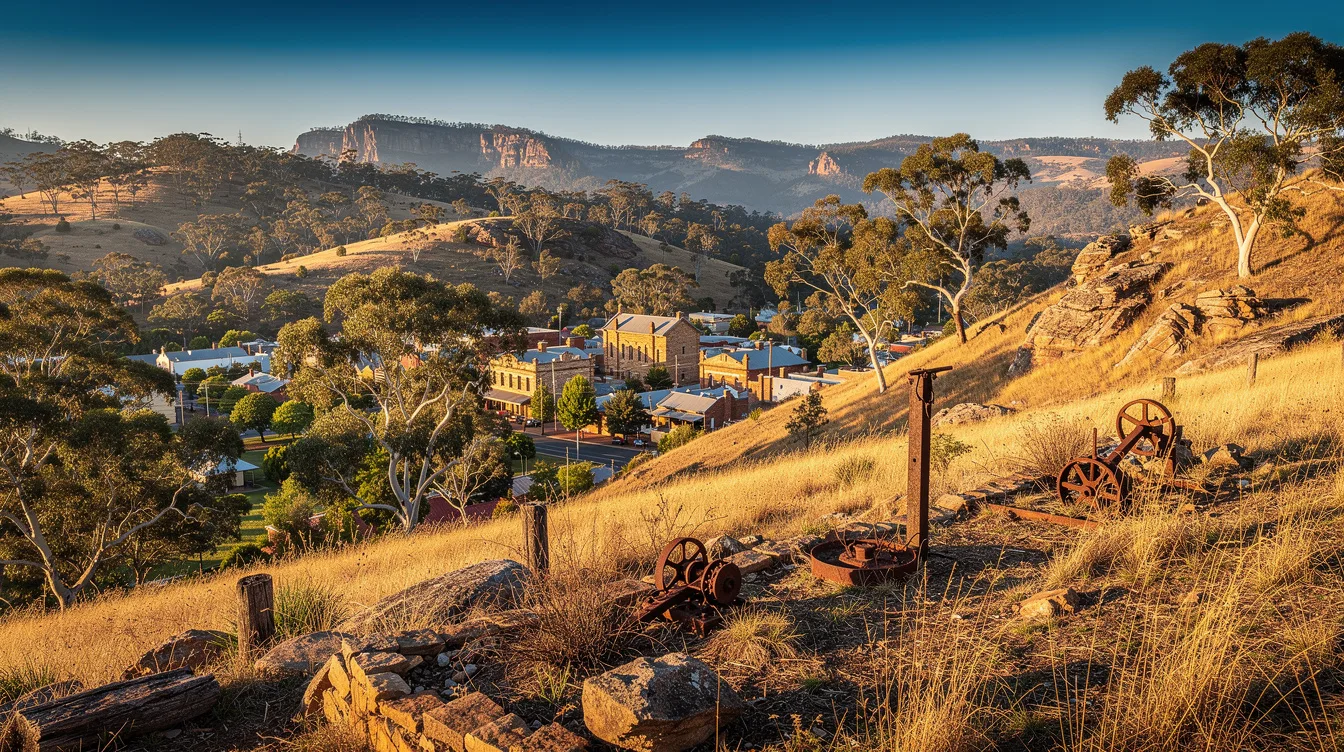
Beechworth saw prospectors recover 23 kg of gold in one week during Victoria’s rush. In 1852, another party reportedly lifted a pan containing 6.4 kg of gold. Those numbers sound exaggerated until you walk the old streets and remember how quickly this remote town grew.
And Beechworth still feels slightly overlooked, despite being a popular stop in northeast Victoria. The preserved stone buildings, cool air, and quiet evenings make it a better base than a quick roadside visit. You can spend one to three nights here without running out of reasons to slow down.
Gold made Beechworth rich, then history kept it intact
The town sits about 176.5 miles from Melbourne, near Wangaratta and Wodonga. Because it sits away from the Hume Highway, its old center avoided much of the pressure that reshaped larger Victorian towns. You notice that distance in the low traffic and broad, old-fashioned streets.
And the gold story is unusually easy to picture. Prospectors worked around Spring Creek, Silver Creek, Reedy Creek, and Woolshed Creek, while miners arrived from the United States, the United Kingdom, and China. The rush expanded the surrounding Ovens region to roughly 22,000 people.
Today, about 3,290 residents live in Beechworth, according to the 2021 census. But the town’s scale still hints at its boom years, when banks, hotels, workshops, a prison, and government offices crowded the district. You don’t need a museum guide to feel the ambition in the stonework.
For background before you go, browse this short guide to Victoria’s historic towns. And leave room for the inconvenient truth: gold brought money quickly, but it also brought harsh controls and unequal treatment of Chinese miners.
Ford Street is the place to begin
Ford Street and the surrounding historic precinct give you Beechworth’s clearest first impression. Former banks, hotels, shops, and public buildings line the streets, so a slow walk works better than a checklist. And the cool mountain air makes the town pleasant on foot when Melbourne feels too warm.
You can pair the old courthouse and prison precinct with local shops, cafes, pubs, and galleries. But don’t expect a large-city cultural program. Beechworth’s appeal is smaller and more physical, with stone walls warming in the afternoon and wooden floors creaking inside old buildings.
Can you understand the gold rush without a guide?
Yes, but a guided heritage walk adds useful context. The old diggings around Spring Creek and Woolshed Creek show where the money came from, while the courthouse and prison explain how authorities tried to control the boom.
And you should make time for the local museum, which holds newspapers, photographs, clothing, artifacts, and records from the district. Those early newspapers préservé the arguments and anxieties of the rush. For a deeper route, start with this guide to Beechworth’s heritage precinct.
Woolshed Falls puts the gold country outdoors
Woolshed Falls is the strongest reason to leave the center. The outing combines waterfalls, granite rocks, bush, and former gold-working areas, giving you a sharper sense of the country beyond the courthouse. And after a morning indoors, the sound of falling water resets the whole day.
Beechworth Gorge and the nearby creeks add short walks, natural pools, and rougher edges. You can also ride local routes or connect with the High Country’s cycling trails. But conditions change, and some outdoor areas feel exposed, so carry water and choose your route according to the weather.
Swimming and river stops make the warmer months appealing, while the higher setting keeps nights cooler than Melbourne. The town sits at about 1,837 feet, which helps explain its mountain-town feel. You get fresh air and open space, but not the polished convenience of an alpine resort.
Plan the outdoor portion with this guide to Woolshed Falls and the gorge. And keep your schedule loose, because the best moments may be a shaded rock, a quiet creek, or a road that looks worth following.
March to May is when Beechworth makes sense
March to May brings autumn color and comfortable weather for walking or cycling. The trees turn the streets amber, and the lower afternoon heat makes the old buildings easier to explore. But the town remains calmer than Victoria’s better-known alpine destinations.
Spring brings green growth and mild temperatures, while summer suits waterfalls, swimming, and outdoor time. And winter is genuinely cool, with snow possible in the surrounding higher country. You can still enjoy pubs and heritage buildings then, if you pack for cold evenings.
Food is part of the reason to stay overnight. Cafes, bakeries, regional restaurants, family wineries, and local producers give Beechworth more character than its size suggests. And because the town is compact, you can walk from a historic street to dinner without turning the evening into another drive.
Give yourself a two-day outline: historic streets and museums first, then Woolshed Falls and a cycling or walking route. Beechworth is polished enough for an easy escape, but rough enough to keep the gold-rush past under your shoes. By dusk, the old stone walls hold the day’s warmth while the streets go quiet.