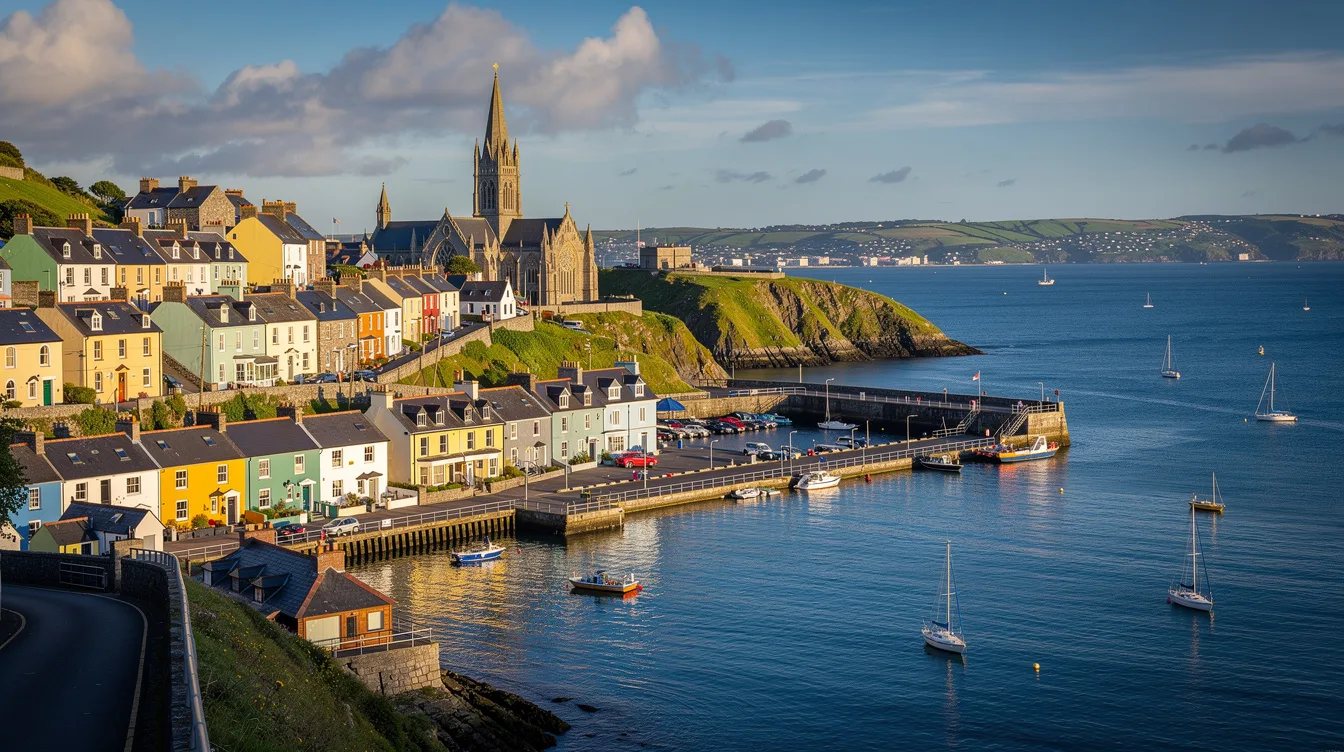
Cobh, pronounced “Cove,” doesn’t ask you to imagine the Titanic story. It puts you at the harbor where the ship made its final stop on April 11, 1912, before heading into the Atlantic. The town is overlooked by many Cork visitors, which makes its history hit harder.
That morning, 123 passengers boarded at what was then Queenstown. Only 44 survived the sinking. You can stand near the waterfront, watch the harbor traffic, and feel how close this past remains without needing a grand theatrical setup.
Titanic’s last stop is still the point
The ship’s final port call is Cobh’s clearest claim, and it earns the attention. Start at Titanic Experience Cobh, then take the Titanic Trail through town to connect the museum story with the actual streets and piers outside.
But don’t expect a vast monument district. Cobh is a working harbor town with shops, homes, and cruise activity, so the experience feels more immediate than staged. You’re following a departure point, not entering a theme park.
The waterfront is where the scale settles in. Ferries and boats move through Cork Harbour, while Com/”>Cobh Heritage Centre adds the wider account of departures that shaped this place long before one famous voyage.
2.5 million departures changed this harbor
Between 1848 and 1950, 2.5 million Irish people left for North America from this port. That number gives Cobh its weight. The Titanic is the headline, but emigration is the longer and more affecting story.
And the Queenstown Story at Cobh Heritage Centre is worth your time because it broadens the view. You’ll find material on famine-era emigration, transport, and maritime life, all tied to a harbor that carried people away from Ireland.
Cobh was called Queenstown from 1849 until 1920. The older name appears throughout its maritime history, so it helps to know both before you start reading plaques or museum displays.
Can you see more than Titanic history?
Yes. The Lusitania memorial in Casement Square recalls the 1915 sinking, after survivors and victims were brought to Queenstown. It’s a sobering second chapter, and it keeps the town from being reduced to one ship alone.
Beyond the harbor, Spike Island makes a worthwhile boat trip for its historic fortress and prison. It adds another layer of maritime history, though you should leave enough time if Cobh is only a day trip from Cork.
St Colman’s Cathedral changes the view
Look uphill and you’ll see St Colman’s Cathedral above the waterfront and rows of colorful terraced houses. At 300 feet, it is one of Ireland’s tallest buildings, and it gives the town a dramatic vertical pull.
But the climb asks something of you. Go at an easy pace, especially if you’ve spent the morning on the waterfront, because the streets rise sharply toward the cathedral. The reward is the harbor spread below and the town’s tight arrangement around it.
This is Cobh at its most photogenic, though the word undersells it. Gray harbor light, bright facades, and the cathedral’s dark stone create a view that feels almost designed, even as laundry and parked cars keep it real.
And you don’t need a schedule packed with sights. Walk the waterfront, pause at the cathedral, then settle in for seafood or a pint. Cobh is lively when ships arrive, but it doesn’t need constant activity to hold your attention.
A Cork day trip that doesn’t require a car
Cork City is about 15.5 miles away, and daily trains from Cork take under 25 minutes. That easy rail connection is a major advantage, especially if you’d rather look out at the harbor than deal with island roads.
The train makes Cobh an unusually simple half-day stop. Stay longer if you want the museums, cathedral, waterfront, and a boat trip, but don’t rush it into a quick photo stop. The history needs a little room.
When should you go to Cobh?
You can visit year-round. Summer brings cruise liners to Ireland’s only dedicated cruise terminal, which can make the center busier. At the same time, much of that traffic moves onward by bus, so walking the waterfront can still feel pleasantly unhurried.
And Cobh’s trade-off is part of its appeal: it draws visitors, yet many arrive focused on somewhere else. By the time the harbor quiets, the cathedral remains above the colored houses and the water turns dark beneath it.