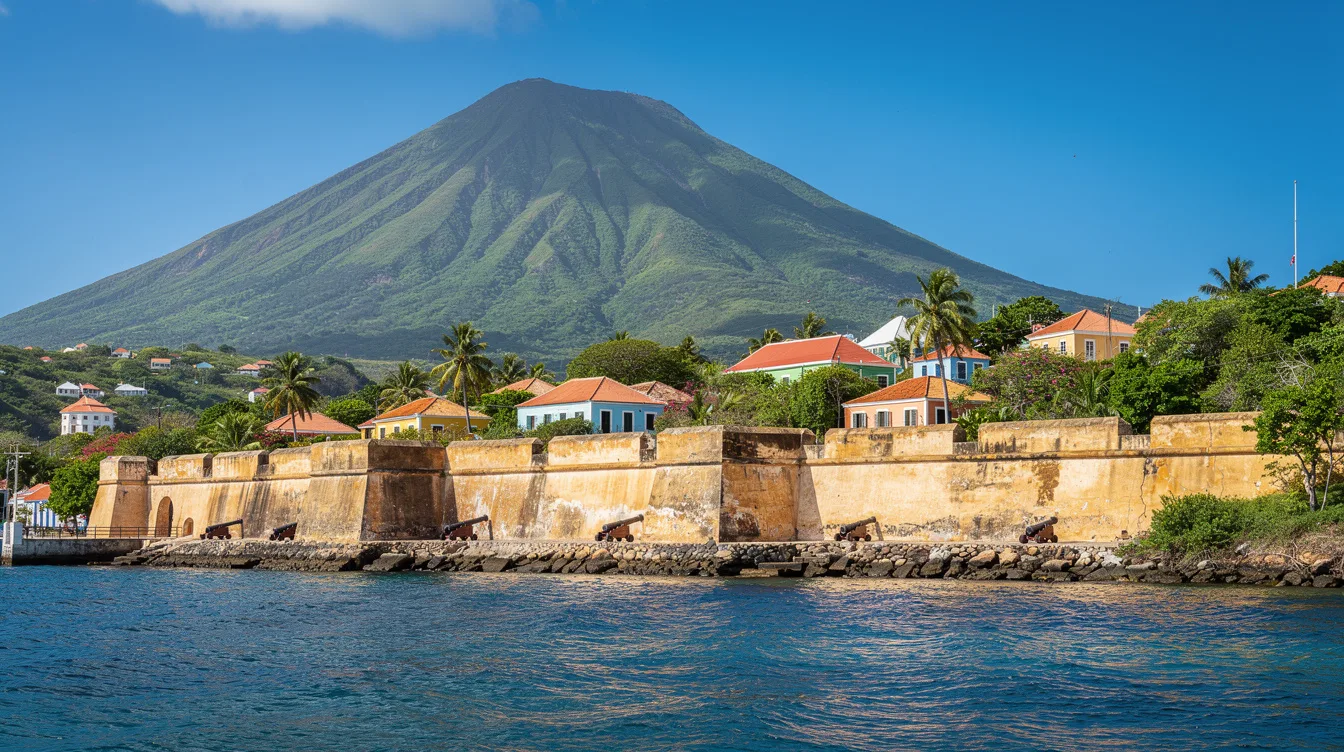
Statia is only 20 minutes by air from Sint Maarten, yet it asks you to slow down almost immediately. This small Dutch Caribbean island has no large-resort script. Instead, it has old stone, a working harbor mood, and a fort connected to a defining American moment.
You may know it formally as Sint Eustatius. Locals call it Statia, and English is the everyday language even though the island is part of the Netherlands.
The 1776 salute still gives Fort Oranje its charge
On November 16, 1776, Fort Oranje returned the salute of an American brig flying the newly independent United States flag. That response is described as the first foreign recognition of that flag, which gives this modest fort an outsized place in American history.
And that is the reason to come up here before you do anything else. The walls look over Oranjestad and the anchorage below, so you can see why a ship’s arrival once mattered so much.
But don’t expect a grand national monument with a polished visitor flow. This is a smaller, more exposed kind of history. The trade-off is exactly the appeal: you can stand near the old cannons without feeling processed through an attraction.
Oranjestad feels quiet because Statia is small
Oranjestad is the island’s main town, and Statia has about 3,200 residents. That scale changes the whole visit. You hear wind moving through open streets and notice the salt in the air rather than a constant rush of traffic.
And you’ll use US dollars here, which removes one small travel nuisance. Statia is legally a special public body of the Netherlands, but its daily rhythm feels Caribbean first, Dutch second.
But quiet doesn’t mean blank. Fort Oranje, Lower Town ruins, old warehouses, and the Honen Dalim synagogue ruins give you enough to follow on foot. The island’s past includes free trade and the transatlantic slave trade, so its history deserves more attention than a quick photo stop.
An 8.1-square-mile island with two volcanic sides
Statia covers just 8.1 square miles, with Saba to the northwest and Saint Kitts to the southeast. It sits about 37.9 miles south of Sint Maarten, which makes the short flight feel almost improbable once you see the island from above.
At the southern end, The Quill is an extinct volcano with a forested crater. The northern end includes the Boven, another volcanic elevation. You can feel the island’s compactness because the terrain keeps rising into view.
And the Quill is the better argument for bringing proper shoes. Hiking its crater ecosystem gives Statia a nature-focused counterweight to the fort, but you should come prepared for a volcanic island rather than a flat beach holiday.
Getting here is easy, staying spontaneous is harder
Flights arrive at F.D. Roosevelt Airport from Sint Maarten. The runway limits aircraft size, which helps explain why Statia has remained less built-up and less crowded than many nearby islands.
But that small-scale access is a real constraint, not a marketing line. You’ll want to organize your arrival around the regional flight, especially if you’re connecting through Sint Maarten rather than treating Statia as an afterthought.
And once you land, the island’s restraint starts making sense. There are no major cruise facilities or long rows of large hotels competing for your attention. That makes it peaceful, though travelers who want nonstop choices may find it too spare.
Diving and old ruins make the best pairing
Statia’s water draws divers for reefs, volcanic marine terrain, and historic wrecks. On land, Lower Town’s ruins and warehouses keep the same maritime story going, so you don’t have to choose between a water day and a history day.
And that pairing is Statia’s strongest travel argument. You can spend one part of the day thinking about ships, trade, and revolution, then look toward the water that carried all of it here.
But this isn’t an island built around beach-club convenience. Its pull is more specific: diving, hiking, and heritage sites, with enough quiet between them to make each one land.
Come for the flag story, stay for the stillness
The American connection is real, and Fort Oranje answers the title’s promise. Yet the island works best when you let that history open the door rather than dictate every hour.
And you should give yourself time to look downhill from the fort after the history lesson ends. Oranjestad sits below, the harbor holds the light, and the old stone walls face the water that made a small island matter.