
One door, three months, and a fifteen-minute October switch can work if your September base stays neutral. I started with one natural grapevine wreath, a black door, and a front step that always felt a little bare. By Halloween, it looked deliberately moody. Not like I’d emptied a party-store aisle onto it.
- Start with a September door decor base you won’t resent in October
- Hang the wreath with the Quiet Hardware Rule
- Layer a doormat pair for fall school door decorating ideas
- Paint one supporting surface, not the whole porch
- Build the Three-Height Pumpkin Stack
- Let a black lantern carry the October door decorations classroom mood
- Swap ribbon for torn gauze in your seasonal classroom door
- Frame one bat cluster instead of covering the door
Here’s what it looked like before
Before, my door had the full starter-home package: a faded welcome mat, one lonely planter, and a wreath I’d bought because it was on clearance. The trim was Benjamin Moore White Dove OC-17, which helped, but the setup had no shape. You could see the problem from the sidewalk.
I didn’t need more stuff. I needed a base you could keep from September through November without your entry looking like a seasonal storage closet exploded. That realization saved me from buying three separate wreaths, which is exactly the kind of cheerful clutter I regret by January.
- Start with a September door decor base you won’t resent in October
- Hang the wreath with the Quiet Hardware Rule
- Layer a doormat pair for fall school door decorating ideas
- Paint one supporting surface, not the whole porch
- Build the Three-Height Pumpkin Stack
- Let a black lantern carry the October door decorations classroom mood
- Swap ribbon for torn gauze in your seasonal classroom door
- Frame one bat cluster instead of covering the door
- Use broom corn for texture over plastic leaves
- Try the Two-Wood Rule for a fall door decorating contest
- Add one handwritten sign, then stop
- Choose pumpkin shapes over matching colors
- Float the spiderweb above your handle, not across it
- Anchor a moon shape with a quiet paint color
- Use a classroom-style paper chain only where kids can reach it
- Skip the giant skeleton and lean into shadows
- Reset in November with the Fifteen-Minute Reverse
1Start with a September door decor base you won’t resent in October
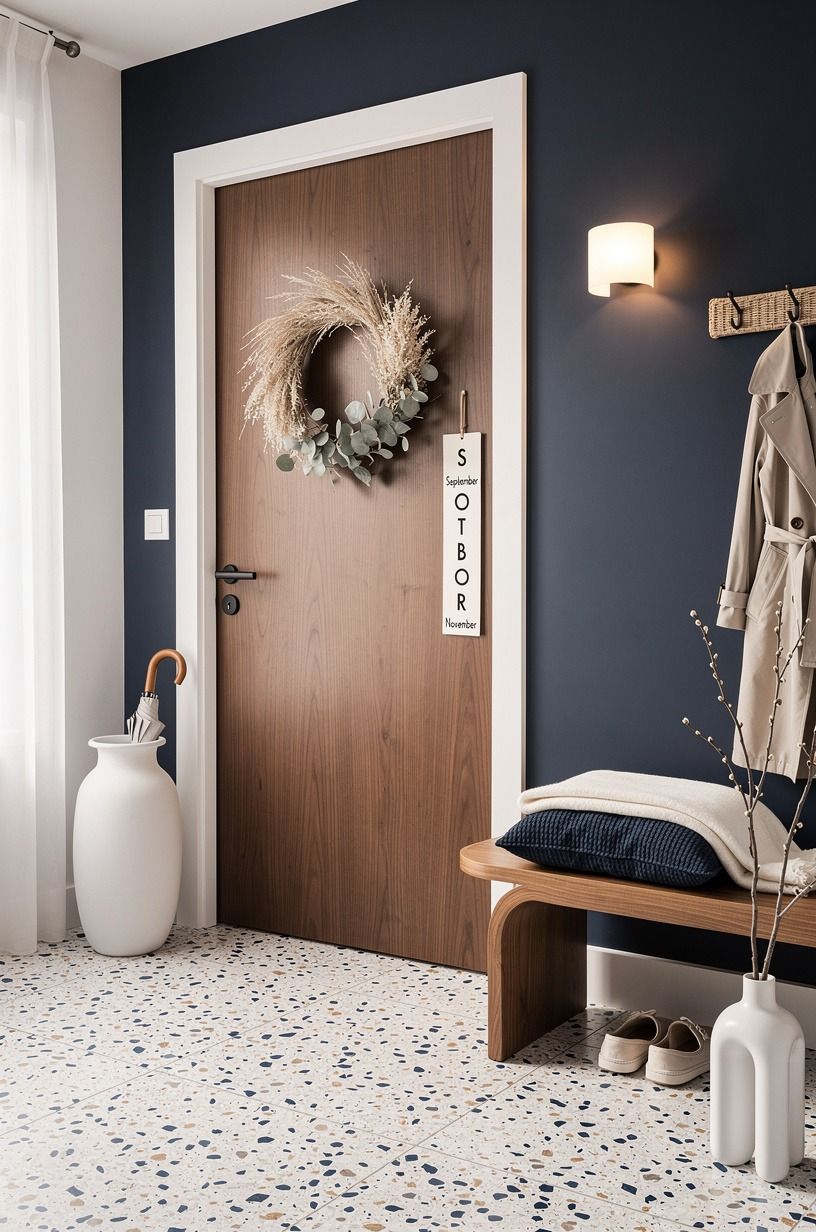
I began with preserved olive branches tucked into my grapevine wreath because they read early fall without shouting pumpkins. You can use dried eucalyptus, too, but I’d skip bright faux maple leaves. They look cheerful in a bin and oddly flat once they hit a dark door.
Your base should have two jobs: look warm in September and leave room for Halloween later. I used a Target Threshold woven coir mat under a plain navy-and-cream layer, then kept the porch colors to navy, white, and walnut. An oversized-chip terrazzo detail added a soft, earthy texture without making the entry feel busy.
And you don’t need a porch makeover to make your entry feel welcoming. One strong foundation gives your October add-ons somewhere to land.
2Hang the wreath with the Quiet Hardware Rule
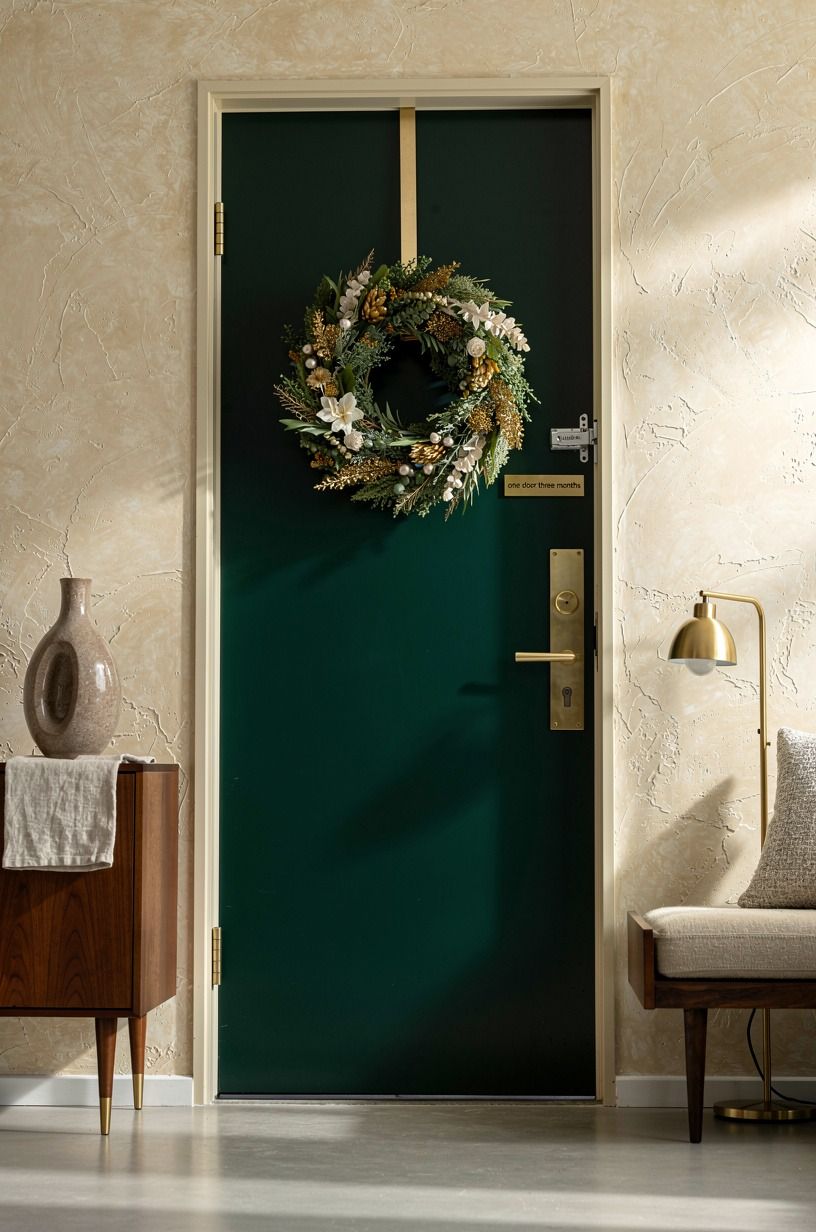
The Quiet Hardware Rule is simple: your hanger shouldn’t become the most noticeable thing on the door. I used a removable black over-door hook, then tucked the hook’s top edge behind the wreath. You’ll get the convenience without that shiny metal line cutting across your trim.
For a rental, this is the move I’d make first. A Command outdoor hook works if your door surface allows it, but test the placement before you commit.
I learned that after pulling one too soon and taking a tiny patch of paint with it. Annoying.
But your wreath needs to sit at eye level, not drift toward the peephole like it’s trying to escape. Keep the center near the visual middle of your door, then step back to check it from the sidewalk. Emerald, gold, and cream look especially polished against hand-applied Venetian plaster.
3Layer a doormat pair for fall school door decorating ideas
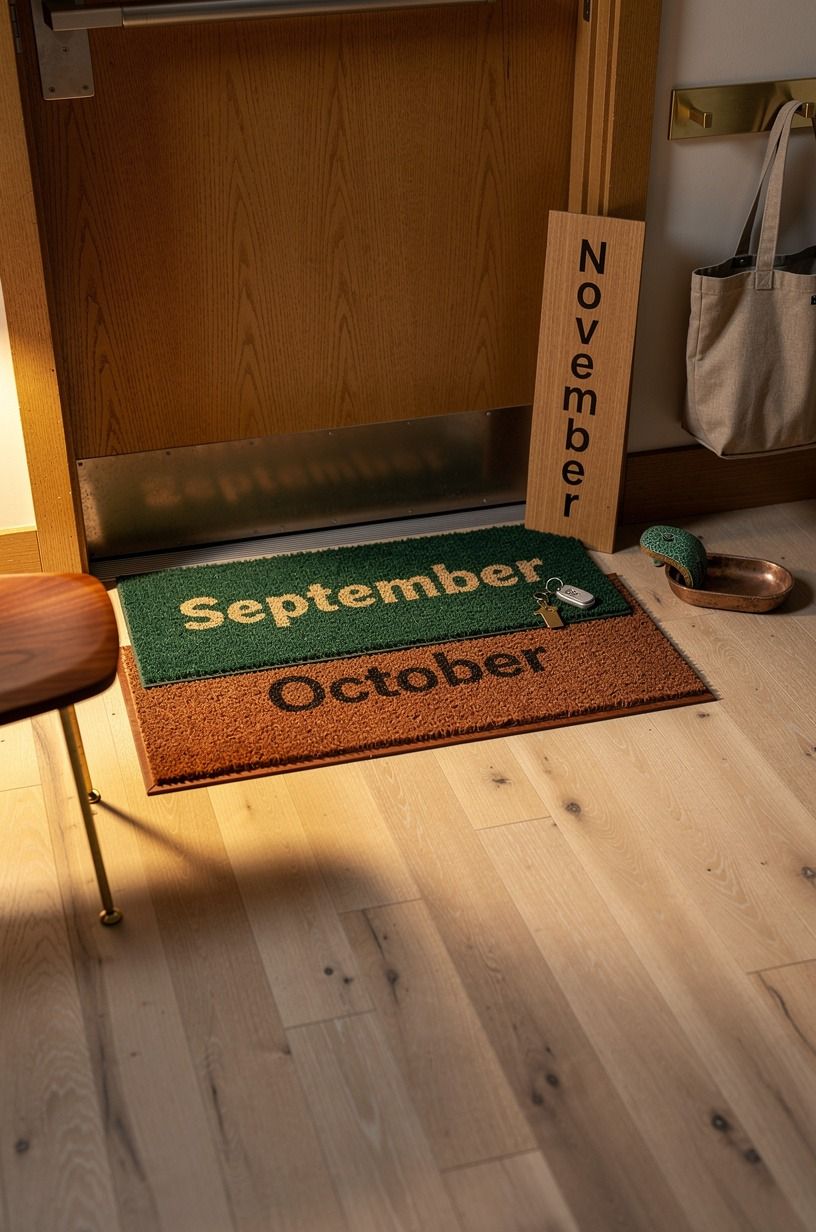
A layered mat makes even a small entry feel more intentional. I put a 4-by-6-foot washable striped rug beneath the coir mat, with enough edge showing to frame it. You can use a plaid layer, but I prefer a simple stripe because Halloween graphics already bring enough visual noise.
Your door area doesn’t need matching pumpkins and matching signs and matching ribbons. That’s where seasonal displays get fussy. Forest green, rust, and natural oak feel more relaxed with a few shagreen accents, especially if you’re borrowing ideas from a boutique hotel cabana weekend makeover.
I spent less time straightening this pair than I did my old tiny mat. That alone was worth it!
4Paint one supporting surface, not the whole porch
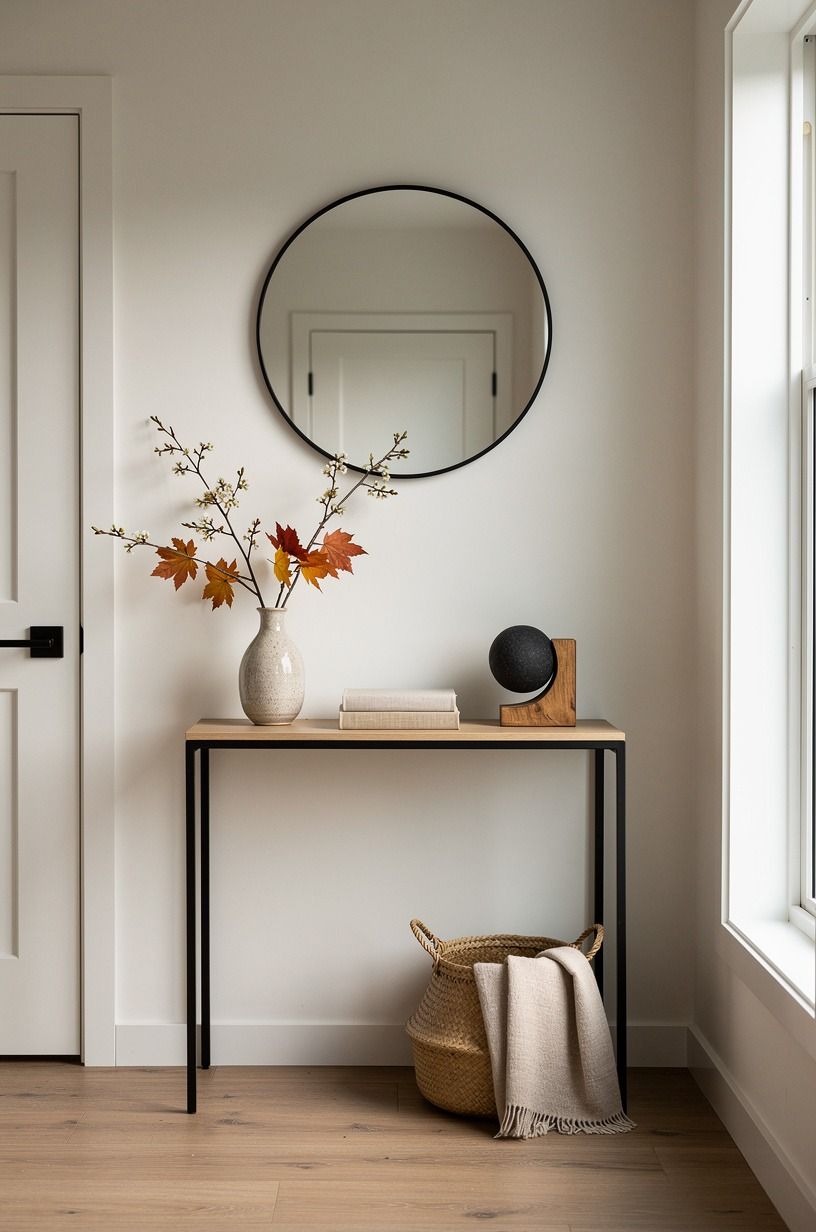
I painted one small wood crate in Farrow & Ball Pigeon No. 25 and used it as a riser beside the door. A dusty rose, charcoal, and brass mix can make orange pumpkins look richer without turning the porch into a color wheel. Your existing brick, siding, or trim can stay exactly as it is.
A crate also gives your display height, which matters more than buying another object. I put a lantern on top, a larger pumpkin beside it, and left the other side open. Washed Belgian linen softens the arrangement without adding another hard surface.
I’d skip a full porch repaint for this kind of seasonal classroom door energy. It’s expensive, it’s slow, and your eye will notice a rushed edge every time you bring in groceries.
5Build the Three-Height Pumpkin Stack
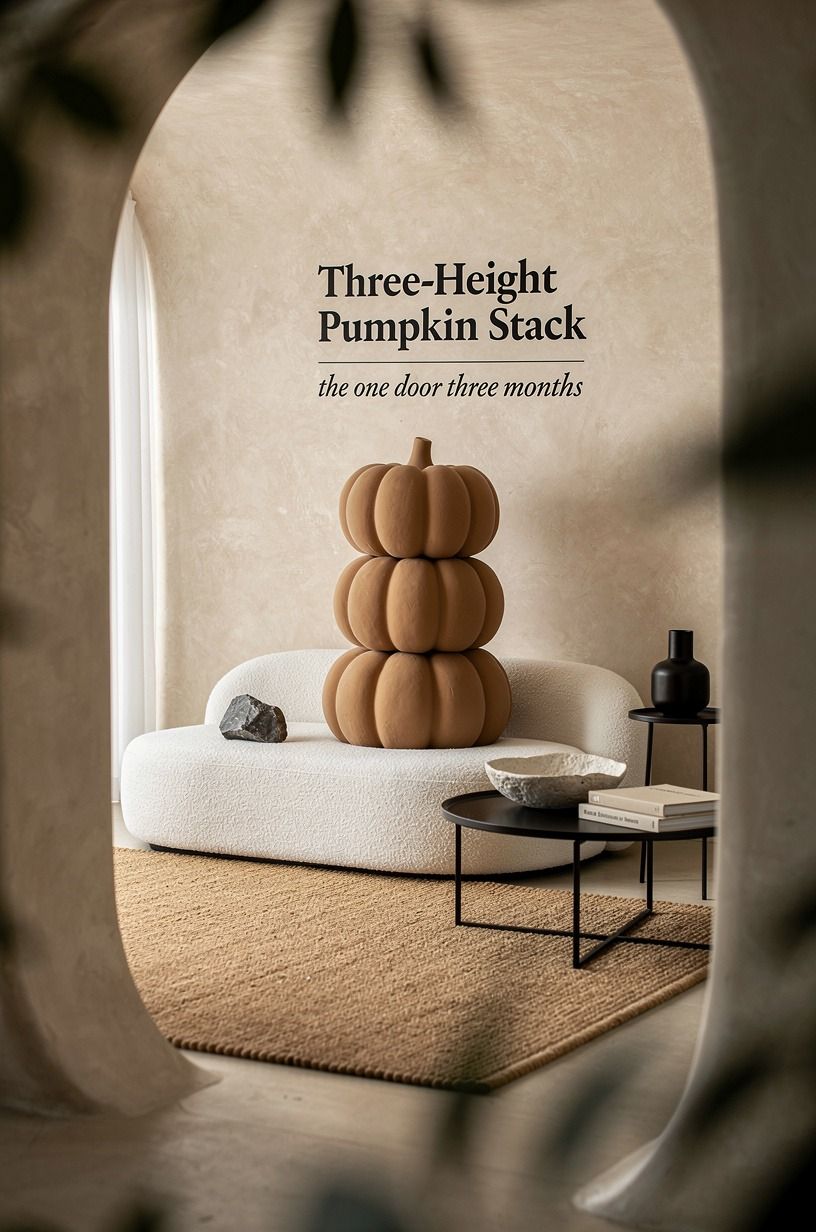
The Three-Height Pumpkin Stack kept me from making the classic mistake: lining every pumpkin up like a little orange fence. I used one tall woven tobacco basket, one medium heirloom pumpkin, and two small pale gourds. Your eye moves up, down, then back to the door.
Use real pumpkins if you can manage them, because the matte skin and crooked stems have more character than glossy plastic. If you need faux, choose a Pottery Barn bouclé pumpkin in camel or warm white and mix it with one natural element so it doesn’t look too polished.
And don’t crowd the threshold. You still need to open your door with a bag of groceries and a bad attitude on a rainy Tuesday.
6Let a black lantern carry the October door decorations classroom mood
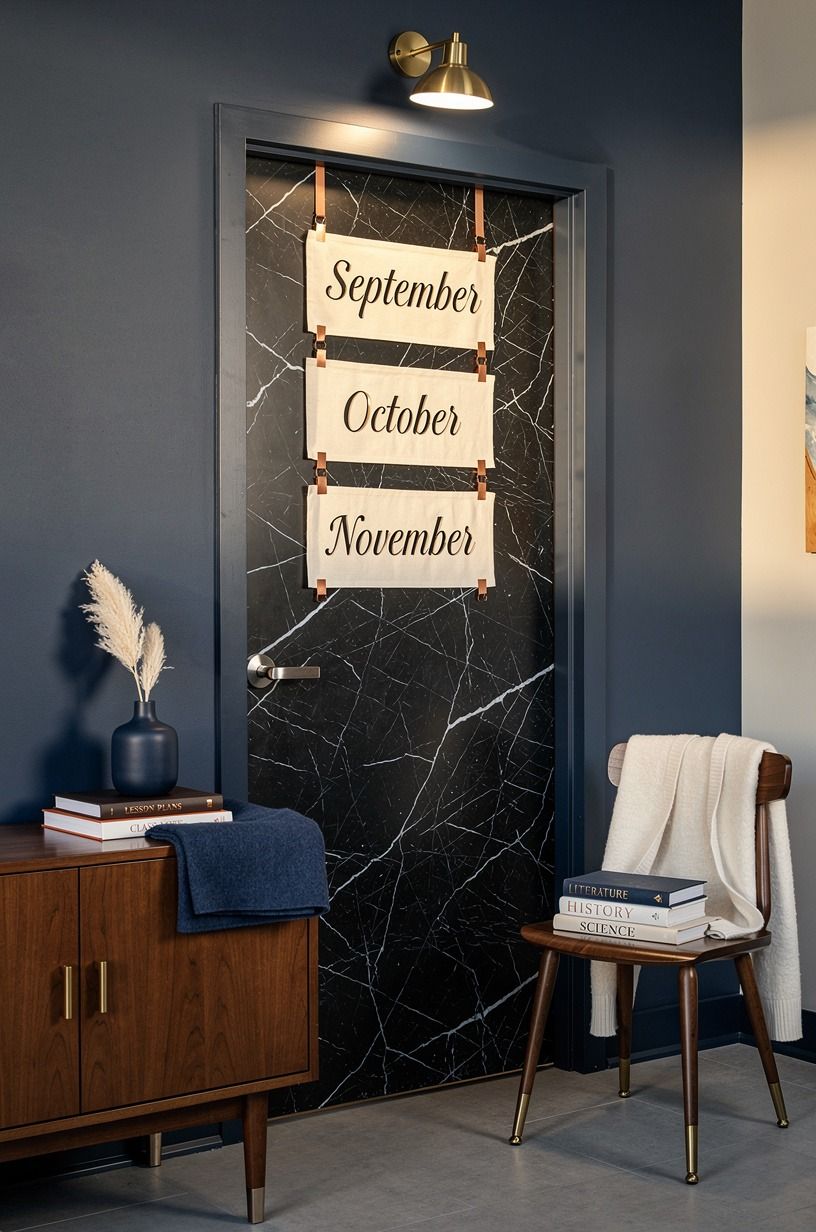
A single matte black Nero Marquina marble lantern was my fastest October change. I put a battery candle inside, set it on the Pigeon crate, and suddenly the whole setup had a darker, more dramatic edge. No wiring.
No complicated assembly.
You’ll want warm light, not the blue-white kind that makes every porch look like a security checkpoint. I like a timer candle because it gives you a gentle glow at dusk without another task on your list. Three light sources per room is a good indoor rule, but outside, one visible pool of amber is enough.
The midnight blue, copper, and ivory mix made sense beside my October Route 66 color inspiration, where those cottonwood tones feel far more useful than bright pumpkin orange.
7Swap ribbon for torn gauze in your seasonal classroom door
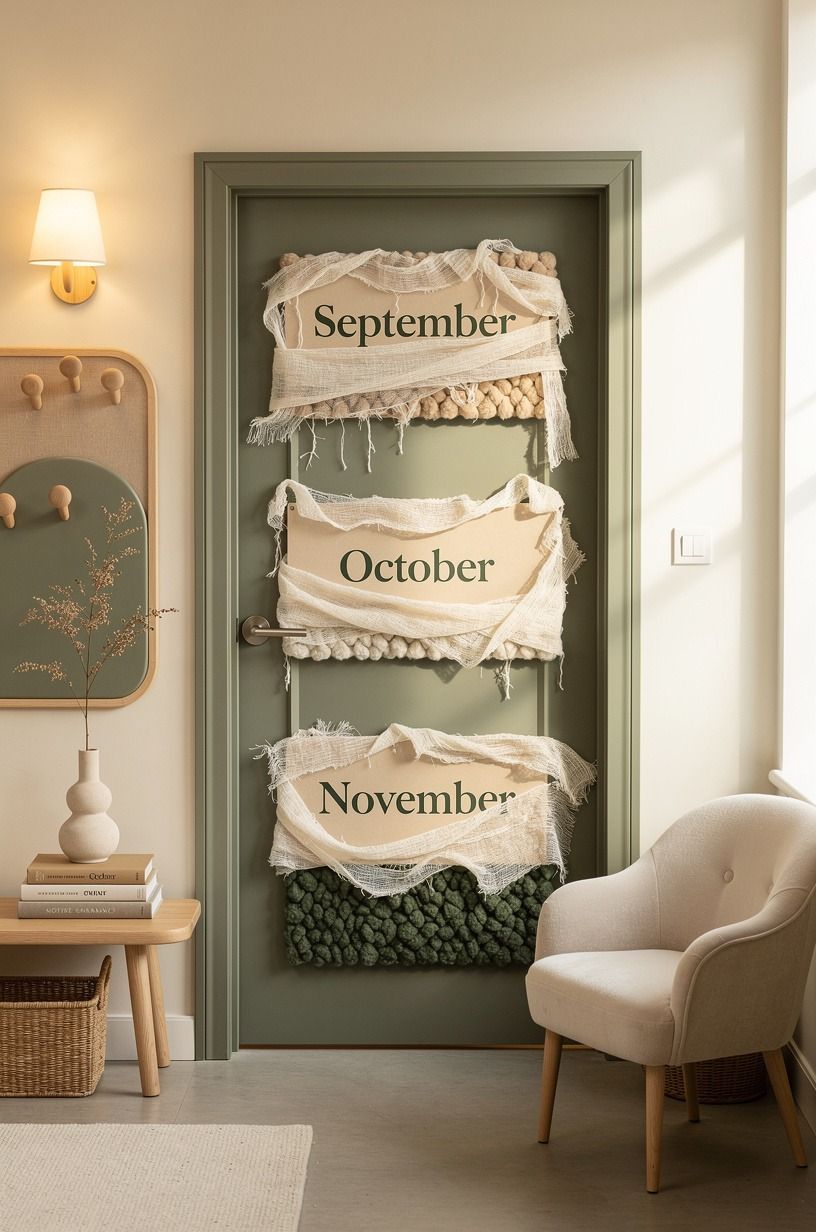
Here’s where the fifteen minutes happened. I removed the olive branches, threaded deep-pile mohair velvet through the wreath, and let two uneven tails hang down. Your September wreath stays intact; the velvet changes the whole mood.
I went back and forth on ribbon because it’s tidy, sure, but tidy isn’t what I want from Halloween. Mohair has a soft, rumpled quality and makes the door feel subtly haunted without looking like a costume set.
A small thing. A big shift.
Use one strip, not five. If you pile on too much fabric, you’ll lose the texture of the grapevine and the door starts reading as cluttered instead of captivating. Sage green, warm cream, and natural wood keep it grounded.
8Frame one bat cluster instead of covering the door
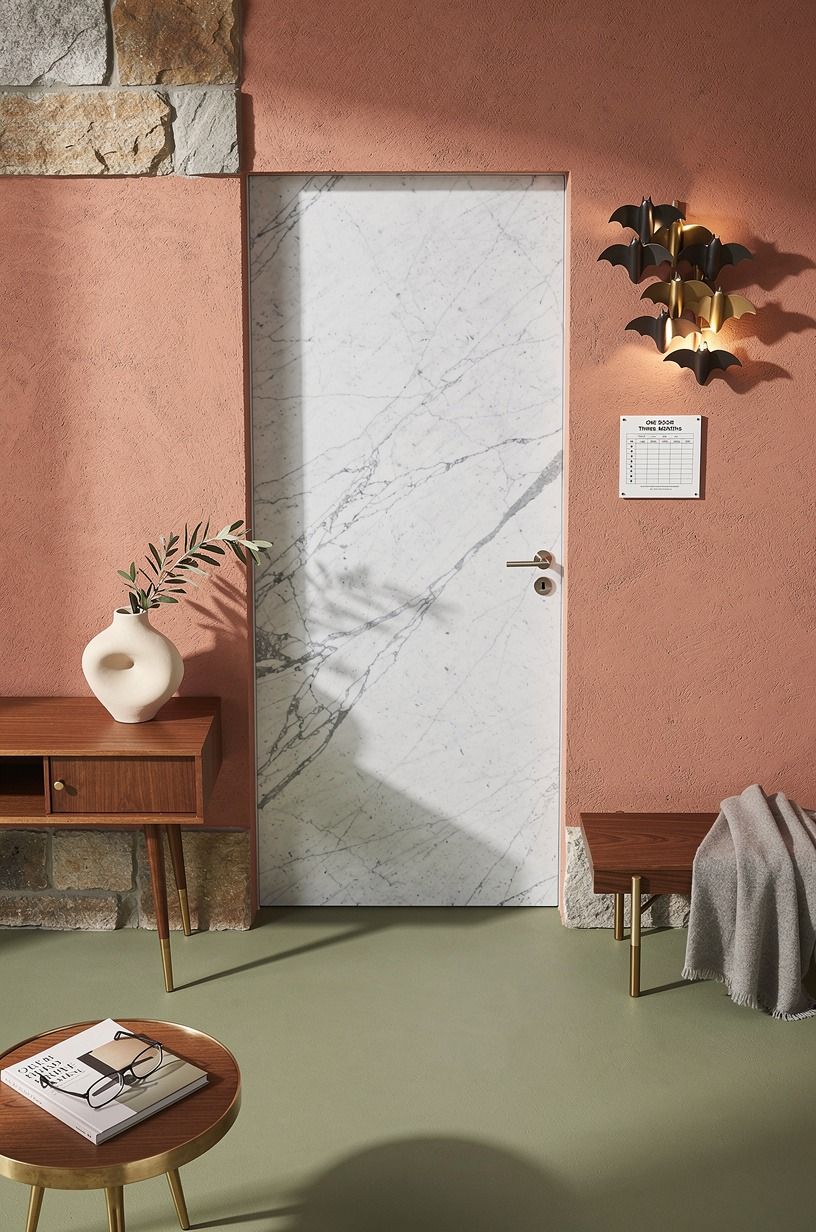
For october classroom door ideas, paper bats can work beautifully if you give them a direction. I used terracotta cardstock bats in a loose curve from the lantern upward toward the wreath. Your eye follows the flight path, which makes the display feel taller.
I’d avoid covering the full door. That look can feel like a bulletin board in person.
Use removable adhesive dots, keep the smallest bats near the bottom, and put the larger silhouettes higher up. Stone and olive details with a touch of Carrara marble keep the arrangement calm.
But check the finish first (especially on freshly painted doors). You want your Halloween layer to lift away cleanly on November 1, not leave you with an unexpected repair project.
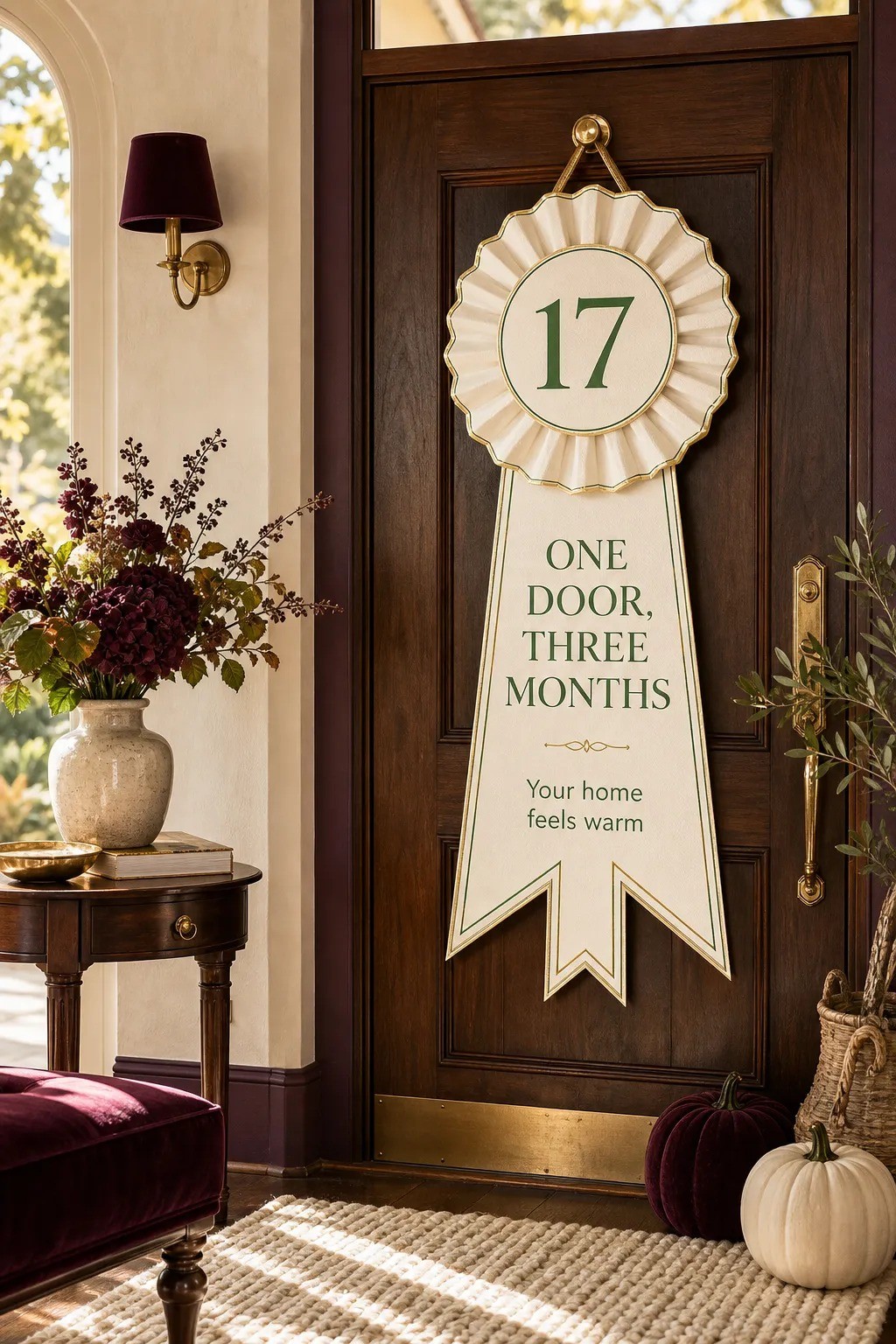
9Use broom corn for texture over plastic leaves
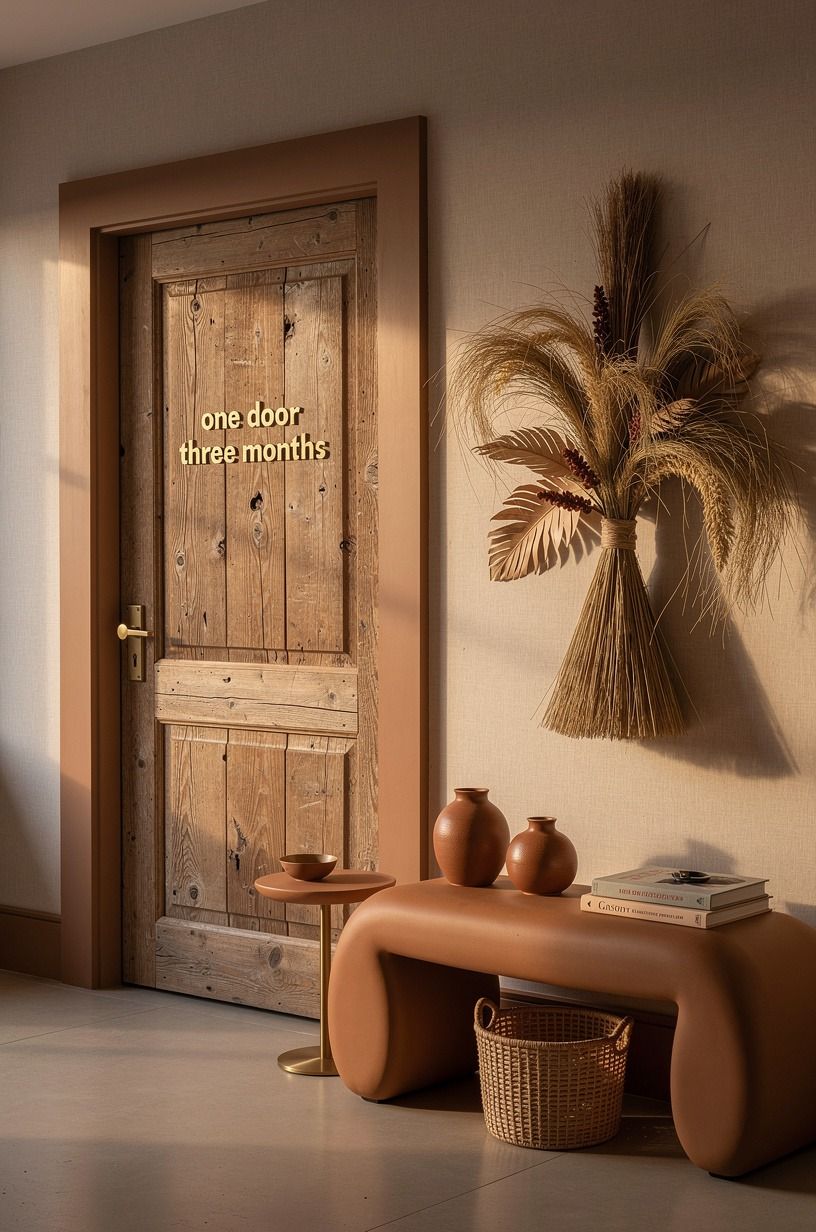
A bunch of natural broom corn in the basket made the porch feel rustic and a little witchy without becoming literal. The stems are thin, clay-toned, and slightly unruly, which is exactly why they work against reclaimed weathered teak. You can add dried wheat, but broom corn has more personality.
Your arrangement needs something vertical that isn’t another sign. I tucked the stems behind a small pumpkin and angled them toward the wreath, then used an aged brass ribbon only at the base. The dry rustle is subtle, but it gives the entry a comforting lived-in feeling.
For more unexpected wall-scale fall decor, I’d borrow the framing instinct from these vinyl record wall display ideas. Same principle, different surface.
10Try the Two-Wood Rule for a fall door decorating contest
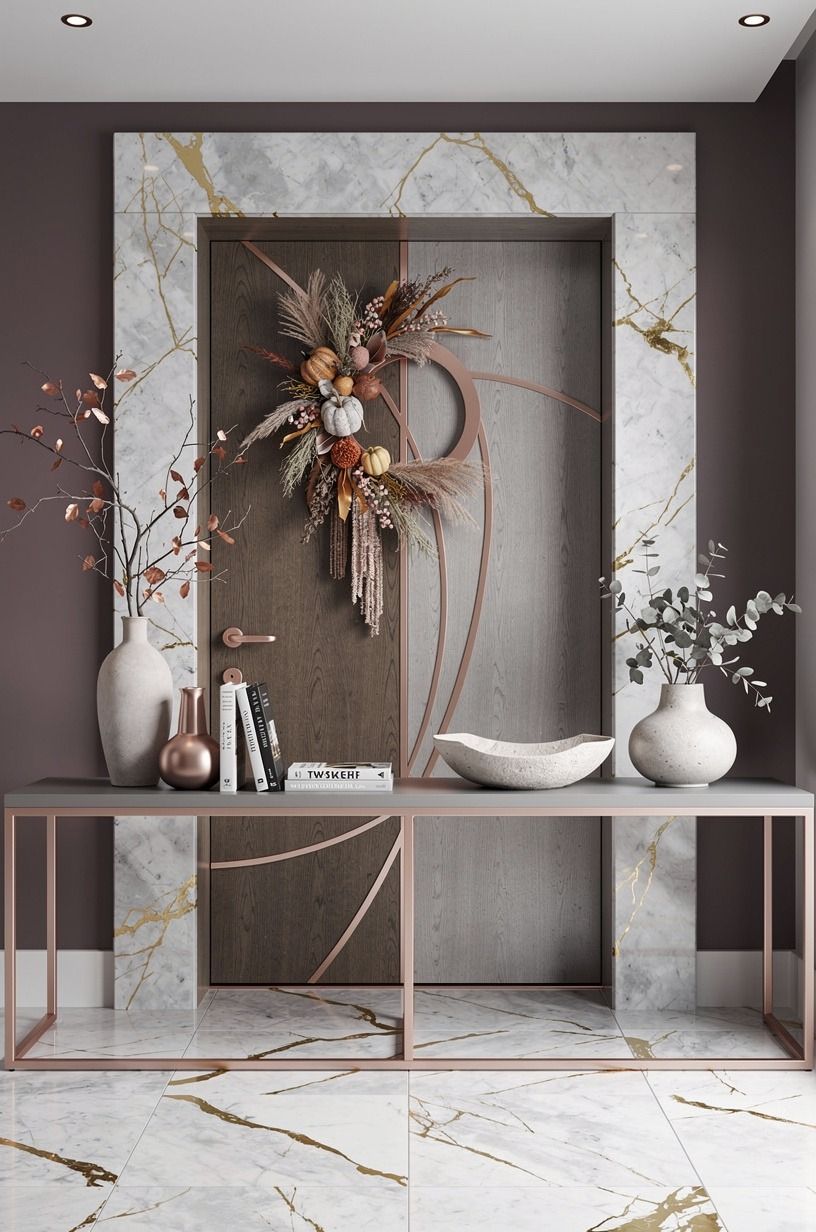
The Two-Wood Rule means repeating only two wood tones: one pale or weathered, one dark or woven. My pale element was the crate; my darker element was a seagrass market basket. Your pumpkins and textiles can change, but those materials keep the display grounded.
More than two wood finishes gets muddy fast, especially on a narrow stoop. I’ve tried adding a stained sign, a cedar crate, a wicker broom, and a walnut bench all together. It didn’t look layered.
It looked like I was staging a yard sale.
Use your darker basket for storage between photos. Extra gauze, spare candles, and the tiny bats all fit inside, so the porch stays calm when you aren’t trying to make it picturesque. Plum, grey, and rose gold sit beautifully beside Calacatta marble with gold veining.
11Add one handwritten sign, then stop
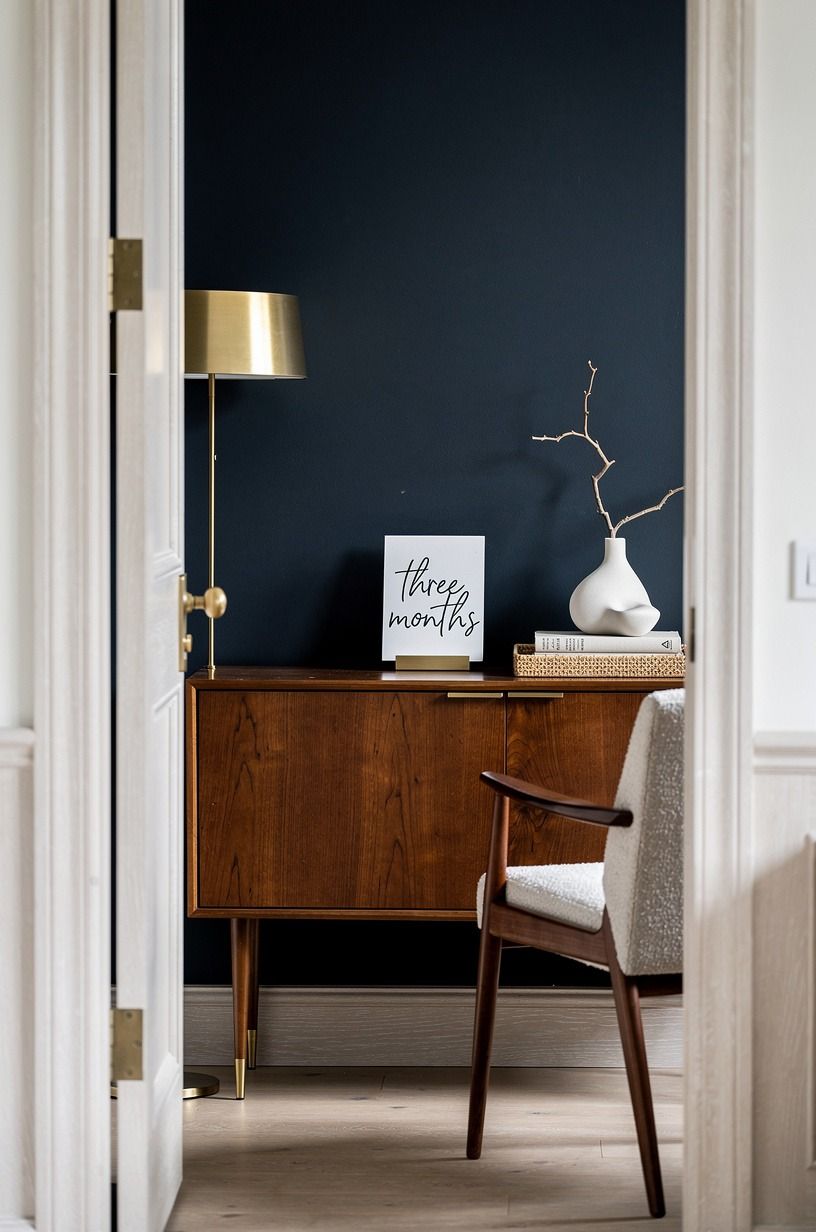
I made a small cerused white oak plaque with “October” in black paint and leaned it against the crate.
12Choose pumpkin shapes over matching colors
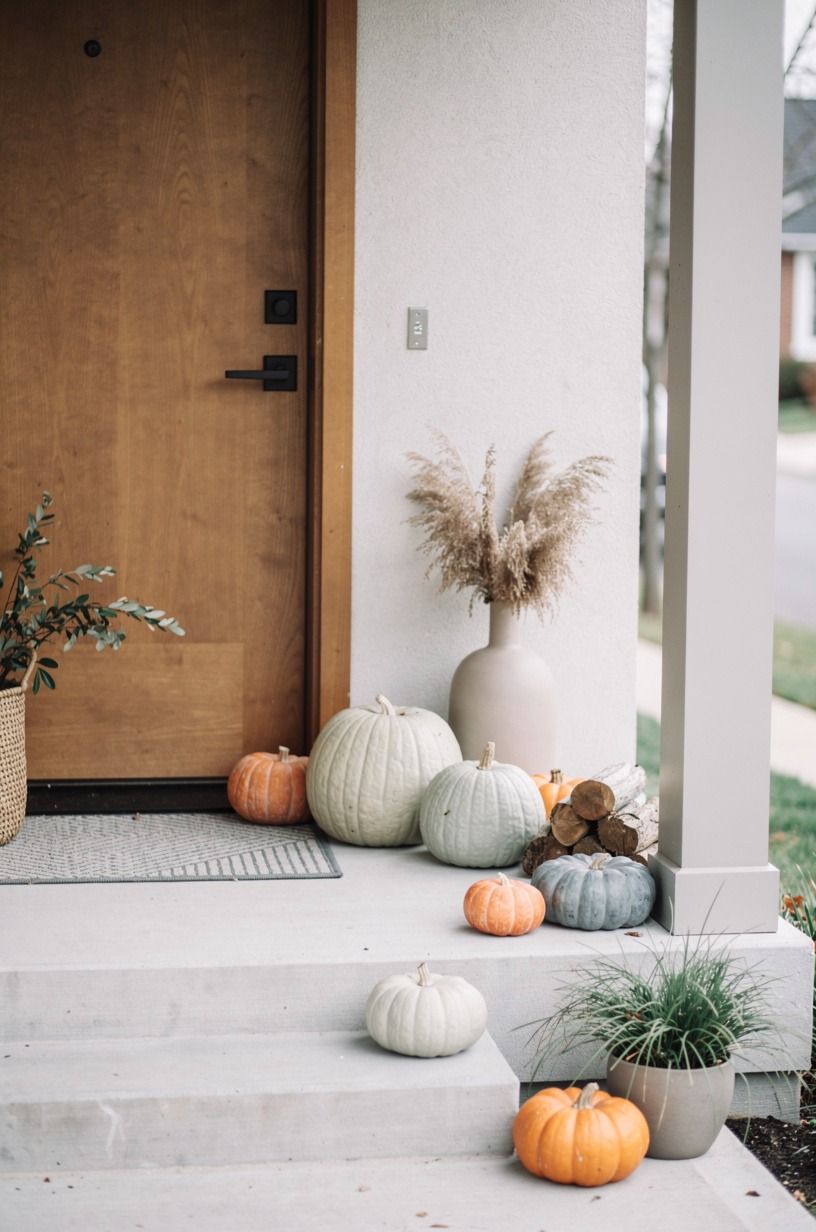
Matching orange pumpkins are the easy answer. I think mixed shapes win. A squat pale pumpkin, a tall muted orange one, and a green-striped gourd make your display feel organic because their silhouettes do the work before color even enters the picture.
I used a velvet pumpkin from West Elm only once, tucked low near the basket. Its soft pile worked beautifully with emerald, gold, and cream, while a backlit translucent onyx accent brought a quiet glow. Your mix should include something smooth, something rough, and something slightly odd.
Why buy five identical pumpkins when two different shapes tell a better story? Keep the colors restrained and let the forms get weird.
13Float the spiderweb above your handle, not across it
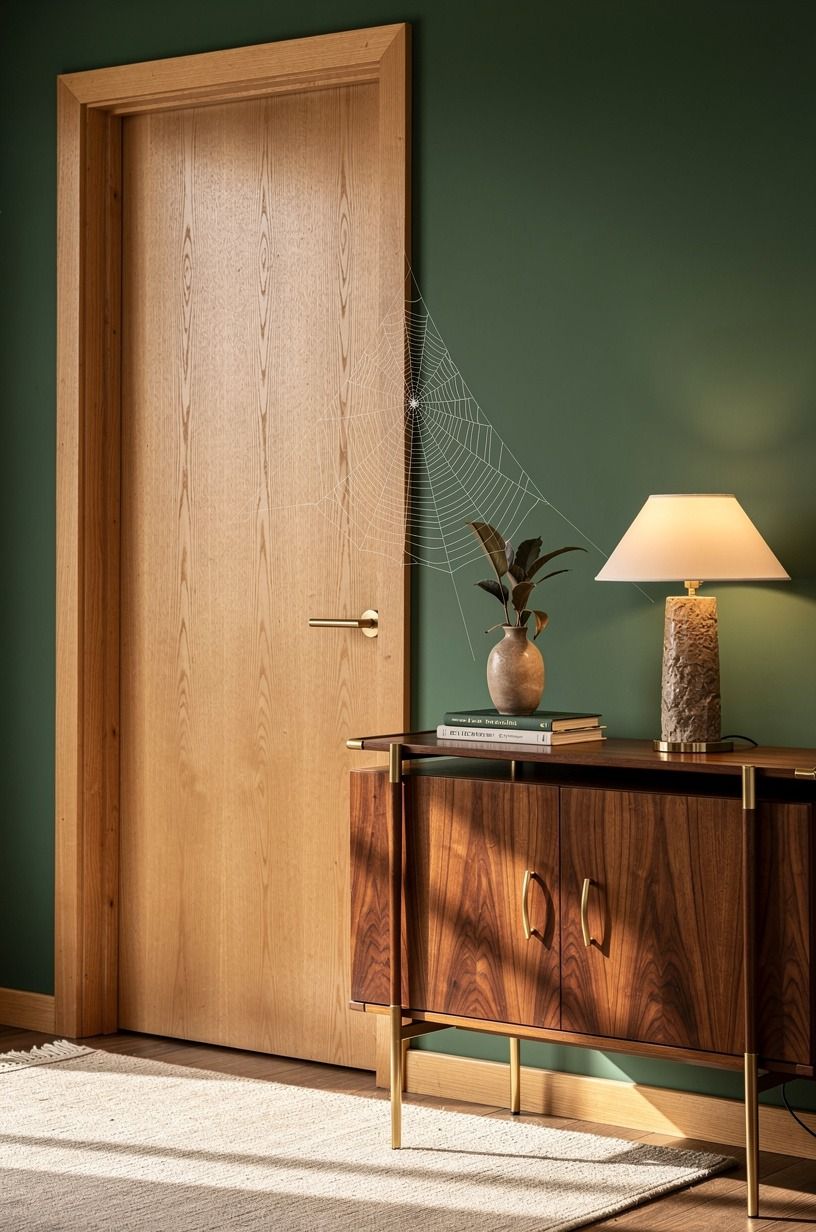
A thin piece of stretch spiderweb material can look refined if you use far less than the package suggests. I pulled it wide, anchored one corner beneath the wreath, and kept it above the handle. Your guests shouldn’t have to fight fake webbing just to come inside.
The web is a Halloween accent, not a blanket. I added one tiny black spider near the edge, then stopped.
More spiders would have made it playful, but I wanted a moody entry that still worked with the forest green, rust, and natural oak base. Book-matched walnut adds richness without making the setup feel heavy.
You can use this same restraint when building hidden seasonal storage. These under-stairs detail room ideas make me want every decoration to have a home after its brief moment outside.
14Anchor a moon shape with a quiet paint color
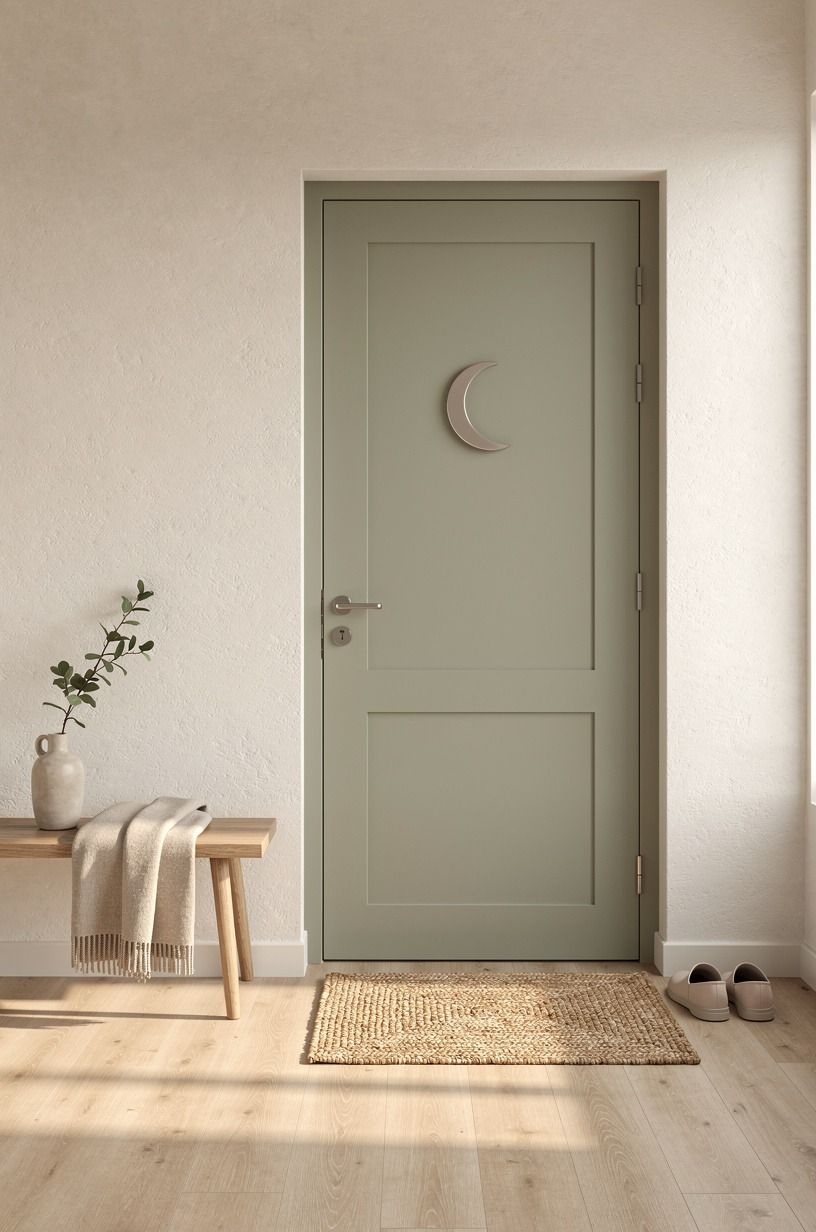
I added a crescent moon cut from warm travertine and painted the supporting surface Sherwin-Williams Agreeable Gray SW 7029. It sounds plain, but dusty rose, charcoal, and brass keep the door feeling soft rather than stark. Your Halloween door doesn’t need every symbol to be black and orange.
The moon went just below the wreath, off-center by a few inches. That little imbalance made the arrangement feel less rigid. I’d skip metallic silver glitter here; it catches light in a way that fights the natural fibers and makes the entry feel less serene.
But you don’t have to paint a moon at all. A paper version works if your door is sheltered, and it stores flat once the season is over.
15Use a classroom-style paper chain only where kids can reach it
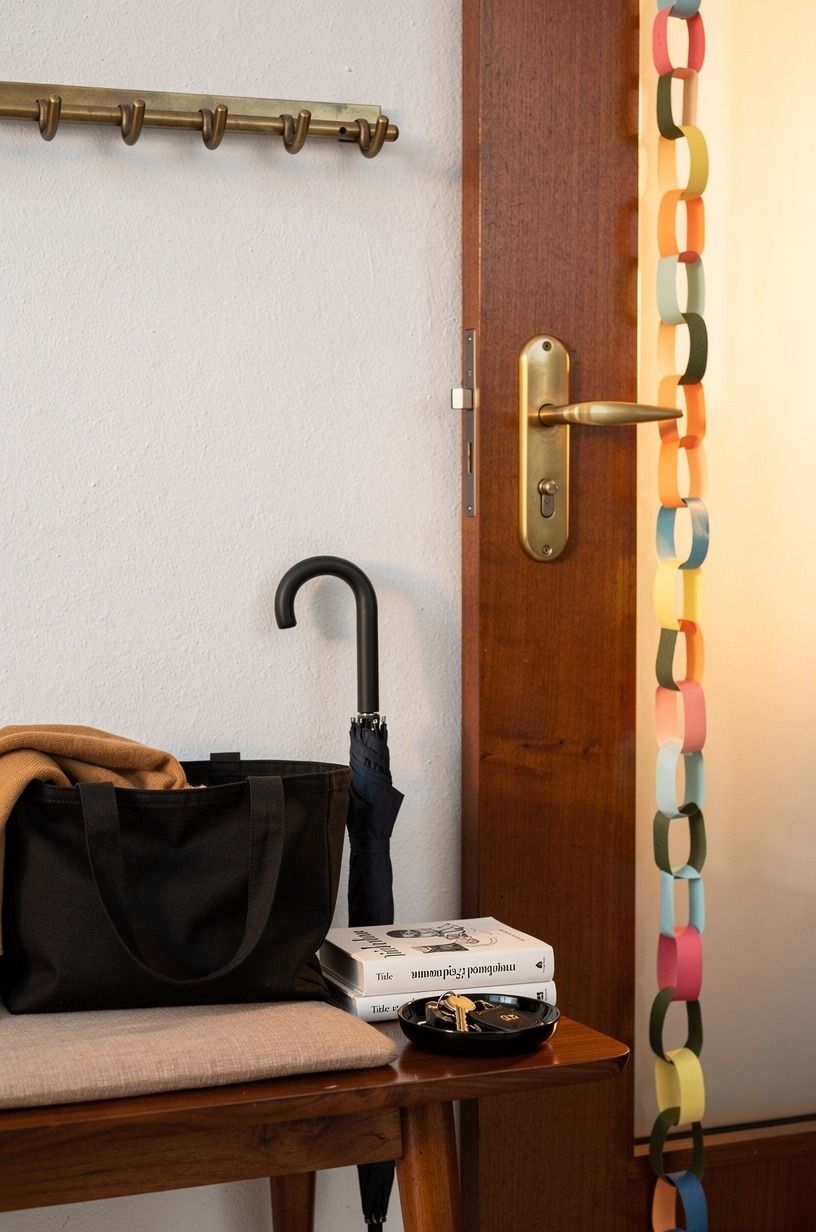
For a seasonal classroom door, I’d keep the interactive piece low. A warm white, camel, and black paper chain with one unlacquered brass detail feels playful while still letting the door breathe.
16Skip the giant skeleton and lean into shadows
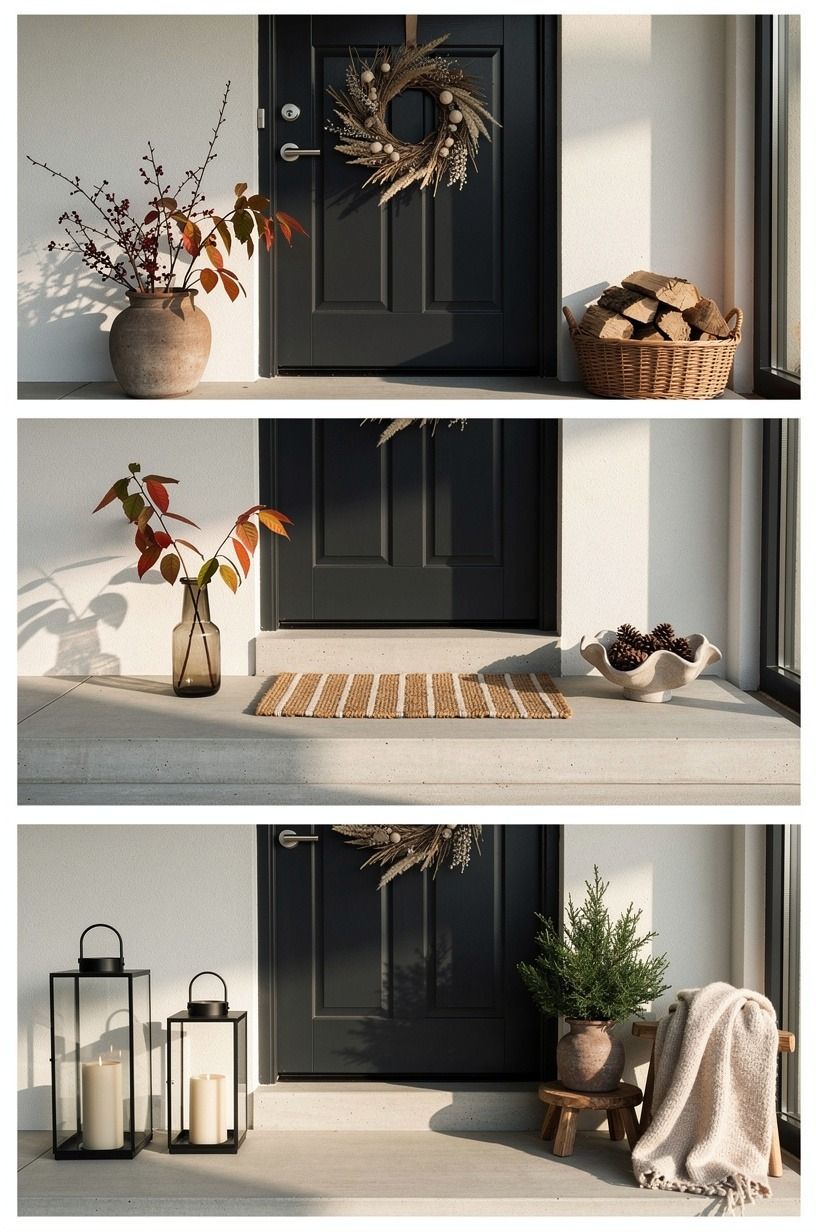
I know the giant skeleton is funny. I also think it swallows a small porch whole.
Instead, I used black iron taper holders inside the lantern and a few cut-paper shadows on the door. Your eye gets the Halloween message without losing the architecture of the entry.
The part that worked was the contrast between warm candlelight and flat black silhouettes. By dusk, the lantern glowed against midnight blue, copper, and ivory, while oversized-chip terrazzo gave the entry a grounded texture. That’s the difference.
If you love a bigger prop, put it a few feet away from the door so your main arrangement can still breathe. Your front step isn’t a retail display, even during a fall door decorating contest.
17Reset in November with the Fifteen-Minute Reverse
The Fifteen-Minute Reverse is why this system lasted three months. I removed the bats, gauze, web, moon, and paper chain, then put the olive branches back into the wreath. Your September setup returns without requiring a new shopping trip.
I keep the October pieces in the seagrass market basket, then carry the basket straight to a labeled shelf. No hunting for tiny adhesive dots next year.
No mystery bag of tangled webbing either. Sage green, warm cream, natural wood, and hand-applied Venetian plaster make the November reset feel especially calm.
And that’s my favorite part: you get a bold October moment, then a calm November porch before the holiday rush begins. A seasonal door should give you energy, not another project.
How much it cost
My own refresh stayed below the cost of replacing one decent outdoor planter because I reused the crate, basket, and base wreath. The typical US range for a broader entry or room update is much larger, so your budget depends on whether you’re restyling what you own or adding furniture and lighting.
For this door, I’d put your money into the natural grapevine wreath and one good lantern, then use found branches and paper silhouettes. A pair of linen drapes typically runs $120-$400 indoors, but outside, your best value is texture you can reuse. You don’t need a $1,500 project to make an entry feel warm.
Why the layered-door approach works beyond Halloween
I think seasonal decor is getting less loud because people are tired of buying a whole personality for every month. You want a door that shifts with the calendar, sure, but you also want your home to feel like yours between the big seasonal moments.
My rule is to build a neutral material story first: fiber, weathered wood, dark metal, something living or dried. Then your seasonal layer can be playful. The same approach works for an indoor nook, a classroom entrance, or even a tucked-away under-stairs hidden bar, where the base materials matter more than the temporary theme.
What I learned after making seasonal doors too complicated
I used to treat each season as a separate decorating assignment. September meant shopping for one look, October meant buying another, and November meant stuffing both into bins I couldn’t find later.
It was expensive in the boring way, not the fun way. Worse, I’d spend an afternoon making something that looked fine at first but never felt right when I came home at night.
This door changed my mind because the base was honest. The grapevine wreath had rough edges.
The coir mat got a little dusty. The painted crate picked up a scuff from a delivery box. None of that ruined it.
It made the arrangement feel lived-in, which is what I want from an entry more than perfection. I don’t need every visitor to think I hired someone.
I want them to feel the little pause before they knock.
The real decision is whether your seasonal layer respects the permanent pieces. If it does, you can add bats, gauze, a moon, or a pumpkin and the door still looks like part of the house. If it doesn’t, you’re just covering your architecture with props.
I’ve done that. It feels loud and gets tired fast.
So I now spend more time choosing one material I’ll keep than ten accents I’ll toss. A durable matte black lantern, a basket with a good weave, a wreath with real depth.
Those are the things you’ll reuse when the paper comes down. And you’ll feel less pressure to make every holiday bigger than the last.
That’s a relief, frankly.
A Few Things Worth Answering
What is the best one-door seasonal look for a small entry?
A grapevine wreath plus one black lantern is the best small-entry combination because it gives you height and glow without blocking the walkway. Try a Target Threshold coir mat, one basket, and a few mixed gourds. Your door will still open easily.
Where can I buy October door pieces on a budget?
Start at IKEA, Target, and Wayfair for baskets, battery candles, and basic textiles. Your cheapest finds often come from a thrift store or Facebook Marketplace. Look for:
– Woven baskets – Black metal lanterns – Plain wood crates
You can also borrow display ideas from this record wall styling guide.
How much does a one-door Halloween makeover cost?
A simple version usually costs about $100 to $300 if you buy a wreath, lantern, pumpkins, and removable accents. Reusing a basket and mat is free, which gives you more room for texture. Your exact total changes with real versus faux pumpkins.
Can I create a fall door on a budget?
Yes, and your best moves are cheap or free. Use clipped branches, repurpose a crate, and make bats from cardstock for a personal seasonal layer. You can save your money for one reusable lantern rather than a pile of one-time decorations.
Is a seasonal door worth it in a small space?
Yes, it’s especially worth it in a small space because the door becomes a focused visual moment instead of requiring a full porch. Keep one side open for clear circulation, then build height beside the hinge side. Your entry will feel considered, not crowded.
Is an October door a good idea for a rental?
Yes, if you use removable hooks, paper shapes, and free-standing baskets. Skip drilled hardware and permanent paint for easy move-out cleanup. A tension-held wreath hook and removable adhesive dots let your style change without making your landlord nervous.
The Change I’d Make First
If I had to pick one, I’d start with the grapevine wreath. Its rough, deep texture makes paper bats and gauze look intentional instead of cheap. Pin the wreath idea for later and let October be the quick part.