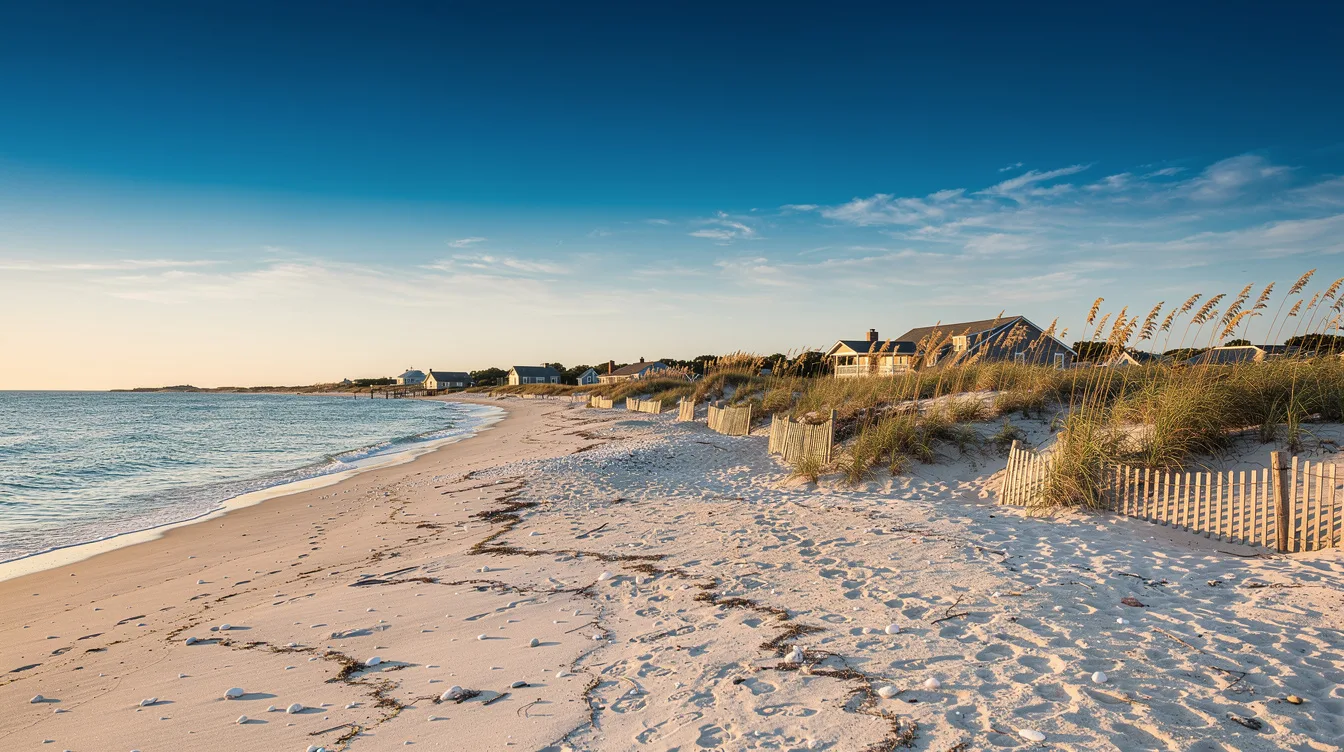
Ocracoke has no bridge connecting it to the mainland. This small village at the southern end of the Outer Banks, in Hyde County, can only be reached by ferry, private boat, or private plane. That separation isn’t a minor detail.
It shapes the pace of every visit.
And when your ferry leaves the dock, the mainland gives way to salt marsh, open water, and a low strip of sand. You don’t arrive here by accident, and that’s part of the appeal. Ocracoke is quiet, maritime, and remote without being difficult to understand.
The ferry is part of the trip
But the route you choose changes the whole day. From Hatteras, the free ferry takes about 70 minutes and runs first come, first served. It feels like the natural choice if you’re already traveling through the northern Outer Banks.
And from Swan Quarter, the crossing takes about 2 hours 45 minutes. The Cedar Island route takes about 2 hours 30 minutes, costs money, and allows reservations. Those longer crossings suit travelers coming from central or southern North Carolina, but neither belongs in a tightly packed itinerary.
Build in room for waiting, weather, and ferry capacity. You should confirm the North Carolina service before booking your room, because a missed crossing can rearrange the entire day. The paid routes accept reservations, while the Hatteras ferry doesn’t.
Can you fly directly to Ocracoke?
Yes, but only by small private aircraft or charter. Ocracoke Airport, identified as W95, has no regular commercial flights. And if you arrive by air, you skip the water crossing but lose the slow reveal that makes the island feel separate.
A compact village beside a wide beach
But Ocracoke isn’t only a place to sleep between ferry rides. The village gathers around Silver Lake, where small docks, boats, old houses, shops, and restaurants create a working harbor rather than a polished resort district.
And the village is only about one mile across at its widest point. You can walk, cycle, or use a golf cart for most daily errands, which makes leaving your car parked feel like the right decision. Follow the road toward the beach when you want more space.
The island has about 16 miles of shoreline and long Atlantic beaches with little construction. They feel open because the dunes and marsh leave plenty of room between you and the next building. Bring water, sunscreen, insect repellent, and a windbreaker, especially when you head away from the village.
History gives the quiet island an edge
But the silence here has a past. A pirate was killed near Ocracoke Inlet in 1718, and that story still shapes the island’s identity. You’ll notice the history in local references, harbor walks, and the sense that these channels once mattered far beyond tourism.
And the Ocracoke Lighthouse has guided vessels since 1823. It remains in operation and can be viewed from outside, though you can’t climb it. The structure is simple, weathered, and more convincing than any souvenir version because the wind is still doing its work around it.
Beyond the lighthouse, the Pamlico Sound gives you calmer water for kayaking and paddleboarding than the Atlantic side. You can also look for birds, walk near the harbor, or spend an afternoon doing very little. My opinion is that Ocracoke works best when you stop treating empty time as a problem.
Late September brings the right kind of quiet
But summer is the busiest season, with heat, humidity, beach demand, and possible ferry waits. July and August suit travelers who want the Atlantic at the center of the trip, though you’ll need more patience and earlier planning.
And late September through October is the better compromise for many visitors. The island is calmer, outdoor activities remain practical, and the air feels less crowded even when the weather cooperates. You still need to watch Atlantic storm conditions, since Ocracoke sits directly in their path.
Plan on three to five nights if you want the island to settle around you. A shorter stay can work, but ferry timing may consume much of it. Reserve paid crossings and lodging ahead, then leave space for a walk beside the North Carolina coast.
Come for the distance, stay for the pause
But Ocracoke isn’t a convenient stop for nightlife, rapid sightseeing, or a rigid schedule. It asks you to accept limited connections, changing weather, and a village that closes earlier than a city.
And that’s exactly why I’d choose it for a slower Outer Banks trip. When the last ferry wake fades across the sound, the harbor goes quiet, and the island finally feels as separate as the map promised.