
Japandi freestanding tub ideas can create a warm spa at home with layered wood, quiet color, and one well-sized tub, even if your bathroom isn’t huge. I once chose pale tile before testing the morning light, and the room felt cold by noon. Your tub needs softness around it, not more white. These ideas keep the mood calm, earthy, and practical!
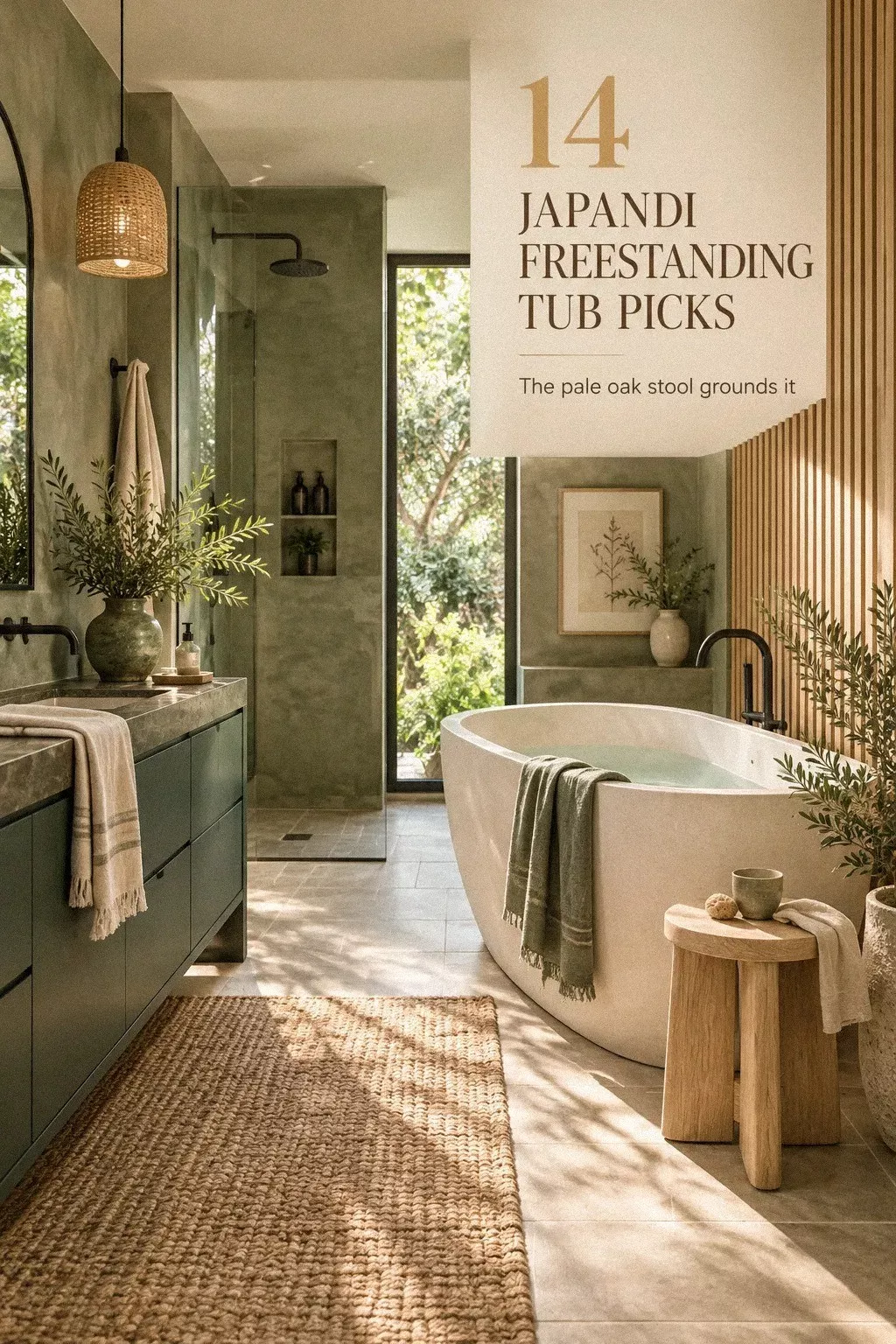
- Float the Tub Beside a White Oak Slat Wall
- Follow The Two-Wood Rule for a Calm Spa
- Paint the Ceiling with Benjamin Moore Chestertown Buff
- Anchor a Japandi Bathroom with a Low Walnut Stool
- Build The Three-Height Light Stack
- Choose Warm Wood Over an All-White Vanity
- Frame the Tub with a Hand-Glazed Zellige Wall
- Layer Soft Textiles for a Cozy Bathroom with Freestanding Tub
- Can You Fit a Tub in a Small Bathroom?
- Use The Quiet Counterweight Against Pale Tile
- Hang a Paper Lantern Above Your Japandi Bath
- Budget the Calm with Real Bathroom Numbers
- Paint the Niche, Not Every Wall
- Mix the Soft-Edge Ratio for a Warm Spa
1Float the Tub Beside a White Oak Slat Wall
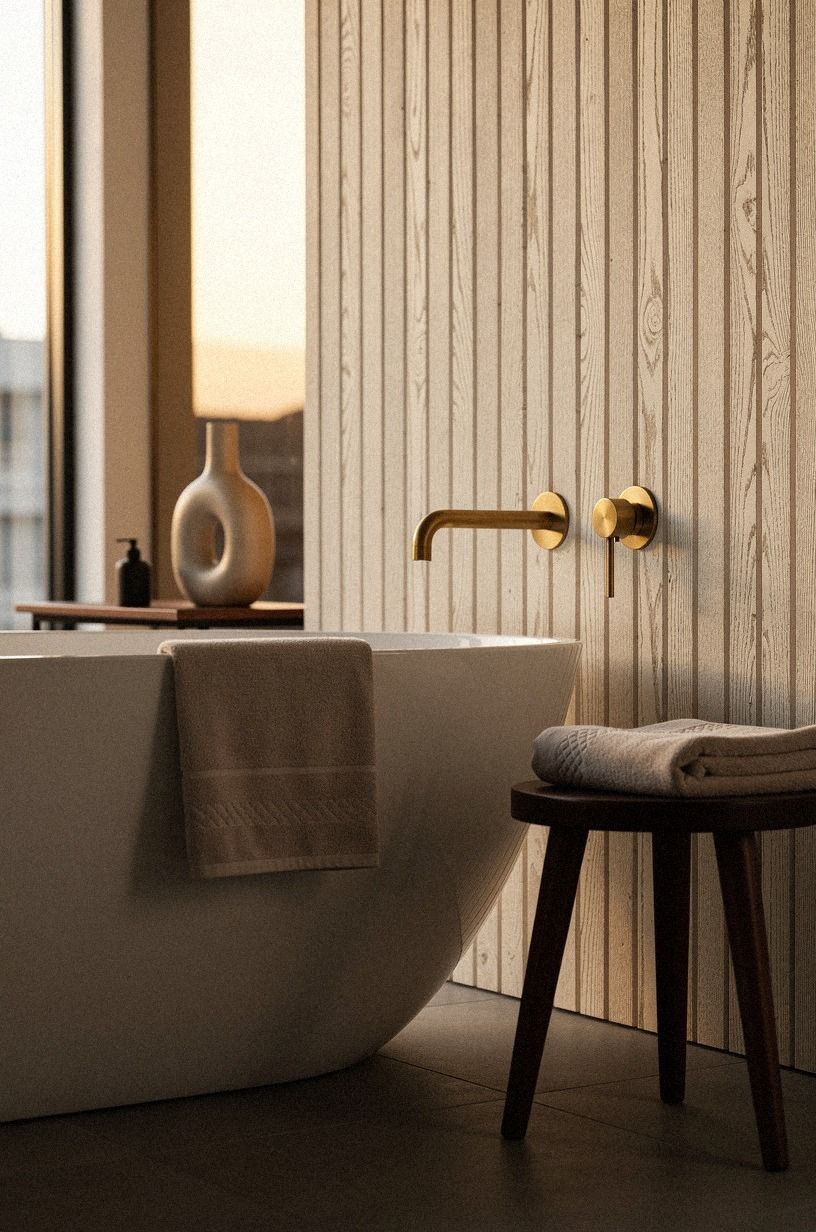
A freestanding tub looks more intentional when you give it a quiet backdrop. For a warm japandi bathroom, use vertical slats in 3/4-inch solid white oak with a matte oil finish, then leave enough breathing room around the rim. You’ll want at least 21 inches in front of the toilet, and your tub should still have comfortable access on both sides.
The wood catches steam softly, while the gaps add shadow without making the wall feel busy.
I’d skip glossy ceramic behind the tub. It’s bright, sure, but it reflects every bottle and towel.
A slatted wall feels more serene because you’re seeing texture before you notice the plumbing. If you’re unsure about the layout, compare it with these wainscoting accent wall ideas behind a freestanding tub.
Keep the rest simple: linen curtain, stone tray, one low branch. That’s enough.
Typical cost by tier (US averages):
2Follow The Two-Wood Rule for a Calm Spa
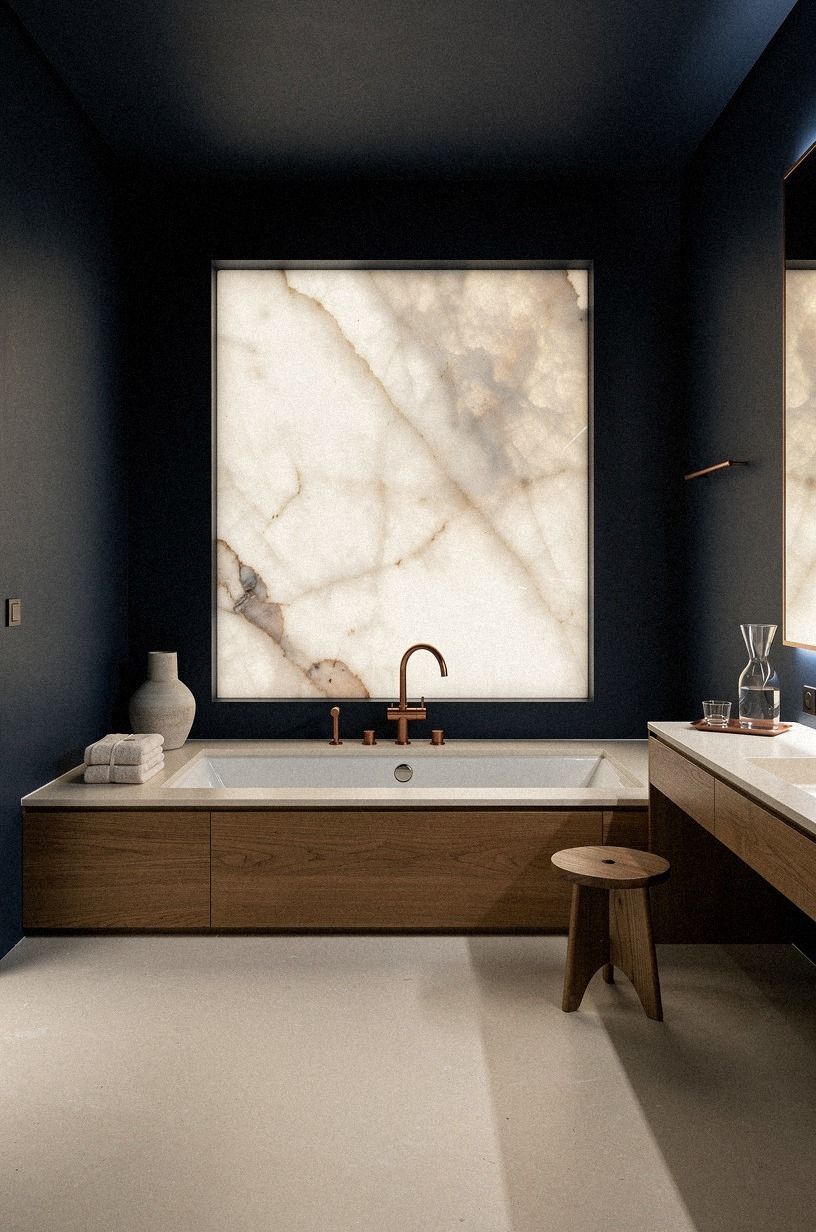
The Two-Wood Rule keeps your relaxing home spa ideas from becoming a showroom collage.
3Paint the Ceiling with Benjamin Moore Chestertown Buff
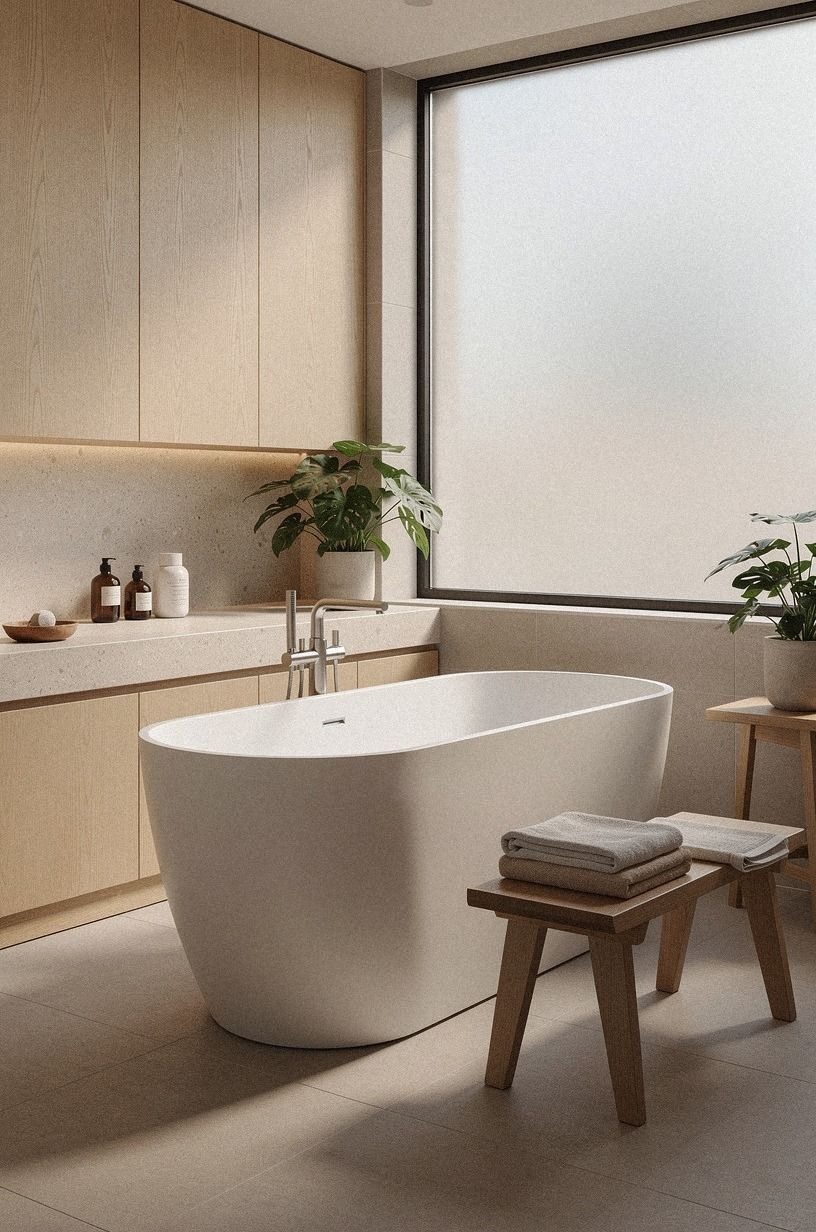
A warm sage ceiling can change your cozy bathroom with freestanding tub more than another accessory will. Try Benjamin Moore October Mist 1495 above pale walls, especially if your bathroom gets cool northern light.
The color reads softly against white porcelain and makes the ceiling feel closer, which is useful in a tall, echoing room. You’ll want a washable eggshell finish because steam has a way of finding every weak paint choice.
I made the mistake of treating the ceiling as an afterthought, and the room looked unfinished even after new fixtures. Your ceiling deserves the same attention as the vanity wall. Pair it with Belgian flax linen, aged bronze, and a small stool in book-matched walnut.
If you’re keeping the walls white, add a warm woven jute runner under the tub zone. It’s subtle, but your feet will notice the difference on a cold morning.
Lovely, and practical!
4Anchor a Japandi Bathroom with a Low Walnut Stool
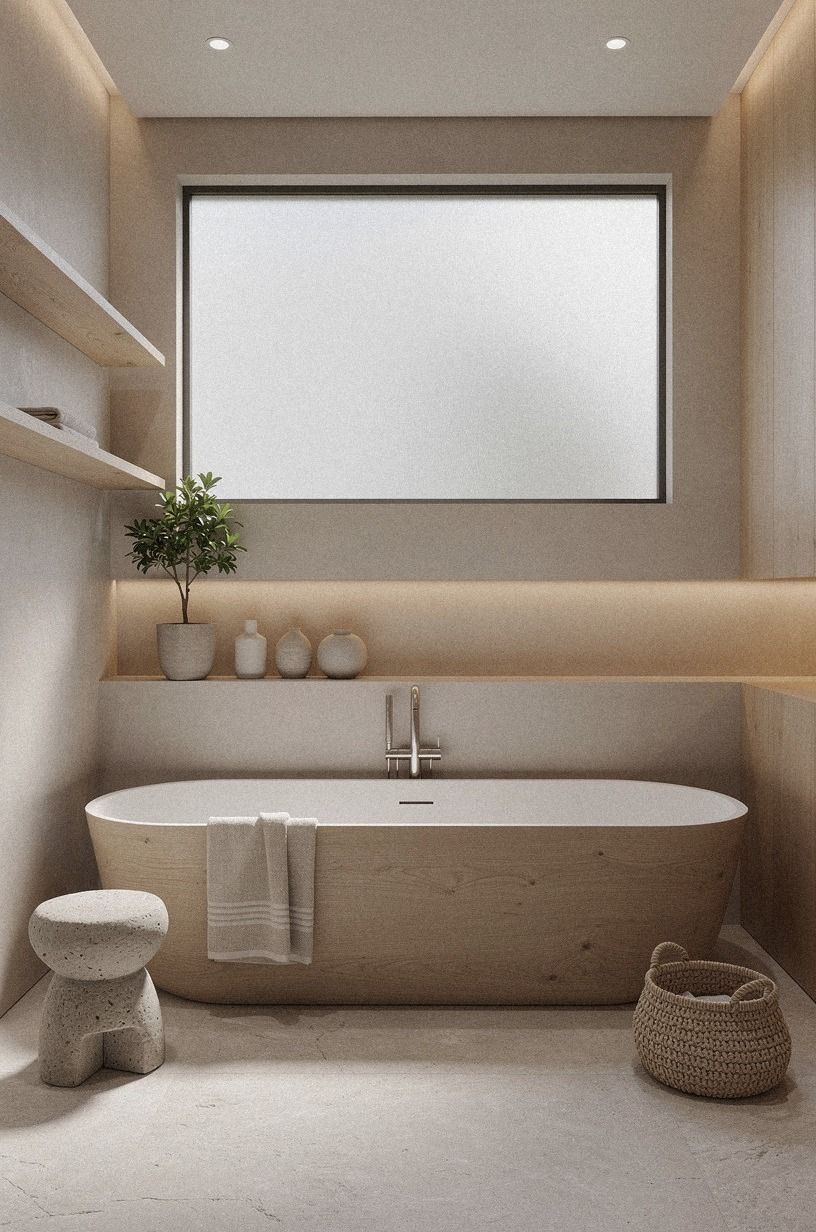
A low stool gives your freestanding tub a human scale. Choose a warm travertine seat around 16 to 18 inches high, with rounded edges and a clear matte finish.
You’ll have a landing spot for a towel, tea, or a book, and your eye gets a grounded shape beside the taller tub. I prefer a stone stool to a metal side table because its weight steadies the room and softens the hard surfaces.
The wrong stool is too narrow, too polished, or too precious to touch. Your bath should feel lived-in, not staged for display.
Look for a low warm travertine stool with enough weight to stay secure on the floor. Add one folded 600gsm Turkish cotton towel, then stop.
If you want more layout guidance, these tub-between-double-vanities ideas show how furniture can frame the tub without crowding it.
5Build The Three-Height Light Stack
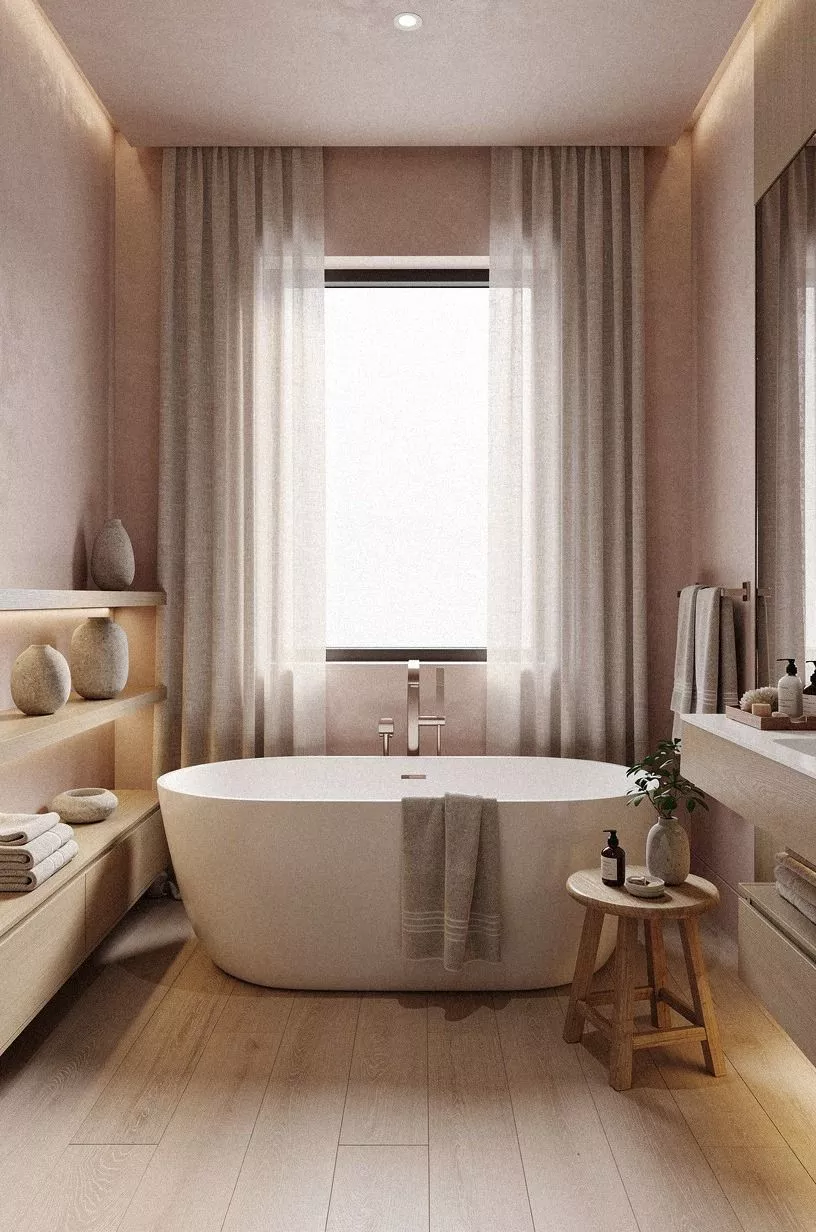
The Three-Height Light Stack gives your Japandi bath a gentle rhythm after sunset. Start low with a rechargeable lamp on a stool, add a middle glow from a wall sconce, then keep the ceiling fixture high and dim. You’ll want warm bulbs, but the real difference comes from spreading light across three levels.
One bright fixture above your head makes the room feel clinical.
Use unlacquered brass for the sconces if you want a little patina against earthy paint. I’d avoid cool chrome here because it turns the tub into a hard white object.
Your best middle layer might be a pair of Schoolhouse Luna sconces with frosted glass, placed high enough to avoid glare in the mirror. For a small room, one sconce and a low lamp can be enough.
See these minimalist Japandi open shower ideas for more ways to control the glow. The result feels peaceful, not sleepy.
6Choose Warm Wood Over an All-White Vanity
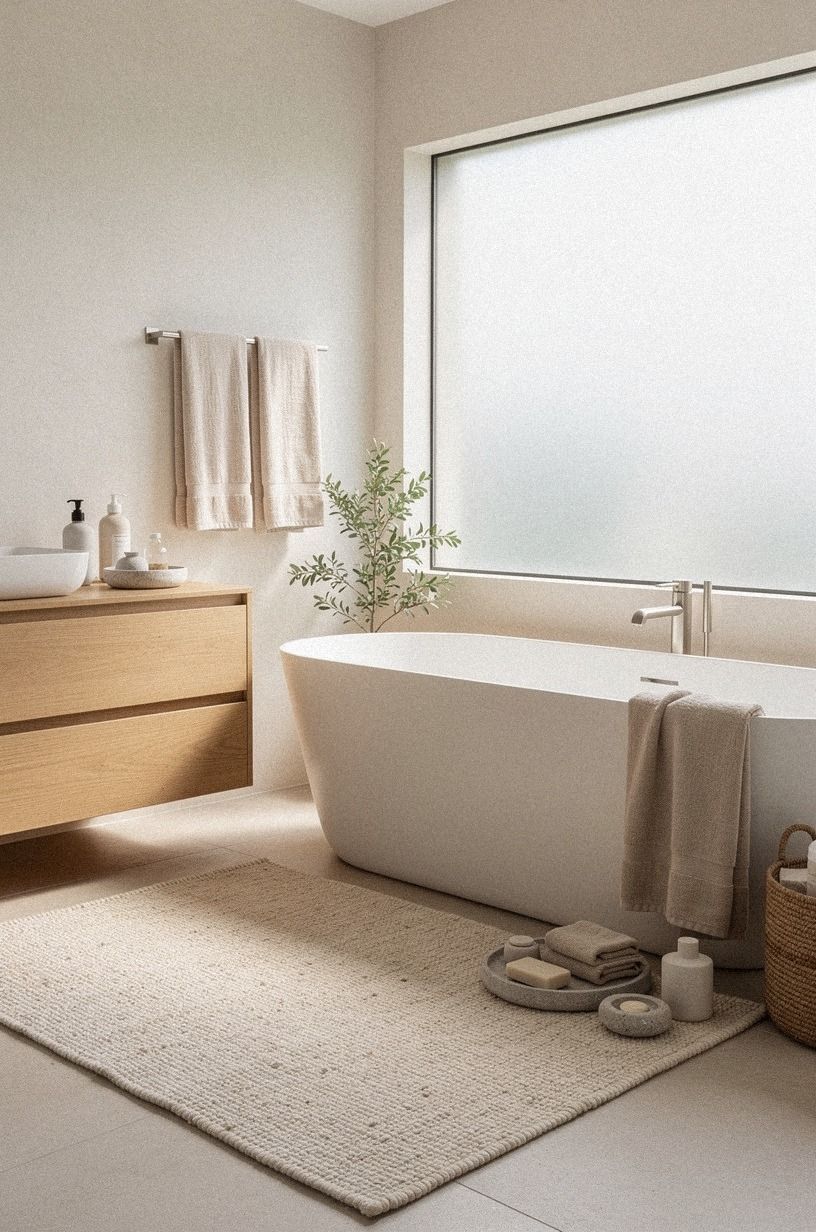
A floating vanity with an oversized-chip terrazzo face will make your japandi bathroom feel warmer than a full-white cabinet ever could. Keep the profile clean, but choose a muted plum base with grey variation and rose-gold hardware. Vanity height usually lands between 32 and 36 inches, so you’ll have room for a comfortable basin without making the cabinet feel oversized.
Your tub can stay white because the vanity carries the visual warmth.
White-on-white bathrooms are easy to make look flat in person. I’d choose a muted plum cabinet with an oversized-chip terrazzo counter over a glossy lacquered unit, then add rose-gold pulls.
You’re not trying to fill every inch. Leave one section open for folded towels, a ceramic bowl, or nothing at all.
That empty space keeps the room airy, refined, and easier to clean. You’ll appreciate that at 7 a.m.
7Frame the Tub with a Hand-Glazed Zellige Wall
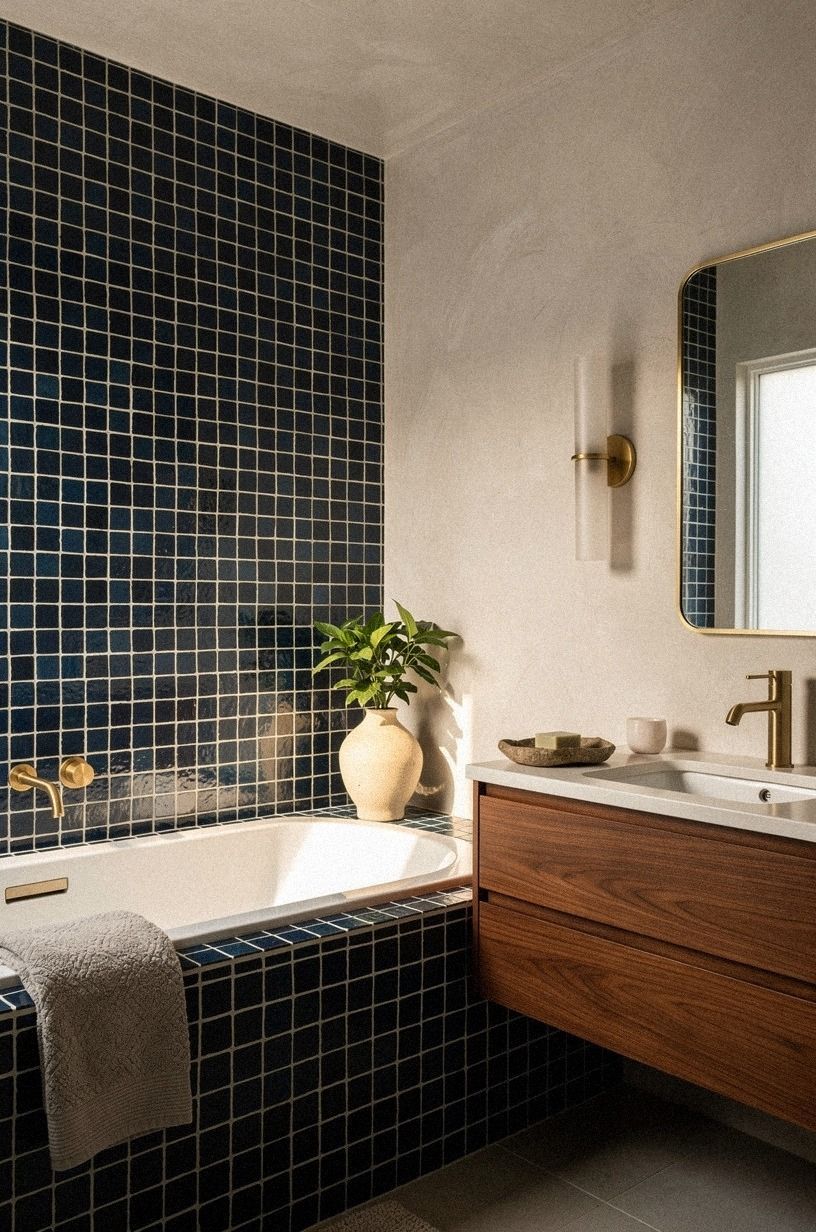
A tub wall can carry tonal color without becoming loud. Use hand-applied Venetian plaster in a restrained navy-and-white finish behind the tub, then let the subtle variation catch the light. The surface should feel earthy and slightly irregular, not like a printed accent sheet.
You’ll want to check the plaster finish against your tub first, because strong contrast can make a narrow room feel restless.
I’d choose Venetian plaster over marble veining here because the quiet variation feels more intimate. Your bathroom will have gentle movement when steam gathers on the finish.
A navy-and-white Venetian plaster wall pairs well with a walnut stool and a limestone tray. If your budget is tighter, use the plaster only from the floor to 48 inches high and paint above it.
These tile-behind-a-freestanding-tub details can help you judge the right height. Don’t finish every wall.
8Layer Soft Textiles for a Cozy Bathroom with Freestanding Tub
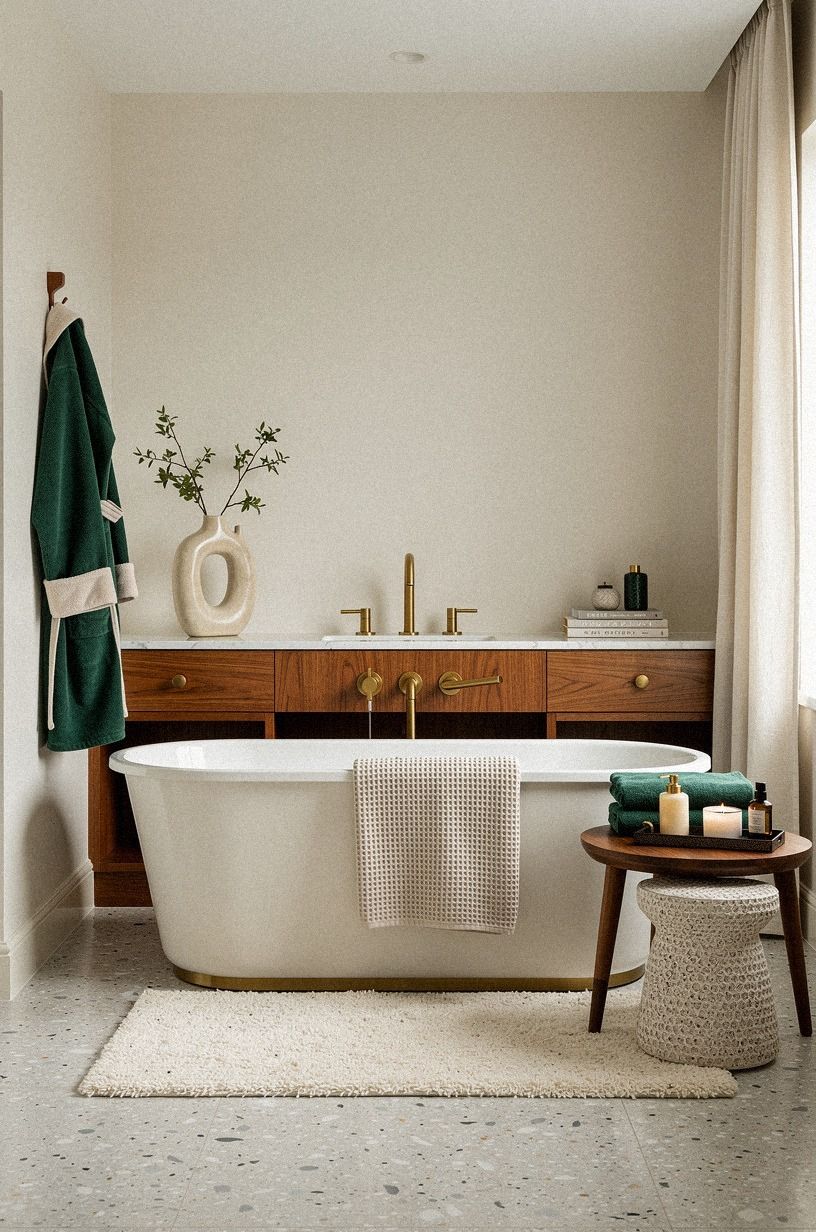
Textiles keep a freestanding tub from feeling exposed. Start with a 600gsm cream Turkish cotton bath sheet, add an emerald Belgian flax linen hand towel, and finish with a washable runner in a muted oat color.
You’ll get softness underfoot and a little visual warmth around the porcelain. Add one small gold-toned shagreen tray for texture.
Your room doesn’t need a pile of towels. Four well-chosen textures are enough.
Skip thick shag mats that trap water and look tired after a few washes. I’d rather see a flatwoven cotton kilim runner with a quiet gold stripe.
It dries faster, and the pattern gives your eye somewhere to rest. If you’re styling a rental, use a removable tension rod and a linen-look curtain instead of drilling into tile.
Your bath can still feel sophisticated without permanent changes. And yes, a good towel makes the whole ritual feel more inviting!
9Can You Fit a Tub in a Small Bathroom?
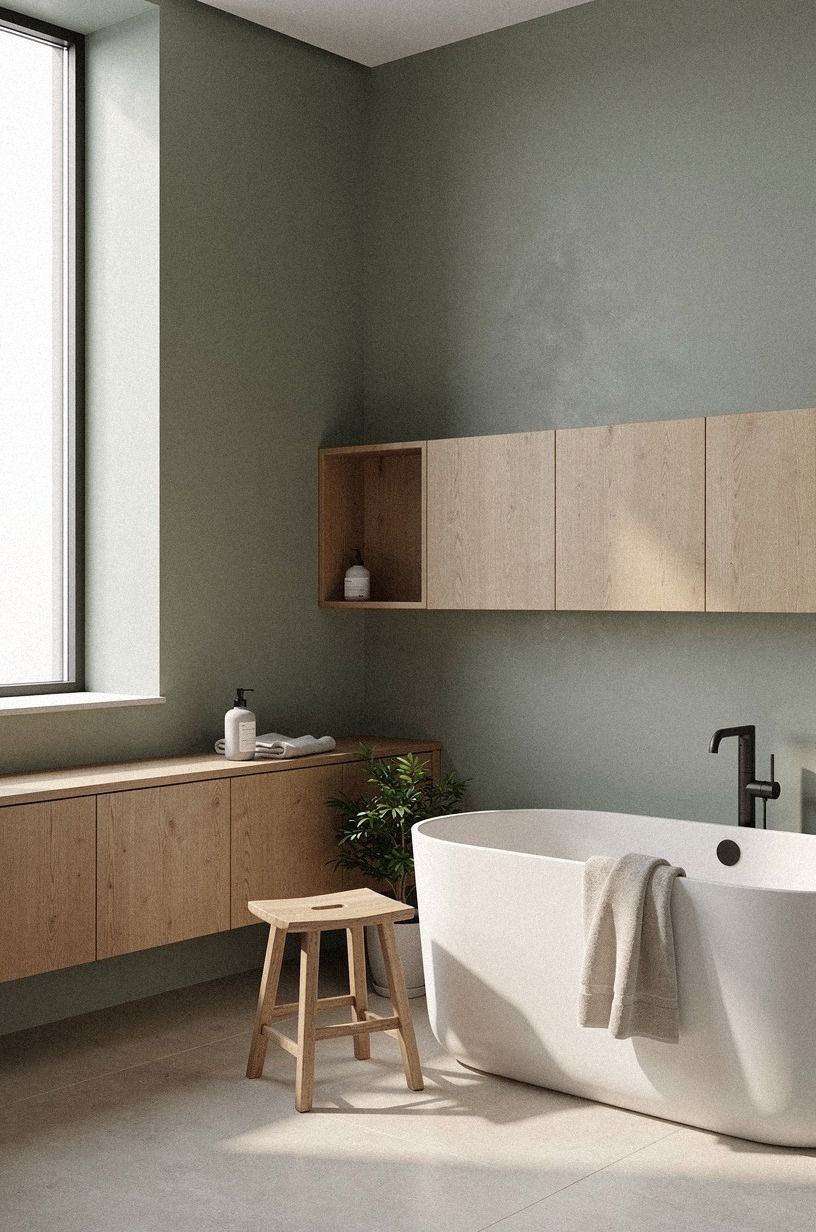
Yes, you can fit a freestanding tub in a small bathroom if you protect circulation first. A standard tub is 60 by 30 inches, or about 152 by 76 centimeters, but your room needs more than the tub footprint.
You’ll want clear access to the faucet, enough space to clean behind the rim, and at least 21 inches in front of the toilet. Measure your doors and turns before delivery.
A compact Duravit D-Code tub can work when you keep the surrounding pieces visually light. Your vanity should float, your mirror should stay broad, and your storage should move upward.
I’d skip a deep soaking model if it forces the toilet into an awkward corner. The bath might feel luxurious, but you’ll resent it every morning. For a layout with a shower, review these freestanding tub and shower combination ideas.
Space is part of the design.
10Use The Quiet Counterweight Against Pale Tile
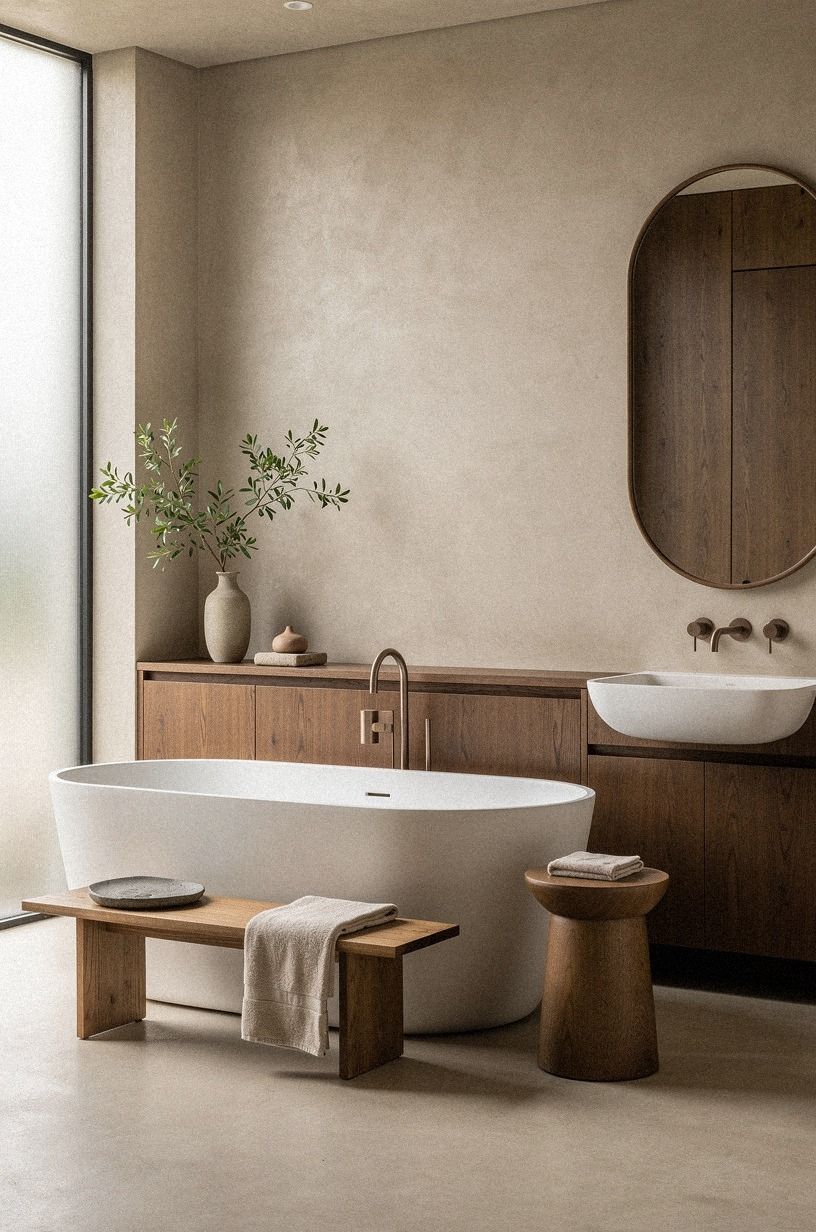
The Quiet Counterweight is a simple way to stop pale tile from feeling washed out. Add one dark, grounded element opposite the tub, such as a walnut vanity, a charcoal linen curtain, or Farrow & Ball Sulking Room Pink No.295 on a single wall.
You’ll create depth without making the room moody. Your eye needs one place to settle.
I’d use dusty rose behind a mirror rather than across every wall, especially in a bathroom with limited daylight. It’s gentle, but it can make a small room feel overly sweet by late afternoon.
A dark oak stool and aged brass faucet may be enough if your tile already has warm variation. Look at this black freestanding tub upgrade if you’re tempted by a darker centerpiece. Personally, I’d keep the tub white and make the wall do the work.
11Hang a Paper Lantern Above Your Japandi Bath
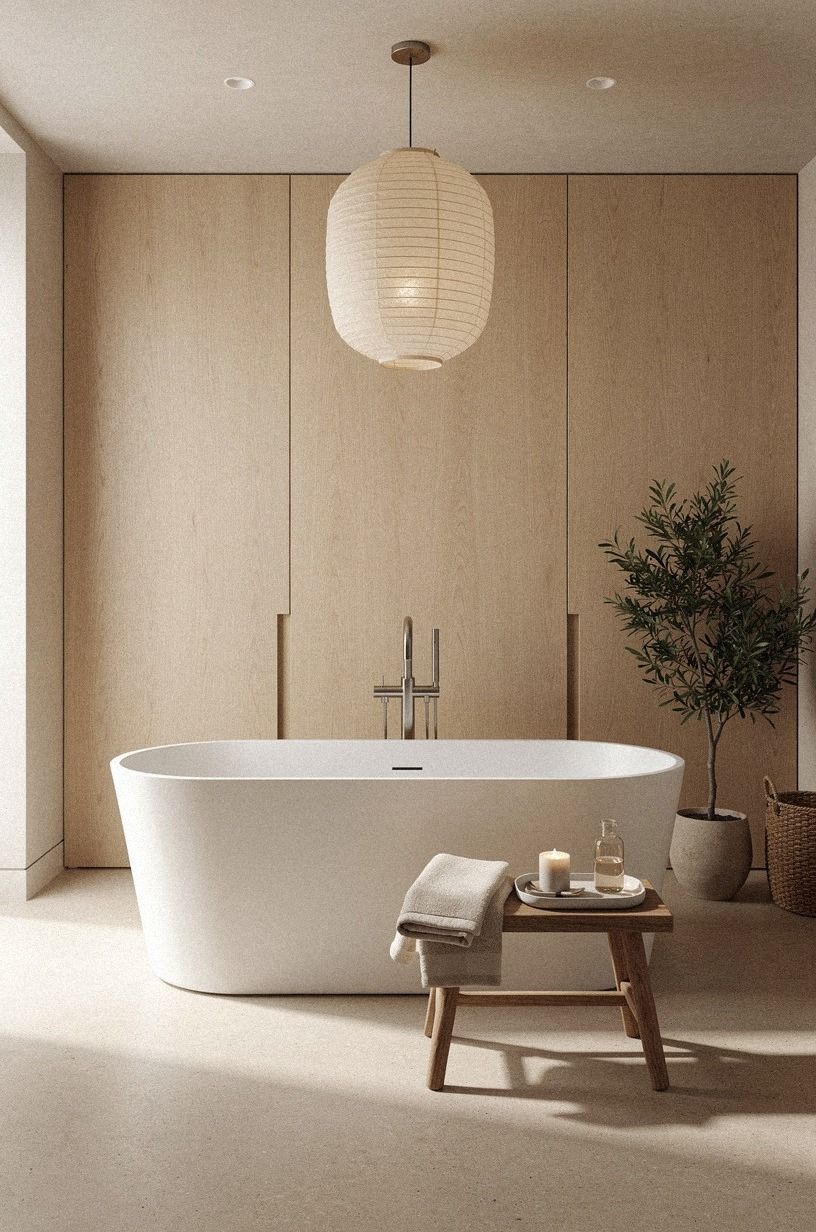
A paper lantern softens the hard surfaces around a tub better than a row of recessed lights. Choose a rice-paper shade with a simple rounded profile and a dimmable warm bulb.
You’ll see the light spread through the paper, while the ceiling disappears into a gentle glow. Your bath becomes calmer without adding visual clutter.
A Noguchi Akari-style lantern gives you the shape, but check the fixture rating and moisture conditions before installation. I’d avoid hanging it directly over the water unless the electrical setup allows it.
Place it closer to the room’s center, then use a wall sconce beside the mirror. Your space will feel more serene because the light is diffused instead of pointed.
Add a small branch of olive greenery, but keep it away from the steam path. Simple is better here.
12Budget the Calm with Real Bathroom Numbers
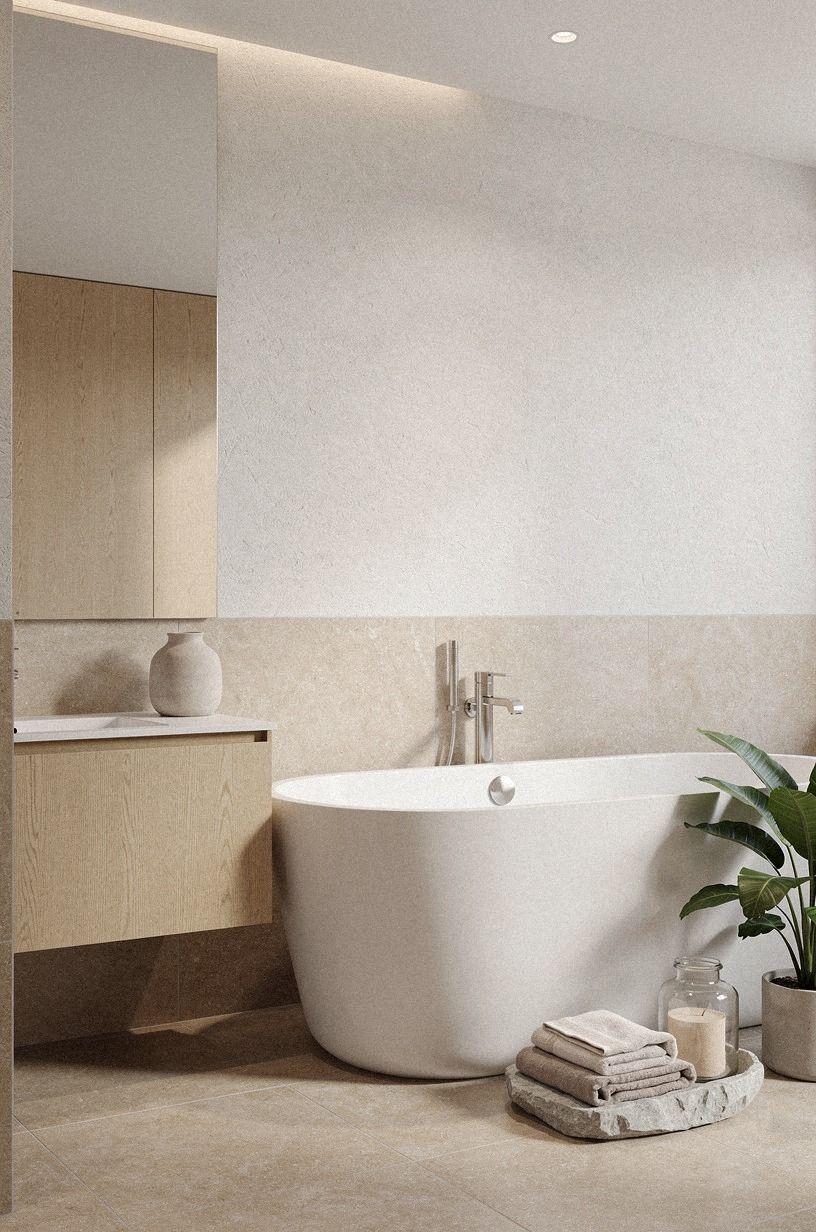
A calming home spa doesn’t require a full renovation.
13Paint the Niche, Not Every Wall
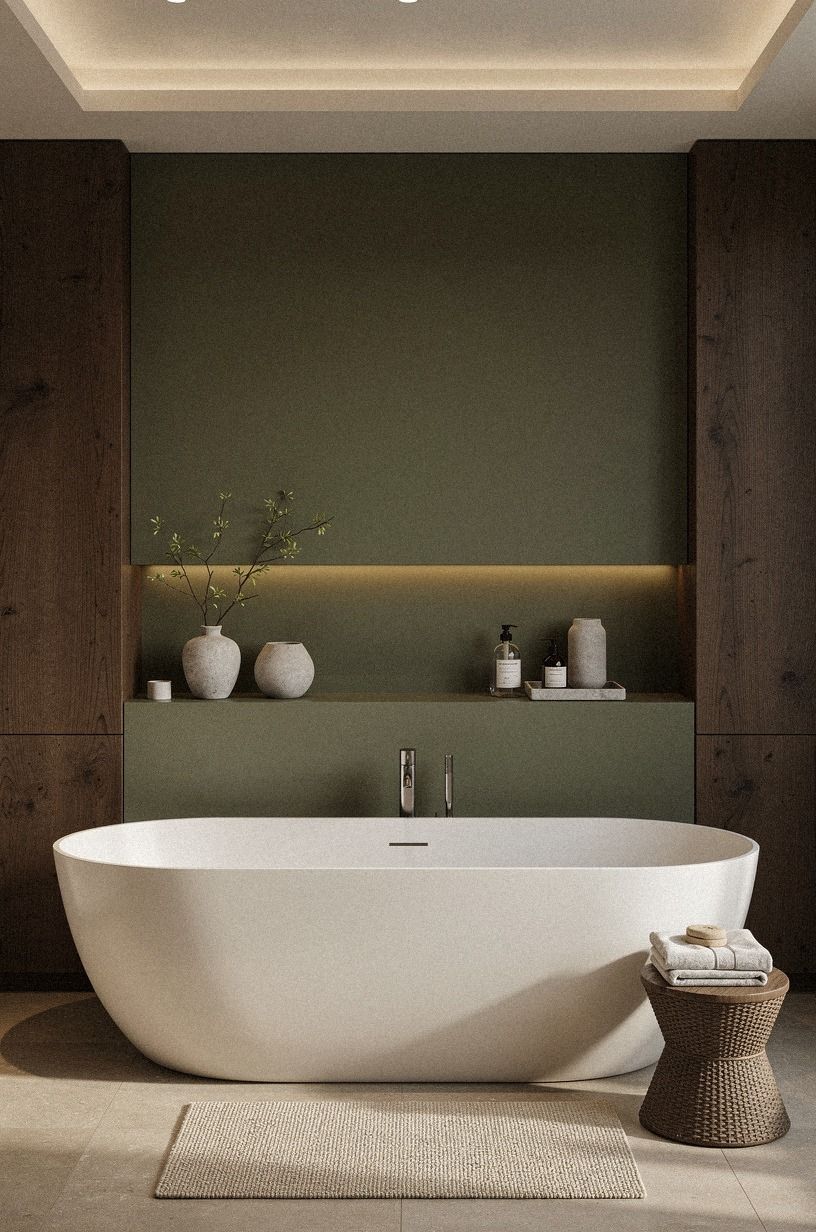
A painted niche gives your spa-like bathroom a focused moment without overwhelming it. Try Benjamin Moore October Mist 1495 inside a recessed shelf, behind a towel rail, or on the wall above a short vanity.
The sage green tone feels gentle in daylight and slightly gray at night, which makes it useful for a quiet room. You’ll get color without losing airiness.
I’d avoid painting every wall this shade if your tile is already cool. Your room could start feeling washed out instead of serene. Use a warm white elsewhere, then repeat October Mist in one towel or ceramic cup.
A Carrara marble shelf can bridge the colors with subtle grey veining. If you’re working around a rental finish, removable art and a peel-and-stick niche panel can create a similar effect.
You’re giving the eye one calm landing place, and that’s enough.
14Mix the Soft-Edge Ratio for a Warm Spa
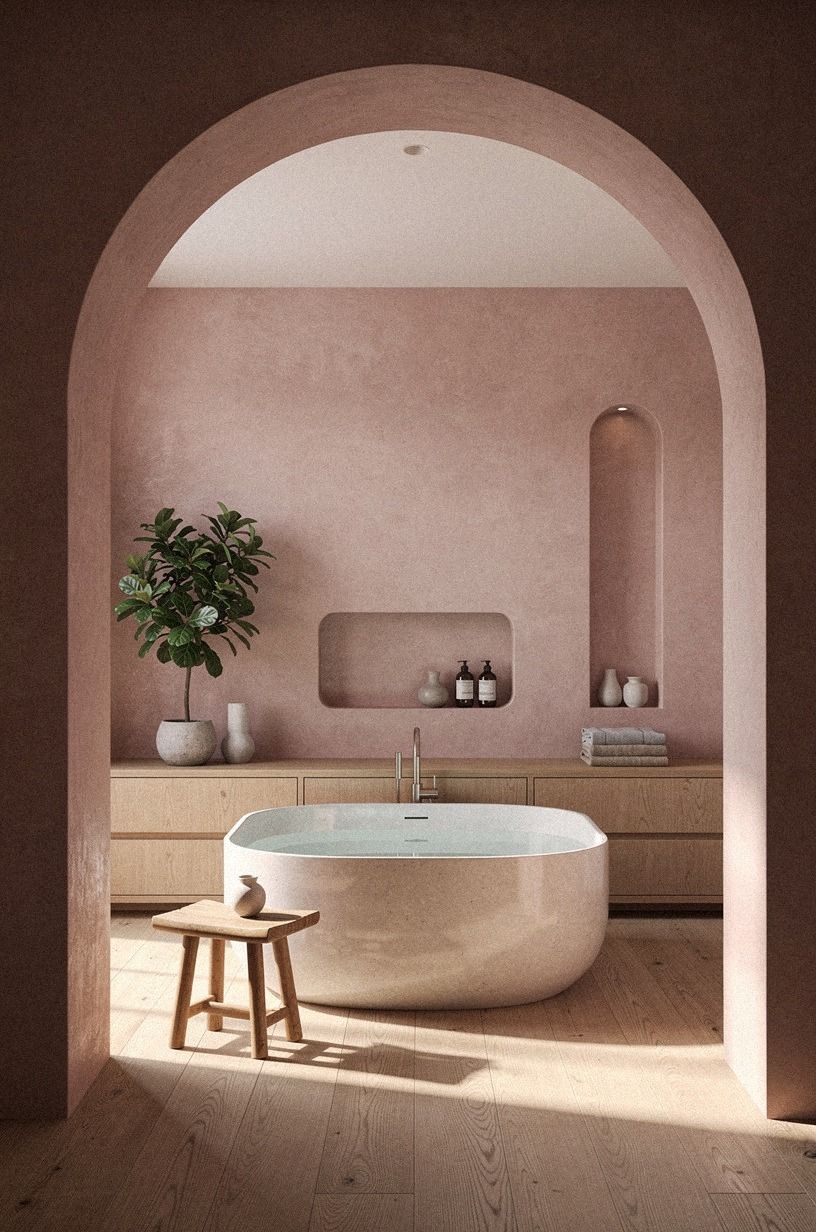
The Soft-Edge Ratio balances all the sharp lines in a bathroom.
What I’d Change Before Buying a Single Tub
I’ve learned that the tub is rarely the first decision. It’s the most visible object, so it gets all the attention, but your floor plan decides whether the room feels calm or cramped.
I once fell for a deep oval tub with a gorgeous profile, then realized the faucet would leave only a narrow path beside the vanity. The shape was lovely.
The daily movement was not. You’ll enjoy your bathroom more if you tape the 60-by-30-inch footprint on the floor first and walk around it for a day.
I’d also choose the lighting before the finish. Warm wood looks dull under a blue-white ceiling fixture, and even the best zellige can look gray when the bulb is wrong.
Your room needs a low glow near the tub, a useful mirror light, and enough general light to clean without squinting. That doesn’t mean buying expensive fixtures. It means deciding where shadows should fall.
My strongest opinion is about color. I’d choose Benjamin Moore October Mist 1495 or a warm white before I’d reach for a full black bathroom.
Black tubs can be dramatic, but they show dust, water marks, and every stray towel. If you want depth, paint one wall in Farrow & Ball Hague Blue and keep the tub pale.
You’ll get the contrast without making the whole room work so hard. A Japandi bath should support your morning, not demand a performance from it.
What People Always Want to Know
What is the best Japandi freestanding tub idea for a small bathroom?
A compact white tub beside a floating oak vanity is the strongest choice because it keeps the floor visible. Add a round mirror, one walnut stool, and soft linen. Open floor area matters more than extra decoration, so you’ll want to protect circulation before choosing accessories.
Where can I buy Japandi freestanding tub pieces on a budget?
Look at IKEA, Wayfair, Target, Facebook Marketplace, and local thrift stores. You can find a useful stool or mirror secondhand, then spend on the faucet and lighting. Secondhand wood often has warmer grain than new laminate, and your room won’t need a matched furniture set.
How much does a Japandi freestanding tub makeover cost?
A cosmetic refresh can fit within the $200 to $1,200 budget range for paint, a mirror, a faucet, and textiles. Free layout changes include removing clutter, changing the light bulbs, and moving storage. Larger tile, vanity, or plumbing work moves into the $3,000 to $9,000 range.
Can I create a Japandi freestanding tub bathroom on a budget?
Yes, and you can begin with three low-cost moves: warm paint, better bulbs, and one textured towel or runner. Use Benjamin Moore October Mist 1495 in a niche, thrift a wooden stool, and keep your existing tub if its shape works. You don’t need a full renovation.
Is a Japandi freestanding tub worth it in a small space?
Yes, if the tub doesn’t block circulation. A smaller room can feel more intentional because you’re forced to edit.
Clear walking space is the real luxury, so measure the tub, vanity, and toilet clearance together before ordering. A floating cabinet will help the floor feel lighter.
Is Japandi style a good idea for a rental?
Yes. Use a removable linen-look curtain, a tension rod, peel-and-stick art, and freestanding storage. No-drill changes can still add warmth through wood, cotton, and soft lighting.
You’ll want to avoid adhesive near constant splash zones unless the product is rated for moisture.
Where I’d Start First
If I had to pick one, I’d start with the lighting. Warm layered light makes pale tile and a basic tub feel intentional, while expensive finishes still look cold under one harsh fixture. Pin these Japandi freestanding tub ideas for later, then test your bulbs tonight before buying anything else.