My patio always looked decent from inside the house, then disappointing the second I stepped onto it. The concrete felt hot by noon, the railing was too exposed, and every chair I tried made the space look smaller.
I wanted that tucked-away resort feeling without pretending I had a huge backyard. The fix ended up being one outdoor daybed, one smart shade layer, and a much stricter approach to what deserved floor space.
Map the Footprint Before You Shop
I stopped guessing and measured the whole zone first. A typical small patio can handle a 2.0 m by 2.5 to 3.0 m layout without making every step feel like a sidestep.
That number changed everything for me. Once I saw the real footprint, I knew I could fit one statement piece, two tiny tables, and a line of planters without killing circulation.
I also gave myself one rule: no oversized lounge set. A small patio looks more expensive when one large item fits properly than when four smaller pieces fight for elbow room.
Anchor the Back Wall With a Round Daybed
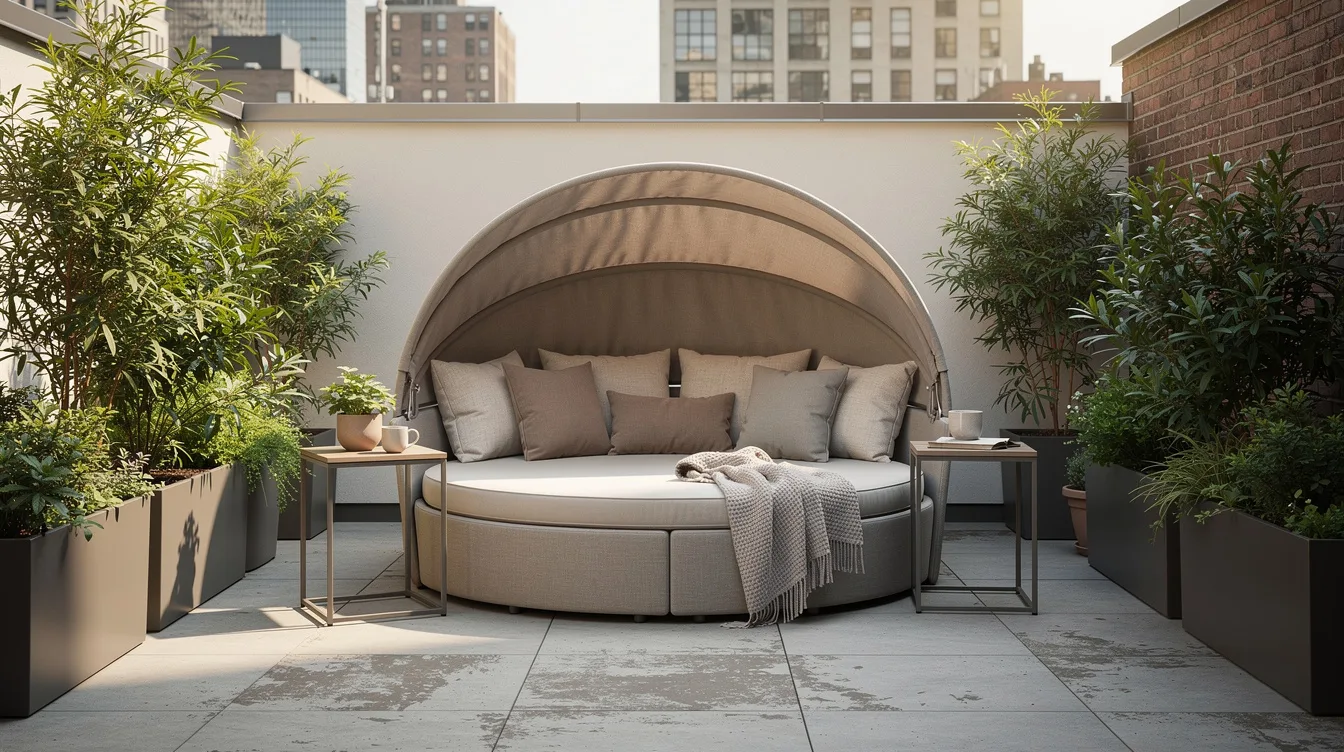
The biggest visual win was pushing a round outdoor daybed against the back wall instead of floating it in the middle. On a 5 to 8 square meter patio, a typical 170 cm diameter model reads plush without swallowing the whole space.
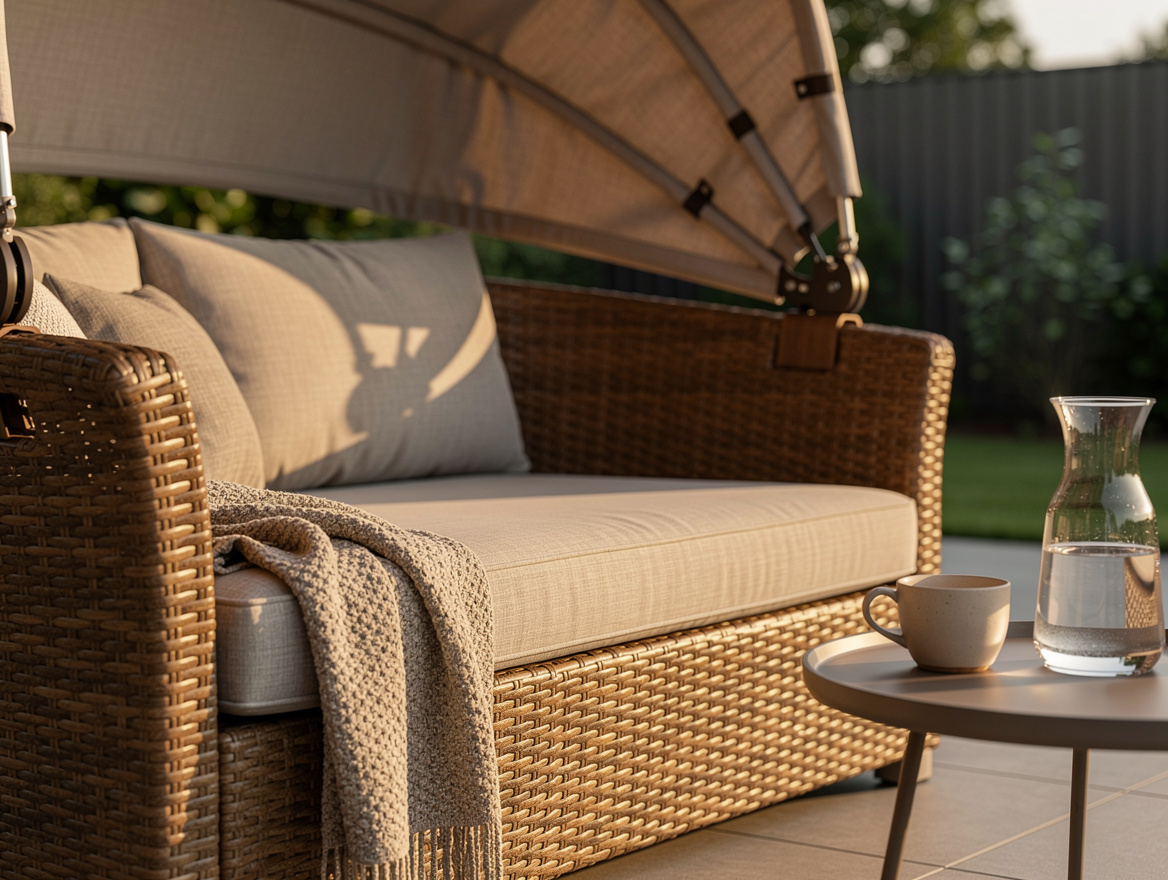
I like modular wicker versions from Amazon or Target for this setup because many split into separate seats with a pull-out ottoman. That matters on a small patio where one piece has to work harder than it would in a big backyard.
Typical budget models use a steel frame, PE rattan, and 5 to 8 cm cushions, and they usually cost about €350 to €800. I think that range is the sweet spot if you want instant cabana energy and can accept that the cushions may need replacing before the frame does.
If you prefer a rectangular look, cabana-style daybeds usually run about 160 to 200 cm long and 140 to 160 cm deep. I still think round works better in tight spaces because the shape softens hard patio edges and feels less bulky from the doorway.
Layer a Retractable Shade Above the Seat
The resort look does not happen from the bed alone. It happens when the retractable canopy gives you that enclosed, shaded feeling that makes the patio feel separate from the rest of the home.
Many round wicker daybeds already include a sliding polyester hood on a curved metal frame. Those front-edge canopy heights are typically around 150 to 170 cm, which is enough for lounging shade, even if it will not feel tall like a freestanding pergola.
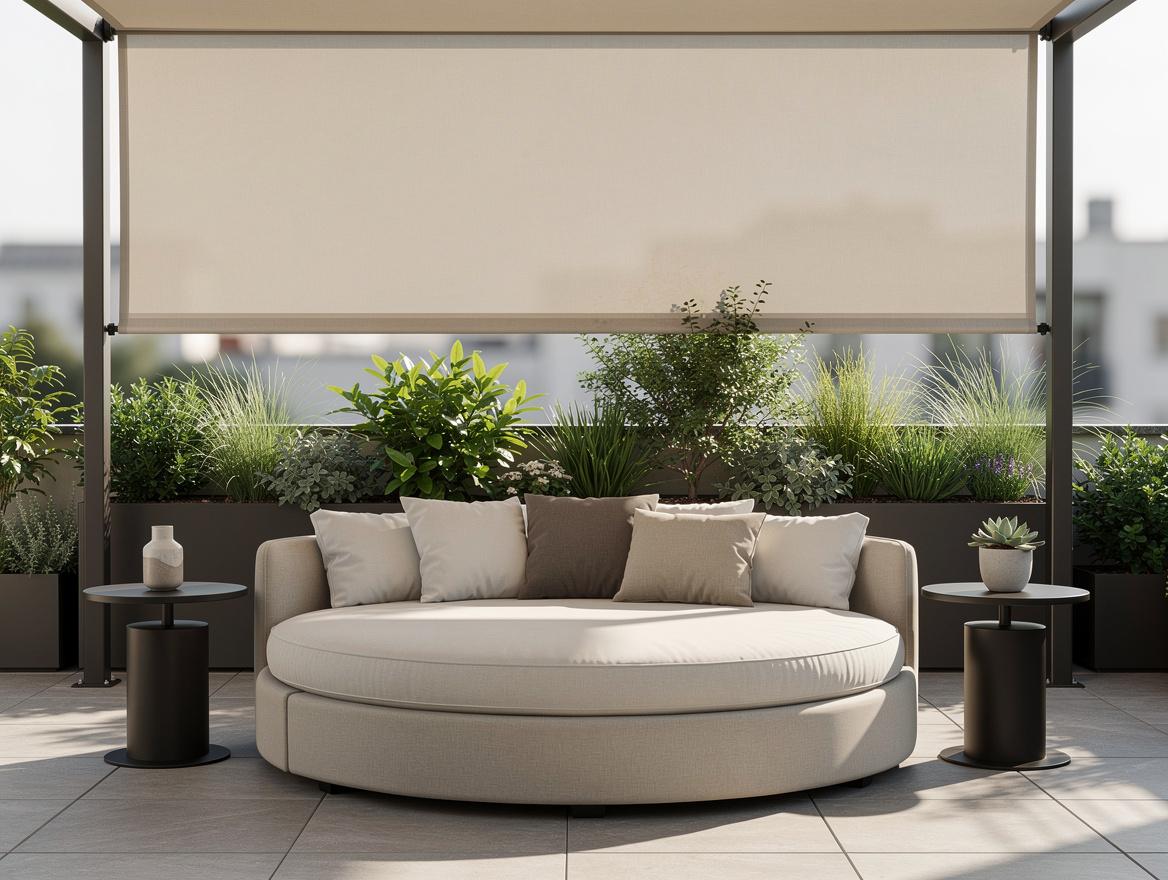
I like built-in shade because it keeps the footprint compact, but I would not rely on it alone if the patio gets hard afternoon sun. A slim retractable shade sail or a compact wall-mounted shade above the daybed gives the setup more depth and makes it feel closer to a hotel cabana.
This is the step that separates “nice outdoor furniture” from “mini resort.” The layered shade also hides nearby fences, railings, and dull siding, which is exactly what I wanted.
Add Small Tables and Tight Planters
I kept the extras tiny on purpose. Two 30 to 40 cm side tables were enough for drinks, sunscreen, and a candle, and anything bigger would have made the layout clumsy.
For the enclosed feeling, I lined the opposite edge with planters instead of adding more seating. A resort patio should feel protected and a little private, and greenery does that faster than throw pillows ever will.
I would rather spend on tall, simple planters from Home Depot, Lowe’s, or Target than on decorative clutter. A narrow run of green along one side gives the patio a border, and that border is what makes a small space feel intentional.
My favorite mix was two taller pots with one lower, wider pot to break up the line. Perfect symmetry can make a tiny patio feel staged, and I wanted it to feel used.
Use Resort Fabrics Instead of Busy Decor
I got the strongest result when I simplified the palette. One sand-colored cushion set, one striped outdoor towel, and a darker accent pillow felt sharper than a pile of mixed prints.
Budget daybeds usually come with polyester cushions, and I think that is fine if the shape is good. What matters more is replacing thin, shiny throw pillows with heavier outdoor fabrics from Wayfair, Target, or Amazon so the whole setup stops looking temporary.
I also added one woven lantern and one tray instead of filling every corner. A chunky outdoor throw. One matte black planter.
One teak-look table. That is enough.
The mistake I almost made was over-decorating because the patio was small. Small spaces need fewer objects with better scale, not more filler.
Set a Budget That Matches the Look You Want
The honest number for this kind of setup is wider than people expect. A convincing small-patio resort look with a daybed and retractable shade typically lands around €600 to €2,500, depending on whether you buy budget wicker pieces or move into more design-heavy territory.
For me, the sweet spot is the middle. Around €800 to €1,500 usually gets you a better frame, thicker cushions, and a cleaner silhouette without pushing into luxury pricing that only makes sense if your patio is a long-term outdoor room.
I would put the money in this order: the daybed first, the shade second, the planters third. Cheap seating ruins the whole scene fast, while a basic table can still look fine if the main lounge piece feels substantial.
If you shop Amazon, Target, or Wayfair, watch dimensions more closely than photos. Plenty of listings look oversized in product images and end up reading more like a children’s cabana once they hit a real patio.
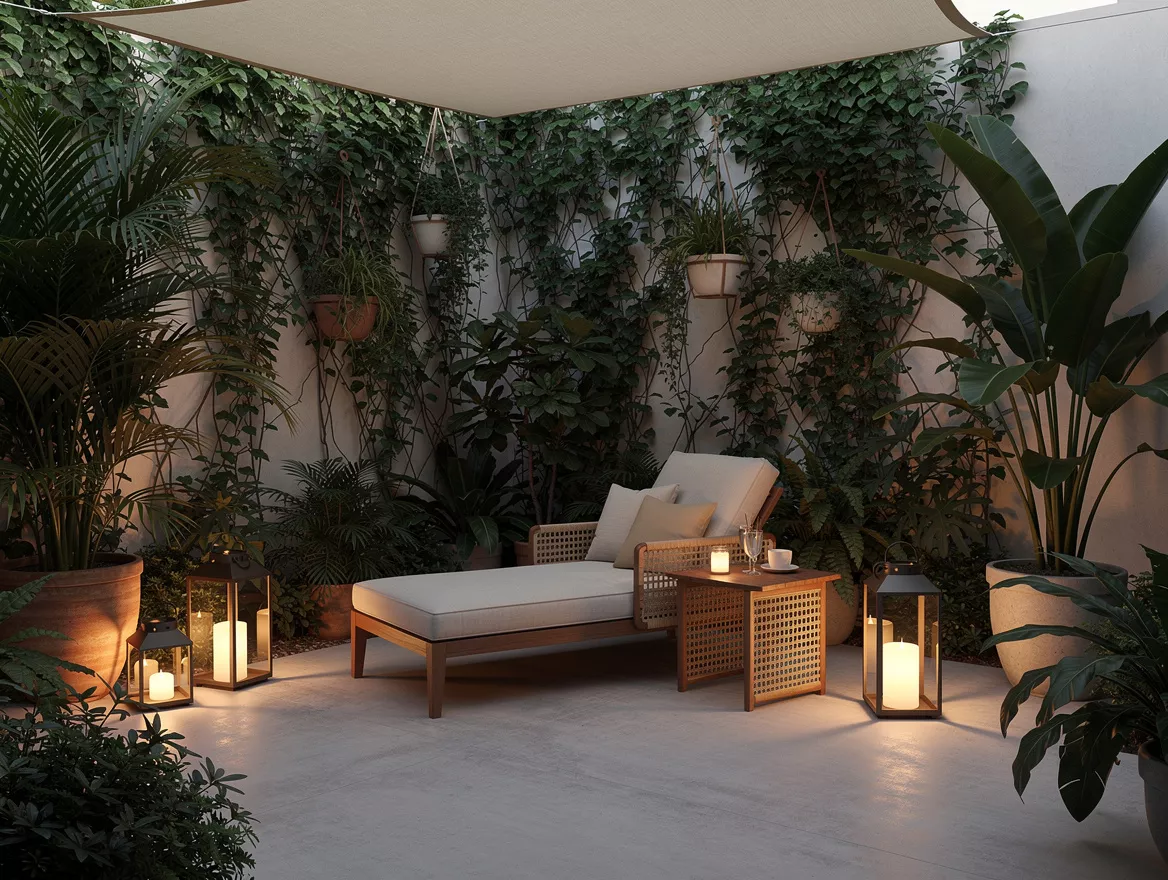
Start with the tape measure, then buy the biggest daybed your footprint can handle without blocking the walkway. Once that anchor is right, the shade and planters are the pieces that make the patio finally feel like a place you stay in, not just pass through.
Mia Carter writes about small-space living and budget home makeovers. She has restyled three rentals and tests most ideas in her own 45 sqm flat.