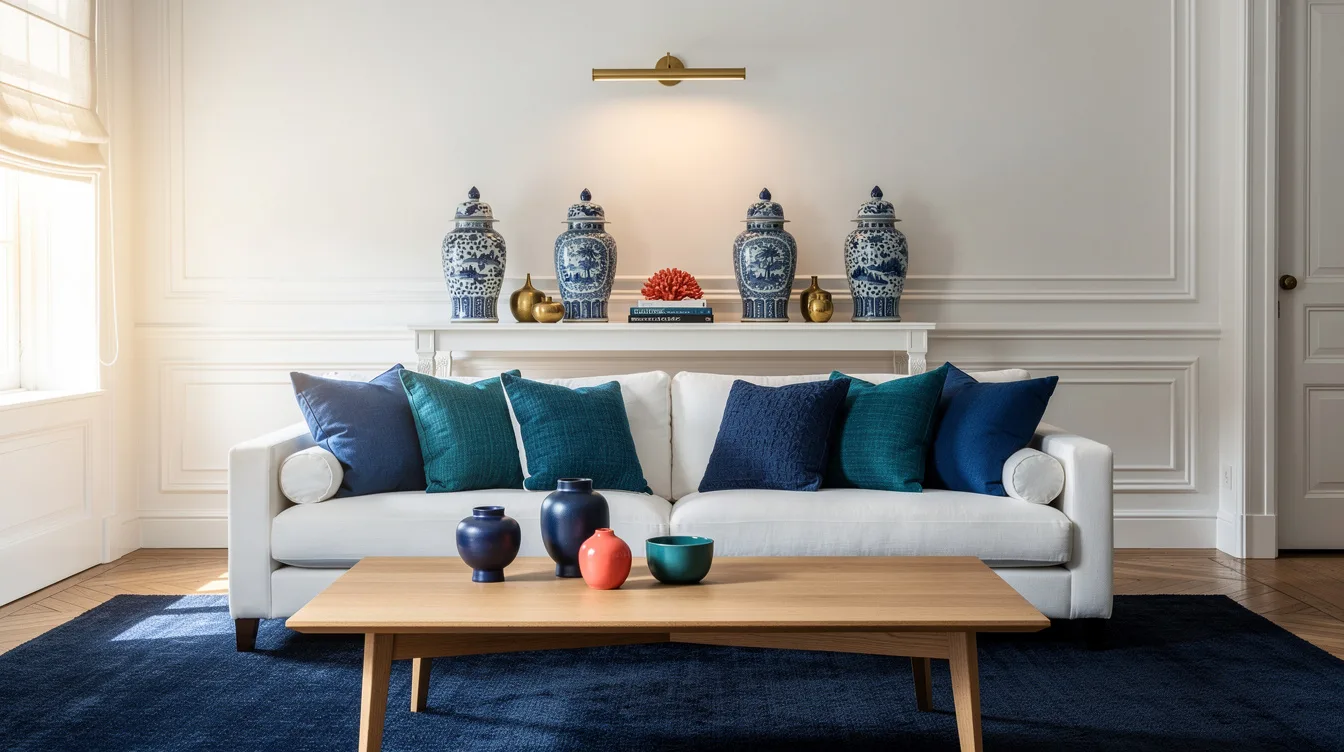
My last apartment was ninety percent cream, and I was tired of playing it safe.
So I picked one rule and stuck to it: walls, trim, ceiling in white, and every other layer pulling from the same blue family. The room got calmer, the furniture looked more expensive, and my dupe-pattern throws stopped clashing. Here is what designers told me actually holds up.
Treat White as the Base, Not the Background
I made the rookie mistake of picking a blue paint chip first. Designers I talked to all flipped the order: pick your white first, then your blue.
Most pros land on a warm or paper white, never a stark blue-white that goes gray in shadow. A simple Benjamin Moore White Dove on the walls and a brighter Decorator’s White on the trim keeps the room from looking flat. Average paint runs about $45 a gallon, and one gallon typically covers a 200-square-foot room on the first pass.
Pick One Blue and Repeat It Five Times
The single biggest cheat code in a blue-and-white room is distribution. If your blue lives in only one corner, that corner feels heavy and the rest feels unfinished.
Aim for the same blue showing up in at least five places: a rug, two cushions, a curtain panel, a piece of ceramics, and one piece of art. Most rooms read as designed around 4 to 6 repetitions of the accent color, according to the editorial examples I pulled from. A Wayfair navy wool rug around $400, two IKEA AINA linen cushions in cobalt, and a pair of blue-and-white ginger jars on the console does the job without looking themed.
Use Pattern to Do the Heavy Lifting
Flat color gets boring fast in an all-white shell. Pattern is what makes a blue-and-white room feel collected instead of staged.
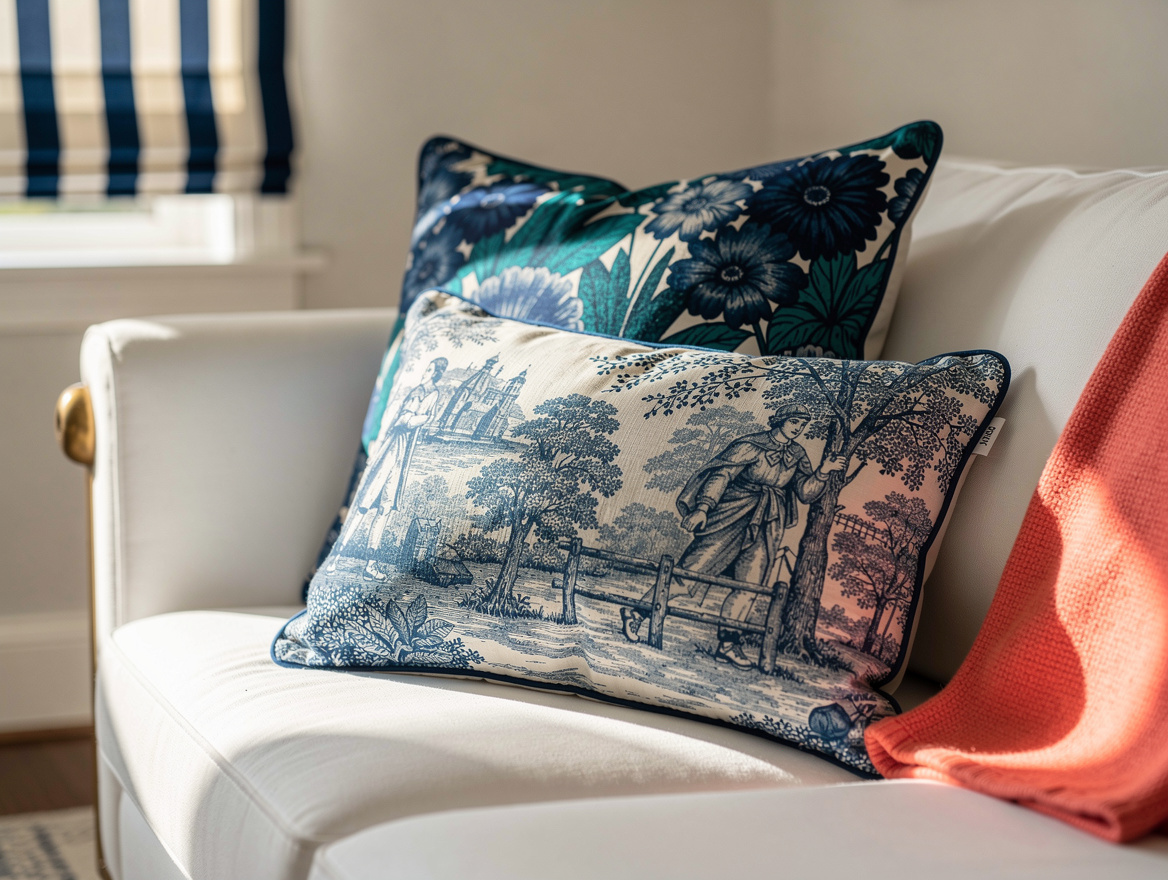
Stripes, florals, toile, checks, and chinoiserie ceramics all feel classic right now and they age well. I mixed a striped Roman shade, a floral cushion, and one bold toile lumbar pillow from Target’s Threshold line (around $35 each). The room instantly looked layered, even though everything came from mass retailers.
Warm It Up With Real Wood and Brass
The fastest way to make blue-and-white feel like a cold hotel lobby is to skip the warm materials. Wood and brass are doing the actual work of comfort.
I added a light oak coffee table from Article (around $500) and a pair of brass picture lights from Lowe’s (about $45 each). Oak, walnut, rattan, jute, and a few camel or marigold accents keep blue from feeling icy. Designers consistently point to this move as the difference between a room that reads as elegant and one that reads as sterile.
Choose Anchor Pieces You Won’t Replace
Cheap accent decor is fine. Cheap anchor furniture is the trap. Spend where you’ll see it every day for ten years.
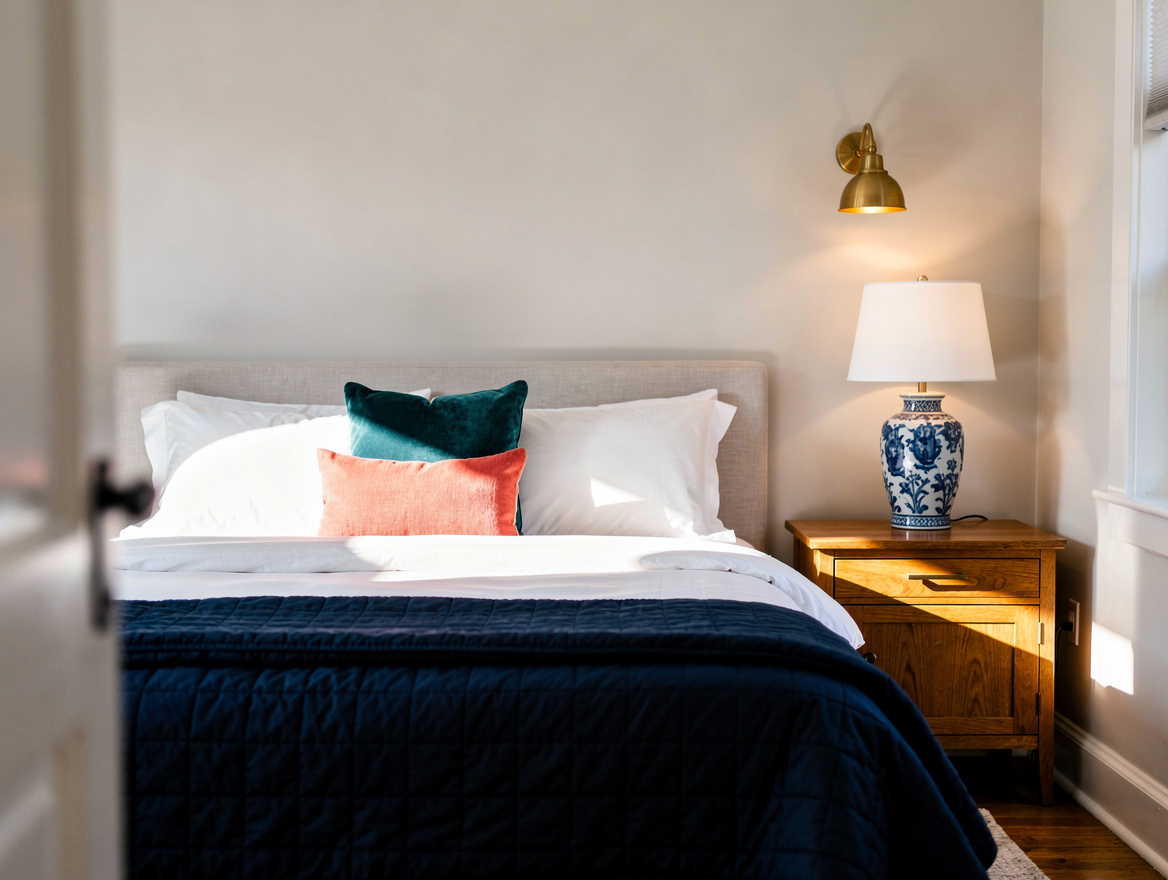
For a sofa, the mid-range sweet spot is roughly $1,200 to $2,000, where you get real frames and performance fabric without a four-figure delivery window. RH, Serena & Lily, and Article all sit in that zone. In my bedroom I went with a Costco upholstered bed frame in white performance boucle (around $900) and saved the splurge for one Ralph Lauren Home navy quilt I plan to keep for a decade.
Layer Ceramics Instead of Buying Art You Don’t Love
You do not need a $3,000 painting to anchor a console. Blue-and-white ceramics are the original wall art of this palette.
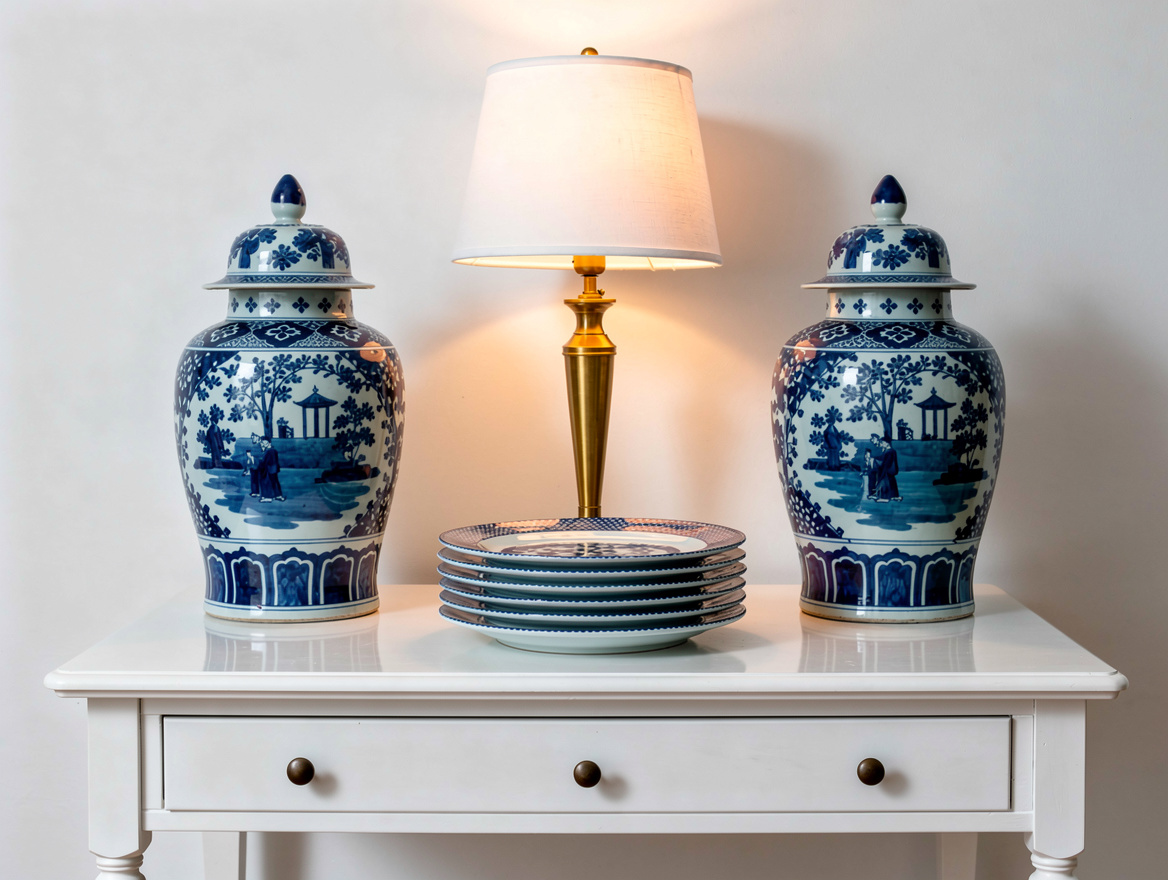
A pair of ginger jars, a stack of vintage transferware plates, and one larger vase give you height, scale, and pattern at a fraction of the cost. I built mine with a $60 HomeGoods ginger jar, a $25 Walmart transferware plate set, and one $180 antique vase from a local shop. Mixed scale matters more than matching origin.
Budget Like a Pro: Roughly $2,500 to $8,000 Per Room
For a typical 200 to 250 square foot living room or bedroom, a solid mid-range build lands between $2,500 and $8,000 in 2026.
The lower end comes from IKEA, Wayfair, Target, and Amazon, with maybe one upgrade piece. The higher end swaps in RH, Serena & Lily, or custom upholstery, and adds a feature wall of heritage wallpaper that can run $1,200 to $1,500 installed. Most rooms I priced out landed around $4,000 once you count the rug, the window treatment, and the ceramics.
That is roughly 40 percent furniture, 25 percent textiles, 20 percent lighting and ceramics, and 15 percent paint and small decor.
Start with the white, pick your blue from a physical swatch, and buy the rug before anything else. A $400 rug in the right shade sets the budget for every cushion, curtain, and ceramic that follows.
Mia Carter writes about small-space living and budget home makeovers. She has restyled three rentals and tests most ideas in her own 45 sqm flat.