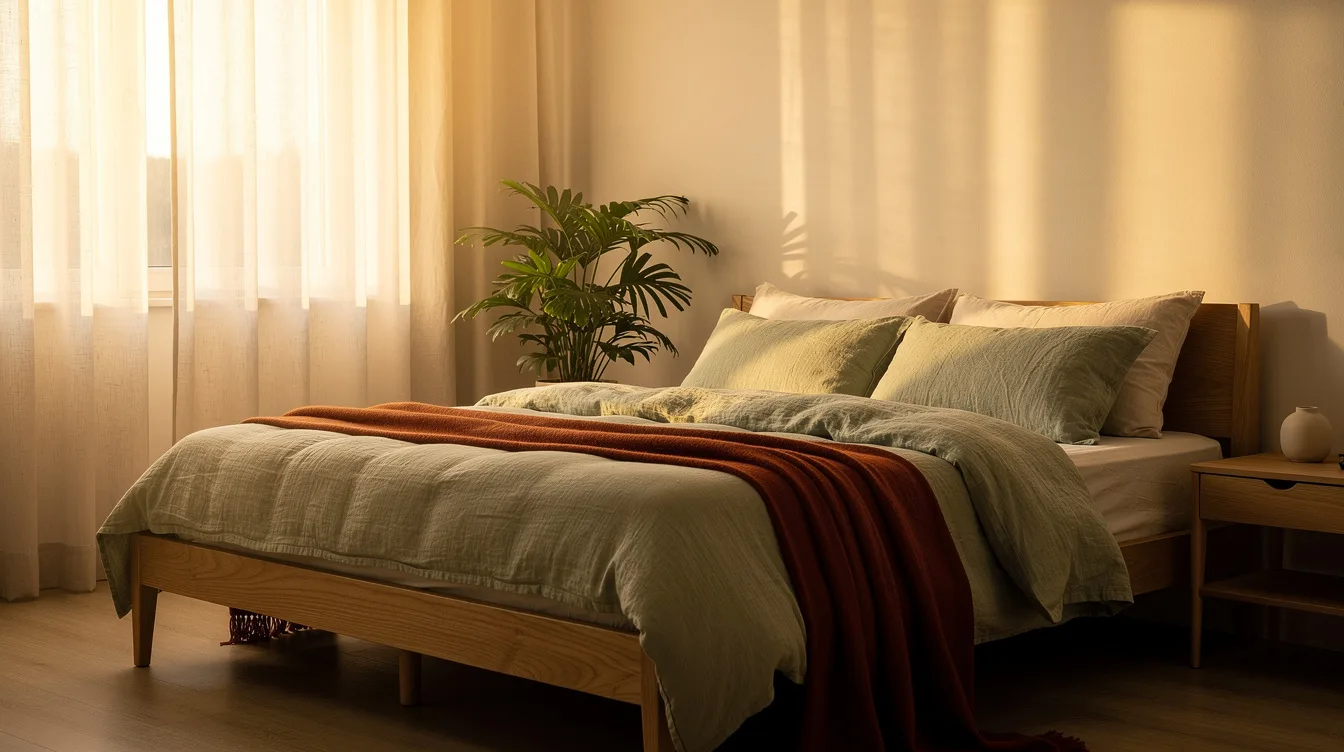
The first hour I spent in my new bedroom, I just stood there, annoyed by the LED strip bleeding under the bed frame. It was too cold, too bright, and somehow still felt cramped.
Start With a Color Story That Actually Quiets the Room
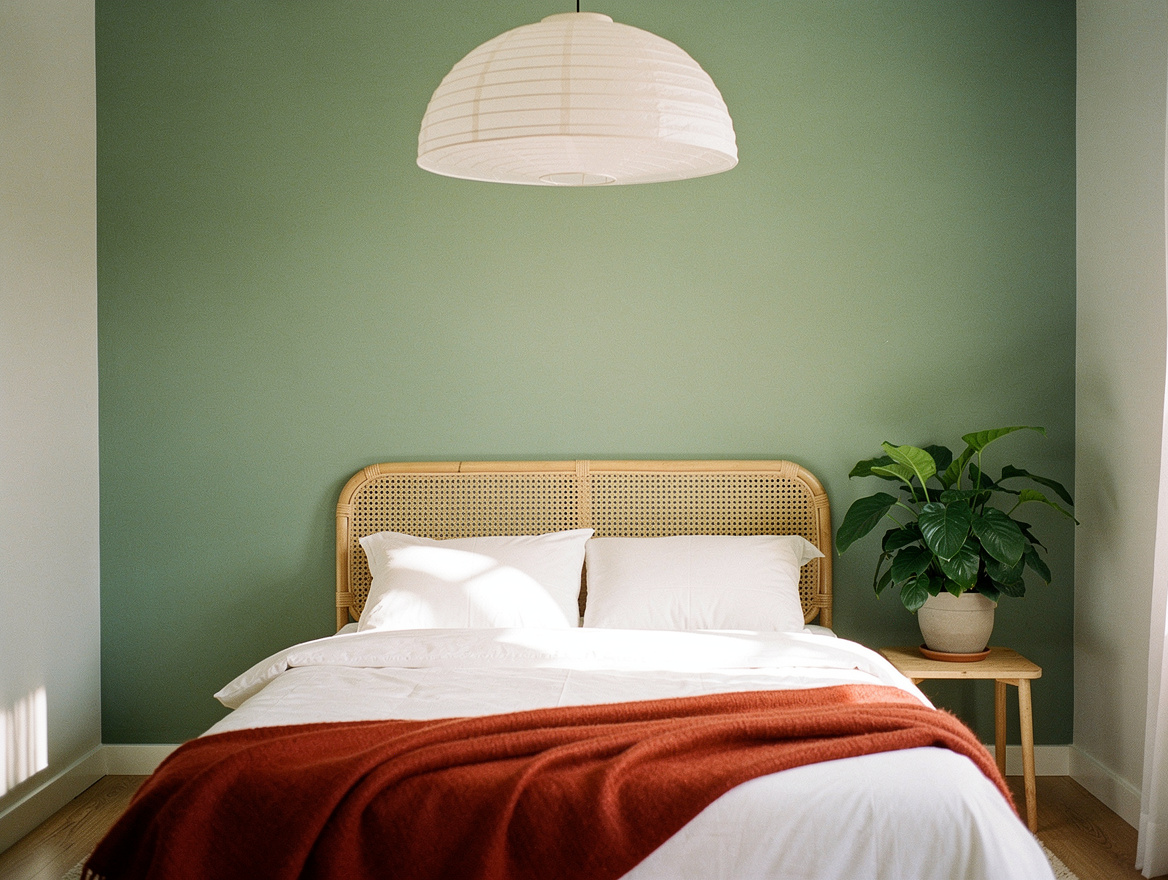
Quiet rooms almost always start with one warm neutral plus one softer accent. Designers lean on shades like Dulux “Natural Hessian” or Farrow & Ball “Jitney” on three walls, then push a single deep tone (terracotta, forest green, charcoal) behind the bed.
Build the Bed Like a Hotel Layer Cake
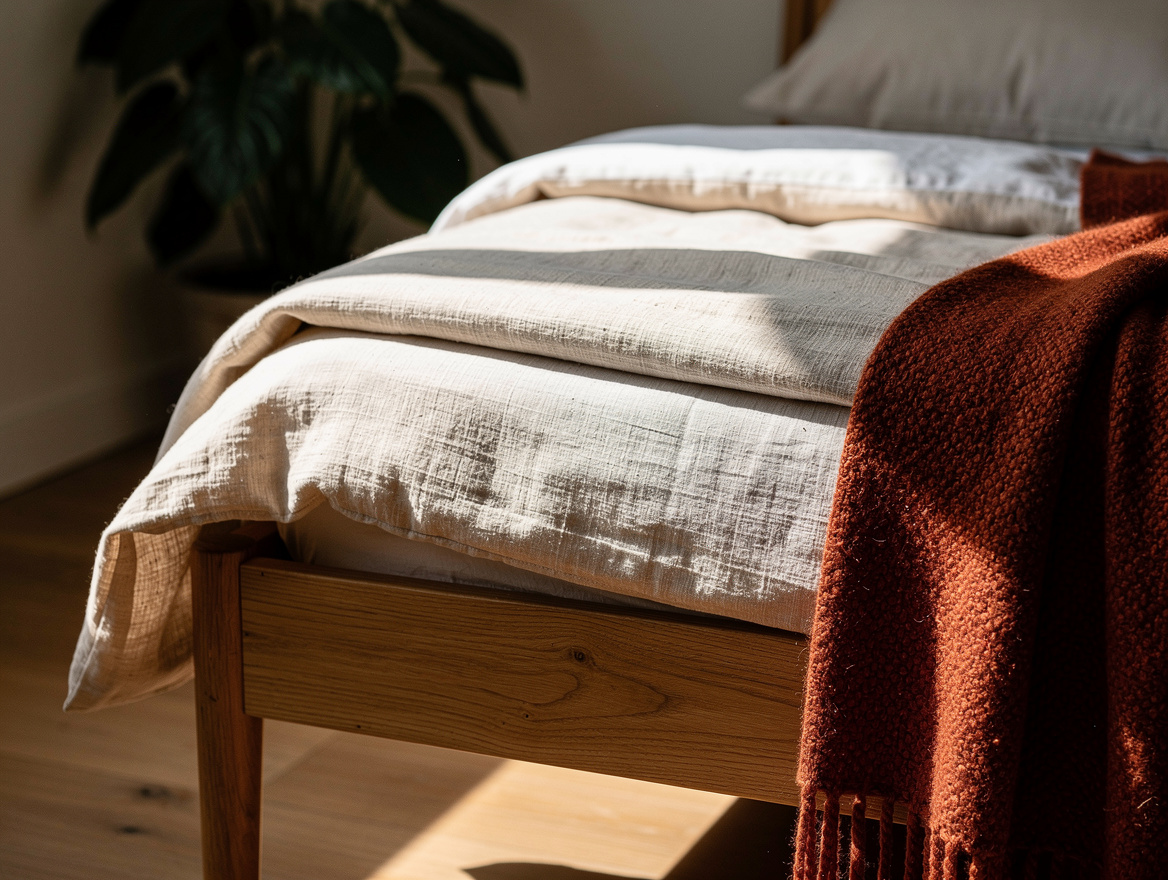
A serene bed is built in layers, not in matching sets. Designers start with a percale cotton base (200 to 400 thread count), add a washed linen duvet cover, and finish with a chunky knit throw folded at the foot, the kind H&M Home stocks every fall for around $49.
Pick a Headboard That Anchors the Wall
Skip the thin slatted headboard. Designers want a headboard that fills at least 60% of the wall width, and ideally stretches close to 180 cm in a queen setup.
Treat the Mattress as a Long-Term Investment
Designers rarely recommend anything but a hybrid. Pocket coils plus a 4 to 6 cm memory foam top give you support without the sinking feeling.
Layer Light, Then Add One Scent
Overhead cans are the enemy of calm. Designers layer three sources instead: a paper drum pendant, two slim sconces flanking the bed, and one warm table lamp on a nightstand for evening reading.
Treat Storage as Part of the Decor
Visible clutter kills serenity faster than bad paint. Designers hide storage in plain sight: IKEA Pax wardrobes (around $600 to $1,400 for a 240 cm run), under-bed drawers, and two nightstands that close.

Add Texture Before You Add Anything Else
Texture is what separates a calm room from an empty one. A 200×300 cm wool rug ($180 to $450 at Wayfair or West Elm), linen curtains that kiss the floor, and one woven wall piece do more than another lamp ever will.
Pick one corner and fix that first, the bedside, the window, the wardrobe. The rest of the room tends to follow once the hardest square meter behaves.
Mia Carter writes about small-space living and budget home makeovers. She has restyled three rentals and tests most ideas in her own 45 sqm flat.