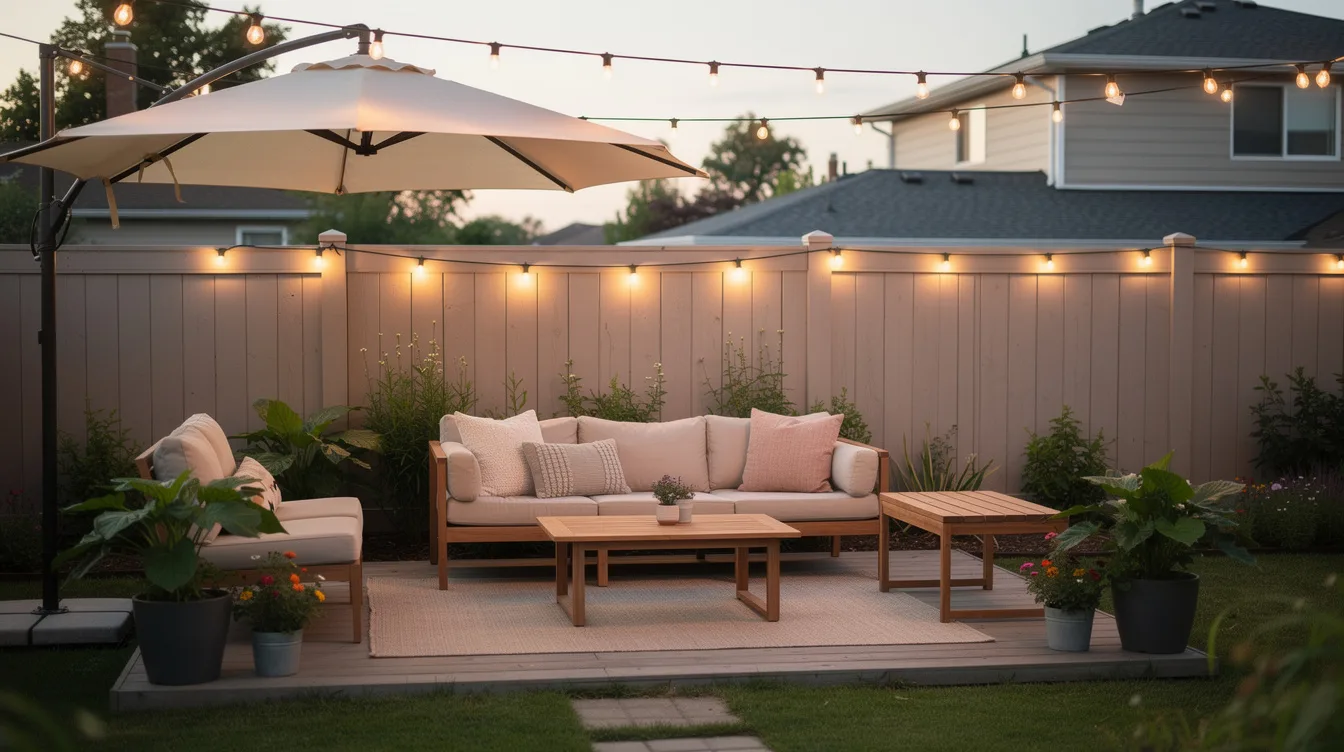
My issue with a tiny backyard was never the square footage. It was the awkward patch of blazing sun, two mismatched chairs, and kids’ stuff drifting toward the door by 6 p.m.
Once I stopped treating it like leftover space and started treating it like an outdoor room, the whole yard got easier to use. The best part is that every fix here is reversible, renter-friendly, and doable without drilling into brick, concrete, or siding.
Anchor the Space With a Compact Lounge Set
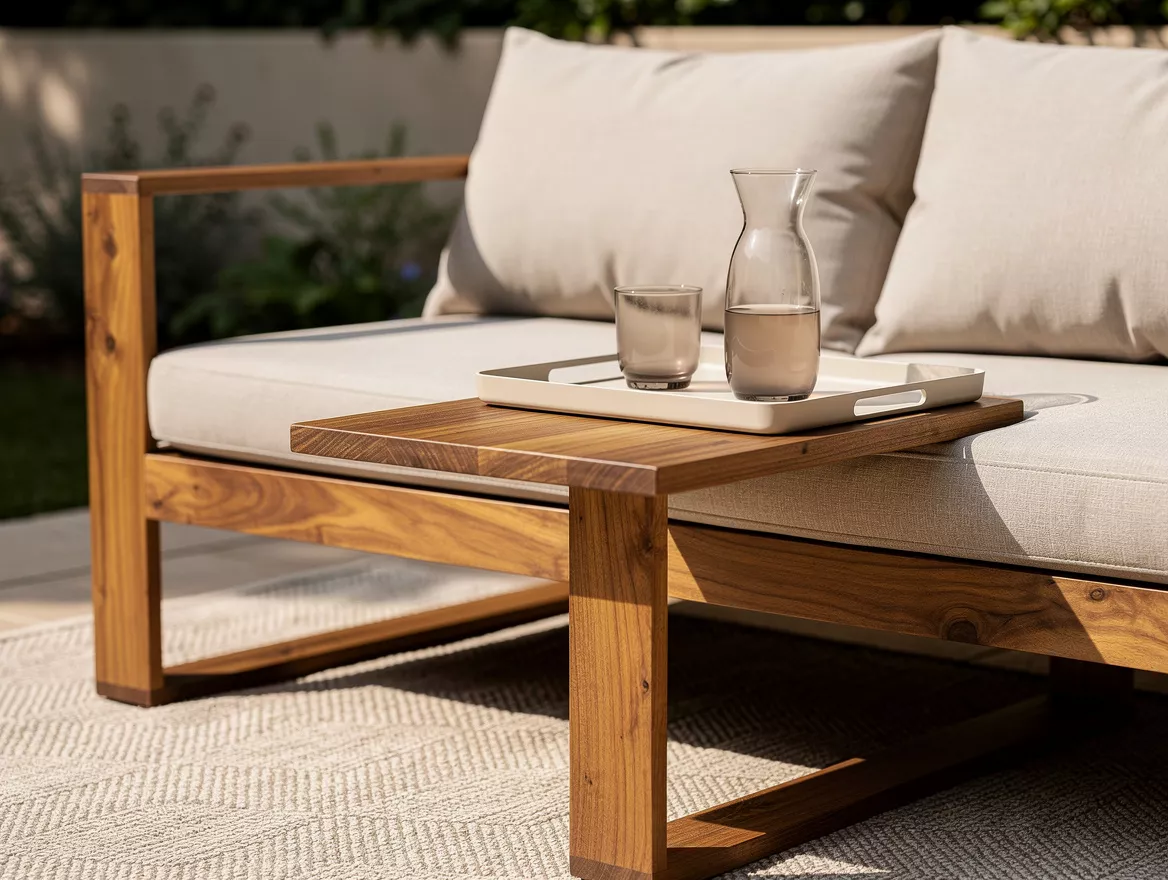
A low, freestanding acacia patio set changes the mood first because it gives the yard a center. In a small space, I like a four-piece layout with one sofa, two chairs, and a coffee table, with the sofa kept around a typical 71 to 75 inches long so it does not swallow the whole patio.
Wayfair and Amazon usually have compact wood or powder-coated aluminum conversation sets in the average $400 to $700 range, which is the sweet spot for a family setup that does not feel flimsy. Beige or gray cushions read cleaner than bright prints, and I think that matters more than people admit.
Skip oversized sectionals. A small outdoor rug under the front legs is enough to make the seating feel intentional, and freestanding furniture gives you the freedom to shift the layout when kids want more play space.
Create Shade With a Weighted Cantilever Setup
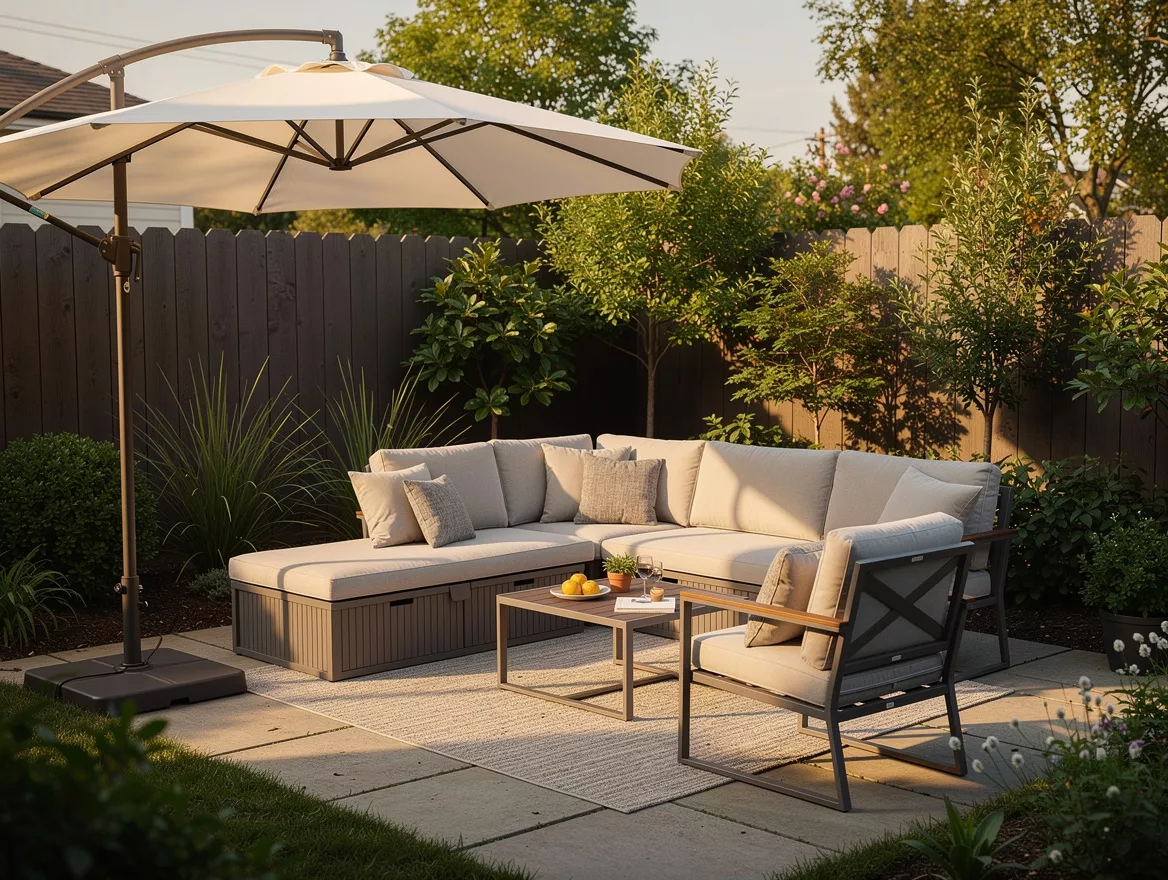
Shade is the upgrade that makes people stay outside longer, especially when the yard gets hammered by direct afternoon sun. A cantilever umbrella works better than a center-pole model in a tiny backyard because the base stays off to the side instead of blocking the table or sofa.
Home Depot, Lowe’s, and Target all carry 10-foot or 11-foot offset umbrellas with cross bases, and a typical price lands between $150 and $300 before you add weights. That size usually covers a four-seat lounge plus a small play mat, which is enough for most narrow patios.
Use paver base weights or fillable bases, not a flimsy stand. I would rather buy a simpler canopy in a neutral color than a fancy one with weak support, because a wobbly umbrella ruins the whole resort feel fast.
Zone It Like a Real Outdoor Living Room
A large polypropylene rug is the easiest visual fix in a tiny yard because it tells your eye where the room starts and stops. For a compact seating area, an average 6-by-9-foot or 8-by-10-foot outdoor rug gives enough coverage without making the edges curl into walkways.
IKEA, Walmart, and Amazon usually price weather-resistant outdoor rugs around $80 to $180, depending on size and weave. Flat-woven styles are the ones I trust most for families because they dry faster and do not trap every leaf and cracker crumb.
Pick one quiet pattern and let it do the work. A sand-and-cream rug instantly softens concrete or pavers, and it makes even inexpensive furniture look more pulled together.
Hide the Clutter Inside a Storage Bench
Family backyards fall apart when every cushion, bubble bottle, and sidewalk chalk bucket stays visible. A storage bench fixes that in one move and adds extra seating without eating up much floor space.
Keter resin-style benches are widely sold through Walmart, Wayfair, and Amazon, and the common 70 to 80 gallon size usually runs about $130 to $220. Typical dimensions hover around 50 to 55 inches wide, 24 inches deep, and 33 to 35 inches high, which fits well against a fence or side wall.
I strongly prefer resin construction over cheap soft-sided deck boxes in a family yard. It wipes clean, handles wet towels better, and does not look collapsed by midseason.
Layer Warm Lighting Without Touching the Walls
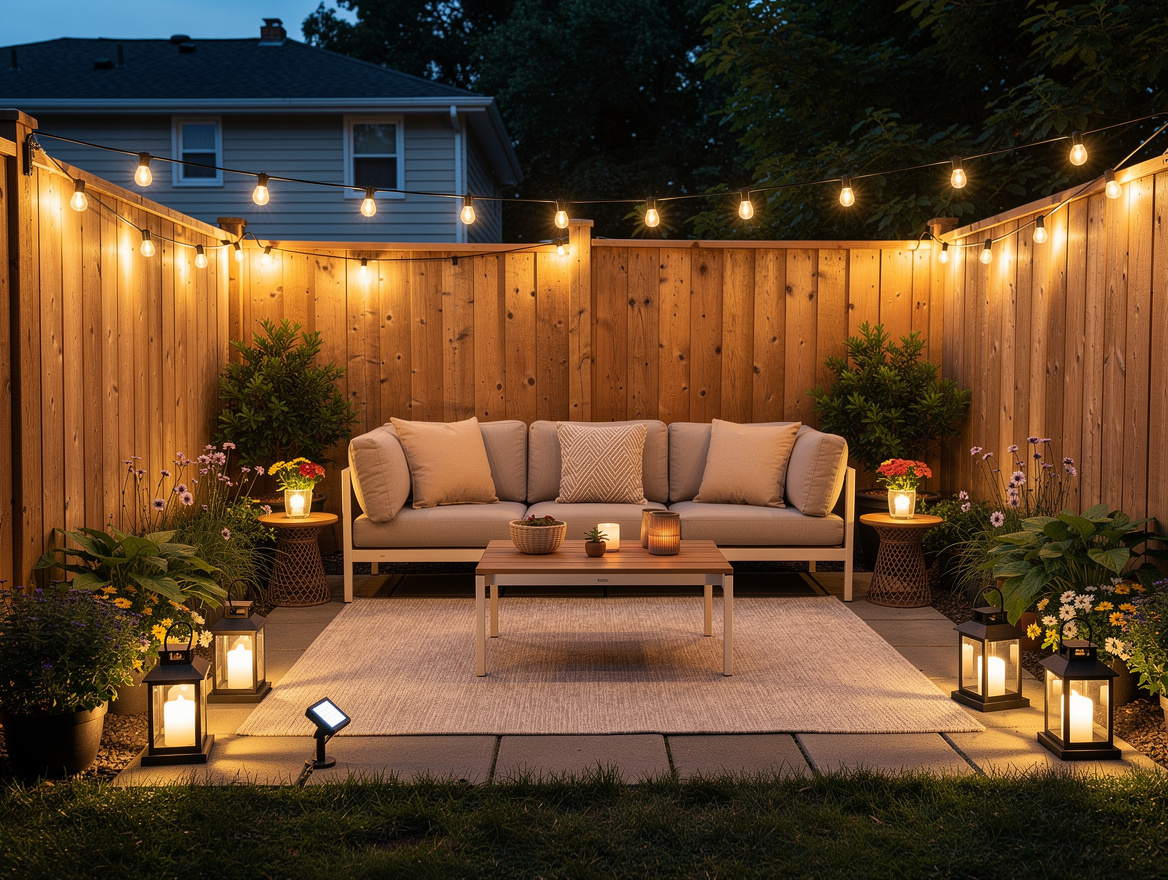
Lighting is what turns a backyard from daytime utility to evening hangout. One line of warm white string lights, around 2700K, gives the soft glow people actually want instead of that harsh blue-white look that feels closer to a parking lot.
Amazon, Target, and Costco often carry 48-foot to 100-foot outdoor string light sets in the average $40 to $90 range, and many are shatter-resistant plastic bulbs. Use freestanding poles in weighted planters or clamp them to existing fence posts if your setup allows it, so you never have to drill.
Then add a few solar lanterns or short path lights near the seating edge. I do not think every corner needs lighting, only the lounge, the path, and one soft glow near the kids’ area.
Finish With Soft Pieces That Make It Feel Booked Out
The last step is the one people skip, and it is why some patios still feel temporary after the big purchases. A weather-resistant throw, two oversized floor cushions, and one tray for drinks make the space feel occupied and relaxed instead of staged.
Target, Walmart, and Lowe’s all have outdoor pillows in the usual $15 to $30 range, while a basic melamine or powder-coated serving tray often costs about $20 to $35. I would keep the palette simple: oatmeal, faded blue, olive, or black.
Add one or two planters with herbs or a dwarf palm if you have room, but stop there. Tiny backyards look better when every item earns its footprint, and too many accessories make them feel busy again.
Start with shade and seating first, then add the rug and storage once you know how your family actually uses the yard. Even in a very small space, those first two moves usually do more than a pile of decorative extras.
Mia Carter writes about small-space living and budget home makeovers. She has restyled three rentals and tests most ideas in her own 45 sqm flat.