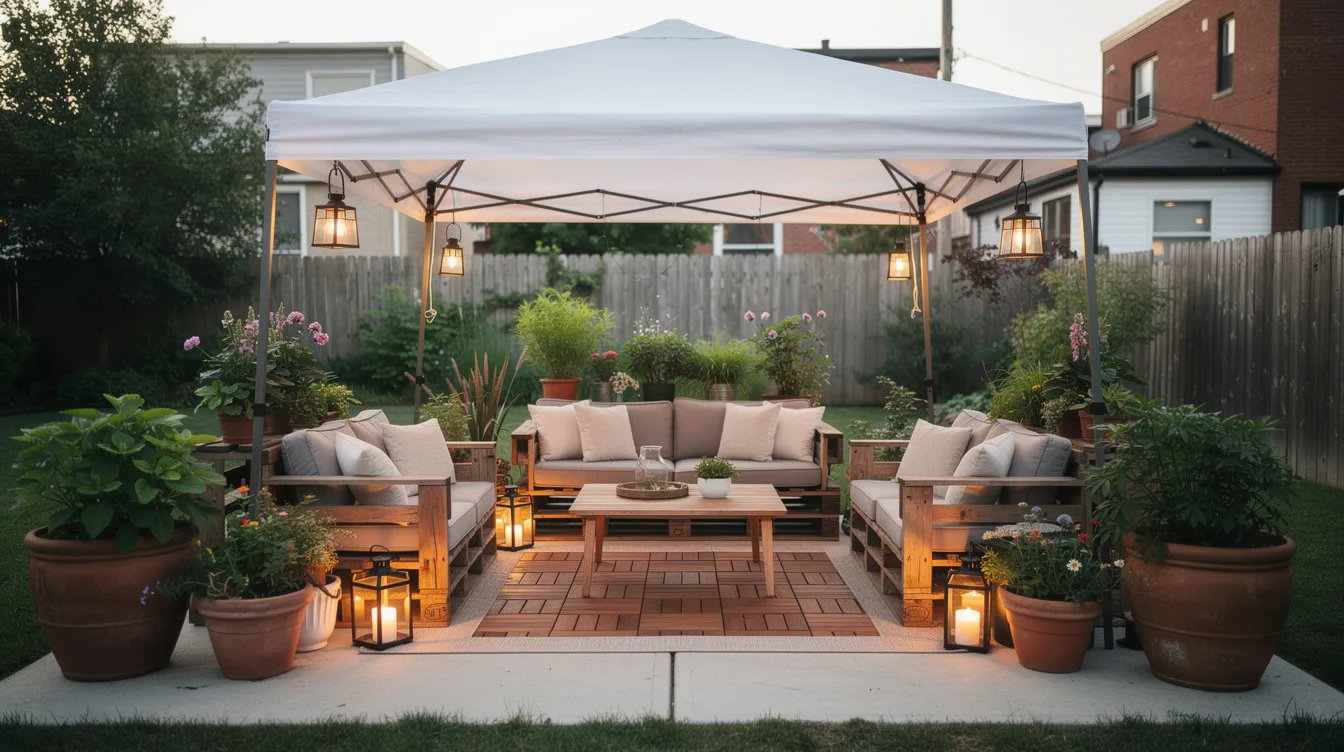
At 4 p.m., my renter backyard felt hotter than the street out front. The concrete held heat, the back wall threw it right back at me, and the only chair I owned was basically parked in a patch of sun that moved every twenty minutes.
I did not need a contractor, a permit fight, or a full makeover. I needed portable pieces that blocked sun, cooled the ground, and grouped the yard into usable zones I could pack up when I move.
Start With a 10×10 Shade Canopy
My backyard changed the minute I put up a 10×10 pop-up canopy over the hottest patch of concrete. A typical price at Amazon, Walmart, or Costco is about $130 to $220, and that is still cheaper than buying a full patio set you cannot use in peak sun.
I like this option because it feels big without feeling permanent. In many US cities, a small freestanding shade structure under roughly 120 square feet usually falls below permit triggers, but I’d still check local rules and my lease before buying anything tall.
Layer a Cantilever Umbrella for Low Sun
The afternoon glare was worse than the noon heat, so I added a IKEA SEGLARÖ umbrella near the seating zone. It is about 9 feet to 10 feet wide, and a typical price for a cantilever setup with a weighted base runs around $150 to $260 at IKEA, Wayfair, or Target.
This is the piece I recommend when you rent, because all the weight stays in the base and nothing goes into the ground. It also gives you flexible shade, which matters more than people think when the sun shifts across a small yard.
Cover Heat-Throwing Concrete First
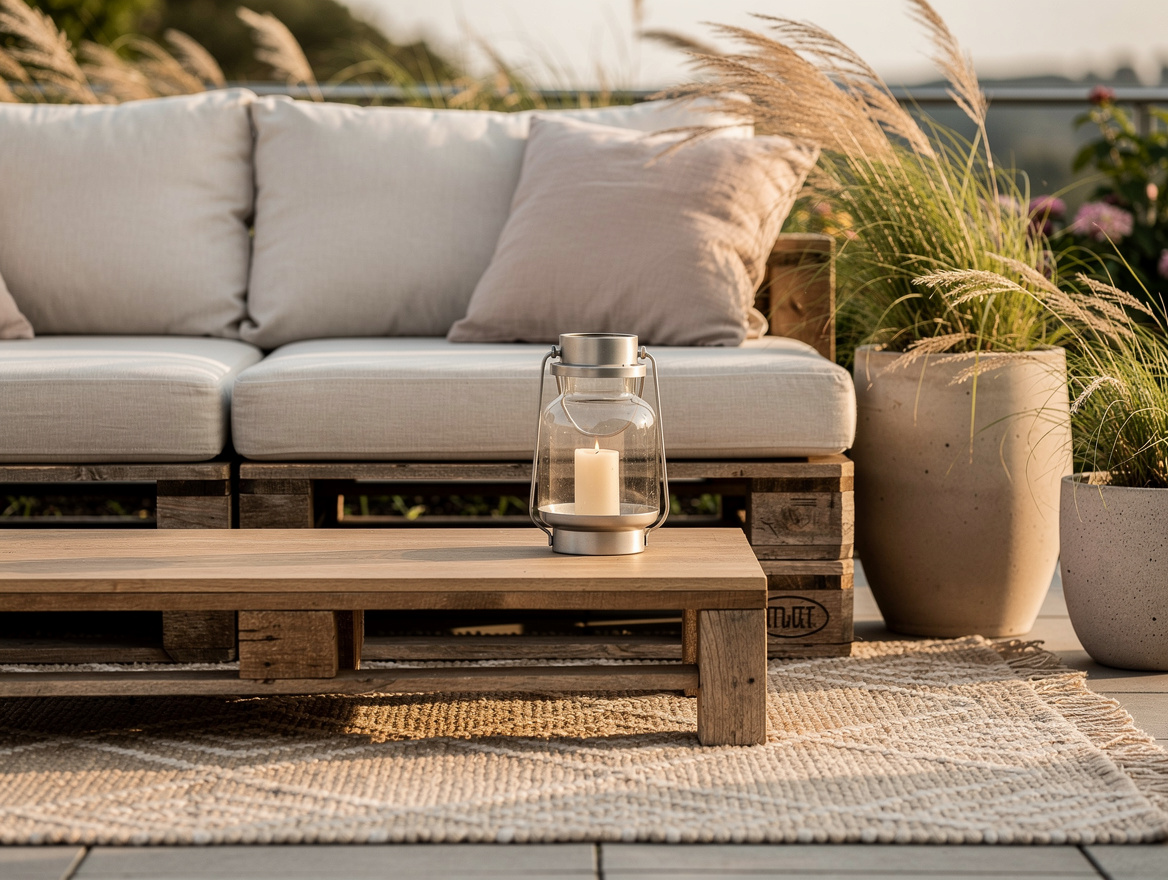
Hot concrete was the part I underestimated. I rolled out a outdoor rug in a typical 5×8 or 6×9 size, and the whole space stopped feeling like a skillet, plus the color break made the yard look intentional instead of leftover.
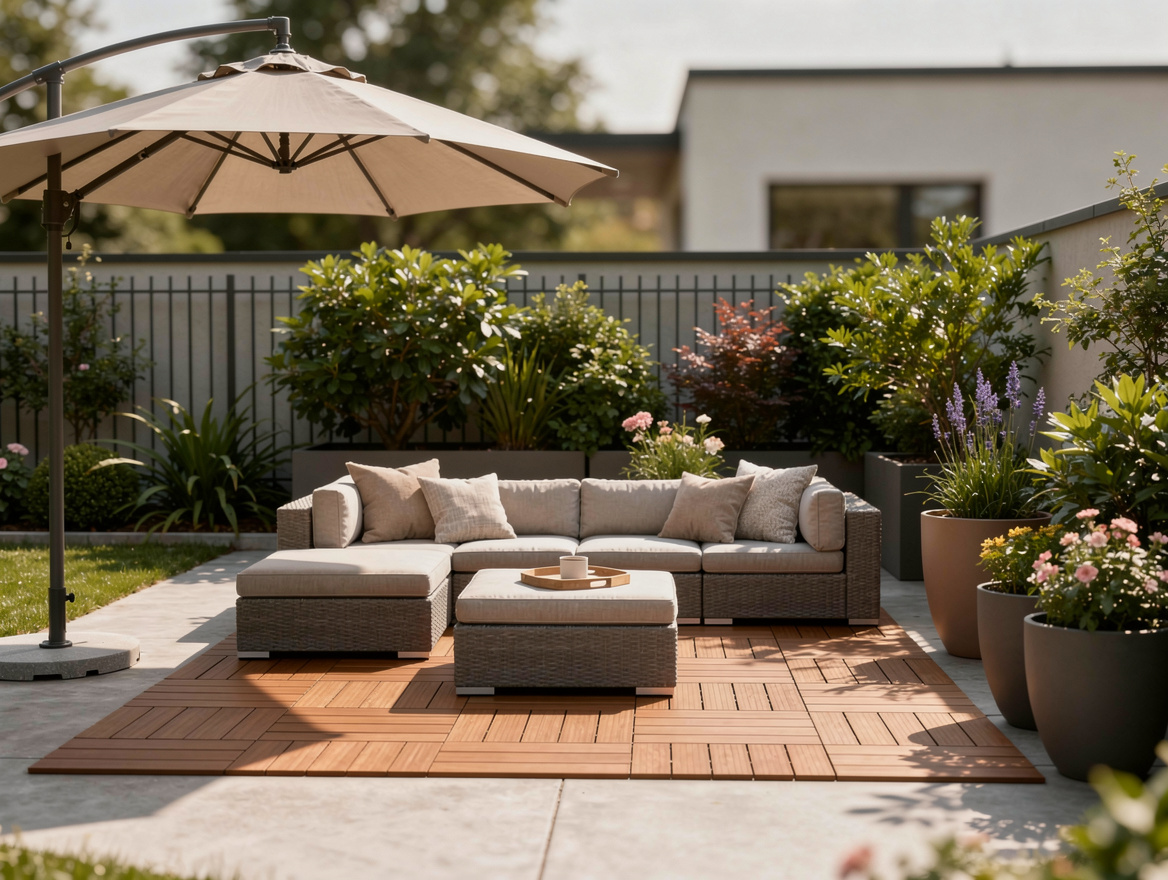
For a bigger reset, I clicked together IKEA RUNNEN deck tiles over the worst section. Typical pricing is about $2 to $4 per tile, or roughly $20 to $35 per square meter equivalent, so a small 10×10-foot zone can land around $180 to $300, and I think that is worth it if your slab absorbs heat all day.
Build a Movable Seating Island
I did not want to drag chairs around every weekend, so I made one fixed-feeling but fully portable zone with wood pallets. Standard pallets are usually close to 48×40 inches, and if you can source them cheaply, the frame may cost almost nothing beyond a few screws or heavy-duty zip ties.
Then I added pallet cushions from Amazon, where a typical seat-and-back set runs about $50 to $90. The look is casual, the seat height stays low, and it works especially well in a renter yard because every piece can be separated and moved out without drama.
If pallets are not your thing, a metal-framed conversation set from Wayfair or Walmart does the same job. Typical four-piece sets run about $250 to $500, and I would pick black or dark bronze over fake wicker every single time because it ages better in full sun.
Use Planters to Cool the Edges
The yard still felt harsh until I softened the perimeter with large resin planters. Big containers from Home Depot, Lowe’s, or Target usually cost about $25 to $60 each, and they do double duty by holding plants and visually blocking ugly fence lines or bare walls.
I went for tall grasses and leafy annuals because they add movement and a little evaporative cooling near the seating area. I would skip tiny decorative pots here, they disappear visually and do nothing for the heat problem.
If you want a shade sail look without making the space feel improvised, use weighted planters as the base for freestanding posts instead of attaching anything to the house. That setup still needs common sense and local rule checks, but it is far more renter-safe than drilling into masonry or fencing.
Finish With Portable Lights and Airflow
Once the sun went down, the space needed warmth, not brightness, so I used solar lanterns and a small string light run instead of one harsh flood of light. Typical lantern prices at Target, Amazon, or IKEA are about $15 to $40 each, and they make a bigger difference than another throw pillow ever will.
Airflow matters just as much as lighting. A portable outdoor fan from Amazon or Ace Hardware, often around $40 to $90, is the least glamorous purchase in the whole setup, but it is the one that makes July dinners actually possible.
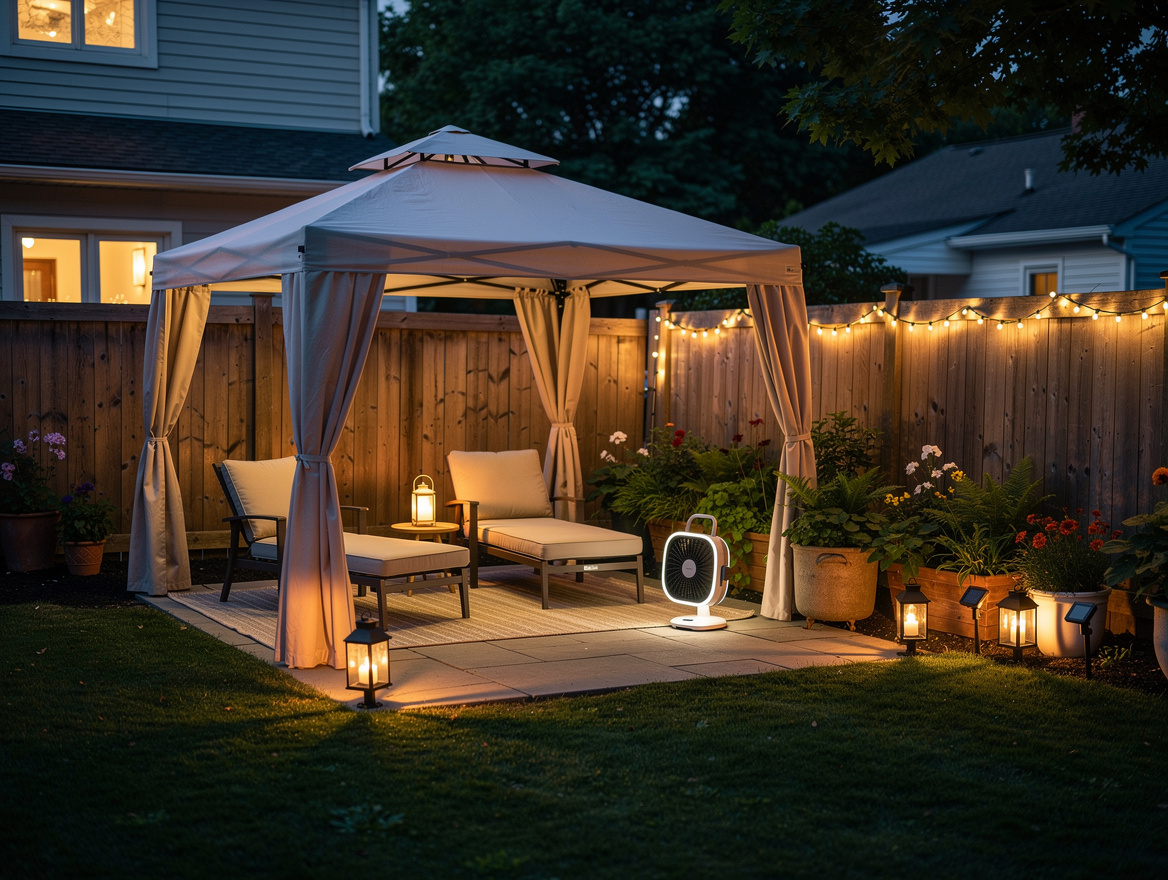
Start with shade over the hottest surface, then cover the ground, then build one seating zone around that core. Even a basic version, canopy, rug, cushions, fan, can make a small backyard feel usable again for roughly $400 to $900, which is a lot less than another summer spent avoiding it.
Mia Carter writes about small-space living and budget home makeovers. She has restyled three rentals and tests most ideas in her own 45 sqm flat.