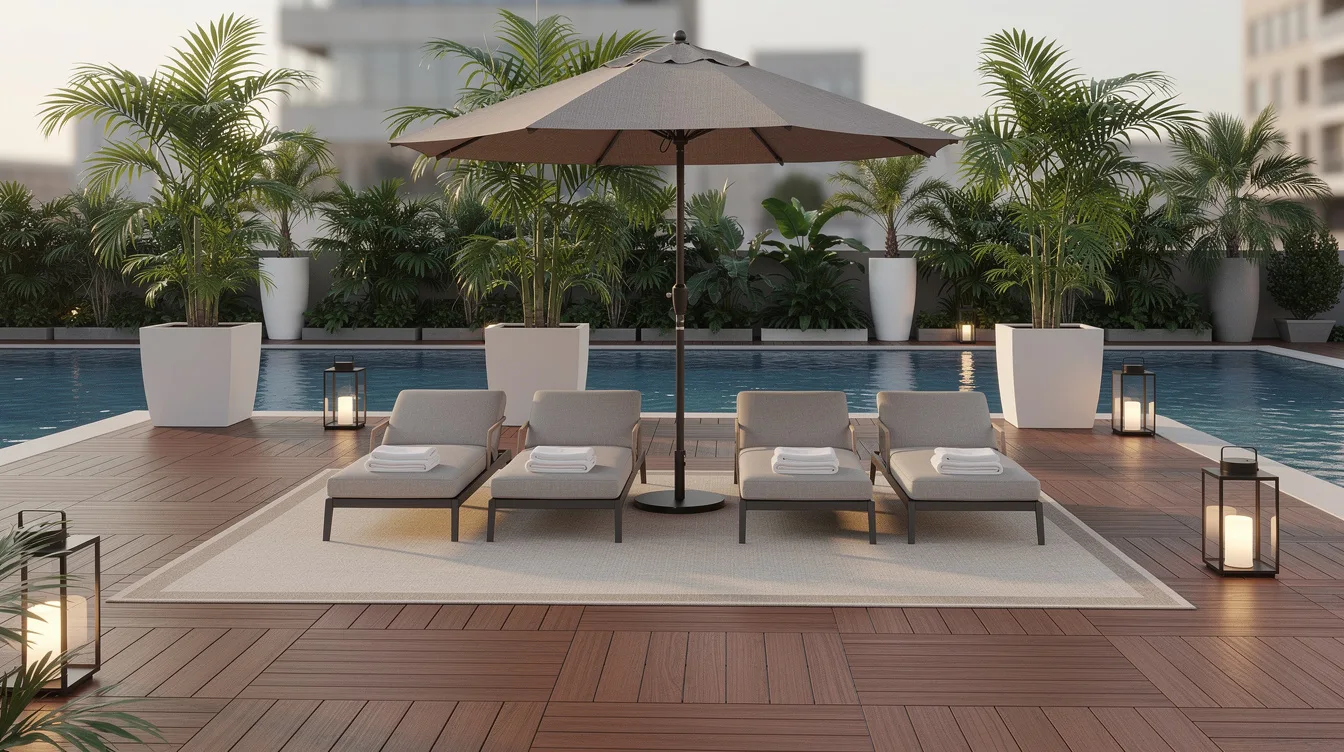
My pool deck had that familiar rental problem: faded concrete under bare feet, two flimsy chairs, and a plastic side table that made every afternoon feel temporary.
I wanted the calm look of a boutique hotel, but I wasn’t about to lose my deposit over drilled holes, mounted shade panels, or anything the landlord could call a “modification.”
Cover the worst concrete first
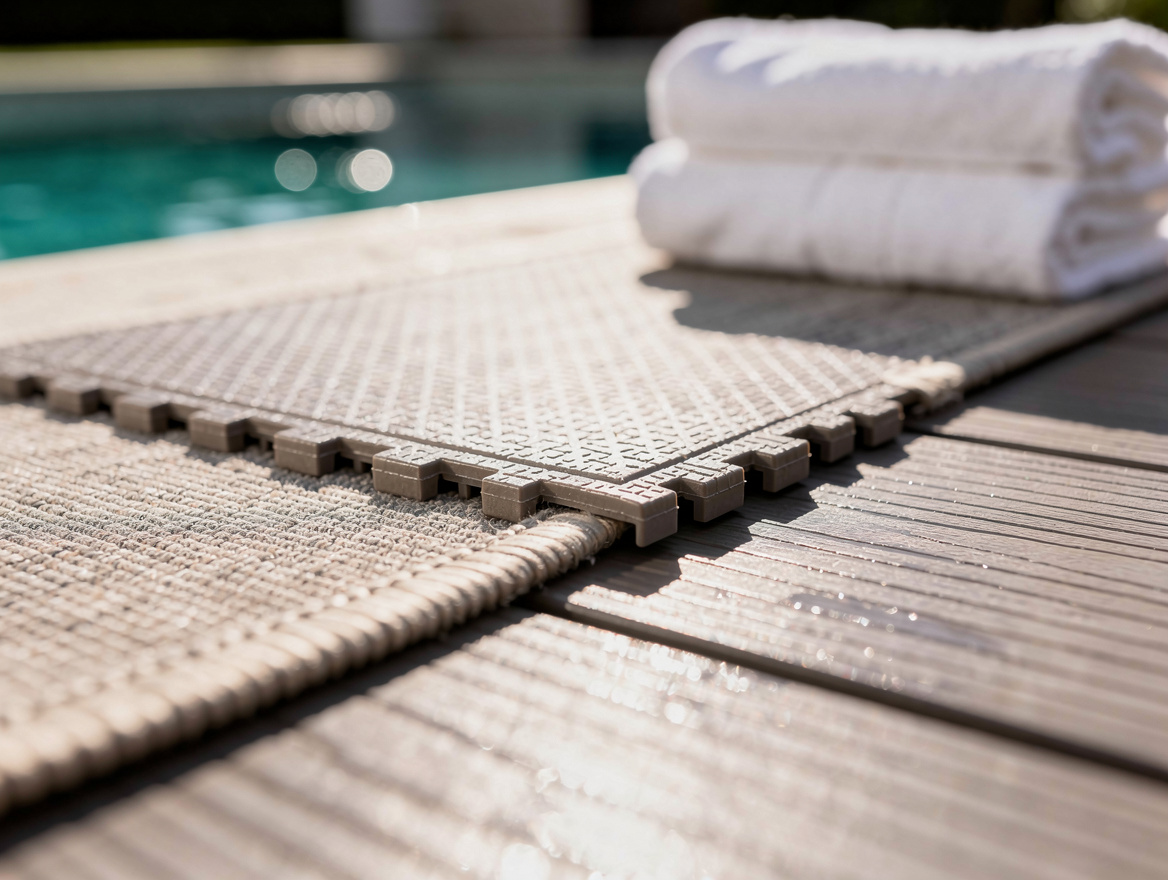
I started by covering the part of the deck that felt the most tired, not the whole perimeter. IKEA RUNNEN deck tiles are the cleanest rental move I’ve found because they snap together, lift back up later, and hide stained concrete fast.
A typical box runs around $30, and small pool decks usually need enough to frame a seating zone rather than the entire pool edge. I like the wood-look version better than gray because it warms up cold concrete and instantly cuts that apartment-complex feel.
If your deck gets intense sun, test one tile in the hottest spot before committing. Darker flooring can look rich, but pale brown or medium wood tones are easier on bare feet and look more like a hotel terrace.
Define one lounge zone with a large rug
Once the floor looked better, I added a real destination for the eye. A Target outdoor rug in a 8-by-10 or 9-by-12 size usually lands around $90 to $140, and that scale matters more than people think.
A rug that’s too small makes every chair look like it drifted there by accident. A larger one pulls the loungers, side table, and towels into one clear zone, which is exactly why hotel pools feel organized even when the furniture is simple.
I’d skip busy tropical prints here. A striped or textured neutral in sand, black, or faded navy looks sharper, hides splash marks better, and gives you room to add color with towels instead of locking the whole deck into one loud pattern.
Bring in shade that feels intentional
No hotel-style setup works without shade, and this is where rentals usually fall apart. A 9-foot patio umbrella from Amazon, Lowe’s, or Home Depot typically costs $60 to $120, and it does more visual work than almost any accessory on the deck.
The important part is the base. A fillable or weighted umbrella base usually adds another $50 to $90, but that’s the piece that keeps the whole setup from looking cheap or temporary.
I prefer a canvas color, black, or soft taupe canopy over bright aqua. Resort spaces rarely rely on novelty color for impact, and a neutral umbrella makes even budget seating look calmer, cleaner, and more expensive.
Swap flimsy seating for low, solid pieces
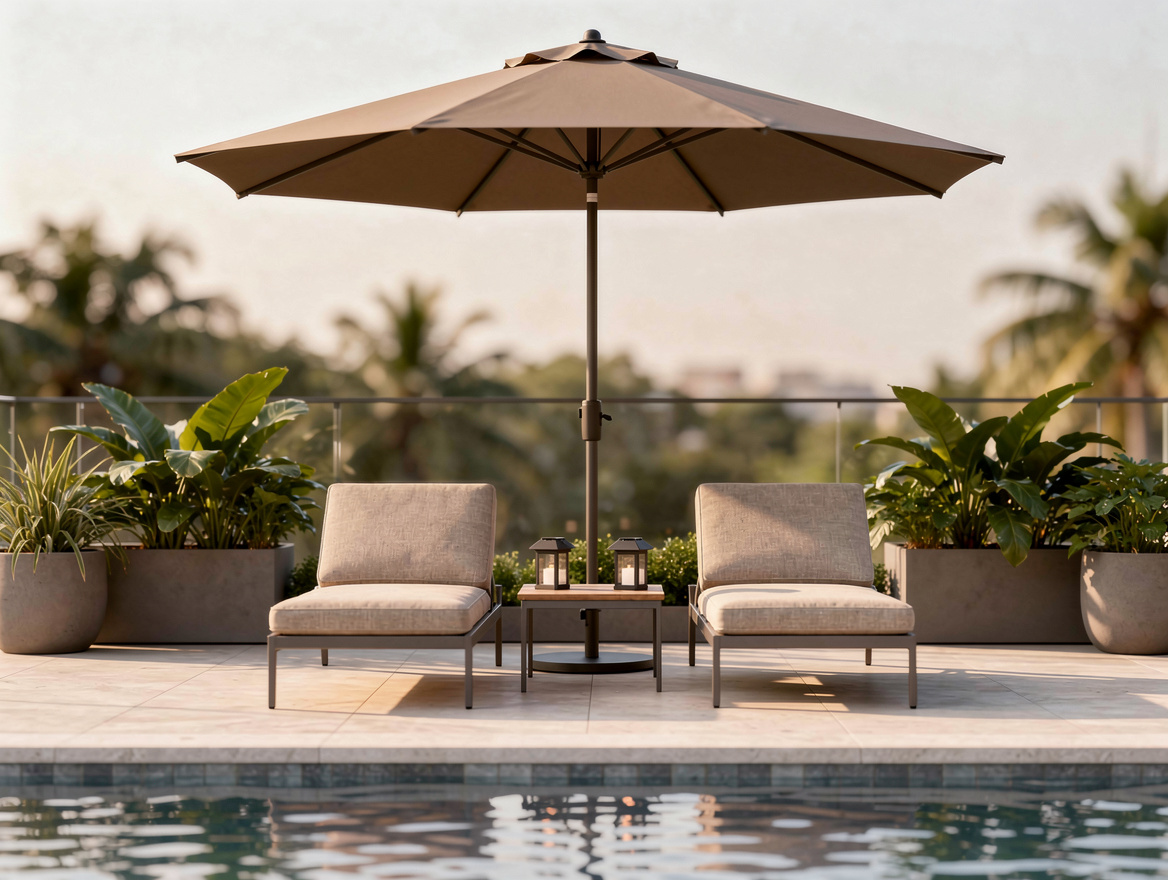
The biggest visual downgrade on most rental pool decks is skinny furniture with exposed tubing. I replaced that feel with Wayfair outdoor loungers and one low side table, because heavier-looking shapes read more upscale even when the materials are still weather-friendly.
A typical outdoor lounger often starts around $120 to $250 each, and a simple resin or acacia-look side table can come in around $40 to $80. That isn’t nothing, but two strong pieces beat a clutter of five weak ones every time.
If loungers aren’t realistic, use deep seat cushions on sturdy chairs and keep the profile low. Hotel decks work because the furniture feels grounded, and I’m convinced tall, flimsy chairs are one of the fastest ways to ruin the mood.
Layer lighting instead of relying on the pool light
At dusk, my deck used to disappear except for the harsh blue pool glow. Adding solar lanterns from Home Depot or Target changed the entire mood without one wire, and that’s exactly the kind of upgrade renters should chase.
Typical outdoor lanterns run about $20 to $35 each, and I like using three or five rather than a matched pair. A slightly uneven mix feels more relaxed, while perfect symmetry can make a small deck feel stiff and staged.
I also added one rechargeable table lamp on the side table for a softer poolside halo. Warm light is non-negotiable here, because cool white bulbs make wet concrete look harsher and bring back the apartment-patio energy you’re trying to escape.
Use textiles and planters to hide the rental feeling
This was the finishing move that made the deck look done. Walmart bath sheets in crisp white or cabana stripes, rolled into a basket or stacked on a bench, instantly signal pool retreat instead of “I brought out whatever towels were clean.”
Pool towels typically cost about $10 to $20 each, and I’d rather buy four matching ones than ten random colors. Matching textiles do the quiet design work that people usually expect furniture to handle.
Then I used two large Ace Hardware planters with palms or grasses to block ugly corners and pool equipment lines. Planters in the 15- to 20-inch range often start around $30 to $70 each, and they’re worth it because they soften hard edges without breaking a single lease rule.
If you still have an eyesore like a hose reel or a utility box, tuck a rolling cart nearby with sunscreen, glasses, and a pitcher. Functional styling sounds fussy, but around a pool it actually keeps clutter from creeping back the next morning.
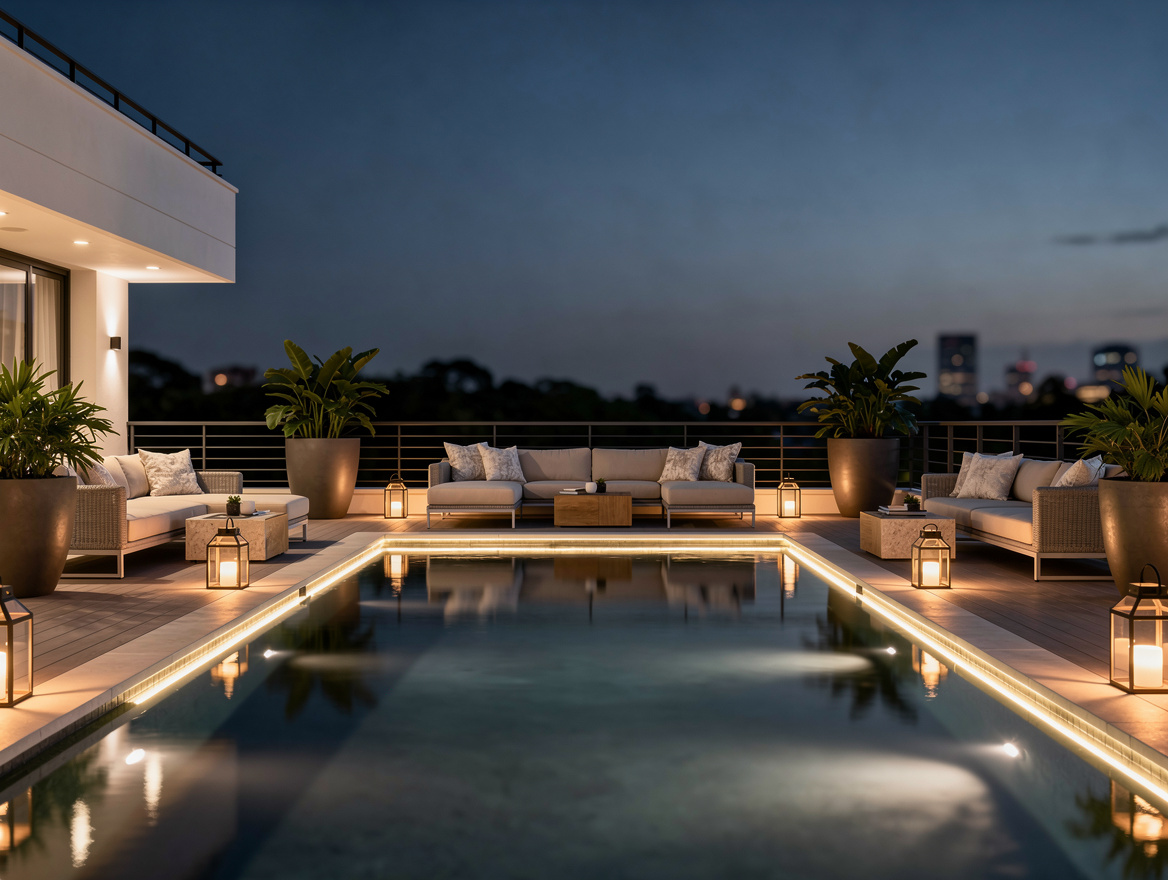
Start with the floor and shade before you spend a dollar on decor, because those two upgrades change the deck fastest. If your budget is tight, build the retreat in that order and the rest will look deliberate instead of patched together.
Mia Carter writes about small-space living and budget home makeovers. She has restyled three rentals and tests most ideas in her own 45 sqm flat.