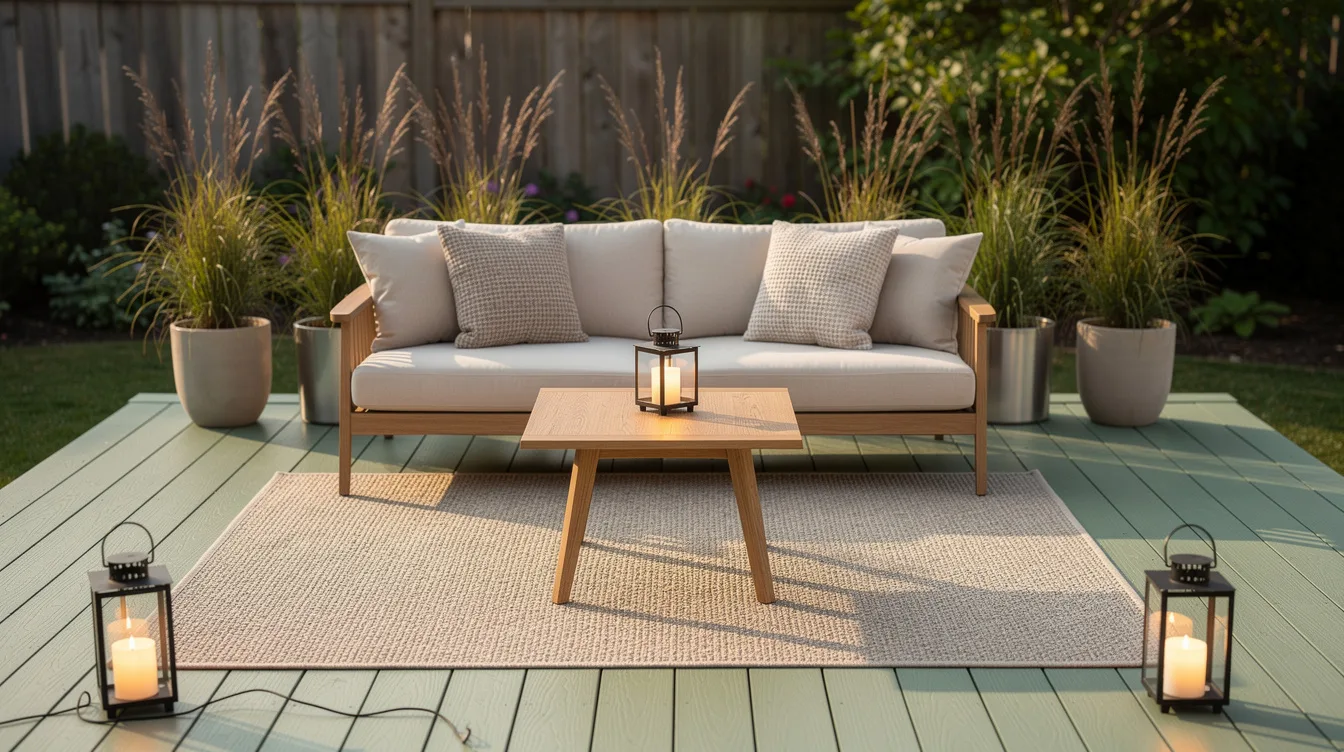
The fastest way to ruin a quiet evening outside is a deck that still looks like a pass-through zone for grill tools, seed packets, and one lonely folding chair. When the boards are faded, the cushions feel thin, and every hard surface catches the light, the space never quite lets your shoulders drop.
The good news is that a small deck does not need a full makeover to feel like a staycation corner. Paint, woven texture, and a few smart layers can do a lot in two hours if you focus on the surfaces your eyes land on first.
Wash the Visual Noise Away With One Paint Color
If your deck feels jumpy, start with Home Depot exterior porch and patio paint in one muted tone. A soft clay, dusty sage, or warm gray settles the whole view fast, and on a small footprint, one color usually works better than mixing rail, floor, and furniture shades.
A typical gallon of deck paint runs about $35 to $60, and for many small decks, that is enough for a noticeable reset in under two hours. I would skip bright white here, it shows pollen and scuffs too quickly to feel restful.
Anchor the Floor With a Woven Outdoor Rug
A deck stops feeling like leftover lumber once you drop a Wayfair polypropylene outdoor rug under the seating area. Woven texture matters more than pattern, so I would take a simple stripe or faded solid over anything loud and beach-themed.
For a small setup, a typical 5-by-7 rug costs around $40 to $90, while an 8-by-10 usually lands closer to $60 to $120. I like a rug that reaches just past the front legs of the chairs, because tiny rugs make small decks feel even smaller.
Pile On Cushions That Feel Soft, Not Fussy
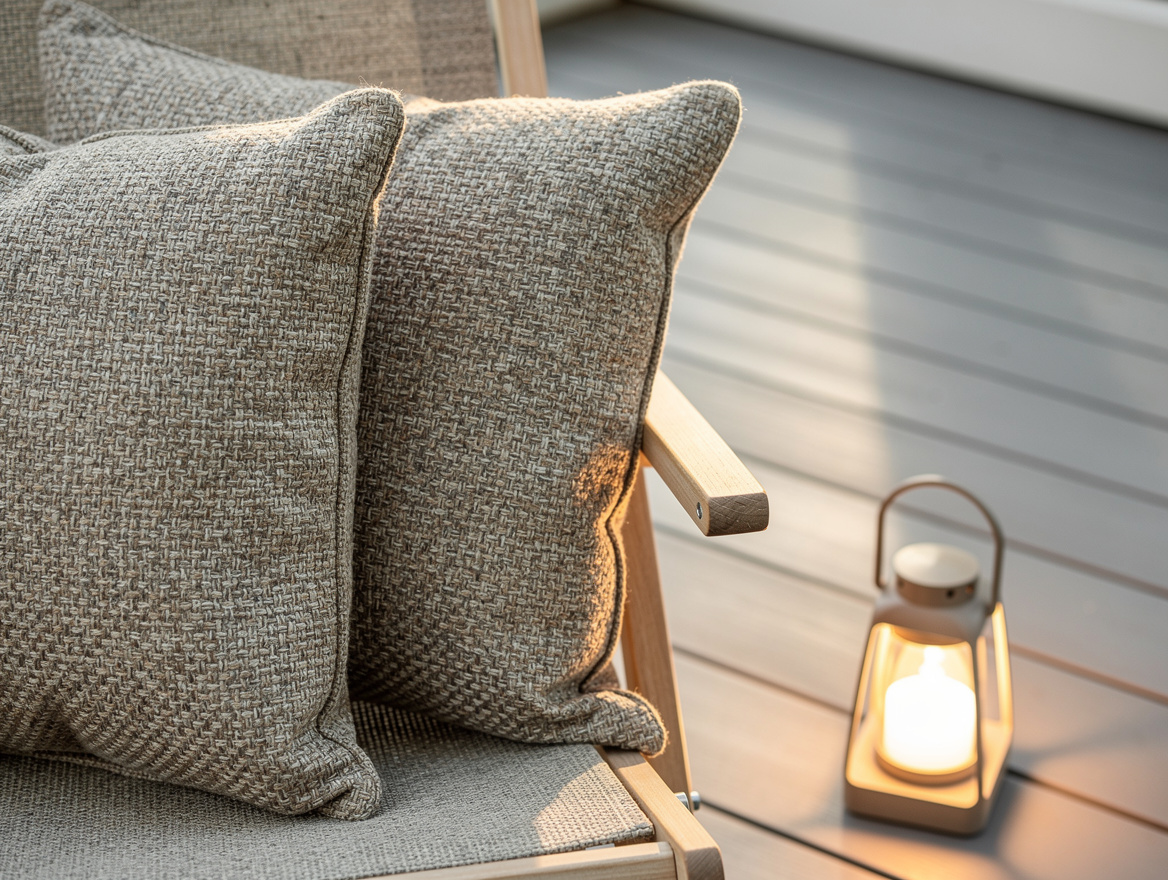
This is where the staycation mood really shows up: a stack of Target outdoor throw pillows in woven neutrals, faded blue, or sand. Two seat cushions and two smaller pillows are usually enough, and anything beyond that starts to look like you are storing the whole patio set outside.
A typical outdoor pillow costs about $12 to $25, and that is one of the fastest upgrades per dollar on a deck. I would avoid shiny fabrics, because matte woven covers read calmer and more expensive even when the budget is modest.
Add One Low Table for Drinks, Books, and Bare Feet
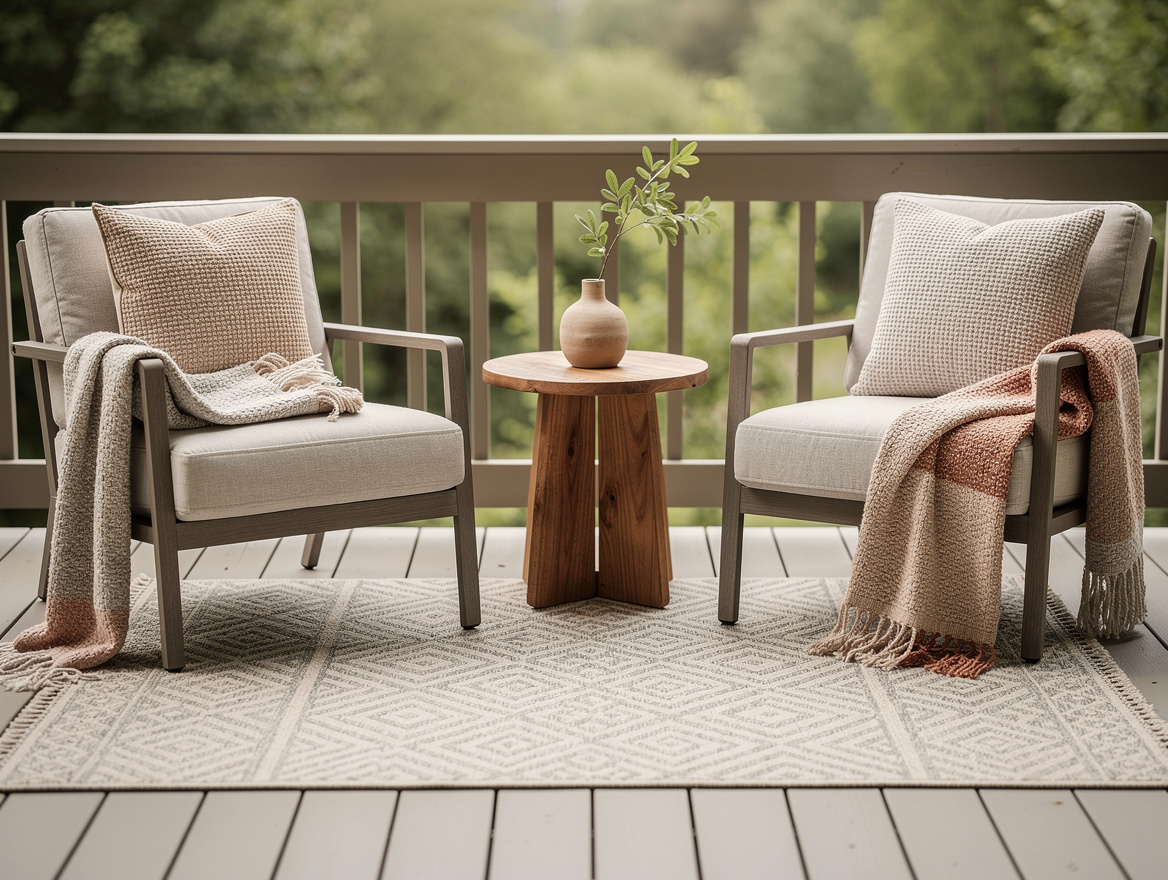
A cramped deck gets better when every piece earns its spot, and a IKEA acacia side table does exactly that. One small table holds iced coffee, sunscreen, and a paperback, and it also gives the seating area a center so it feels intentional instead of temporary.
A typical outdoor side table from IKEA, Walmart, or Amazon sits around $25 to $60, and that range is enough for something durable and compact. I strongly prefer a round table here, because sharp corners on a tight deck get annoying fast when you are carrying a tray.
Layer Lantern Light Instead of One Harsh Fixture
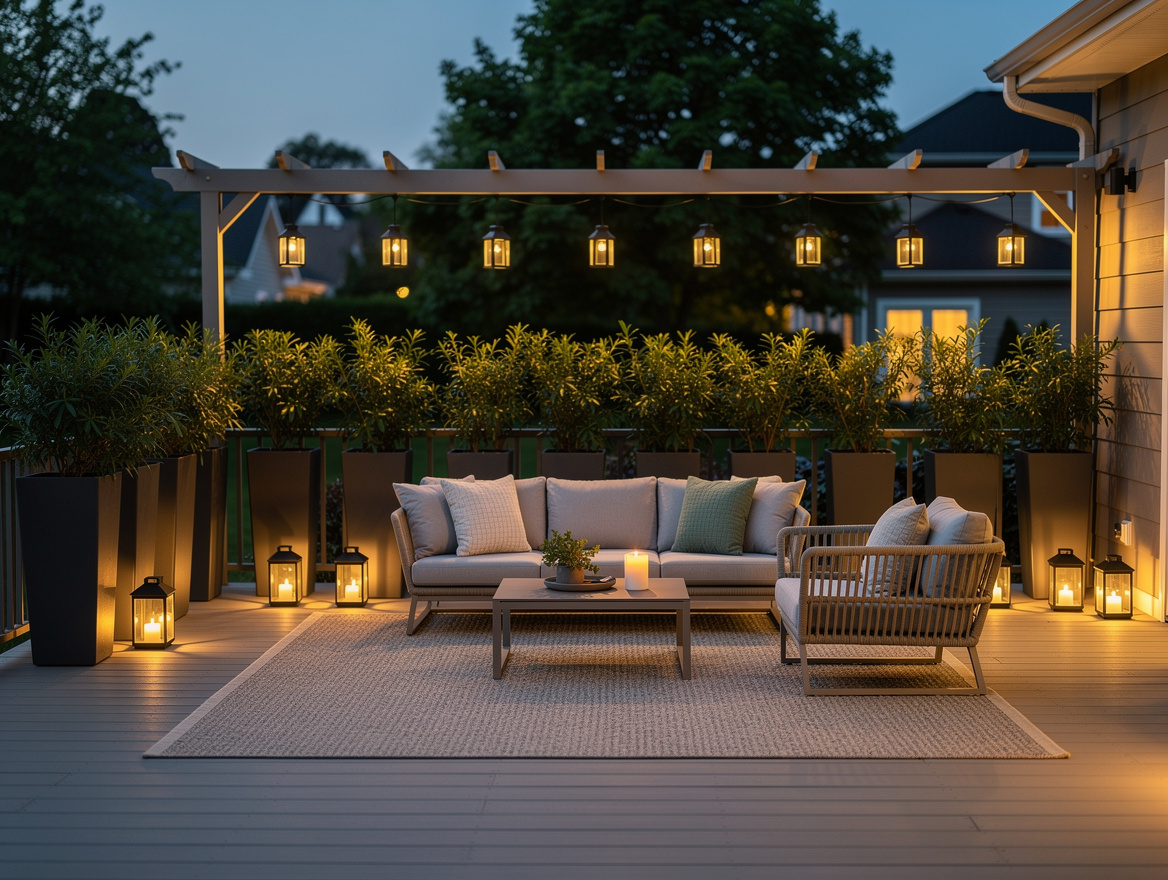
Overhead light can make a deck feel flat and exposed, especially at dusk. A pair of Lowe’s solar lanterns or battery candles at different heights gives you softer light pools, and woven or rattan-look shades help the space feel warmer right away.
A typical lantern costs around $20 to $40, and solar string lights often fall near $15 to $30. I would rather use two or three dim sources than one bright bulb, because calm spaces need shadows and contrast, not backyard stadium lighting.
Tuck Privacy Into the Corners With Fabric and Planters
You do not need a full renovation to make a small deck feel protected. A Costco cedar planter or a simple box from Ace Hardware with tall grasses, plus one outdoor curtain panel or woven screen, can block the awkward side view that keeps the whole area from relaxing.
A typical planter setup with potting mix and one plant often costs about $30 to $80, and outdoor curtain panels usually start around $20 to $35. I think this is the step most people skip, but even partial screening changes the mood more than adding another decorative object ever will.
Start with the floor first: paint if the boards look tired, rug if the boards are decent. Once the base feels quiet, add cushions and low light, and the whole deck will read calmer without turning into a weekend-long project.
Mia Carter writes about small-space living and budget home makeovers. She has restyled three rentals and tests most ideas in her own 45 sqm flat.