I knew my bedroom curtains were wrong when the sunrise hit the wall at 6:12 and lit up the corner of my dresser before my alarm. The fabric looked fine at night, but in the morning it was basically glowing, and the streetlight outside stayed visible long after I wanted the room dark.
That’s why the best bedroom curtain ideas right now are less about decoration alone and more about control. Light, temperature, softness, and how the panels actually fall matter a lot more than people think.
Start With a Two-Layer Setup
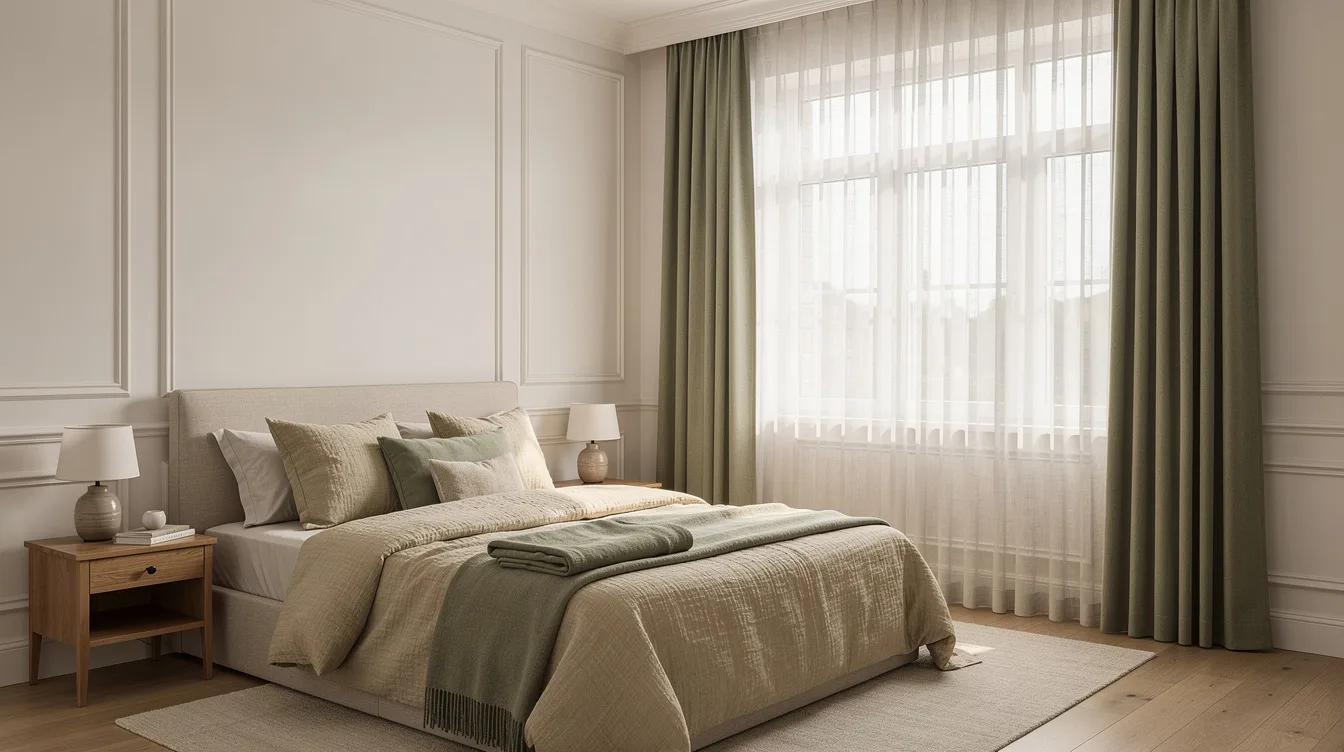
If you want one setup that works in almost any bedroom, use a double curtain rod with a blackout panel on the outside and a sheer panel underneath. It gives you darkness at night and filtered daylight in the morning without making the room feel shut down all day.
I think this is the smartest layout for city bedrooms and for anyone who sleeps lightly. A typical pair of blackout panels from Amazon or Target often starts around $25 to $60 per panel, and a basic sheer panel usually lands around $15 to $35.
The look is cleaner when both layers reach the floor. Short curtains still read as temporary to me, even when the fabric is nice.
Pick Blackout Fabric for Comfort, Not Just Darkness
A bedroom curtain should help you sleep, and that’s why thermal blackout polyester keeps showing up in practical 2026 picks. It blocks more light than airy fabrics and usually helps with heat and outside noise too.
If your room faces traffic, early sun, or a neighbor’s security light, this is the fabric I’d choose first. Panels sold at Walmart, Wayfair, and Home Depot in common sizes like 52 by 84 inches or 52 by 96 inches are easy to find, and those dimensions fit a lot of standard US windows.
My opinion is simple: for sleep quality, decorative semi-sheer curtains alone are a weak choice. A bedroom should be able to get properly dark when you need it.
Use Linen or Cotton Gauze When You Want a Softer Wake-Up
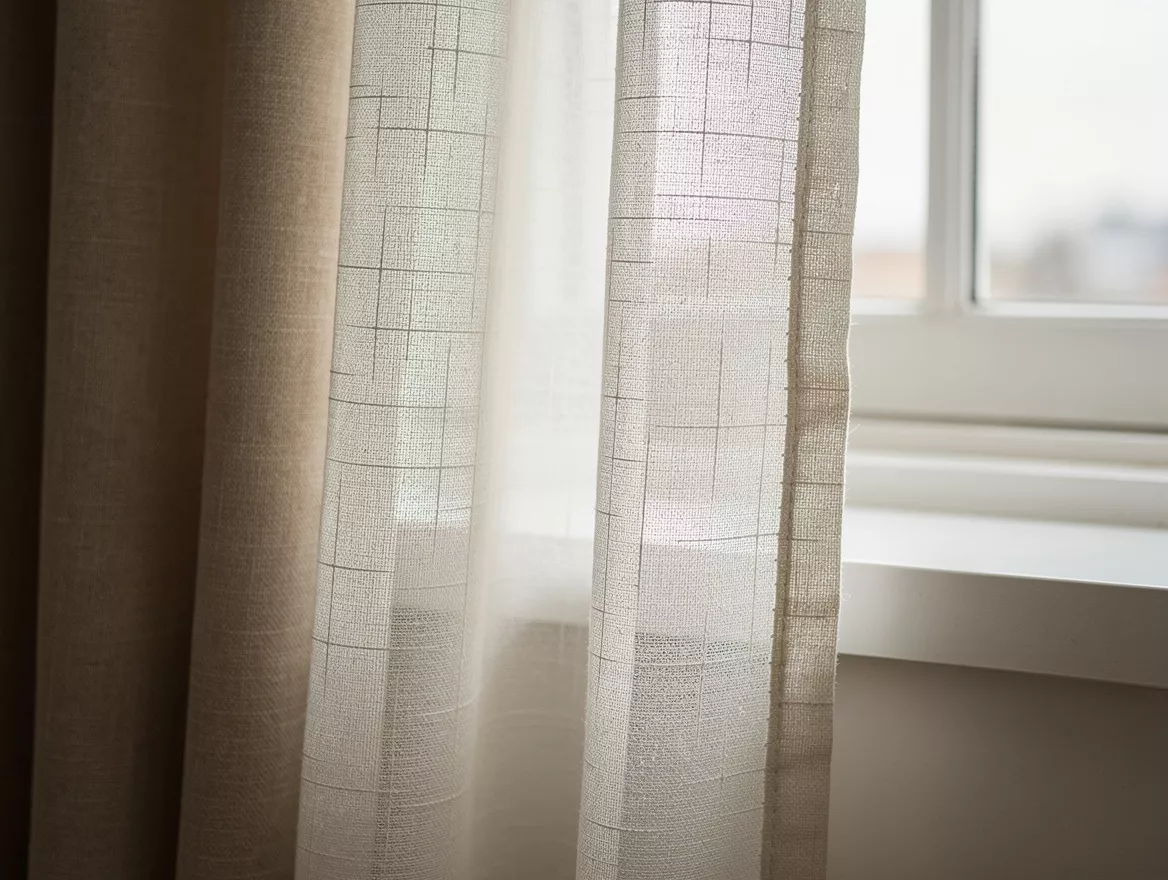
If total blackout feels too heavy, go with linen-look curtains or cotton gauze panels. They soften the room fast and let in a gentler morning light, which works well in bedrooms where you don’t need pitch-black conditions.
IKEA and Wayfair both tend to have the kind of textured neutrals people actually want right now: off-white, warm camel, mineral beige, and soft sage. That lightly crinkled finish matters because it looks relaxed without trying too hard.
I like gauze best as the inner layer, not the main privacy layer. It has a lived-in softness that feels current, but by itself it rarely does enough for light control.
Hang the Rod Higher and Wider Than the Window
This is the move that makes average curtains look more expensive. Mount the curtain rod close to the ceiling, or about 4 inches below crown molding if you have it, then extend it roughly 8 to 12 inches past each side of the window.
That wider span lets the fabric stack off the glass when open, so you keep more daylight. It also gives you that hotel-style fullness people love, especially with full-length panels that just touch the floor or lightly puddle.
I would skip stingy width every time. Curtains that barely cover the frame make the whole room feel flatter and shorter.
Keep the Color Palette Quiet but Warm
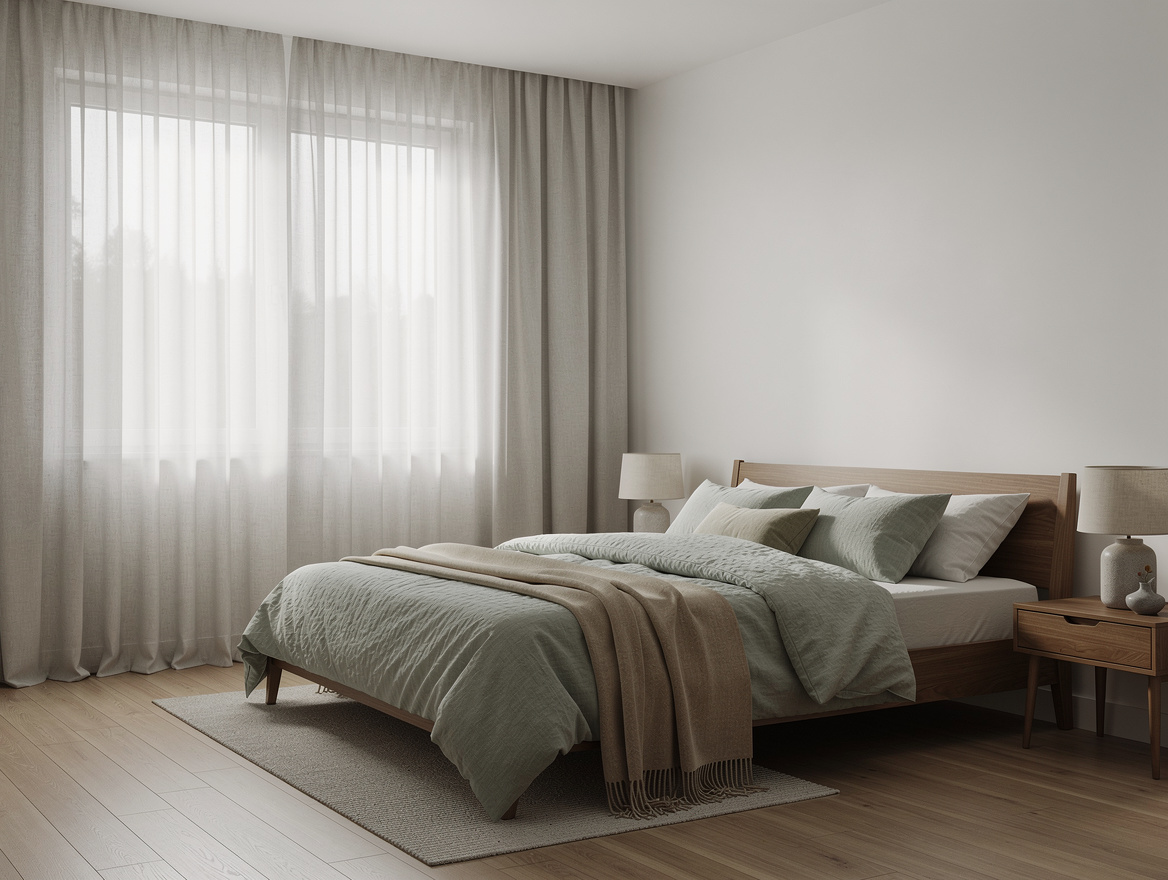
The easiest colors for a bedroom in 2026 are still the calm ones: off-white, beige, camel, eucalyptus, sage, and light earth tones. They work because they soften the room without making it look washed out.
If your bedding already has pattern, I’d stay with solid curtains in a textured fabric. If the room is plain, a subtle pattern like a tone-on-tone vertical stripe or a very open gingham can add interest without making the space busy.
Target and Amazon are good places to watch for those quiet patterns at a lower price point. Bold contrast curtains can look great in a living room, but they usually feel too active for sleep space.
Match the Curtain Weight to the Room’s Real Needs
A lot of bad curtain choices happen because people shop for style before function. A west-facing bedroom, a nursery, and a guest room do not need the same fabric weight.
For hot rooms or spaces with strong afternoon sun, choose lined blackout panels. For a calm guest room or a shaded bedroom, linen-blend curtains with a sheer backing may be enough and will feel less heavy during the day.
This is where Lowe’s, Ace Hardware, and Home Depot can be surprisingly useful, especially if you also need better rods, brackets, and light-blocking wraparound hardware. Better hardware fixes a lot of side-light problems that people wrongly blame on the fabric.
Spend Where It Shows and Save Where It Doesn’t
You do not need luxury curtains to get a polished bedroom. Spend more on the visible outer layer, especially if it’s a linen-blend panel, and save on the inner sheer voile, which is mostly there for daytime privacy and softness.
A practical budget often looks like this: around $30 to $70 per blackout panel, or about $20 to $50 for sheers, depending on size and brand. Amazon, Walmart, and IKEA usually cover the budget end well, while Wayfair is useful when you want more texture or longer lengths.
I’d also budget for fullness before I’d budget for fancy trim. Two skinny panels never look as good as enough fabric with a clean hem.
Begin with the layer that solves your biggest problem first. If sleep is the issue, buy blackout panels before anything else, then add a sheer once the room already feels darker, quieter, and easier to wake up in.
Mia Carter writes about small-space living and budget home makeovers. She has restyled three rentals and tests most ideas in her own 45 sqm flat.