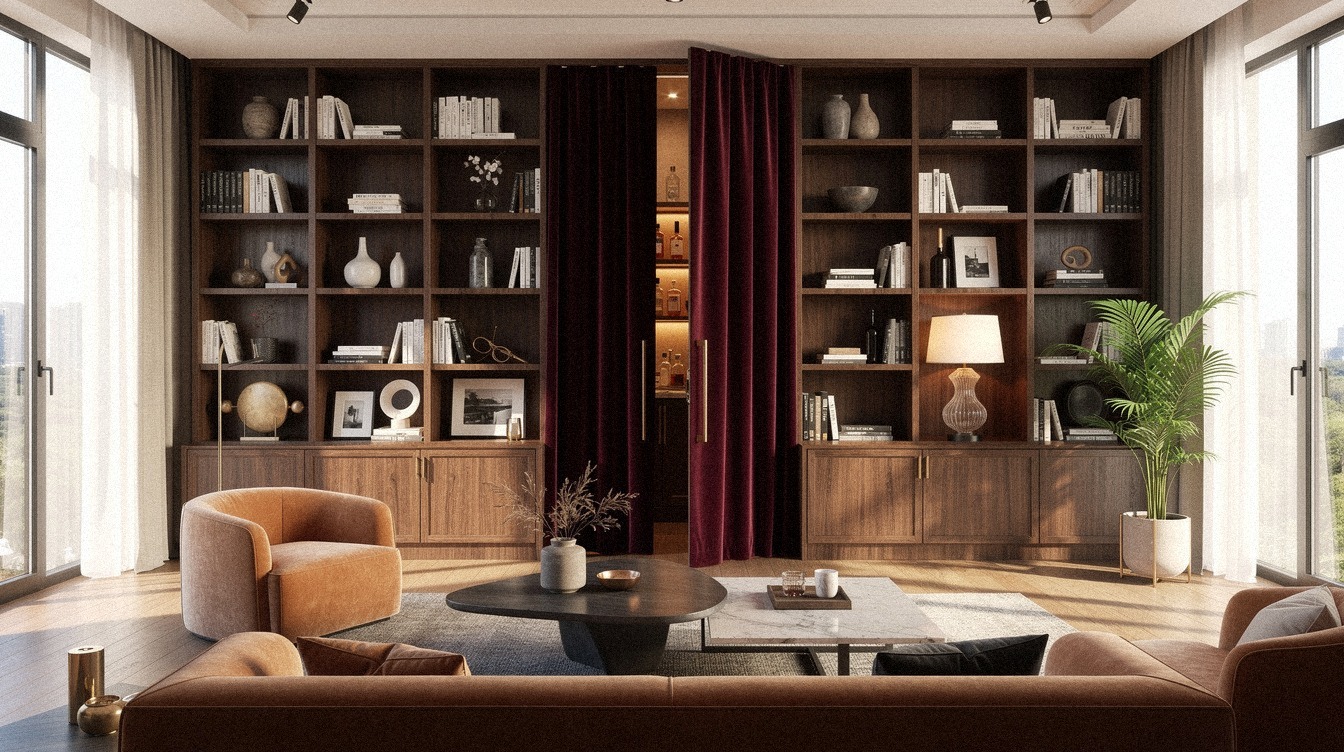
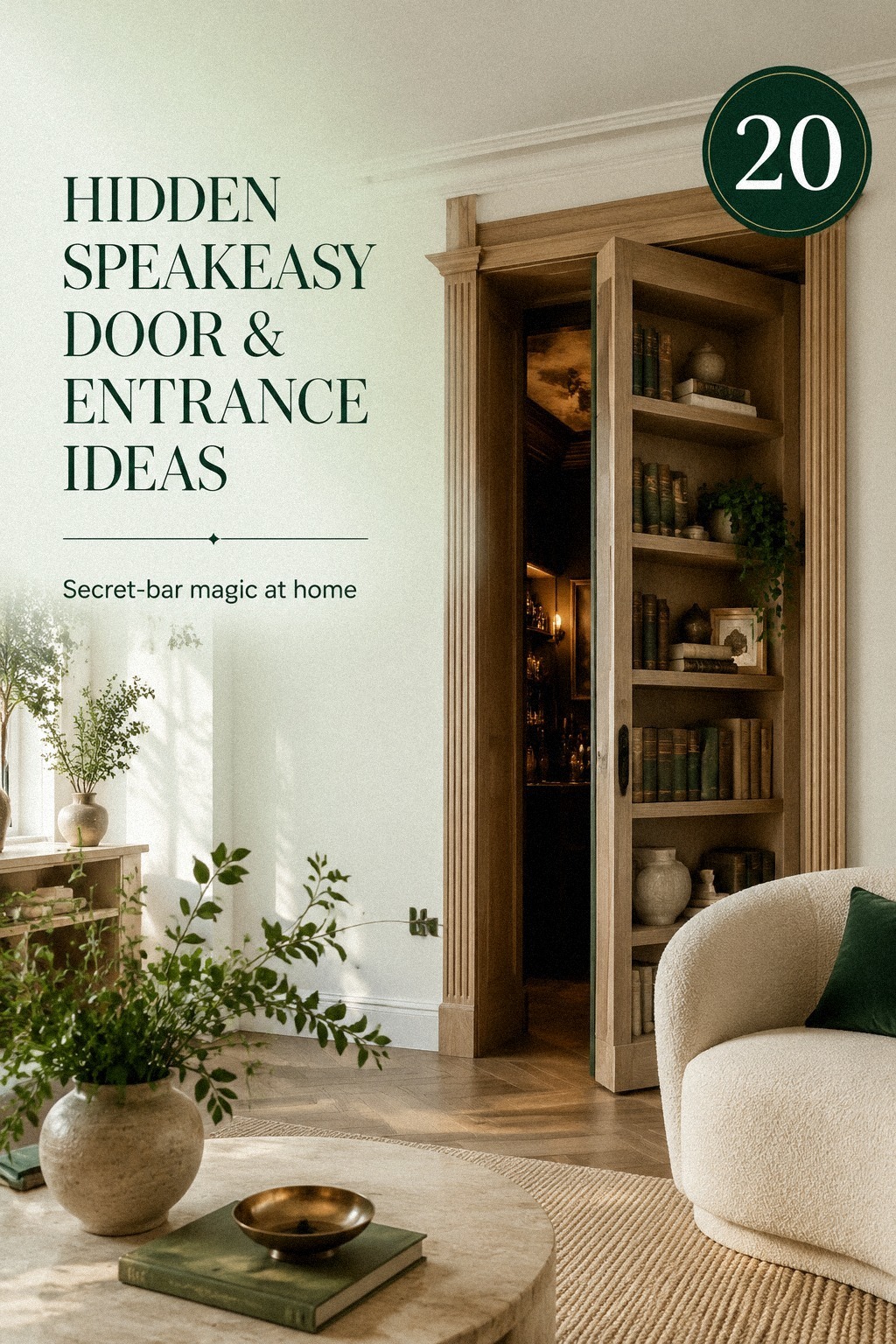
Hidden speakeasy door ideas can make a living room feel richer, quieter, and far more custom than a standard bar cart ever will. I learned that after hiding one opening so aggressively that guests walked straight into the wall, which was funny once and annoying after that. The fix wasn’t more drama. It was better cues, warmer materials, and one clear reason for your eye to pause.
- Disguise a bookcase as a velvet lounge entrance (The Velvet Threshold Rule)
- Panel the fireplace wall with a hidden pivot
- Camouflage the door inside walnut picture moulding
- Trigger a mirror door with brass sconces
- Slide a bar cabinet across the entrance
- Wrap the opening in fluted oak panels (The Flute-and-Glow Method)
- Hide the latch behind framed vintage art
- Conceal the passage with floor length drapery (Drapery over drywall)
- Build a faux library wall with rails (The Borrowed-Library Method)
- Frame a secret doorway in smoky glass (What if the glass only hinted?)
- Mask the entrance behind a cocktail niche
- What does the lighting behind the door do for the mood?
- The hardware that quietly gives it away (or saves it)
- Is a bookshelf enough on its own?
- How do you hint without telegraphing?
- The small budget version that still wows
- One paint decision that changes everything
- Skip these shortcuts (they always look fake)
- Common mistakes I keep spotting
- What about a curtain in a tight modern room?
1Disguise a bookcase as a velvet lounge entrance (The Velvet Threshold Rule)
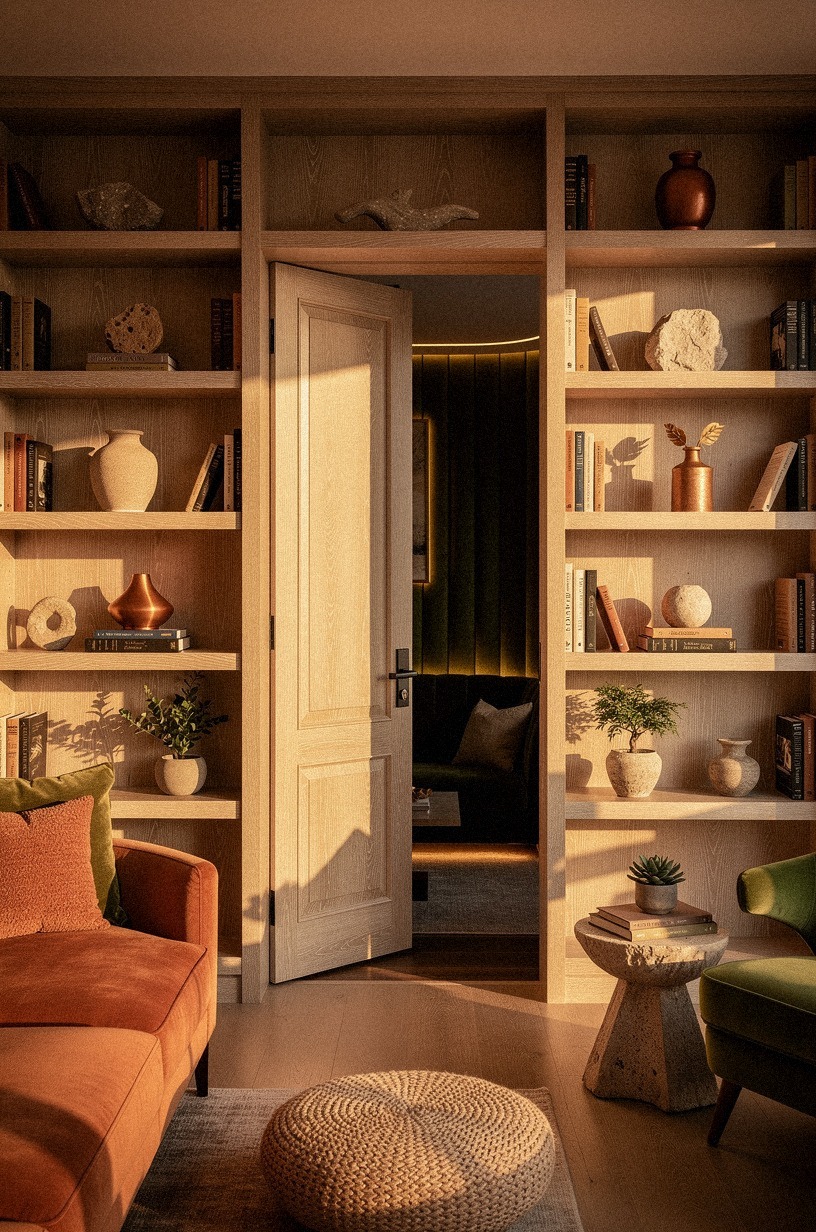
Start with a full-height cerused white oak bookcase wall, not a skinny fake shelf that stops short of the crown. If you want this to read like built-in architecture, your shelves need enough depth to hold real hardcovers, objects, and a lamp, usually 10 to 12 inches. I made mine too shallow once, and you could tell from across the room that the door was pretending.
Then give your eye one soft clue. A glow of mohair velvet behind the opening works because you see warmth before you understand the plan. Keep the shelf styling tight on the moving panel so your books don’t shift every time you enter.
A pair of low bowls. Dark spines.
One box for matches. If you love spaces that feel discovered instead of staged, the mood in this hidden West End gems story is the right energy to borrow.
I’d skip fake library wallpaper here. You need real shadow lines, real shelf depth, and hardware that doesn’t fight you when your hands are full. And if your lounge behind the door glows amber instead of bright white, guests will look twice every single time!
2Panel the fireplace wall with a hidden pivot
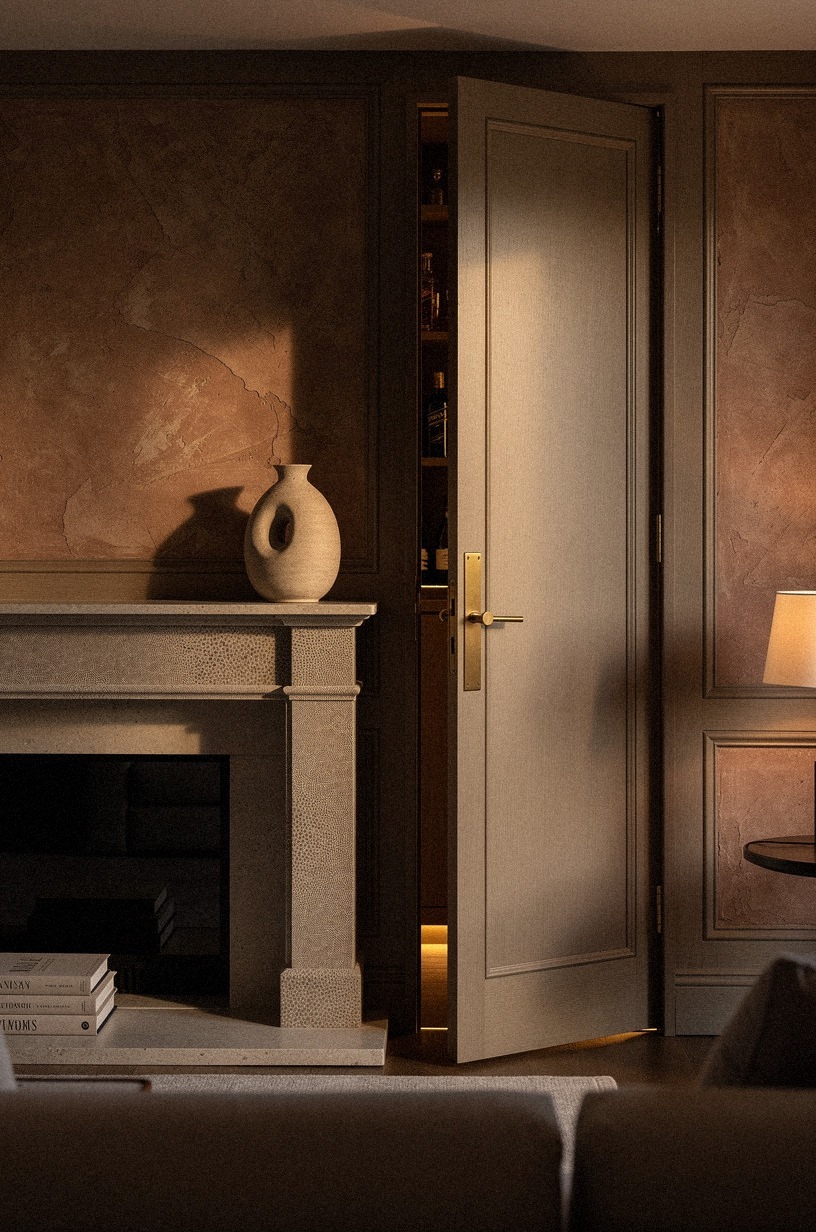
Treat the fireplace wall as one calm plane in Benjamin Moore Revere Pewter HC-172, then let the hidden pivot disappear inside the panel rhythm. This works best when the stiles and rails stay consistent on both the fixed wall and the moving slab. You want your eye reading symmetry first, not hunting for a gap.
A pivot beside the hearth needs breathing room, so leave at least a few clean inches between the firebox trim and the door seam. And don’t crowd it with a bulky chair.
If your sofa is 35 to 40 inches deep, pull the seating group back enough that the panel can open without clipping a corner table. I like this more than a visible bar door because the fireplace already acts like the room’s anchor.
Why compete with it?
The part that worked in my own living room was restraint. Aged bronze hinges, not shiny brass.
Slim reveals, not chunky battens. For moody inspiration, I keep coming back to this piece on Europe’s most spectacular hidden bar, because it understands that anticipation matters more than showing everything at once.
3Camouflage the door inside walnut picture moulding
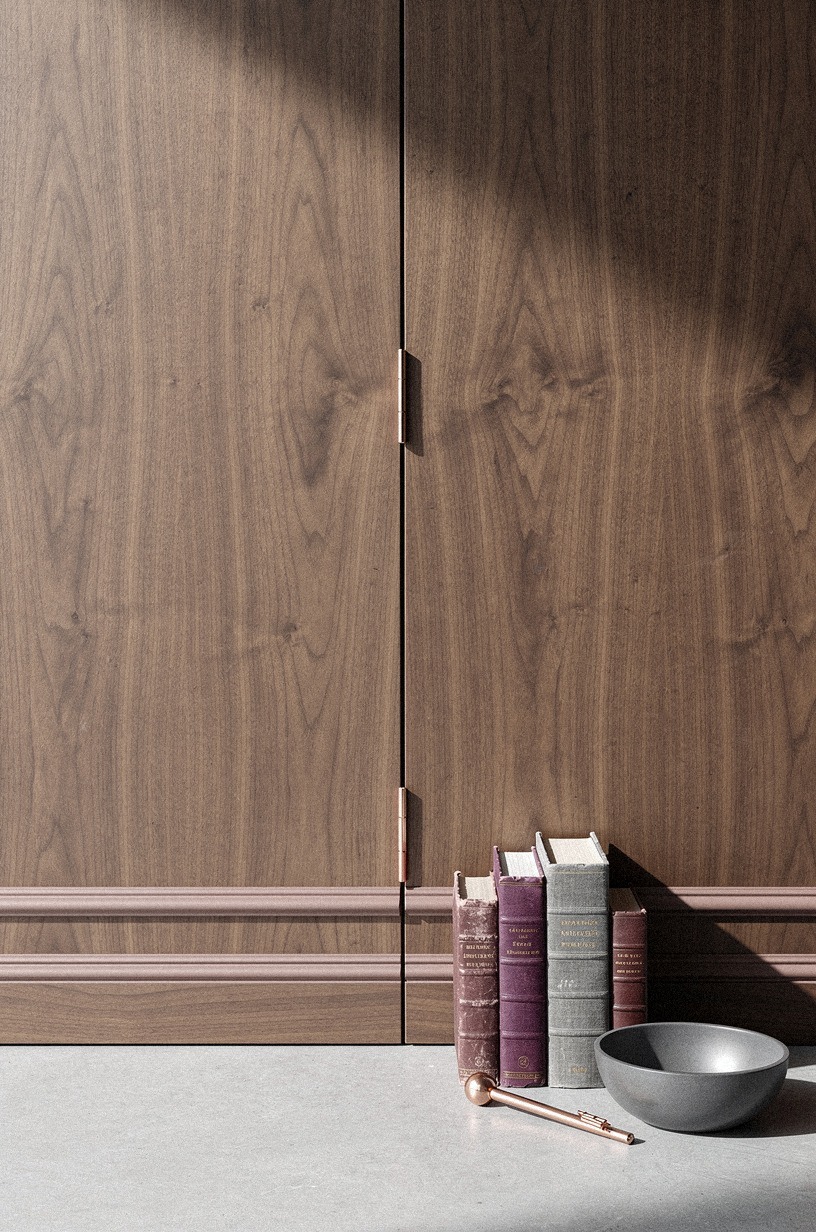
Use book-matched American walnut veneer so the grain wraps across the wall and through the door without a hard stop. That’s the whole move, and yes, it only works when you line the seam up with the moulding geometry. I wouldn’t cheap out on printed walnut here because the repeat pattern gives it away fast.
Rose-gold accents can soften dark wood if you keep them thin. A small frame edge.
A catch plate. Maybe the leg on a drinks table. But the wall should still belong to the walnut, not the metal.
You want that old-club hush, not a glam hotel lobby.
My rule is what I call The Two-Glow Balance: one reflective note, one warm note, and then stop. Farrow & Ball Hague Blue No. 30 on the adjacent trim can make the walnut feel even deeper if your room gets good afternoon light. If you like interiors that feel layered and slightly cinematic, this article about hidden waterfalls and detail cascades oddly captures the same reveal effect.
4Trigger a mirror door with brass sconces
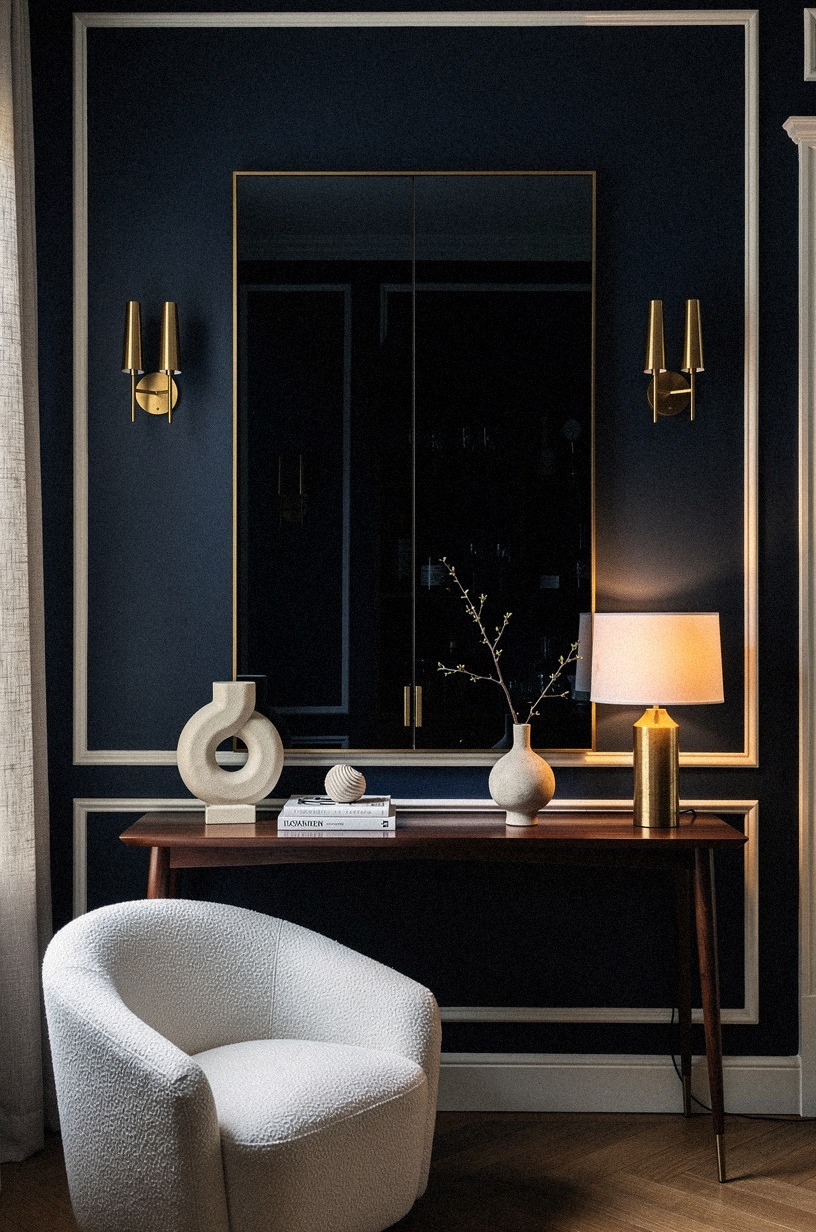
Frame the mirror as wall decor first, then let the entry function come second.
5Slide a bar cabinet across the entrance
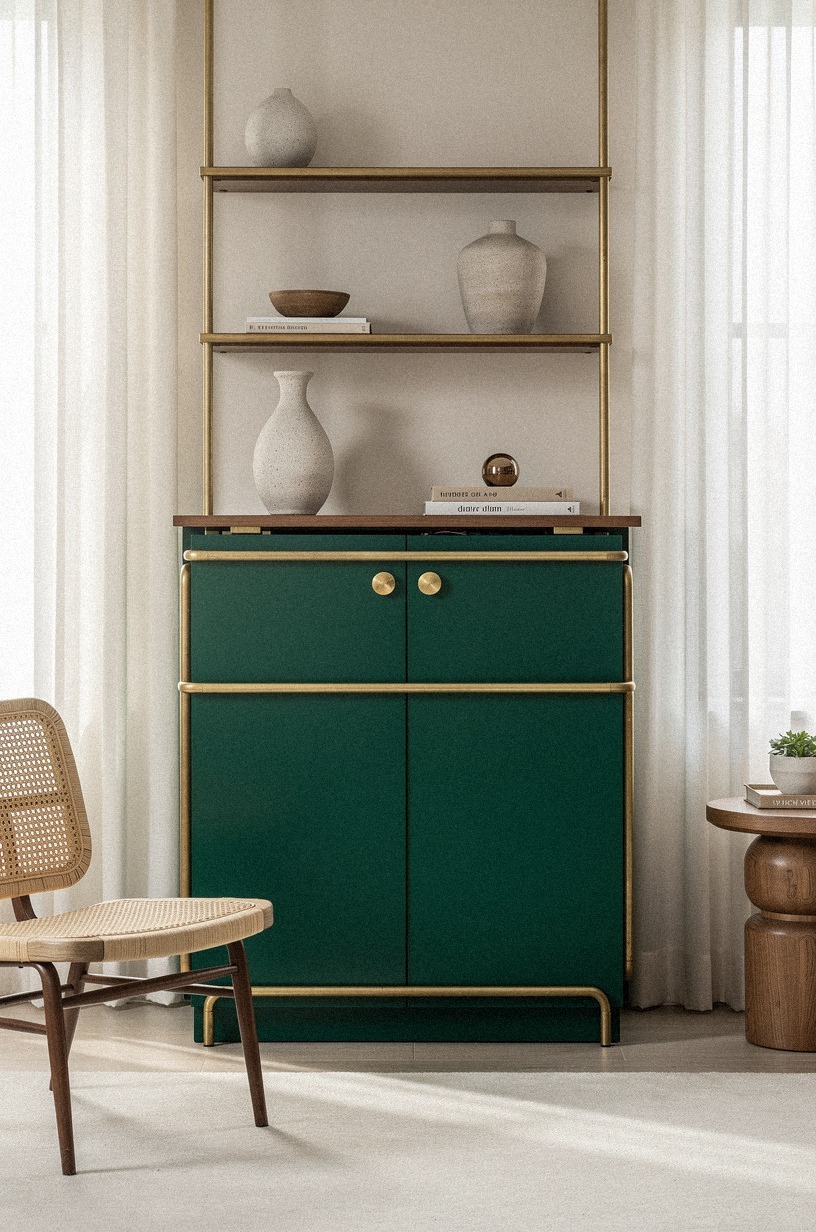
If your room is small, a sliding cabinet is probably the smartest speakeasy in house move on this list. You get storage on the front, a hidden bar beyond, and zero need for a swing radius.
The cabinet can stay visually modest too. In the photo, that centered emerald lacquer piece works because the cream room around it stays quiet.
Keep the cabinet narrower than your instinct says. Around 30 to 36 inches often feels better than a wide buffet, especially if your rug is 8×10 and your seating already takes up most of the floor.
You still want the room to breathe. A chunky unit can make the entrance feel like a bank vault, and that’s not the vibe.
Use the inside well. CB2 Primitivo glasses on the shelves. A tray for citrus.
One ice bucket. Rails need to glide cleanly, so don’t overload the door with stone or overbuilt hardware.
And if you’re working with a calm, pale living room, this is one of the few places I’d welcome a saturated jewel tone because the contrast gives your guests something to move toward. That contrast is the payoff!
6Wrap the opening in fluted oak panels (The Flute-and-Glow Method)
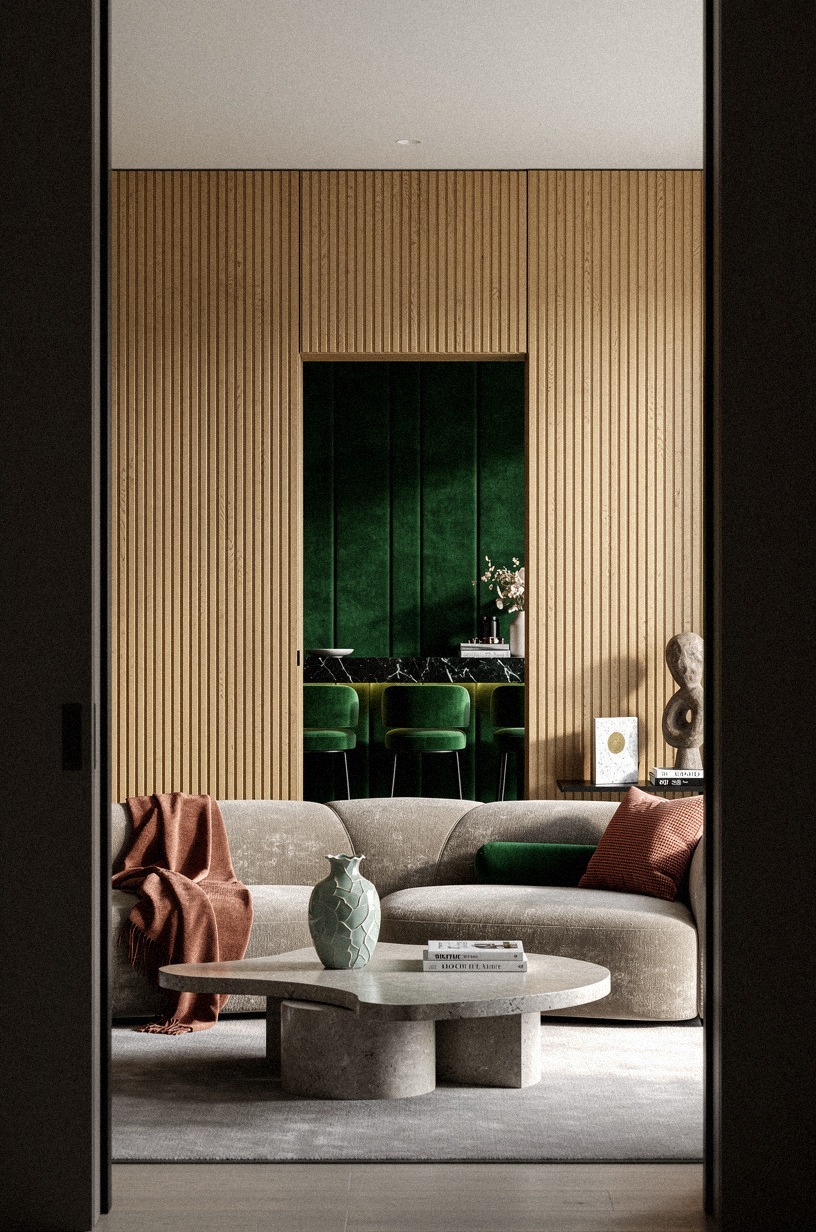
Fluting gives you movement without asking for ornament, which is why it works so well for speakeasy design ideas. Run natural white oak panels from baseboard to ceiling and let the opening sit right in the center of that rhythm.
The bar beyond can go darker. It should.
Forest green velvet looks richer when the outer shell stays quietly tactile.
This is also one of the easiest ways to make a plain builder opening feel custom. The flutes throw little shadows all day, and those shadows matter more than people think.
They make a flat wall feel expensive without shouting. I prefer a 3/4-inch solid oak panel over thin MDF wraps if you can afford it, because the edges hold up better where hands keep brushing past.
And don’t clutter the surrounding room. Sherwin-Williams Evergreen Fog SW 9130 on nearby millwork pairs beautifully with oak and green velvet, but too many extra finishes will kill the effect. For a related sense of quiet discovery, this hidden wildlife sanctuary story gets the pacing right: one reveal, then another.
7Hide the latch behind framed vintage art
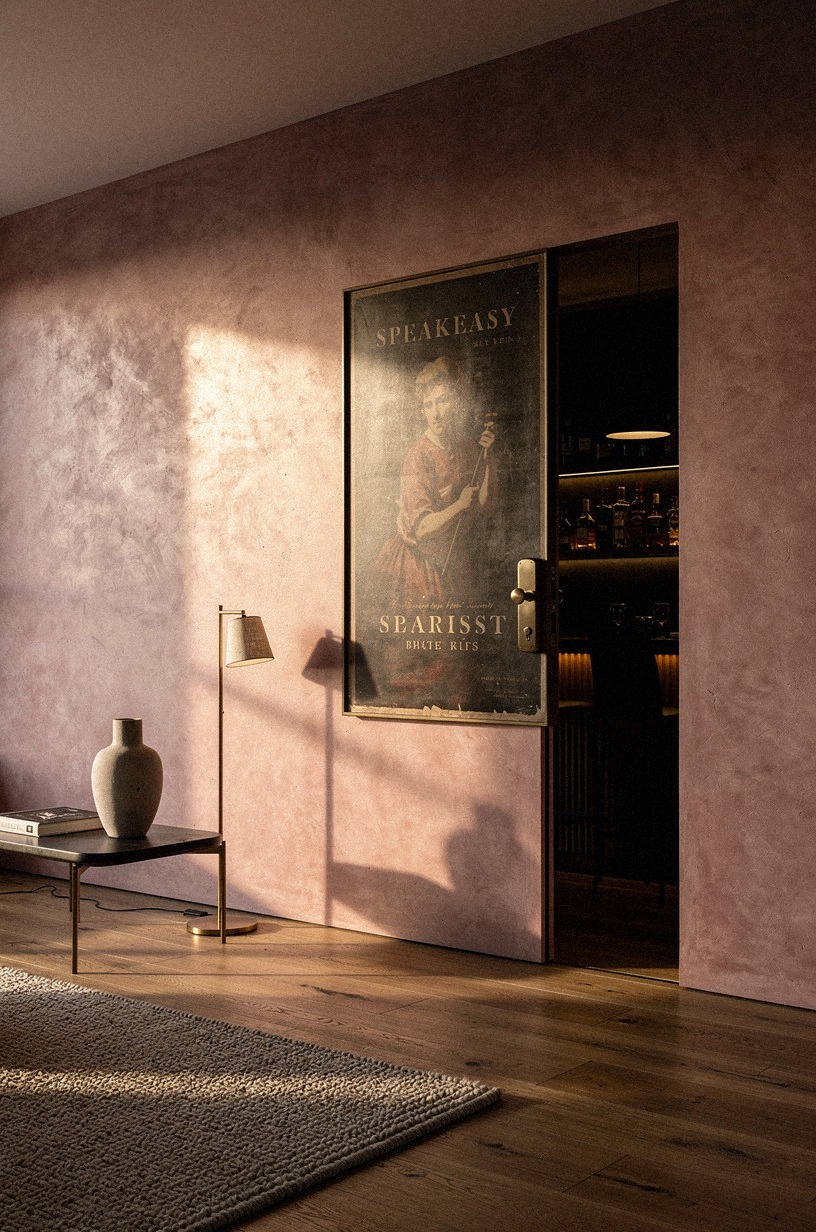
A framed art panel is the move if you want the doorway to feel collected rather than engineered.
8Conceal the passage with floor length drapery (Drapery over drywall)
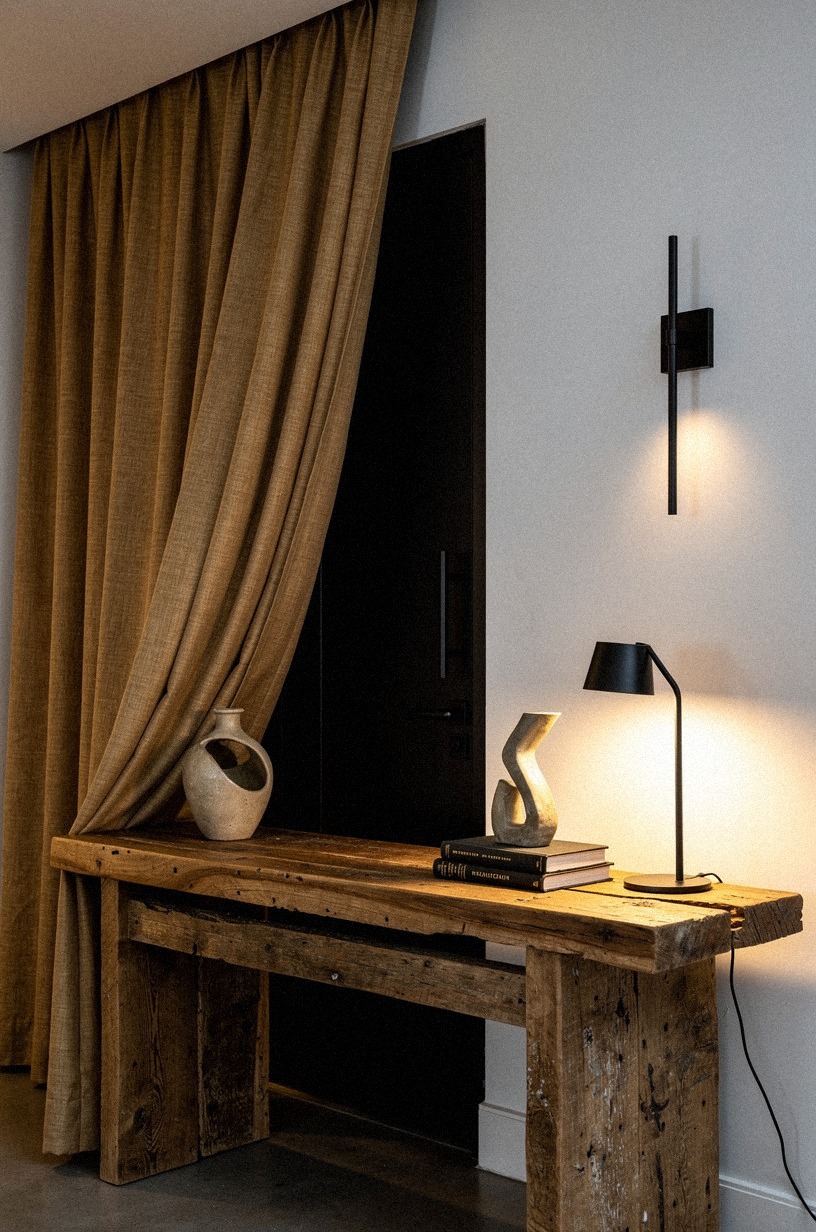
Use drapery when you want softness more than carpentry. A pair of Belgian flax linen panels in camel can hide an opening beautifully, especially if your room already leans warm and a little old-money. Ceiling height matters here, so hang the rod high and let the fabric kiss the floor instead of hovering above it.
This approach is also good for renters because it doesn’t demand full millwork. You can use a tension-mounted track if your trim allows it, then stack the panels wide enough that the opening clears easily when you slide them back.
I’d rather see one generous pair than four skimpy panels. More fabric, less fuss.
It feels custom for far less money!
But keep the bar beyond disciplined. Article Sven leather seating, one low lamp, maybe a smoked tray on the counter. If the hidden room is chaotic, the curtain reads like a cover-up instead of an invitation.
For the sort of layered mood you want, I like this piece on France’s best-kept hidden village because it understands softness, age, and restraint.
9Build a faux library wall with rails (The Borrowed-Library Method)
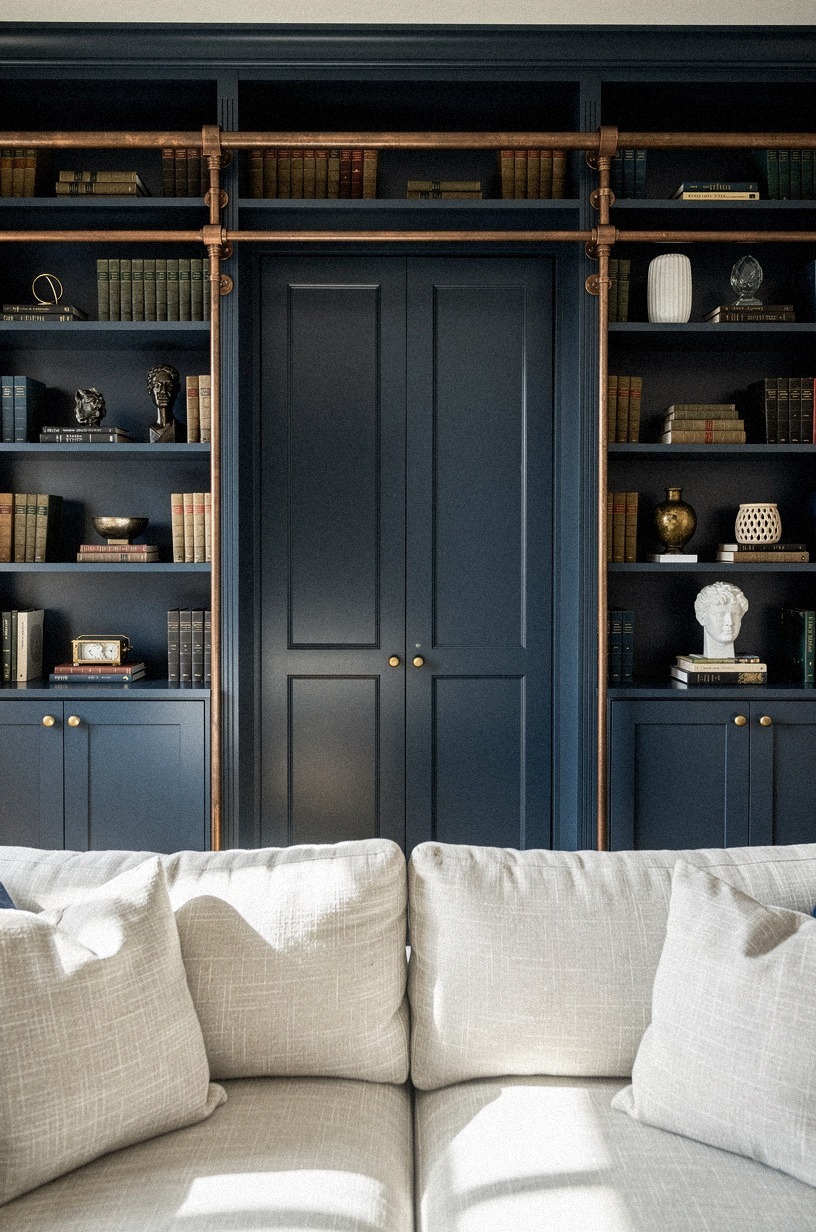
Rolling rails make a faux library wall feel a little theatrical, and sometimes that’s exactly what a cool speakeasy needs. Paint the shelves in midnight blue enamel and let the central bookcase align perfectly with the surrounding cases when closed. If the door sits even slightly proud, the magic is gone.
Low perspective loves detail, so give the lower shelves real heft. Boxes. Decanters.
A stack of oversize books. And make sure the rail hardware feels architectural instead of barn-door casual.
I wouldn’t use black iron that looks too farmhouse. The better fit is a darker, quieter finish that blends into the shelving.
This is where The Borrowed-Library Method helps: keep the books imperfect, keep the accessories sparse, and let one ladder or rail detail do the storytelling. IKEA BILLY can be a starting point if you trim it in, though custom fronts always look better. For another take on the pleasure of finding a hidden route, this secret art studios journey is full of good visual pacing.
10Frame a secret doorway in smoky glass (What if the glass only hinted?)
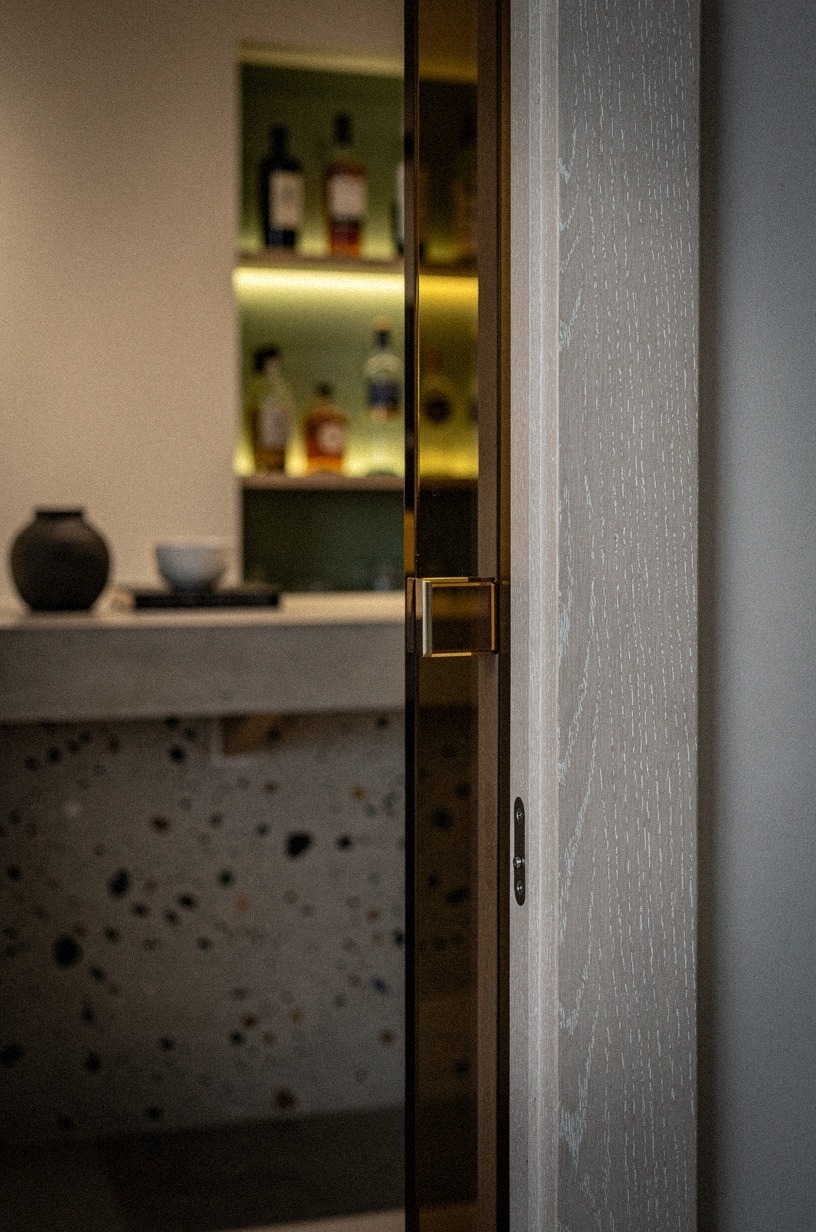
Smoky glass is the move when you want the entrance to feel contemporary but not cold. The close-up detail matters here: a slim pivot, a soft reveal, and bronze-tinted glass that lets light pass while still holding back the full view.
If the glass is too clear, you lose the suspense. If it’s too dark, you get a dead patch in the wall.
Pair it with cerused oak so the wood grain warms up the harder surface. I like a narrow frame profile because the material contrast is already doing enough.
And if you’re worried about fingerprints, you’re right to worry. This needs regular wiping, especially near the edge where everyone reaches.
The upside is how good it looks at night. You catch the glow of bottles and maybe the edge of a lamp, not the whole room. That’s more seductive than a fully open view, and it’s why I’d choose smoky glass over clear reeded panels in a living room that already has a lot going on.
Less chatter. More depth.
11Mask the entrance behind a cocktail niche
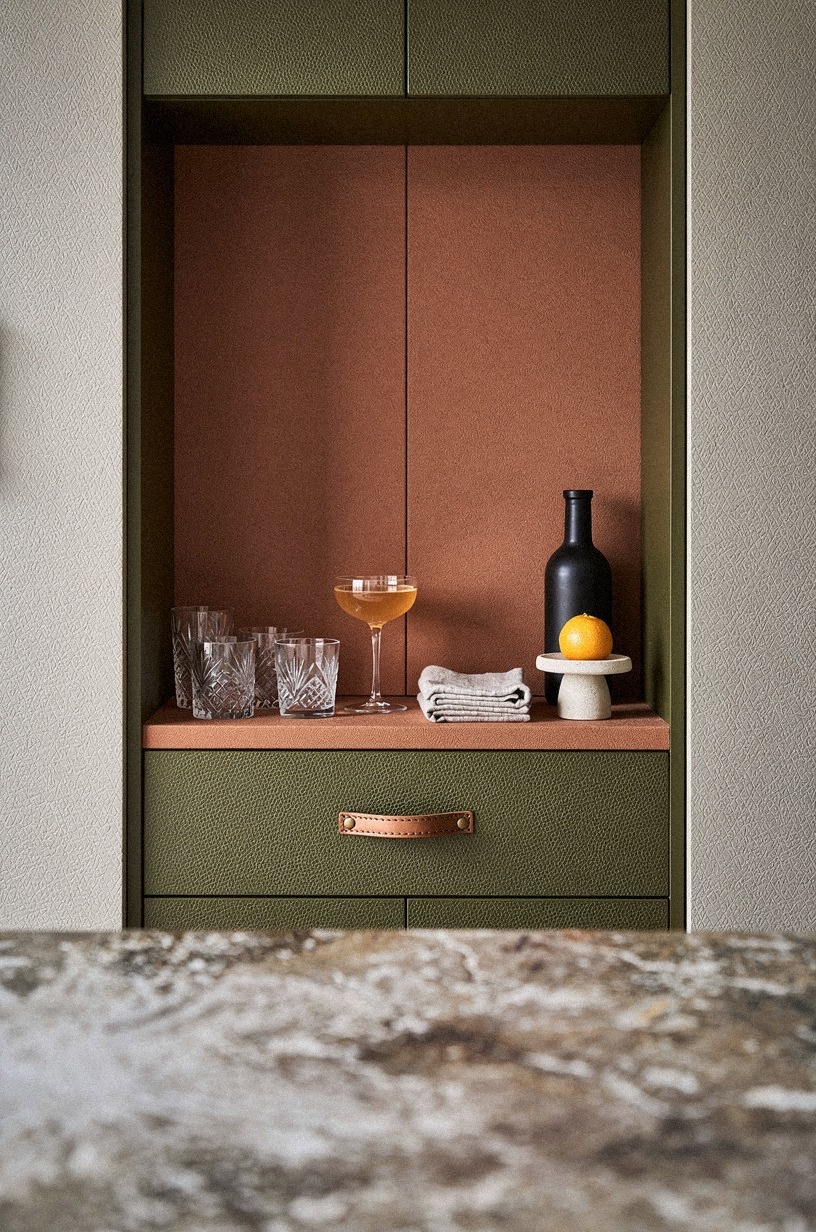
A built-in niche is one of the most believable speakeasy ideas for home because it gives people a reason to stop in front of the wall.
12What does the lighting behind the door do for the mood?
A warm glow at 2700K from a single amber bulb can do more for the reveal than the door hardware ever will. The way I think about it: a hidden bar entrance without moody light reads like a closet, not a bar.
Try a slim brass picture light mounted above the moving panel, or a West Elm rechargeable sconce that you can pop off and recharge. Don’t overdo it.
One source, dimmed, on a warm dimmer. Then stand in the living room and watch how the wall changes at dusk.
For a related take on glow and atmosphere, this hidden island fortress piece captures the same hush.
13The hardware that quietly gives it away (or saves it)
Aged bronze hinges, slim reveals, magnetic catches. The right hardware lets your eye stop searching for the seam.
The wrong hardware shouts it. I’ve used unlacquered brass latches from a local hardware shop and they’re worth every penny because the patina gets softer with time.
Skip the chunky pulls. A slim finger pull routed into the door edge disappears visually and works beautifully with bare hands.
If you’re nervous about a magnetic catch not holding, add a small roller latch at the top so guests don’t accidentally push through. For an example of restraint done well, this hidden Moorish town story gets the right balance.
14Is a bookshelf enough on its own?
Honestly, no. A freestanding bookshelf in front of an opening looks like a bookshelf in front of a wall, and guests can usually tell.
The Borrowed-Library Method only works when the unit is anchored, full-height, and trimmed in to look built. If you want the budget version, the IKEA BILLY with custom side panels and a ceiling track is a real starting point.
Spend the weekend sealing, painting, and adding crown. You’ll end up with something that photographs like a $4,000 install.
For a similar layered reveal, this secret art studios piece shows the right rhythm.
15How do you hint without telegraphing?
A small visual cue, never the whole mechanism.
16The small budget version that still wows
You don’t need a $4,000 door to get the mood. A tension-mounted drop cloth drape in unbleached canvas runs about $80, a secondhand bookcase from Facebook Marketplace runs about $200 with patience, and a single can of Benjamin Moore Black Forest Green is enough to disguise a builder-grade opening in a weekend.
The sum is a real feeling. I’d rather see a tight $400 install done well than a $5,000 install done sloppily.
Spend on the hinge and the fabric first, then the styling. Everything else is forgiving.
For a real budget reference, this hidden culinary treasures piece shows what restraint can do.
17One paint decision that changes everything
If you change one thing, change the wall behind the opening. Farrow & Ball Hague Blue or Benjamin Moore Black Forest Green is dramatic but right when the rest of the room stays quieter.
A muted olive is a softer call that still gives the entrance weight. I’d skip anything with too much grey; it kills the warmth.
A satin finish hides fingerprints better than flat, and a single coat of primer underneath the dark color stops the bleed-through that gives cheap paint away. Worth doing right the first time.
For related color conviction, this detail art studios piece leans into the same commitment.
18Skip these shortcuts (they always look fake)
Fake bookcase wallpaper, printed-wood panels, oversized visible latches, a too-shiny chrome handle, a hollow-core door pretending to be a solid walnut slab.
19Common mistakes I keep spotting
The biggest one: a door that opens the wrong way. Pivot points need to clear the wall, the trim, and the nearest chair, and that math should happen before you buy the slab.
Second: hinges that don’t match the room’s finish. A shiny brass hinge in a calm matte black room telegraphs the seam. Third: forgetting the sound.
A solid-core door with felt weatherstripping is whisper-quiet. A hollow-core door is not. Fourth: skipping the floor finish under the door’s swing arc. A satin poly on the hardwood stops scuffs from giving you away.
For pacing, this Mediterranean secret town piece covers similar restraint.
20What about a curtain in a tight modern room?
A floor-length drape can feel too soft for a tight, modern room, but only if you let it. The fix is weight. Belgian flax linen in a saturated tone like rust or aubergine reads as architectural, not as a bedroom curtain.
Hang the rod 4 to 6 inches below the ceiling so the panels drop, and use matte black rings instead of grommets for a cleaner break. I’ve done this in 8×10 living rooms and the curtain becomes a focal point, not an apology.
Worth it for the calm alone. For a related example of mood-as-design, this hidden village piece reads similarly soft and intentional.
Why hidden bar entrances feel more expensive than open bars
Here’s my honest take: a hidden bar entrance works because it edits the room before it decorates it. An open bar says, “look at my things.” A concealed one says, “come closer.” That’s a huge difference in how your home feels to you at 9 p.m. when the lamps are on and the house finally goes quiet.
I used to think the best version was the most dramatic one. More shelving.
More trim. More little reveals. I was wrong.
The rooms that stay with you usually have one strong move, then a lot of calm around it. A bookcase wall in cerused oak. A camel curtain with real weight. A smoky glass panel that only gives you a sliver of light.
That’s enough. Once you cross that line into overexplaining the idea, you lose the thrill.
And this is where budget matters more than people admit. You do not need a $12,000 millwork package to get the mood.
But you do need to spend on the right category. A cheap hinge will make an expensive-looking wall feel fake in one pull.
A flat paint color with no depth will make the hidden seam look obvious by midafternoon. Good fabric, decent hardware, and one finish with character usually beat a room full of average stuff.
Every time.
If you’re trying to decide where your money should go, these ranges are a useful starting point:
For a hidden doorway project specifically, I’d put your first dollars into the mechanism and the surface people touch. Then the mood layer. Then the extras.
If your coffee table is about two-thirds the sofa length and 16 to 18 inches tall, if your rug is truly 8×10 or 9×12 with front legs on it, and if the lighting lands warm instead of icy, the room already feels more finished before anyone even finds the bar. That’s the part nobody respects enough.
What People Always Want to Know
What is the best Hidden Speakeasy Door & Entrance Ideas [Secret-Bar Goals] for a small living room?
The best one is usually the sliding cabinet because it saves swing space and gives you double-duty storage. If your room is tight, start with a narrower cabinet and calm walls. The hidden bar story in a medieval fortress city is a fun mood reference too.
Where can I buy Hidden Speakeasy Door & Entrance Ideas [Secret-Bar Goals] pieces on a budget?
IKEA, Target, and Wayfair are the first places I’d check for budget-friendly basics. Think frame sets, drapery panels, shelf lighting, and simple cabinets. Facebook Marketplace is worth your time too, especially for solid wood bookcases.
I also like browsing these hidden West End gems when I want a reminder that character beats price.
How much does a Hidden Speakeasy Door & Entrance Ideas [Secret-Bar Goals] makeover cost?
Most makeovers land somewhere around $300 to $8,000, depending on whether you’re hanging drapery or building millwork. The free part is editing what you already own and moving lighting to the right spots. Custom doors and pivots are what push you into the higher bracket.
Can I create a Hidden Speakeasy Door & Entrance Ideas [Secret-Bar Goals] on a budget?
Yes, and you can get a convincing look with cheap layered upgrades. A curtain track.
Paint on the wall behind the opening. Better lamps. Start there.
If you keep the palette tight and the glow warm, your room won’t feel makeshift at all.
Is a Hidden Speakeasy Door & Entrance Ideas [Secret-Bar Goals] worth it in a small space?
Yes, it’s worth it because small rooms reward editing. A concealed opening keeps visual noise down and gives the living room one memorable move. I’d just make sure your furniture layout still clears the path, especially if your sofa is deep and your rug is already large.
Is Hidden Speakeasy Door & Entrance Ideas [Secret-Bar Goals] a good idea for a rental?
Yes, if you use low-commitment layers instead of hard construction. Think tension-mounted drapery, peel-and-stick moulding, removable sconces, and freestanding cabinets. The hidden village reference here has the same soft, aged mood renters can fake surprisingly well.
Where I’d Start First
If I had to pick one, I’d start with the floor-length drapery. It hides bad trim, softens the room, and buys mood fast. Pin it for later and borrow this hidden village mood.