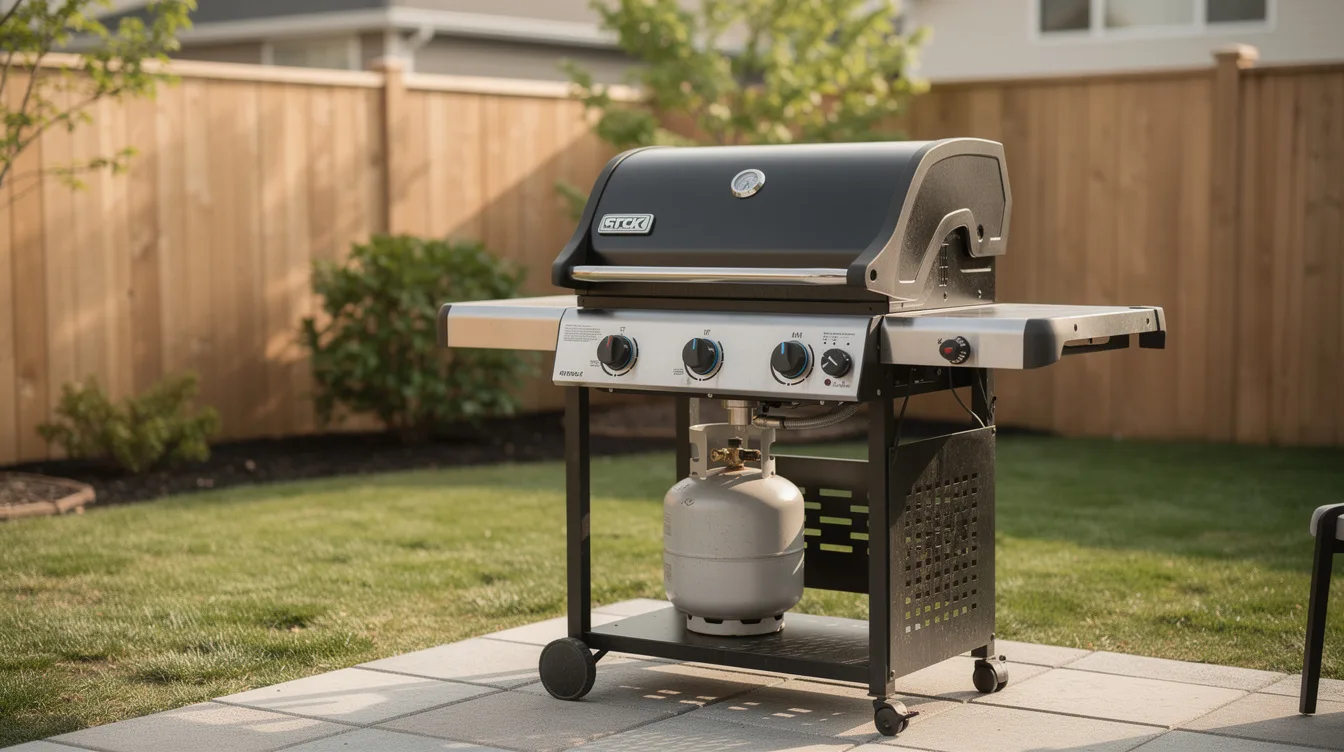
I know the exact moment a grill starts looking hopeless: when the lid feels chalky under your hand and the side shelf leaves a black streak on your sleeve. Mine hit that point right before the first warm weekend, when I realized the outside looked tired even though the frame still felt solid.
The good news is you usually do not need a full replacement. A typical refresh costs about $22 to $165, depending on how much you already have at home and whether you swap one or two interior parts.
Start With the Grimy Parts You Usually Ignore
Begin inside the firebox, not on the shiny lid. Old grease and rust dust kill the whole before-and-after because they make everything look neglected, even after paint.
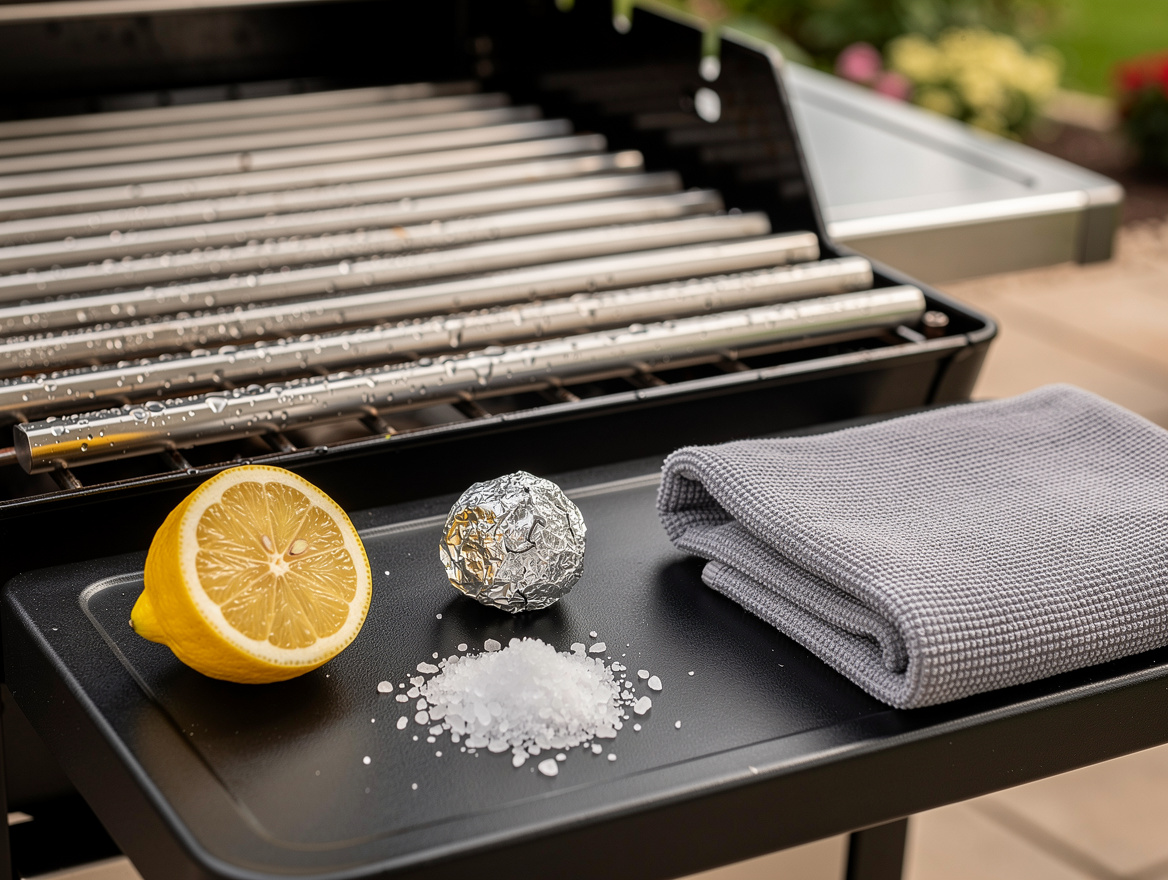
For a cheap first pass, use half a lemon, coarse salt, dish soap, and a fist-size ball of aluminum foil. That setup can cost almost nothing if it is already in your kitchen, and it works surprisingly well on light rust and dull grates.
If you want a safer dedicated tool, buy a bristle-free grill brush from Home Depot, Lowe’s, Walmart, or Amazon. Typical 2026 pricing lands around $11 to $33, and I think it is worth it because loose metal bristles are a dumb risk.
Once the grates, heat shields, and rack are scrubbed, rinse and dry everything completely. A grill never looks restored when moisture is still sitting in the corners.
Degrease the Exterior Until It Reflects Light Again
This is the step that changes the look fastest. A faded grill often is not fully faded, it is buried under grease haze on the lid, handle area, and side tables.
Use a dish-soap degreaser or a power-wash style kitchen spray from Target, Walmart, or Amazon, then wipe with a microfiber cloth. For baked-on mess, a grill-specific cleaner from Ace Hardware or Lowe’s usually costs about $10 to $20, and it saves a lot of scrubbing time.
Do not skip the little trim pieces. The control panel and shelf edges are where the grill starts looking current again, because those are the parts your eye reads first from across the patio.
I would rather spend fifteen extra minutes here than rush into paint. Clean metal gives you a better finish, and it makes you notice what really needs replacing.
Use High-Heat Paint the Right Way
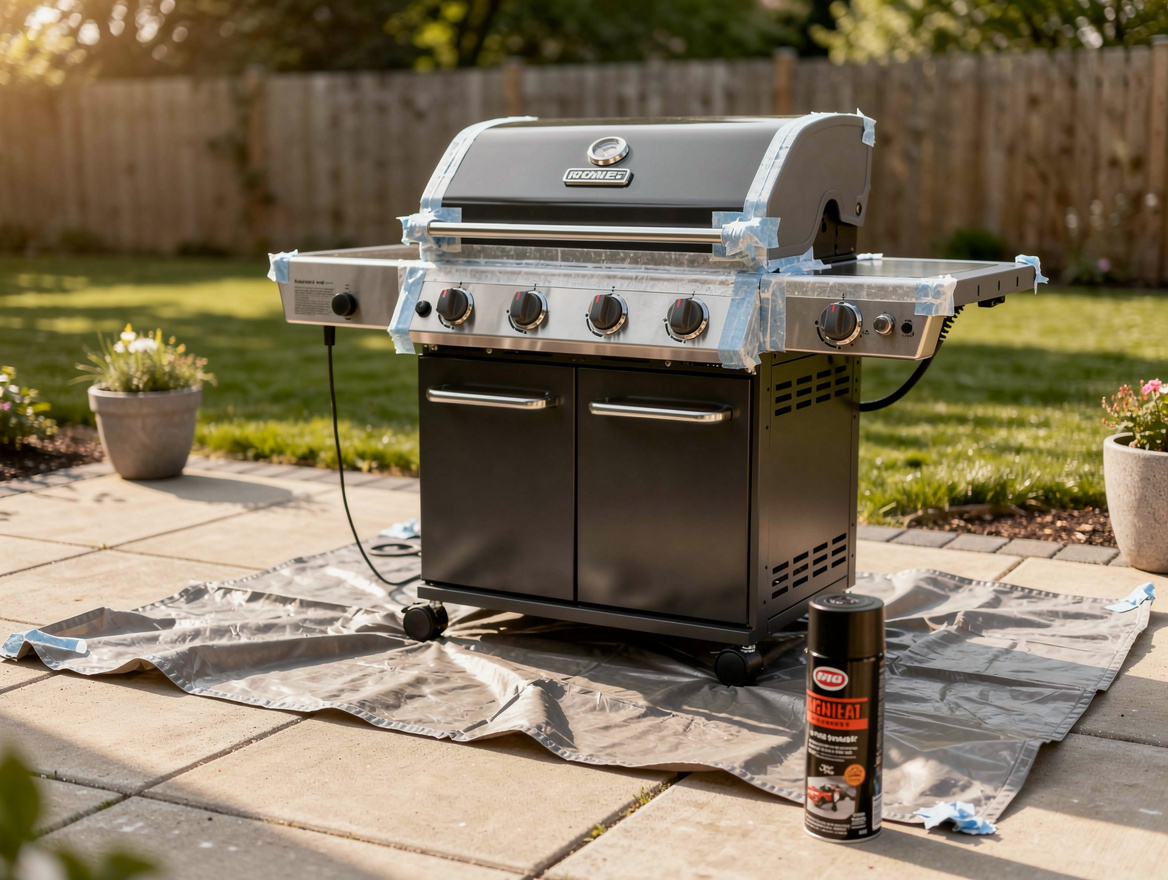
If the shell is solid but blotchy, high-temp spray paint is the fastest cosmetic fix. Look for high-heat spray paint at Home Depot, Lowe’s, Amazon, or Walmart, usually around $11 to $22 per can in 2026.
A standard can is typically 300 to 400 milliliters, about 7.5 to 8 inches tall and roughly 2.5 inches wide. One can usually covers about 11 to 22 square feet with two or three light coats, enough for a typical three- or four-burner lid and front panel if you do not overspray.
Mask the thermometer, knobs, logos, and any stainless steel trim before you start. Three light coats look far better than one heavy coat, and they are much less likely to drip.
Let it cure fully, usually 24 to 48 hours depending on the can directions. This is the difference between a grill that looks freshly revived and one that still looks like a rushed weekend project.
Replace the Two Parts That Age the Worst
If your grill cooks unevenly, the inside is probably the real issue. Thin heat plates often rot in about 12 to 18 months on cheaper models, and burner tubes commonly fade out in roughly two to four years.
This is why a grill can look ugly and cook badly at the same time. Swap those tired parts, and the whole setup feels newer the minute you fire it up.
Check Amazon, Home Depot, and Lowe’s for aftermarket stainless steel burner kits and heat tents sized for common big-box grills. A basic set for a three- or four-burner model often lands in the $30 to $90 range, which is still much cheaper than replacing the entire unit.
The practical rule I trust is simple: if the frame is solid and the parts cost less than half the price of a new grill, fixing it makes sense. That is not sentimental, it is just good math.
Freshen the Surfaces Around the Fire
Do not stop at the cooking core. A scratched side shelf, greasy wheels, and a sun-faded handle can make a refurbished grill still look old.
Wash any plastic pieces with warm soapy water, then wipe dry and buff lightly. If the shelf liner or prep surface is beyond saving, a small replacement tray or utility bin from IKEA, Target, or Amazon can make the station feel cleaner for very little money.
Hardware matters more than people think. Replacing rusty screws, washers, or a loose caster with parts from Ace Hardware or Home Depot costs a few dollars, but it sharpens the whole silhouette.
This is also where matte black usually wins. I like a uniform dark finish because it hides minor age marks better than trying to preserve every original detail.
Know When a Cover Beats Another Upgrade
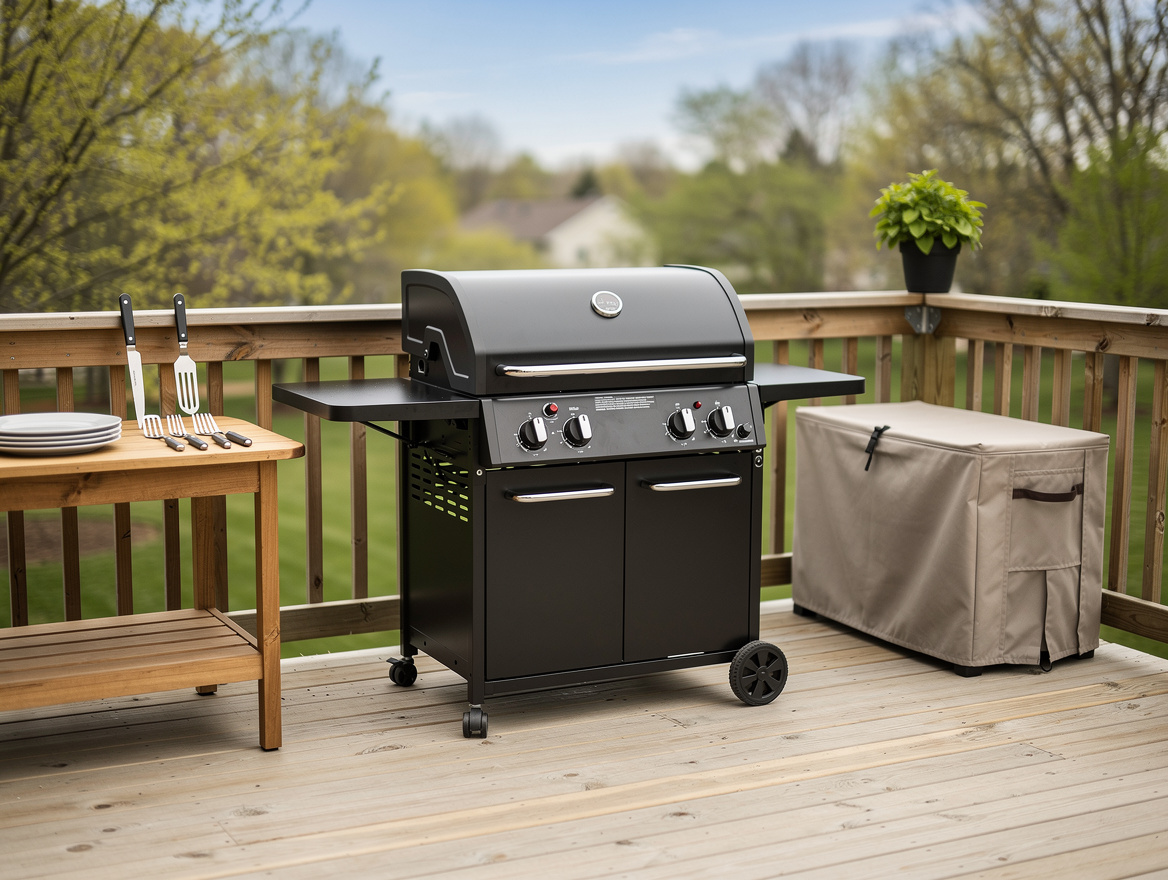
Once the grill looks respectable again, protect the work. A basic grill cover from Walmart, Costco, Amazon, or Lowe’s usually costs about $20 to $50, and it can do more for appearance over one season than another round of scrubbing.
Measure before you buy. Covers are usually sold by overall grill width, and a typical midsize gas grill falls somewhere around 48 to 60 inches wide, so guessing is how you end up with a sloppy fit.
This is also the point where I stop spending. If you already cleaned it, painted it, and replaced one key interior part, adding more money rarely changes the look enough to justify it.
A grill does not need to look factory fresh to feel ready for summer. It needs clean lines, an even finish, and hardware that works without a fight.
Start with the deep clean first, because that tells you whether you need a $5 fix, a $20 paint job, or a $90 parts order. If the frame is sturdy, a smart refresh usually beats dragging home a new grill you did not plan to buy.
Mia Carter writes about small-space living and budget home makeovers. She has restyled three rentals and tests most ideas in her own 45 sqm flat.