
I’ve learned that gender reveal ideas that include big brothers and sisters work best when every child gets a real job. Your reveal doesn’t need expensive staging or a room full of pink and blue. It needs a part each child can own, plus enough time for their reactions to unfold naturally. These ideas keep the setting warm, practical, and memorable.
Before You Buy Anything, Assign the Jobs
Start with the children, not the decorations. Decide who will open, carry, draw, choose, explain, or arrange. A clear role makes the reveal feel personal, exciting, and reassuring for siblings who might otherwise feel pushed to the side.
Keep each instruction short. “You’ll hold the card.” “You’ll lift the lid.” “You’ll choose the ribbon.” Children usually respond better to concrete jobs than to vague requests to “help.”
Match the Job to the Child
Give the oldest child a responsibility that involves judgment, such as reading a clue or explaining the rules. Preschoolers can decorate, carry fabric, or place cards. Toddlers can choose between two safe objects or arrange soft materials.
The task doesn’t need to look impressive. It needs to feel genuinely theirs. A small, successful job can create a proud, joyful moment that lasts longer than an elaborate setup.
- Build the Two-Color Reveal Box Together
- Who Gets to Draw the Clue?
- Frame a Sibling Guessing Wall
- Stack Three Heights Around the Reveal
- Pink and Blue? Choose a Family Palette
- The Keepsake Book Gives Everyone a Page
- Give Each Child One Sound to Carry
- Backdrop First, Costs Second
- Toddlers Need a Soft Texture Job
- Why Choose a Doorway Over a Stage?
- Plan the Last Moment Like a Family Portrait
1Build the Two-Color Reveal Box Together
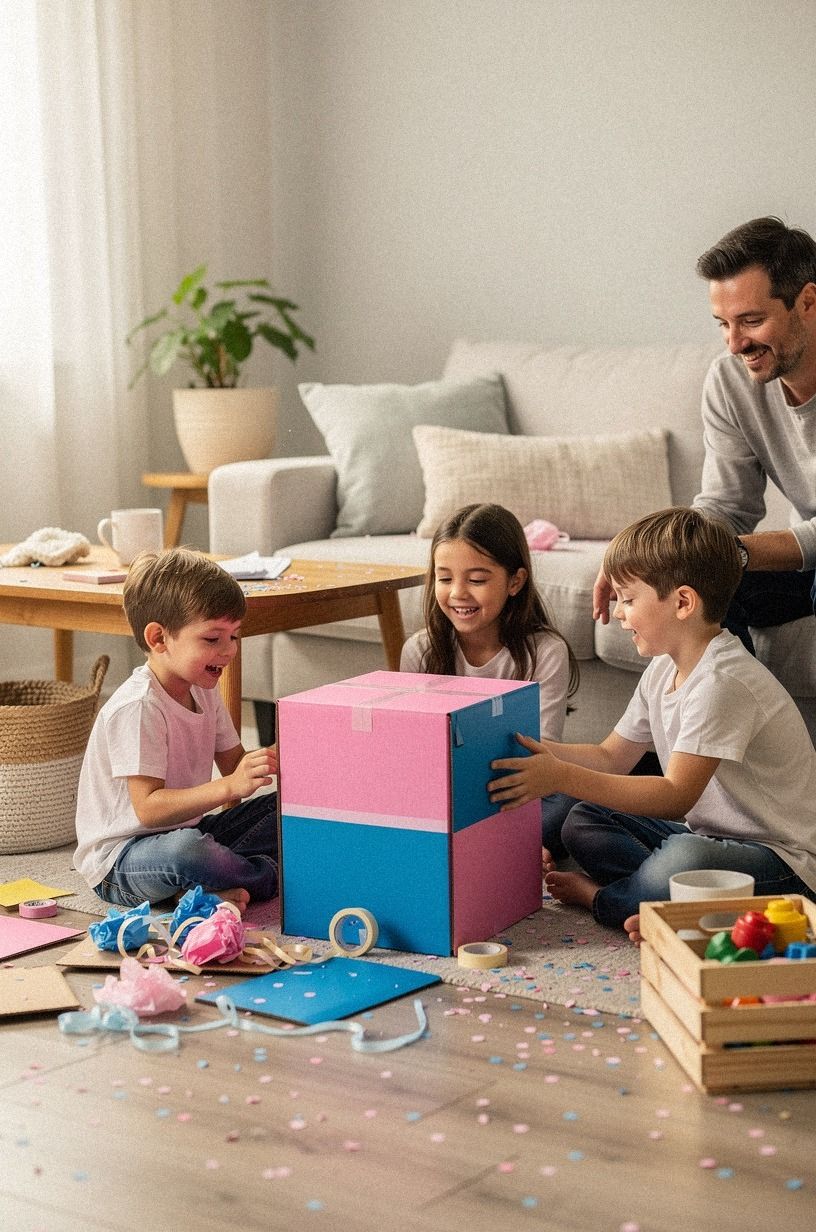
Give each older sibling a sealed box filled with one family color, then let them open it together. The reveal feels more exciting when your children have to cooperate. I’d use dusty rose tissue paper with a charcoal ribbon and a small brass tag around the real pink or blue clue, so the outside stays mysterious.
A sturdy IKEA KALLAX cube can work as a low display base if you already own one. You don’t need a giant package. A medium cardboard box wrapped in dusty rose paper, with a small shagreen-textured accent, looks soft, layered, and easy for children to handle.
Let your children decorate the lid with fingerprints, stars, or their own names. Keep the outside grounded in Benjamin Moore Kendall Charcoal HC-166, with a narrow brass detail, so the contents carry the surprise. If two children are lifting the box, keep it light enough for the younger one to participate safely.
I’ve seen reveals lose their warmth when adults rush the opening. Let your children count slowly, look at each other, and react in their own way. If one child freezes, that’s fine.
You can make the moment theirs without asking for a perfect reaction.
For the wider setting, borrow the relaxed approach from this low-key gender reveal guide for a small party at home. Your box will feel more intentional when the food, seating, and backdrop stay quiet.
You can also use the same low-key gender reveal ideas for a small party at home if your living room is compact. A simple table, two chairs, and open floor space are enough. The children should be able to reach the box without climbing or squeezing between adults.
2Who Gets to Draw the Clue?
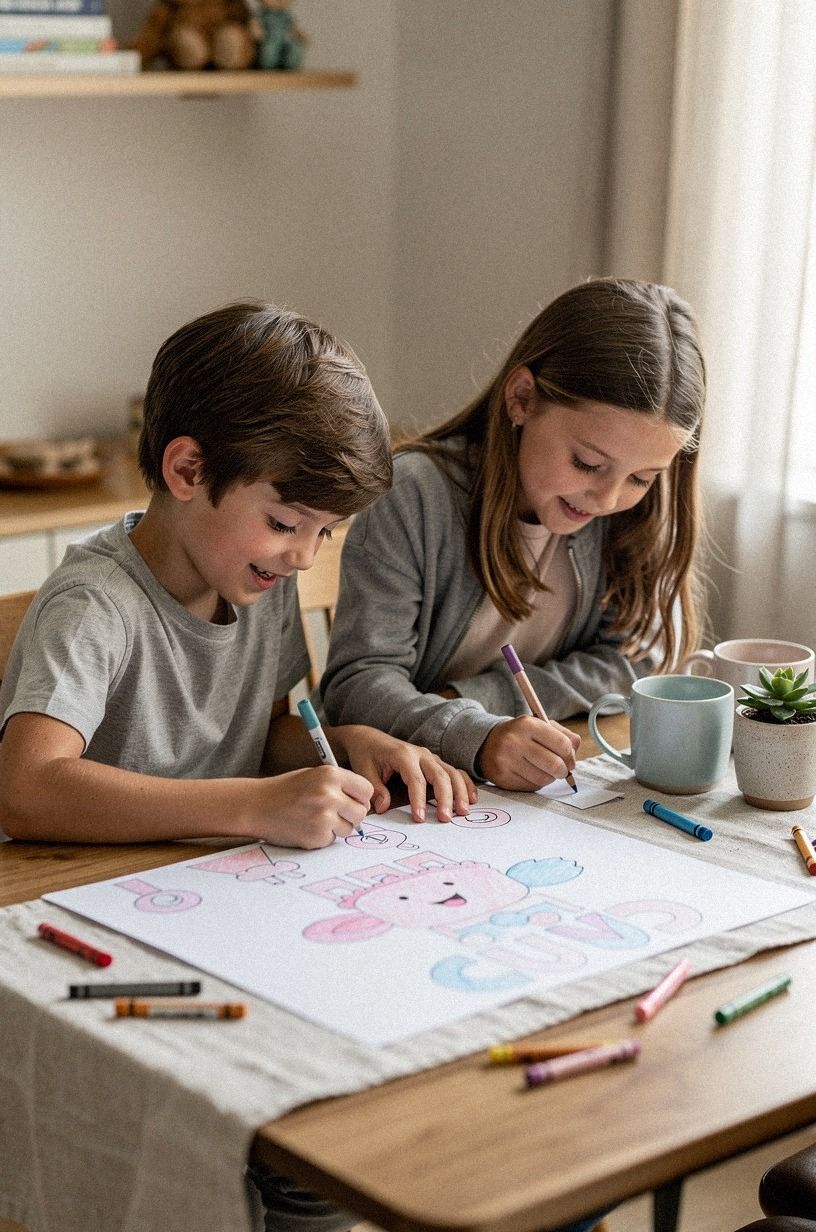
Ask your oldest child to draw a picture that hints at the baby, then let the younger siblings add one detail each. The oldest child gets a leadership role, while the smaller children still have a clear way to contribute.
You could ask the oldest to draw a stroller, a crib, a family pet, or a favorite place. Keep the clue open-ended. If the child wants to draw a purple dinosaur, let that become part of the reveal story.
Their imagination matters more than whether the drawing looks polished.
Use recycled watercolor paper, washable tempera paint, and a washed Belgian linen table cover if your children tend to create with enthusiasm. I’d place the supplies on a small IKEA LÄTT table or another surface they can reach comfortably.
Give each child a limited choice. One may choose the border color, another may add stars, and the oldest may write the final question. A restrained palette of warm white, camel, and black keeps the activity calm.
Afterward, ask the oldest child to explain the drawing to everyone. That small speech gives the sibling a moment of importance and helps guests listen to the children. If you need another activity to follow it, these gender reveal party games and guessing ideas for guests offer simple prompts.
Try one of those gender reveal party games and guessing ideas for guests while the artwork dries. Your children can explain the rules, which gives them ownership of the gathering.
3Frame a Sibling Guessing Wall
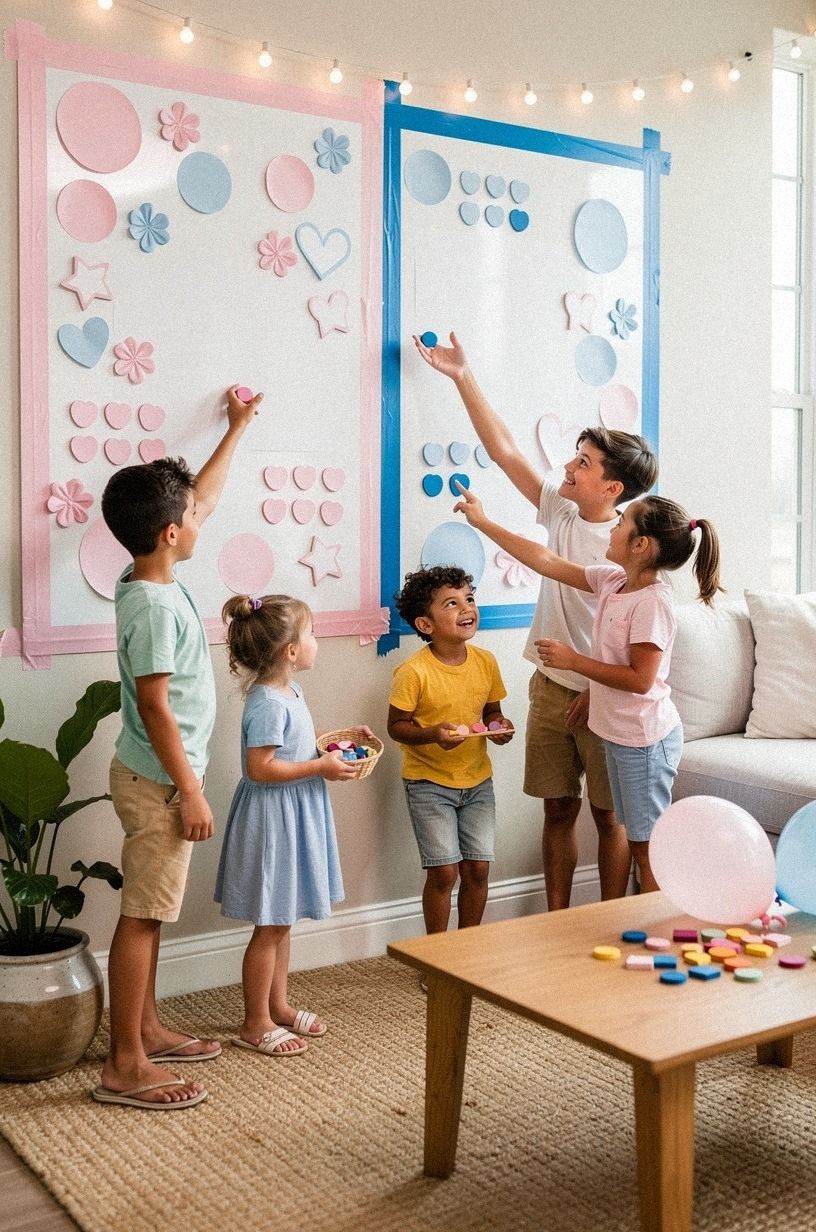
Create a guessing wall where each child chooses a side, writes a reason, and adds a small drawing. The wall becomes a record of what your family imagined before the birth. Use midnight blue behind the display, with copper clips and ivory cards, if you want a rich setting that won’t announce the answer.
Set the guesses at child height. You can hang the main paper with removable strips and keep the center of the artwork about 57 to 60 inches from the floor for adult viewing. Younger siblings can place their marks lower, where they can reach without climbing.
Use an organic bouclé-covered board with copper clips, giving each child an ivory card for their name, guess, and one sentence about why they chose it. A child who says “because the baby kicks at night” has given you something far more valuable than a polished sign.
Don’t correct spelling or steer the answers. You’re preserving their voices. I’ve found that the funniest guesses often become the detail everyone remembers after the party is over.
Your wall can lead into a simple game. Add one prompt from these gender reveal party games and guessing ideas for guests, then let your children explain the rules.
For an extra personal touch, give everyone a small ivory card with a copper clip. Adults can write their own predictions on the back, while children decorate the front. You’ll have a keepsake that costs very little and feels wonderfully specific to your family.
4Stack Three Heights Around the Reveal
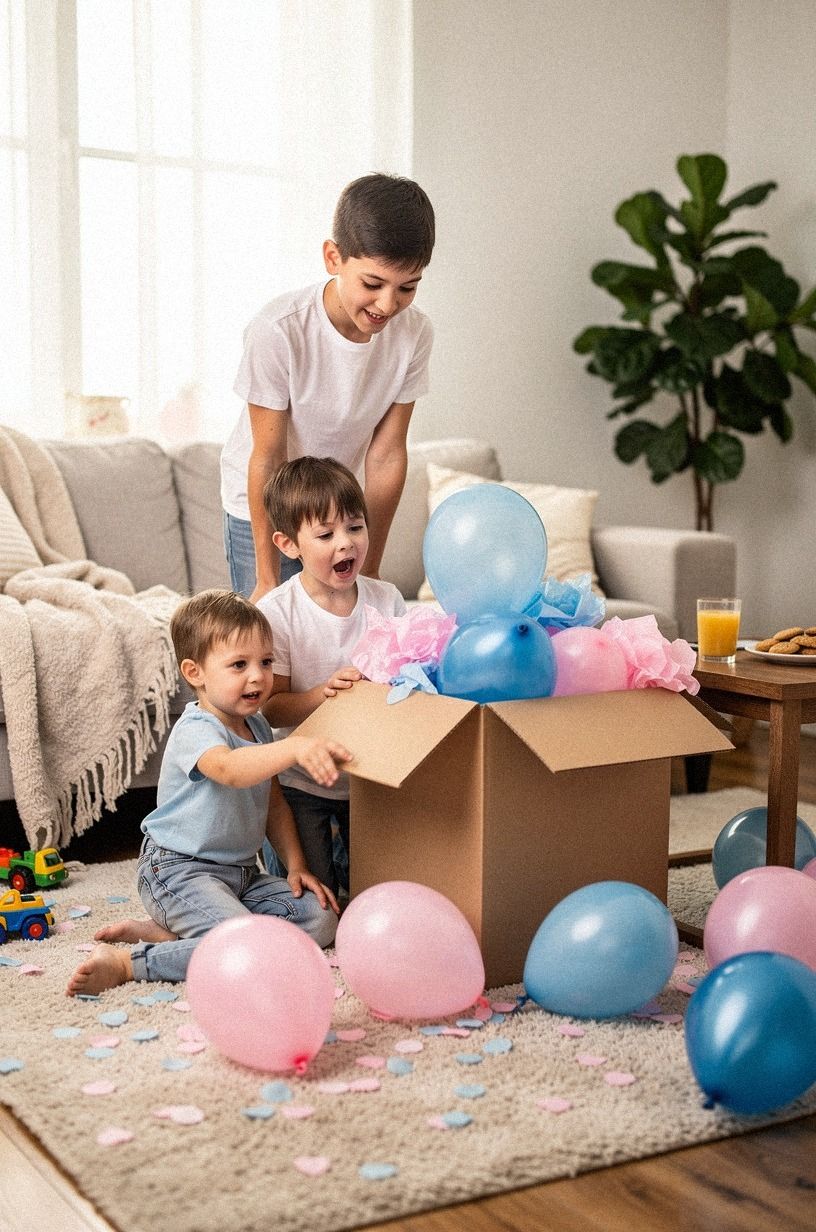
Build a small display with three different heights so every sibling has a visible place in the scene. This arrangement works especially well when several children are involved because nobody needs to stand directly in front of another child.
Start with a low natural-wood stool, add a warm cream woven storage basket, and finish with a narrow oak side table. Keep the tallest object behind the others and make sure every surface is stable. Children should never have to balance on furniture to participate.
Give each child one height to manage. The oldest might place the reveal envelope on the table, a preschooler might arrange sage fabric inside the basket, and a toddler might choose where the stool sits. These jobs are simple, satisfying, and easy to explain.
I’d keep the objects in a family palette of sage green, warm cream, and natural wood. A Nero Marquina marble tray with white veining can anchor the arrangement, while a few cream paper fans soften it without making the room feel overly matched.
Check the sightline before guests arrive. Sit in a chair and look toward the display.
Can you see every child? Can the youngest reach their object?
If the answer is no, lower the arrangement and clear away anything that blocks movement.
You can find more affordable setup ideas in these DIY gender reveal decorations you can make on a budget. A few DIY gender reveal decorations you can make on a budget will usually serve you better than buying a complete themed kit.
A Quiet Room Makes Every Reveal Better
The setting should support the children rather than compete with them. Move bulky furniture away from the reveal point, leave a clear path, and give everyone somewhere comfortable to sit while they wait.
Soft materials, open floor space, and gentle lighting create a relaxed atmosphere. A crowded room can make a tender moment feel hurried, while a simple arrangement gives every reaction room to land.

5Pink and Blue? Choose a Family Palette
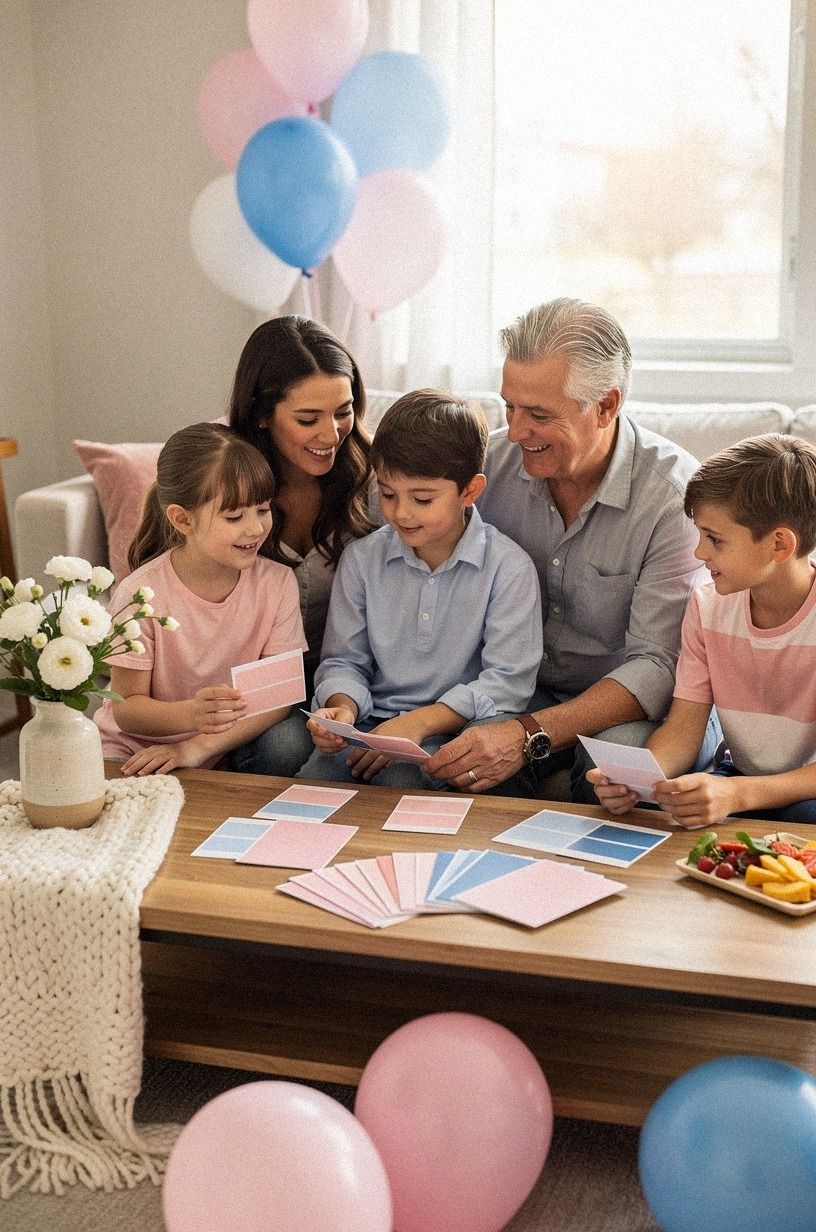
Use one shared family palette instead of dividing the room into pink on one side and blue on the other. Terracotta, stone, and olive feel warmer and more personal than a strict color split.
Bring in one piece of deep-pile mohair velvet, such as a cushion or small runner, so the setting has softness without turning into a themed party. The pink or blue clue can remain the only surprise color.
6The Keepsake Book Gives Everyone a Page
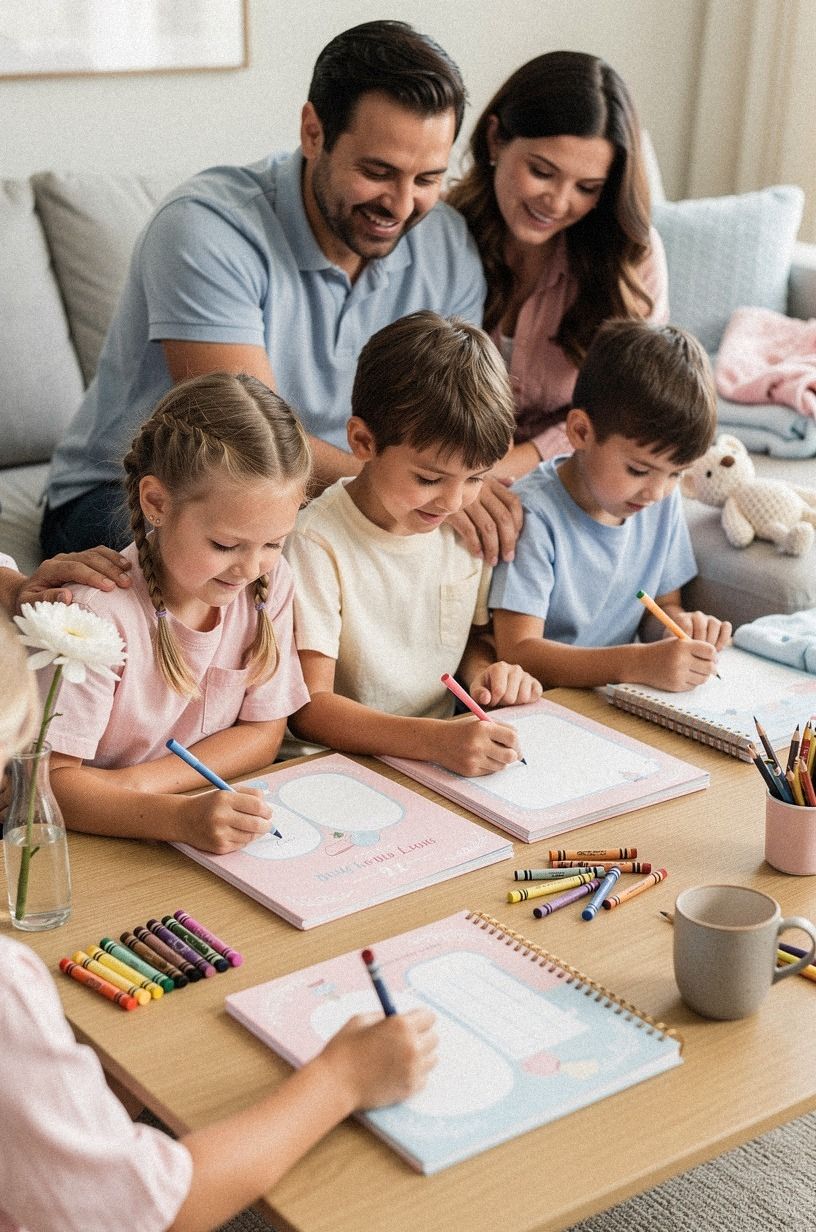
Let each sibling create one page for a baby book before the reveal. The oldest child can write a promise, a preschooler can draw the family, and a toddler can make fingerprints around the edge.
Choose a clay-colored linen-covered album with thick pages. A simple Rite in the Rain scrapbook or an affordable blank notebook can work just as well. Rest it on a small Carrara marble slab with subtle gray veining, and add one aged brass object nearby.
What matters is giving everyone enough room to make a page without competing for space.
You might offer three prompts: “I hope the baby likes…,” “I will teach the baby…,” and “Our family is…” Children usually respond better to a sentence starter than to a completely empty page.
Use non-toxic markers, cream cardstock, and one set of aged brass stickers. Keep the supply list short. A spectacular craft table can become a stressful clean-up project, especially when younger children are tired.
Read the pages aloud before the reveal. Your children may say something unexpectedly sweet or hilariously practical.
Let them explain their choices. If a sibling wants to change a sentence, give them room to do it.
Afterward, place the book near the reveal box or doorway. Guests can add a short note inside, using the simple prompts from these gender reveal party games and guessing ideas for guests. It becomes a keepsake your children can revisit when the baby is older.
7Give Each Child One Sound to Carry
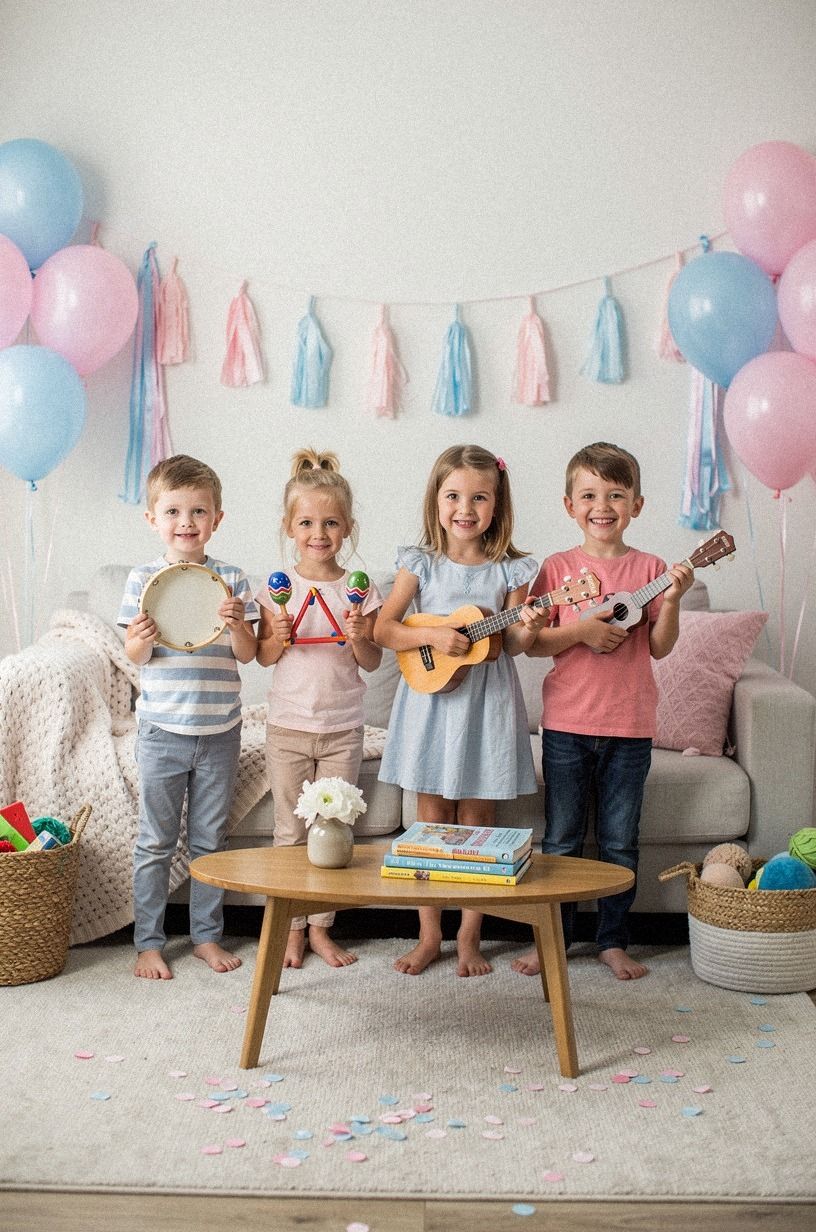
Make the reveal a small sound performance. One child shakes a bell, another taps a drum, and an older sibling opens the final envelope after the rhythm stops. It’s playful, affordable, and gives every child a job that feels important.
Use a reclaimed weathered teak rhythm block for the oldest child and soft bells for younger hands. Add a plum cloth, grey ribbon, or small rose-gold detail to keep the setting cohesive.
Avoid anything sharp or painfully loud. A warm room can turn chaotic quickly when every child receives a noisy instrument.
Choose one simple rhythm in advance. You can clap it together three times, then stop and let the last child reveal the color.
Your children don’t need musical training. They need a clear sequence they can remember.
The sound gives the gathering a natural pause. Everyone looks toward the same person, and the reveal has a beginning, middle, and finish. That structure helps shy children because they know what comes next.
I’d keep the decor quiet around this idea. A reclaimed weathered teak stool and one rose-gold vase are enough. Your children are the focus, and the room shouldn’t compete with their expressions or movement.
If your guests want to play along, use a few prompts from these gender reveal party games and guessing ideas for guests. You can keep the rhythm moment separate from the larger group activity, which makes the whole event feel more controlled.
8Backdrop First, Costs Second
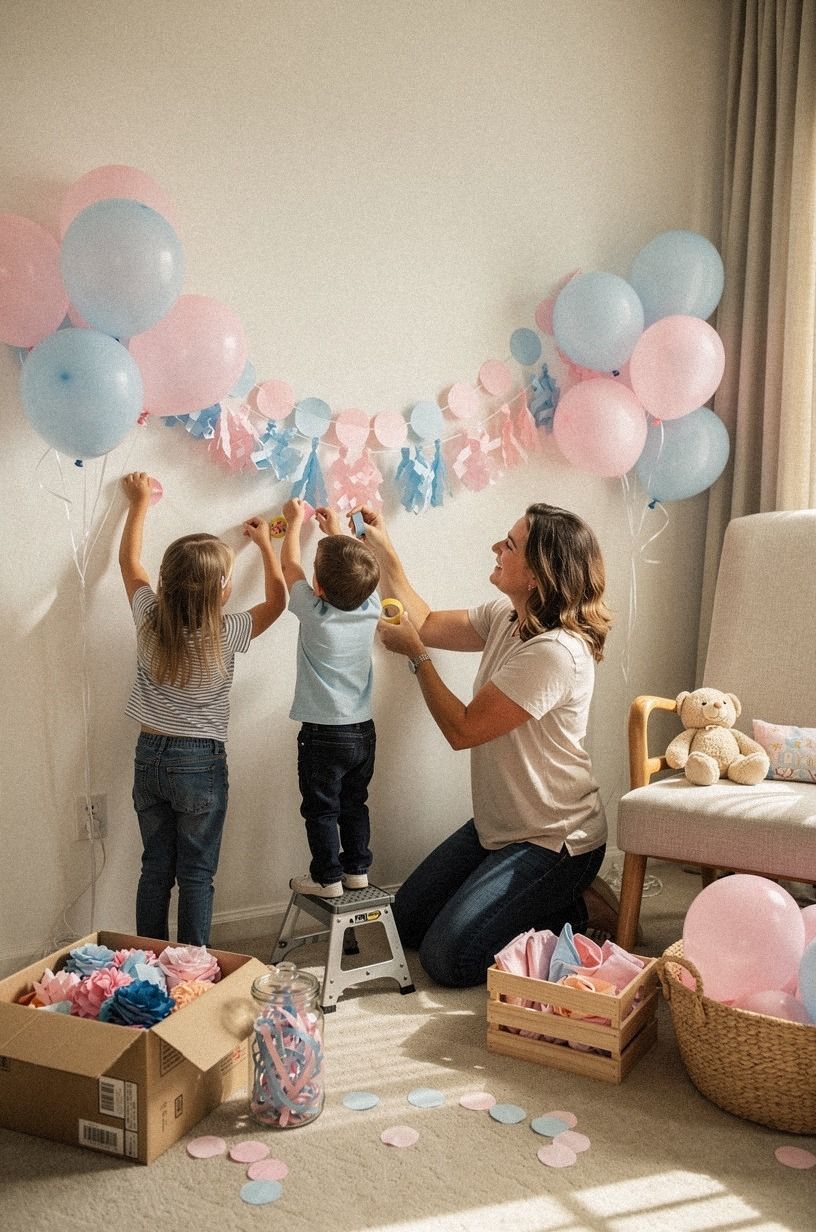
Paint a simple navy and white backdrop with your children before the party, then use it behind a walnut reveal table. A Calacatta marble tray with gold veining can hold the envelope or color clue without adding much clutter.
A Practical Cost Plan for a Warm Reveal
Spend first on the item that gives the children a clear role. That might be a sturdy box, a large sheet of paper, or a keepsake book. Decorative extras matter less when the central activity is engaging.
Borrow stools, frames, baskets, and vases before shopping. Thrifted pieces can look more charming than matching party supplies, and your children won’t know whether an object came from a boutique or your hallway cupboard.
Leave about 10% of the budget for forgotten basics such as tape, wipes, replacement paper, or snacks. Small practical purchases can prevent a beautiful plan from becoming frantic.
Safety Checks Worth Making
Keep heavy objects low, secure unstable furniture, and remove anything sharp from the children’s path. Avoid small pieces such as loose beads, buttons, and tiny ornaments when toddlers are involved.
Test removable hooks, adhesive strips, and tension rods before the party. Keep cords against the wall and leave at least 30 inches of clear walking space where children will gather. An adult should stay close whenever a toddler is carrying or arranging materials.
9Toddlers Need a Soft Texture Job
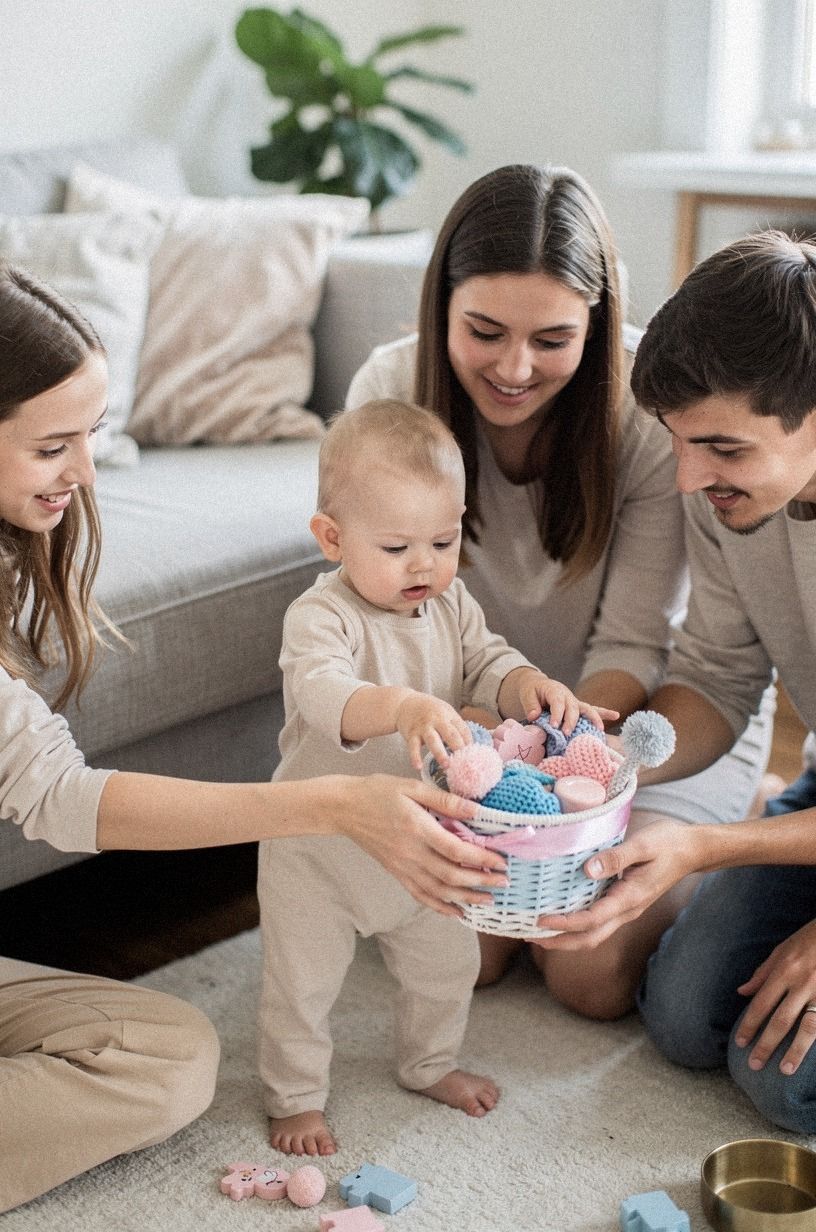
Toddlers need a task they can complete with their hands, so give them a basket of soft objects to arrange around the reveal. A job involving texture keeps small children engaged longer than a complicated instruction.
Fill a low cerused white oak basket with emerald fabric squares, cream felt leaves, soft pom-poms, and small gold ribbons. Avoid buttons, beads, loose glitter, and anything that could become a choking hazard. Your toddler should be able to touch the materials safely while an adult stays nearby.
Ask the child to choose what goes inside the basket and what stays beside it. This gives them genuine control without making the final arrangement fragile. If the pieces end up in a surprising order, let it stand.
A cream wool throw can create another useful texture station. Your toddler might fold it, carry it, or place it on the floor for siblings to sit on. Simple movement feels meaningful when adults treat it as part of the celebration.
Keep the basket close to the reveal point, but leave a clear route around it. Toddlers often change direction suddenly. Your older children can help by carrying the basket together or returning pieces when the activity ends.
For more gentle activities, combine this with the DIY gender reveal decorations you can make on a budget. A toddler can add fingerprints to paper decorations while the older children handle cutting and writing.
10Why Choose a Doorway Over a Stage?
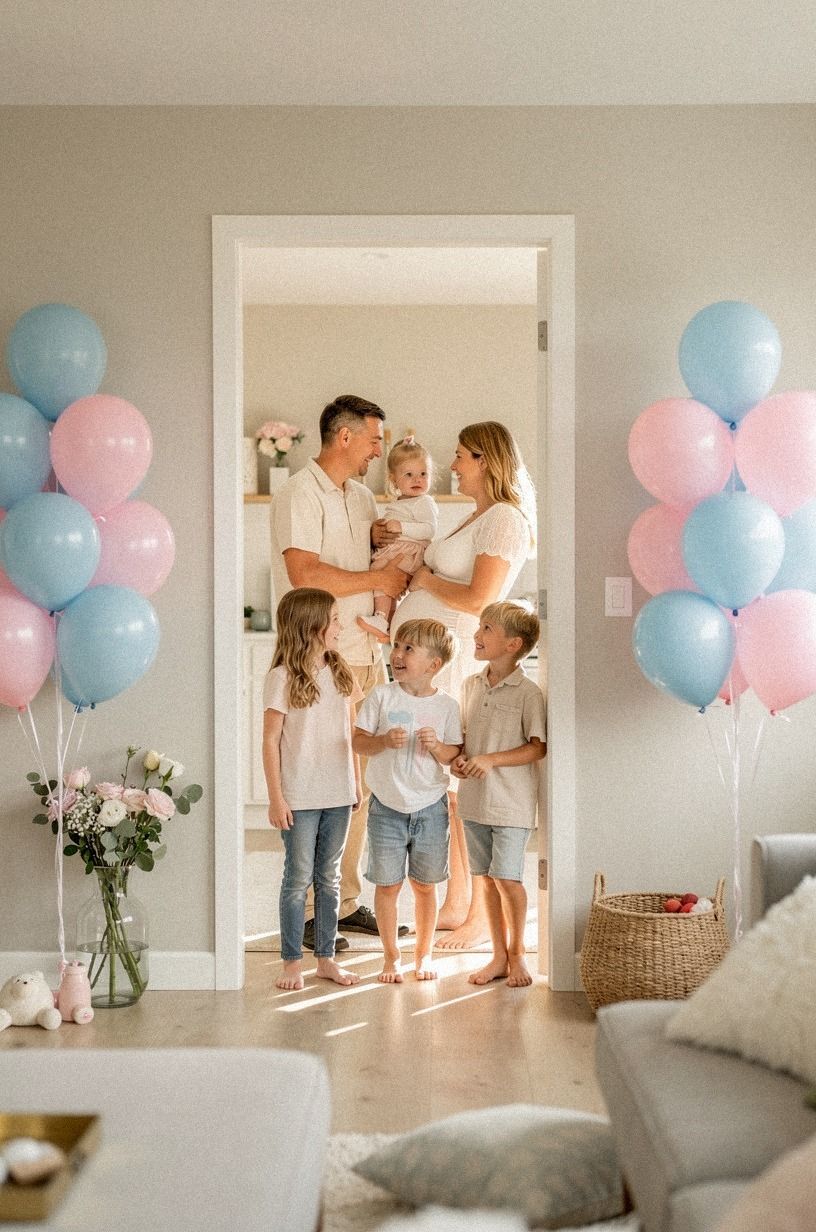
Use a doorway as the reveal point instead of building a staged backdrop. Each sibling can stand on one side of the opening, then walk through together after the result is announced. The movement creates a welcoming, family-centered moment.
Hang a forest-green cotton gauze curtain from a tension rod so you don’t need to drill into the wall. Add a rust-colored ribbon or tieback, and set the rod about 4 to 6 inches above the door frame. Let the fabric fall close to the floor for a softer line.
You can hide a color ribbon, sign, or small paper garland behind the curtain. The oldest child pulls the fabric aside while the younger ones step through. You’re keeping the reveal active without asking anyone to perform a complicated routine.
I’d choose a doorway with natural light and enough floor space for three people. A narrow hall won’t give your children room to turn toward the guests, and a dark entry can flatten the whole setting.
Use removable adhesive hooks for any extra decoration. They’re useful in a rental and easy to remove once the gathering ends. A small natural-oak stool or a backlit translucent onyx tray can finish the entry without crowding it.
For an even quieter version, pair the doorway with these low-key gender reveal ideas for a small party at home. You’ll get the same emotional payoff with fewer supplies. If the doorway is too narrow, use the entrance to a larger room instead.
11Plan the Last Moment Like a Family Portrait
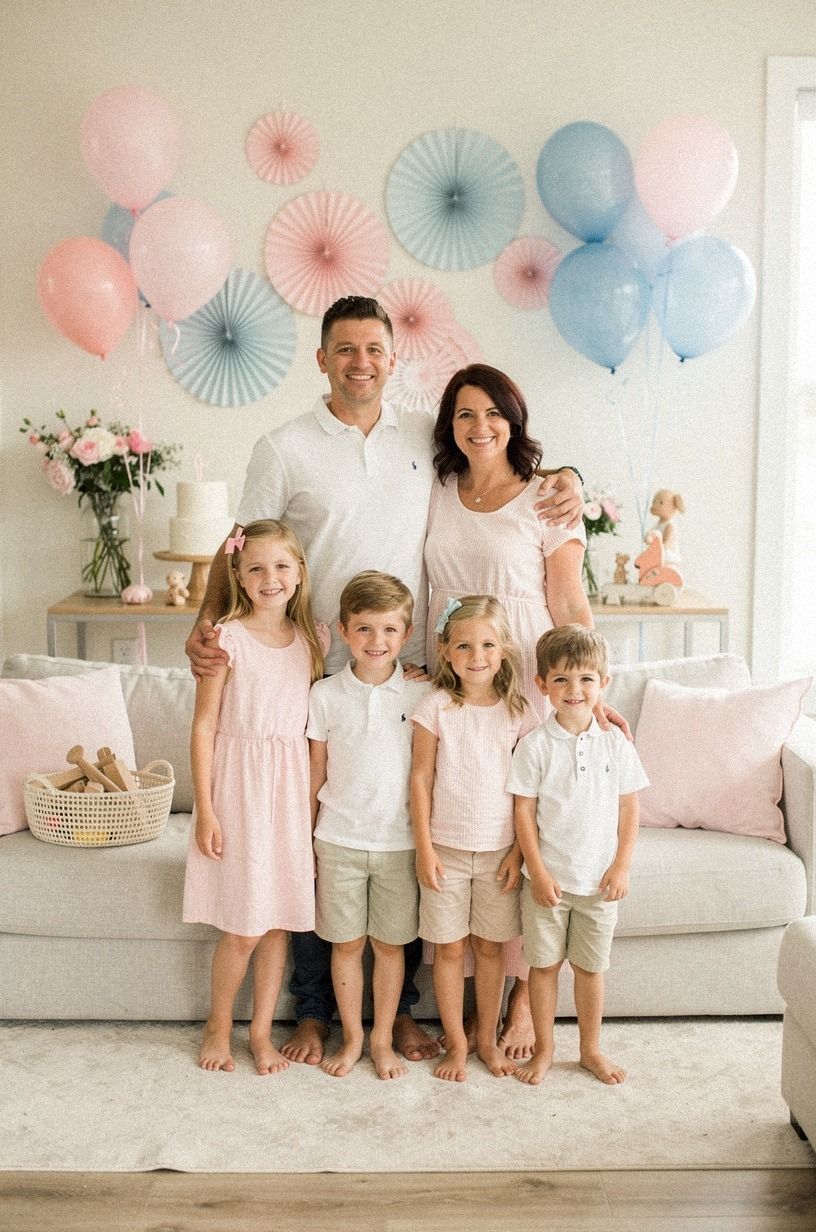
Save one final moment for after the reveal, when everyone has stopped reacting and the children are close together. You don’t need to force a perfect pose. Give the siblings a place to sit, stand, or lean against one another.
Place a dusty rose wool rug beneath them and move sharp-edged furniture away. A book-matched walnut bench can help younger children sit safely, while older siblings stand behind it. Add one charcoal cushion and a small brass object, but keep the arrangement loose enough that children can change positions.
Ask each sibling to say one thing they hope to do with the baby. Their answers may be funny, practical, or wonderfully sincere.
One child may promise to share snacks. Another may announce that the baby can watch them play.
Those details are worth keeping.
I’d avoid adding another activity at this stage. The reveal has already happened. Let the children hold the keepsake book, touch the fabric, or sit beside the parents while everyone settles.
If you want guests to participate, use one final question from these gender reveal party games and guessing ideas for guests. Keep it brief so your children don’t feel as though the event has suddenly become a performance.
What Should You Keep After the Reveal?
Save the drawing, guessing cards, keepsake pages, and one small piece of the backdrop. You don’t need to preserve every decoration. The most meaningful objects are the ones that show what your children thought and made themselves.
Write the date on the back of each item. A short note about what happened that day can make the memory more vivid later. Keep the pieces in the album, a document box, or an envelope tucked into the baby’s room.
Why Sibling Reveals Work Better With Real Responsibility
The strongest sibling reveals aren’t built around making children look adorable on command. They’re built around giving each child a small piece of responsibility that matches their age.
An older child can read a card, a preschooler can carry fabric, and a toddler can choose where a basket sits. When you let the role fit the child, the moment feels calmer and more generous.
I’ve made the mistake of designing a reveal around the finished setting first. The backdrop was polished, the colors were right, and nobody looked comfortable.
Children don’t experience a party as a composition. They experience it through texture, movement, waiting, and the question of whether adults will let them touch something.
That’s why I prefer a reveal box, a shared drawing, or a sound cue over a complicated display. Your children can understand those ideas immediately.
They can see what their hands are supposed to do, and they can change the plan without ruining it. A little unpredictability is part of the memory.
The room matters, too. Warm wood, soft fabric, and open floor space create a setting where siblings can move toward each other.
Harsh lighting and crowded furniture make every reaction harder to read. You don’t need a luxury party budget.
You need enough space for your children to turn around, look at you, and find one another.
Before the gathering, explain each role in one sentence. “You’ll open the envelope.” “You’ll carry the basket.” “You’ll add the final card.” Children handle transitions better when the instructions are concrete and short.
You should also build in a quiet reset. A child may need water, a snack, or five minutes away from the guests.
That isn’t a failure in your plan. It’s good hosting. When you give children room to regulate themselves, they return with more confidence.
If I were planning this for my own family, I’d choose one visual idea and one emotional idea. The visual might be a painted backdrop.
The emotional idea would be a promise in the keepsake book. Together, they give you something to enjoy now and something your children can understand later.
That’s the part worth keeping.
What People Always Want to Know
What is the best gender reveal idea that includes big brothers and sisters for a small party?
A shared reveal box or sibling guessing wall works best because every child gets a visible role without needing much space. An IKEA KALLAX cube, neutral paper, and one color clue can create a warm focal point in a small room. I’d choose the box when your children enjoy movement and teamwork.
Where can I buy gender reveal pieces on a budget?
Look at IKEA, Wayfair, and Target for baskets, paper, textiles, and simple furniture. Facebook Marketplace and thrift shops can also provide wooden frames and stools.
You don’t need matching pieces, and second-hand items often give the display more character. I’d check your own cupboards first.
How much does a gender reveal makeover cost?
A small reveal can cost about $35 to $168, depending on how many pieces you already own. A simple setup using household baskets, family artwork, and borrowed furniture may stay below $60.
Paint, fabric, and a keepsake book are the main purchases. The setting can feel special without a major renovation.
Can I create a gender reveal on a budget?
Yes, and your children can make much of the decor. Use kraft paper, reused jars, family artwork, and a basket you already own. Choose one backdrop, one reveal object, and one place for everyone to gather instead of spreading your budget across many small decorations.
Start with what your family already loves.
Is a sibling reveal worth it in a small space?
Yes, because a small room keeps the family close and makes reactions easier to notice. Choose one clear wall, move oversized furniture away, and use a low-pile wool rug so children can sit together without blocking the walkway. I’d keep the guest list comfortable rather than squeezing in extra chairs.
Is a sibling gender reveal a good idea for a rental?
Yes. Use a tension rod, removable adhesive strips, peel-and-stick paper, and freestanding baskets.
A cotton gauze curtain can cover a doorway without permanent changes, and your children can decorate paper panels that come down easily after the gathering. Test every removable product on a hidden spot first.
Where I’d Start First
If I had to pick one, I’d start with the shared reveal box. Your children lift it together, so nobody becomes a background prop, and the slow opening gives every reaction room. Keep the wrapping neutral, assign each sibling one simple job, and let the rest of the room stay quiet.
Pin this idea for later, then gather supplies from your home before shopping. A box, a basket, a few sheets of paper, and one meaningful family object may be all you need. The reveal will feel most memorable when your children recognize themselves in it.