
The best gender reveal party games get guests talking within minutes, and you can build this list for $0 to $800 depending on your styling. I once spent too much on matching decorations and forgot the guests needed something to do. These ideas fix that. They’re warm, social, and easy to adjust.
- Layer the Prediction Table With Three Clear Choices
- Mix the Old Wives’ Tale Guessing Cards
- Build the Baby Prediction Jar
- Frame a Photo Booth Guessing Wall
- Play the Two-Color Candy Vote
- Swap Bingo Squares for Baby Milestones
- Hang a Guess-the-Birth-Date Calendar
- Anchor a “Who Knows the Parents?” Quiz
- Use the Three-Height Light Stack
- Frame a Baby Photo Match Game
- Layer the Advice Card Station
- Contrast Team Predictions Over Trivia
- Paint a Prediction Palette
- Build the Storybook Guessing Shelf
- Float a “Future Favorite” Food Vote
- Style the Guessing Lounge With a Rug
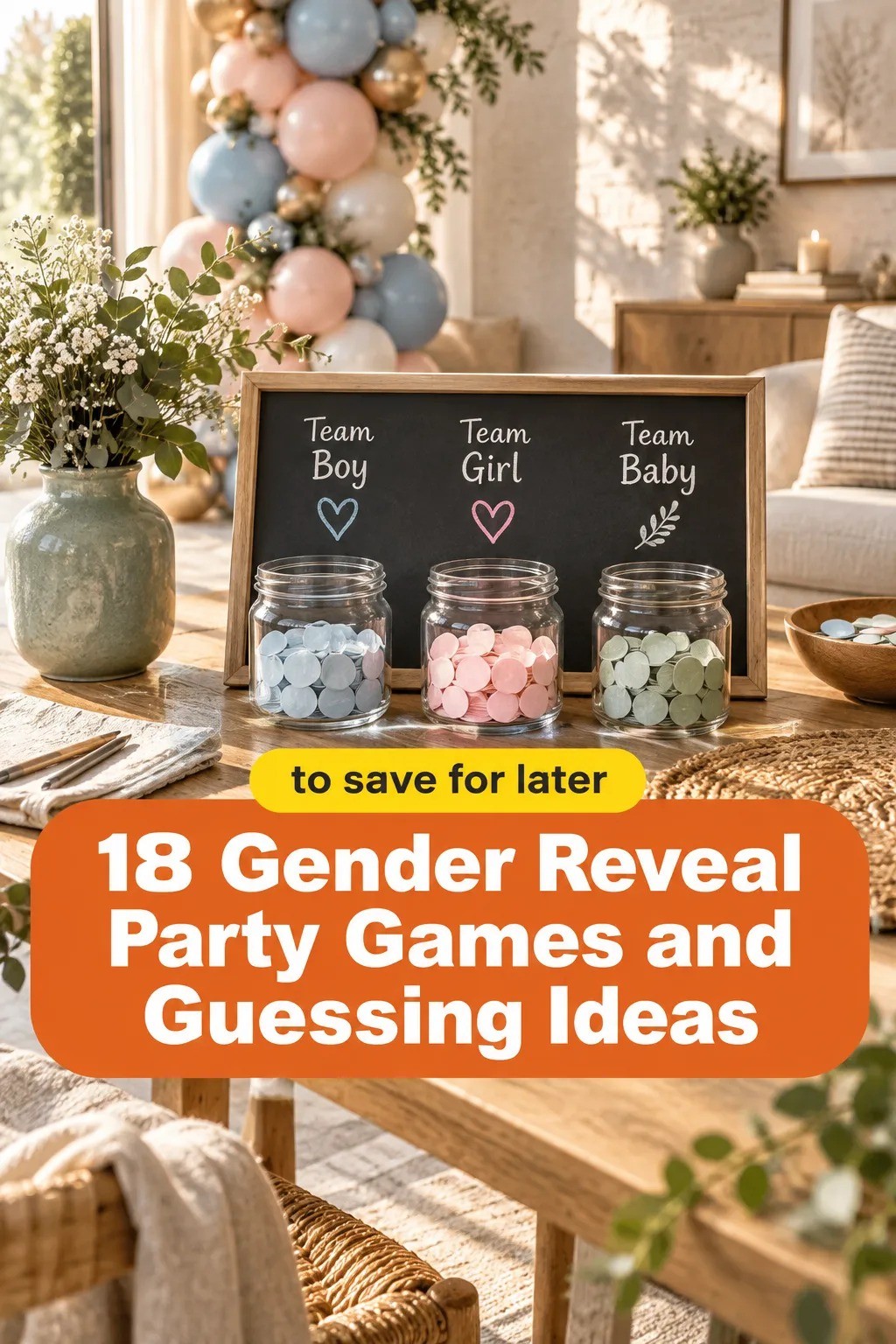
- Ask the Question: What Will Baby Inherit?
- Finish With the Reveal Relay
1Layer the Prediction Table With Three Clear Choices
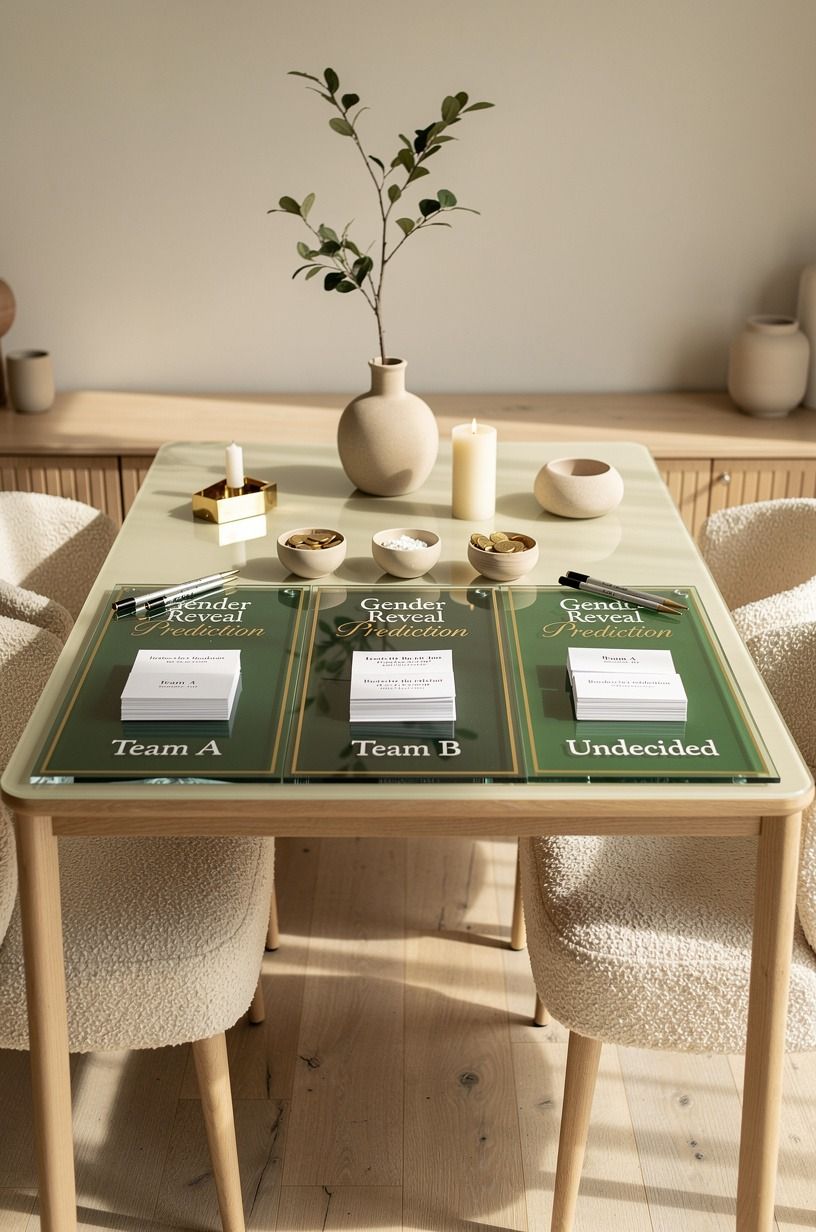
Give guests one central place to make a prediction, then make the choices visible from across the room. An emerald runner with an organic bouclé texture, three cream ceramic bowls, and small cards are enough.
Label the bowls “team pink,” “team blue,” and “wild guess,” so nobody has to ask what happens next. You’ll want the table near the entrance because guests tend to make their first prediction before they’ve found a drink.
My favorite version uses a gold-toned tray for pens and keeps the cards in a shallow cream box. It feels intentional without looking like a school worksheet.
If you’re hosting in a small apartment, skip a large backdrop and use one framed sign instead. And if you want more party inspiration, this guide to creative virtual party ideas has a useful lesson: guests participate more when the first action is obvious.
2Mix the Old Wives’ Tale Guessing Cards
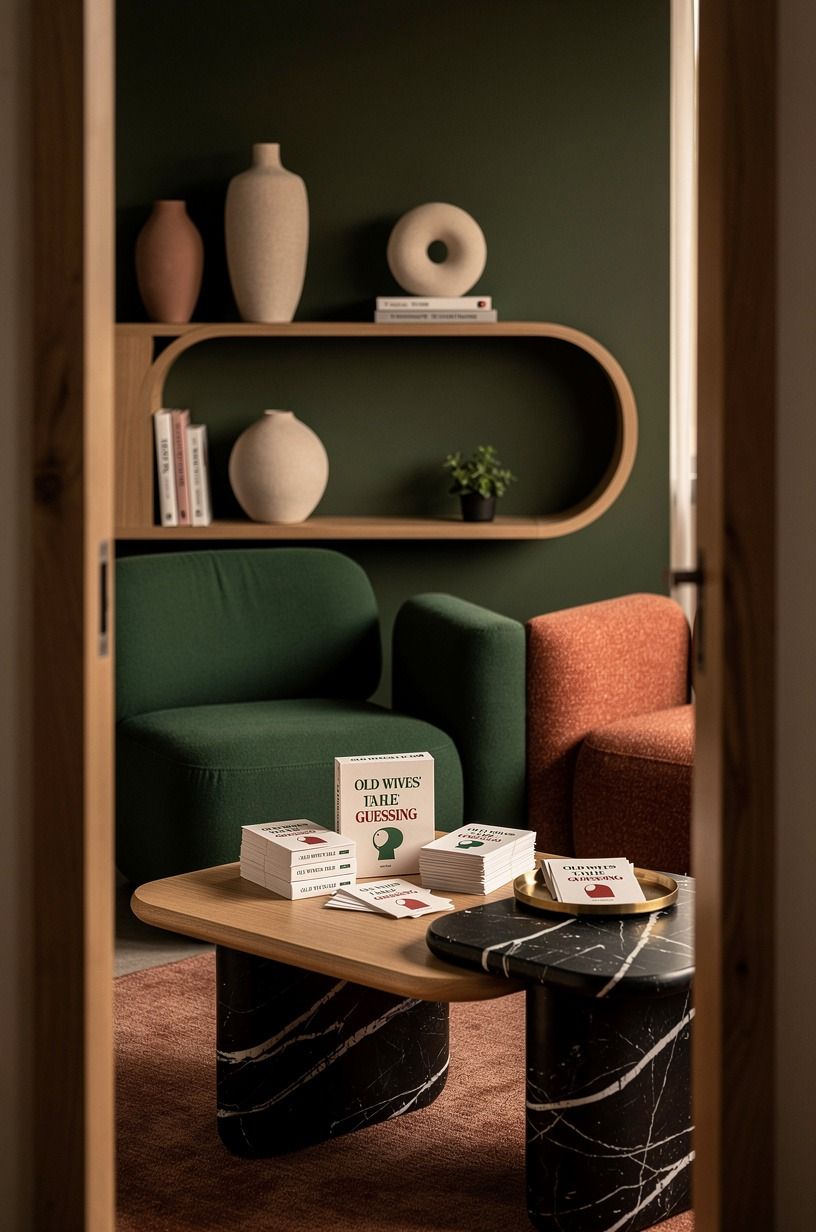
Old wives’ tale cards work because everyone has an opinion, even the guests who don’t know the parents well. Print questions about cravings, sleep, the baby’s heart rate, and the shape of the bump.
Keep each card to five questions, or you’ll create a quiz instead of a conversation. You can place a rust cardstock card at every seat with a forest-green pencil.
I’d skip glossy paper because it catches glare and makes the handwriting messy. A Farrow & Ball Studio Green envelope and a small Nero Marquina marble tray add an earthy touch without forcing the whole room into one color.
If you’re using a dessert table, let the cards sit beside the napkins rather than under the cake stand. You’ll get more guesses that way.
And yes, the answers don’t need to be scientifically accurate to be fun!
3Build the Baby Prediction Jar
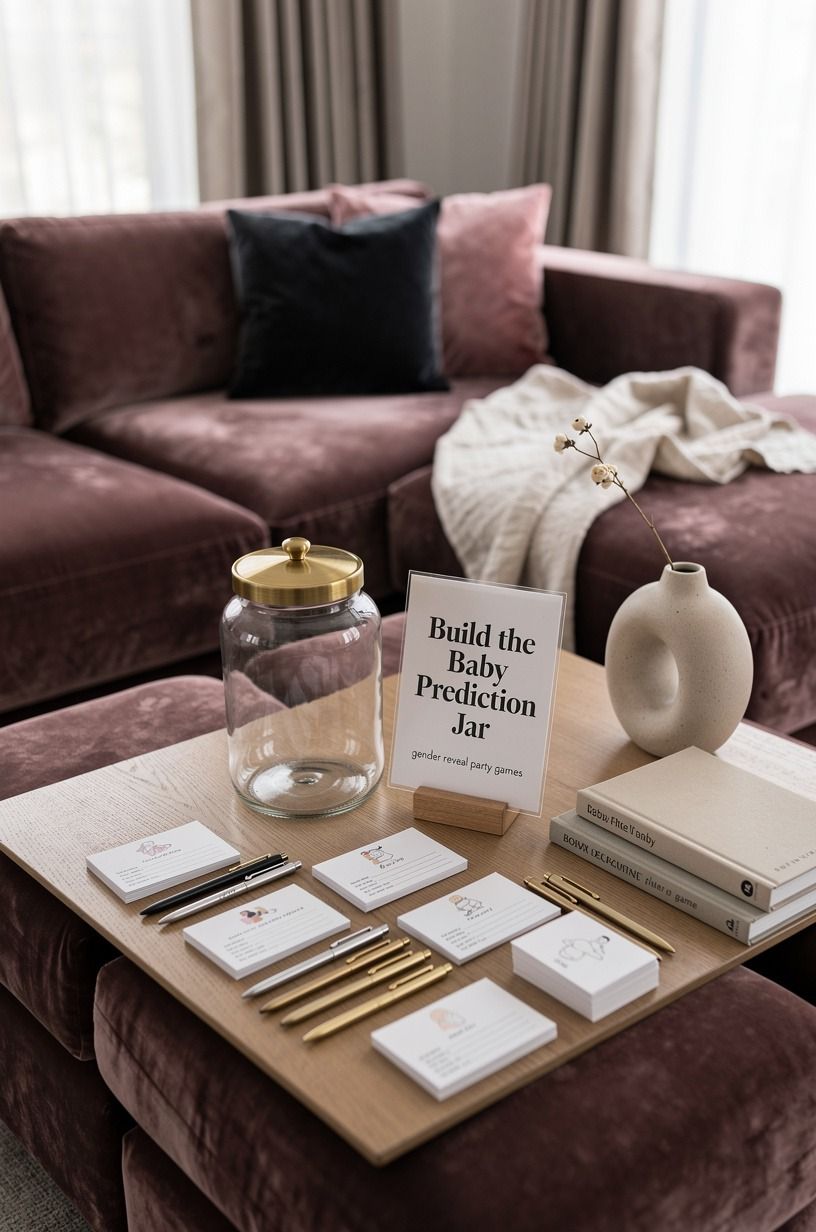
A prediction jar gives shy guests an easy way to participate without speaking in front of everyone. Set out slips for birth date, birth weight, hair color, and the first food the baby might love. A dusty-rose deep-pile mohair velvet pad beneath the clear jar keeps the station soft, while a charcoal clipboard with a brass clip holds the instructions and a sample entry.
You’ll want to write “one guess per slip” in large lettering because people tend to fold several answers together. I made that mistake at a shower once, and we couldn’t read half the handwriting later.
Use a charcoal KALLAX cube as a low station if children are attending, so they can reach it without climbing. For another guest-friendly idea, pair the jar with a party hairstyle inspiration board, especially if the shower has a dressy theme.
4Frame a Photo Booth Guessing Wall
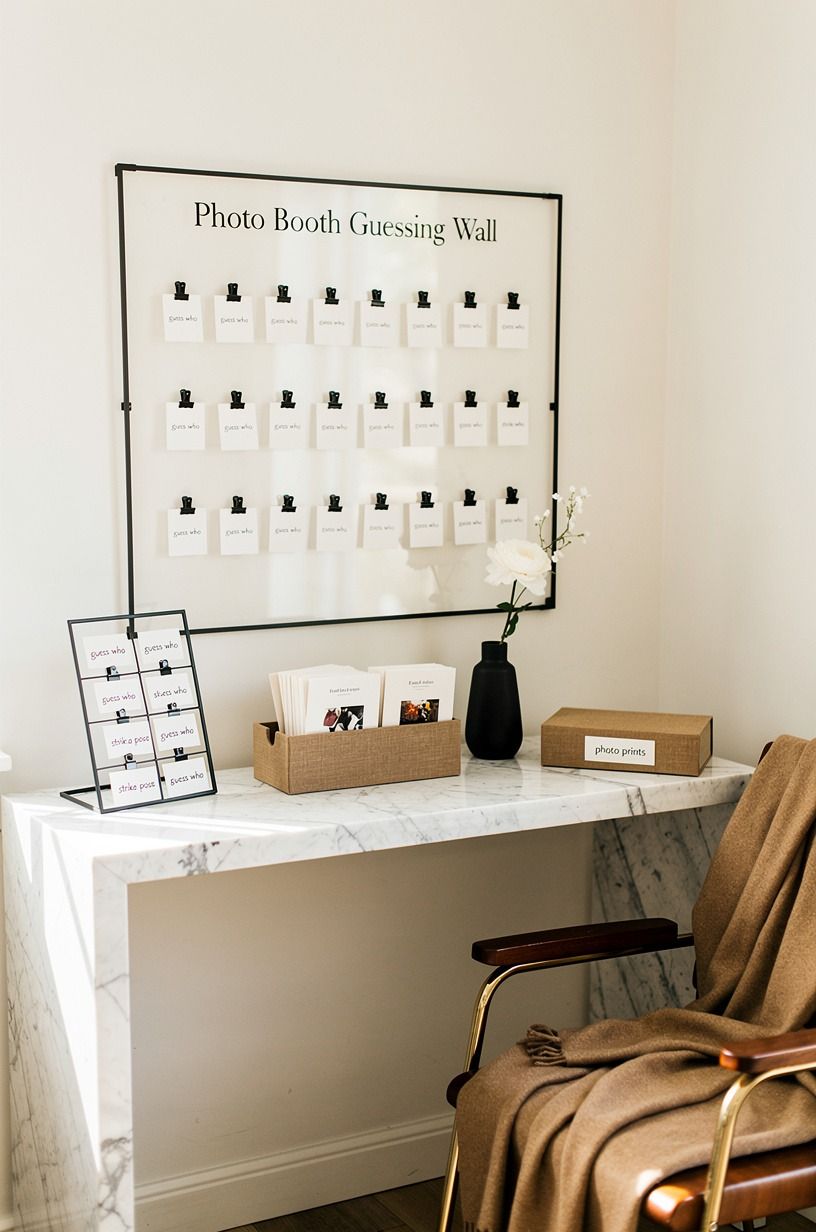
Turn the party wall into a guessing game by placing two large boards against a warm-white wall. Add camel-colored borders, black lettering, and a small Carrara marble console beneath them for cards and pencils.
5Play the Two-Color Candy Vote
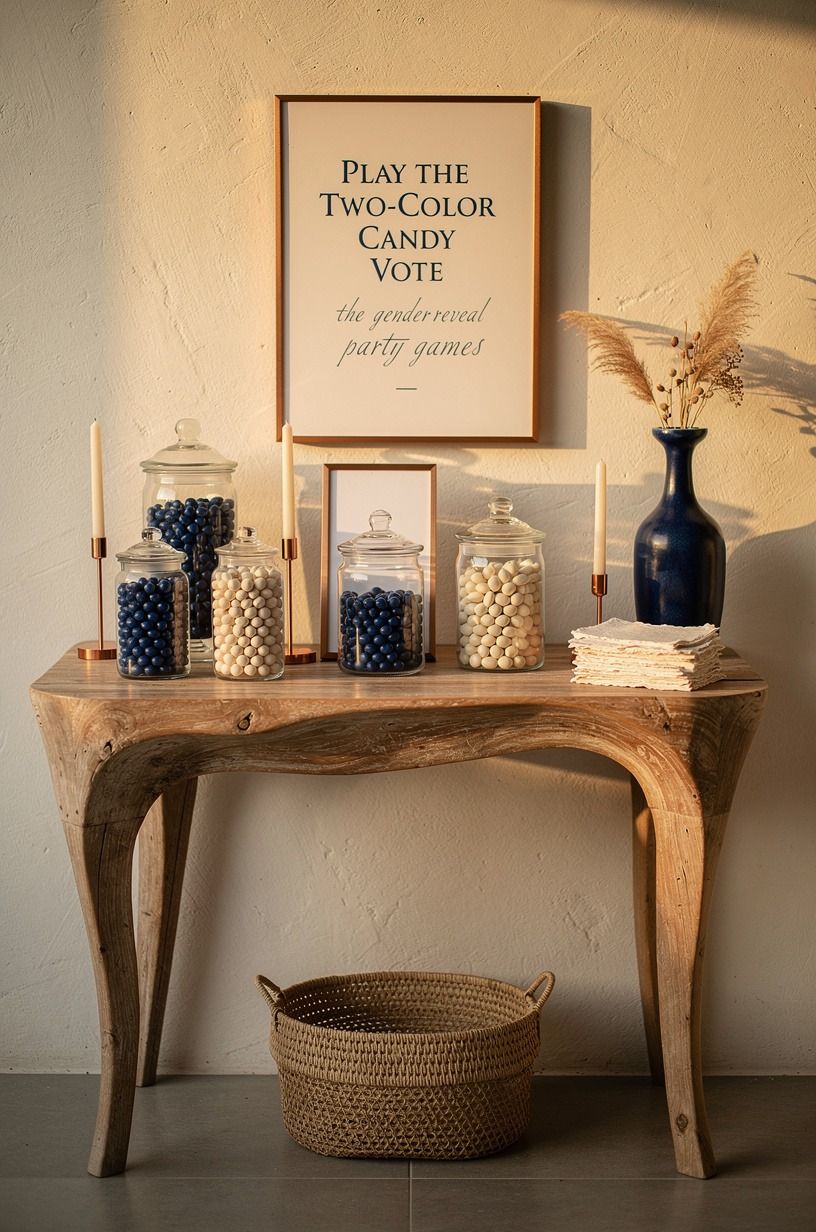
Candy voting is quick, visual, and generous to guests who don’t want a complicated activity. Fill two glass apothecary jars with midnight-blue and ivory sweets, then give everyone a small copper scoop or paper cup.
The jar with the most candy becomes the crowd’s prediction. You’ll get instant chatter because people can see the vote changing all afternoon.
Choose wrapped hard candy if children will be present, and use small glass cups instead of loose scoops for cleaner serving. A reclaimed, weathered-teak console gives you enough room without making the game feel like a buffet.
I’d avoid mixing several shades of blue because the results become hard to read. One midnight tone and one ivory shade look calmer.
And if you’re serving drinks, match the candy colors to the punch so your table feels warm rather than overly themed.
6Swap Bingo Squares for Baby Milestones
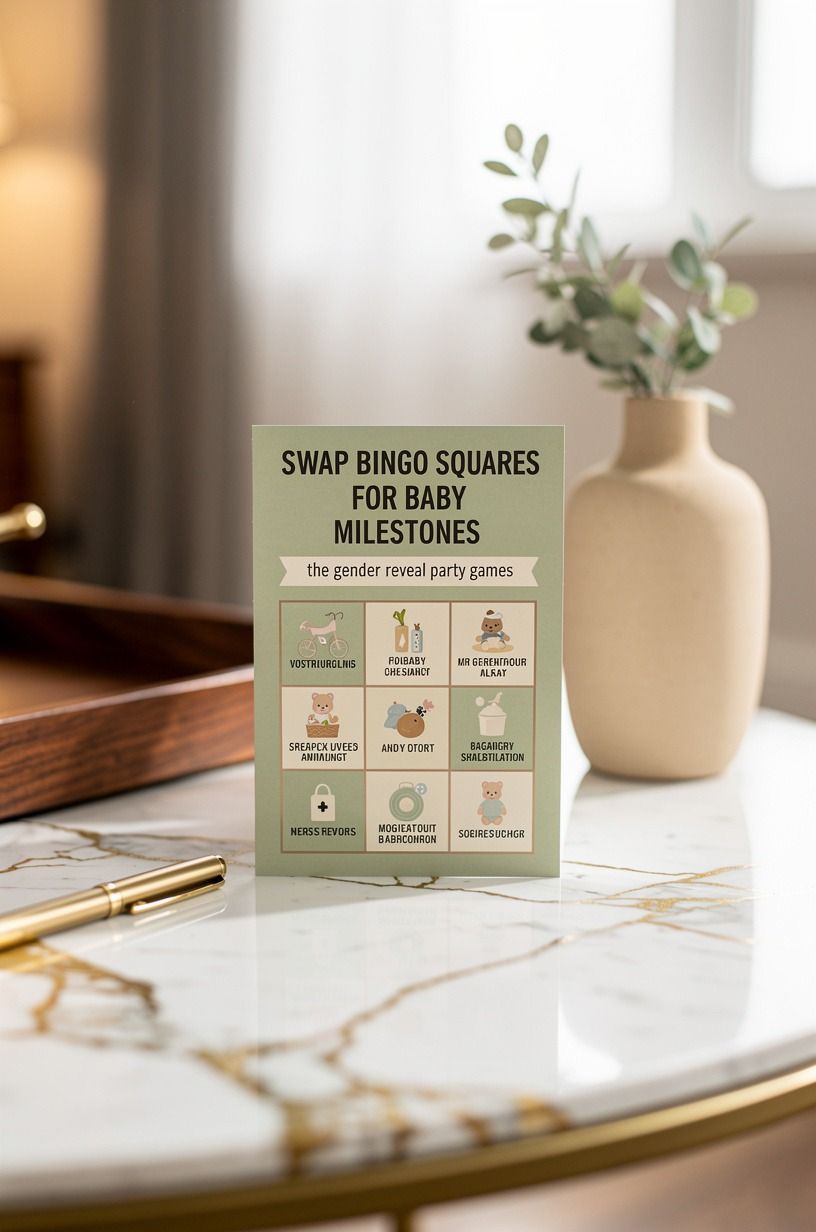
Baby bingo becomes more engaging when the squares predict moments guests might see during the party. Use squares such as “someone cries,” “the parents open a gift,” “someone mentions cravings,” or “a grandparent gives advice.” Print the cards on warm cream cotton paper so they don’t curl beside cold drinks.
You’ll want a small pencil at every place setting, plus one Calacatta marble tray with gold veining for marking squares. A natural-wood stool can hold the prize basket without taking up table space.
Skip novelty prizes that nobody wants at home. A candle, tea blend, or little box of chocolates feels more generous.
If you’re hosting outdoors, clip each card to a wooden clipboard because a breeze can turn the game into a chase. Save this warm party drink idea for a colorful refreshment station.
7Hang a Guess-the-Birth-Date Calendar
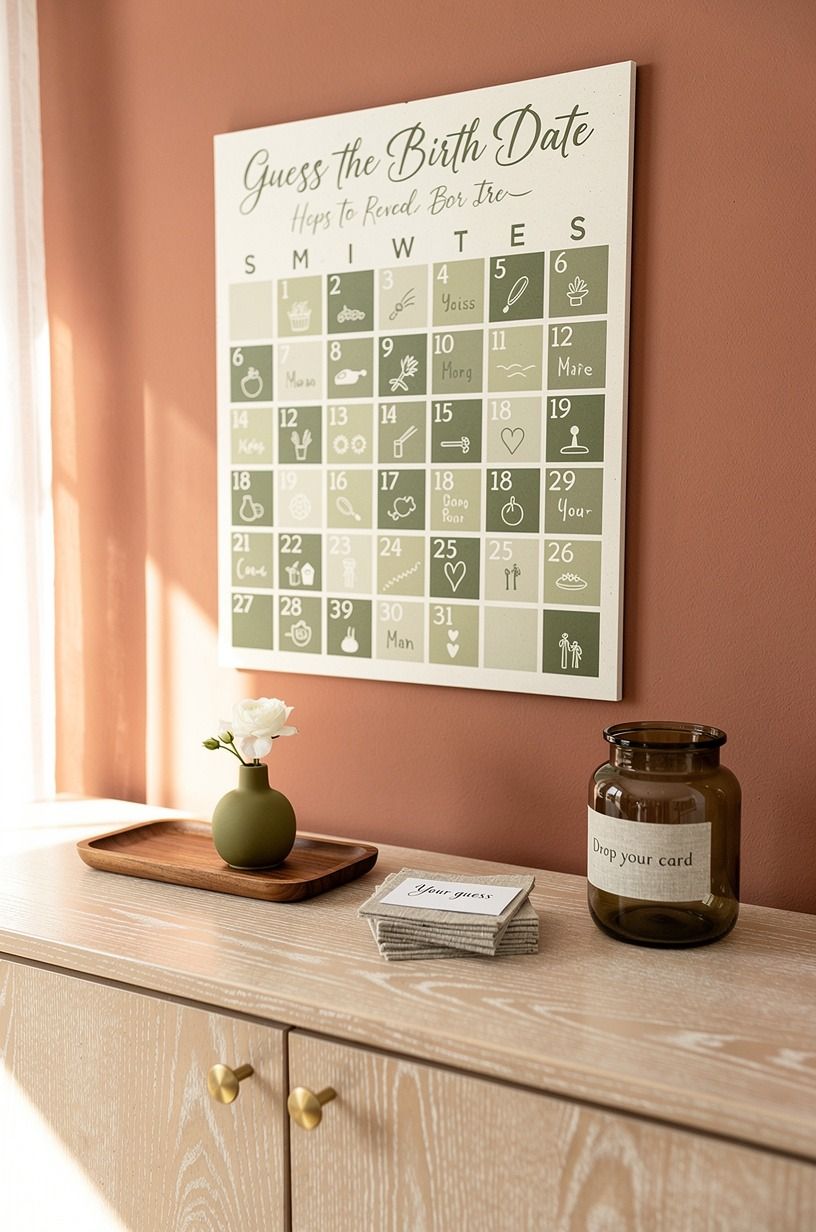
A birth-date calendar lets guests make a prediction that feels personal without requiring a loud group activity. Use a full month page, place a small sticker on every day, and ask each person to choose one.
Leave the due date unmarked so nobody assumes it’s the obvious answer. A cerused white oak poster hanger makes the calendar easy to display and store.
Your guests will need enough writing room, so use a large format rather than a crowded desktop calendar. Hang it with the bottom edge around eye level, then place a small stone bowl of stickers underneath.
I’d pick muted terracotta and olive dots over glitter stars because they suit a warm, modern shower. And if your party has a fireplace or living-room focal point, keep the calendar away from it so people don’t block the room’s natural gathering path.
8Anchor a “Who Knows the Parents?” Quiz
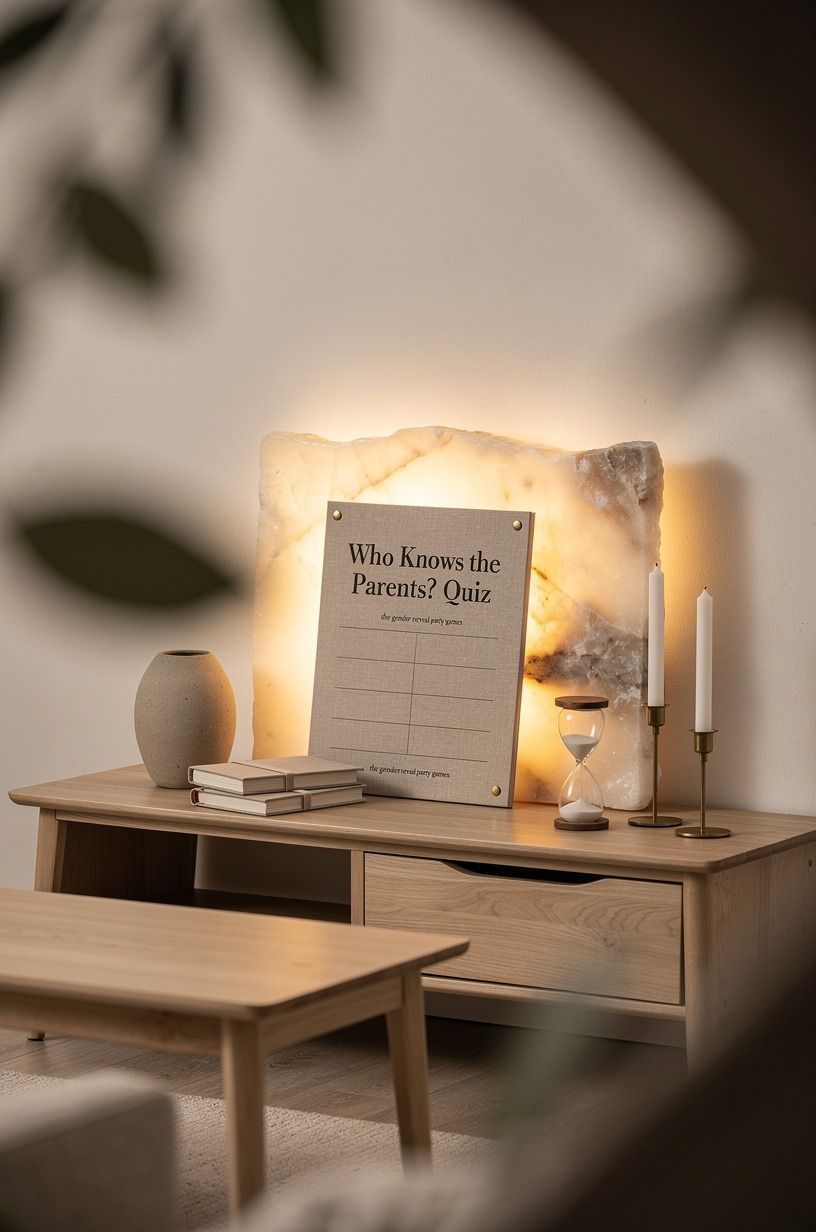
A parent quiz turns personal details into a light competition. Ask questions about the parents’ first date, favorite snack, childhood nickname, and the name of the person who guessed the pregnancy first.
Keep the questions affectionate rather than embarrassing. Guests should laugh with the parents, not feel as if they’re watching a roast.
Print the quiz on clay-toned linen stock, and use an aged-brass pen cup beside a backlit translucent onyx tray so the table has a little visual weight. You’ll want one person to read the answers aloud after everyone finishes.
That reveal is where the room gets lively. I’d skip a timed round because pregnant guests and older relatives may need a slower pace.
For a second activity, link the quiz table to your frosted party hairstyle inspiration so guests have something to browse while they wait.
9Use the Three-Height Light Stack
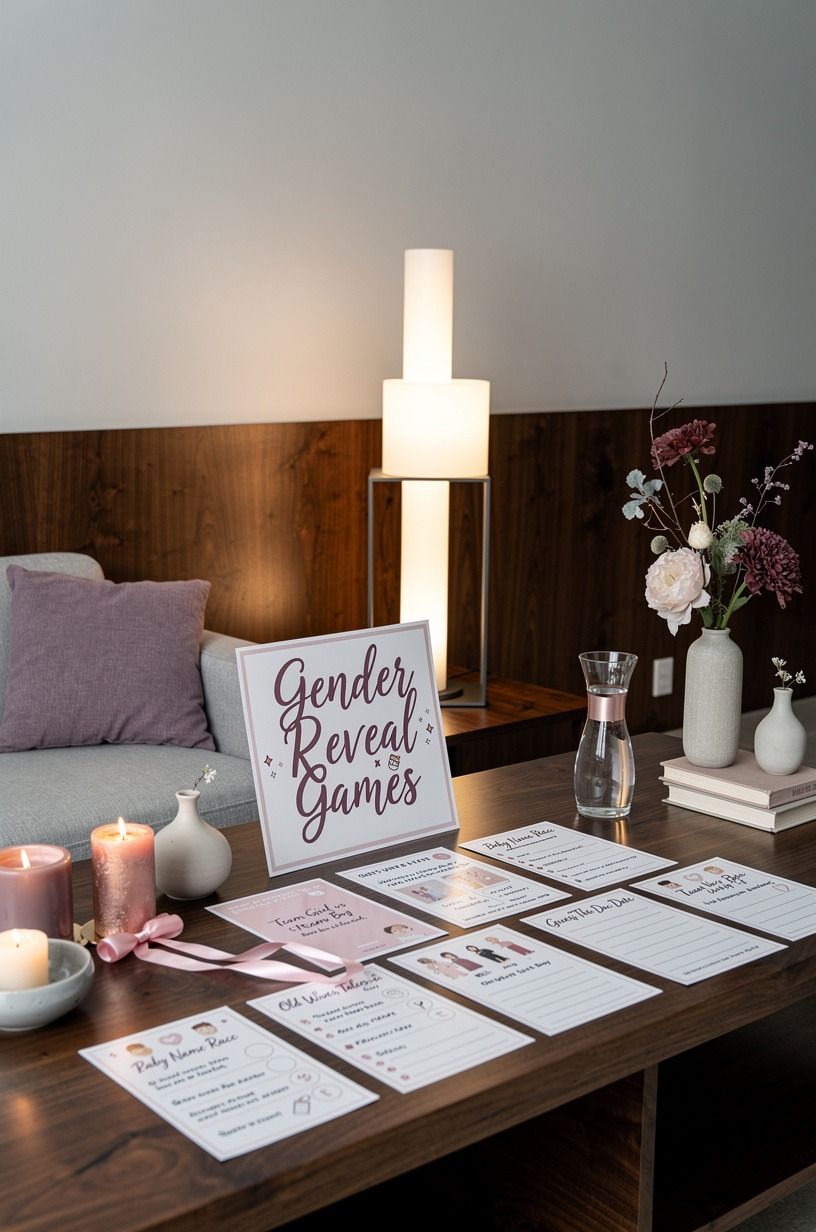
Lighting can turn a basic guessing station into the place where guests naturally gather. Create three levels: a tabletop lamp, a hanging pendant or string of lights, and a low candle or battery lantern.
This follows the useful rule of three light sources per room: ceiling, task, and ambient. You’ll notice the difference as soon as the afternoon light fades.
Use a plum linen-shaded table lamp, warm white LED candles in rose-gold holders, and a slim floor lamp with a book-matched walnut base if the room allows it. I’d skip blue-white bulbs because they make pastel decorations look harsh and flatten everyone’s face in photos.
If you’re renting, use a plug-in pendant with a removable hook. And if the light needs more warmth, place it near rose-gold accents, not shiny chrome.
Guests stay longer when their eyes aren’t fighting the room.
10Frame a Baby Photo Match Game
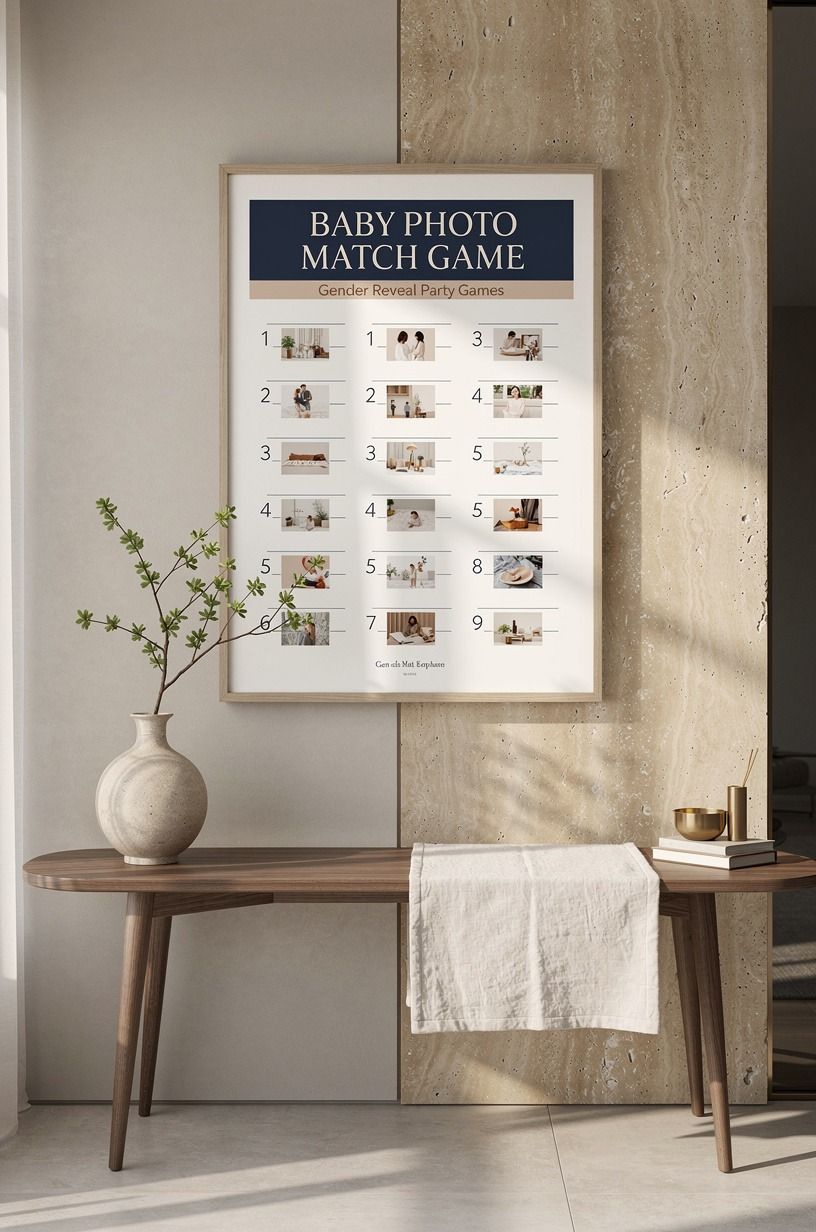
Ask guests to bring or send a baby photo before the party, then display the images with numbered cards. Everyone guesses which childhood face belongs to which adult. This game creates stories quickly because the parents can explain the odd haircut, missing tooth, or family resemblance behind each photograph.
Use walnut photo clips on a long navy ribbon, and keep the images at 4 by 6 inches so the wall doesn’t feel crowded. You’ll want a printed answer key hidden in a drawer or envelope until the final round.
I’d choose a warm travertine picture ledge over a freestanding board if you already own one, but don’t buy furniture just for this. A temporary ledge or ribbon works.
For a more polished party mood, borrow ideas from this warm highlights style piece, especially its use of soft contrast.
11Layer the Advice Card Station
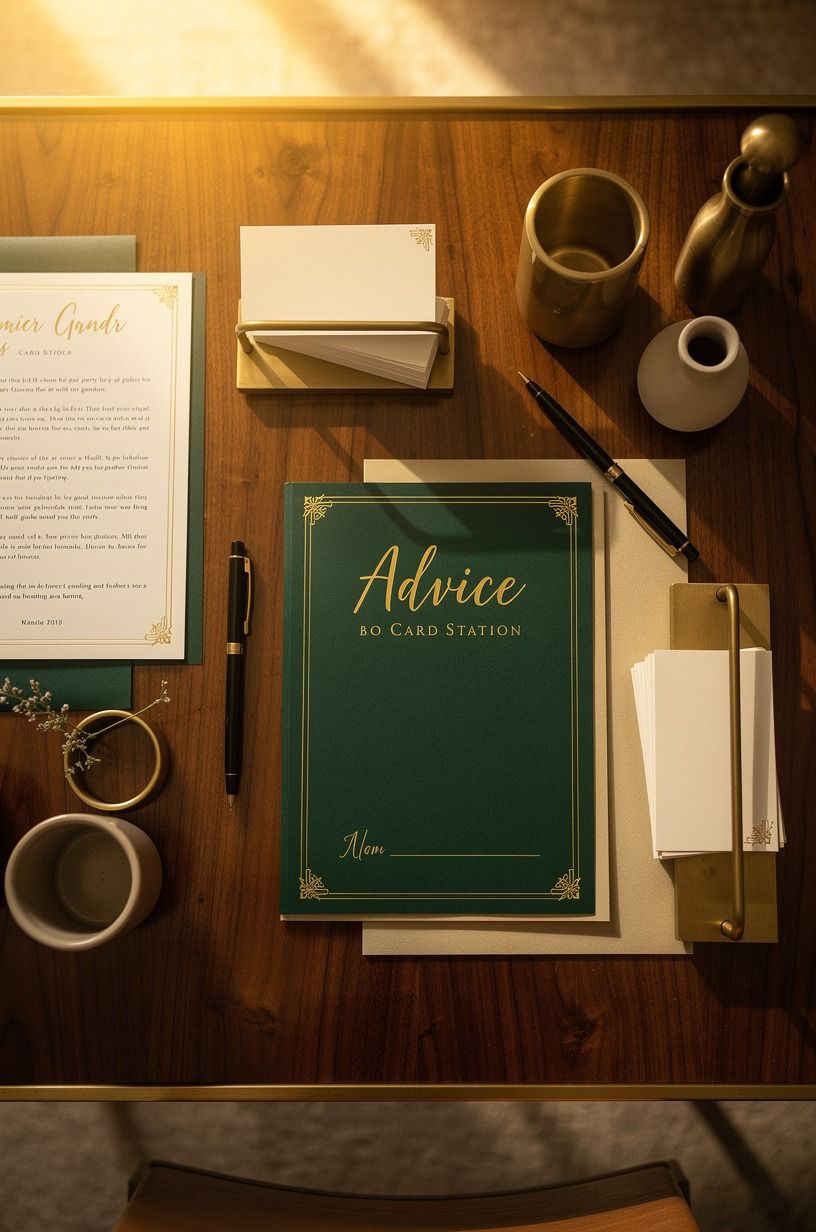
Advice cards aren’t technically a guessing game, but they keep guests writing, sharing, and thinking about the baby throughout the party. Ask for one piece of practical advice, one hope, and one prediction. An emerald cloth under the cream cards makes the station feel rich without adding another loud color.
Place the cards beside a narrow vase of eucalyptus and a small bowl of unlacquered brass clips developing a warm patina. You’ll want to give guests an example because “write advice” can feel too broad.
Try: “The thing I wish I’d known during the first month was…” I’d skip a long list of prompts because it starts to feel like homework. If you’re short on space, use a wall pocket instead of a table.
It keeps your surfaces open for food and drinks.
12Contrast Team Predictions Over Trivia
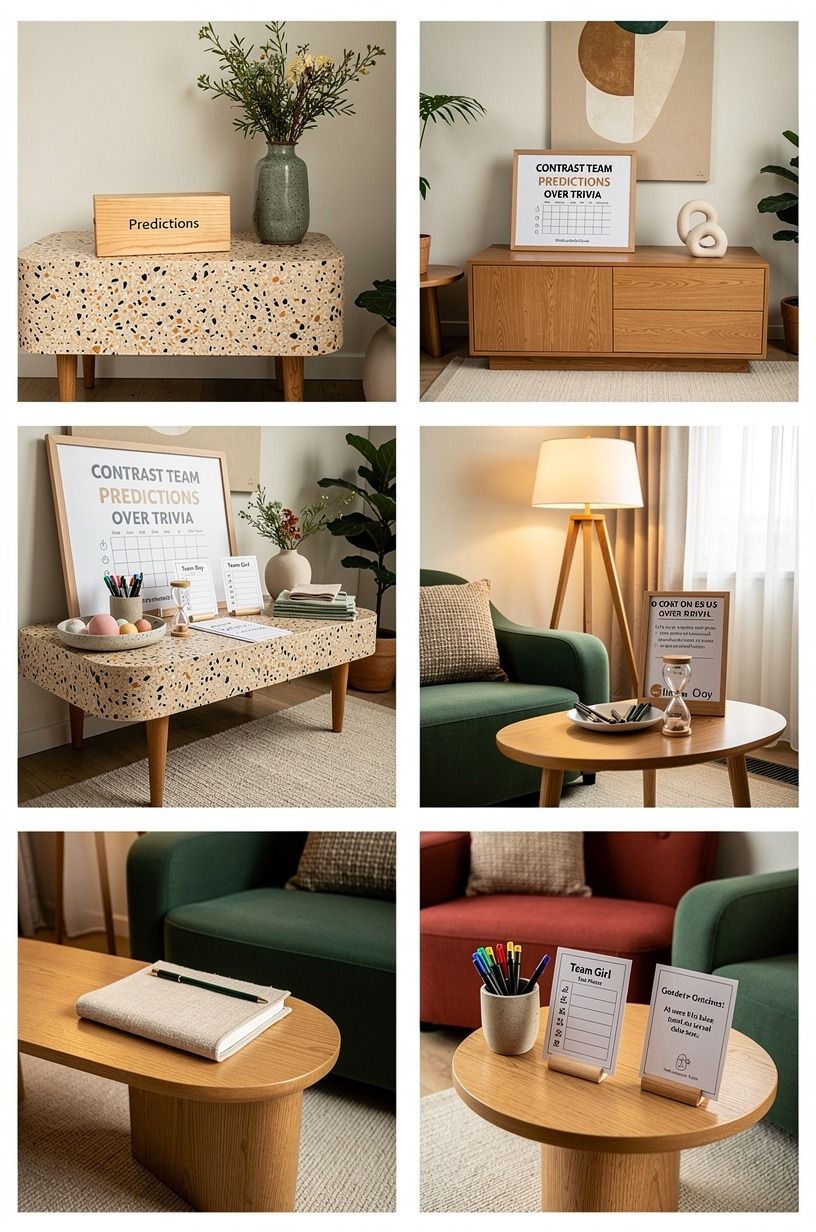
A team prediction game works best when the questions are quick and slightly silly. Divide guests into two teams, then ask about the baby’s future preferences: sweet or savory, early riser or night owl, adventurous eater or cautious taster. Each team holds up a colored card, and the parents choose the answer that feels most likely.
Give each team a forest-green or rust felt pennant and a small oversized-chip terrazzo bowl as a visual marker. You’ll want one host to keep score on a natural-oak pad, but don’t make the score the whole point.
The conversation matters more. I’d choose six questions instead of fifteen because the energy stays bright.
For a food-focused party, pair the game with this whipped coffee idea for brunch guests, then let the losing team serve the next round.
13Paint a Prediction Palette
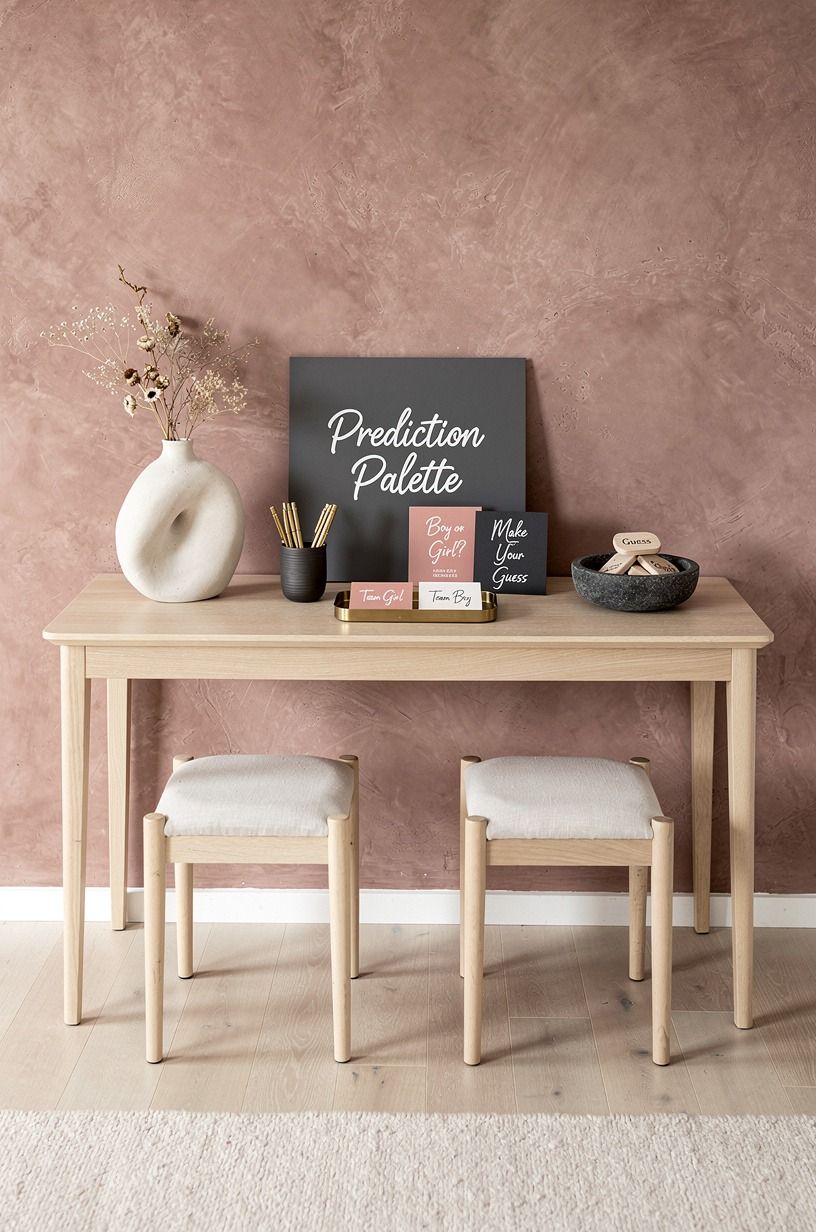
Let guests vote with paint swatches instead of paper cards. Mount the swatches against a dusty-rose wall with hand-applied Venetian plaster, then add charcoal labels and brass clips.
14Build the Storybook Guessing Shelf
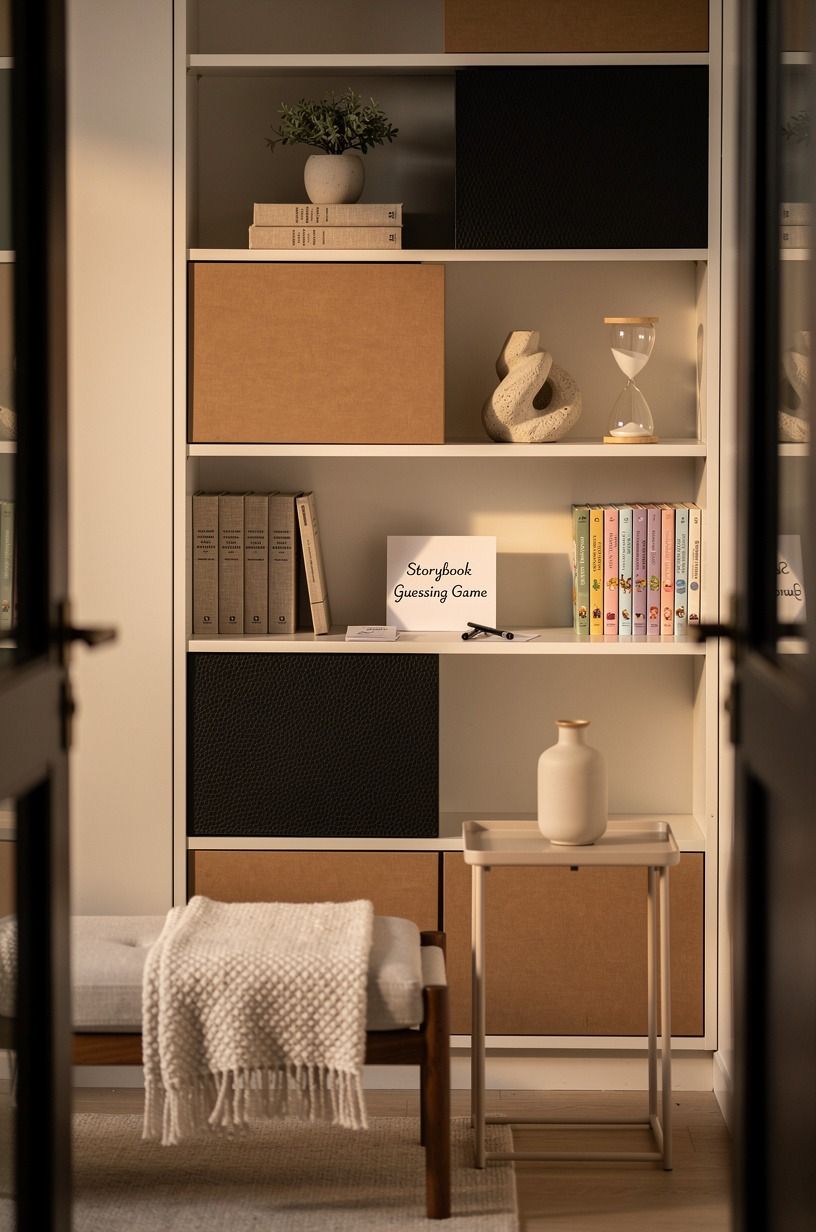
Choose five children’s books and ask guests to guess which one the baby will love first. They can vote by placing a ribbon marker inside the book or writing the title on a card. This feels warmer than a disposable game because the parents keep the books afterward.
A warm-white shelf with camel shagreen accents and black brackets makes the display feel collected.
You’ll want a mix of familiar and unexpected titles, with different colors and textures on the covers. Keep the shelf low enough for guests to browse, but secure it properly if children are attending.
I’d skip books with sound buttons because they can overwhelm conversation. Add one camel shagreen bookend for texture, then let the books do most of the decorating. If the party has a small footprint, a basket beside the sofa can replace the shelf without losing the idea.
15Float a “Future Favorite” Food Vote
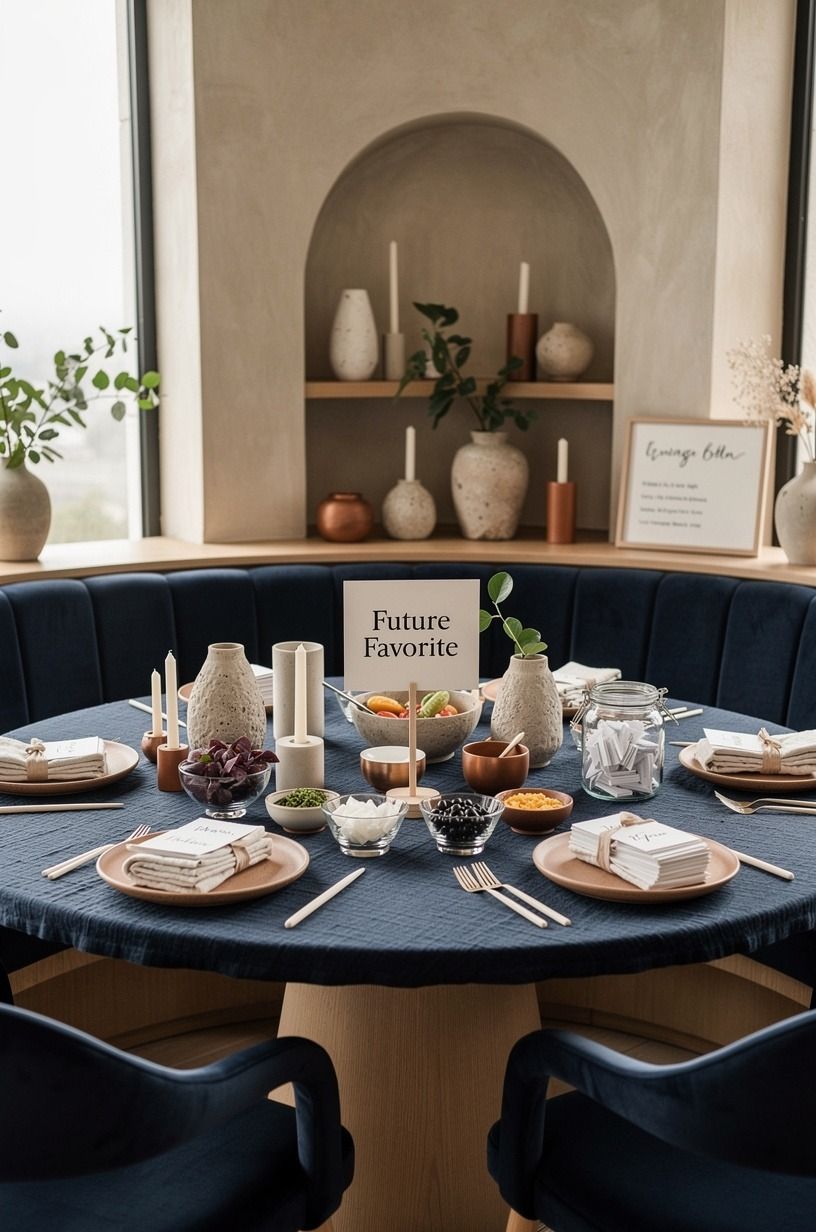
Set out small samples of several foods and ask guests to predict the baby’s future favorite category. You might offer citrus, chocolate, pickles, berries, and a mild savory bite.
The parents don’t need to know the answer now. The point is to create a playful record of everyone’s guesses.
Use ivory stoneware tasting plates on a washed Belgian linen runner, with small copper labels written in dark ink. You’ll want to check allergies before serving anything, then keep the portions modest so the table doesn’t become a full meal.
I’d choose one strong flavor per category instead of five confusing variations. A copper serving tray gives the station a warm base. And if you’re serving a punch, keep it on another surface so guests can move through the tasting area without crowding.
16Style the Guessing Lounge With a Rug
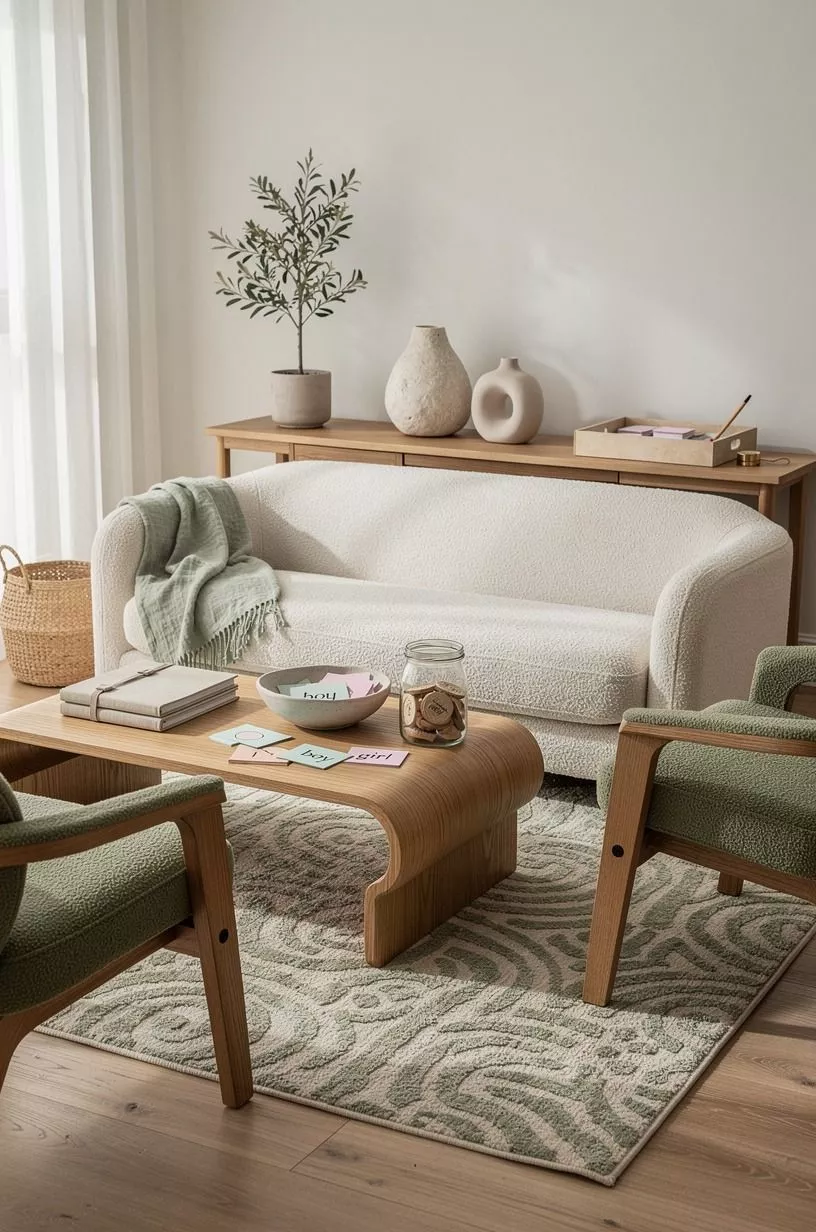
A comfortable seating area makes every other game work better because guests need somewhere to pause, compare answers, and talk. Use a sage-green rug, warm cream cushions, and a natural-wood side table with an organic bouclé chair nearby.
Keep the palette soft enough that the lounge feels restful rather than themed. A low table can hold prediction cards and drinks, while the rug gives the conversation area a clear home without adding more furniture.
17Ask the Question: What Will Baby Inherit?
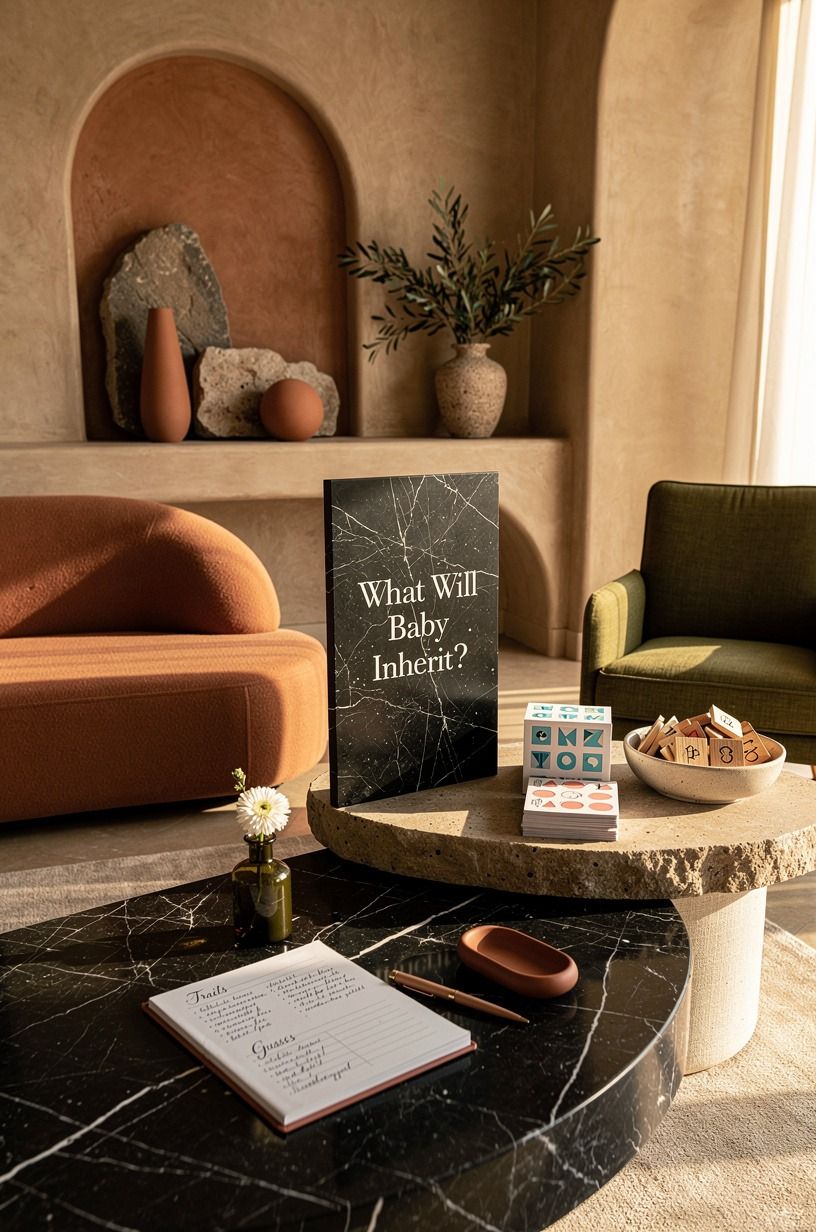
This guessing game invites guests to choose who the baby might resemble. Set out cards with prompts such as “same laugh,” “same stubborn streak,” “same eye color,” and “same morning energy.” Guests can vote for one parent, both parents, or a grandparent. It’s personal without becoming overly sentimental.
Use a terracotta card deck and a shallow Nero Marquina marble catchall for finished answers. You’ll want the parents to read a few aloud because the best part is often the explanation behind a prediction.
I’d skip categories about weight or appearance that could feel uncomfortable. Keep the focus on habits, expressions, and family stories.
And if you’re adding a memory station, give it a separate table so the two activities don’t blur together.
18Finish With the Reveal Relay
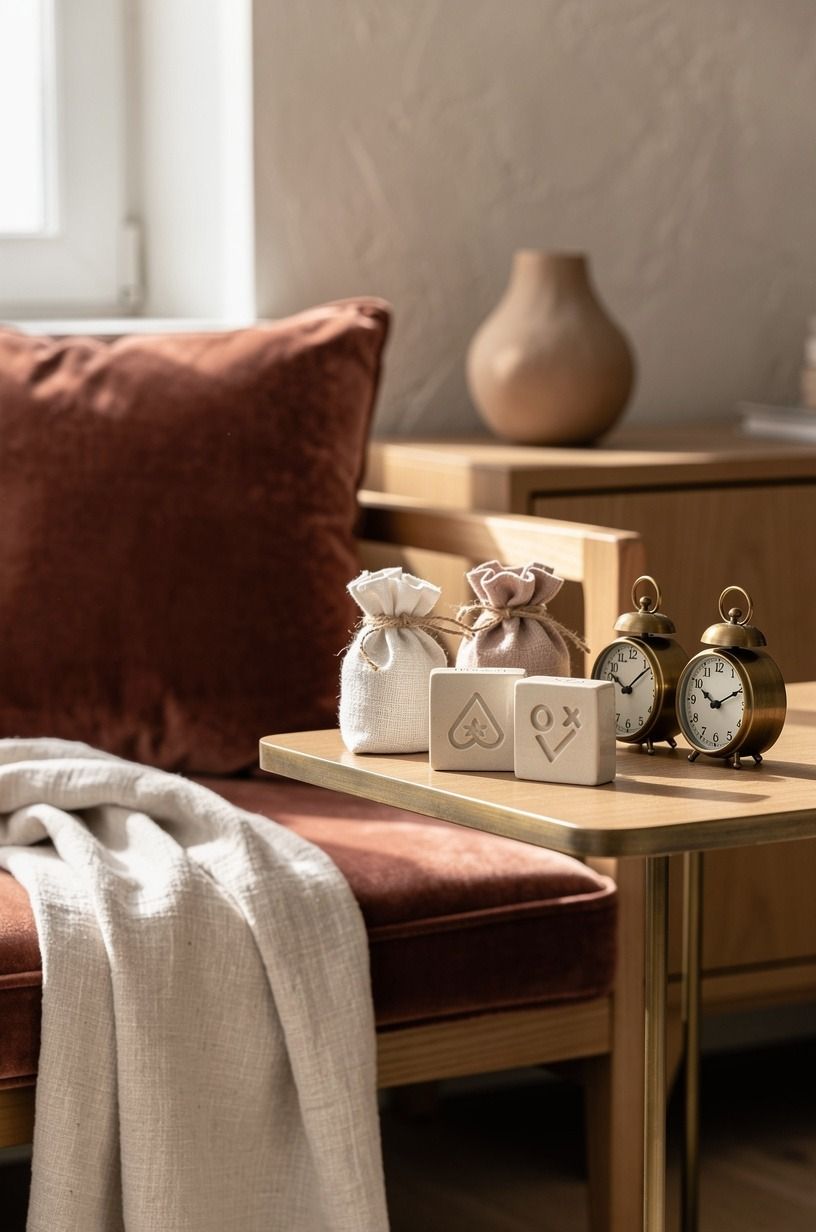
Save one active game for the end, when guests have eaten and already know one another. Gather everyone around a clay-linen table with aged-brass details and deep-pile mohair velvet seating, then let the relay carry the room into the reveal.
What These Games Say About Hosting Well
I’ve hosted enough gatherings to know that the best gender reveal party games aren’t the loudest ones. They’re the activities that give people a reason to speak to someone they’ve never met.
A prediction card beside the drink station can do more than a large centerpiece because it removes the awkward first step. Nobody has to invent an opening line.
They can ask, “What did you guess?” and the room starts moving.
I also learned that too much decoration can work against you. My early parties had matching signs, layered backdrops, and one very expensive table arrangement that blocked the food. It looked polished in photos, but guests kept standing in the doorway because the useful surfaces had disappeared.
Now I choose one visual anchor, such as a painted prediction board, then keep the games spread across the room.
The best setup has a little friction, but not much. A card needs a pen.
A voting jar needs a label. A quiz needs a place to sit.
If your guest has to ask where the activity begins, the design has failed before the first answer. That doesn’t mean everything must be obvious or childish.
It means your matte ivory cards, wooden trays, and clear signs should quietly guide people.
I’d also avoid making every game competitive. One lively quiz is plenty.
Balance it with the advice cards, the book vote, and the photo match, where guests can participate at their own speed. Some people want to perform.
Others want to write one thoughtful sentence and talk beside the window. Both groups deserve a place.
And the reveal itself should still have room to breathe. Don’t fill every minute with an activity.
Leave a little quiet around the cake, the gifts, and the family photos. That pause is often when the most memorable conversation happens.
What People Always Want to Know
What is the best gender reveal party game for a small party?
The baby prediction jar and parent quiz work best because they need little floor space and encourage one-on-one conversation. Use a KALLAX cube or small tray for supplies, then keep the activity near the drinks so guests can join without interrupting the room.
Where can I buy gender reveal party pieces on a budget?
Look at IKEA, Target, and Wayfair for trays, card stock, baskets, and simple lighting. You can also find secondhand glass jars, frames, and serving boards through Facebook Marketplace or a local thrift shop. Choose reusable pieces so the party supplies earn their storage space.
How much does a gender reveal party games makeover cost?
A simple setup can cost about $100 to $300 if you reuse furniture and print your own cards. A broader room refresh may fit the typical $200 to $800 budget tier. The free pieces are conversation prompts, homemade signs, borrowed frames, and family photos.
Can I create gender reveal party games on a budget?
Yes, and you can start with three free moves: a phone-based baby photo match, handwritten prediction slips, and a parent trivia round. Add colored cardstock, thrifted jars, and one small dessert for a warm setup without buying a full party kit.
Is a gender reveal party games setup worth it in a small space?
Yes, because a small room keeps guests close enough to talk. Use one central prediction table, one wall activity, and one seating area. A flat-weave rug can define the lounge without adding furniture, while vertical photo displays keep the floor open.
Is gender reveal party games styling a good idea for a rental?
Yes. Use removable hooks, tension rods, tabletop frames, and peel-and-stick labels that come off cleanly. A plug-in pendant or battery lantern can replace hardwired lighting, and a ribbon photo wall gives you impact without drilling into the walls.
Where I’d Start First
If I had to pick one, I’d start with the prediction jar. It’s inexpensive, works for shy guests, and leaves you with a keepsake instead of disposable clutter. Pin the prediction party ideas for later, then add one active game when your guest list needs more energy.