At Port Denarau Marina, about 4 miles from Nadi International Airport, there are two desks side by side. One sells catamaran tickets. One sells seaplane seats. Both say “Mamanuca Islands.” Neither tells you that the island you book determines almost everything about the trip you’re about to take.
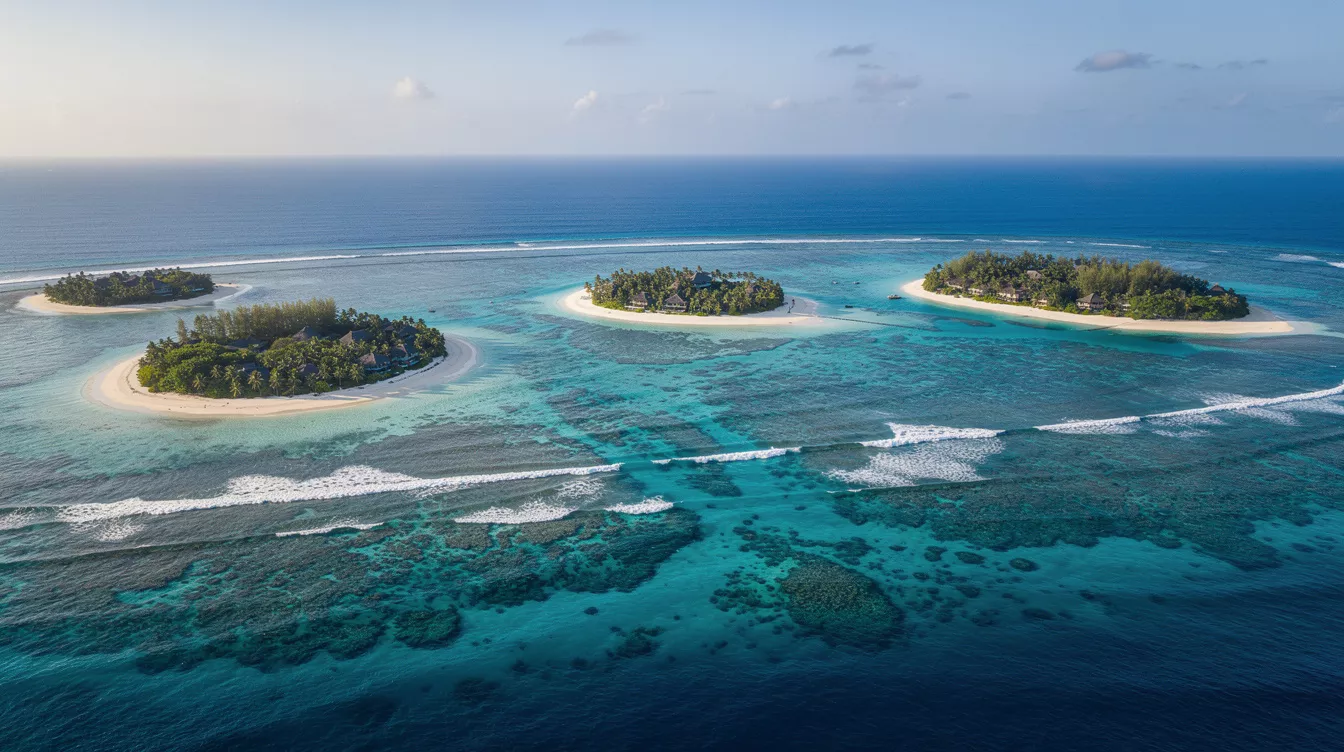
The Mamanuca group holds more than 20 islands fanning northwest from Viti Levu’s coast. Six have resorts. And those six are not interchangeable. The water crossing alone runs anywhere from 25 minutes to nearly 2 hours depending on where you’re headed, and that distance is the whole argument.
The geography the resort brochure skips
Think of the Mamanucas in two tiers. The inner islands, including Malolo Lailai, Mana, and Castaway (Qalito), sit roughly 9 to 12 miles offshore. The outer islands, Tokoriki and Likuliku among them, sit 17 to 22 miles out. Because the Malolo Barrier Reef wraps the western edge of the group, the outer islands receive less wind chop and their leeward water stays glassy well into late morning.
The inner islands are easier and faster to reach. But they sit closer to Viti Levu’s runoff, so water visibility drops noticeably after heavy rain on the main island. That cause-effect relationship between distance and water clarity is the first thing your booking decision controls, and most travelers don’t know to ask about it.
One boat captain who has run the Port Denarau route for years puts it plainly: the outer reef is a different color. He means that literally. You can see the effect a barrier reef has on water conditions the moment your boat clears the inner channel.
What the boat schedule actually decides
South Sea Cruises and Awesome Adventures Fiji run scheduled high-speed catamarans from Port Denarau, with a typical morning departure around 9 am stopping at inner islands first. Because Malolo Lailai and Plantation Island Resort receive that boat before it continues outward, they absorb a daily wave of day-trippers until roughly mid-afternoon. By 3 pm the catamaran reverses course, and the beaches quiet down fast.
If you’re staying on Mana or Castaway, the geometry works in your favor after that departure. But during the lunch window, the reef around Mana’s western shore, which drops to coral gardens in 20 to 40 feet of water, is shared with everyone who came for a snorkel stop. And that’s a real crowd on a peak-season Tuesday.
A seaplane transfer with operators like Turtle Airways costs roughly $180 to $250 USD per person one way versus $40 to $75 by catamaran. The 10 to 15-minute flight to the outer islands isn’t just faster. The aerial view of the reef structure shows you exactly where the channels run and where the bommies cluster, which is information that local guides use every single day. How you arrive shapes what you find when you get there.
Five islands, five different trips
Castaway Island (Qalito) sits about 12 miles from Port Denarau. The resort controls the whole island, so beach density stays low. Mana sits nearby but hosts multiple accommodation tiers and takes day-traffic from passing scheduled boats, which makes it livelier but never quite yours until late afternoon.
Tokoriki, roughly 21 miles out, has no scheduled day-trip stop because no catamaran route includes it without a resort booking. That exclusion isn’t policy. It’s pure distance. The family that runs the island’s dining operation described the outer-island quiet as the thing guests always mention first, usually on the second morning when it finally registers.
Likuliku Lagoon Resort, adjacent to Tokoriki, remains the only overwater bungalow property in Fiji and is adults-only. Rates run upward of $800 per night in peak season. But those bungalows sit directly above a reef system that receives almost no foot traffic. The difference between a day-trip island and a stay island is exactly this.
The trade-offs no booking site lists
Plantation Island Resort on Malolo Lailai starts closer to $180 per night, which makes the inner island look like the budget move. But the outer resorts typically include full-board packages because there is nowhere else to eat. Once you factor meals in, the gap narrows considerably.
The wet season runs November through April, with cyclone risk peaking January through March. If three consecutive rainy days strand you on a small outer island, your options are genuinely limited. The inner islands offer faster escape to Nadi when plans break down. That flexibility has a real value that rack rates don’t capture.
Your questions about the Mamanuca Islands answered
How do you get from Nadi to the Mamanucas?
All boats and seaplanes depart from Port Denarau Marina, about 4 miles from Nadi Airport. Catamarans to inner islands take 25 to 45 minutes. Outer islands run 75 to 110 minutes by boat. A taxi from the airport to the marina costs roughly $8 to $12 USD.
When is the best time to visit?
June through October is the dry season. Water temperatures sit around 75 to 77°F and southeast trade winds keep humidity low. July and August are peak. Late May and October offer drier conditions with fewer visitors and lower rates. The South Pacific shoulder season is real and worth targeting.
What does a Mamanuca trip actually cost?
Catamaran transfers run $40 to $75 round-trip per person. Inner island resorts range from $180 to $350 per night. Outer properties run $350 to $800-plus. Add $180 to $250 per person each way if you take the seaplane. Budget the full-board meals into any outer island rate before deciding the inner island looks cheaper.
At 6:30 in the morning on an outer island, before the wind picks up, the water on the western side is the color of glass with something blue underneath it. It smells like salt and almost nothing else.