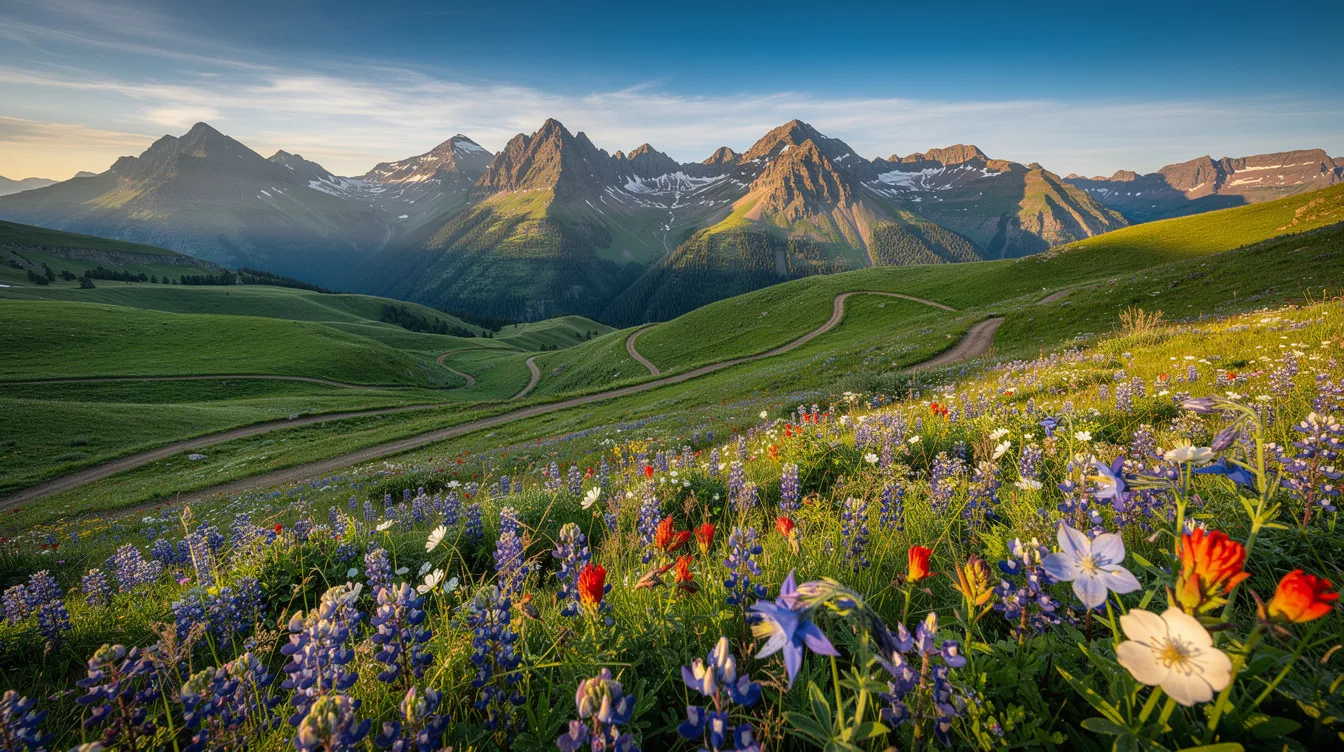
Crested Butte calls itself Colorado’s Wildflower Capital, and July is when that claim feels earned. More than 800 miles of trails spread through the Gunnison, Crested Butte area, while alpine blooms climb toward their seasonal peak. You’ll find a real mountain town here, not a polished resort pretending to be one.
July turns the trails into the main event
And the flowers usually begin in June before reaching their fullest display in July. The timing shifts with snowpack and elevation, so the first weeks of August can still deliver color. You’ll see why the town built its identity around blooms once the hillsides turn yellow, purple, and red.
But this is also the busiest summer period, which means lodging fills early. The trade-off is simple: July gives you the strongest flower show, but June and early August can feel easier on the trail. For a quieter trip, aim outside the peak weekends and start hiking before the day warms up.
That makes a three-to-five-night stay feel about right. You can spend one day following flowers, another on a mountain-bike route, and still leave room for slow mornings along Elk Avenue.
More than 800 miles gives you room to roam
And the region’s biggest advantage is scale. The Gunnison, Crested Butte area has more than 800 miles of trails, so you don’t need to repeat the same short walk each morning. Teocalli Ridge and Doctor Park suit riders seeking a serious outing, while other routes make more sense for a slower hiking day.
But trail variety doesn’t mean every route is gentle. Crested Butte is a strong choice if you already enjoy demanding hiking or mountain biking, and a less comfortable fit if you want flat paths close to town. You’ll need to match the route to your fitness, then respect changing weather above the valley.
Higher routes rise beyond the town. Take your first day gradually, drink more water than usual, and wear strong sun protection. The air can feel cool while the sun presses hard against your shoulders.
A former coal town with a serious winter edge
And summer color isn’t the only reason to come. Crested Butte grew from coal mining, and its downtown remains a colorful National Historic District centered around Elk Avenue. You can walk between old storefronts, cafés, and bars, then feel the town thin out quickly beyond the main street.
But the nearby resort at Mt. Crested Butte has a different personality. It is known for demanding inbounds skiing, while still providing terrain for beginners and intermediate skiers.
You’ll find more lift access there, but the old town feels more personal after the last chair stops spinning.
Winter runs from December through March, when snow sports take over. Summer is more relaxed, but winter carries the sharper edge that made this place famous among strong skiers. Neither season is effortless, and that is part of the appeal.
Can you get there without a car?
And yes, you can reach the core of town without driving every day. Local shuttles connect Crested Butte with Mt. Crested Butte and the ski area.
A bus also runs toward Gunnison.
But a car remains useful once you leave town. Remote trailheads, Kebler Pass, and outlying riding areas are easier with your own wheels. You can manage a car-free stay near downtown, though the wider region asks for more planning.
Book early for July, especially if you want to sleep within walking distance of dinner. Mt. Crested Butte is more convenient for lift access, while old Crested Butte gives you a better base for town life.
The choice comes down to whether your morning starts with coffee or a chairlift.
Choose the season that matches your energy
And June through August is the clear window for flowers, hiking, and mountain biking. September and October bring quieter trails and turning aspens, while April and May can feel unfinished, with mud and lingering snow limiting some routes.
But Crested Butte rewards travelers who accept a little friction. The airport is small, summer lodging costs can climb, and the best trails take effort to reach. You’ll trade convenience for space, then understand the bargain when the afternoon wind moves through the flowers.
By evening, Elk Avenue cools beneath the mountains, and the last light settles over the old storefronts. In July, the trail dust stays on your shoes long after the flowers close.