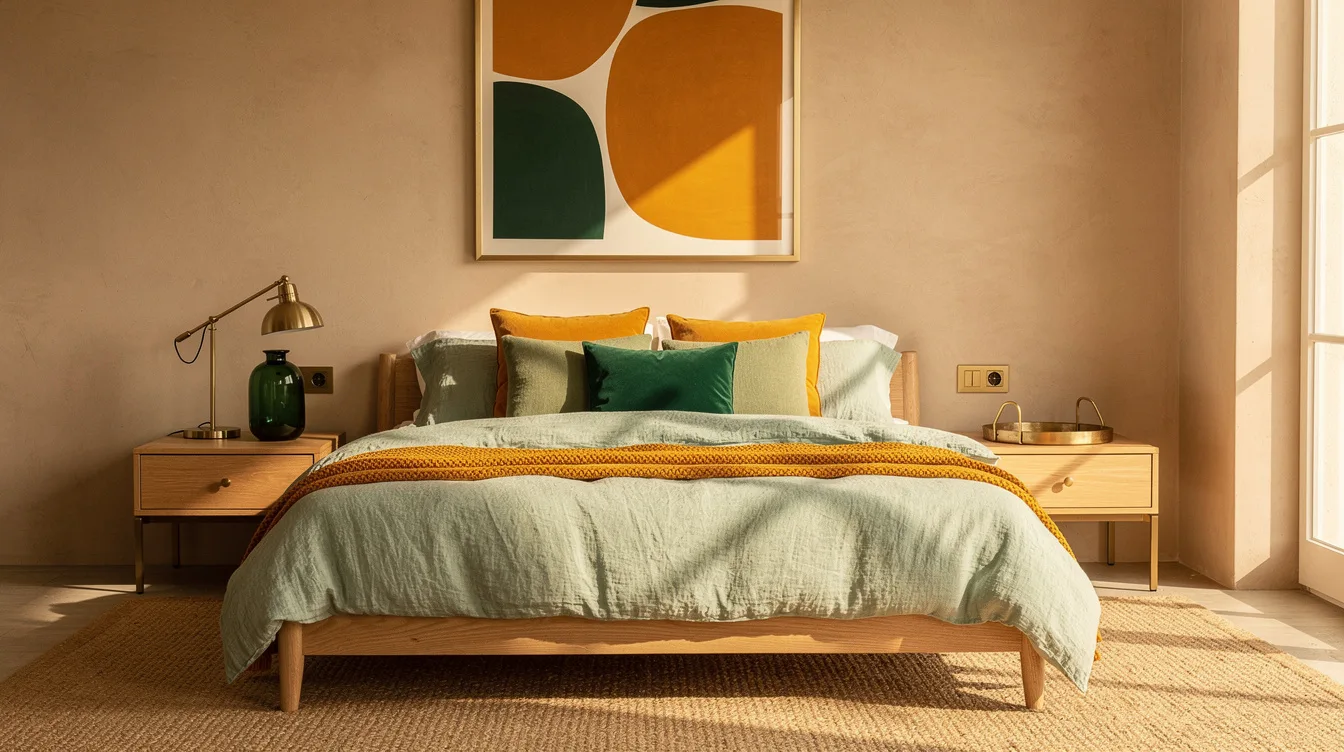
My south-facing bedroom received such strong light that a pale peach sample looked almost white at noon, then turned noticeably orange by evening. I wanted a sun-washed palette with enough calm to sleep in, not a room that felt permanently overheated.
The solution was to mute the warm colors, cool them with mineral undertones, and let natural materials carry the glow. I also treated every sample as temporary until it survived a full day on the wall.
Choose Undertones That Can Take the Sun
I began with a mineral neutral because strong southern light can push warm paint toward yellow-orange by midday. A gray-, green-, or brown-based neutral keeps the walls steady while still accepting peach, clay, and olive accents.
My safest combinations were sand with faded sage and dusty rose with olive. Bright coral, clean butter yellow, and vivid terracotta felt too loud across four walls.
Test Paint Through the Entire Day
I painted samples on an A2 board and moved it between walls before choosing a color. The same shade can look muted in the morning, pale at solar noon, and noticeably peachier by evening.
I checked each sample around 10:00, at noon, and after the strongest daylight had passed. A typical premium gallon can cost around $70, so testing first is cheaper than correcting an entire bedroom.
Build the Room Around a Quiet Base
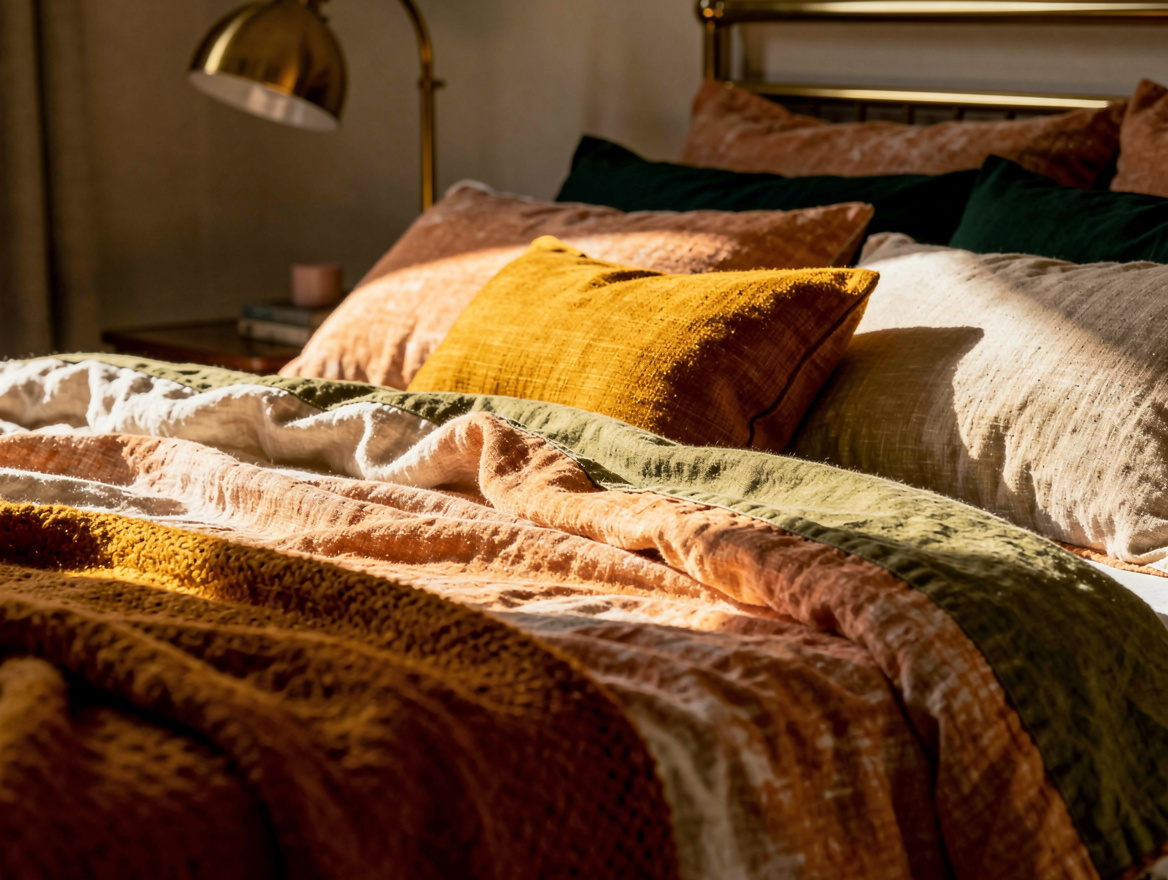
For my walls, I favored a pale sandstone or soft green-gray instead of a saturated warm shade. South light already supplies plenty of energy, so the background should hold the room together.
I used the 60/30/10 composition as a guide: 60% quiet base, 30% sun-washed supporting color, and 10% sharper contrast. That proportion kept the room relaxed without making it feel washed out.
Cool Warmth With Washed Textiles
I brought in washed linen bedding in warm ivory, oat, and flax to soften the brightness. Linen absorbs the glow visually, while a faded peach pillow or muted clay quilt keeps the palette connected to the sun.
Target and IKEA are useful starting points for affordable cotton and linen-look layers, but I would avoid stacking too many yellow-based fabrics. One tobacco-toned throw is enough to warm the bed.
Anchor the Glow With Natural Wood
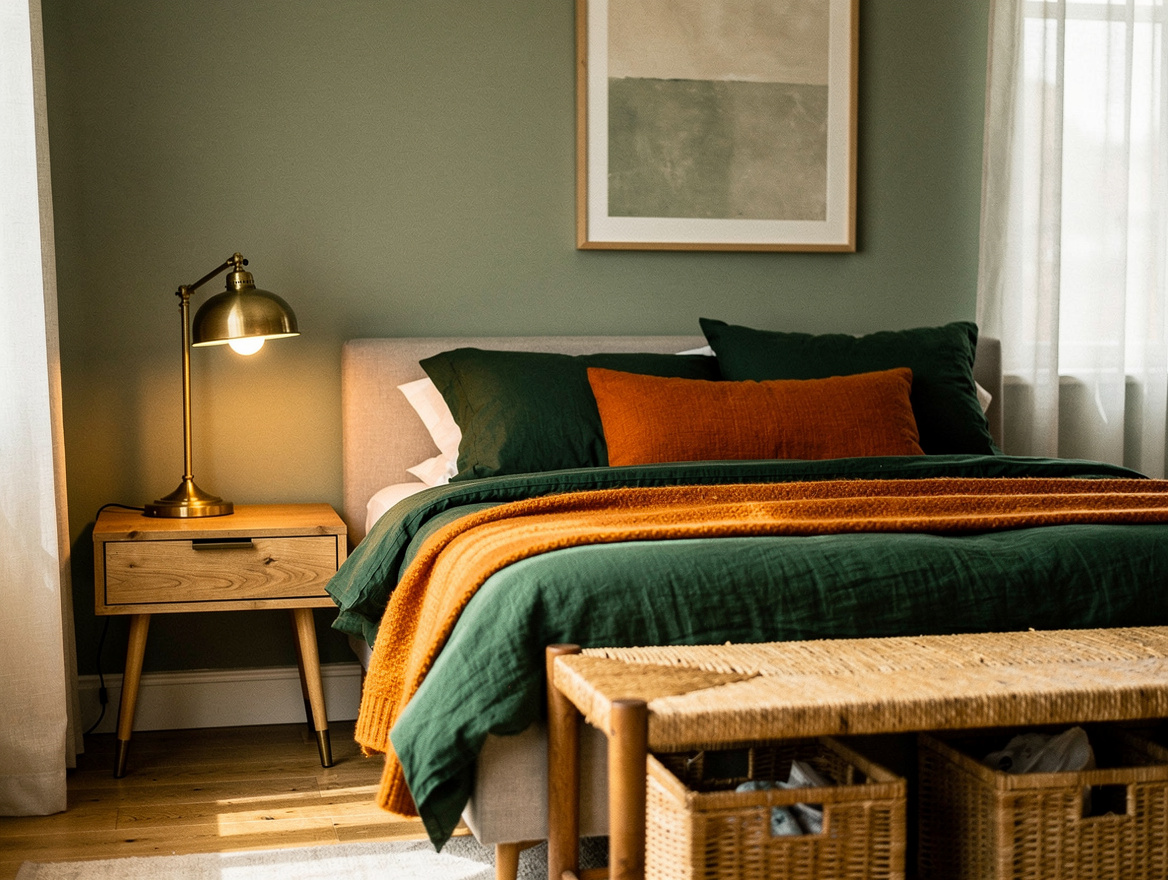
A light oak nightstand gave the room warmth without adding another strong color. Natural jute, woven rush, and tobacco rattan worked in the same way, bringing texture that feels grounded in direct light.
I kept metal finishes restrained with one aged-brass lamp from Wayfair or Home Depot. Too much polished brass made the south-facing exposure feel hotter than it was.
Finish With One Clear Contrast
I used faded olive as the main contrast because it cooled the apricot and sand tones without becoming severe. A small olive throw, ceramic lamp, or framed textile was more effective than repeating the color everywhere.
For a slightly moodier room, a little ink blue or umber can sharpen the palette. Walmart, Lowe’s, and Amazon make it easy to find a single accent piece, but the contrast should stay limited so the sunlight remains the focus.
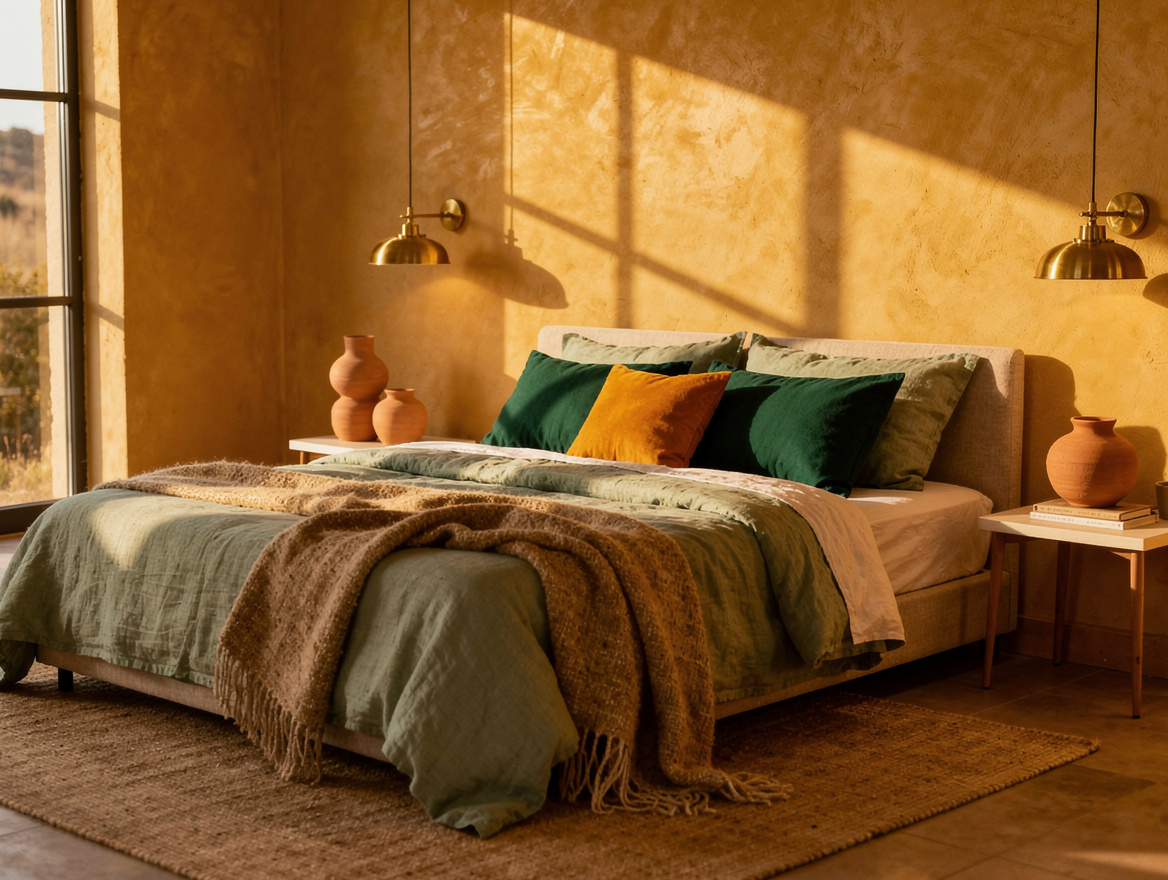
Start with one A2 paint board in a green-gray or sandy neutral, then watch it from morning through evening before buying a gallon. Once the base feels calm at noon, add faded sage, dusty rose, or clay through bedding and smaller pieces.
Mia Carter writes about small-space living and budget home makeovers. She has restyled three rentals and tests most ideas in her own 45 sqm flat.