Coastal blue bathroom ideas can feel breezy without a demolition crew or a pile of tile samples. I once paired icy blue with stark white and got a room that felt more clinical than coastal. The fix was warmer texture, softer contrast, and one grounded material. You can get there with paint, lighting, and a better mirror.
- Paint one wall in Farrow & Ball Hague Blue
- Layer a light blue spa palette
- Swap a plain mirror for a rope-framed one
- Build the Three-Texture Towel Stack
- Frame the vanity with warm wood
- Hang a woven pendant over the sink
- Try Benjamin Moore Chestertown Buff against blue
- Float a shelf above the toilet
- Use brushed brass against dusty blue
- Layer the Two-Blue Rule
- Choose a patterned shower curtain over tile
- Anchor the room with a soft runner
- Paint the vanity in a blue-green shade
- Frame the tub with coastal art
- Mix blue with pale terracotta
- Use the Three-Height Light Stack
- Choose open storage over a bulky cabinet
- Try a blue house decor moment with stone
- Pair blue with aged brass instead of chrome
1Paint one wall in Farrow & Ball Hague Blue
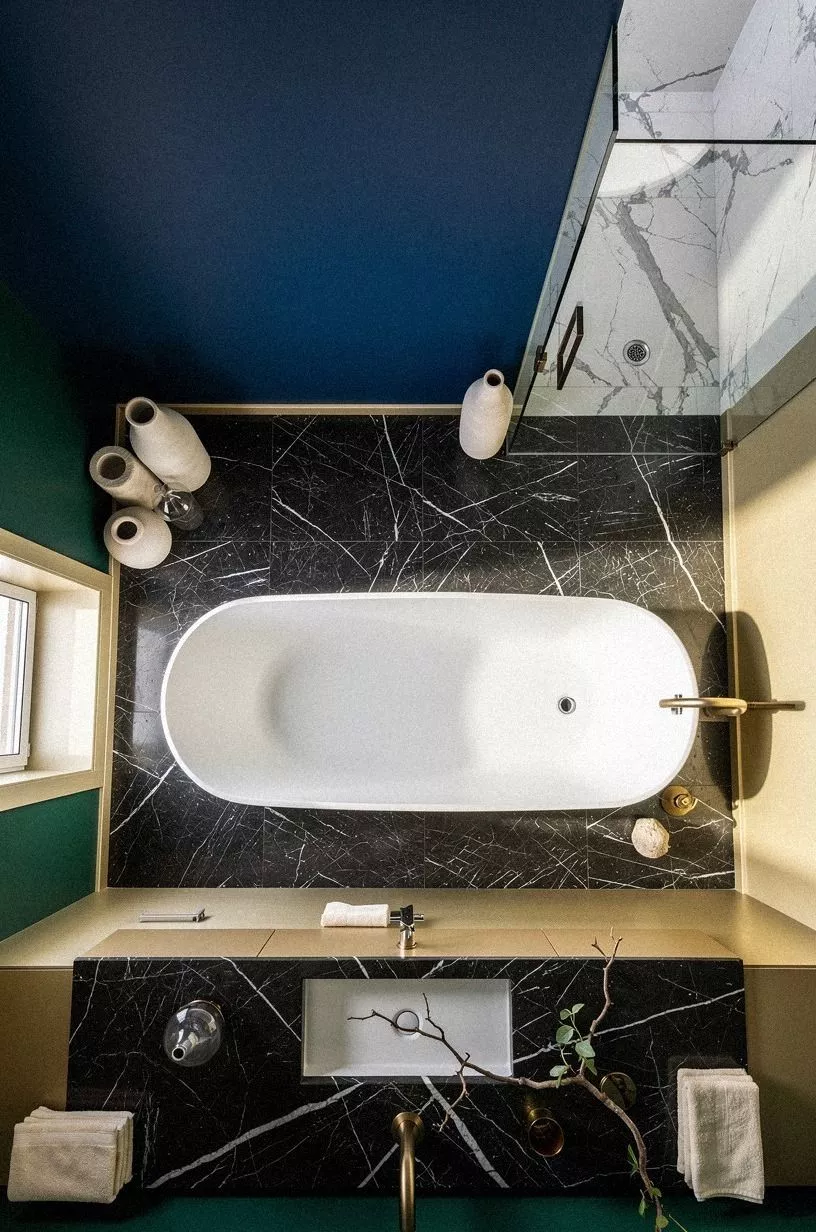
A single dark wall gives your bathroom the depth that pale blue often misses. Balance it with an emerald, gold, and cream palette, then add Nero Marquina black marble with white veins for a grounded finish. You’ll get a moody, inviting backdrop without making the whole room feel dark.
I’d skip painting every wall in a deep shade unless your bathroom gets generous daylight. You want the color to feel dramatic, not heavy.
If you’re working with a narrow room, pair the accent wall with soft cream elsewhere and let your eye travel across the contrast. A dark blue bathroom color guide can help you compare deeper shades before you commit.
Choose a matte washable bathroom paint for a quiet finish. Your wall will look more like painted plaster than a shiny rental unit, and you won’t have to fuss over every reflection.
2Layer a light blue spa palette
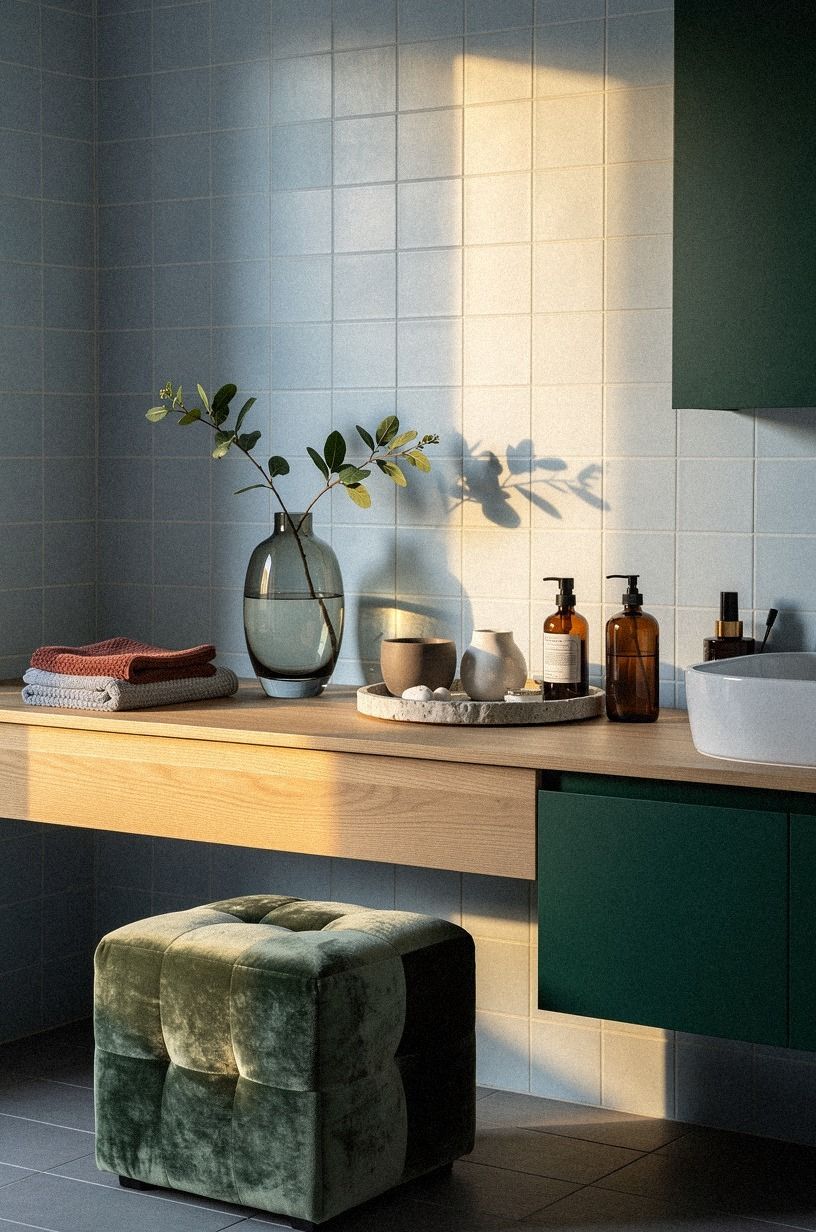
A light blue spa bathroom works best when you layer several quiet tones instead of choosing one obvious blue. Try forest green, rust, and natural oak accents around the room. Your space will feel organic because the contrast stays warm, but it won’t look flat.
The material matters here. A deep-pile mohair velvet stool adds softness and depth beside painted walls and hard surfaces. Add a small oak stool or a woven basket, and you’ll have the natural note that cool blue usually needs.
And don’t make every surface blue. I’d keep the ceiling and trim warm white, then bring in one muted rust detail, such as a small plant pot or ceramic vessel. You’re building a calm palette, not decorating a theme park.
3Swap a plain mirror for a rope-framed one
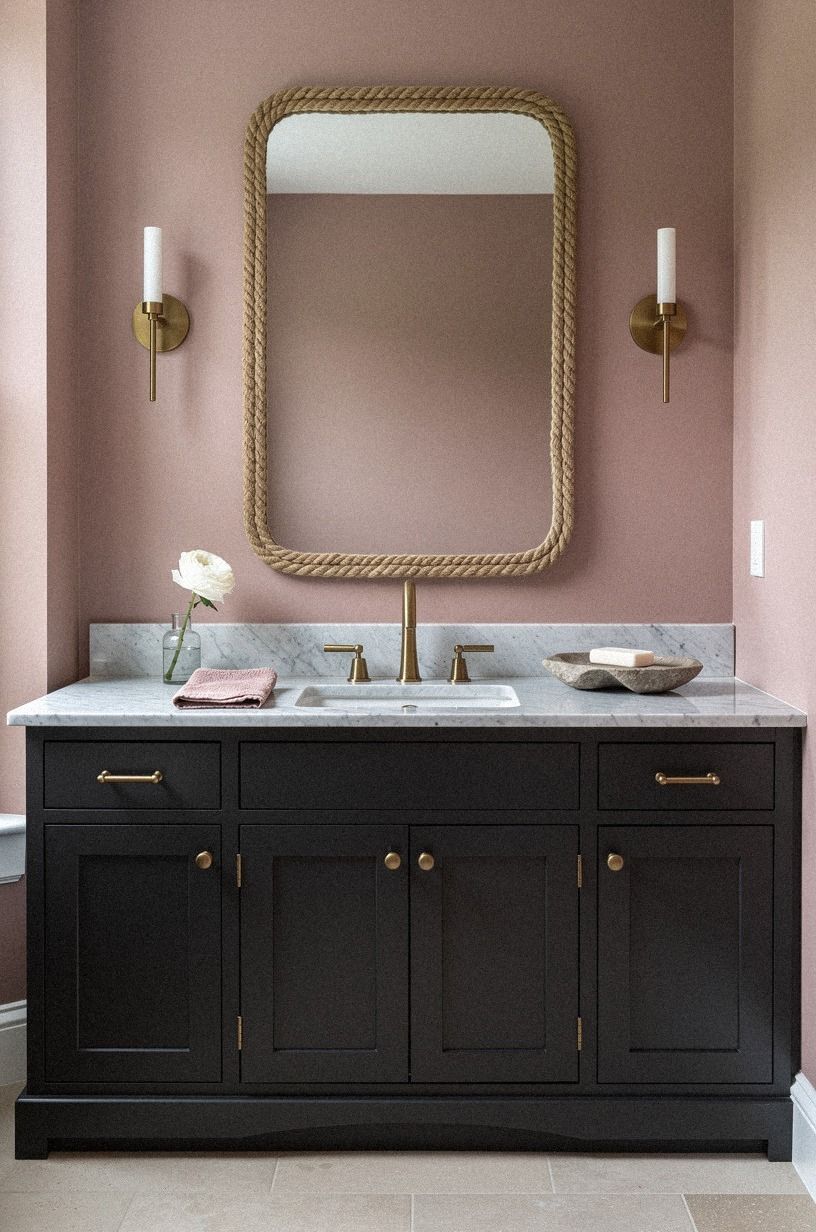
A rope-framed mirror gives your blue bathroom a nautical note without leaning into anchors, shells, or novelty signs. Look for thick natural jute or cotton rope around a simple round frame. Your eye will read the texture first, and that keeps the room charming rather than literal.
I’d pair it with dusty rose, charcoal, and brass rather than adding more pale blue. A small Carrara marble surface with subtle grey veining can keep the arrangement feeling polished without losing its relaxed character. If you’re replacing a builder-grade rectangle, measure the vanity first and keep enough wall around the mirror so the room can breathe.
A Carrara marble ledge pairs especially well with warm metal fixtures. You’ll get the relaxed feeling of a seaside cottage, but the proportions still feel modern. For more mirror ideas, browse these blue and beige bathroom combinations, especially if your existing floor is beige.
4Build the Three-Texture Towel Stack
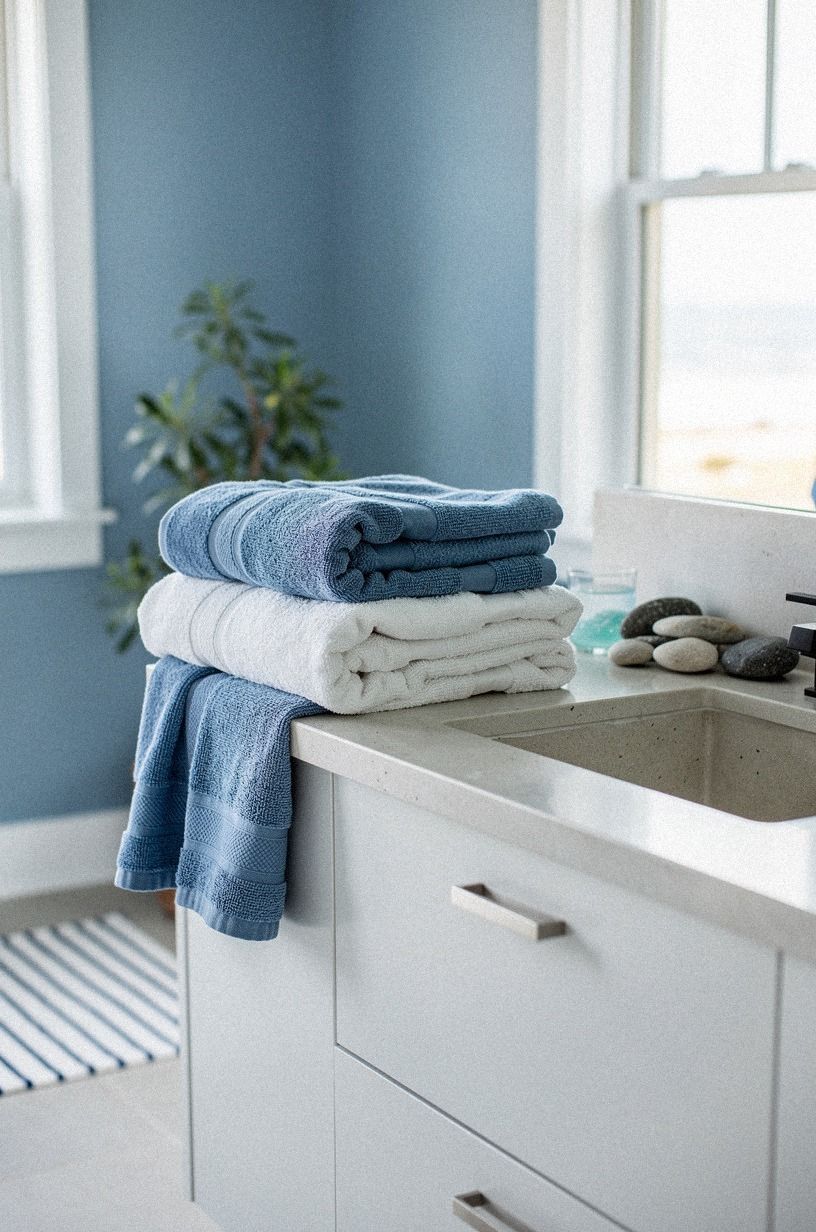
The Three-Texture Towel Stack is simple: one smooth towel, one ribbed towel, and one nubby bath mat. Your bathroom gets dimension without extra furniture, and you can change the colors seasonally without repainting anything.
Start with reclaimed weathered teak for a stool or small towel ladder. Add ribbed cotton in warm white, then bring in camel and black accents through the mat or hardware. You’ll notice the difference when light moves across the grain.
It’s subtle, but the room will feel warmer underfoot.
I made the mistake of buying every towel in the same flat weave. It looked tidy for about a week, then the whole bathroom felt thin.
You don’t need more stuff. You need texture that breaks up the hard surfaces.
5Frame the vanity with warm wood
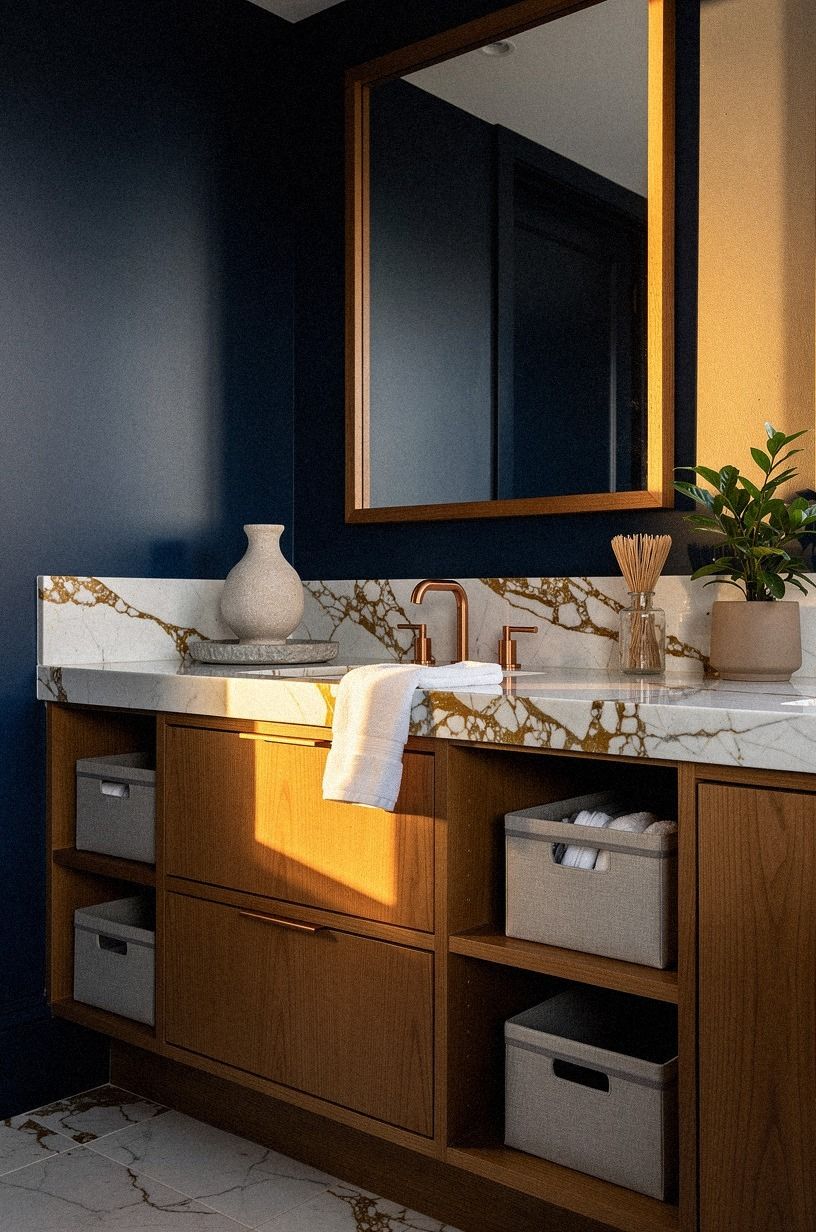
Warm wood keeps a coastal bathroom from becoming too pale. Pair a midnight blue, copper, and ivory palette with Calacatta marble with gold veining around the vanity. The contrast feels richer without turning the room formal.
6Hang a woven pendant over the sink
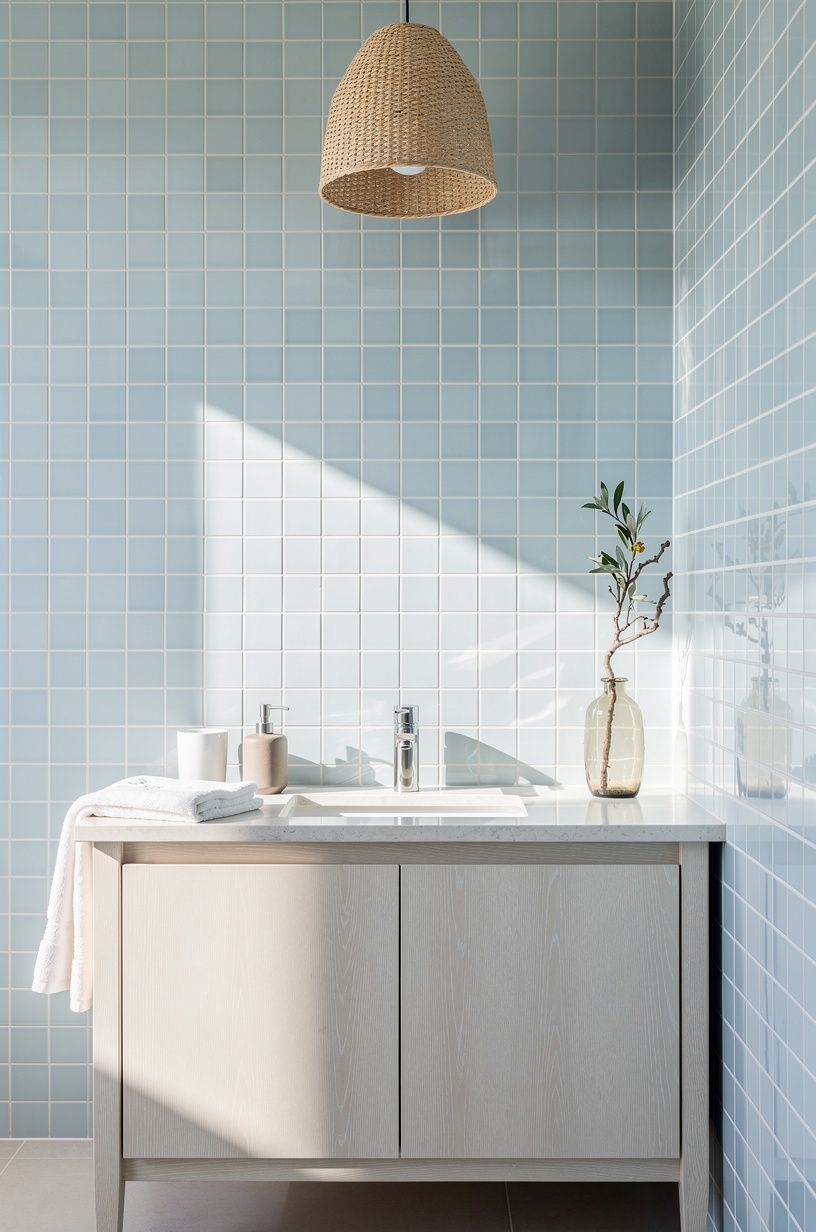
A woven pendant makes a small bathroom feel more organic, particularly when the ceiling light is harsh. Choose a shade in rattan, seagrass, or woven paper, then use a warm bulb so your blue walls don’t turn gray at night.
Your fixture doesn’t need to hang low. Keep the bottom high enough that you won’t bump it while reaching for the mirror. A cerused white oak vanity or shelf adds a soft, pale grain that works beautifully with sage green, warm cream, and natural wood.
I’d skip an oversized basket shade in a compact bathroom. It can crowd the mirror and make your ceiling feel lower. If you’re working with limited wiring, use a small plug-in sconce or a battery fixture and keep the visual weight near the vanity.
7Try Benjamin Moore Chestertown Buff against blue
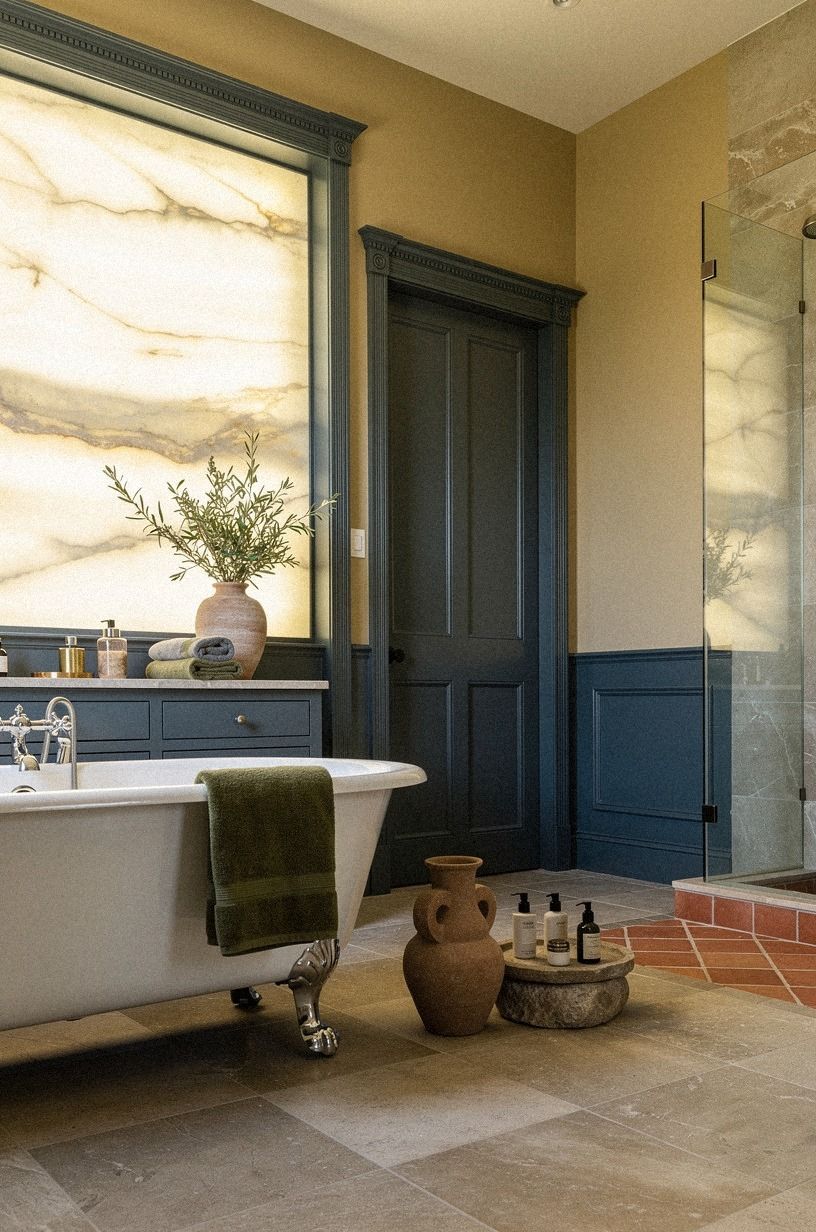
Blue and warm tan make a bathroom feel more collected than blue and white alone. For a richer version, bring in terracotta, stone, and olive, then use backlit translucent onyx as a small surface or accent. The glow adds warmth without overwhelming the blue.
8Float a shelf above the toilet
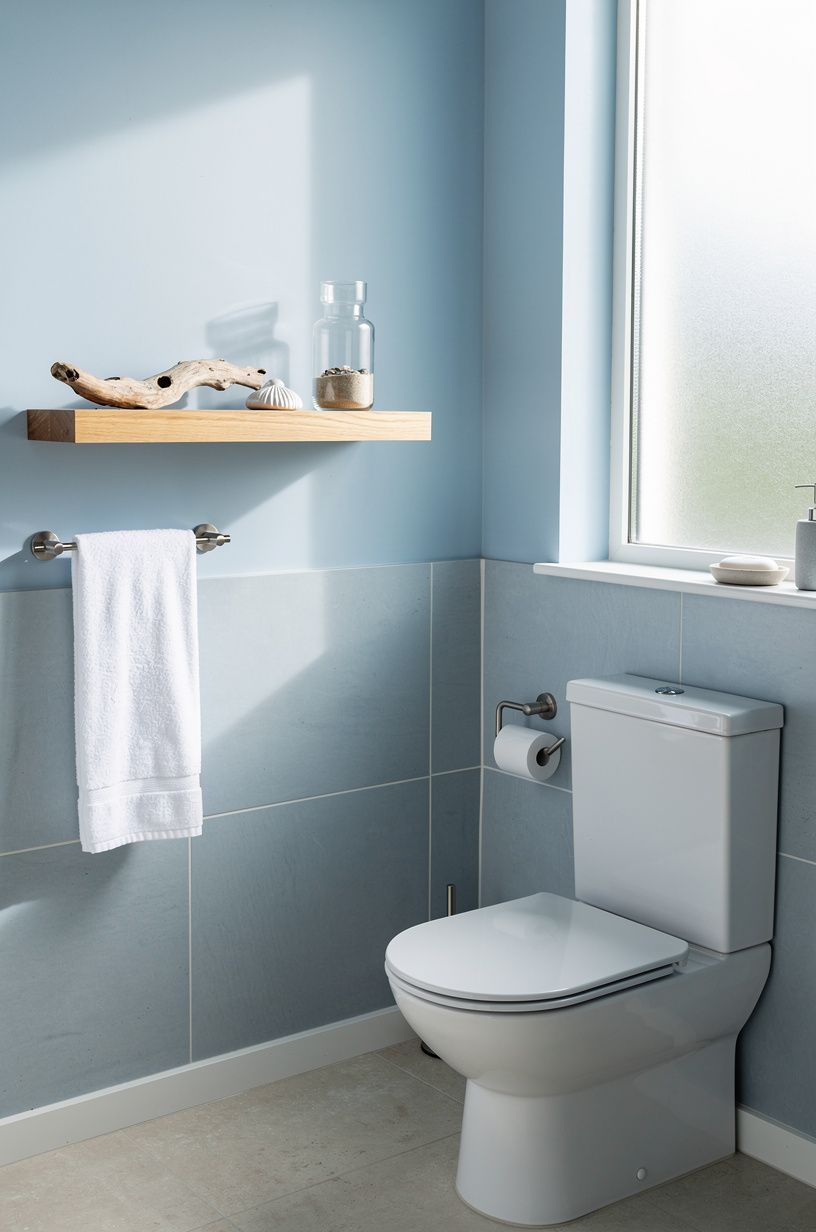
A floating shelf above the toilet gives you storage without adding a bulky cabinet. Install one shelf in painted wood or sealed oak, then keep your display practical: folded towels, a small glass jar, and one low plant. Your bathroom will feel organized, not staged.
A book-matched walnut shelf is substantial enough to look intentional, but it won’t overwhelm a narrow wall. Check your wall anchors before loading it with bottles. You’ll want the shelf to hold daily items, not become a leaning tower of products.
Use nominal styling on the shelf:
– Folded Turkish cotton towels. – A ceramic cup with a small fern. – One amber glass bottle. – A pale blue soap dish.
That little grouping is enough. More objects won’t make the space feel richer; they’ll make your morning routine annoying.
9Use brushed brass against dusty blue
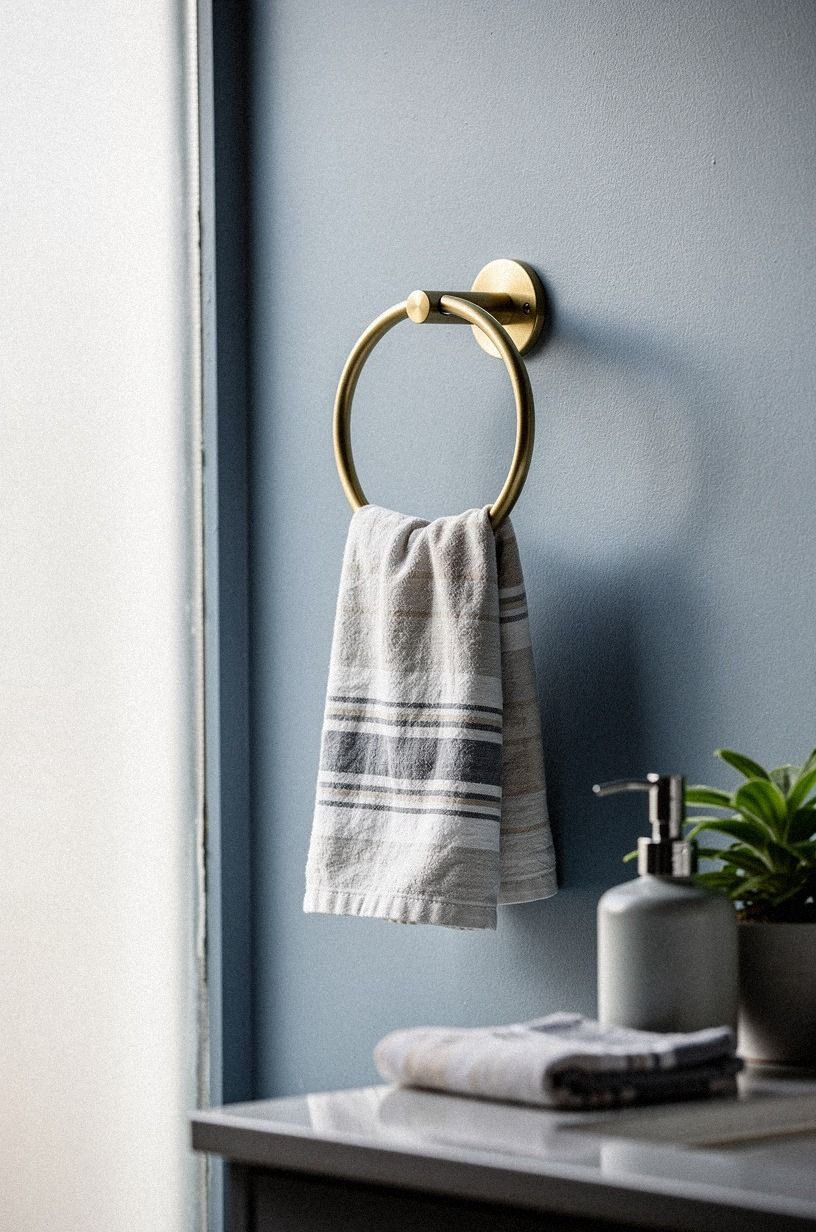
Brushed brass brings warmth to dusty blue, especially when the metal has a soft finish instead of a mirror shine. For a more layered room, combine plum, grey, and rose gold with warm travertine. The stone keeps the palette from feeling too sweet.
10Layer the Two-Blue Rule
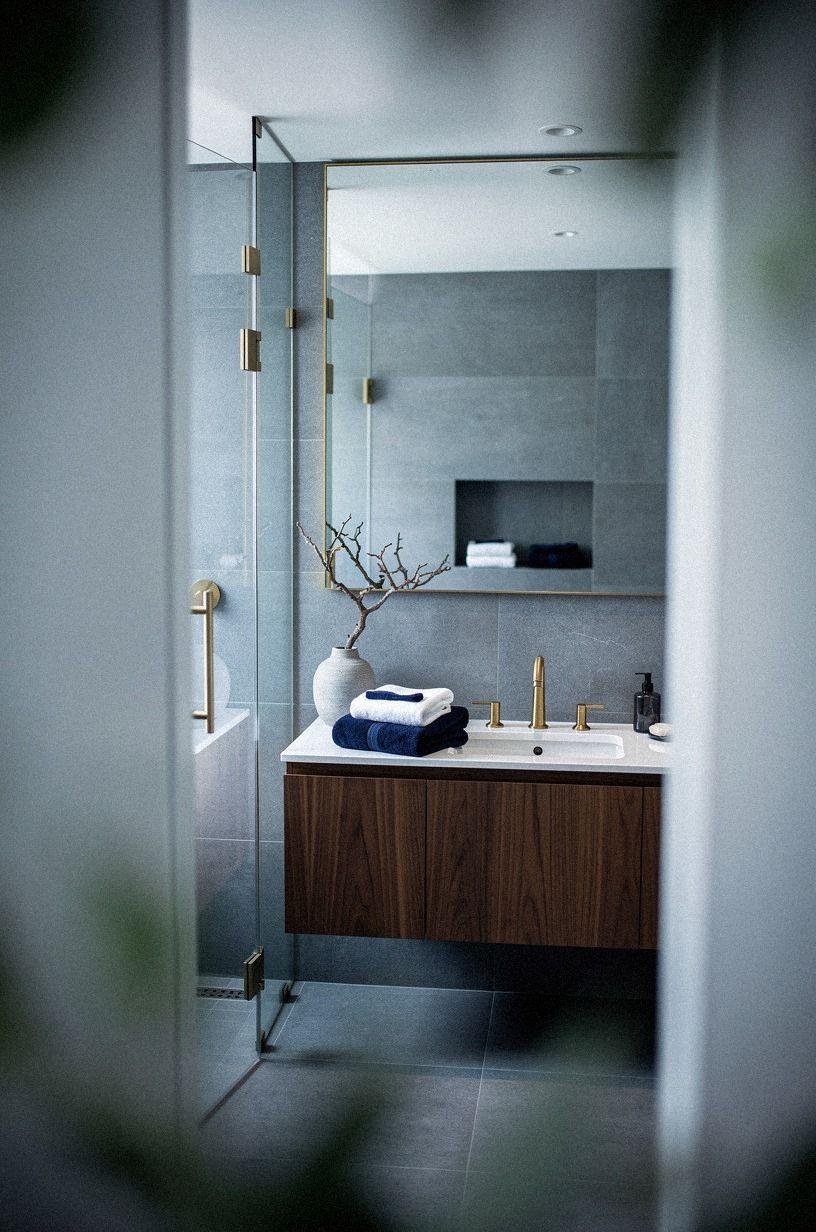
The Two-Blue Rule keeps your bathroom from looking one-note. Choose one pale blue for the largest surface and one deeper blue for a smaller element, such as the vanity, shower curtain, or artwork.
A navy, white, and walnut palette feels especially settled when paired with unlacquered brass developing a natural patina. You’ll get contrast without the hard visual stop that black can create.
Your second blue should appear at least twice so it feels connected to the room. A towel and a small ceramic vessel may be enough.
Don’t add five more shades because you’re worried the first two aren’t doing enough. They are.
11Choose a patterned shower curtain over tile
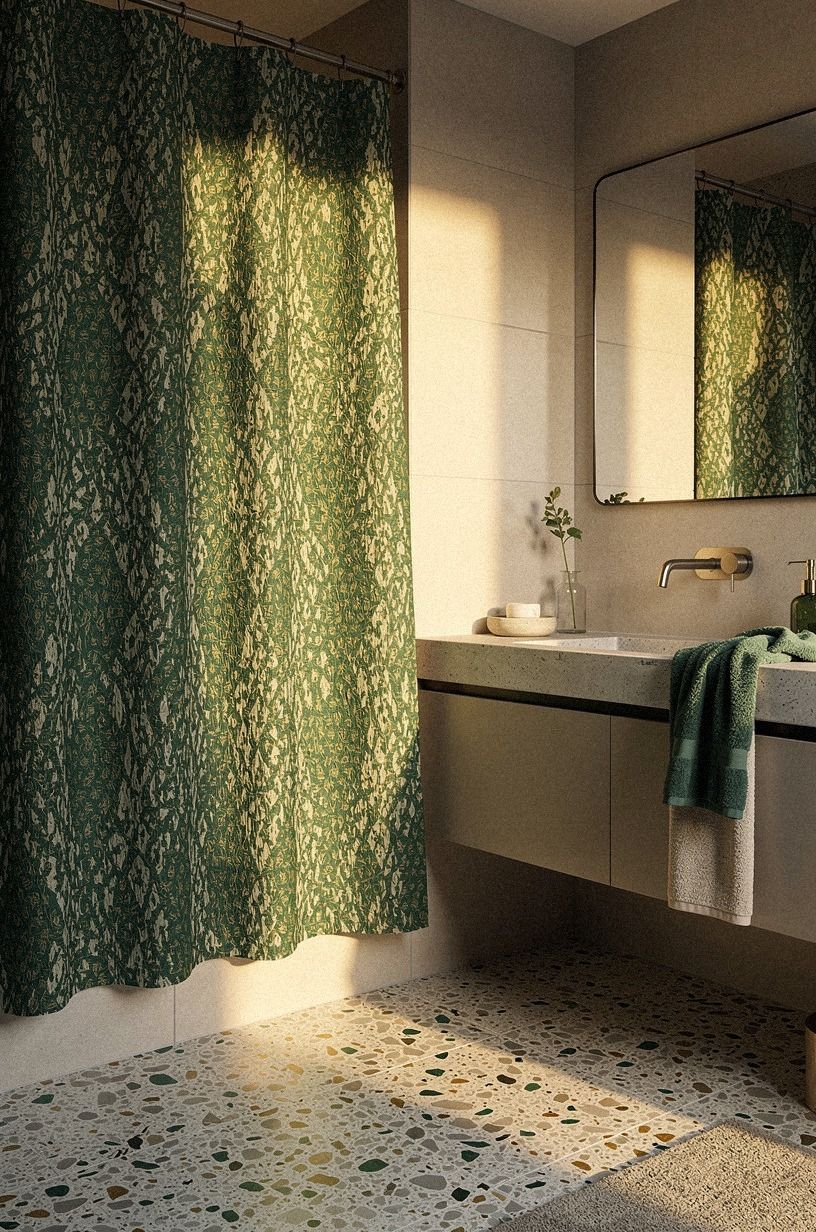
A patterned shower curtain can create the coastal feeling you want without opening a wall or ordering tile. Look for broad stripes, faded botanical shapes, or a soft geometric print in emerald, cream, and gold.
A large-chip terrazzo surface can echo the pattern without adding another busy textile. Your print should be larger than the room’s smallest details, otherwise the bathroom will feel crowded. Hang it close to the ceiling if you want the tub surround to look taller.
And here’s the practical part: a curtain is easy to replace when your taste shifts. You can test a more dramatic blue for a season, then move back to a pale spa palette without paying for another renovation. This is one of the easiest renter-friendly coastal swaps.
12Anchor the room with a soft runner
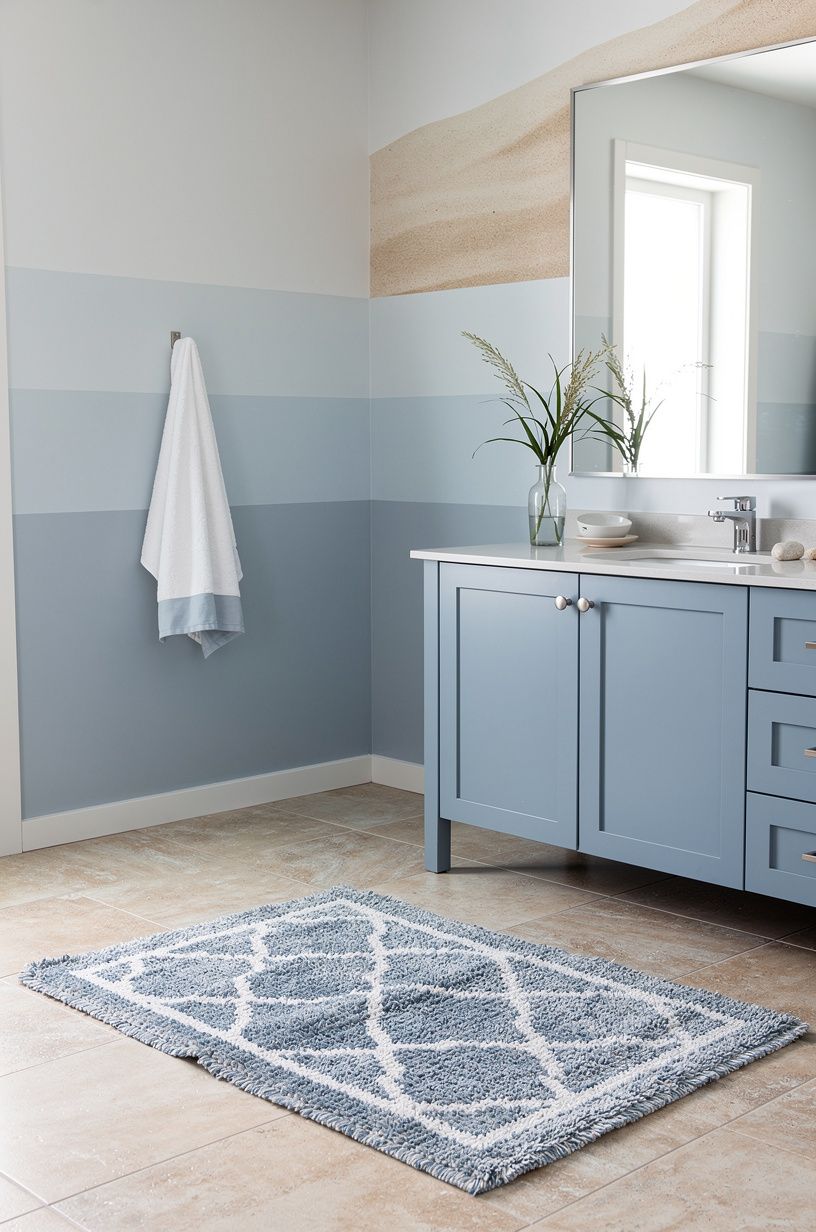
A runner gives your feet warmth and makes the bathroom feel less like a corridor. Choose a washable design in forest green, rust, and natural oak tones, then let the pattern echo one color from your wall or shower curtain.
A hand-applied Venetian plaster wall adds variation without competing with the runner. You’ll want enough clearance around the toilet and vanity so the fabric doesn’t bunch under doors. If your room is narrow, a restrained stripe can make the floor feel longer.
I’d skip the tiny matching bath-mat set. It breaks the floor into little islands and can make your bathroom look more crowded. One longer runner usually feels calmer, especially when you’re trying to create a breezy, open effect.
13Paint the vanity in a blue-green shade
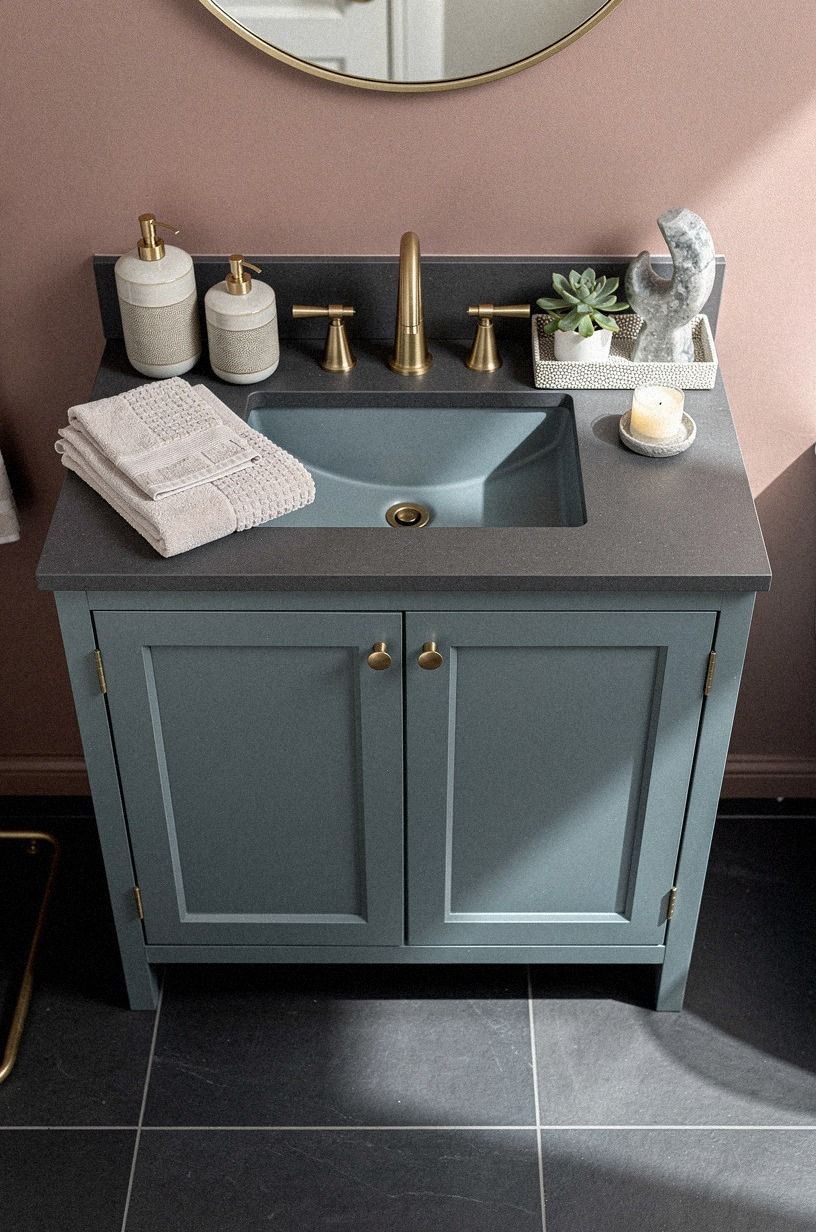
A painted vanity is one of the strongest changes you can make without replacing the whole bathroom. Use a blue-green shade on the cabinet, then soften it with dusty rose, charcoal, and brass so the furniture becomes an anchor.
Shagreen accents can add a subtle tactile finish to the drawers or accessories. In a darker bathroom, test the color beside your existing floor because the undertone may become more noticeable. Your sample should stay on the wall for a full day before you decide.
If you’re using an IKEA KALLAX birch-effect unit as open storage, paint only the back panel or add blue bins instead of coating the whole piece. You’ll keep some pale wood visible, and the room won’t lose its airy quality.
14Frame the tub with coastal art
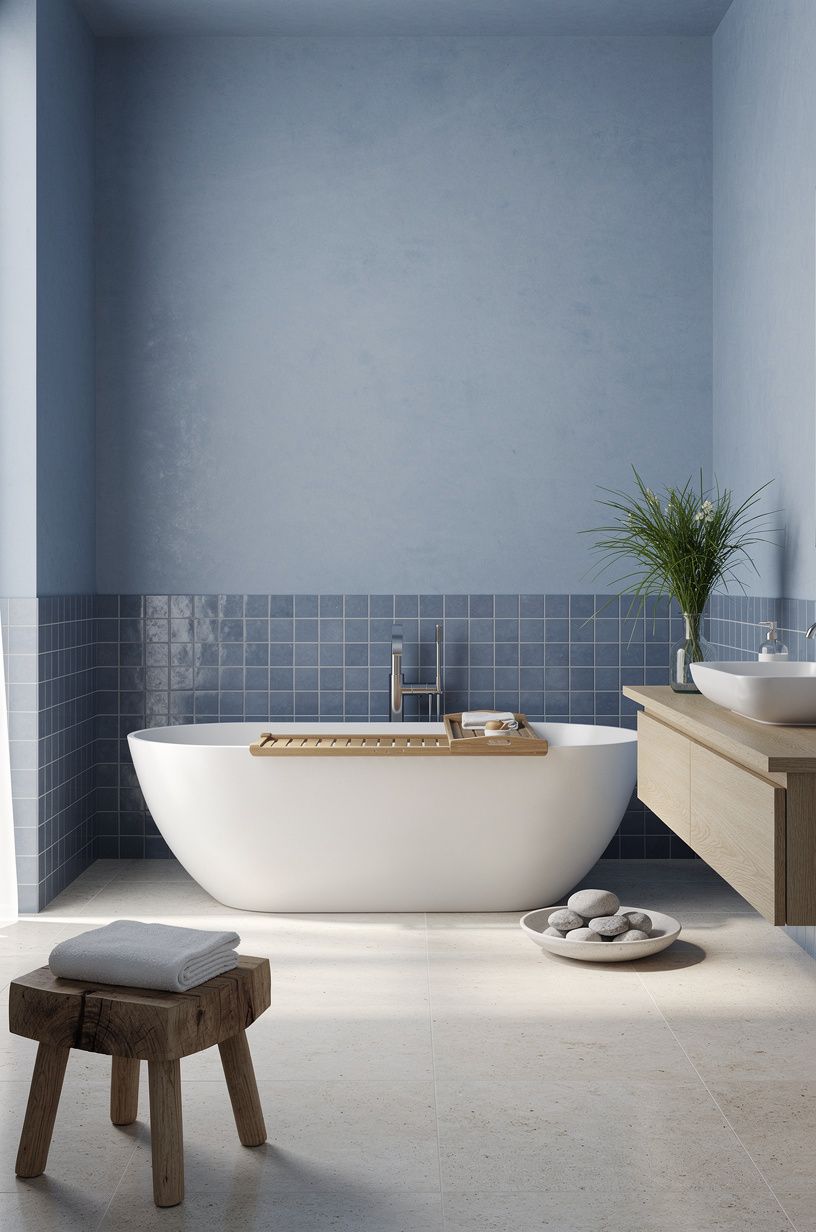
Art makes a blue bathroom feel personal rather than assembled from matching accessories. Choose one framed print with sea grass, a foggy shoreline, or abstract brushwork in warm white, camel, and black. Your wall gets a focal point, but the room still feels quiet.
A washed Belgian linen mat or curtain works better than a glossy beach photograph if you want a sophisticated result. Keep the frame away from direct spray, and use acrylic glazing if the piece will sit near the tub. You’re protecting the art while keeping the mood relaxed.
For a gallery wall, limit yourself to a few related pieces. Why crowd the only open wall?
One larger work often gives your eye a place to rest, especially in a small bathroom. See these coastal blue bedroom ideas for art pairings that can cross over nicely.
15Mix blue with pale terracotta
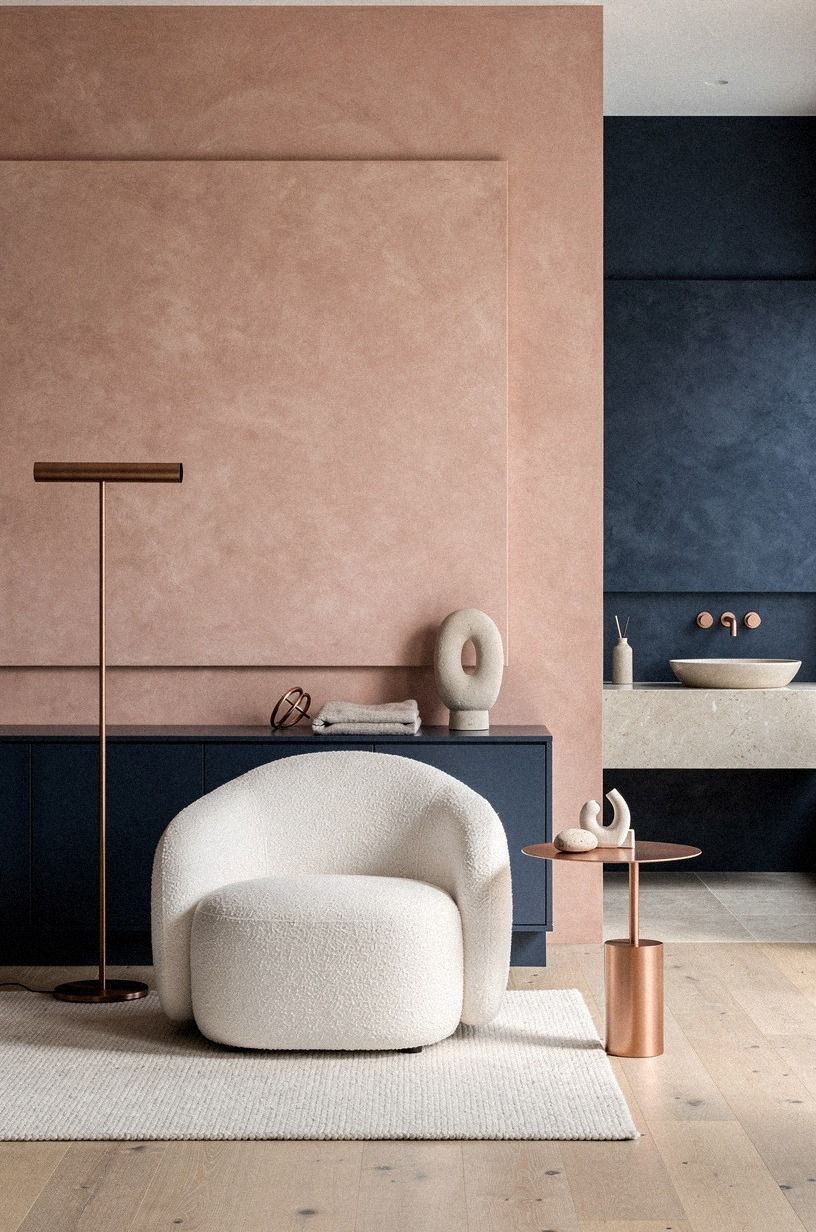
Pale terracotta gives blue a sun-warmed counterpoint. Use it in a small vase, a soap dish, or a framed detail rather than covering an entire wall. A midnight blue, copper, and ivory palette will feel earthy and welcoming, with just enough contrast to stop the blue from becoming chilly.
An organic bouclé stool has a soft, irregular texture that makes the room feel lived-in. Place it near the vanity with a folded towel or a branch of eucalyptus. You’ll get texture, color, and a faint garden note in one small corner.
But don’t pair bright orange with every cool blue. I’d choose dusty clay, muted coral, or faded terracotta instead. The softer color lets your blue remain the lead while giving the room a warmer pulse.
16Use the Three-Height Light Stack
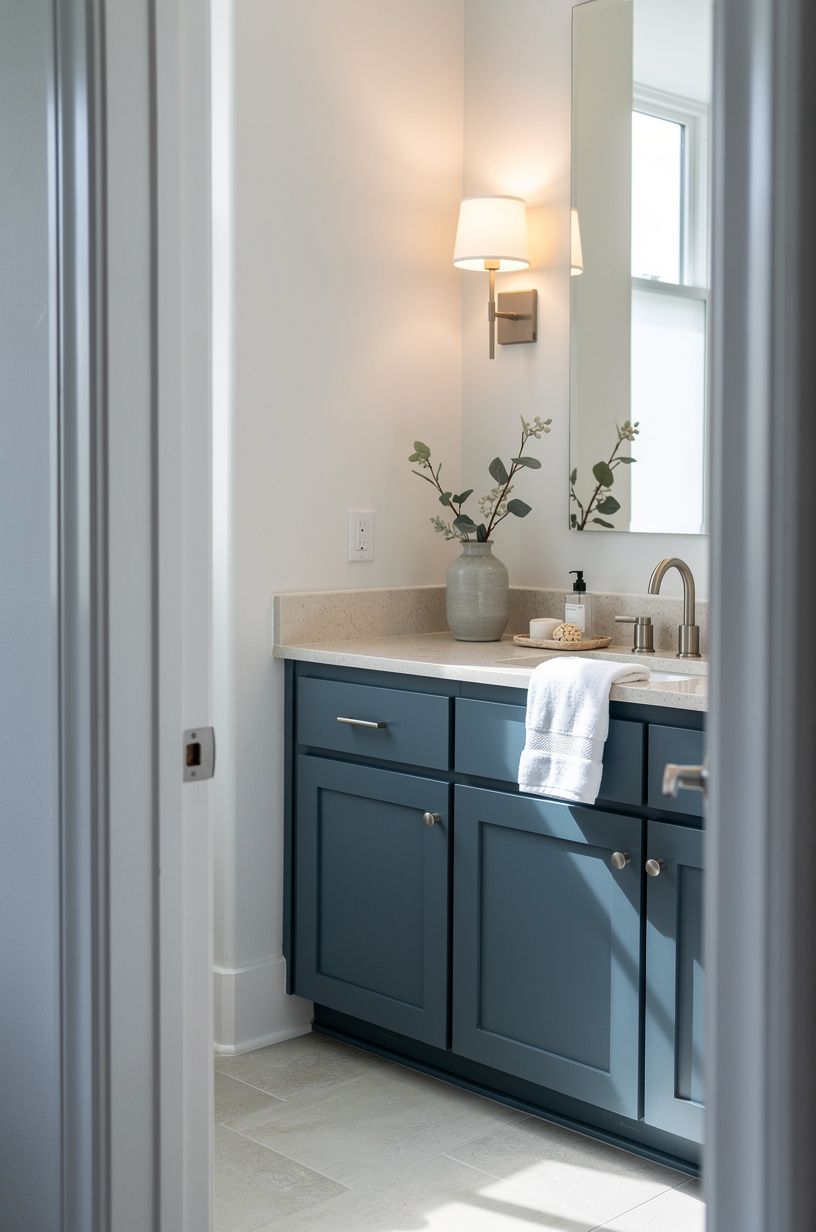
The Three-Height Light Stack gives your bathroom more depth at night. Combine sage green, warm cream, and natural wood, then add a Nero Marquina black marble surface with white veins for contrast. The three light levels will keep the dark stone from feeling too heavy.
17Choose open storage over a bulky cabinet
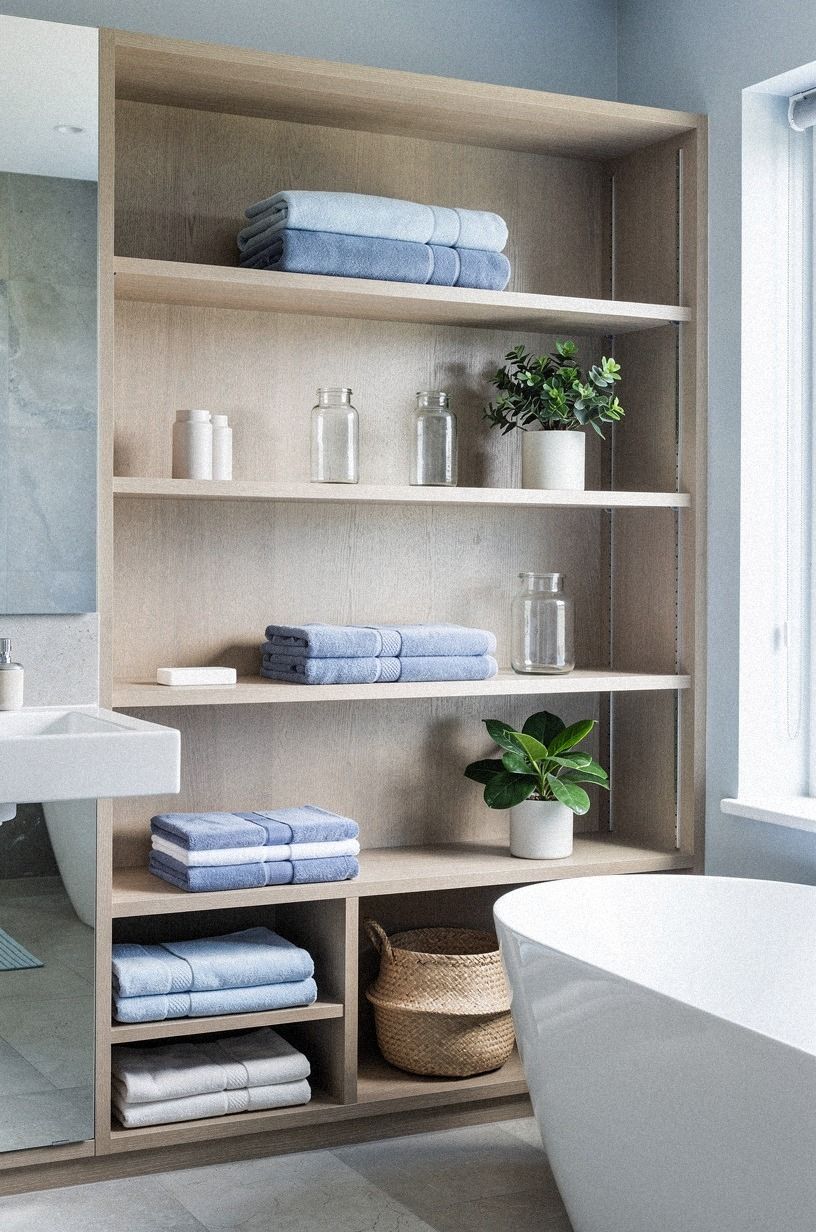
Open storage can make a small bathroom feel larger because the wall remains visible behind your towels and baskets. Use one shelf or a narrow ladder, then keep the display edited so your everyday products don’t become visual clutter.
A deep-pile mohair velvet stool brings softness beside terracotta, stone, and olive. If you’re using open shelves, choose matching containers in clay, linen, or aged brass. Your eye will see a calm pattern instead of a collection of labels.
I’d skip deep storage beside a narrow toilet. The extra capacity isn’t worth the cramped passage. Measure the clear floor area first, including the required 21-inch toilet clearance in front, then choose furniture that leaves your path comfortable.
18Try a blue house decor moment with stone
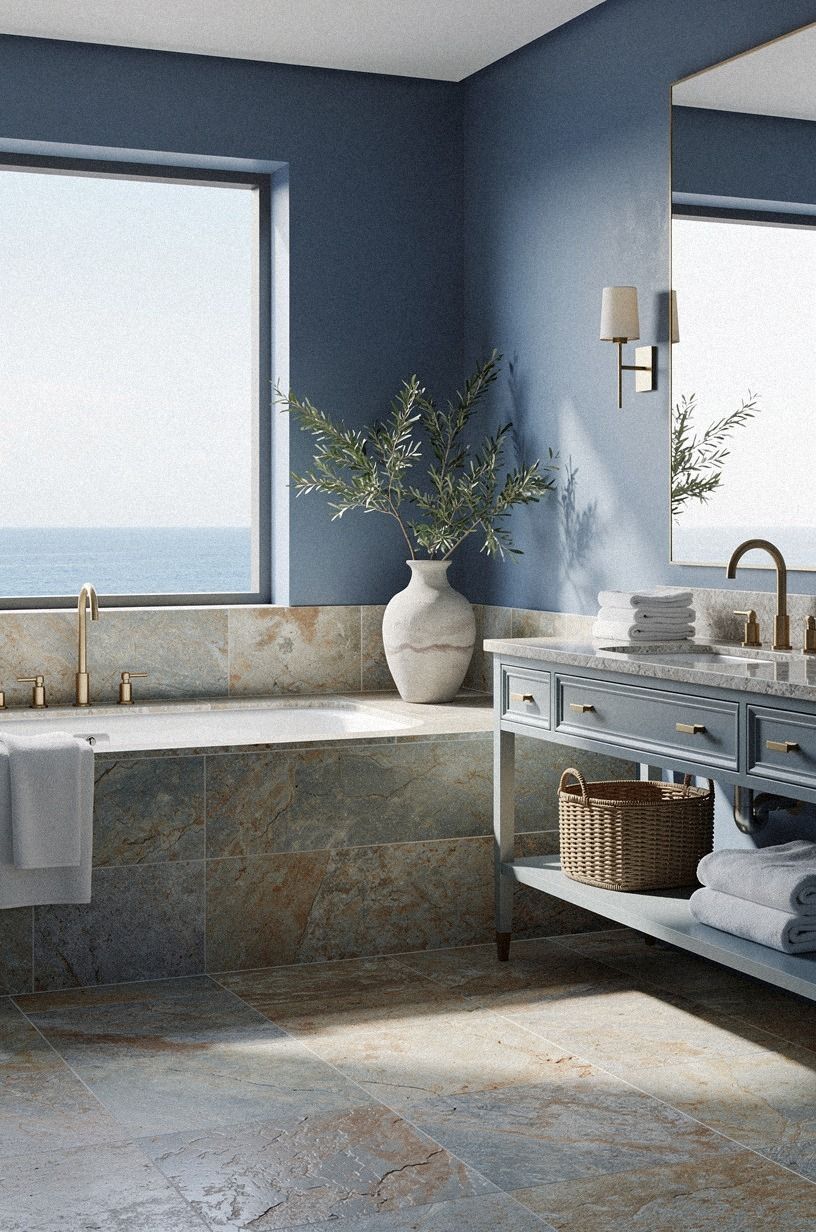
Blue house decor doesn’t have to mean blue on every wall. Bring the color into a small stone vignette with a clay, linen, and aged brass palette. Your bathroom will feel connected to the rest of the home.
Carrara marble with subtle grey veining adds a tactile, elegant note beside painted blue. Use it for a small tray or shelf accessory, not necessarily a full countertop. You’ll get the visual weight of stone without committing to a major replacement.
If your vanity already has a cold white top, add warmth through wood and woven materials before buying new stone. Your budget will stretch further, and the room may need texture more than another hard surface. For a softer neighboring palette, compare these dusty blue bathroom ideas.
19Pair blue with aged brass instead of chrome
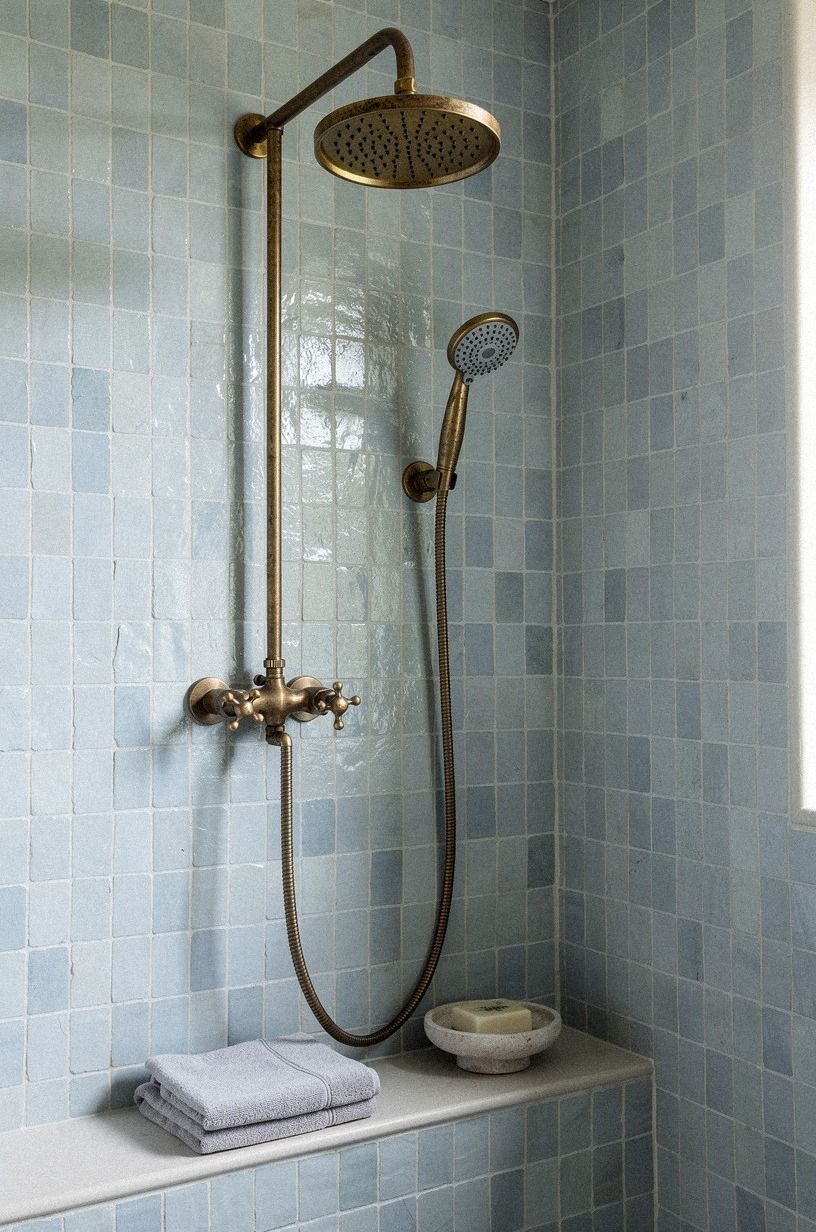
Aged brass gives blue a quiet vintage edge. Pair plum, grey, and rose gold with Carrara marble with subtle grey veining for a finish that feels collected rather than overly nautical.
How Much Will a Coastal Blue Bathroom Cost?
A cosmetic refresh can stay modest, but a full renovation moves into a different budget. The table below uses typical US ranges, so your labor, location, and room condition may shift the final number.
For materials, subway tile usually costs $2-$10 per square foot, while zellige tile sits around $15-$35 per square foot. A marble top may run $50-$100 per square foot, and a brushed brass faucet typically lands around $120-$450. You don’t need the high tier to get a convincing coastal result.
If you’re deciding where to spend, put your money into the item you touch every day. A good faucet, comfortable lighting, and a mirror with the right proportions will serve you longer than a decorative accessory. Your blue paint can do much of the visual work.
Why Coastal Blue Still Feels Fresh
Coastal blue keeps returning because it can shift between airy, moody, rustic, and refined depending on what surrounds it. A pale blue with linen feels peaceful. The same family of color with dark wood and brass can feel dramatic.
I’ve watched the look move away from obvious beach references and toward materials that suggest the shore instead of announcing it. Think salt-washed wood, woven fibers, soft stone, and imperfect ceramics. Your room can feel connected to the coast without looking like a vacation rental.
That’s the part I’d keep in 2026: less matching, more atmosphere. You don’t need a blue shell collection or a sign above the toilet. You need a color you can live with, a texture your hand notices, and lighting that makes the room pleasant after sunset.
My Honest Take on Coastal Blue Bathrooms
I used to think a coastal bathroom needed crisp white walls, bright navy accents, and some kind of stripe. That formula looked clean in a catalog, but it didn’t feel warm when I lived with it. The hard white reflected every bulb, the navy looked disconnected, and the room felt more like a rental than a retreat.
Now I’d start with the light. Before choosing paint, I watch how the room changes from morning to evening.
A blue that looks soft at noon can turn gray under a cool bulb, while a blue-green can become surprisingly gentle with warm light. Your sample board needs both conditions because your bathroom does, too.
I’d also spend more time on texture than on decorative objects. A thick towel, a woven shade, and pale wood do more for the room than six small accessories. That’s why I prefer one sage mohair velvet stool or one linen curtain over a pile of themed items.
The room should feel comfortable when you enter it barefoot.
The biggest mistake I made was choosing every finish separately. The faucet was shiny, the mirror was rustic, the shelf was orange wood, and the blue paint was too cold.
None of those choices was terrible alone, but together they argued. Your best coastal bathroom will have one clear lead, usually the blue, then two or three supporting materials that know when to stay quiet.
So choose the mood before you choose the shopping list. If you want airy, keep the contrast soft.
If you want moody, let one deep blue carry the room. If you want earthy, introduce terracotta, oak, and stone.
You’re allowed to stop before every surface is finished. A little restraint is what keeps the space feeling lived-in instead of staged.
A Few Things Worth Answering
What is the best coastal blue bathroom idea for a small bathroom?
A pale blue wall with a rounded mirror is the easiest starting point because it keeps the sightline open and reflects light. IKEA HEMNES storage can add useful warmth without filling the floor. Choose one woven texture and one brass detail so your small room feels calm rather than crowded.
Where can I buy coastal blue bathroom pieces on a budget?
IKEA, Wayfair, and Target are practical places to start, while Facebook Marketplace and thrift shops can yield better wood mirrors and stools. Secondhand wood often brings more character than new matching sets. Your best budget move is comparing dimensions first, then choosing the finish.
How much does a coastal blue bathroom makeover cost?
A cosmetic makeover typically runs about $200-$1,200, depending on paint, textiles, the mirror, and your faucet. Paint and rearranging can cost very little, especially if you reuse storage. A new vanity, lighting, or partial tile work moves the project toward the $3,000-$9,000 mid-range.
Can I create a coastal blue bathroom on a budget?
Yes, and you can start with paint, a used mirror, and fresh towels. A focused color palette does most of the visual work.
Rearrange what you own, add a woven basket, and use a warm bulb before buying new furniture. Your room may need editing more than shopping.
Is a coastal blue bathroom worth it in a small space?
Yes, because blue can give a small room a clear mood without taking floor space. One painted wall is usually enough. Keep the vanity area visually simple, choose a rounded mirror, and preserve at least 21 inches of clearance in front of the toilet so the room remains comfortable.
Is a coastal blue bathroom a good idea for a rental?
Yes. Use peel-and-stick wallpaper on a removable panel, a tension rod for a fabric curtain, and adhesive hooks for lightweight art.
No-damage changes let you bring in blue, wood, and woven texture without touching the plumbing. Your best rental upgrade may be better lighting and towels.
Where I’d Start First
If I had to pick one, I’d start with the blue-green vanity. It gives your bathroom color, storage, and a grounded focal point without touching the tile.
Paint the walls lighter, add warm brass, and let the grain show. Pin this idea for later and build the rest around it.