
Charcuterie ideas using plates you already own can look intentional without a new serving board or a shopping trip. I tested this with mismatched dinnerware, leftover linen, and one stubborn cheese knife. The result felt warm, inviting, and far more personal than a matching set. You don’t need more stuff. You need a better arrangement. For a faster version, I borrowed one idea from last-minute charcuterie boards you can build in 10 minutes.
Here’s what it looked like before
Before I changed anything, I had plates in different shapes, a shallow bowl with a chipped rim, and serving pieces that had migrated into three separate drawers. Nothing was unusable, but nothing was working together either.
I kept reaching for the same plain white plate because it seemed safe. Then I realized you’re not styling a plate by itself. You’re creating a small arrangement around food, texture, height, and the people who’ll gather near it.
The fix was less about buying something new and more about seeing what each piece could contribute. Even a color reference like the best white paint depends on these 3 things you already own helped me think about the surrounding palette.
- Start with charcuterie on a plate that has room to breathe
- Can height make no-board charcuterie feel more generous?
- Layer everyday serving ideas with one soft textile
- The Shallow Bowl
- Why Farrow & Ball Pigeon worked better than another plain white plate
- The Three-Height Light Stack
- Let the cheese lead the charcuterie plate
- A Dark Rim, Not a New Board
- Use the Two-Texture Rule for everyday serving ideas
- Before You Style Charcuterie on a Plate, Quiet the Backdrop
- Anchor charcuterie without a board with one oversized napkin
- Mix charcuterie ideas using plates you already own by color
- Rosemary at the Edge
- Plate or Board? Finish with a reachable center
1Start with charcuterie on a plate that has room to breathe
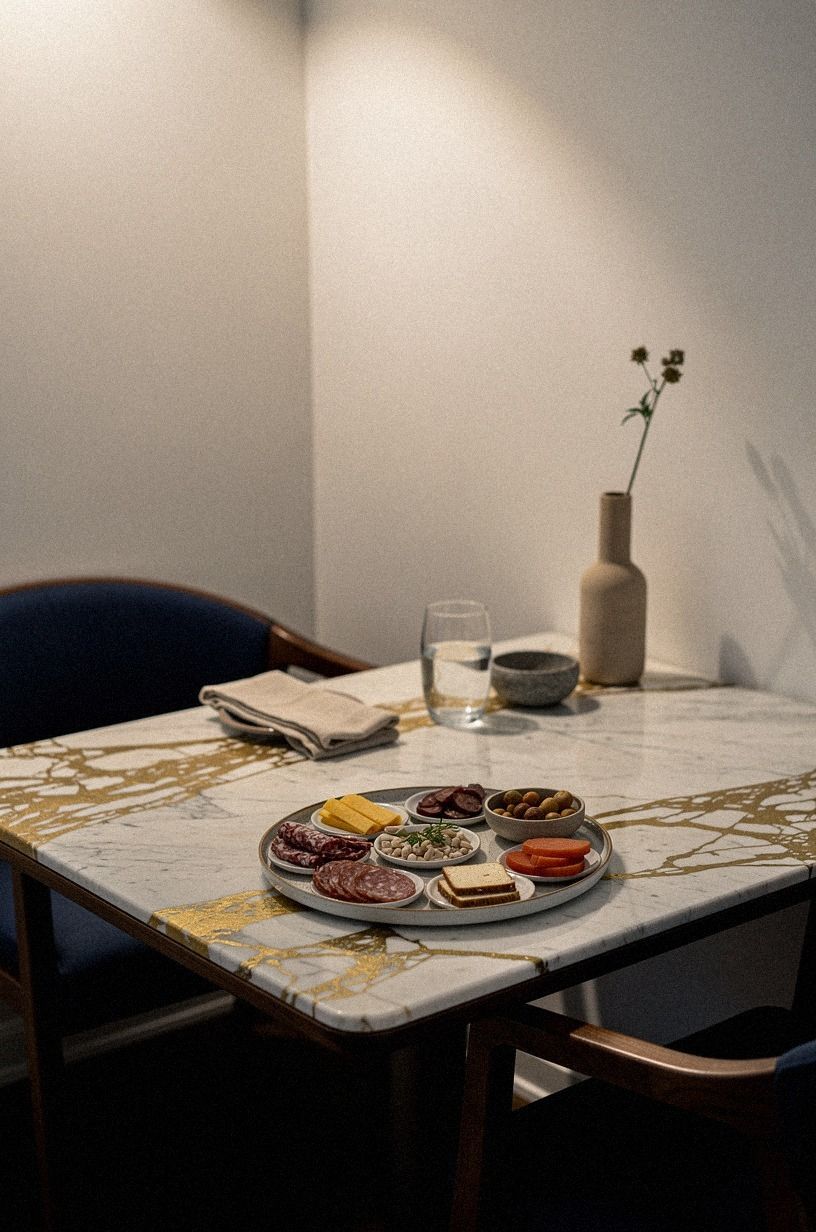
I began with the largest plate I already owned, a deep navy ceramic dinner plate with a quiet gloss. Its 11-inch surface gave the cheese and fruit enough breathing room. It rested on a warm Calacatta marble surface with soft gold veining, which kept the navy from feeling too heavy.
The first layer was a folded square of white linen beneath the plate. It softened the hard edge and connected with the walnut table underneath.
I’d skip a paper napkin here. It folds too sharply and makes your everyday serving idea feel like a children’s party.
Then I placed the food in three loose groups instead of making a ring around the rim. A wedge of cheese, a small pile of grapes, and sliced pear created a quiet triangle. You can see every choice, and you won’t need a second board to make the plate feel generous.
The same principle works when adapting last-minute charcuterie boards you can build in 10 minutes to a smaller surface.
2Can height make no-board charcuterie feel more generous?
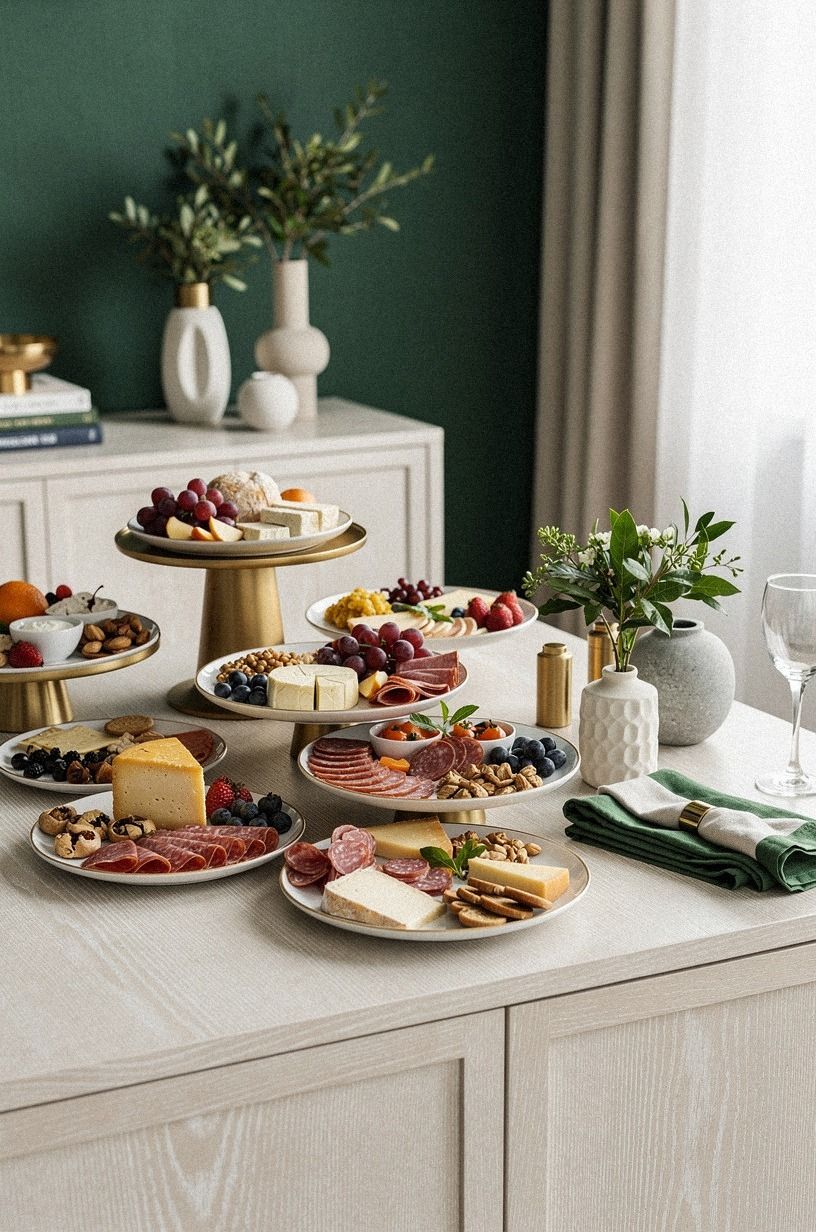
The second change was height. I used a low cerused white oak shelf nearby as a visual anchor, then raised one section of the plate with a small overturned saucer. You won’t see the saucer once the food is arranged, but you’ll feel the difference because the plate stops reading as one flat surface.
I tested a tall stack first, and it looked fussy. A modest lift worked better. Your eye moves from the low olives to the middle cheese wedge and then toward the taller rosemary sprig.
The emerald, gold, and cream colors gave the arrangement enough richness without adding more objects.
If you’re arranging charcuterie without a board, keep the highest item near the back third of the plate. The front should stay easy to reach.
I learned this after knocking a fig into the honey bowl twice. Not elegant!
A quiet backdrop, much like the one discussed in the best white paint depends on these 3 things you already own, also helps height read clearly.
3Layer everyday serving ideas with one soft textile
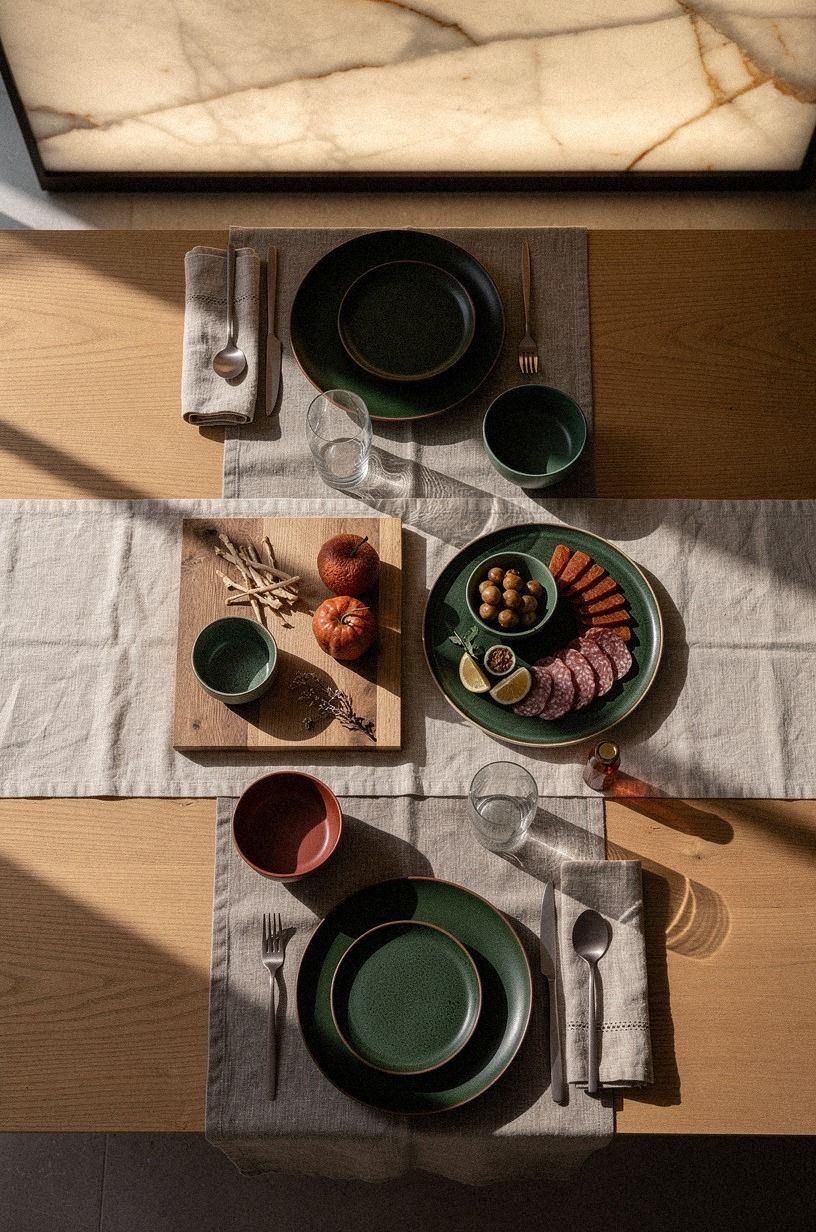
I wanted the food to feel welcoming before anyone tasted it, so I added one forest-green linen napkin beneath the plate. The plate rested on a small backlit translucent onyx surface, and the textile kept that smooth material from feeling cold.
The napkin wasn’t tucked into a complicated fold. It simply rested under one corner.
You can use a tea towel, a linen runner, or even a clean cotton scarf. The point isn’t luxury.
It’s contrast. Smooth ceramic beside rumpled fabric gives your eye something to notice, and the plate feels less like a lonely object on the table.
I’d avoid several different textiles in one arrangement. They compete quickly.
A single warm layer looks more refined than a pile of textures, and it won’t make your table feel like a fabric sample book. If you’ve got only a plain plate, this is the change I’d make first!
It’s the same restrained instinct behind last-minute charcuterie boards you can build in 10 minutes.
4The Shallow Bowl
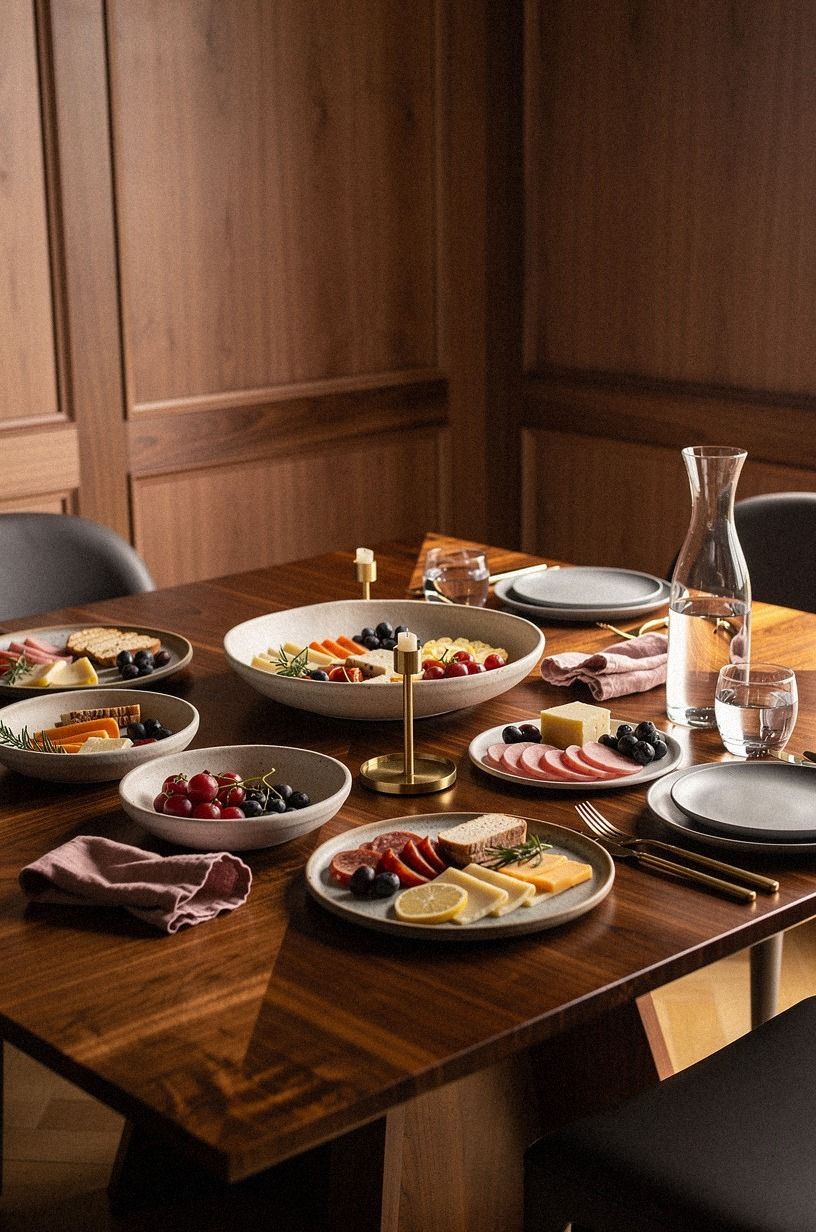
My shallow bowl became the most useful piece in the cabinet.
5Why Farrow & Ball Pigeon worked better than another plain white plate
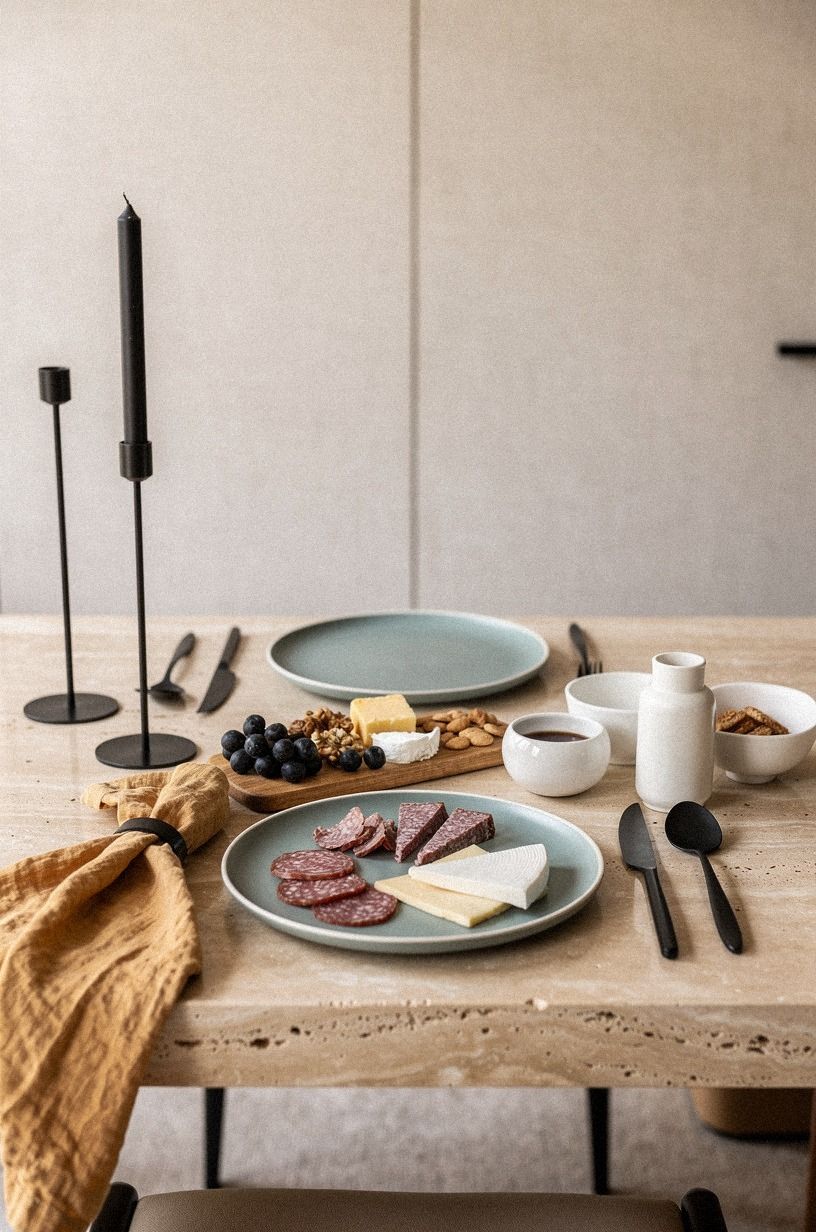
I used to think every plate needed to coordinate exactly. What I liked about Farrow & Ball Pigeon No.25 was its softened quality, not its exact blue-gray color. I translated that quiet feeling into a warm white plate set against warm travertine, camel linen, and one small black accent.
The food looked more vivid against the warm surface. Red grapes, golden cheese, and toasted bread felt gathered rather than scattered. Your plate doesn’t need to disappear beneath the food.
A restrained color can make the ingredients look more generous.
Benjamin Moore White Dove OC-17 is still useful for a clean base, especially if your room already has dark wood. But I’d skip an all-white stack when the food is pale too. The result can look washed out instead of elegant.
I found the same balance while reading last-minute charcuterie boards you can build in 10 minutes.
6The Three-Height Light Stack
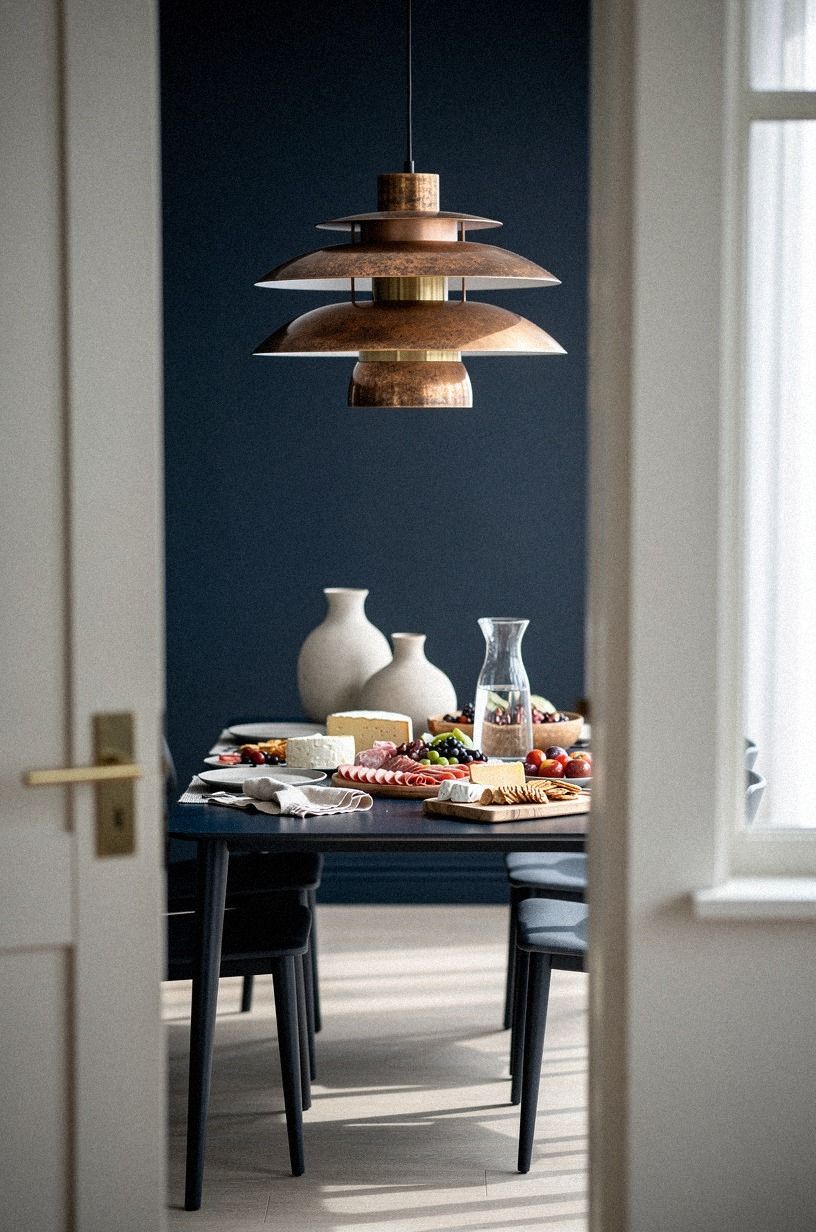
The Three-Height Light Stack was the first named rule I kept. Midnight blue, copper, ivory, and unlacquered brass gave the arrangement enough variation to feel collected.
7Let the cheese lead the charcuterie plate
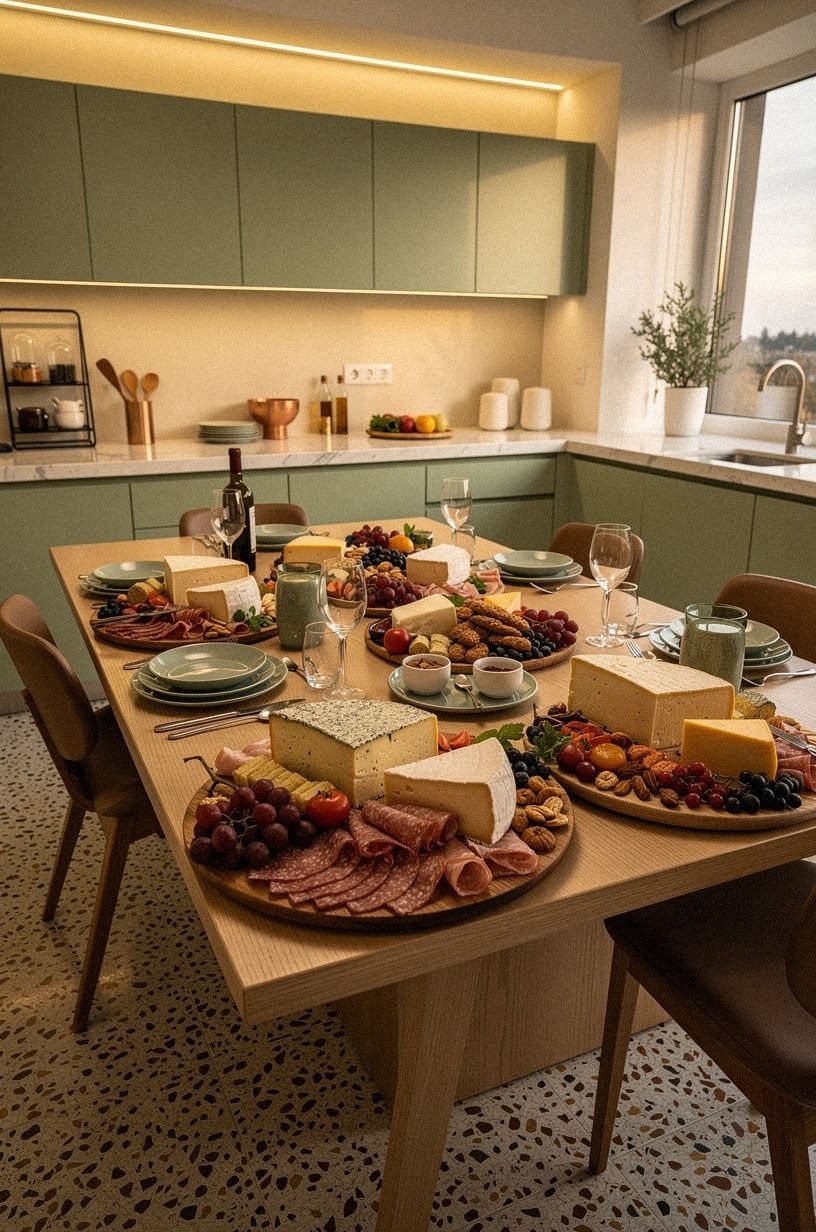
I changed the order of styling after noticing that I was treating cheese like a side note. It became the starting point. I placed a firm wedge of aged cheddar near the center, then built the fruit and crackers around its shape.
You’ll get a more natural composition when the largest food item sets the direction.
A natural wood serving spoon sat beside the plate, not across it. Its grain picked up the warm color of the crust and worked with the sage green, warm cream, and earthy tones around the food. Your utensils should support the meal, not become a centerpiece.
I’d skip arranging every cracker in a perfect fan. That look feels stiff when people start eating.
A loose cluster gives your guests permission to take one. And honestly, that matters more than a flawless arrangement.
The looser approach also suits last-minute charcuterie boards you can build in 10 minutes.
8A Dark Rim, Not a New Board
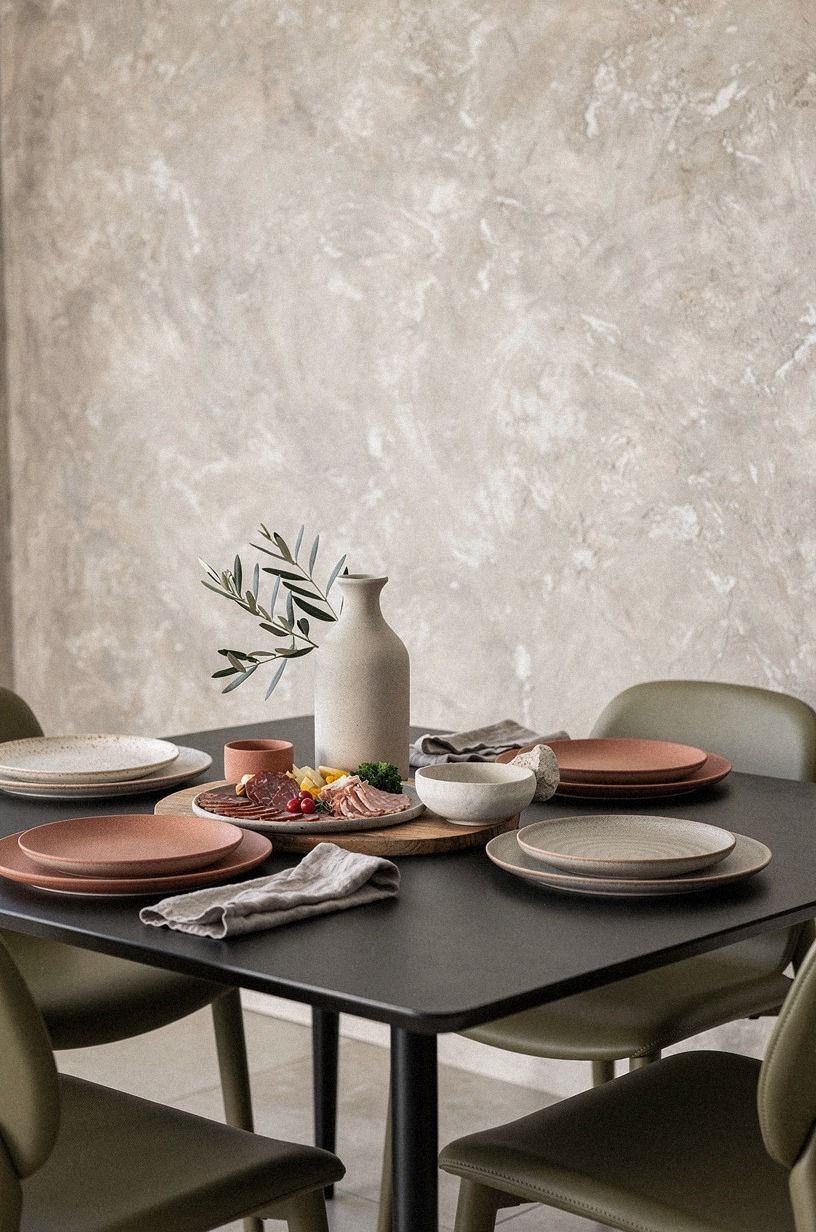
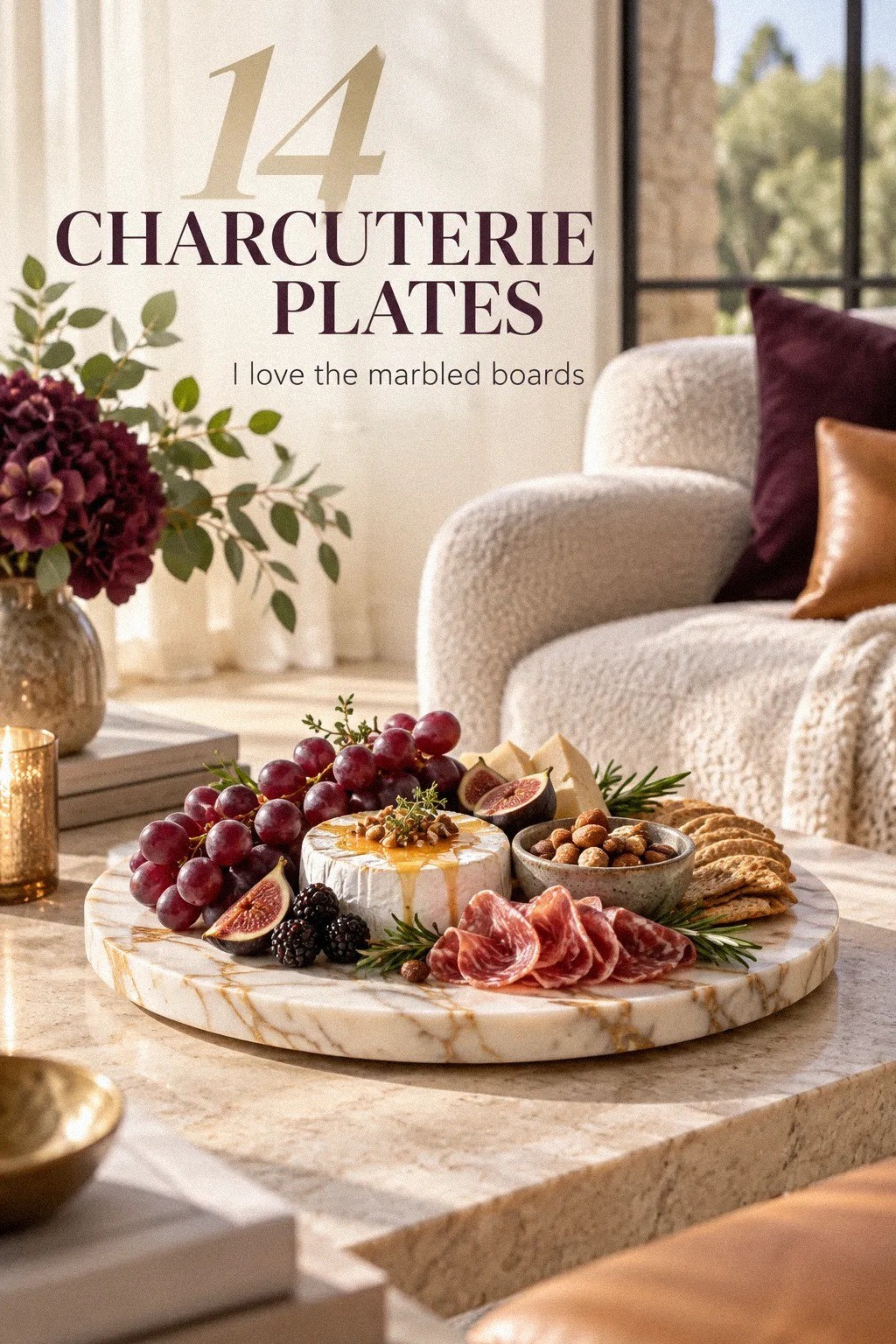
One of my favorite no-board charcuterie ideas came from a plate I nearly donated.
9Use the Two-Texture Rule for everyday serving ideas
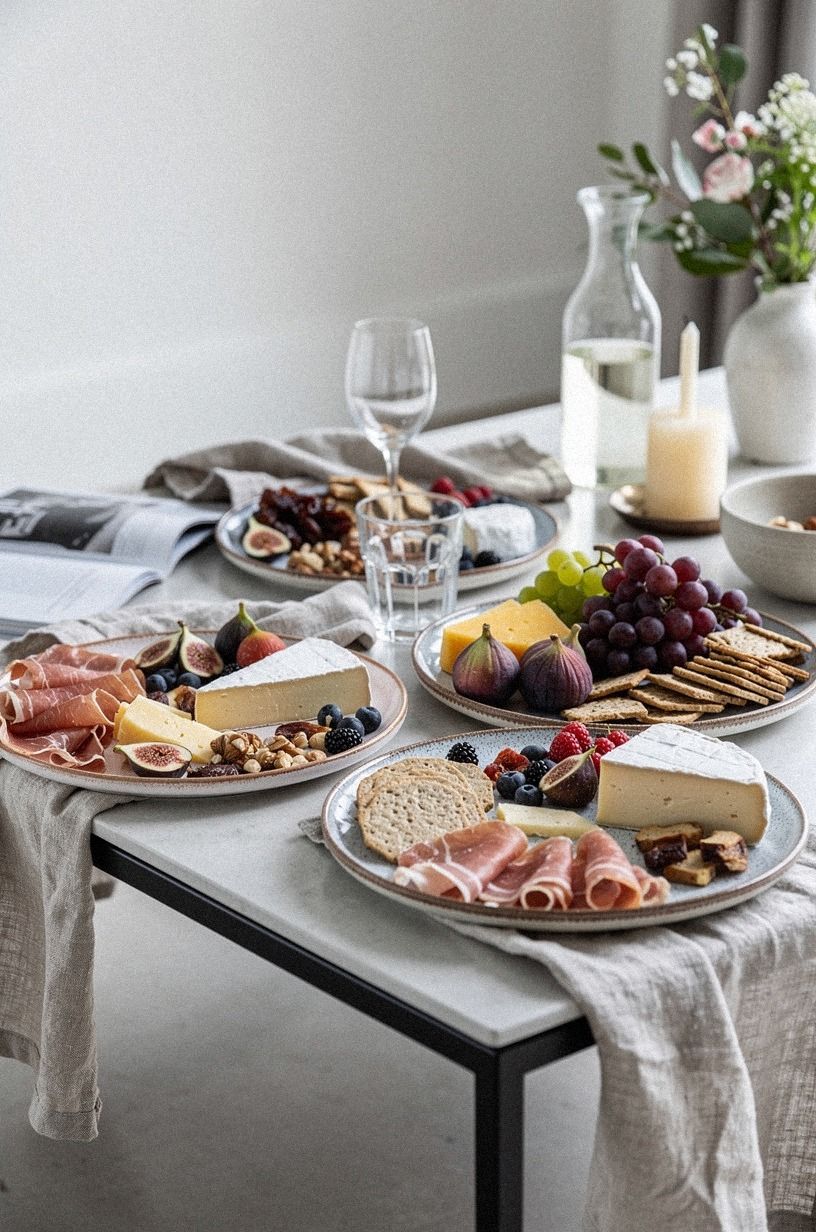
The Two-Texture Rule is simple: I pair one smooth surface with one rough surface, then stop. For this plate, the smooth piece was a clay-toned ceramic dish.
The rough piece was natural linen folded beneath it. A small aged-brass detail with shagreen texture added interest without turning the setup into a collection of accessories.
I added walnuts and sliced apple because their textures continued the idea. Crisp, soft, ridged, and glossy gave the plate a more captivating rhythm than extra decoration would have. Your ingredients can provide much of the visual interest when you let them.
I’d avoid adding glass beads, shiny ornaments, or decorative filler. Those details may look festive in a store display, but they don’t belong beside food. If you need more warmth, use a wooden handle or a linen edge instead.
The arrangement will feel more honest. That simplicity is also why last-minute charcuterie boards you can build in 10 minutes translates so well to everyday plates.
10Before You Style Charcuterie on a Plate, Quiet the Backdrop
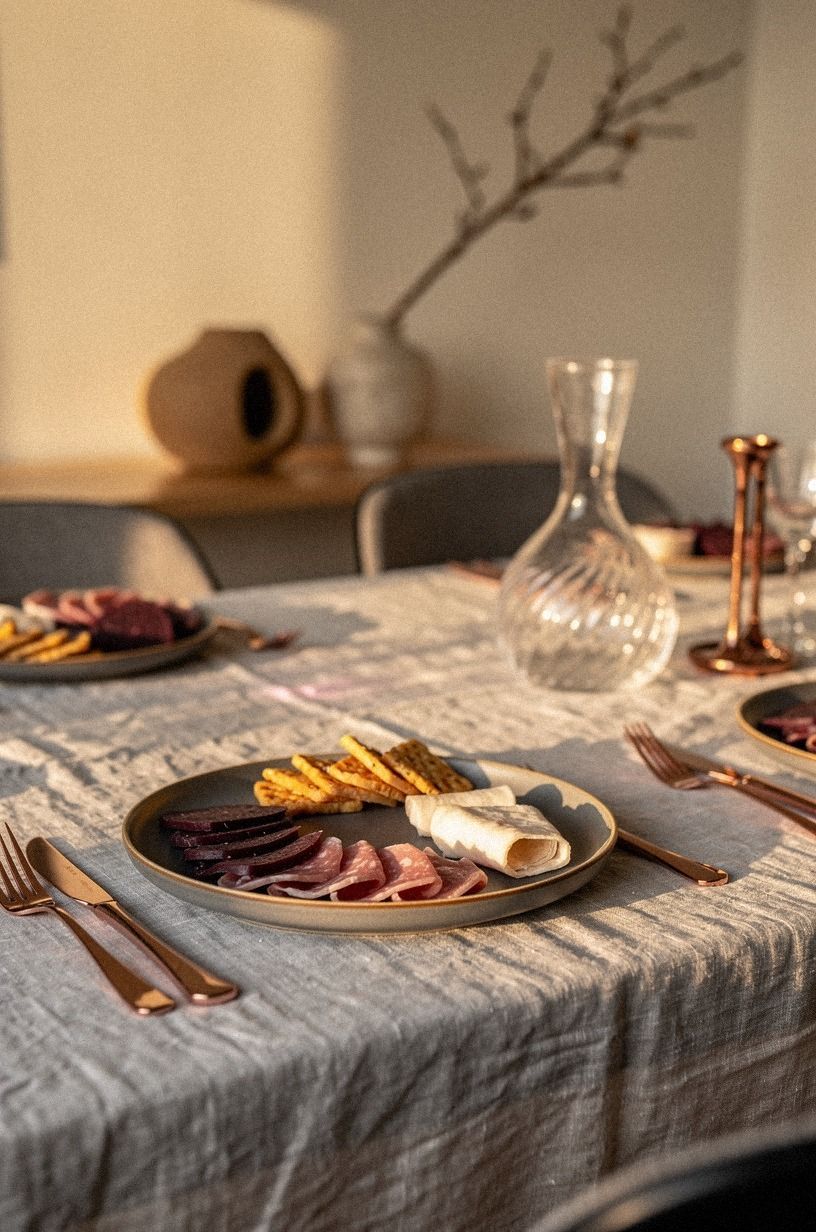
The plate looked better after I changed what sat behind it. I tested a small wall area in my mind with Sherwin-Williams Agreeable Gray SW 7029, then kept the surrounding backdrop soft with washed Belgian linen. Plum, gray, and a small rose-gold accent gave the setting warmth without making it busy.
If you’re serving near a wall, move the plate away from visual clutter. A plain section of wall, a wood table, or a calm linen runner gives the food space to speak. Art can stay nearby, but it shouldn’t compete with the plate’s main colors.
Your eye needs a resting place. I learned that a busy floral print behind the setup made the food look smaller.
A quieter background made the same plate feel more inviting, and it didn’t cost anything to move it six inches. For color context, I kept returning to the best white paint depends on these 3 things you already own.
11Anchor charcuterie without a board with one oversized napkin
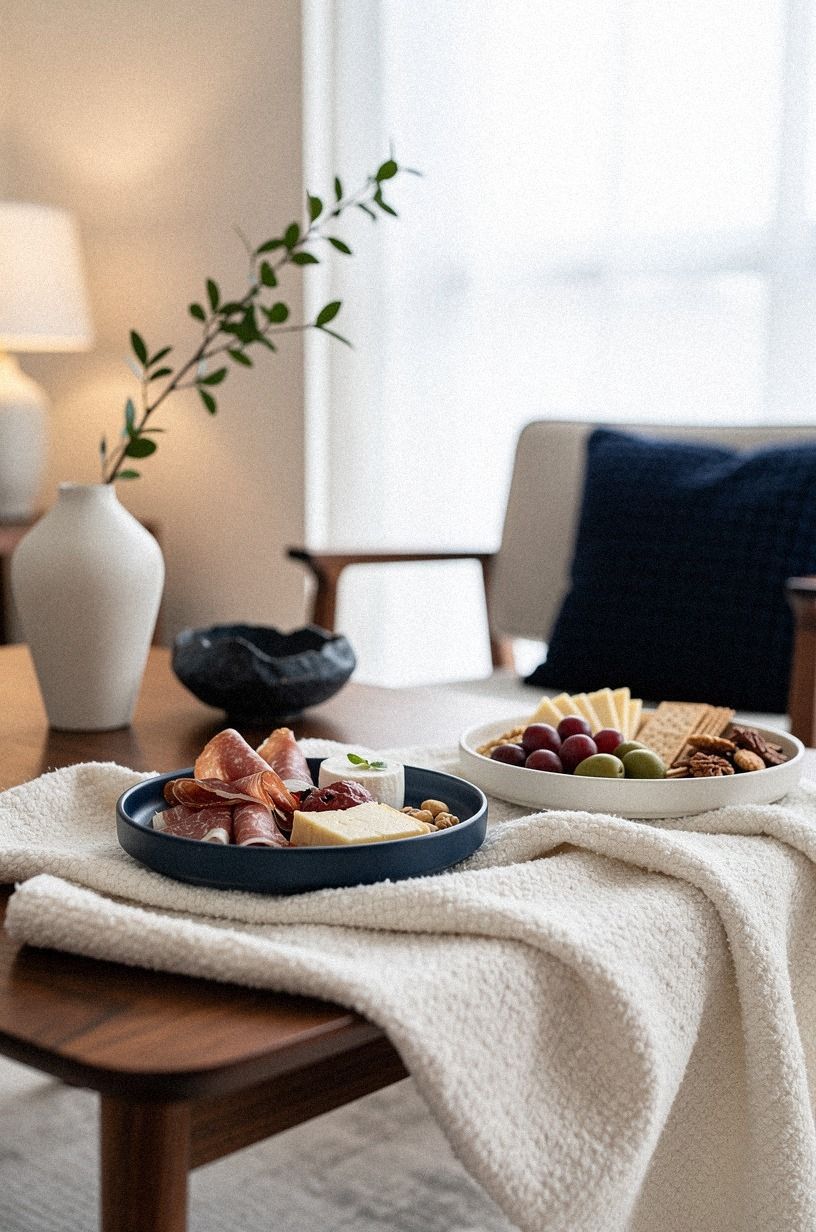
I tried several small napkins first, and they made the plate look fragmented. One oversized organic bouclé textile worked better because it created a single visual field beneath the plate. Navy, white, and walnut gave the arrangement a warmer foundation than oatmeal linen would have.
The fabric extended beyond two edges instead of surrounding the plate evenly. Your textile doesn’t need a loud pattern when its job is to connect several unrelated pieces.
And you can fold it casually. One corner can fall toward the chair while the other sits under the bowl.
I’d skip a crisp square fold unless your table is very formal. A little movement keeps the setting from feeling precious.
The relaxed shape echoes the practical layouts in last-minute charcuterie boards you can build in 10 minutes.
12Mix charcuterie ideas using plates you already own by color
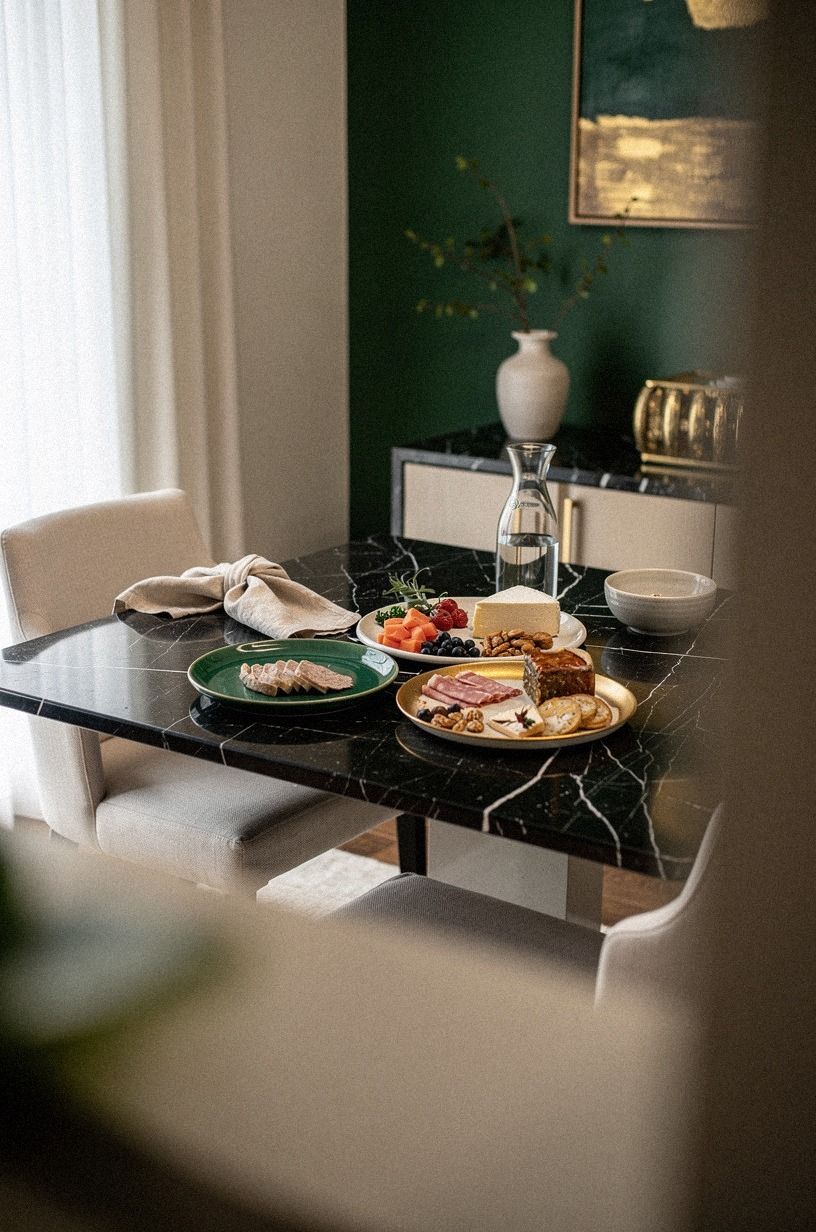
For the third arrangement, I stopped matching shapes and matched colors instead. An emerald plate, a cream bowl, and a small gold serving piece shared the same rich family. A thin piece of Nero Marquina black marble beneath the bowl gave the palette a clear dark anchor.
The Benjamin Moore Chestertown Buff HC-9 tone is a useful reference if you’re looking for warm cream and gold accents. I didn’t paint the dishes, but thinking about the color helped me choose pears, walnuts, and rosemary instead of adding bright berries.
Your plate collection can be eclectic and still feel harmonious. Keep one color repeating in at least two places, then let the rest vary. I’d rather see three related colors than six objects that technically match but feel lifeless.
The palette should stay as approachable as the ideas in the best white paint depends on these 3 things you already own.
13Rosemary at the Edge
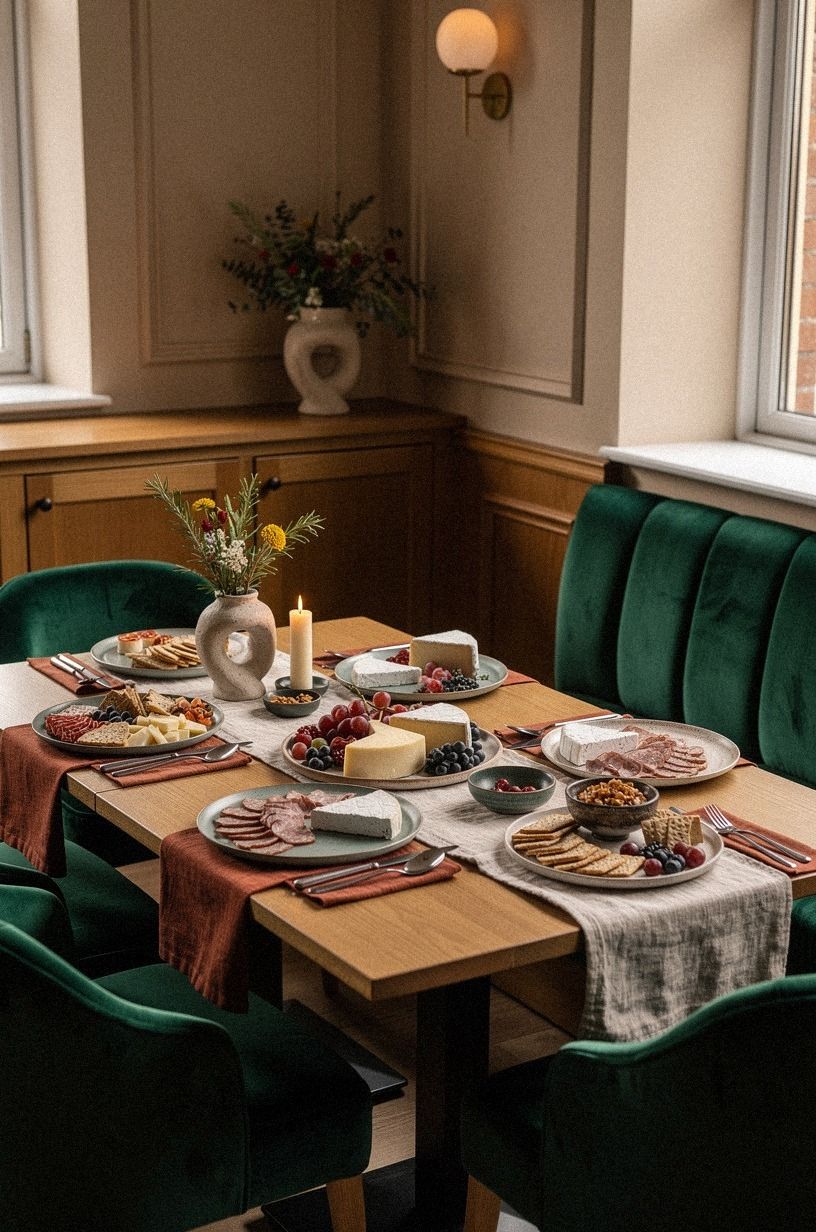
I used rosemary as the final accent because it added fragrance as well as color. A few sprigs rested beside the cheese, and the scent reached the table before anyone sat down. You can use thyme, sage, or a clipped branch if it’s clean and food-safe.
The sprigs sat in a tiny natural oak dish with a deep-pile mohair velvet napkin tucked beneath it. Forest green, rust, and warm wood made the greenery feel connected to the rest of the table. Your smallest pieces may be the ones that give the arrangement its finish.
I’d avoid a large bouquet near a plate. It blocks faces and makes the food feel secondary.
A small natural detail is enough. The room stayed bright, intimate, and relaxed because I left plenty of open space around the gathering.
For another compact arrangement, I’d start with last-minute charcuterie boards you can build in 10 minutes.
14Plate or Board? Finish with a reachable center
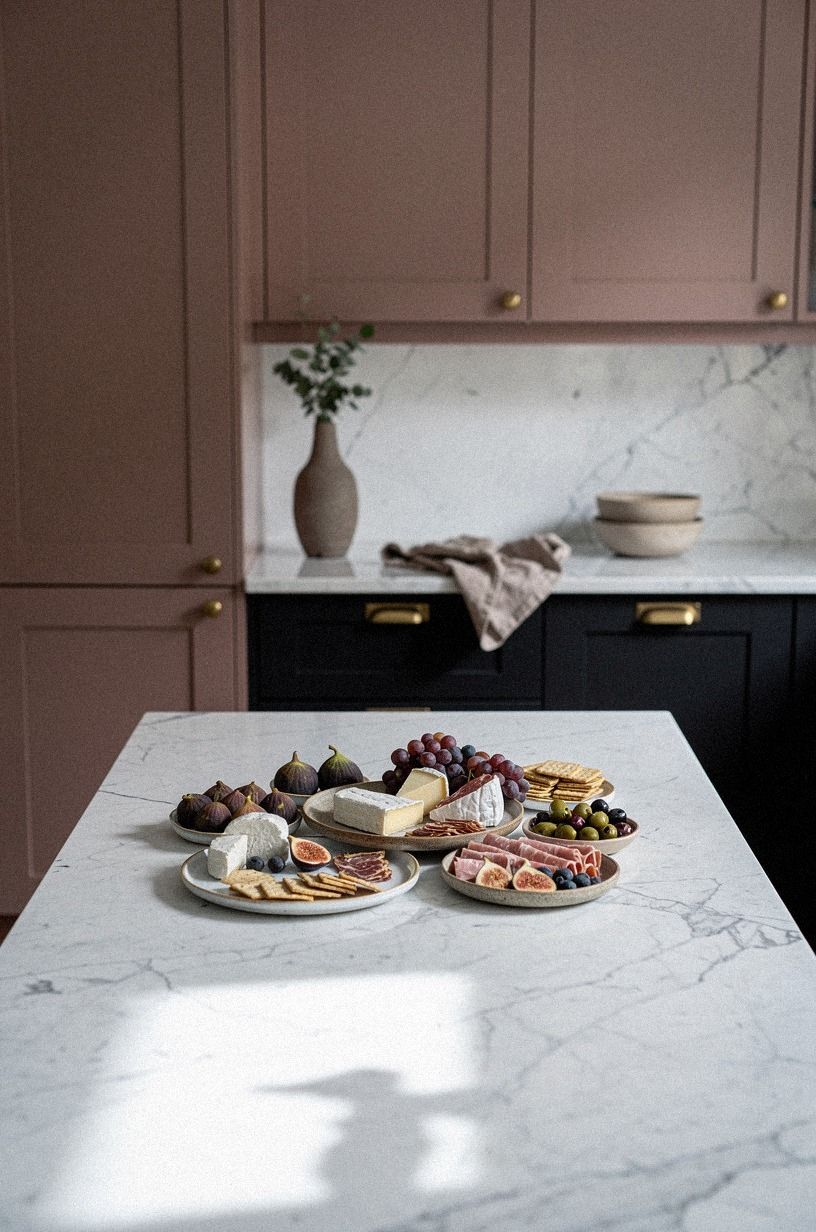
The last arrangement was the one I kept. I placed the main plate in the middle, then set the knife, bowl, and napkins within easy reach rather than spreading them across the whole table. A dusty rose plate, charcoal napkin, and brass utensil gave the center a little warmth.
A Carrara marble tray with subtle gray veining could create a stronger boundary if you own one, but I didn’t need anything elaborate. The dinner plate itself became the center, and the surrounding pieces supported it without crowding the table.
The result felt warm because it was practical. People could serve themselves, the plate didn’t wobble, and nothing decorative needed to be moved before eating.
That’s the test I trust most. If your arrangement works once the first person reaches in, it’s ready. The same principle applies to the best white paint depends on these 3 things you already own.
How much it cost
The plates themselves cost me $0 because I used pieces I already owned. That was the point of the makeover. If you’re refreshing the surrounding room too, typical US ranges are much broader than a plate-only reset.
A wool rug can run $400-$1,500, linen drapes for a pair typically cost $120-$400, a statement light fixture ranges from $150-$800, and room paint for a DIY project is often $200-$600. You don’t need any of those items for charcuterie on a plate.
If you’re working with what you have, start with the plate, one textile, and one natural accent. That combination gives you the most visible change without turning a simple serving idea into a full room project. For a separate small-scale starting point, I’d save last-minute charcuterie boards you can build in 10 minutes.
Why I Stopped Saving the Good Plates
I used to save my nicest plates for guests, which meant they spent most of the year stacked behind the dishes I used every day. That never made sense once I noticed how much a plate can change the feeling of an ordinary meal. The good plate wasn’t improving anyone’s evening in the cabinet.
So I pulled everything out and looked at the pieces together. Some were chipped. One had a faded floral edge.
Another was too shallow for anything messy. I didn’t need all of them, and I didn’t need a matching set. I needed to see what each plate could do.
My strongest opinion is that imperfect dinnerware works better for this than a flawless collection. A little variation makes the food feel lived-in. It also gives you permission to use what you own instead of buying a new board because a decorating idea told you that you needed one.
I’d still avoid anything cracked, unstable, or difficult to clean. Practical limits matter.
But a different rim, a soft glaze, or an uneven edge can make a small arrangement feel personal. You’re not building a showroom.
You’re making a place where someone can take a slice of pear without asking whether they’re allowed to touch it.
That’s why the plate makeover stayed with me. It wasn’t about making the table feel polished. It was about noticing that the objects already in my home had more range than I’d given them.
Once I stopped waiting for the right serving piece, the room became warmer, and the food felt more generous.
The Questions Worth Answering First
What is the best charcuterie idea using plates you already own for a small space?
The best choice is a large dinner plate with one shallow bowl and one folded linen napkin. It keeps food reachable while creating visual breathing room. You can use an IKEA plate or your plainest ceramic piece, then let fruit and herbs supply the color.
Where can I buy charcuterie pieces on a budget?
Look at IKEA, Wayfair, and Target first, then check Facebook Marketplace or a local thrift shop. You’ll often find useful serving shapes second-hand, especially shallow bowls and linen napkins. If you’re browsing more plate ideas, save this guide to last-minute charcuterie boards you can build in 10 minutes.
How much does a charcuterie plate makeover cost?
A plate-only makeover can cost $0 when you use dishes, napkins, and food you already own. A broader room refresh typically falls into the $200-$800 budget range for paint, textiles, art, and organization. You can compare paint options with the best white paint depends on these 3 things you already own.
Can I create charcuterie ideas using plates you already own on a budget?
Yes, and you can begin with three free changes: group food by height, use one textile beneath the plate, and add a rosemary sprig or fruit peel for color. A single shallow bowl can organize olives or nuts without requiring a new board.
Is charcuterie on a plate worth it in a small space?
Yes, because a plate takes less room than a large board and keeps every item within reach. Use the center for cheese, the back third for height, and the front edge for crackers. You’ll get a more comfortable setup without crowding the table.
Is charcuterie without a board a good idea for a rental?
Yes. Use removable textiles, a freestanding tray, and dishes you can take with you. You won’t need wall hooks, shelves, or permanent changes.
A rental-friendly table can still feel warm and intentional when the arrangement relies on objects you already own.
Where I’d Start First
If I had to pick one, I’d start with the largest plate you already own. Its extra surface gives every food a place to land, so you won’t need more accessories to make the table feel generous. Use it tonight, and let the arrangement stay a little imperfect.