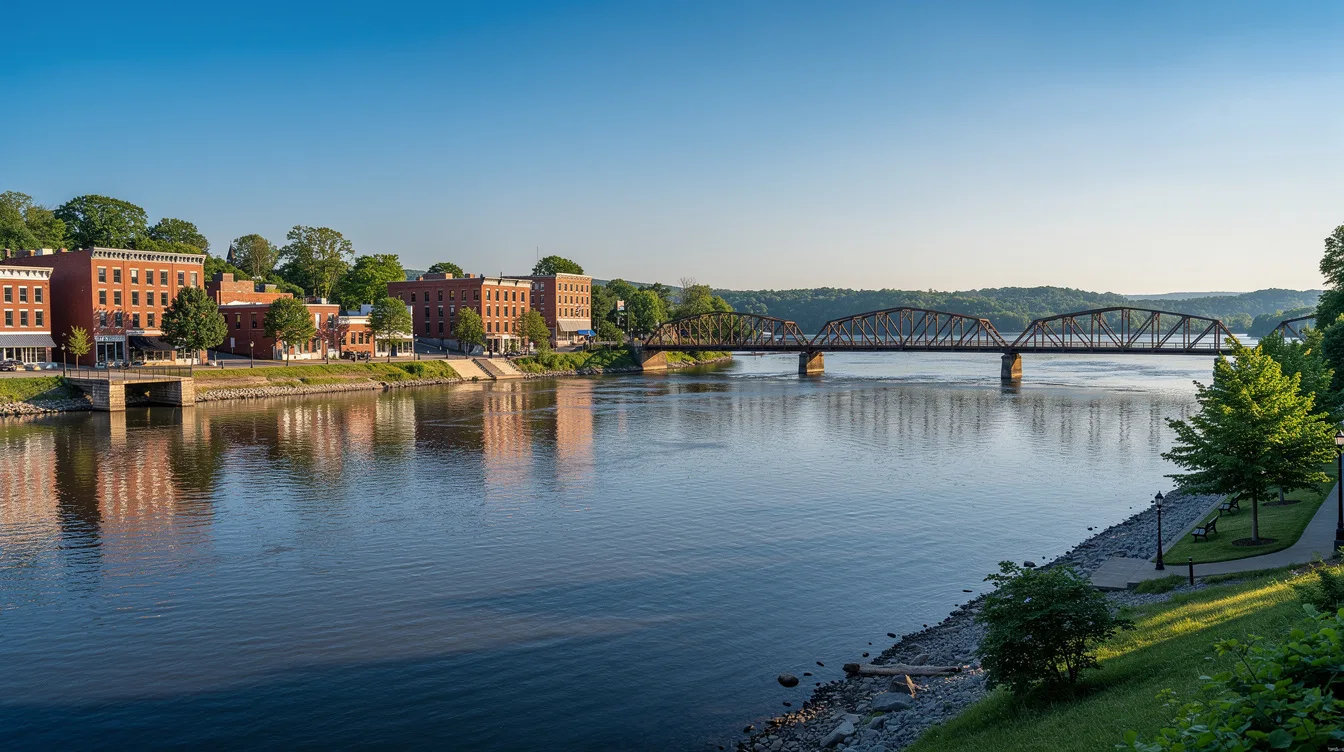
The first permanent American settlement in the Northwest Territory isn’t in Cincinnati or Cleveland. It’s a river town of about 14,500 people in the far southeast corner of Ohio, roughly two hours from Pittsburgh.
Marietta sits at the point where the Muskingum River meets the Ohio. Founded on April 7, 1788, it beat every other permanent settlement in the territory Congress had created just a year earlier.
And the name has nothing to do with Ohio. It comes from Marie-Antoinette, a thank-you for French support during the war for independence.
Why 1788 still matters here
The Northwest Territory was created in 1787. It was enormous, largely unmapped by the men who claimed it, and completely without an American town.
Then the Ohio Company of Associates landed at the confluence in April 1788. That single date is the reason a town of this size carries the weight it does.
You’ll feel that in the street grid before you read it on a plaque. The brick streets and Victorian houses aren’t a restoration project. They’re just what’s still standing.
The confluence does the work
Two rivers meet here, and the town organizes itself around that fact. West Virginia sits on the far bank, close enough that the state line feels like a technicality.
The riverfront is the best part of the visit, and I’d give it an evening rather than a quick stop. Water moving past a town at dusk has a sound to it. Flat, steady, older than anything on shore.
Lively enough to keep you occupied, but never loud.
Two museums that actually earn the ticket
The Campus Martius Museum covers the earliest days of settlement in the Northwest Territory, including Rufus Putnam. It’s the fastest way to understand why anyone bothered coming this far downriver in 1788.
A short walk away, the Ohio River Museum takes on river navigation and the history of the Ohio itself. Go in that order. The settlement makes more sense once you’ve seen what the river could carry.
But be honest with yourself about pace. This is a weekend of walking, reading, and looking at water, not a full itinerary of attractions.
The oldest thing in town predates the town
Mound Cemetery holds Hopewell earthworks, built by people who were here long before the Ohio Company arrived. It’s a strange, quiet place to stand.
And it reframes the whole “first settlement” story. First American settlement is not the same as first settlement, and the ground here says so plainly.
How do you get there without a long haul?
Drive. It’s about two hours from either Pittsburgh or Columbus, depending on your route, which makes it a genuine weekend distance from both.
The nearest airport is Mid-Ohio Valley Regional Airport (PKB), near Parkersburg, West Virginia. Marietta sits a short drive from there, so a flight-plus-short-drive works if you’re coming from farther out.
Is there anything to do outside the historic core?
Yes, and it’s wooded. Wayne National Forest reaches into the surrounding country, which gives you somewhere to go once you’ve walked the brick streets twice.
The town itself covers a little under 9 square miles and sits at 614 feet. Low, riverside, and easy to cross on foot.
A college town with 13,000-odd residents
Marietta College and Washington State Community College are both here, in a place the 2020 census counted at 13,385 people. That ratio changes the texture of a small town.
It means the downtown has more life than the population number suggests. It also means the rhythm shifts with the academic year, and you should expect that.
What kind of trip this actually is
This is a heritage weekend, not a resort. Museums, old architecture, a walkable riverfront, and the seat of Washington County going about its business.
And that’s the trade-off worth naming. If you want nightlife or a long list of restaurants, drive somewhere else. If you want to stand where the Northwest Territory began, there is exactly one address.
Come with the date in your head. April 7, 1788, at the mouth of the Muskingum, and everything American in the territory that followed started from that bank.