
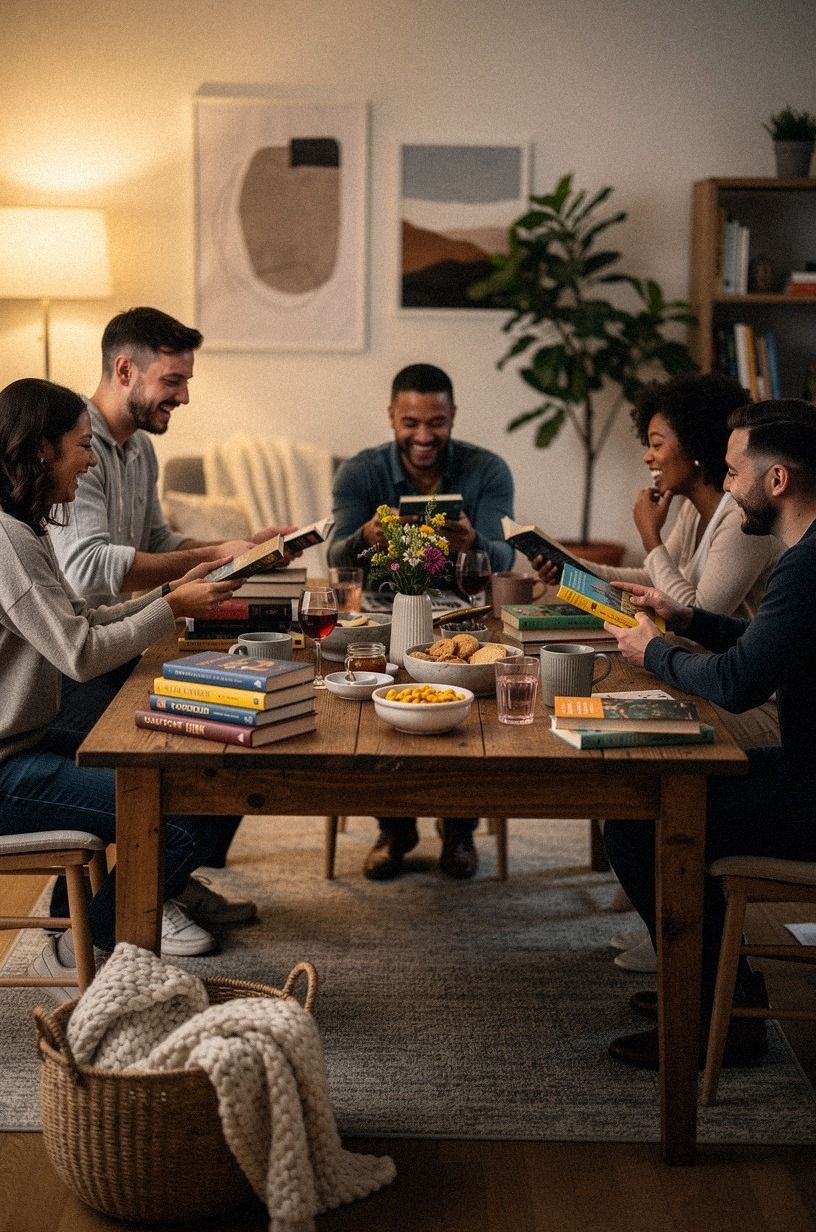
Book swap party plans can stay warm, organized, and low-cost with one central table, clear labels, and tactile details. The common mistake is treating the gathering like a pile of books instead of a room people can move through. These 15 ideas create an easy path from arrival to browsing, conversation, and departure. The result is simpler than expected!
- Suspend Bookmarks Above the Buffet
- Why Keep the Exchange Table Central?
- Group Books by Color Without Losing the Categories
- Build a Reading Corner With Mismatched Chairs
- What Should Each Book Label Say?
- Frame the Invitations With Recycled Pages
- A Glass Cloche, Not a Precious Display
- Light the Table With Reading Lamps
- Between Two Shelves, Add Literary Quotations
- Turn a Bar Cart Into a Book Cart
- Can Cushions Sort Books by Genre?
- Compose a Table Runner From Book Covers
- Benjamin Moore Pigeon for Category Crates
- Garnish Glasses With Mini Reading Cards
- Suspend Open Books With Clear Sightlines
1Suspend Bookmarks Above the Buffet
A bookmark garland creates an instant focal point without taking table space. String sturdy paper bookmarks across the buffet, keeping the line loose enough to create a gentle dip in the center. Guests will notice the literary cue before reaching the drinks, and the terracotta, stone, and olive palette feels warm rather than childish.
Choose cotton ribbon or narrow jute cord, then mix illustrated bookmarks with blank cards for guest recommendations. The garland should hang low enough to feel connected to the table, yet high enough to avoid brushing against serving dishes. Three or four clusters look more collected than one perfectly even row.
Keep the buffet useful underneath. A shallow cerused white oak tray for pencils, a ceramic bowl for name tags, and folded canvas totes can keep the exchange moving. Leave generous open space for guests to place drinks, sort titles, and compare covers.
For a personal recommendation station, adapt the card arrangement from these graduation guest-book recommendation cards. Short prompts such as “pass this along because…” encourage useful notes without slowing the arrival flow. The change feels immediate!
2Why Keep the Exchange Table Central?
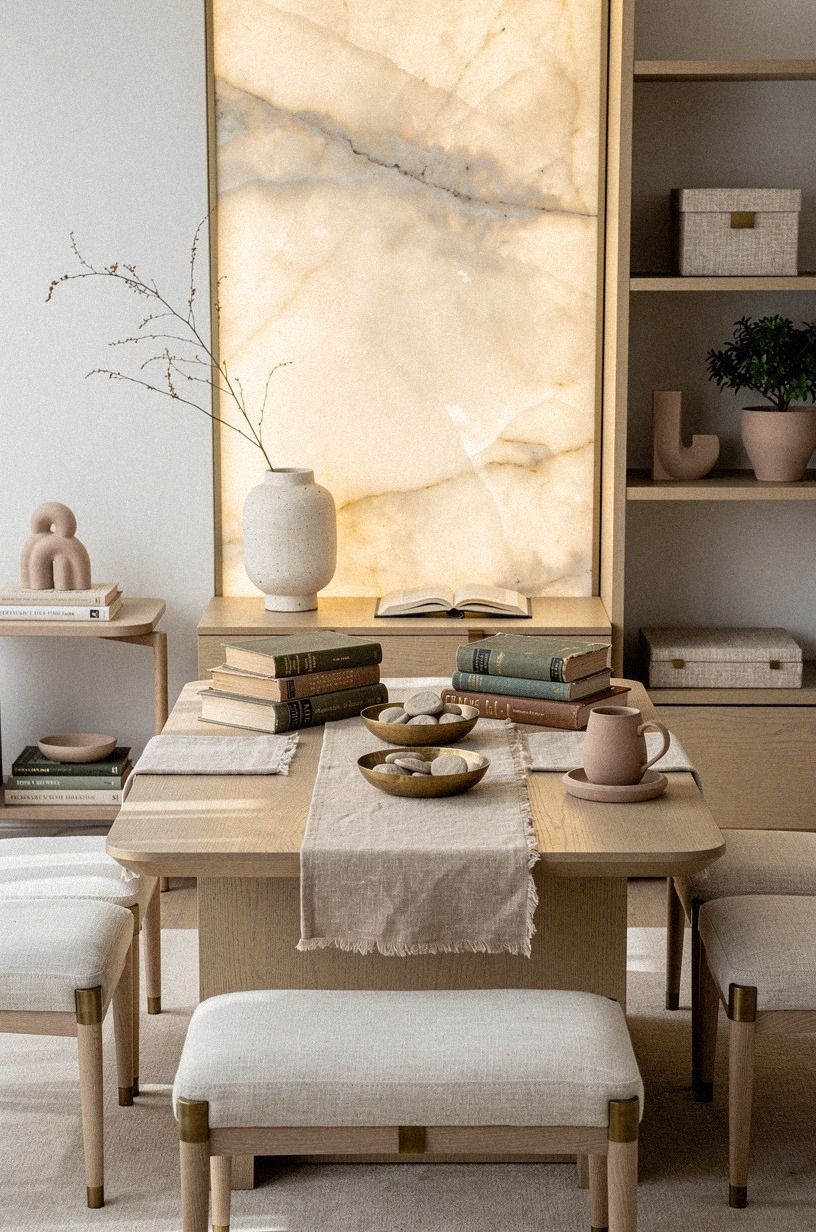
A central exchange table works best when every side remains open. A backlit translucent onyx surface can give the setup a soft architectural presence while keeping the arrangement visually light.
Place the table where guests can approach from the entry, seating area, and drinks station. That simple route prevents bottlenecks and makes the exchange feel like the natural center of the gathering.
3Group Books by Color Without Losing the Categories
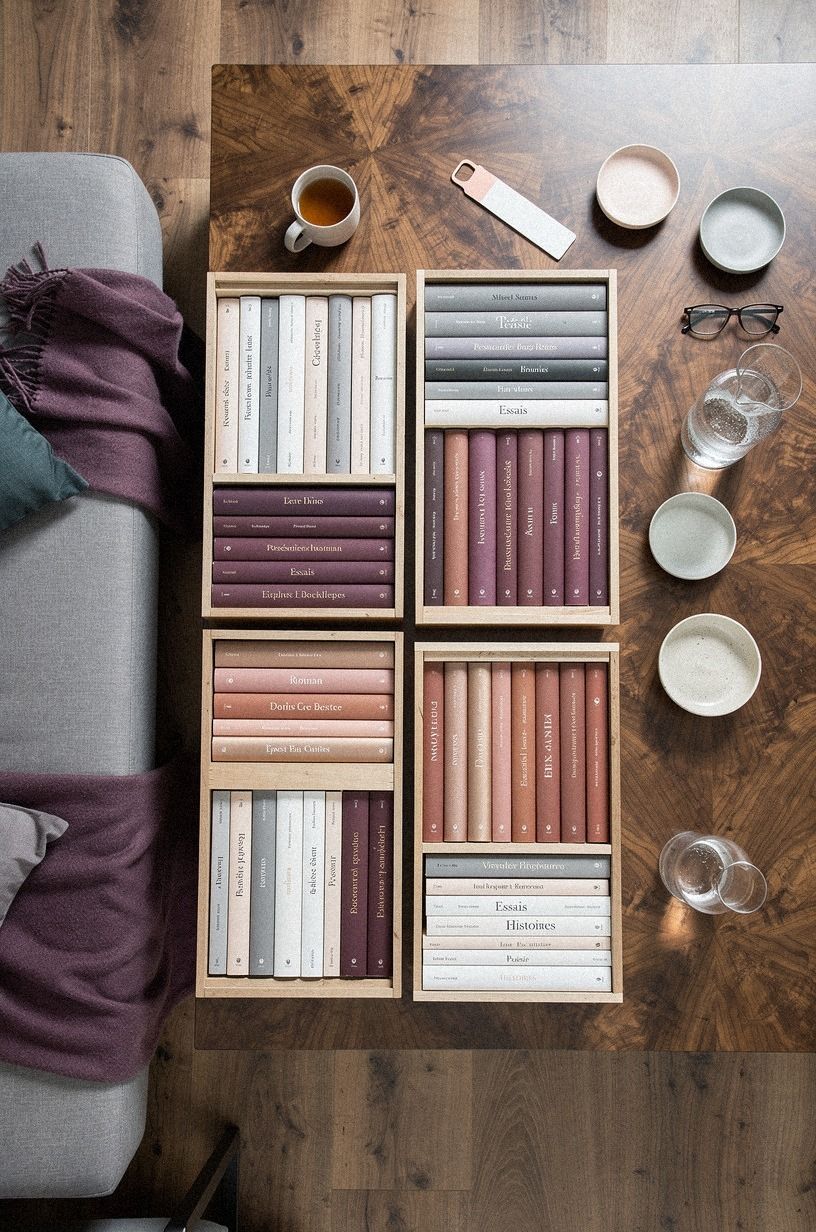
Color grouping makes a large pile feel deliberate, especially when guests bring books with very different covers. Arrange titles on crates by broad families such as plum, grey, rose gold, rust, and cream. The coordinated display creates a charming backdrop, but categories still need to remain obvious.
Use book-matched walnut panels or sturdy walnut crates, then line each surface with folded linen so covers don’t slide. Keep the crates stable and avoid stacking them higher than eye level.
A low arrangement feels safer and lets guests scan every title without stretching. The room will feel lighter!
Color should support genre labels rather than replace them. Use small cards beneath each group, such as “mystery,” “memoir,” “weekend reads,” or “long novels.” Guests will appreciate the visual order, while the labels prevent the party from becoming a beautiful but confusing wall of books.
For extra clarity, place one sample title at the front of each section. The visible spine or cover acts as a quick cue, while the category card gives the system a practical explanation. The display stays expressive, practical, and easy to browse.
4Build a Reading Corner With Mismatched Chairs
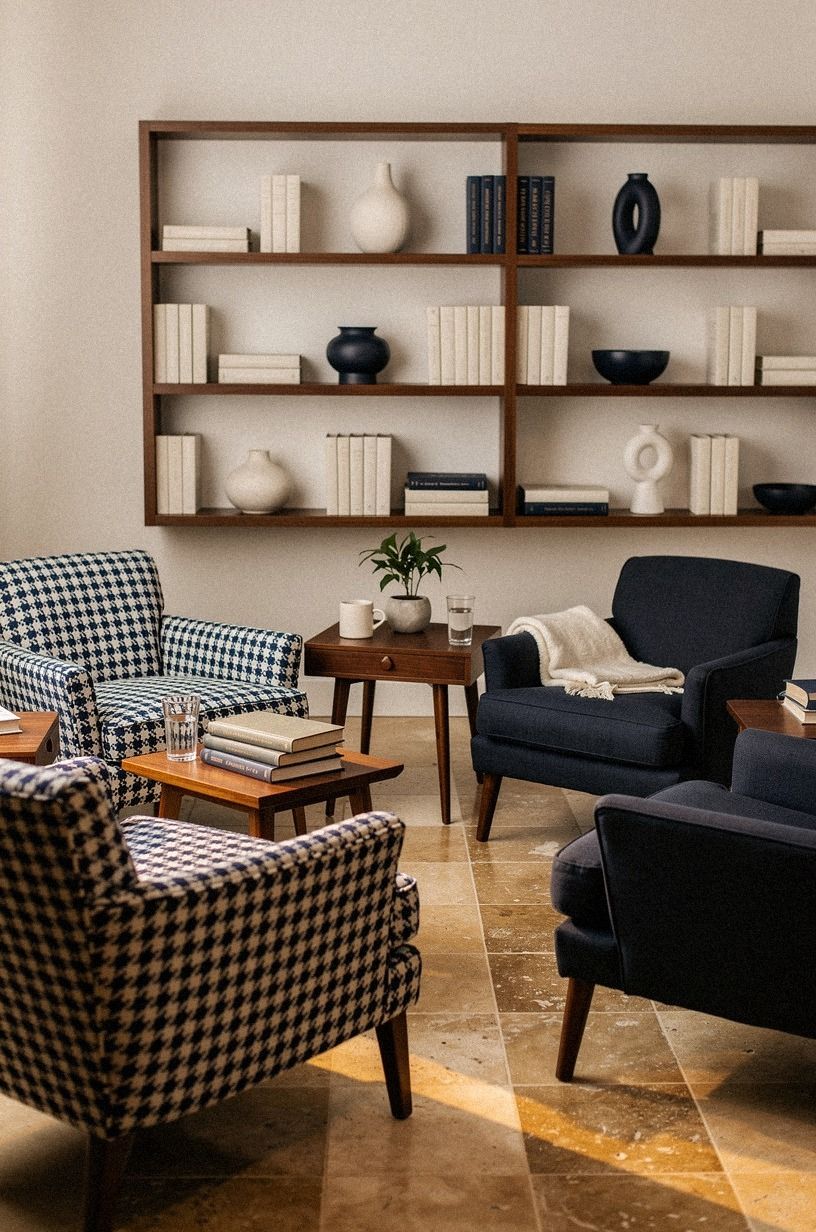
A reading corner gives guests a place to pause after choosing a title. Pairing a navy upholstered chair with a warm walnut chair creates character without requiring a matching furniture set. Add one small warm travertine side table for drinks, recommendation cards, or books waiting for a new owner.
Keep the seating close enough to the exchange table for easy conversation, but far enough away to preserve circulation. A chair angled toward the table feels more welcoming than a chair pushed flat against the wall. One compact brass floor lamp can define the corner and help guests read handwritten notes.
Use cushions to introduce texture without making the space feel staged. Navy cotton, soft white linen, or walnut-toned woven fabric can connect the chairs to the book table. Avoid oversized cushions that swallow the seat or create a place for books to disappear.
A reading corner also gives quieter guests a natural retreat. Not every visitor wants to browse while standing, and a comfortable pause often leads to more thoughtful recommendations. A full lounge arrangement is unnecessary; one attractive chair and enough room to set down a book are sufficient.
5What Should Each Book Label Say?
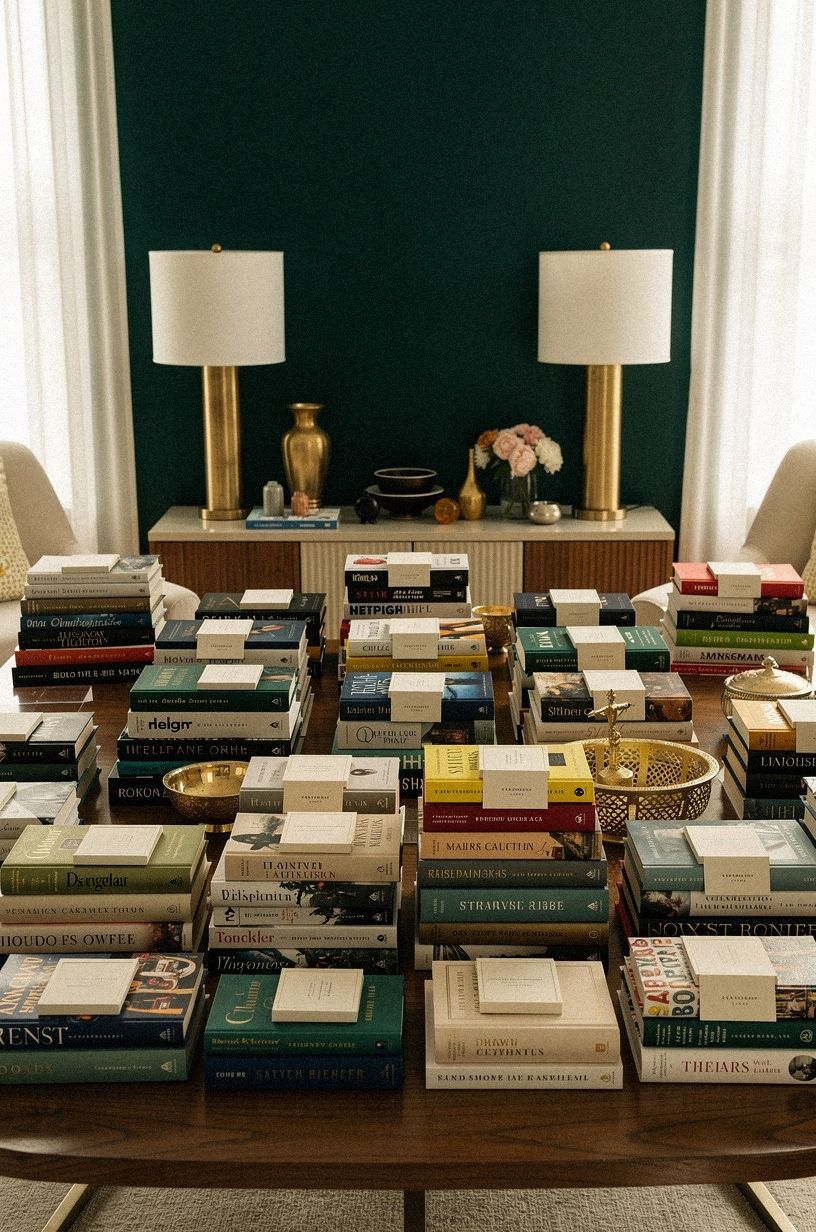
Handwritten labels help guests understand why a book deserves attention. Keep each note short, specific, and readable from standing height.
Useful prompts include:
– “Pass this along if you enjoy…” – “Best for a rainy afternoon” – “A sharp, funny narrator” – “Bring patience for the first chapter” – “Great conversation starter”
Use cream index cards, black ink, and an unlacquered brass clip or holder that can develop a natural patina. Guests don’t need a long review, and the table won’t develop a slow queue. A few vivid words can make an overlooked title feel appealing.
Leave blank cards beside the exchange area so guests can add recommendations during the party. That small invitation makes the table feel generous, collaborative, and alive.
6Frame the Invitations With Recycled Pages
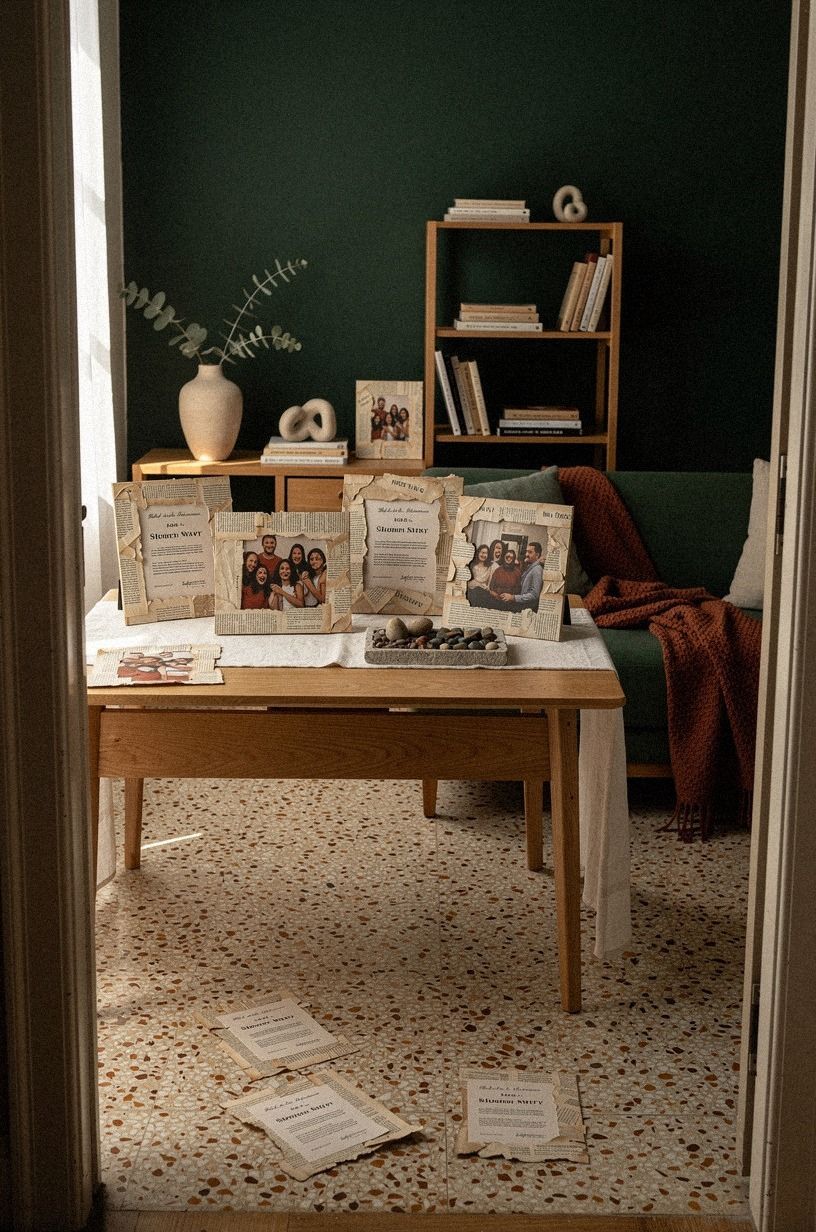
Framed invitations can turn party details into part of the room instead of another sheet on the counter. Pair recycled pages with forest green, rust, and natural oak for an earthy presentation.
An oversized-chip terrazzo frame can give the display enough weight without requiring ornate decoration. Keep the invitation text large, and place the frame near the entry where guests can read it before reaching the book table.
7A Glass Cloche, Not a Precious Display
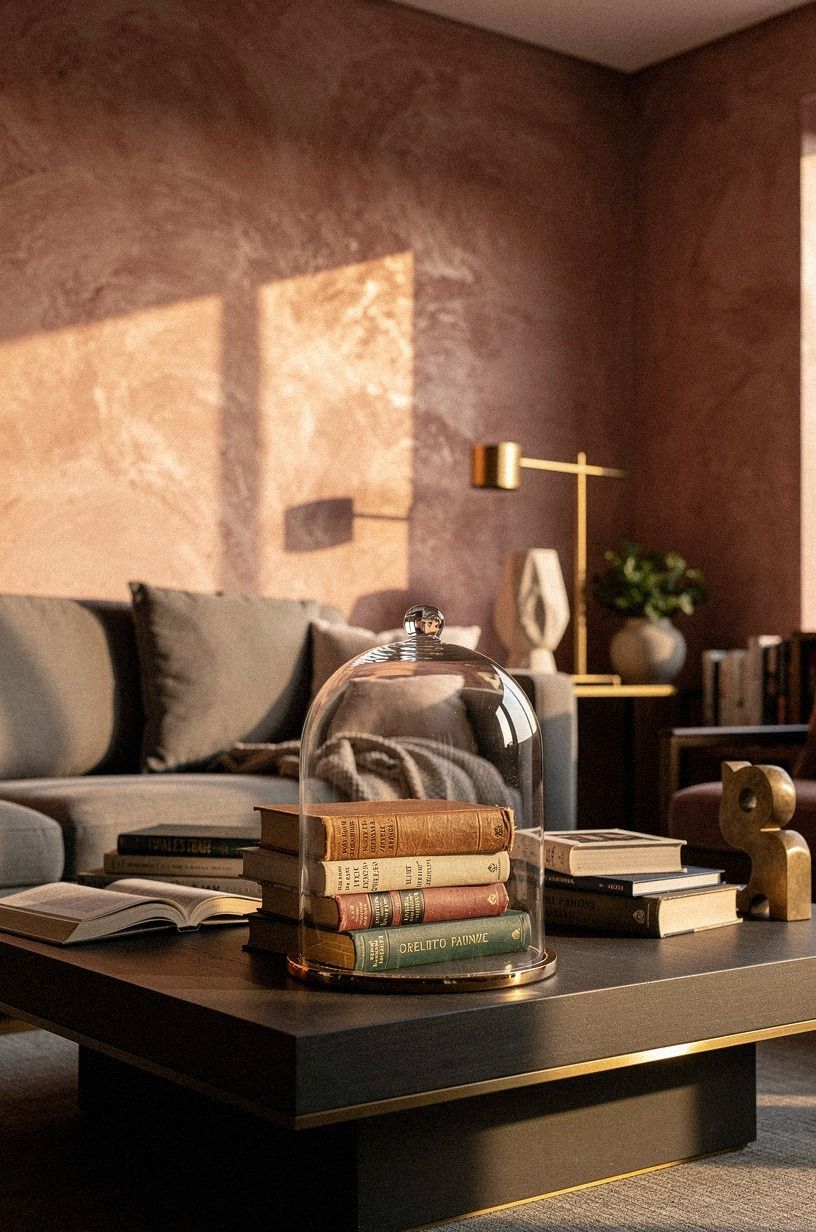
A transparent cloche creates a small moment of discovery around one featured stack. Choose three or four novels with dusty rose, charcoal, or brass-toned covers, then place them on a hand-applied Venetian plaster base. The display works well for a host pick, a local author, or an unusual edition.
A glass bell jar should sit where guests can see it without moving other books. Keep the featured titles available nearby, because a sealed display can feel precious if nobody knows whether the books are available. Add a small card with the reason for the selection, not a long explanation.
Keep the surrounding surface quiet. Guests should notice the shape of the cloche and layered spines first. Avoid placing flowers directly beside it, because petals and stems can compete with the covers and make the arrangement feel like a general centerpiece.
One cloche is enough for most rooms. Several domes can make the exchange feel like a shop display rather than a relaxed neighborhood gathering. A single unusual detail usually feels more confident than a collection of competing centerpieces.

8Light the Table With Reading Lamps
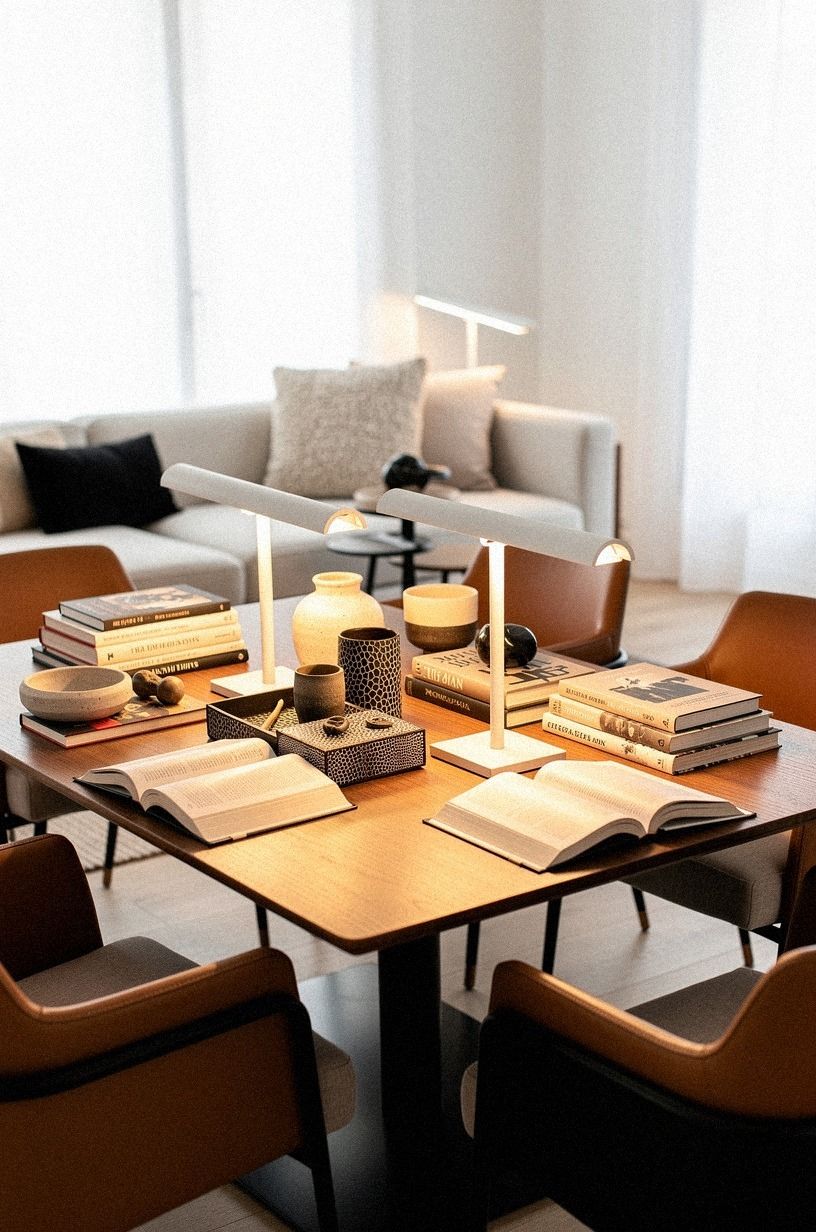
Good lighting helps guests browse comfortably and makes handwritten labels easier to read. Use warm white lamps with camel shades and black accents around the exchange table. The glow should fall across the covers instead of shining directly into anyone’s eyes.
A shagreen desk lamp or compact library lamp can provide task light without looking office-like. Three sources across the room usually work well: overhead light for arrival, task light for labels, and ambient light for conversation. If the ceiling fixture feels harsh, let table lamps and a nearby floor lamp carry more of the evening atmosphere.
Lighting doesn’t need to match. One aged brass lamp beside one matte black lamp can feel more relaxed than a coordinated pair. Avoid cool blue bulbs, which flatten the warm white, camel, and black palette and make the room feel less inviting.
Guests notice this comfort quickly!
Place cords along walls or beneath a rug edge, keeping every walkway clear. A beautifully arranged table loses its appeal when guests must step over cables to reach the next category. Solve the practical details before adding another decorative lamp.
9Between Two Shelves, Add Literary Quotations
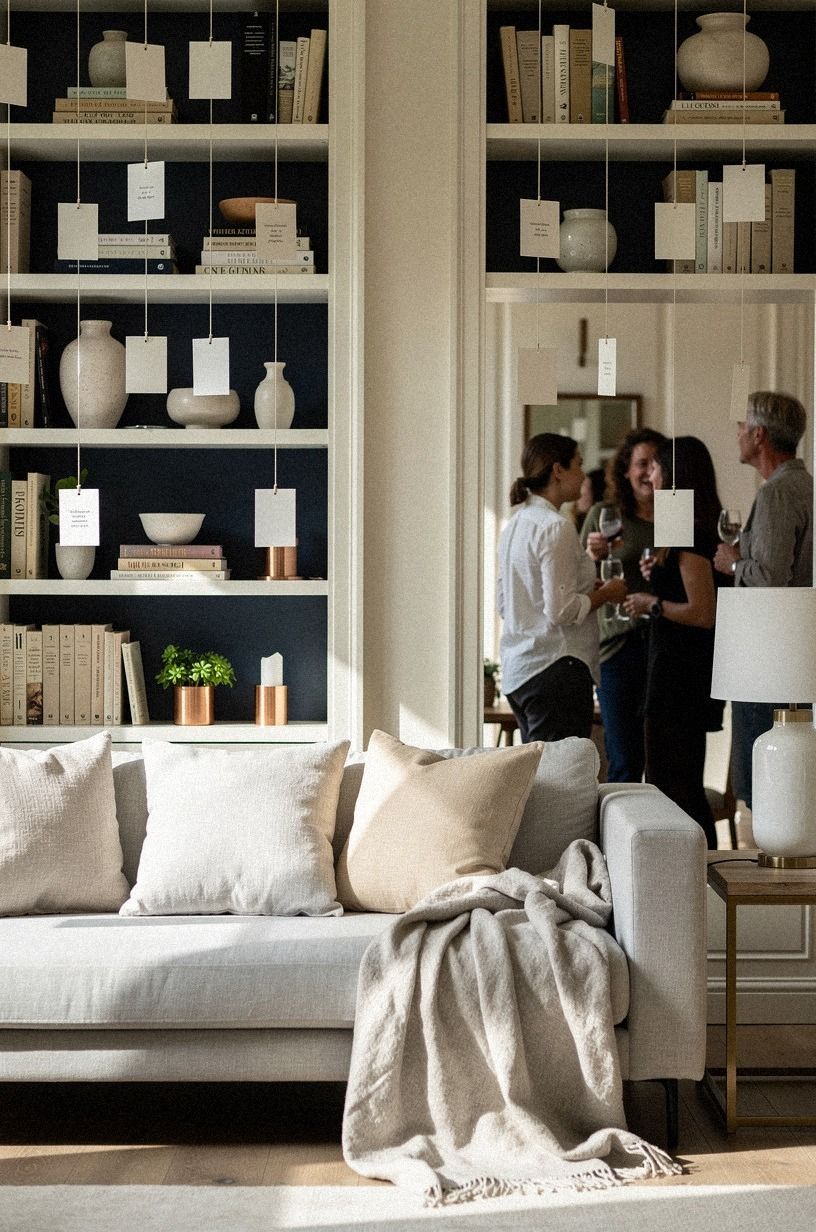
Literary quotations can fill the narrow wall between two shelves, especially when guests need a visual pause between book groups. Mount the cards on washed Belgian linen with a lived-in texture, then use midnight blue, copper, and ivory for a quietly dramatic palette.
Keep the quotations short enough to read while standing. A slim copper rail or simple wooden strip can hold the cards without competing with the shelves.
10Turn a Bar Cart Into a Book Cart
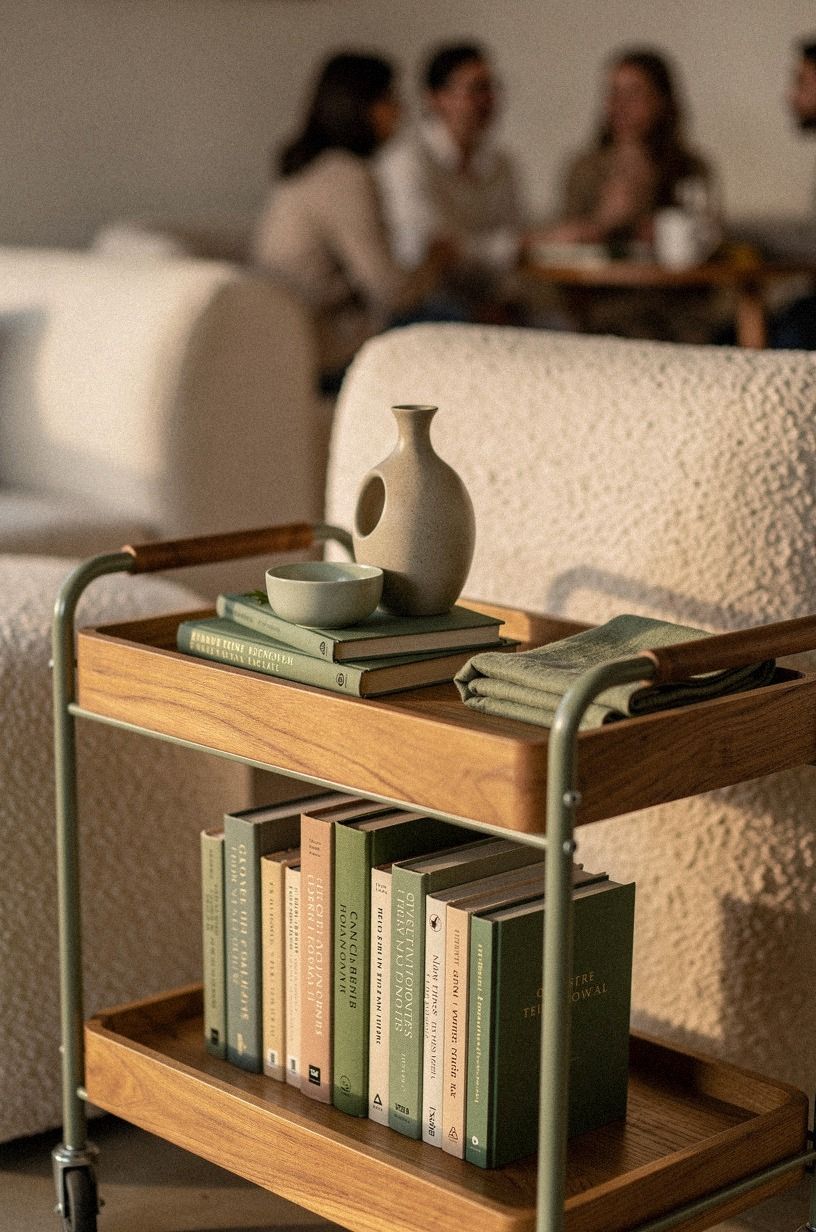
A bar cart can become a compact book station with almost no structural work. Use a sage green cart with warm cream labels and natural wood trays, then reserve the upper level for small paperbacks and the lower level for larger hardcovers. Guests can roll it near the seating area when browsing slows.
A Target Threshold wood-and-metal cart gives two useful surfaces without taking much floor space. Lock the wheels before guests arrive, and avoid overloading the top shelf with heavy art books. Add one shallow organic bouclé basket for tote bags, pencils, or spare labels.
A cart becomes most useful when it has a clear job. Mark one shelf “new arrivals” and another “ready to travel.” Guests will understand the movement of books, while the cart keeps the main table from becoming crowded. A removable tray also makes cleanup faster.
If the cart sits near the entry, use the top level for books guests may want to recommend immediately. Near the seating area, it can hold titles selected for later browsing. The location should determine the task, keeping the setup flexible without adding clutter.
11Can Cushions Sort Books by Genre?
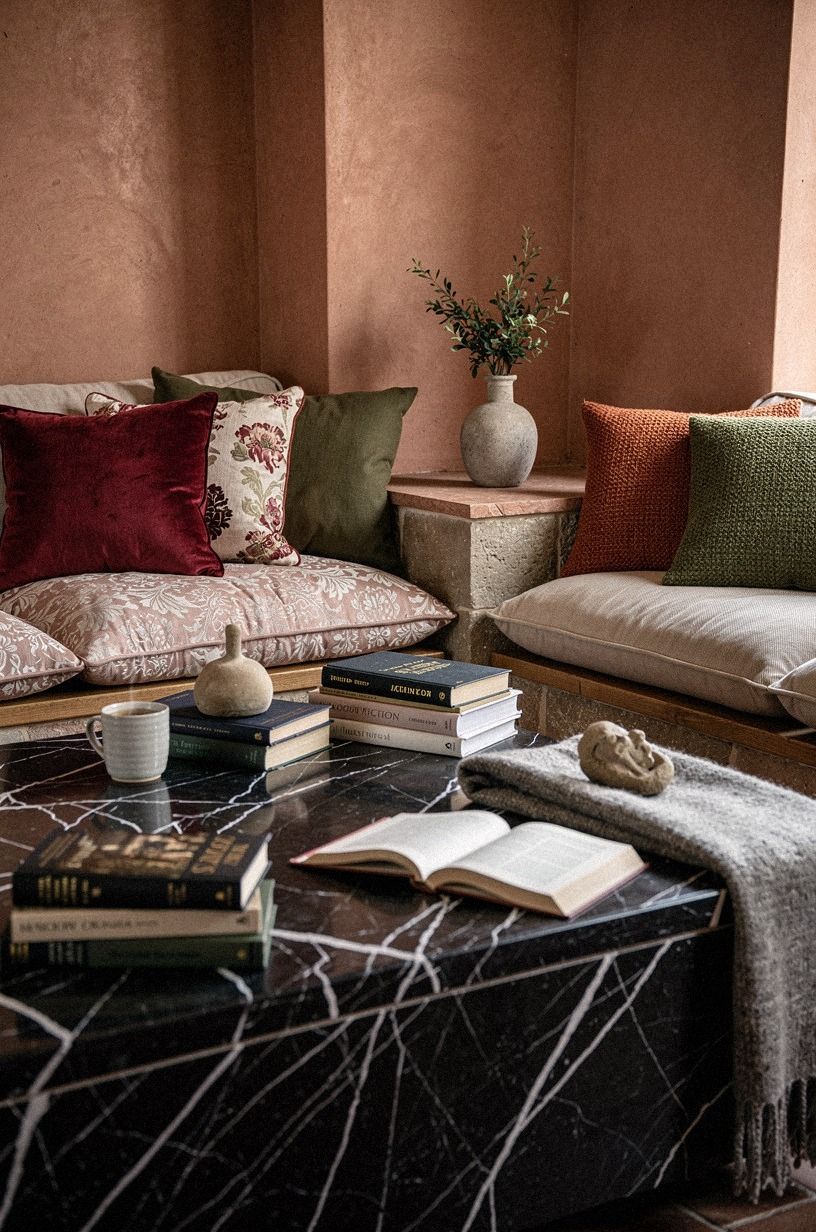
Genre cushions give the seating area a playful code without turning the room into a themed set. Assign one embroidered cushion to each broad category, such as terracotta for fiction, olive for memoir, and stone for essays.
A small Nero Marquina black marble tray can hold the category cards beside the seating area, adding a crisp material contrast without overwhelming the cushions.
The code doesn’t have to be perfect. Guests should understand the idea after one glance, and category cards can provide the full explanation. Use removable fabric tags or small cotton loops so the cushions can return to ordinary seating after the party.
Avoid printing long titles across every cushion. A color, symbol, or single letter feels more refined and won’t compete with the books. If children are attending, washable covers are a practical choice, making cleanup easier.
12Compose a Table Runner From Book Covers
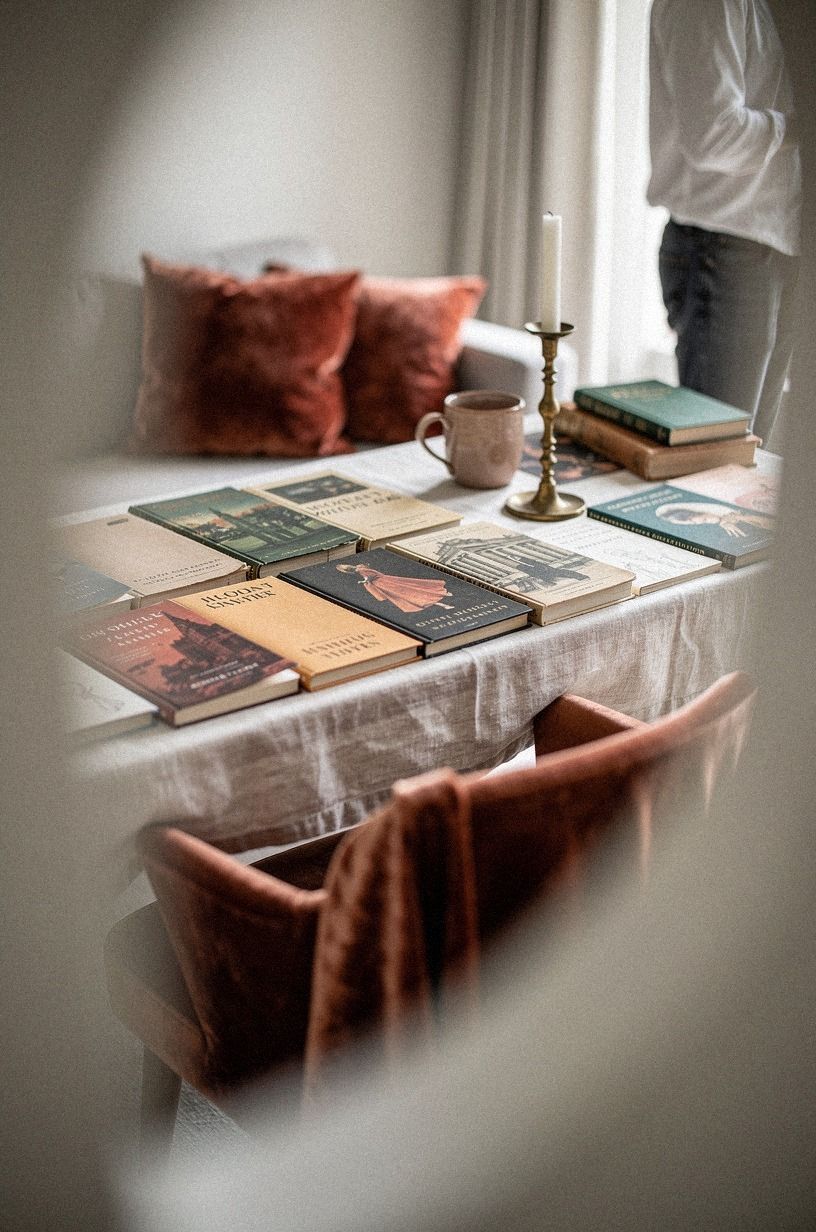
A cover runner brings the literary theme directly onto the dining table without using loose pages. Place selected covers over a deep-pile mohair velvet runner in clay, linen, and aged brass tones.
Keep the books flat and avoid placing drinks directly on the display. A narrow brass tray at each end can define the arrangement while leaving enough open table space for browsing and conversation.
13Benjamin Moore Pigeon for Category Crates
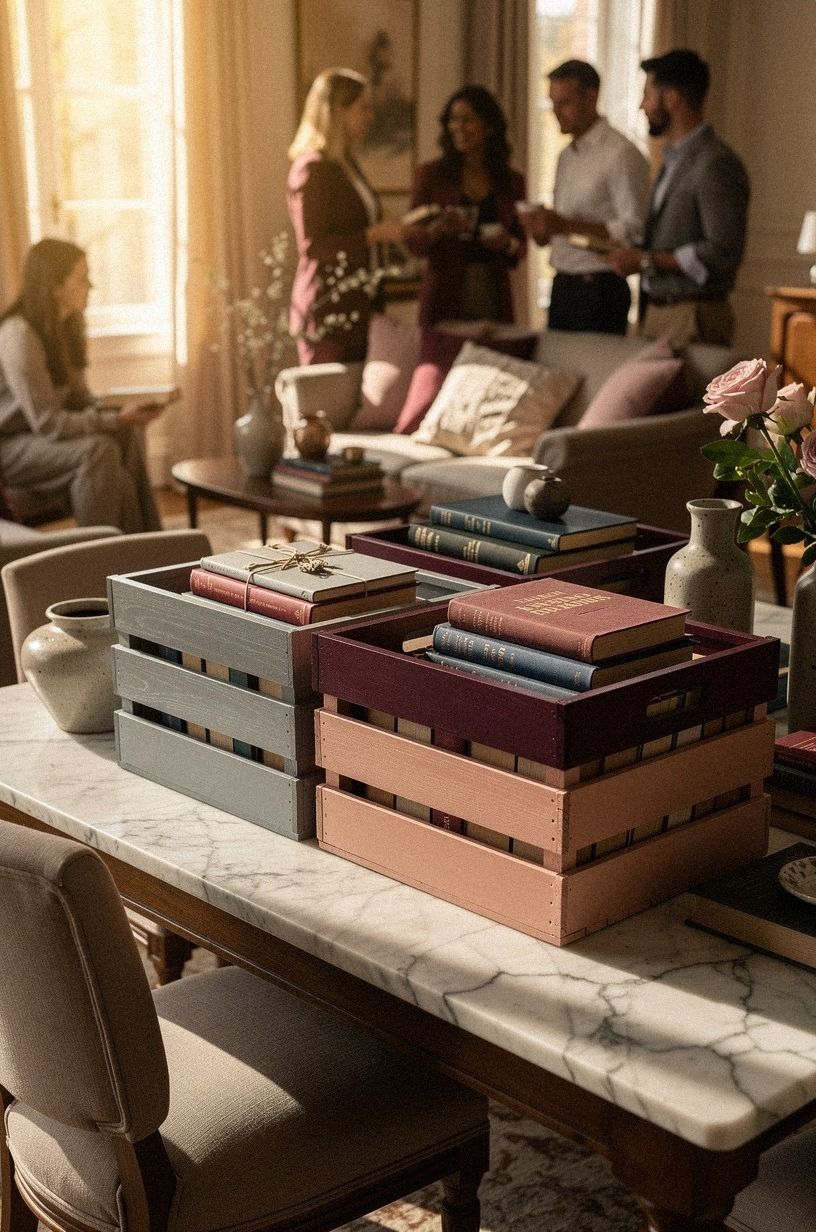
Painted crates can organize the exchange while giving the room a plum, grey, and rose gold accent. Assign one color to each broad category, then write the category name on a removable card rather than directly on the wood. Carrara marble details can echo rose-grey tones without adding visual clutter.
Choose Benjamin Moore Pigeon No. 25 for a muted grey crate, or use Sherwin-Williams Agreeable Gray SW 7029 when the room already has strong color. Cream cards will contrast more clearly than pale grey. Avoid painting every crate a different shade if the display already contains colorful covers.
A consistent paint finish makes mismatched crates feel related. Matte paint looks relaxed and hides small flaws, while satin paint is easier to wipe clean. Sand rough edges before painting, especially when guests will reach into the crates repeatedly.
The following room-refresh benchmarks can help set a sensible party budget. These figures describe typical US decor costs, not a required book swap purchase.
For a modest swap, paint and labels usually create more impact than custom shelving. A few cohesive colors can make borrowed furniture feel purposeful, attractive, and surprisingly polished.
14Garnish Glasses With Mini Reading Cards
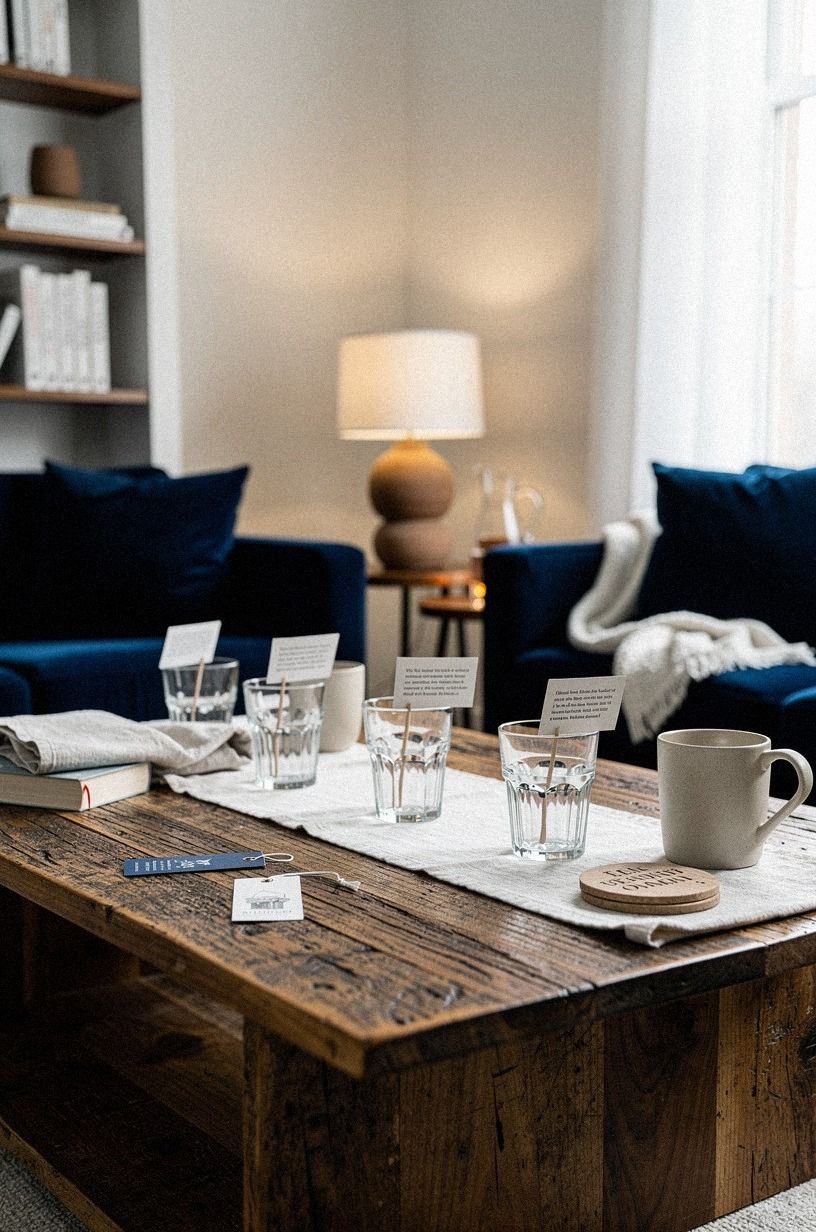
Mini reading cards can turn a drink station into a gentle conversation point. Arrange the glasses on a reclaimed weathered teak tray, using navy, white, and walnut accents to connect the station with the rest of the room.
Keep each card small enough to avoid crowding the glassware. A short prompt such as “What should travel next?” can encourage conversation without turning the drink table into another display wall.
15Suspend Open Books With Clear Sightlines
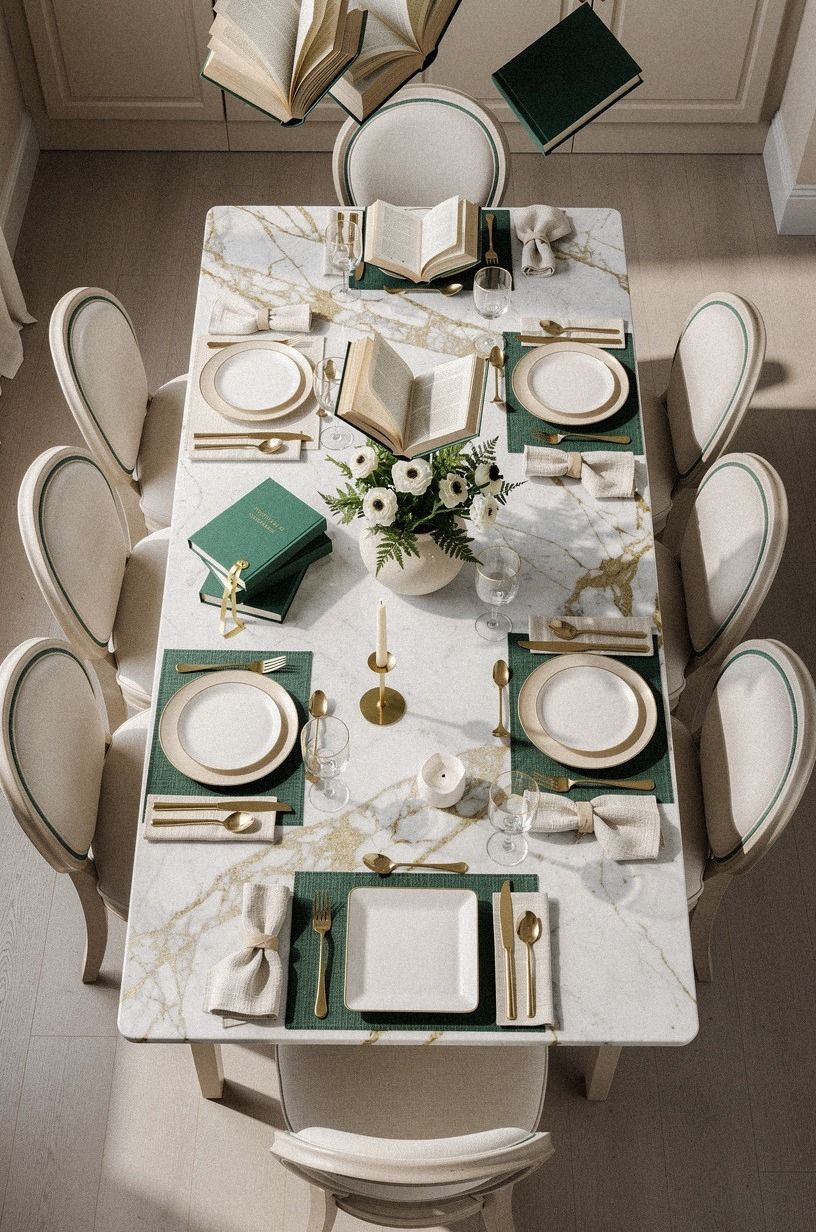
Open books suspended above the table create the most dramatic idea in the collection, so the installation should stay light and controlled. Use photocopied pages or damaged books rather than valuable editions, and hang them in an emerald, gold, and cream palette above the conversation area.
A Calacatta marble with gold veining accent on the table can echo warm page tones without competing with the suspended arrangement. Keep the lowest pages well above head height, and test every knot before guests arrive. A tension rod or removable ceiling hook can help renters avoid permanent marks.
The arrangement should feel airy, not crowded. Guests need clear sightlines across the table, and the books shouldn’t swing into lamps or serving dishes.
Never hang open volumes directly above hot food. Use the ceiling display as a visual frame, then keep the practical exchange below.
Limit the installation to a small cluster. Two or three open books can feel theatrical and graceful; a dense ceiling may make the room feel lower and harder to navigate. The strongest effect comes when the installation frames conversation instead of interrupting it.
Which Details Matter Most: Books Over Balloons?
A successful book swap doesn’t need a dozen novelty decorations. The strongest gatherings give guests three things quickly: a clear place to start, an easy way to understand the categories, and enough comfort to stay for another conversation. The room can feel warm and memorable through texture, light, and useful signs rather than disposable clutter.
Start with movement. Guests should enter, find the exchange table, understand where to place a book, and locate a drink without asking for directions. A central table, a low cart, or painted crates can create that path.
If furniture blocks the doorway, even the most elegant palette will feel awkward.
Next, choose one material story. Clay, linen, and aged brass create a soft gathering space; walnut, navy, and warm white feel more classic; olive, terracotta, and stone feel earthy. Benjamin Moore White Dove OC-17 can calm a busy wall, while Farrow & Ball Pigeon No. 25 adds a muted layer without swallowing the covers.
Lighting matters more than extra accessories. Three sources can shape the room: overhead light for arrival, task light for labels, and ambient light for conversation.
Guests won’t praise the wiring, but they’ll notice when every book is easy to see. That practical comfort is what makes a simple party feel considered!
For a small gathering, prioritize the exchange surface and seating before buying decorative pieces. A used table, borrowed lamps, and recycled cards may be enough.
Nobody needs a showroom. Guests need a room that lets books, conversation, and small discoveries share attention.
The Questions Worth Answering First
What works best for a small book swap party?
A central folding table and a compact cart work well because guests can browse without filling the whole room. Clear circulation matters more than extra furniture. An IKEA KALLAX cube, a narrow table, and one reading chair can create an inviting setup without crowding the floor.
Where can guests buy book swap party pieces on a budget?
IKEA, Wayfair, and Target offer useful carts, crates, lamps, and trays at several price levels. Facebook Marketplace and local thrift stores can provide solid wood pieces with more character than a matching new set. Focus spending on lighting, stable surfaces, and comfortable seating.
How much does a book swap party makeover cost?
A book swap refresh can cost about $100 to $300 when books, tables, and chairs are already available. Free labels, recycled pages, borrowed lamps, and thrifted baskets can keep spending low. The largest expense usually comes from lighting or accent furniture, not paper details.
Can guests create a book swap party on a budget?
Yes, and free materials can carry much of the design. Reuse jars for pencils, cut cards from packaging, borrow lamps, and paint existing crates. A warm linen runner can hide a plain folding table, while handwritten labels create more personality than expensive printed signage.
Is a book swap party worth it in a small space?
Yes, because a small room naturally keeps the gathering focused. Guests can browse, talk, and reach the exchange table without long walks.
Use one central surface, one seating corner, and vertical labels. Avoid scattered piles, since they’ll make the room feel smaller.
Is a book swap party a good idea for a rental?
Yes. Tension rods, removable hooks, peel-and-stick labels, and freestanding carts can create the look without permanent changes.
Guests can hang a light paper garland from a tension rod and use a removable display strip for cards. These eighteenth-birthday guest-book layouts also offer adaptable ideas for compact sign-in stations.
Where to Start First
If one idea deserves priority, choose the central exchange table. It controls movement, keeps categories visible, and gives every decorative detail a useful edge. Guests will browse more easily when the books have a clear home.
Begin with a stable table, three simple category cards, and one comfortable chair. Add the cart, lamps, garland, or painted crates only after the main route feels easy to follow. For a compact planning reference, save these eighteenth-birthday guest-book layouts alongside the table plan.