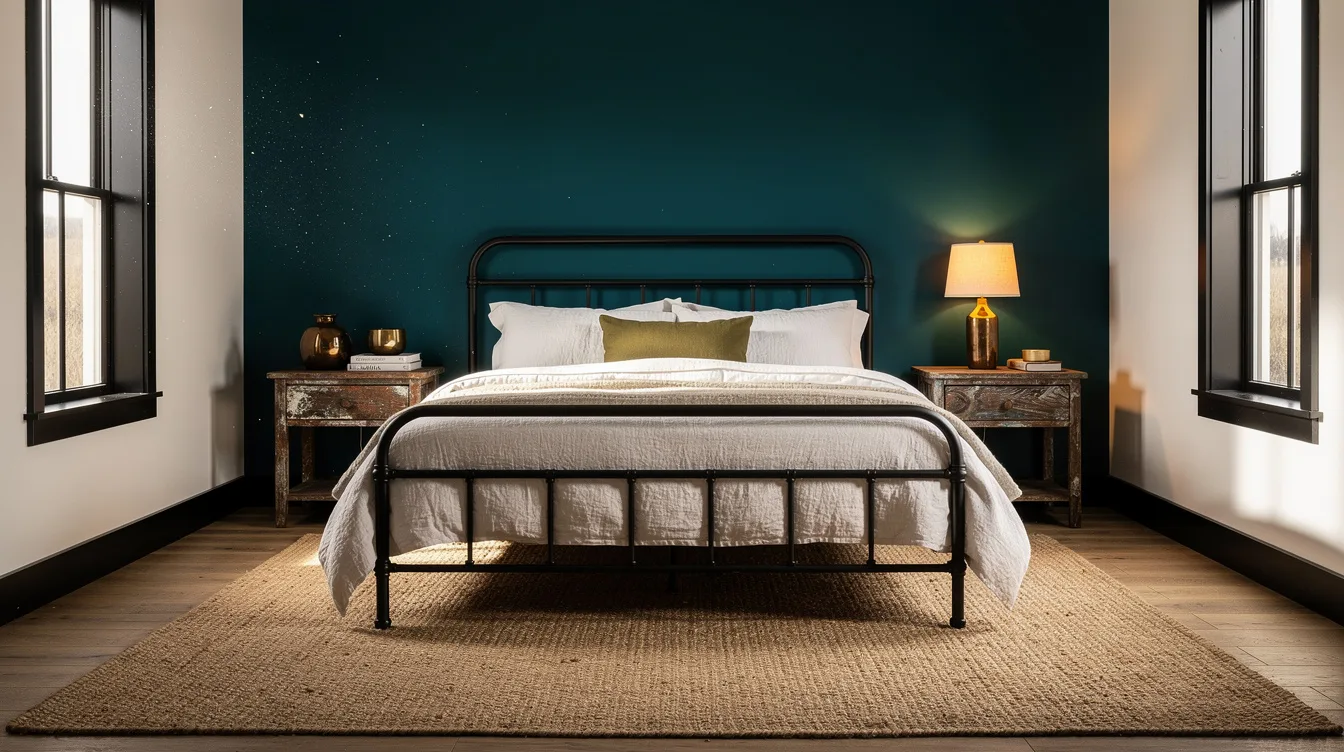
The black window trim is already doing the dramatic work in this bedroom, so the bedding has to bring softness without turning the room sugary. Start with a queen bed and a 36-inch circulation path, then build around warm white, washed linen, worn wood, and a few precise black accents.
The common mistake is treating modern farmhouse as a shopping list of signs, shiplap, and distressed furniture. The better version relies on proportion, useful textures, and enough empty space for the architecture to breathe.
Frame the Windows in Warm Contrast
Black window trim gives a farmhouse bedroom its strongest architectural line, so let it stay visible. Pair it with warm white walls and linen curtains in oatmeal, flax, or soft ivory instead of bright white.
Hang each panel high and wide, with roughly twice the window width in total fabric. A curtain budget of about $150 to $500 is typical, while a Home Depot tension rod for a 48-to-84-inch opening costs around $14.
Painter’s canvas is a practical low-cost option when you want filtered light and a slightly weightier texture. It looks more relaxed than shiny polyester and gives the black trim room to lead.
Build the Bed With Quiet Layers
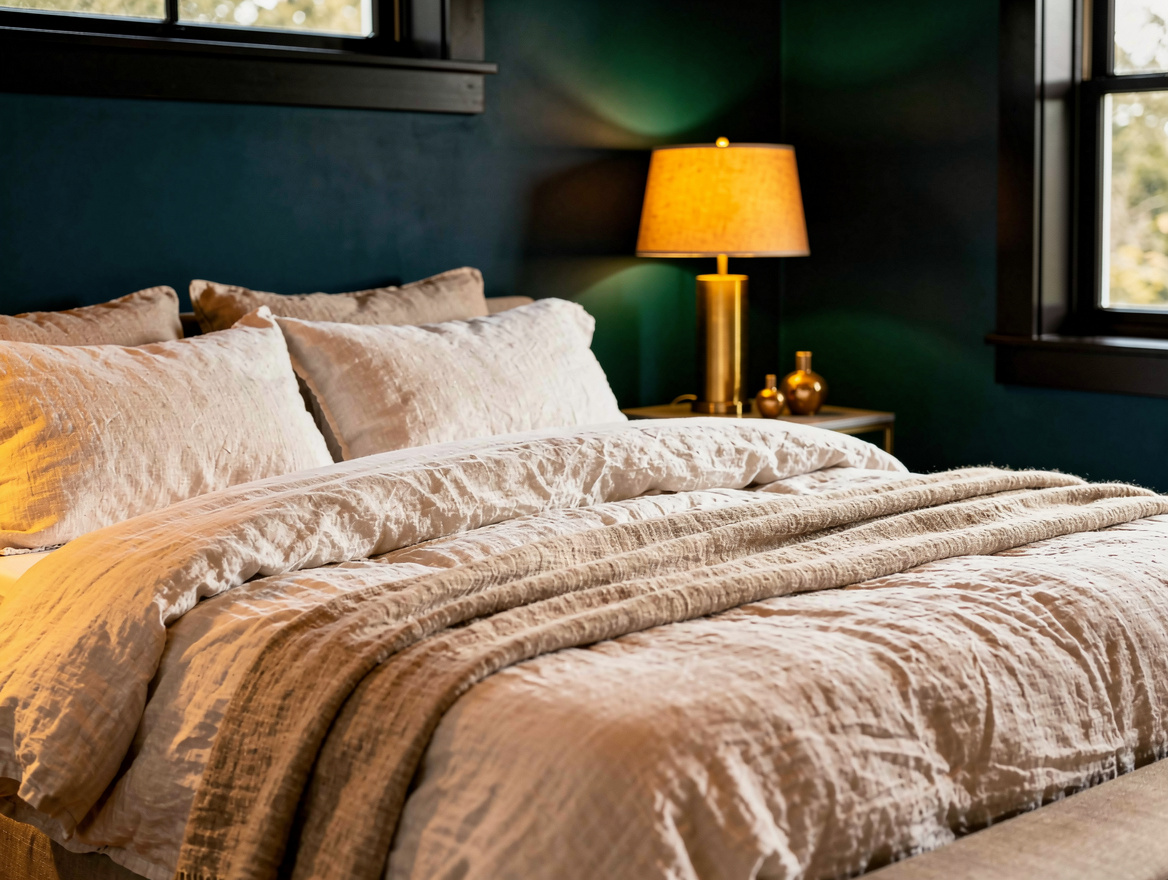
Start with crisp cotton percale, then add washed linen for softness and movement. That contrast keeps the bed from looking flat while preserving the unfussy mood that makes modern farmhouse rooms work.
A 100 percent linen duvet cover typically costs about $290 to $380 at the premium end, while an IKEA cotton quilt ranges from roughly $29.99 to $69.99. Spend more on the layer that touches your skin and save on the decorative coverlet.
Use a ticking stripe pillow or a small checked lumbar cushion, then stop. Too many patterns make the bed look staged rather than lived in.
Choose a Black Bed With Real Air Around It
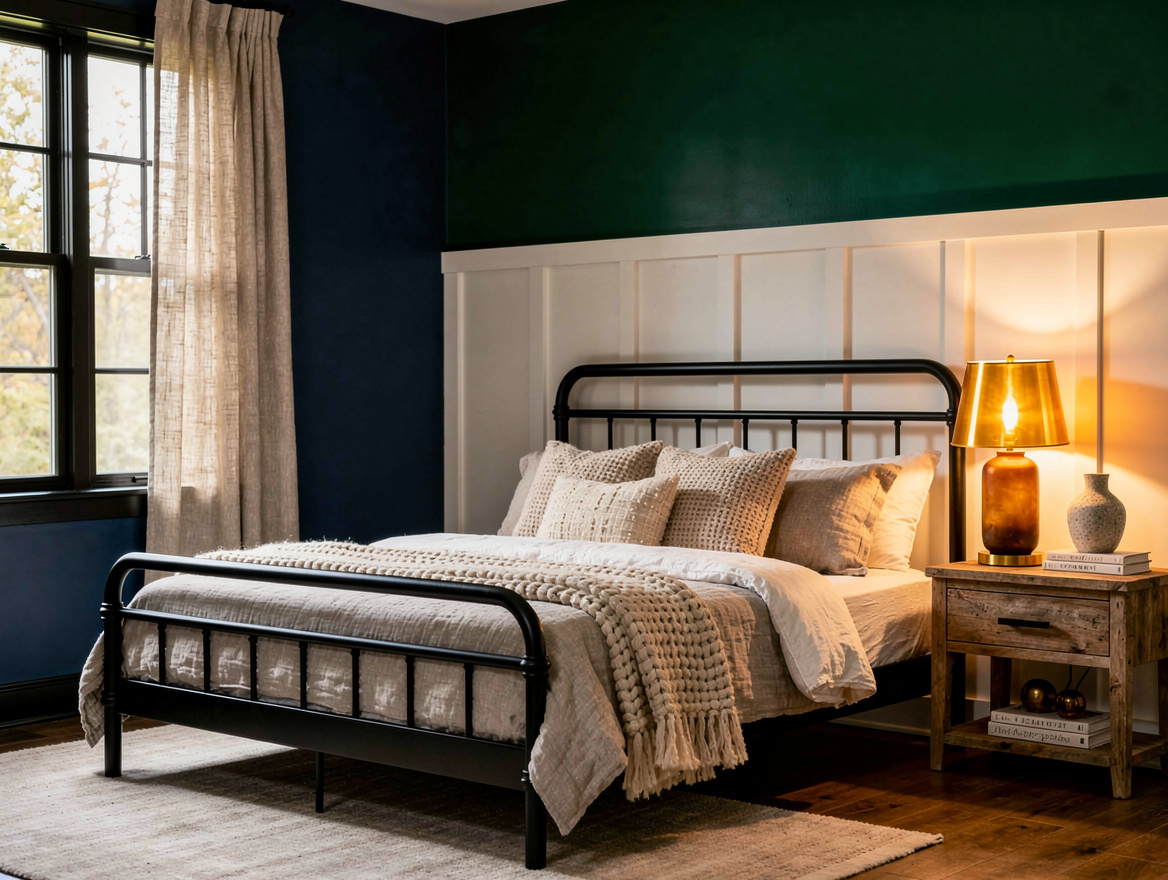
A black metal bed reinforces the window trim without adding another heavy wood tone. A Home Depot queen metal platform bed typically runs about $59 to $86, making it a useful starting point for a midrange room.
Leave 24 to 30 inches on each side of a queen bed and roughly 30 to 36 inches between its foot and the opposite wall or dresser. Those clearances matter more than squeezing in a larger frame.
For a warmer effect, choose a black wood canopy frame, but expect a typical price of about $800 to $2,500. My preference is the simpler metal silhouette when the windows already provide strong structure.
Give the Headboard Wall One Strong Texture
Board and batten adds farmhouse character without covering the entire room in decoration. A DIY installation typically costs about $150 to $400, depending on the wall size and the trim you choose.
Paint the treatment soft white when the bedding carries darker accents. If the room needs more depth, use charcoal or deep navy on shiplap instead of the familiar bright white finish.
Peel-and-stick wood can work as a narrow accent, but reserve it for a carefully measured wall. A wall treatment that stops awkwardly behind the nightstands makes the room feel unfinished.
Repeat Black Through Small Fixtures
Repeat the window color in two or four smaller places: lamp bases, picture frames, a mirror edge, or a curtain rod. The repetition should feel intentional, while the majority of the room stays warm and pale.
An IKEA SKURUP wall sconce typically costs about $24.99 and suits the straightforward farmhouse profile. Plug-in sconces from Home Depot usually run about $44 to $63 when you want an easier installation.
Keep each nightstand close to the bed, with no more than about 6 inches between them. The tabletop should sit within roughly 2 inches of the mattress top so the lamp remains easy to reach.
Warm the Floor With Natural Fiber
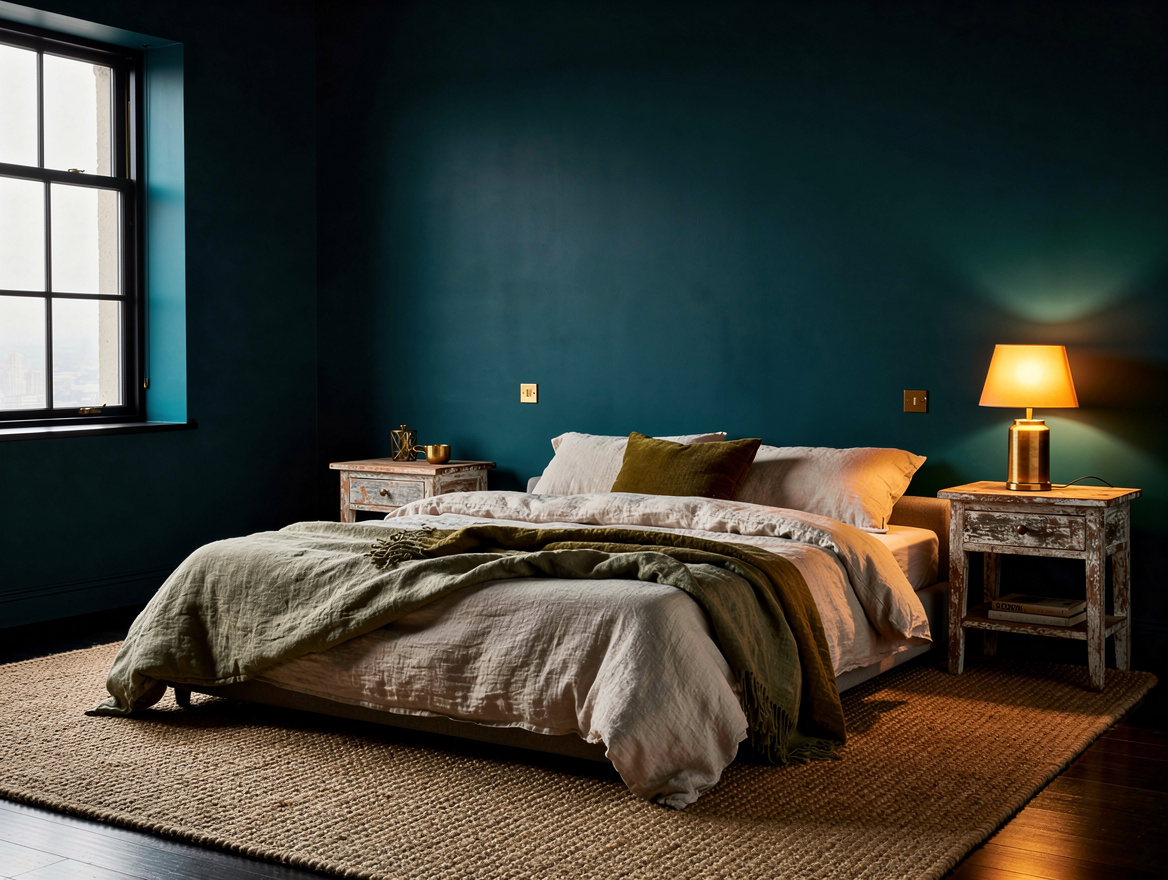
A jute rug softens the black-and-white contrast and adds the dry, tactile quality this style needs. A typical large rug costs about $150 to $400, so size the room carefully before buying.
Place enough of the rug under the bed to land beneath the nightstands or at least extend generously along both sides. The goal is a soft landing for bare feet, not a narrow strip floating at the footboard.
Finish with aged wood, cotton, wool, or stone accents, then introduce one current earthy shade such as olive, mocha, clay, or deep green. Those colors feel fresh while staying grounded in the farmhouse palette.
Measure the window, bed clearances, and headboard wall before choosing a single decorative piece. Once those dimensions are right, buy the linen layer first, repeat black in two small fixtures, and let the room’s restraint do the decorating.
Mia Carter writes about small-space living and budget home makeovers. She has restyled three rentals and tests most ideas in her own 45 sqm flat.